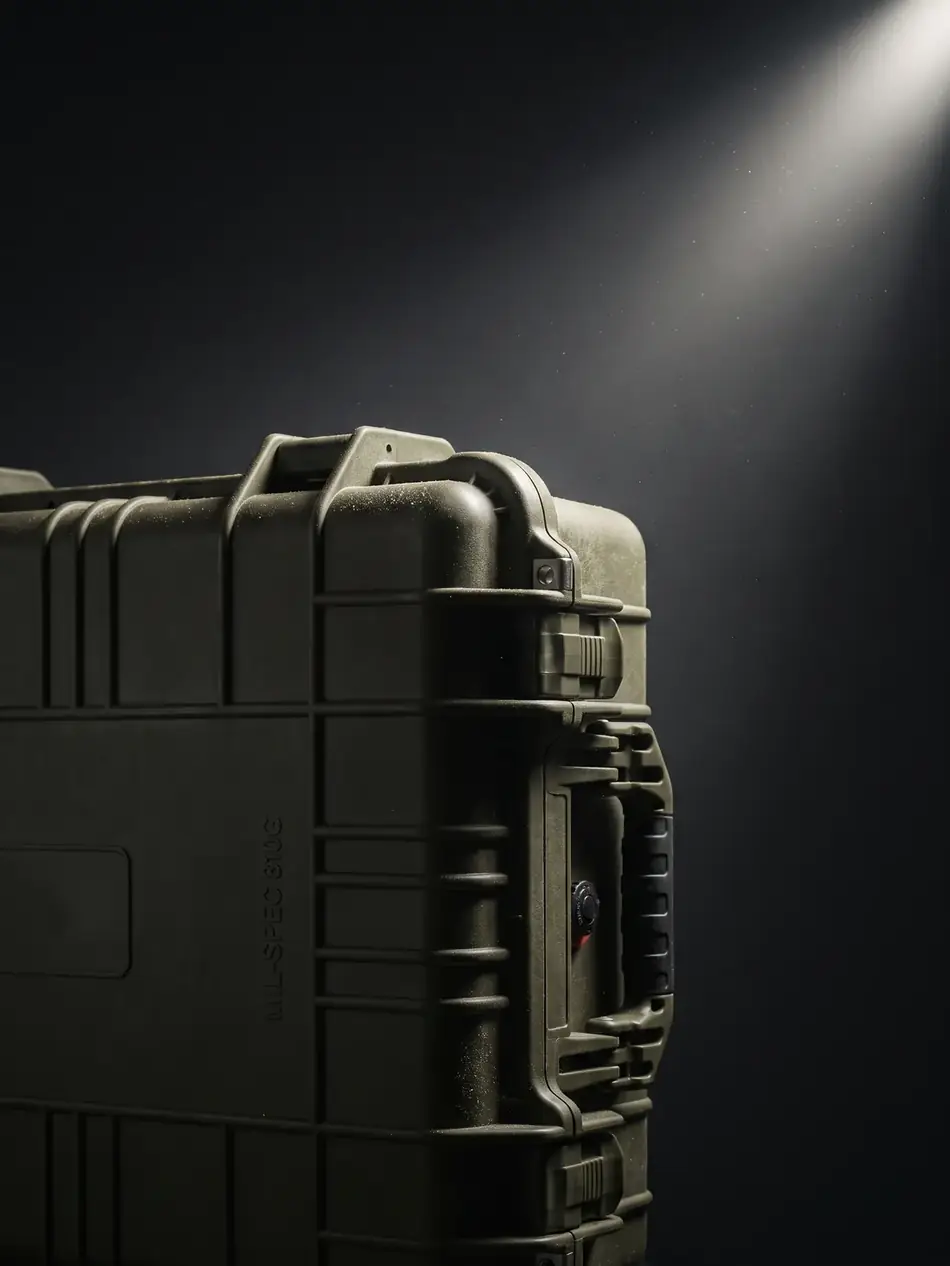
Protecting Defence Equipment in Transit and Storage
Defence support equipment is the unglamorous half of the inventory — test sets, spares, ground power, cabling, calibration kits — and it is the half most often damaged in transit because it is packaged last.
Defence support equipment is the unglamorous half of the inventory — test sets, spares, ground power, cabling, calibration kits — and it is the half most often damaged in transit because it is packaged last.
Specifying support equipment cases
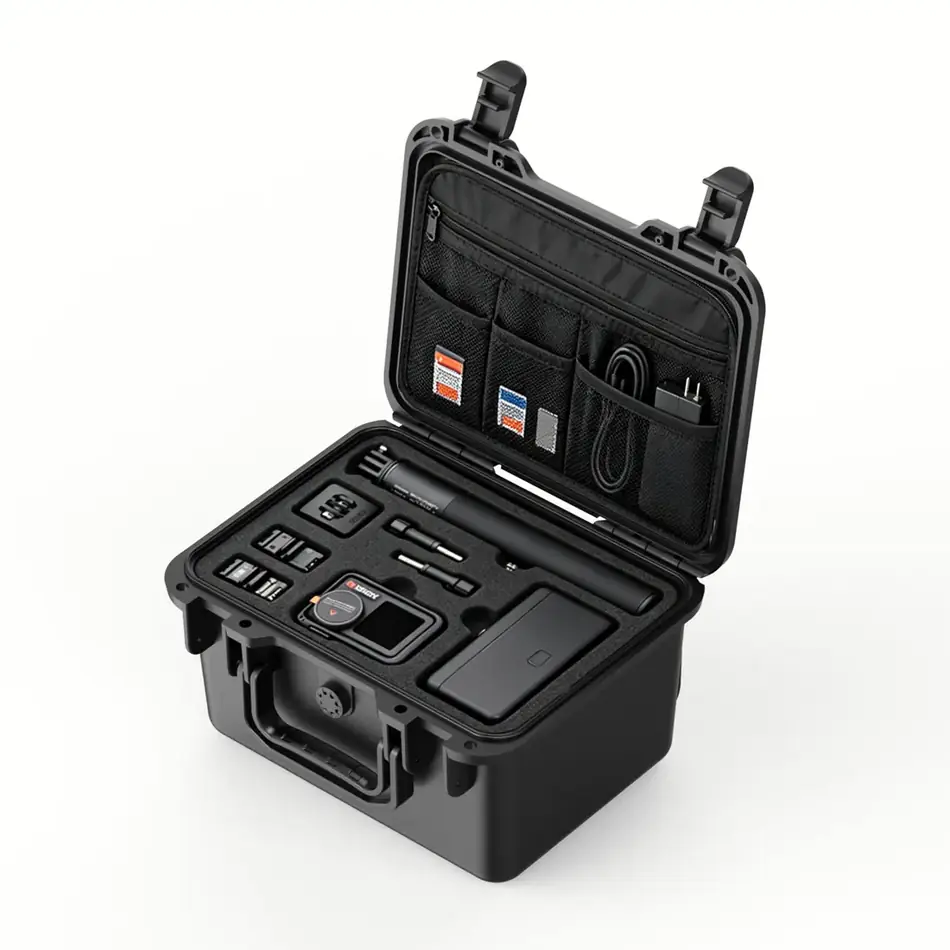
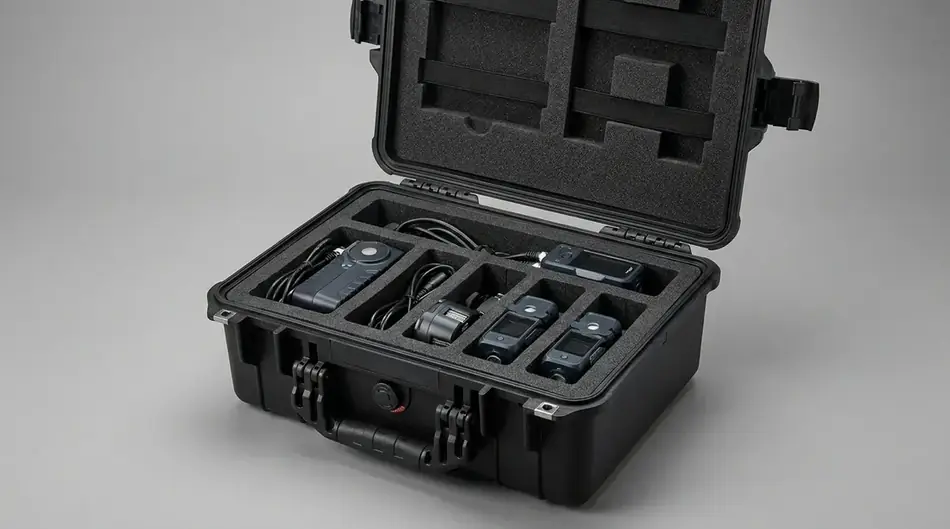
Support equipment tends to be shared across systems, so its case has to work for several configurations over a programme life. We recommend a modular interior: a fixed CNC base that carries the primary unit, and a pluck-foam top layer that can be rebuilt when the kit changes. That combination costs slightly more than a single fixed cut and lasts much longer.
Where a case must be tracked, we add a serial plate pocket and a document holder on the lid, and specify the latch count for security seals.
Typical defence support applications
- Ground power distribution units and cable sets
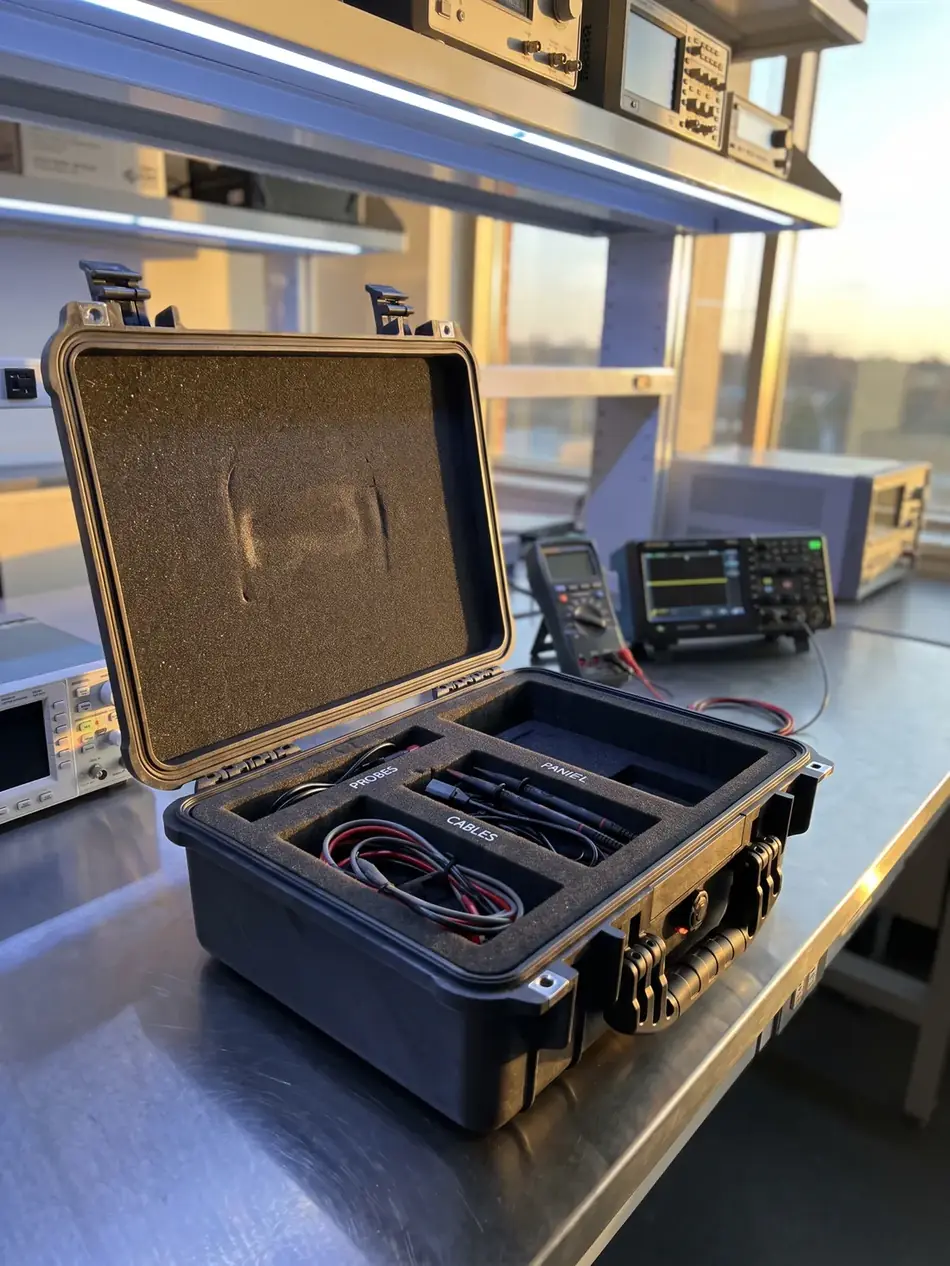
- Test, measurement and calibration equipment
- Spares and consumable kits held at unit level
- Optical and sighting equipment in maintenance configuration
- Programmer, loader and software-carrier cases
- Field infrastructure: masts, mounts, connector sets
Shells that fit Defense work
Ranked by internal volume.
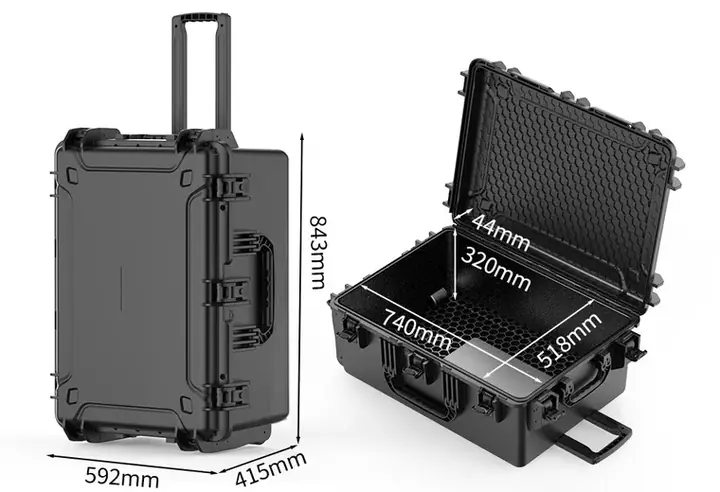
T Series Protective Case
External 843 × 592 × 415 mm
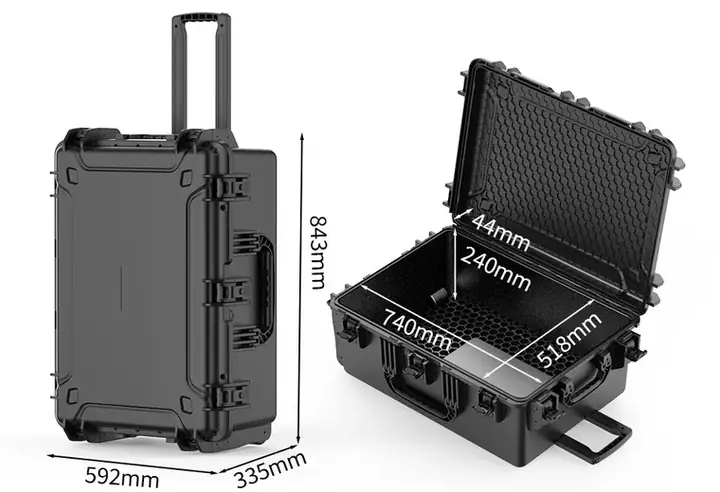
T Series Protective Case
External 843 × 592 × 335 mm
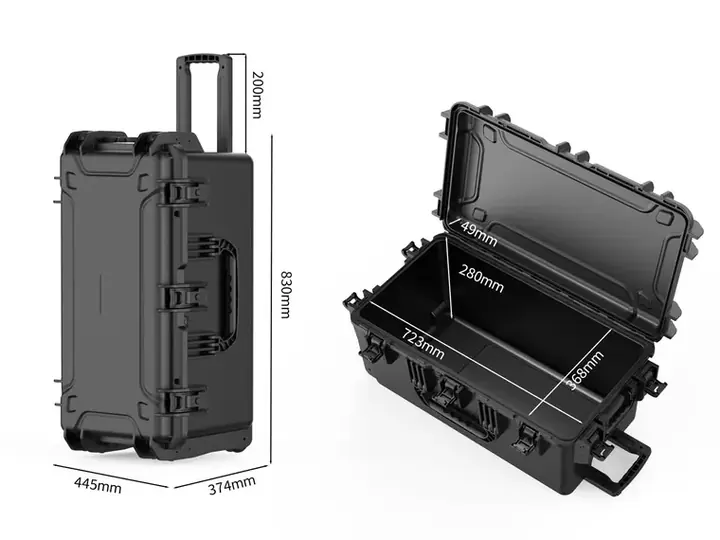
T Series Protective Case
External 830 × 445 × 374 mm
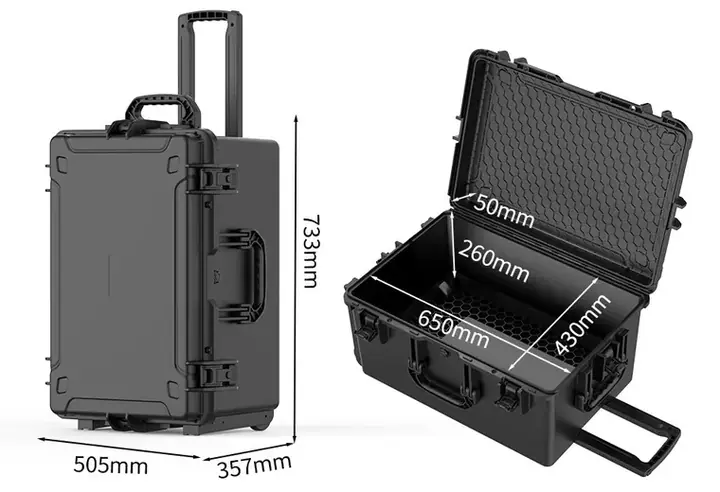
T Series Protective Case
External 733 × 505 × 357 mm
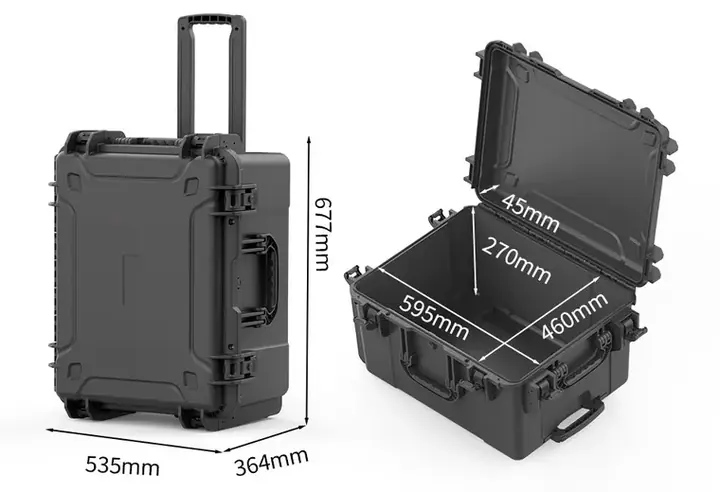
T Series Protective Case
External 677 × 535 × 364 mm
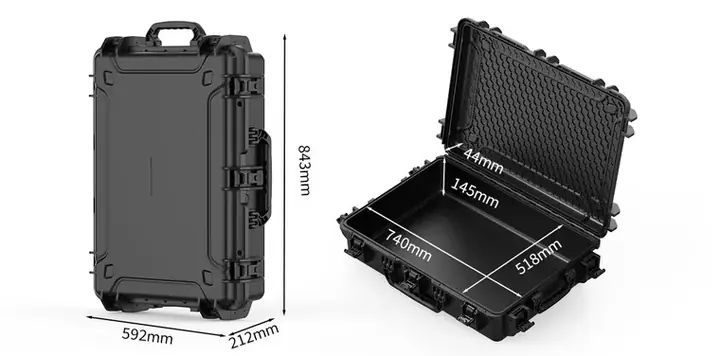
8 Series Protective Case
External 843 × 592 × 212 mm
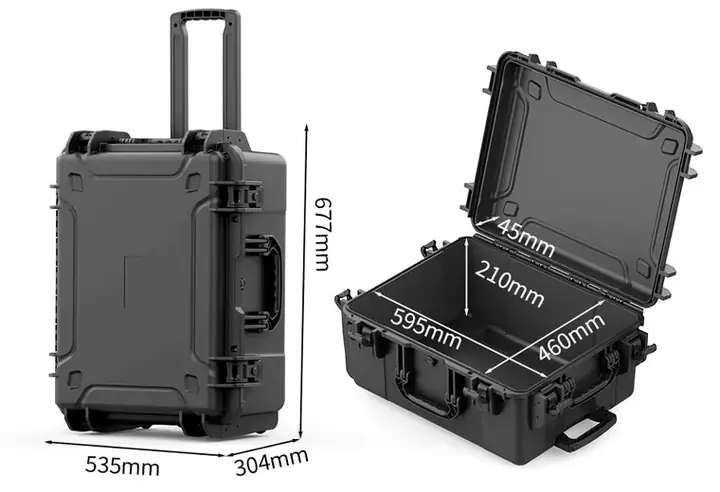
T Series Protective Case
External 677 × 535 × 304 mm
8 Series Protective Case
External 1356 × 154 × 408 mm
Questions in this sector
What is the difference between a military case and a defence support case?
A military case is normally issued with a system and stays with it. A defence support case carries shared equipment that moves between systems and users, so its interior has to be reconfigurable and its contents verifiable.
Can defence cases be OEM customised?
Yes. Interior geometry, colour, hardware, identification and sealing are configurable on an existing shell; a new exterior geometry requires a mould.