Protective Cases for Test and Measurement Instruments
Instrument buyers do not shop by case model. They shop by the instrument: what fits it, what keeps it calibrated in transit, and what a factory can prove. This page is written from our published model data (115 instrument-category shells, 45 optical-category shells) and states plainly what we have not measured.
Instrument buyers do not shop by case model. They shop by the instrument: what fits it, what keeps it calibrated in transit, and what a factory can prove. This page is written from our published model data (115 instrument-category shells, 45 optical-category shells) and states plainly what we have not measured.
What we actually stock for instruments
Sizes below are internal (usable) dimensions measured on the finished shell, taken from the 115 models in our instrument category and the 45 in the optical category. Median values are given because most instrument buyers land between the extremes rather than at them.
Shell material across these models is polypropylene, engineering-grade polypropylene or ABS; published wall thickness runs 2.1-5.8 mm on instrument shells and 3.3-6.0 mm on the heavier optical shells, which is what usually decides whether a case survives a loaded pallet stack rather than whether it survives a drop.
| Need | What We Publish | Why |
|---|---|---|
| Hand-held meters and small instruments | Internal length 240-408 mm x width 170-296 mm x depth 60-155 mm | Roughly the median instrument shell (395 x 296 x 155 mm internal), 5-15 L usable volume |
| Bench-portable analysers and power quality analysers | Internal length 395-880 mm, depth 155-275 mm | Larger instrument shells reach 35.2 L usable volume and 1.63-7.8 kg empty weight |
| Total stations, laser distance meters, surveying instruments | Optical category: internal 395-1280 x 257-545 x 140-364 mm, 25.6-111.6 L | 17 of 45 optical models carry wheels and a telescopic handle for survey tripods |
| Laboratory analytical instruments in routine freight | Rolling models: internal 437-740 x 296-545 x 164-364 mm, wall 4.2-6.0 mm | Thicker walls and 17.7-111.6 L volume, 19 of 19 with wheels and pull handle |
What buyers search for in this sector, answered directly
Each line is a search phrase instrument buyers use. The right-hand column is what our factory does about it, not a marketing restatement.
| Need | What We Publish |
|---|---|
| Precision Instrument Transport Case / Precision Equipment Transport Case | Foam layout engineered to the instrument, not sold as a generic box |
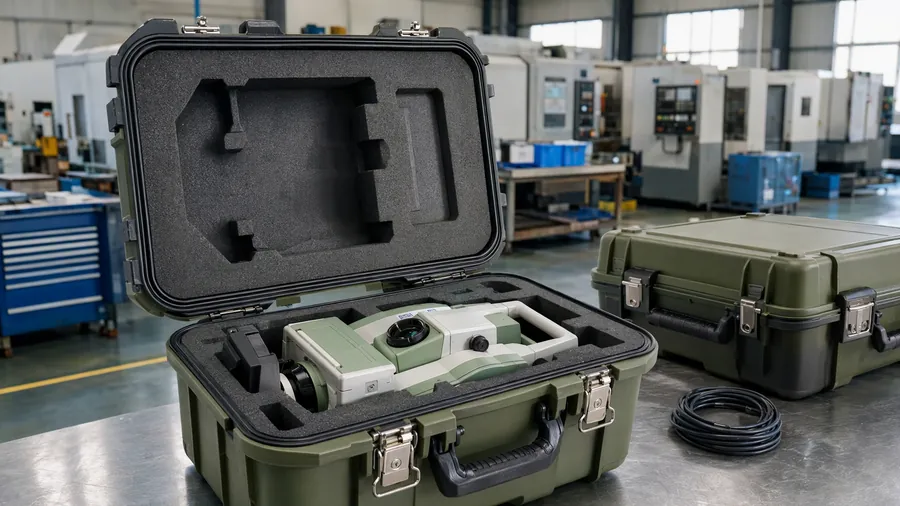
| Surveying Instrument Transport Case | Optical shells with 140-364 mm internal depth to clear a total station on its base plate |
| Rail Transit Instrument Transport Case | Same shells, specified for trackside loads; stacking is published per model (107 of 115 instrument shells stack) |
| Power Quality Analyzer Case / Power inspection meter dustproof waterproof hard case | We publish the seal type available per model and, where a seal is fitted, describe it as fitted - not as a certified ingress rating |
| ESD anti-static plastic instrument case wholesale | Conductive or antistatic interior is a material option quoted per order; it is not a property we claim on stock shells without specifying it |
| Instrument box with automatic pressure relief valve | Valve is a hardware option on applicable models; ask and we show which SKUs offer it |
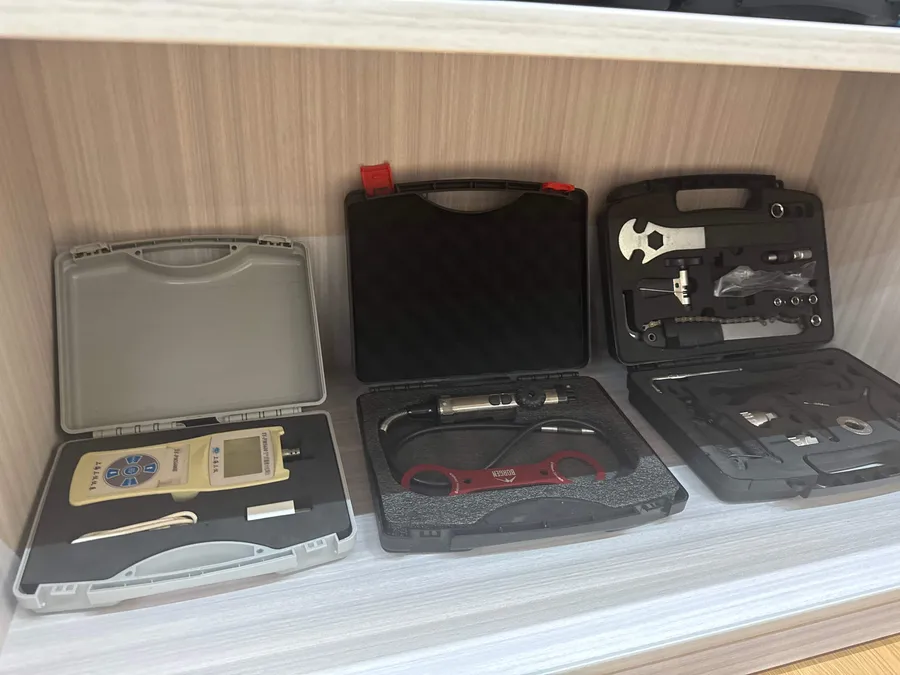
| EVA Lining Design for Instrument Cases / Custom-Cut Foam for Instrument Cases / Custom EVA foam lined precision instrument case | From 1 unit with your instrument dimensions; CAD or a sample both work |
| Adjustable Divider Instrument Case | Divider sets are an interior configuration quoted against the shell SKU |
| Lightweight Instrument Case Design | Published empty weights run 0.46-7.8 kg across instrument shells |
| Small precision instrument custom enclosure factory / Instrument plastic enclosure custom development / Custom ABS/PP plastic precision instrument box | 45 days on existing tooling, 125 days when a new mould is required |
| Electronic measuring instrument OEM/ODM protective box | OEM and ODM both run from the same 155-model database |
| Precision instrument briefcase fast delivery factory | Stock shells with custom foam ship in days; the 45/125 day figures are for customised programmes |
| Medical anti-static precision instrument case / Shockproof Design for Medical Instrument Cases / Surgical instrument sterilization storage box | Handled as instrument work with a medical buyer's documentation trail; we do not claim medical device certification for the case |
| Automotive Diagnostic Instrument Case / Automotive Battery Testing Instrument Case | Diagnostic shells sit in the same instrument family; see our automotive service sector page for the workshop-side configuration |
| Portable testing meter safety case manufacturer | We are the moulding factory, not a reseller |
| What Information Is Needed for an Instrument Case Quote | Instrument outline drawing or sample, target orientation, payload per case, annual quantity, destination port |
| Laboratory analytical instrument portable safety box | Sized on the instrument plus its reagent trays; 5.0-35.2 L usable volume is published per shell |
| Portable spectrum analyzer sealed safety case | Instrument shell with the seal option fitted and described as fitted, plus a cut interior that carries the analyzer body and its calibration source separately |
| Custom precision electronic instrument protective box | Same instrument shells with a machined interior; wall thickness 2.1-5.8 mm is published so you can judge stacking before you order |
| Survey Drone Equipment Case | Drone category (internal 350-650 x 280-545 x 150-305 mm) or optical shells when the payload and GNSS base travel together |
| Aviation Instrument Transport Case | Instrument or optical shell specified by the packed outline of the unit; 17 of 45 optical models publish wheels and a pull handle for ramp handling |
| Automotive Testing Case Supplier | We mould the shells ourselves; for vehicle work see the automotive service sector page, same shell families |
| Custom Automotive Diagnostic Instrument Case | Interior cradle for the diagnostic head plus a separate bay for the VCI, leads and charger, cut from your kit list |
| Industrial laser marking machine accessories box | Filed as instrument work: optics, f lenses and small spares partitioned so metal does not travel against metal |
| Musical instrument pedal & audio briefcase | Stomp boxes and audio interfaces pack in the electronics family with a machined pedal row and a power-supply bay; we do not claim acoustic properties |
| Outdoor marine instrument waterproof sealed case | Salt spray is a material and hardware question: same instrument shells with the seal option fitted, stainless hardware and a drained lid detail, described per model rather than as a rating |
How instrument cases are actually engineered here
An instrument case is a suspension problem before it is a box problem. The interior carries the load into the shell walls across the largest practical area, so a shell that is thin in the corner rib will fail there even if the lid looks heavy. That is why we quote interiors against a specific instrument rather than shipping generic pluck foam, and why published wall thickness (2.1-5.8 mm on instrument shells) is one of the first things we will tell you.
- Base and lid depth are published separately per model, so you can see where the instrument sits and where the probe set goes
- Foam density and cut method are specified per order: die-cut convoluted, CNC-cut block or EVA lining with a machined skin
- Stacking is a per-model published property, not a general promise
- Cable and accessory volume is called out so a case is not sized to the instrument alone
What we do not claim about these cases
In our product database the ingress-protection, shock-protection and drop-test fields are recorded as not measured for these models. We are not going to write an IP code, a military shock specification or a drop-test claim on this page, because we cannot hand you a report for the stock shell.
If your tender requires a specific rating, send the clause. We will tell you plainly which shells we believe can meet it, quote accredited third-party testing against your configuration as a separate work package, and let the report - not this website - make the claim.
Buying from the factory: terms, MOQ and lead time
We supply wholesale and OEM/ODM only: EXW or FOB Guangdong, no retail, no DDP, no overseas warehouse. Payment is 30% deposit with the balance after inspection, before container loading. Third-party factory inspection and on-site audits are welcome.
- Stock shell plus custom foam: from 1 unit
- Custom colour or logo: 300 units per SKU
- OEM on existing tooling: 45 days
- New mould development: 125 days, 3,000 units per component
- Contact: Fred Zhao, KeXin Sales Team, WhatsApp +86 135 3588 0002
Laboratory and custom-colour instrument case searches, answered with published model data
Each first-column line below is a phrase buyers actually type when they are sourcing an instrument case. The right-hand column is what our published model data (site product database, 155 models, of which 115 sit in the instrument category) says about it, or a plain statement that we have not measured the thing being asked about. It is not a restatement of the search phrase.
Dimensions quoted here are internal (usable) dimensions measured on the finished shell, so a cavity figure already accounts for wall thickness; the corresponding external shipping footprint is published separately per model where it exists.
| Search | What We Publish |
|---|---|
| laboratory instrument case | The instrument category is 115 published models: internal length 240-880 mm, internal width 170-408 mm, internal depth 60-275 mm, median usable interior 15.0 L. Twenty of the 115 offer 200 mm or more of internal depth, which is what a bench analyser with raised optics, a stirrer plate or reagent trays usually needs. Ninety-six of the 115 publish an available compressible-gasket seal in a continuous moulded channel. For instruments that move between rooms or go out on freight, the rolling subset is 19 models at internal 437-740 x 296-545 x 164-364 mm, wall thickness 4.2-6.0 mm, 17.7-111.6 L usable volume and 4.91-15.32 kg empty, all 19 fitted with wheels and a telescopic handle. Vibration tolerance, temperature range and humidity behaviour are recorded as not measured, so we size the cavity and quote the interior instead of quoting an environmental rating. |
| custom color instrument cases | Colour is published as an option on all 155 models in the database, including every one of the 115 instrument shells, with a minimum of 300 units per SKU for a custom colour and 300 units per SKU for a logo. A stock shell with a custom-cut interior starts at 1 unit, so colour is the step where a programme stops being sample-sized. OEM work on existing tooling quotes at 45 days and a new mould at 125 days with 3,000 units per component, which is also the practical point at which colour-in-resin versus a finishing coat is decided. We match a colour reference you supply (a RAL code, a Pantone chip or a physical master sample) rather than a paint name. Colour fastness, UV resistance and outdoor fade are recorded as not measured: we publish no fade or colour-retention figure, and where a specification needs one we quote accredited laboratory testing on the exact shell and finish as a separate work package. |
| pp vs abs for instrument cases | Both thermoplastics are in the same published database, so this is arithmetic rather than opinion. Of the 115 instrument shells, 62 are polypropylene, 35 are engineering-grade polypropylene and 17 are ABS. Polypropylene: wall 2.2-5.0 mm, net weight 460 g to 7.8 kg, usable interior 5.0-35.2 L, internal length up to 880 mm, 57 of 62 stackable, 5 of 62 on wheels, seal published on 54 of 62. Engineering PP: wall 2.1-5.8 mm, 630-6,110 g, 5.2-30.9 L, 32 of 35 stackable, seal on 25 of 35. ABS: wall 3.5-5.3 mm, 1,300-4,860 g, 6.5-29.7 L, internal length 300-507 mm, all 17 stackable, none of the 17 with wheels, seal published on 17 of 17. A worked example: KX 6-5522 in ABS gives internal 507 x 385 x 190 mm, 5.3 mm wall, 4.86 kg empty, 29.7 L; KX 8-5827 in PP gives internal 500 x 400 x 220 mm, 5.0 mm wall, 7.8 kg, 35.2 L. ABS shells in this category stop at 507 mm internal length and stay hand-carried, while the PP family reaches 880 mm and carries the trolley builds. Neither material carries an impact rating in our data: shock and impact resistance are recorded as a build option that depends on the specified foam layout, with wall thickness published and no drop height claimed without a test. |
| custom instrument case manufacturing process | The published inputs are a drawing of the instrument, a photograph of the packed kit, or the instrument itself sent to us; all three are listed as acceptable for interior design. Four routes then apply, each with a published number: stock shell plus custom-cut foam from 1 unit; colour or logo on a stock shell at 300 units per SKU; OEM or ODM on existing tooling at 45 days; new mould development at 125 days with 3,000 units per component. Interiors are die-cut, CNC-cut, or EVA-lined from your kit list, and lid depth and base depth are specified separately so the instrument sits in the base while probes, leads and chargers go in the lid. Tooling and interior drawings are approved before cutting, first articles are inspected before the production run, and terms are 30 percent deposit with the balance paid after inspection and before container loading, EXW or FOB Guangdong. Third-party factory inspection and on-site audits are welcome. |
| instrument case interior and hardware options | Foam is published by type (Pick and Pluck, die-cut, CNC-cut, EVA, PE, EPE) and by structure (top foam, base foam, egg-crate or convoluted, custom cut, layered), with custom thickness and custom shape both available from 1 unit on a stock shell. Hardware is published per model: hinges, feet and a latch body that accepts a standard padlock are recorded as measured features of the shell; latch count, shoulder strap and pressure-relief valve are specified per configuration. 8 of the 115 instrument shells publish wheels and 107 of the 115 publish a stackable configuration, which is the pair of flags that decides whether a case works on a loaded pallet or only on a shelf. |
| instrument case wholesale and export packing | Wholesale and OEM/ODM only: EXW or FOB Guangdong, no retail, no DDP, no overseas warehouse. 44 of the 115 instrument shells publish carton data, for example KX 3213 at 16 pieces per carton in a 645 x 530 x 520 mm carton and KX 3308 at 20 pieces per carton in 670 x 550 x 425 mm. Pallet quantity and container loading are recorded as not measured: pallet counts are calculated from the carton footprint against your pallet standard, and 20GP, 40GP and 40HQ figures are supplied with the quotation rather than asserted on the page. |
Polypropylene versus ABS for instrument shells, model by model
Buyers comparing these two materials usually want a rigidity claim we cannot hand them a report for. What we can hand them is the published geometry: wall thickness, cavity depth and empty mass decide how a shell behaves in a stack and how much energy the interior has to absorb, and those three figures are in the product data for every model.
| Search | What We Publish |
|---|---|
| Published wall thickness | Polypropylene 2.2-5.0 mm, engineering-grade polypropylene 2.1-5.8 mm and ABS 3.5-5.3 mm across the 115 instrument shells, published per model, which is the figure most often confused with a shock rating in a specification. |
| Cavity reach | Internal length runs to 880 mm in the PP family but stops at 507 mm in ABS, so long instrument builds are a PP decision in our catalogue. |
| Empty mass | 460 g to 7.8 kg for PP, 630-6,110 g for engineering PP and 1,300-4,860 g for ABS; the lightest instrument shells in the database are PP. |
| Stacking and mobility | 57 of 62 PP shells and 17 of 17 ABS shells publish stackable, while wheels appear on 5 PP and 3 engineering PP models and on none of the ABS shells. |
| Seal availability | A gasket seal is published on 54 of 62 PP, 25 of 35 engineering PP and 17 of 17 ABS instrument shells; the seal is described as fitted hardware, and no ingress-protection code is stated for any of them because none is measured. |
How to read published case data against a tender specification
A material datasheet and a whole-case test result are different documents, and most sourcing mistakes we see come from confusing them. A datasheet tells you what the polypropylene or ABS was before it became a shell; it says nothing about your lid, your latch positions, your gasket channel or your foam layout. If a specification clause matters, ask any supplier - including us - for the report on the finished case in the configuration you are buying, with the test method number, the laboratory name and the sample size stated on it.
Second, separate the three mechanisms that protect an instrument: the shell carries stack load and handling abuse, the gasket manages dust and splash, and the interior manages the shock that actually reaches the optics or the calibration. A case that is thin in the corner rib fails in a stack even if the lid looks heavy; a thick shell with generic pluck foam still transmits the peak into the instrument. That is why we quote interiors against a specific instrument and publish wall thickness, lid depth and base depth per model rather than one blanket performance sentence.
Third, ask what the supplier publishes about what they have not tested. Our product data records waterproof, dust resistance, UV resistance, temperature range, stack load in kilograms, payload capacity and any ingress-protection rating as not measured, and records shock and impact as configuration-dependent. A page that lists every rating as achieved without naming a report is the page to be careful with.
What this page does not claim about instrument cases
- No ingress-protection code is printed on this page: that field is recorded as not measured in the published model data, and accredited testing is quoted per configuration as a separate work package.
- No military or aerospace standard is claimed, and no shock specification is stated for the stock shell; shock and impact resistance are published as a build option that depends on the specified interior.
- No drop height is claimed, because we hold no drop-test report on these shells; wall thickness is published instead so you can judge stacking yourself.
- No float, submersion or pressure-equals-waterproof statement is made; a gasket is fitted hardware, not an ingress result.
- No customer name, order volume, ranking, market share or expert opinion appears in this append; the only numbers here are our own published model, MOQ and lead-time data.
- ESD, antimicrobial or cleanroom behaviour is not asserted on any shell; conductive or antistatic interiors are a material option quoted per order.
- Pallet quantity and container counts are recorded as not measured and are calculated from the published carton footprint with your quotation.
Sourcing checklist for laboratory and instrument case buyers
Send these six items and a stock-shell recommendation, an interior design, MOQ, lead time and price terms come back in one reply. The same list is what you should expect any competent case factory to answer, so it doubles as a supplier screen.
- Instrument outline drawing or a sample, plus how it must travel: packed flat, on its base plate, or with probes and cables attached
- Instruments per case and payload per case, so cavity and interior are designed against a real mass rather than a nominal litre figure
- Whether the case is hand-carried, rack-stacked or air-freighted, which selects between the 115 instrument shells and the 19 rolling models
- Annual quantity and target start-up quantity, because 1 unit, 300 units per SKU and 3,000 units per component are three different programmes
- Any specification clause you must satisfy, quoted verbatim, so we can say plainly whether we have measured it and what accredited testing would cost
- Destination port and Incoterm preference, noting we trade EXW or FOB only
Cases used in this sector
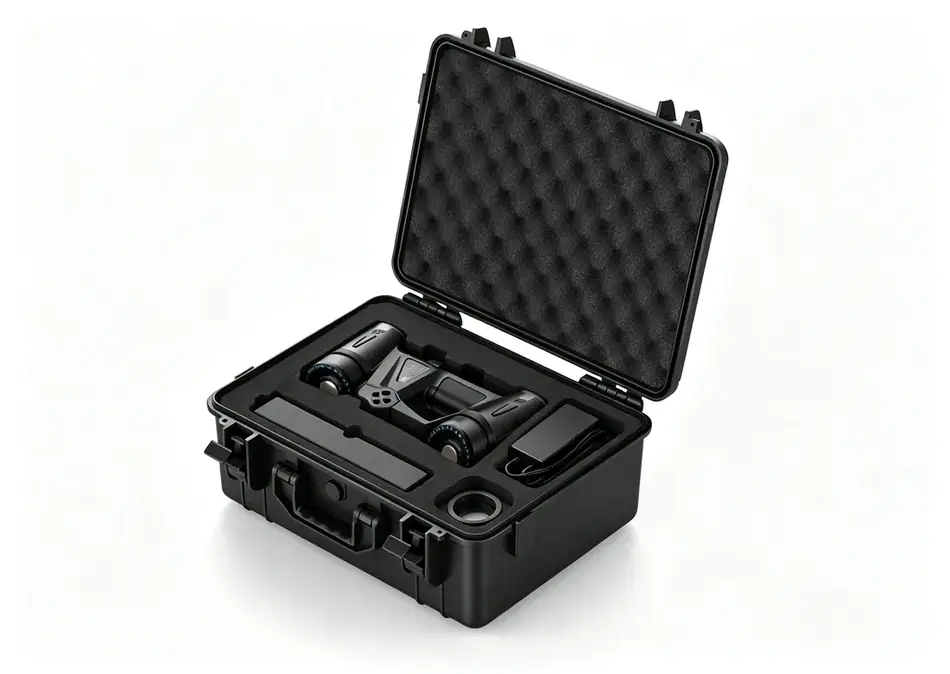


Shells that fit Test & Measurement Instruments work
Ranked by internal volume.
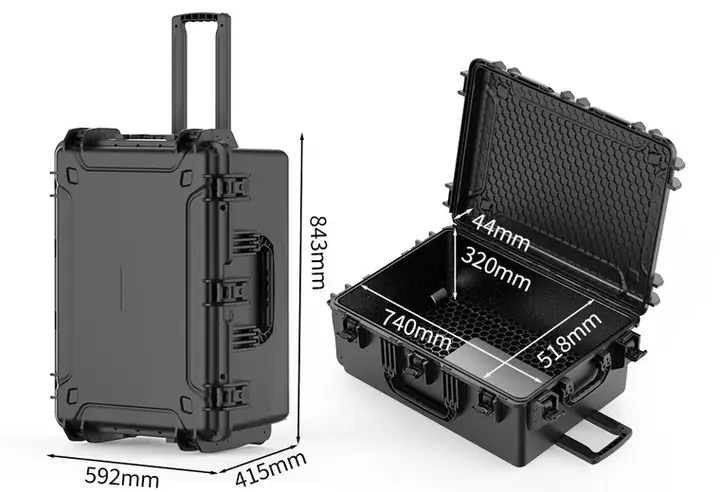
T Series Protective Case
External 843 × 592 × 415 mm
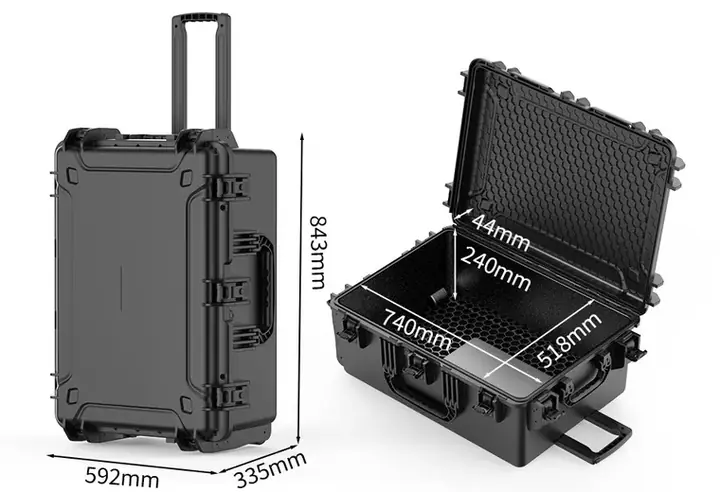
T Series Protective Case
External 843 × 592 × 335 mm
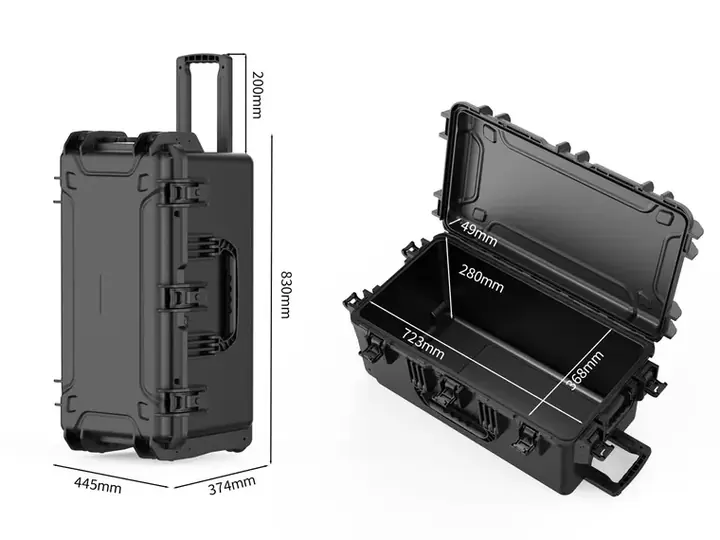
T Series Protective Case
External 830 × 445 × 374 mm
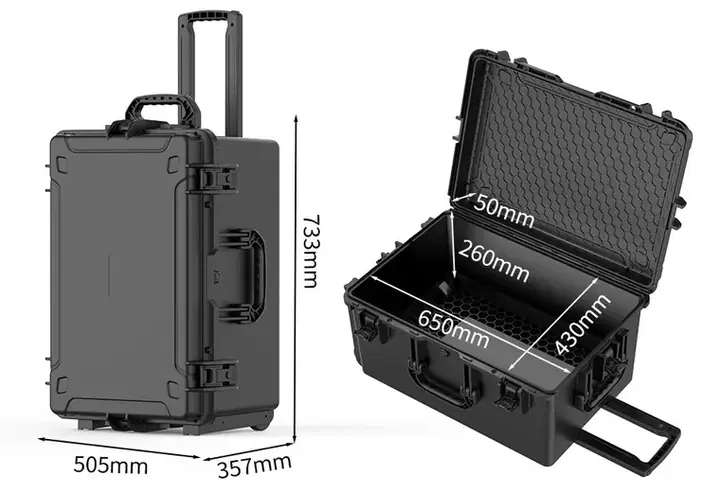
T Series Protective Case
External 733 × 505 × 357 mm
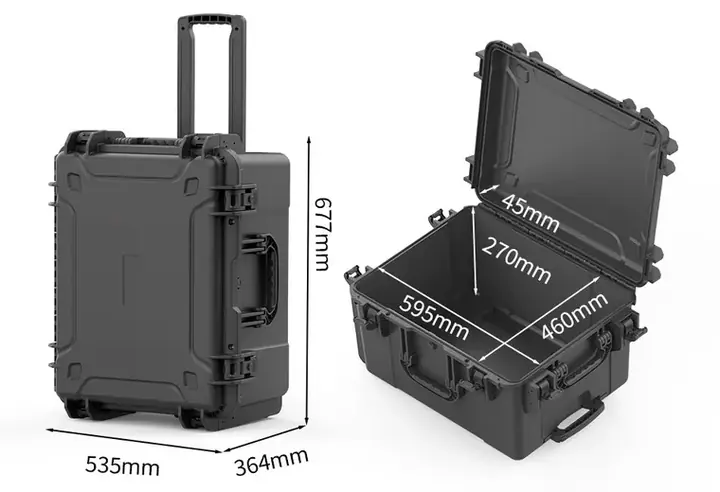
T Series Protective Case
External 677 × 535 × 364 mm
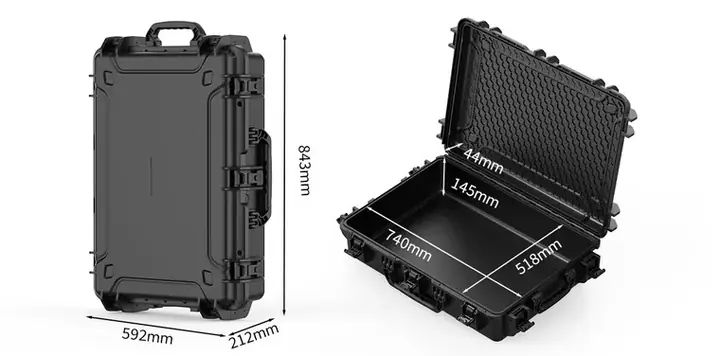
8 Series Protective Case
External 843 × 592 × 212 mm
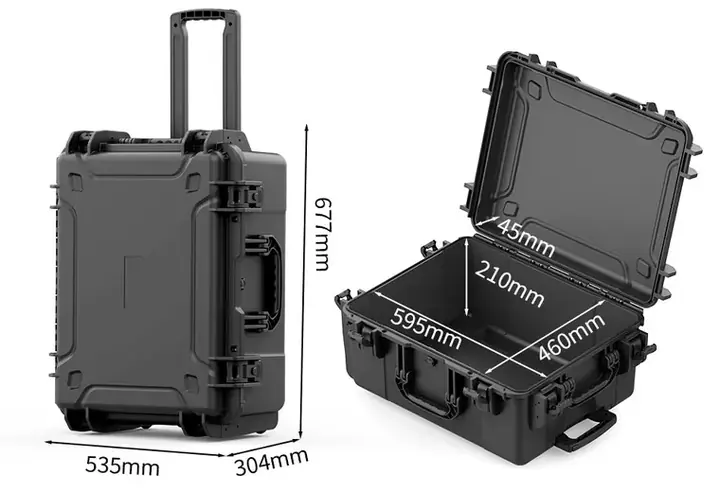
T Series Protective Case
External 677 × 535 × 304 mm
8 Series Protective Case
External 1356 × 154 × 408 mm
Questions in this sector
Do you certify an ingress rating or a military shock specification for these cases?
No, and we will not print one we cannot prove. Those fields are recorded as not measured in our published product data. If a rating matters to your project, we quote accredited third-party testing against the specific shell and interior you buy, and the laboratory report is the document that speaks.
Can you make a case for an instrument you do not list?
Yes. Send an outline drawing with dimensions and weight, or ship us the instrument. interiors are engineered to the payload; from one unit on a stock shell, or as an OEM programme if the geometry needs its own mould.
What information do you need for an instrument case quotation?
Instrument dimensions and mass, how it must be carried (packed flat, on a base plate, with probes and cables), the number of instruments per case, whether it will be air-freighted or sea-freighted, your annual quantity, and your destination port. With those you get shell recommendation, interior design, MOQ, lead time and price terms in one reply.
Do you supply instrument cases wholesale?
Yes - wholesale and private label for distributors, equipment brands and instrument makers. Terms are EXW or FOB, 30 percent deposit, balance after inspection. Custom colour and logo start at 300 units per SKU.
Which shell should I choose for a total station or survey instrument?
Start with the optical category: internal lengths from 395 to 1280 mm with 140-364 mm depth, wall thickness 3.3-6.0 mm, and 17 of the 45 models with wheels and a telescopic handle. Whether your instrument fits is decided by its dimensions on its base plate, so send those.
Can you supply a laboratory instrument case to a specification that names an ingress-protection code?
We can supply the shell and interior, and we can tell you plainly that the ingress field is recorded as not measured in our published data, so no code is printed here. Send the clause. We will say which of the 115 instrument shells we believe can meet it with the seal option fitted, quote accredited third-party testing on that exact configuration as a separate work package, and let the laboratory report - not this page - make the claim.
Is polypropylene or ABS the better choice for an instrument case?
In our catalogue it is decided by geometry, not by a material preference. ABS instrument shells publish a narrower, more rigid envelope: wall 3.5-5.3 mm, internal length 300-507 mm, 1,300-4,860 g, all 17 stackable and none on wheels. The polypropylene family reaches internal lengths up to 880 mm, wall 2.2-5.0 mm, from 460 g to 7.8 kg, and carries the 5 wheeled builds. If the instrument is bench-sized and hand-carried, ABS is usually the neater fit; if it travels on a trolley or needs deep cavities, the PP family is where the published models are.
What does a custom colour instrument case programme cost in time and volume?
Colour and logo both publish a minimum of 300 units per SKU. On existing tooling, OEM or ODM quotes at 45 days; a new mould is 125 days with 3,000 units per component. A stock shell with a custom-cut interior starts at 1 unit, so prototype and pilot quantities do not need colour tooling at all. Terms are a 30 percent deposit with the balance after inspection before container loading, EXW or FOB. We do not publish a colour-fastness figure: UV resistance and fade are recorded as not measured.
Which shells suit bench instruments that must stay protected in routine freight?
Start with the 19 rolling models in the instrument family: internal 437-740 x 296-545 x 164-364 mm, wall thickness 4.2-6.0 mm, usable interior 17.7-111.6 L, empty mass 4.91-15.32 kg, every one with wheels and a telescopic handle. If the instrument is bench-portable rather than rack-mounted, the smaller instrument shells at 5.0-15.0 L usable volume are the usual fit. In both cases the protection that reaches the instrument comes from the interior layout, so send the packed outline and we will propose cavity, lid depth and foam density against it.