Defense Equipment Cases
Protective cases for defence electronics, communication systems, optical and measurement equipment. Published internal dimensions, custom foam interiors, OEM options.
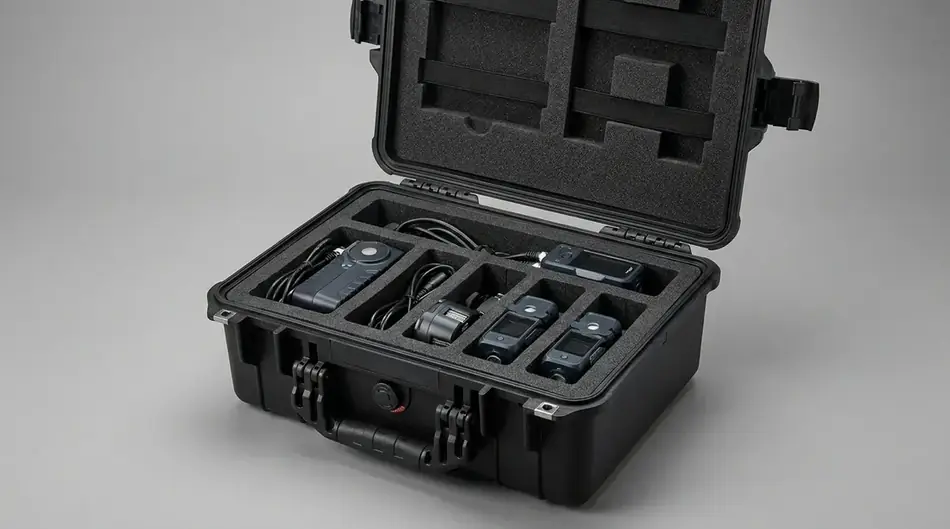
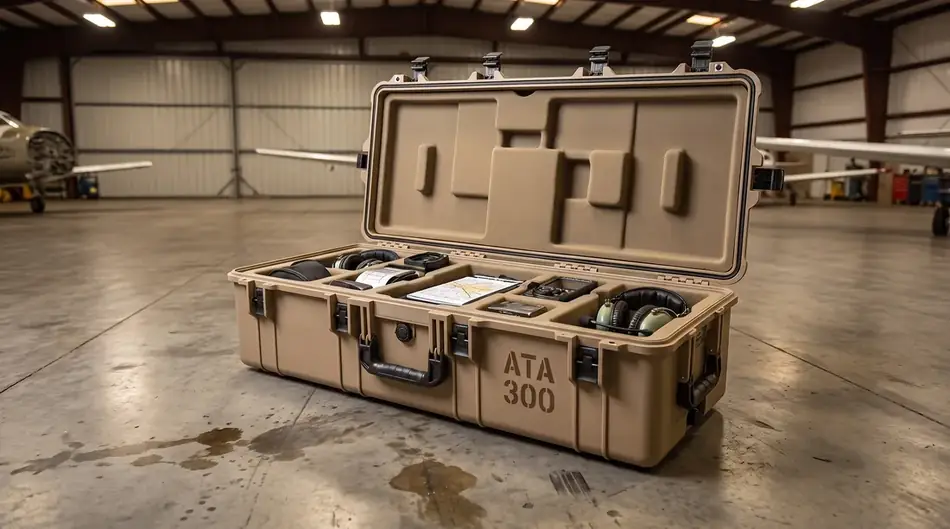
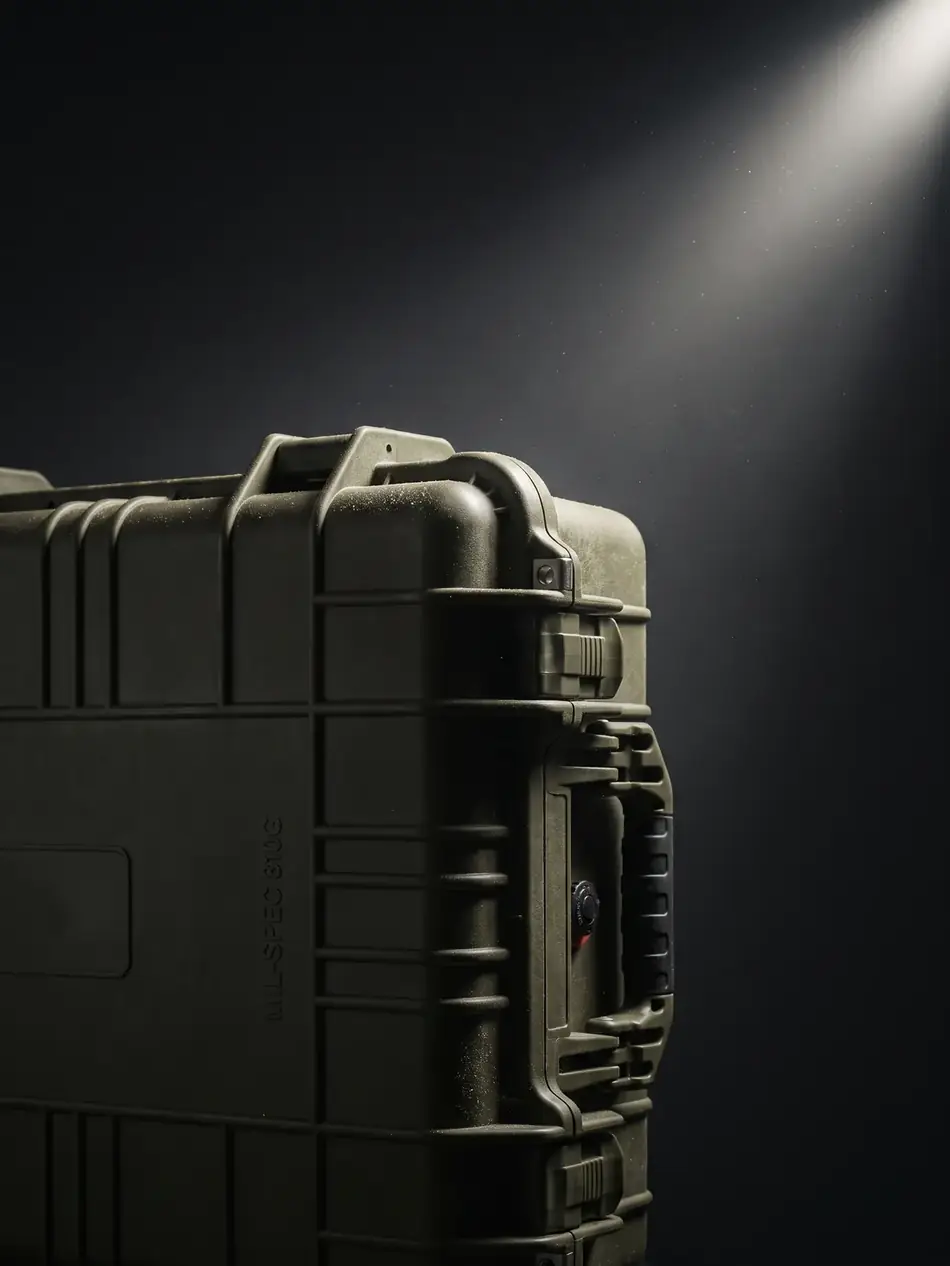
A defence equipment case is a protective transport and storage container specified for the equipment support cycle rather than for a single weapon system: it must protect electronics and optics in transit, allow a technician to verify contents at a glance, and survive repeated international movement. KeXin supplies these as standard shells with engineered foam interiors, or as fully bespoke OEM cases.
Key points
- Sixty-three standard models carry an internal volume of 15 L or more, sized for systems rather than accessories.
- Foam is specified in layers: a plucked or CNC top for the unit, a base layer for mass, and a loose layer for accessories.
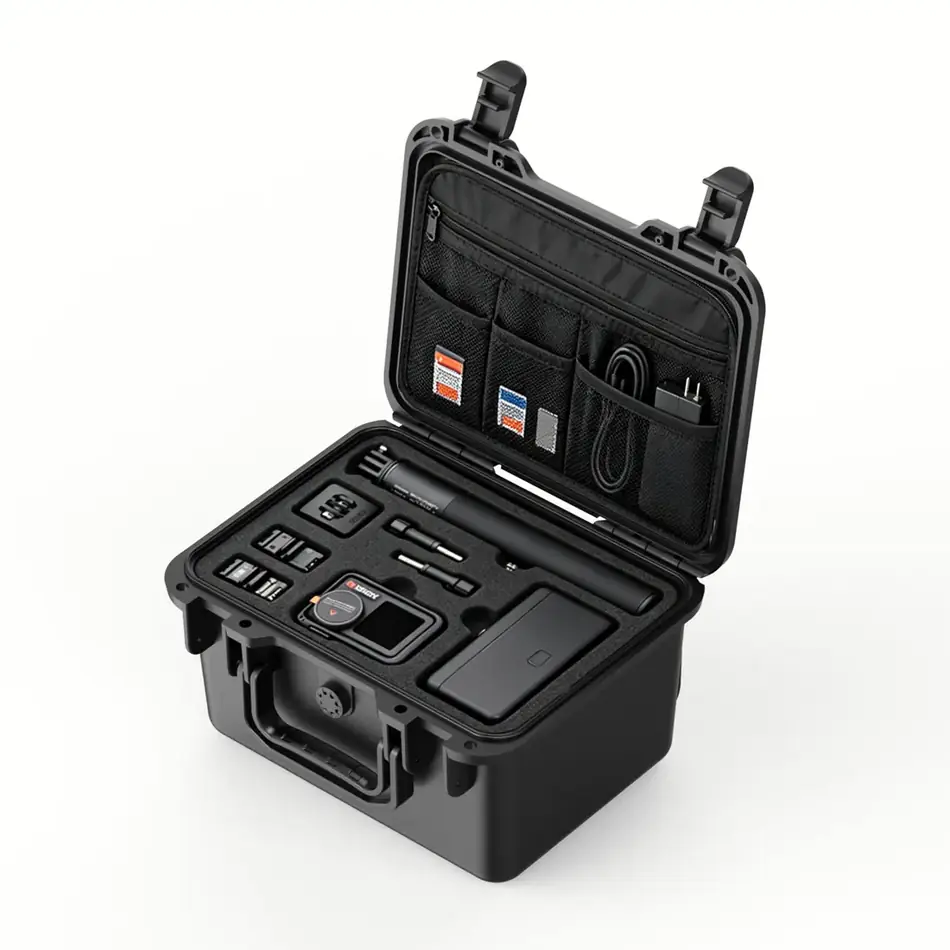
- Cable and accessory storage is planned inside the same lid depth, so a kit can be audited without opening compartments.
- Document pockets on the lid are an option for checklists, serial records and transport paperwork.
Specifying around the equipment lifecycle
Defence buyers rarely purchase one case. They purchase a configuration that has to work at the depot, on a convoy, in an aircraft hold and in a field tent. That means the case is specified against the whole movement chain: the internal dimensions that fit the equipment plus its cabling, the external dimensions that fit the pallet and the vehicle, and the weight that a single handler can lift when the case is fully loaded.
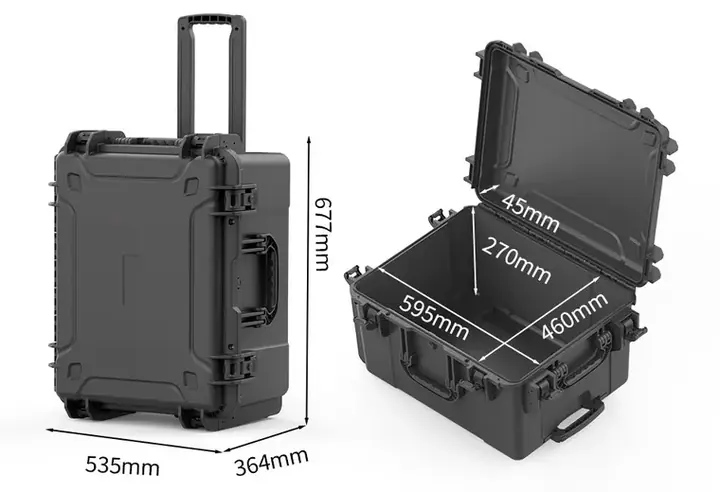
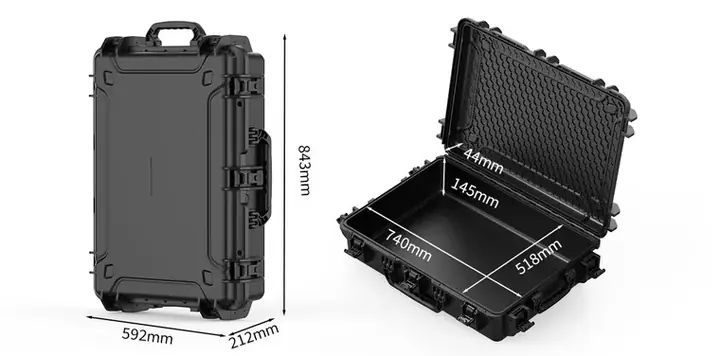
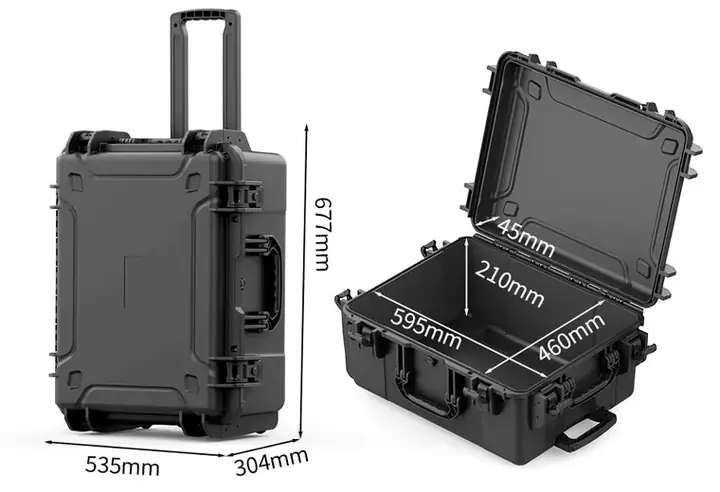
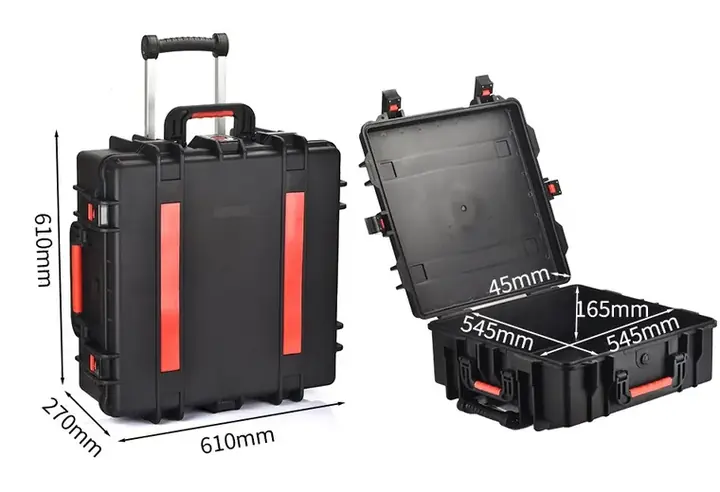
We publish external and internal dimensions separately for every model, because the two are routinely confused in enquiries and the difference is where a container load plan fails.
Electronics, optics and communications
Electronic assemblies are protected by limiting acceleration, not by limiting contact. The foam must be thick enough to stop the equipment bottoming out, dense enough not to creep under sustained load, and cut so that the load is carried by the chassis rather than by a connector or an antenna. For optics and measurement heads we normally recommend a two-layer base with a firmer EPS or cross-linked PE carrier under a softer PE contact layer.
- Communication systems — radios, handsets, batteries, masts, feed cables, spare antenna sets
- Optical and measurement systems — scopes, rangefinders, thermal and night-vision units, survey instruments
- Electronic support equipment — power supplies, distribution units, test sets, programming kits
- Field infrastructure — cabling reels, connectors, spares kits, tool sets
In this family
Sorted by internal volume. Each card leads with the measured internal envelope, because that is the number you size on.
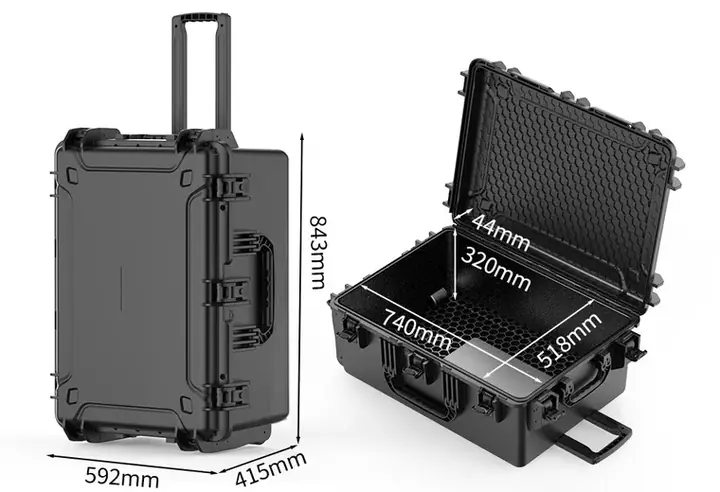
T Series Protective Case
External 843 × 592 × 415 mm
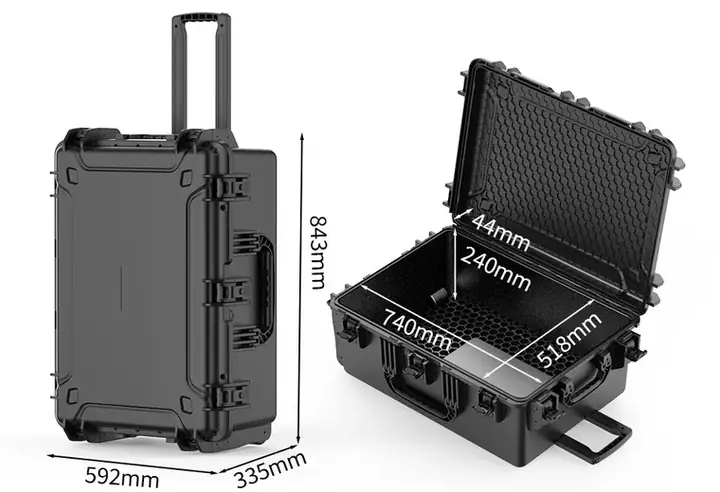
T Series Protective Case
External 843 × 592 × 335 mm
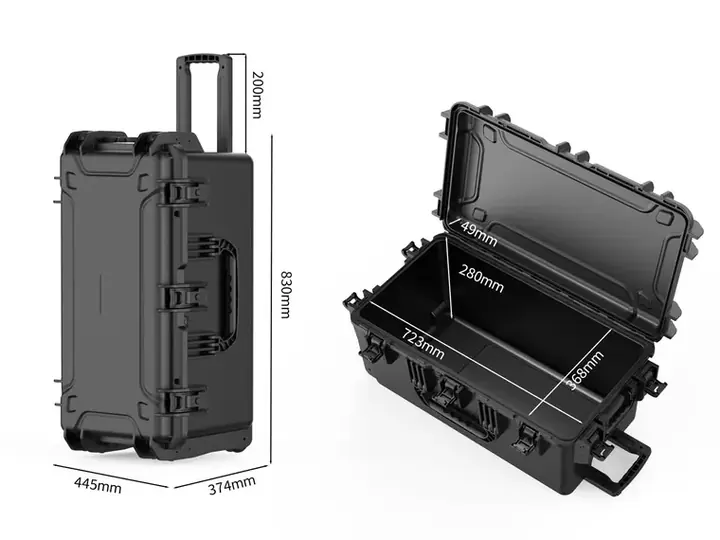
T Series Protective Case
External 830 × 445 × 374 mm
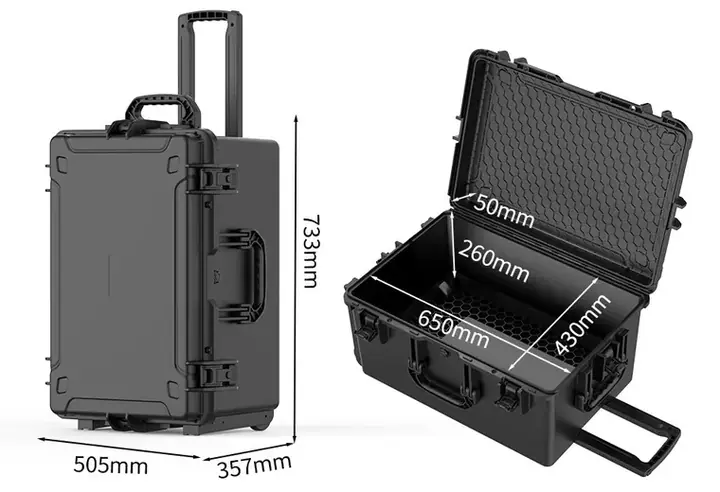
T Series Protective Case
External 733 × 505 × 357 mm
T Series Protective Case
External 677 × 535 × 364 mm
8 Series Protective Case
External 843 × 592 × 212 mm
T Series Protective Case
External 677 × 535 × 304 mm
8 Series Protective Case
External 1356 × 154 × 408 mm
T Series Protective Case
External 610 × 610 × 270 mm
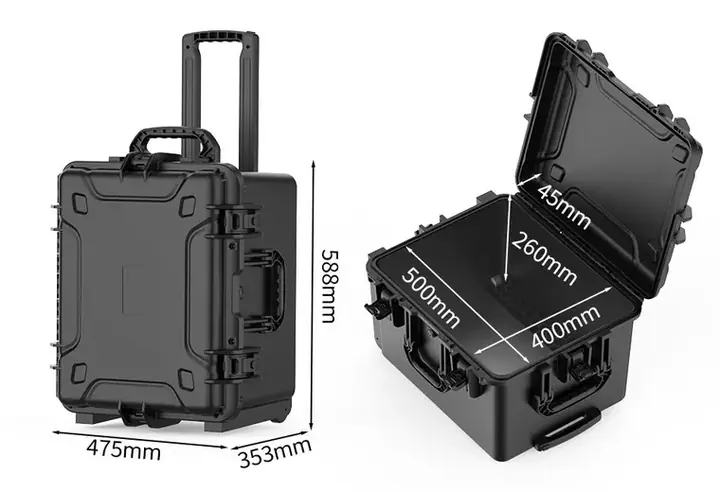
T Series Protective Case
External 588 × 475 × 353 mm
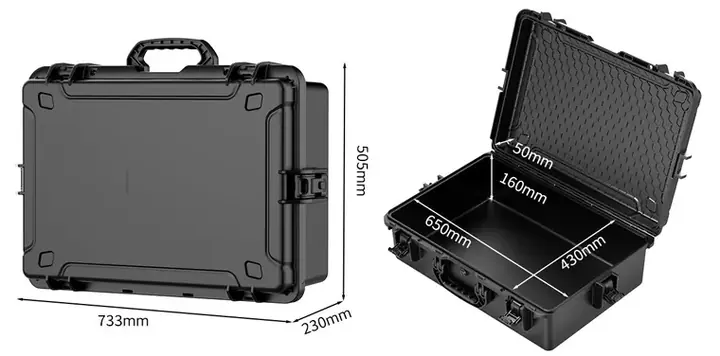
8 Series Protective Case
External 733 × 505 × 230 mm
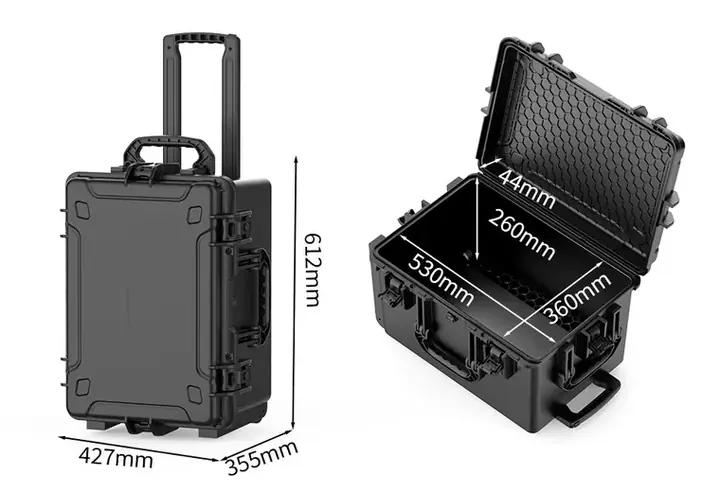
T Series Protective Case
External 612 × 427 × 355 mm
See all 45 Defense Equipment Cases models in the filterable database →
In this family: 5 sub-classifications
The family is not a flat list. Buyers come to us with a sub-type in mind, so each one below is a real filter over the same product database rather than a separate marketing page.
How to specify this family
Free-drop height
With a 50 mm base foam layer, a 15 kg assembly sees a markedly lower peak deceleration than with 20 mm. Where the case is handled by hand off a vehicle, we specify the deeper base.
Stacking
A case that will be shipped stacked needs a wall thickness and rim geometry that carries the load through the shell, not through the lid.
Questions on Defense Equipment Cases
What is a defence equipment protective case?
A reusable hard-shell case specified to protect military and defence support equipment — electronics, communications, optics, measurement instruments, tools and field stores — through storage, inland transport, air and sea movement and field handling.
Why is equipment protection important during transportation?
Most damage in a logistics chain happens during handling, not during line-haul. Loads are dropped, cases are dragged, and stacked pallets impose compression on the lower boxes. A protective case converts those events into forces the shell and foam can absorb without passing them to the equipment.
How should sensitive defence equipment be packed?
Support the mass on a firm base layer, isolate the unit from the shell walls with a softer contact layer, keep connectors and protrusions unloaded, separate accessories into their own pockets, and leave enough clearance that the lid closes without compressing the contents.
Can defence equipment cases be customised?
Yes. Interior geometry, foam density and thickness, colour, latching, locking, identification, cable routing and document storage are all configurable on an existing shell. A new exterior geometry requires a mould.
What case sizes are available?
Internal lengths from 115 mm to 1,280 mm, internal volumes from 0.3 L to 139 L, across 155 standard models. Filter the product database by internal length, width and height to see the models that fit your equipment.