Logistics & Packing Guide
Internal versus external dimensions, pallet fit, carton data and container loading.
67 published in this cluster
Internal Versus External Dimensions
Internal dimensions decide whether the equipment fits. External dimensions decide whether the case fits a pallet, a rack, a vehicle or an airline limi…
How To Measure Equipment For A Case
Measure the equipment as it will actually be packed, not as it is on the bench. Record the maximum extent in each of the three axes including anything…
Container Loading For Protective Cases
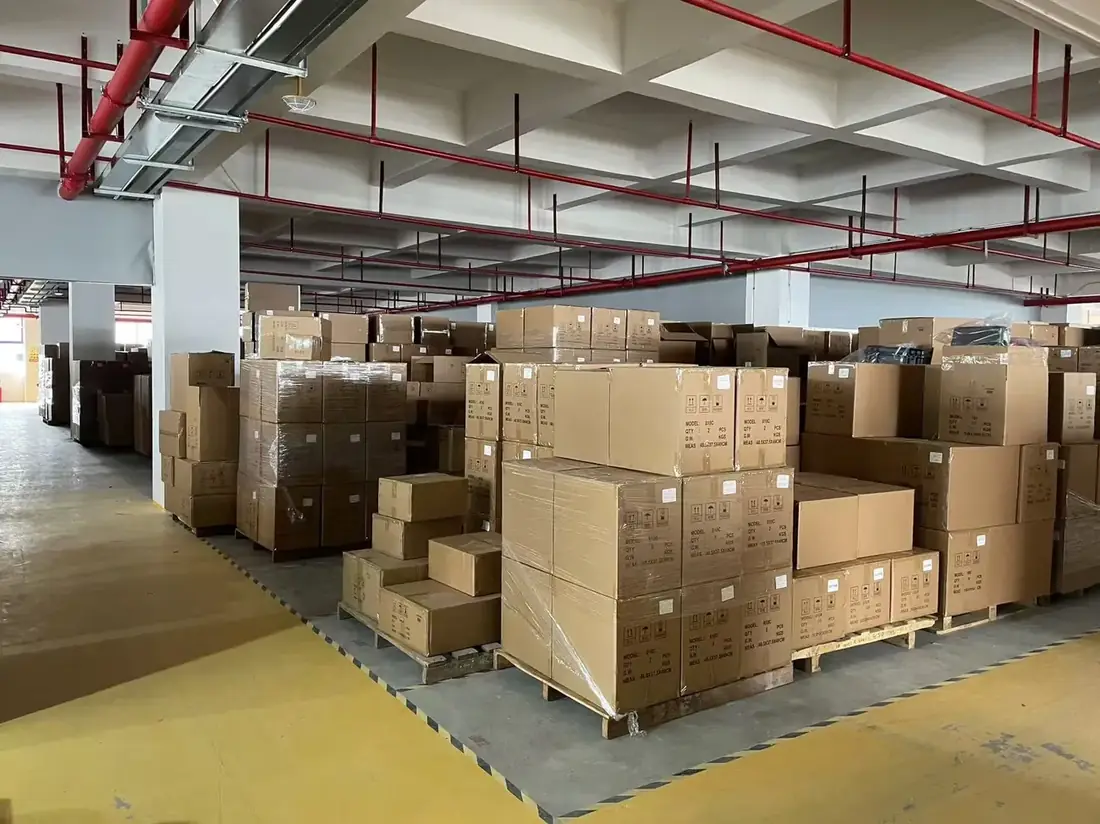
Work from the carton, not the case. Take carton length, width and height and pieces per carton, build a pallet footprint that divides into 1,200 x 1,0…
How To Read A Protective Case Datasheet
A protective case datasheet has four groups of numbers: the envelope (internal and external dimensions, narrow internal width, lid and base depth spli…
Stacking and Palletising Protective Cases
A stack is safe when the load travels through the shell walls and the stacking rims rather than through the lid panel. That depends on rim geometry, w…
How can protective cases improve equipment organization?
A protective case improves organisation at two levels: the tidy interior it gives one load, and the orderly system it creates across a whole fleet. In…
What Factors Affect Shipping Costs for Protective Cases?
The price of moving a batch of protective cases is not driven by the case itself but by what the carrier is willing to bill for, and that usually redu…
How Can Case Size Affect Logistics Efficiency?
Case size affects logistics efficiency because every step in a supply chain measures the outside of the box, not the equipment inside it. A larger ext…
How Should Equipment Cases Be Palletized? A Carton-First Method
Palletize equipment cases from the outside in: take the carton footprint and the pieces-per-carton figure for every model on the order, lay a grid on …
What factors affect protective case selection for logistics?
For logistics, protective case selection is decided by a different set of factors than bench protection: the case is a unit load first and a shell sec…
How Do Buyers Compare Protective Case Dimensions Across Suppliers? A Field-by-Field Method
Buyers compare protective case dimensions by putting the same seven fields from every supplier onto one sheet before comparing any price: external dim…
How do buyers compare case weight across protective case suppliers?
Compare case weight only after you have agreed what the number is. A supplier figure may be the empty shell, the shell with its foam, the shell with a…
How Do Buyers Compare Case Handles Across Protective Case Suppliers? A Field-by-Field Method
Buyers compare case handles by counting the fields a supplier actually publishes, not by looking at handle photographs: how many listings state a hand…
How Do Buyers Compare Case Seals Across Protective Case Suppliers? A Field-by-Field Method
Buyers compare case seals by counting the fields a supplier actually states for the model being quoted, then by testing the closure that compresses th…
How Do Buyers Compare Case Gaskets Across Protective Case Suppliers? The Bead, The Channel, The Closure
Buyers compare case gaskets by separating the one fact a datasheet actually states from the many facts it never does. On our own file of 155 published…
How Do Buyers Compare Case Hinges Across Protective Case Suppliers? A Field-by-Field Method
Buyers compare case hinges by counting the fields a supplier actually states per model, then by asking the two geometry questions a hinge lives or die…
How Do Buyers Compare Case Latches Across Protective Case Suppliers? A Closure-Geometry Method
Buyers compare case latches by separating the one closure fact every supplier states from the facts that decide whether the lid actually closes evenly…
How Do Buyers Compare Case Load Capacity Across Protective Case Suppliers? A Field-by-Field Audit
Case load capacity is compared on published fields, because almost nobody publishes the number itself. On our own file of 155 active models, the two f…
How Do Buyers Compare Case Wheels Across Protective Case Suppliers? A Published-Field Audit
Case wheels are compared by counting the wheel fields a supplier actually puts in writing, because photographs tell you nothing you can specify agains…
How Do Buyers Compare Case Stackability Across Protective Case Suppliers? A Field-by-Field Guide
Case stackability is compared on published geometry, because no supplier - including us - publishes a stack rating. On our file of 155 active models t…
How Do Buyers Compare Case Palletization Across Protective Case Suppliers? A Field-by-Field Guide
Case palletization is compared on inputs, because the result is yours, not the supplier's. On our file of 155 active models the field you would expect…
How Should Field Research Equipment Be Transported? A Packing Method From The Factory
Inventory and measure every item in its transport configuration, then give the kit cases whose internal envelopes exceed the largest items with cleara…
What Affects Protective Case Dimensions for a Hard-Shell Equipment Case?
Five things set the numbers on a hard-shell case datasheet, and none of them is the size of your equipment: the tool family that owns the footprint, t…
Common Mistakes in Protective Case Dimensions for Equipment Transport Cases
The mistakes that cost money in transport are not measurement mistakes, they are reading mistakes: taking the external line as the space inside, takin…
What Affects Internal vs External Dimensions for a Hard-Shell Equipment Case?
Five things create the gap between a hard-shell case's internal and external dimensions: shell wall thickness, the internal rib field, hinge and latch…
Common Mistakes in Internal vs External Dimensions for Equipment Transport Cases
Most dimension failures in transport case procurement come from six avoidable mistakes: fitting equipment against the external envelope instead of the…
What Affects Case Weight for a Hard-Shell Equipment Case?
Case weight is set by five things, in this order of how much they move the scale: the outside size of the shell, the wall thickness published for that…
What Affects Case Load Capacity for a Hard-Shell Equipment Case?
Case load capacity is set by the geometry and build of the shell, not by one stamped number, and on our own catalogue that number is deliberately abse…
What Are The Common Mistakes In Case Load Capacity For Equipment Transport Cases?
The expensive errors around case load capacity are almost all reading errors, not moulding errors, and they share one root cause: treating a published…
What affects case wheels for a hard-shell equipment case
Four things decide the answer: the route the case actually travels, the mass somebody still lifts when that route breaks, the tooling the shell was mo…
What are the common mistakes in case wheels for equipment transport cases
Six mistakes explain almost every complaint about wheeled shells: choosing case wheels from photographs instead of published fields, adding wheels to …
What affects case handles for a hard-shell equipment case
Four things decide it: the mass a person actually puts a hand under, the shell envelope that decides where a grip can be moulded, the tooling line the…
What are the common mistakes in case handles for equipment transport cases
Six mistakes explain nearly every handle complaint we hear about equipment transport cases: reading a handle type as if it were a handle specification…
What are the common mistakes in case weight for equipment transport cases
The most common mistake in case weight is using one number for a decision it was never recorded for. Our file carries a net weight in grams on 93 of t…
What affects case hinges for a hard-shell equipment case
Four published things affect a hinge, and none of them is the hinge itself. Lid depth decides how much shell swings on the hardware, and our file reco…
What are the common mistakes in case latches for equipment transport cases
Seven mistakes account for almost every latch complaint on an equipment transport case, and all seven come from using one easy number in place of the …
Common Mistakes in Case Hinges for Equipment Transport Cases: An Eight-Point Field Guide
The common mistakes in case hinges are made on paper, months before anything breaks: buyers and purchasing teams compare the one hinge field every sup…
What Affects Case Latches for a Hard-Shell Equipment Case? Eight Published Factors
What affects case latches is the shell they are fitted to, not the latch moulding itself. Six published fields decide whether a lid closes evenly and …
What are the common mistakes in case seals for equipment transport cases
Almost all of the common mistakes in case seals come from reading one published line as though it answered a question it never addressed. Our file of …
What affects case gaskets for a hard-shell equipment case
Six things govern the gaskets on our hard-shell cases, and only one of them is the rubber. The first is construction: 124 of our 155 published models …
What affects case stackability for a hard-shell equipment case
Stackability on a hard-shell equipment case is decided by a short list of published fields rather than by how solid the case looks, and the first is a…
What are the common mistakes in case stackability for equipment transport cases
Seven mistakes explain nearly every complaint about stacked shells: reading the stackable flag as a load rating, taking moulded feet as proof of a sta…
What affects case palletization for a hard-shell equipment case
Four inputs decide the answer, in this order: the published carton footprint, the pieces per carton sitting beside it, the deck height your own rack o…
Common Mistakes in Case Palletization for Equipment Transport Cases
Almost every palletization problem on equipment transport cases is decided before the first carton is placed: the grid was planned on the case instead…
How Should Protective Case Dimensions Be Specified In A Protective Case RFQ?
Specify dimensions in a protective case RFQ as a fixed block of numbered lines, not as a sentence. Write, in order: internal length, internal width, t…
What Information Should Be Provided About Protective Case Dimensions Before a Quotation?
Send protective case dimensions in millimetres, on three named axes, for the equipment as it will actually be packed - and then add the four numbers a…
How Should Case Weight Be Specified In A Protective Case RFQ?
Specify case weight in a protective case RFQ as a named block of lines, not as an adjective. Write, in order: the measurement basis (empty shell, shel…
How should case load capacity be specified in a protective
In a protective case RFQ, do not ask for a single load-capacity number. Specify the loads the case will actually meet: the mass of the payload and how…
What information should be provided about case load
Before we can quote case load capacity honestly, send the inputs that decide the answer rather than asking for one rating. Give the payload mass and w…
Industrial Tool Transport Case: Sizes, Foam, Mobility
An industrial tool transport case is specified from four facts before any price is discussed: the tool list and its heaviest item, the way the case mo…
Cold Chain Equipment Case: What a Shell Can Prove
A cold chain equipment case is a rigid shell that protects a temperature-sensitive load mechanically; it does not create or hold a temperature. Coolin…
Automotive Equipment Transport Packaging Solutions
Short answer: automotive equipment transport packaging is decided by four published figures on one named shell - internal dimensions against the packe…
Communication Equipment Transport Packaging Solutions
Short answer: a communication-equipment packaging solution is three decisions, not one box. Level one is the unit shell that holds the radio, module, …
Drone Equipment Transport Packaging
Drone Equipment Transport Packaging is a three-level problem, and the level most buyers skip is the one that decides the freight bill. Level one is th…
Internal vs External Dimensions Before a Quotation
Provide both dimension sets, on three named axes, in millimetres. The internal figures describe the cavity your equipment has to fit; the external fig…
Specifying Case Wheels in a Protective Case RFQ
Write case wheels into the RFQ as a numbered hardware block, not as an adjective. State the wheel count and layout, whether the fixing is a serviceabl…
How To Measure Usable Interior Dimensions
The usable interior of a case is its published internal length, width and height minus whatever your own insert and the lid-to-base parting line consu…
Internal vs External Dimensions in a Protective Case RFQ
State both sets of internal vs external dimensions, label each one, and say which of them is the constraint. In a protective case RFQ the internal box…
What information should be provided about case hinges
Nine inputs decide a case hinge quotation, and only one of them is about the hinge itself. Send the shell model or the equipment envelope, the lid and…
How should case latches be specified in a protective RFQ
Specify case latches as a closure system, not as a part. An RFQ that can be priced and inspected names seven things on one page: the latch count and t…
What to Send About Case Handles Before a Quotation
Send eight lines and a handle question becomes answerable in writing: which listing or external envelope you are working from, the empty mass of the s…
How to Specify Case Locks in a Protective Case RFQ
Specify case locks in a protective case rfq as a closure package rather than as one word. Six lines make it answerable: what the lock has to do (deter…
What to Provide About Case Wheels Before a Quote
Give the supplier six lines and the quotation becomes answerable: which listing or external envelope you are working from, the mass of the shell with …
How to Specify Case Handles in a Protective Case RFQ
Specify case handles by field, not by photograph. A handle line that can be quoted and inspected states six things: the handle type on each face, whet…
What information should be provided about case locks
Before you ask for a quotation, put four facts about case locks in the request: how many locking points each case needs, what will do the locking - yo…
How to specify case hinges in a protective case RFQ
Specifying case hinges in a protective case RFQ comes down to five decisions: how many hinges and on which edges, whether the lid must open flat or st…
What to provide about case latches before a quote
Provide the closure duty, not a part name. Before a supplier can price case latches, it needs eight things from you: the model or shell size you are q…