What information should be provided about case handles before a quotation?
Send eight lines and a handle question becomes answerable in writing: which listing or external envelope you are working from, the empty mass of the shell and the loaded mass with foam and contents, how the case is carried day to day (one hand, two hands, or tipped and pulled), the height band of the people who carry it, whether the empty case still has to stack or rack, whether the grip has to be a serviceable spare line, the annual and first-order quantity, and the delivery term with destination. Case handle information before a quotation matters more than the word handle suggests, because our published file records exactly two handle states across 155 models and publishes no grip dimensions at all, so anything not stated by you can only be answered by a guess.
Key points
- Our file records two handle states and nothing between them: fixed folding on 136 of 155 listings, telescopic plus fixed folding on 19, and no listing with a telescopic grip alone.
- Handle material, grip length, fold height and a pull or lift force figure are published on none of the 155 listings, so those four lines must come from your side of the enquiry.
- Extended telescopic height is published on 11 of the 19 rolling listings at 240, 295, 310, 385 and 485 mm, with a median of 295 mm; the other eight are confirmed per configuration.
- All 19 rolling listings publish an empty mass, from 4,912 g to 15,320 g with a median of 8,500 g, while 62 of the 136 wheel-free listings publish no mass figure at all.
- The two longest shells in the file measure 1,356 mm and 956 mm on their long axis and carry fixed folding handles only, so length alone never decides a rolling specification.
- A handle change that fits existing moulded inserts is configuration work at MOQ 300 with a first sample in 45 days; a new grip boss or a wheel channel is a 125-day mould at MOQ 3,000 per component.
- A shoulder strap is recorded as a manufacturer option with no published value on all 155 listings, so say whether you need it fitted, supplied loose or left out.
The eight lines that make a handle question answerable
Case handle information before a quotation is quotable only when a supplier knows eight things: the listing reference or the external envelope in millimetres, the empty shell mass and the loaded mass including foam and contents, the carry mode your crews actually use, the height band of the people who carry it, whether the empty case has still to stack or rack, whether the grip has to appear as a spares line, the annual and first-order quantity, and the delivery term with destination. Those eight answers move a request between three different build states in our catalogue: a wheel-free shell with one fixed folding grip line, one of the 19 T Series shells recorded with a telescopic plus fixed folding handle, or a tooling programme, because a new grip boss or a recess for a different fitting is not a bolt-on change on a tool that was designed without it.
A partial enquiry costs time for a structural reason rather than an administrative one. The handle field in our published file records a state, fixed folding or telescopic plus fixed folding, and publishes no grip length, no diameter, no fold height and no material on any of the 155 listings. Tell us the carry mode and the masses and we can answer in one line whether your need is inside the tool we already own, and that single line changes both the price and the calendar of the purchase order.
What our 155-model file publishes about handles
Every listing in our catalogue carries a fixed folding handle: the handle record takes exactly two values across 155 models, fixed folding on 136 and telescopic plus fixed folding on 19, and the 19 that add a telescopic grip are exactly the 19 that record two wheels and exactly the 19 recorded as not stackable. A rolling shell in our range therefore keeps its side folding grip for two-person lifts instead of trading it away. Read the rows below as the shape of a real answer: each is a published listing with only the fields our file states for that model, and where the file is blank we leave the cell blank rather than borrowing a sibling figure.
| Listing As Published | Handle Record | Longest External Mm | Empty Mass G | Telescopic Height Mm | Stackable | Lid Depth Mm |
|---|---|---|---|---|---|---|
| WL8-8442 Trolley | Telescopic + fixed folding | 843 | 15320 | 295 | false | 320 |
| WL8-6830 Trolley | Telescopic + fixed folding | 677 | 10160 | 310 | false | 210 |
| WL8-5726 Trolley | Telescopic + fixed folding | 576 | 5600 | 385 | false | 155 |
| WL8-5021 Trolley | Telescopic + fixed folding | 495 | 4912 | not published | false | not published |
| WL6621 | Fixed folding | 662 | 6420 | not applicable (no telescopic grip) | true | 43 |
| WL4821 | Fixed folding | 475 | 3670 | not applicable | true | 144 |
| WL2005 | Fixed folding | 195 | 175 | not applicable | true | 20 |
Fixed folding on every listing, telescopic on 19: how the two states differ
The two handle states are not two quality grades of the same part; they are two moulding decisions. A fixed folding grip is stowed against the shell wall, lies flat so the case can be palletised in layers, and takes the full mass of the shell when it is lifted. A telescopic grip is a column set in the back wall above two wheels, which is why the 19 listings that state one also state two wheels and a stackable value of false. In our file the coupling is total: there is no listing with a telescopic grip and no wheels, no listing with wheels and no telescopic grip, and no listing where a telescopic grip replaces the folding one.
That coupling is the first thing to check against your own requirement, because most handle requests are written as if grip and mobility were separate options. If your fleet standard asks for a telescopic handle but your store racks cases in layers, the file tells you plainly that 19 listings satisfy the first condition and none of them satisfies the second, and the conversation then moves to which constraint you are prepared to relax rather than to whether a supplier is being difficult.
Handle length, grip diameter, fold height and pull force: the fields we leave blank
Nothing in our published file describes the handle as a component. The materials record carries a hardware line stating metal or polymer by configuration, but the handle entry itself is blank on all 155 listings, so grip length, grip diameter, folded stand-off height, the internal clear width a hand needs, and any pull or lift force rating are absent from every page in the catalogue. We treat those as drawing values for the ordered configuration rather than catalogue values, which is why a request that asks only for a heavier handle cannot be answered with a figure and should be answered with a question about mass and carry mode instead.
| Field | Status In Our Published File | What To Send In The Enquiry |
|---|---|---|
| Handle state (folding, or telescopic plus folding) | Published for all 155 listings: 136 fixed folding, 19 telescopic plus fixed folding | Which state you need and, if telescopic, whether the same shell must still stack when empty |
| Grip length, diameter and folded stand-off | Not published on any listing; the handle material entry is blank on all 155 | Glove size or hand-clearance requirement, and whether two people share one grip or use two |
| Handle pull or lift force rating | Not published; stack load and load capacity are recorded as not measured | The loaded mass and the acceptance evidence your procedure needs, so we can state what exists and what must be commissioned |
| Telescopic extended height | Published on 11 of 19 rolling listings, 240 to 485 mm, median 295 mm | Operator height band, and confirmation that you want the figure measured on that shell |
| Shoulder strap | Recorded as a manufacturer option with no published value on all 155 | Fitted, supplied loose, or omitted, plus the anchor positions your kit expects |
| Second or additional grip position | Not published as a position count for any listing | A sketch or photograph of the current case showing where hands go, plus the shell dimension you want kept clear |
Carry mode decided by published mass, not by the looks of the case
Mass is the line that decides everything else about a handle, and our file publishes it on 93 of 155 listings, from 100 g to 15,320 g with a median of 1,480 g. Twenty-four listings publish an empty mass of 4,000 g or more, and 19 of those 24 are the rolling listings; among the wheel-free shells the heaviest published figure is 6,420 g on WL6621 and only five listings reach 4,000 g at all. Sixty-two listings publish no mass figure, none of them rolling, which is why we ask for the empty and the loaded number separately rather than inferring either one from a size band.
| Carry Mode | Published Evidence In Our File | Handle Information To Send |
|---|---|---|
| One person, one hand | Typical of the wheel-free range where mass is published: median 1,200 g, lowest 100 g on WL1204 | Loaded mass, grip preference, and whether the case is carried by the lid edge or the long side |
| Two people, both folding grips | Five wheel-free listings publish 4,000 g or more, up to 6,420 g on WL6621 | Number of hands, whether a second grip position is required, and the lift height at the vehicle |
| Tipped and pulled on two wheels | 19 rolling listings, empty mass 4,912 g to 15,320 g, median 8,500 g, stackable false on all 19 | Operator height band, route in metres with thresholds and any stair run, floor type |
| Long shell carried by hand | 12 listings reach 700 mm on their long axis and only 5 of those roll; the two longest, 1,356 mm and 956 mm, are fixed folding only | Long-axis dimension, where hands may sit, and whether the shell must pass through a door or lift |
Choosing between a folding grip, a telescopic grip and a second person
Start from the route, not the component. A wheel-free shell with a folding grip suits loads that stay under the two-person lift threshold your site already uses, keeps full stacking on a rack or a pallet, and is the only state available on 136 of our 155 listings. A telescopic grip buys pulling comfort across smooth floors and costs you stacking on all 19 listings that carry it, which is a storage and freight decision as much as a handling one. Where the loaded mass passes what a crew will lift safely and the route still needs stacking, the honest answer is usually a second person and a better foam layout, not a bigger handle.
Second, size the grip against the loaded lid rather than the empty shell. Lid depth is published on 100 of our 155 listings, from 16 mm to 320 mm with a median of 97.5 mm, and the deepest published lids sit on the heaviest shells, with WL8-8442 Trolley recorded at 320 mm of lid and 15,320 g empty. A deep loaded lid is carried by whatever its own grip is, so the handle line and the foam line should be written in the same enquiry, together with the drawing, photograph of the packed kit, or physical sample our foam record asks for.
Third, state the service assumption. Wall thickness is published on 148 listings, from 2.0 mm to 6.0 mm with a median of 3.9 mm, and a grip is fastened through that wall. If your procedure requires a spare grip to be stocked and fitted in the field, say so on its own line, because that turns the handle from a catalogue feature into a quoted line item against the ordered configuration.
Where the handle line changes by application
For instrument and electronics kits carried by one engineer at a time, the wheel-free folding-grip listings are normally the right family: the published masses are low, stacking holds, and the money is better spent on the cut foam than on hardware. For field and vehicle work where the same shell travels a long smooth run, the 19 rolling listings are the only ones in our file with a telescopic grip, and all 19 sit in the military-protective-cases catalogue, with rolling models from 463 mm to 843 mm on their long axis.
For shared or public-facing use, the missing fields matter more than the present ones. A lockable or recessed grip, a specific grip colour, and an anti-lift geometry are all hardware conversations we can have, because custom hardware is recorded as available on all 155 listings, but none of them is a catalogue tick: they are configuration notes against a drawing. Long shells are the third case. Two listings pass 900 mm on their long axis and neither carries a telescopic grip, so a long-case requirement should arrive as a dimension and a route description rather than as a demand for wheels.
Customising handles: configuration on an existing tool versus a new mould
Custom hardware, custom colour, logo, foam, packaging and private label are recorded as available on all 155 listings, so a handle specification that fits existing moulded inserts, an existing boss pattern or a colour or marking change is configuration work: MOQ 300 pieces for logo, colour and OEM work, first sample on an existing mould in 45 days. What we cannot do with a fitting change is move or add a grip where the tool has no boss, or open a wheel and column channel in a shell designed without them; those are new-mould items, published at 125 days with MOQ from 3,000 pieces per component.
The practical test before you order a handle change is which of those two columns it falls into. Ask us to state, in the quotation, whether the requested grip uses existing inserts and existing fastener positions, and whether the same answer holds for the lid grip if you want one. That one sentence is what keeps a 45-day sample path from turning into a 125-day tooling programme after your launch date is already committed.
Purchasing notes to put next to the handle line
Our commercial frame is wholesale and OEM only, quoted on EXW or FOB terms. We do not sell retail, we do not quote DDP, and we hold no overseas warehouse, so the delivery term belongs in the enquiry together with quantity and destination, because those two lines decide the freight cube more than the handle does. Pallet quantity in our file is recorded as not measured and is calculated from the carton footprint against your pallet size, and 20GP, 40GP and 40HQ figures are supplied with the quotation rather than printed per listing. Carton data is published on 64 of the 155 listings; where it is blank we work from your pallet dimension instead of assuming a sibling value.
Two clauses close most handle specifications at order stage. The first is an acceptance line: grip state against the drawing, telescopic travel against the confirmed height where one is fitted, and folding action without scoring on the wall behind it. The second is a spares line, since our latch count is recorded as specified per configuration and hardware is stated only as metal or polymer by configuration, so a spares package is quoted from the drawing rather than read off a catalogue page. Where your procedure needs a documented force figure, name the method you want evidenced, and we will tell you plainly which parts exist in our published file and which would have to be commissioned as accredited third-party testing of the ordered configuration as a separate priced work package.
What we do not state about handles on any listing
Here is the explicit negative list, so this page can be used as evidence. We publish no grip length, no grip diameter, no folded stand-off height, no handle material and no handle pull or lift force rating for any of our 155 models. We publish no stack load and no load capacity, both recorded in our file as not measured, and no drop height is claimed for any shell without a test record on that configuration. We state no enclosure ingress rating on any listing, and protection figures such as waterproofing, dust resistance, UV and temperature range are recorded as not measured, with accredited testing available to commission per configuration.
What we do state is in the file and can be checked at receiving: handle state on all 155 listings, telescopic extended height on 11 of the 19 rolling listings, wheel count, stackability, external and internal dimensions, wall thickness on 148 listings, lid and base depth on 100 listings each, empty mass on 93 listings, and the quantity and lead-time terms that follow from whichever of those you change. If a specification you must meet asks for a number that is not in that list, we say so in the quotation and price the testing route rather than print a figure we cannot stand behind.
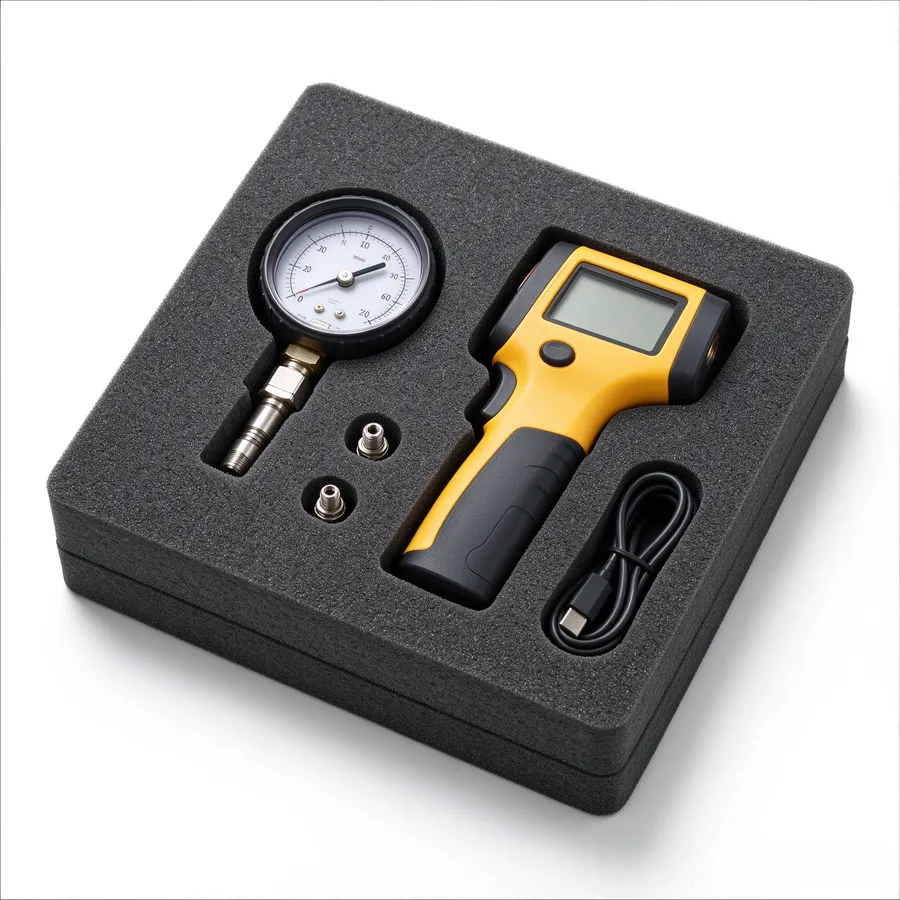
Customisation
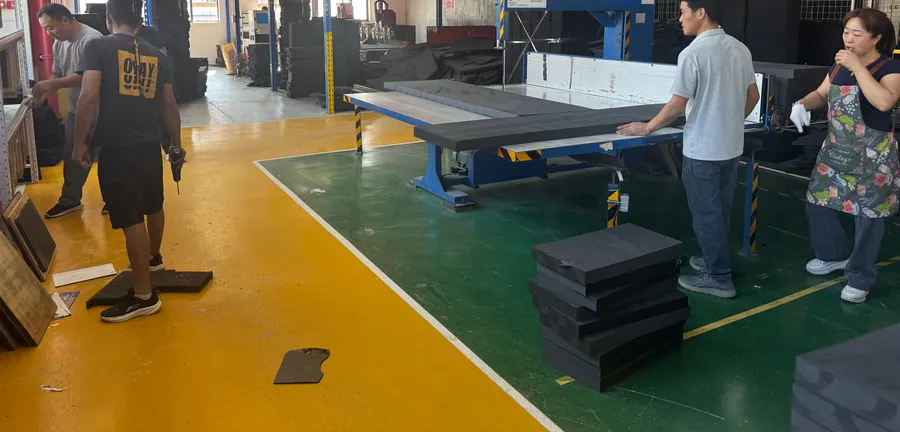
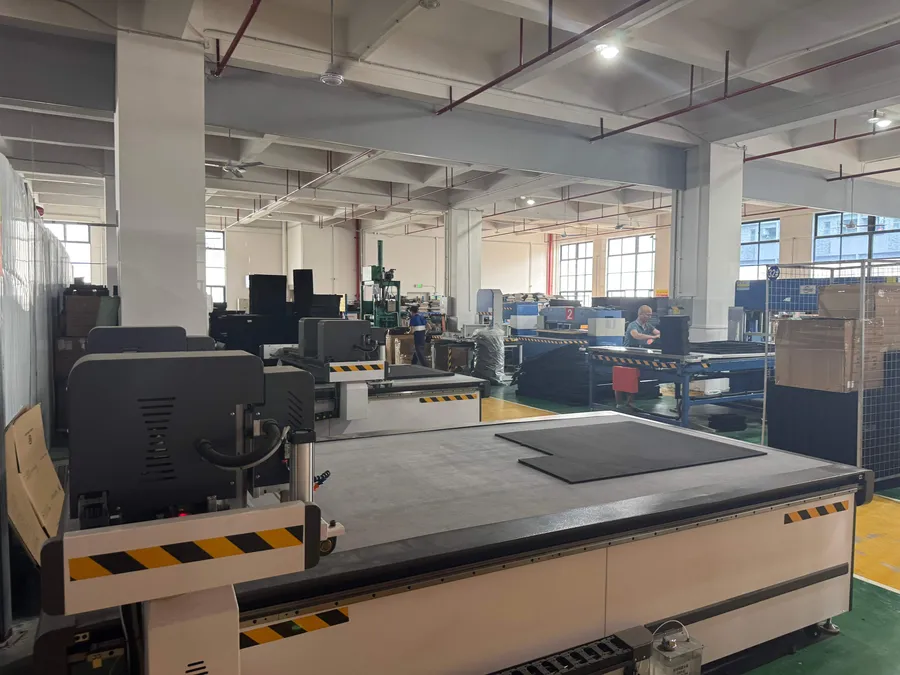
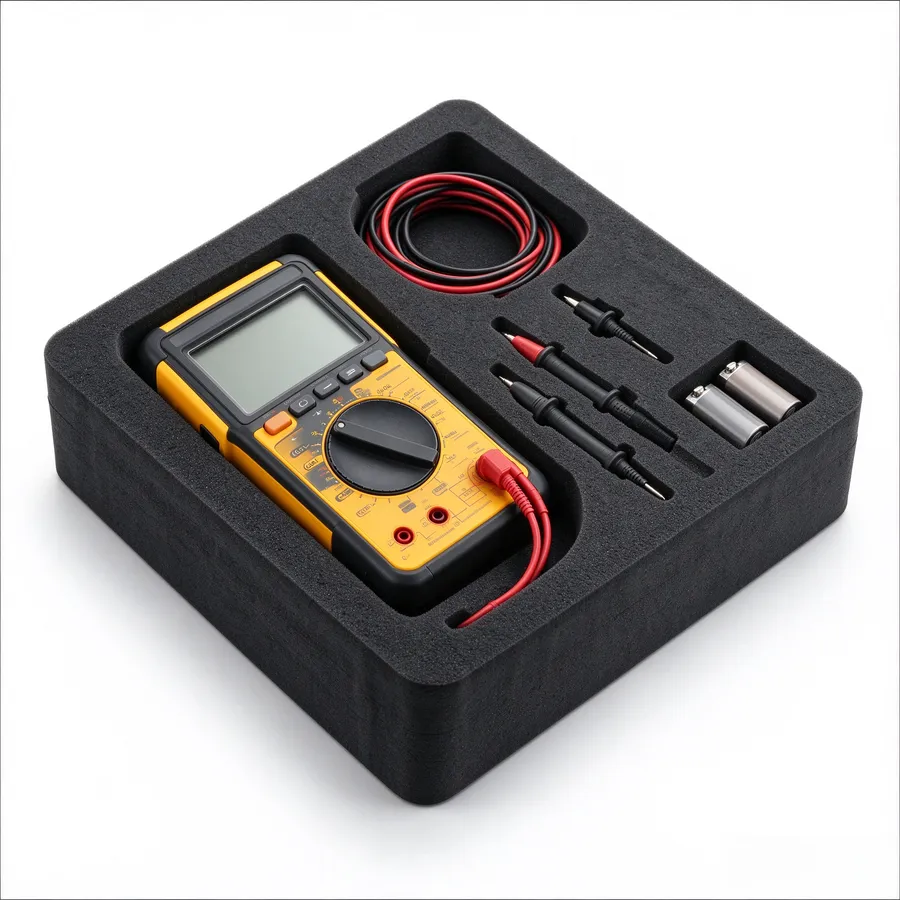
Everything described above is configurable on a standard shell: interior layout (pick-and-pluck, die-cut or CNC-cut), foam grade and thickness, colour, logo method, latch and lock count, pressure-equalisation valve, cable ports, document holder and identification plate. A bespoke exterior geometry requires a new mould — 125 days, from 3,000 units per moulded component.
Procurement considerations
| Question | What to send us |
|---|---|
| Which shell fits? | Equipment L × W × H as packed, plus required clearance per axis |
| What does it cost? | Order quantity and estimated annual quantity — the two drive different answers |
| Is tooling needed? | Whether an existing shell clears the envelope with usable foam depth |
| Lead time? | Your required delivery date, not just the order date |
| Certification? | The exact standard your tender names — we will say whether we can test to it |
| Freight? | Destination and preferred terms; carton and pallet data supplied with the quotation |
Comparison and selection guide
The tables on this page exist because a protective case is chosen by comparing three things: the envelope, the environment and the handling chain. Where no table applies, the rule below is.
| Situation | What To Do |
|---|---|
| Start from the equipment, not the case | Measure the tallest, widest and longest points of the packed equipment including antennas, handles and connectors. Add 20 mm minimum clearance per axis before selecting a shell. |
| Then choose the carrying method | Under 8 kg, a fixed handle is lighter and cheaper. Over 12 kg or any journey over 30 m, specify the T series with telescopic handle and wheels. |
| Then decide the interior | Pick-and-pluck for kits that change. Die-cut or CNC-cut for fixed layouts that must be auditable at a glance. |
- Size on internal dimensions plus clearance, never on a product name.
- Choose the carrying method before the shell: it changes the series, not just the price.
- Specify the interior last, and decide up front whether the end user will reconfigure it.
What information should be provided about case handles before a quotation? relates to Logistics & Packing Guide. Related families: Military Protective Cases / Rolling Cases / Equipment Transport Cases / Custom Protective Cases / Electronics Cases. Related sectors: field and industrial equipment. Continue in the Logistics & Packing Guide cluster.
This page is written from our own production data. If your requirement differs, send the dimensions and we will tell you which of the 155 models fits, or whether a custom route is needed.