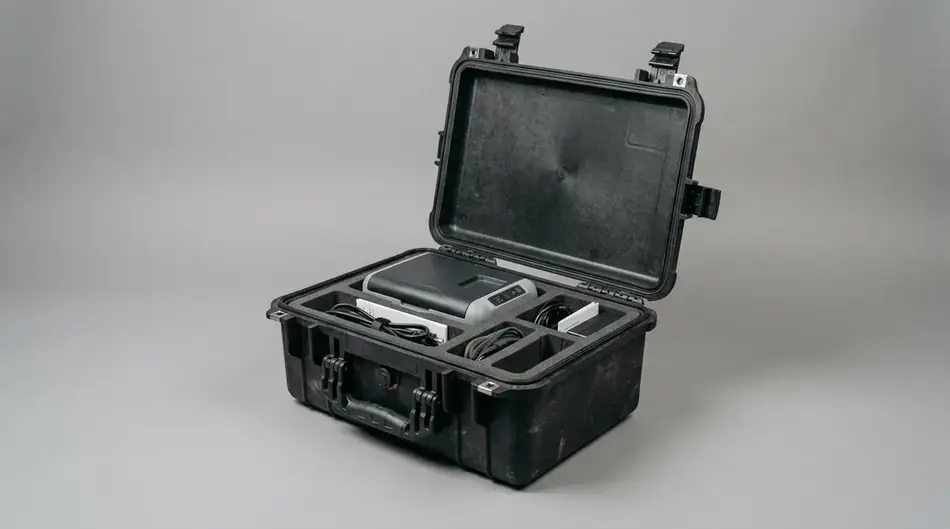
Waterproof & Dustproof Cases
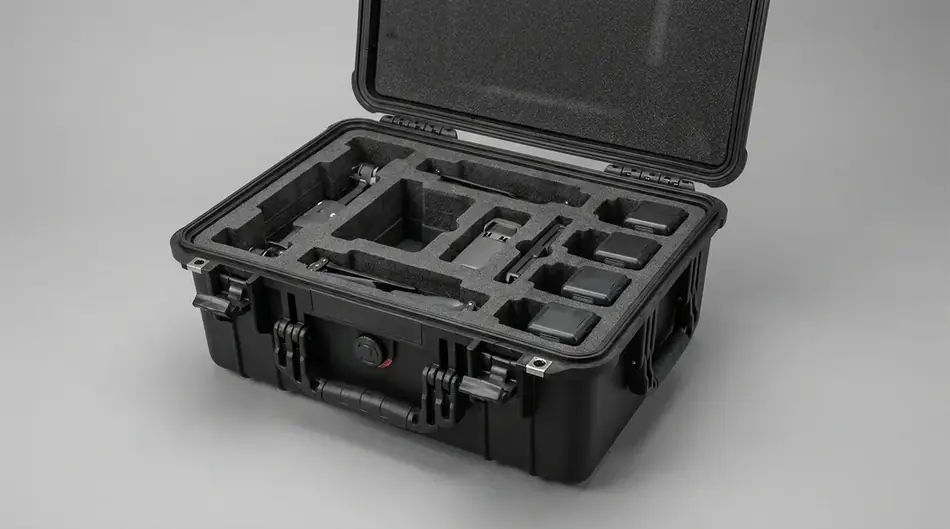
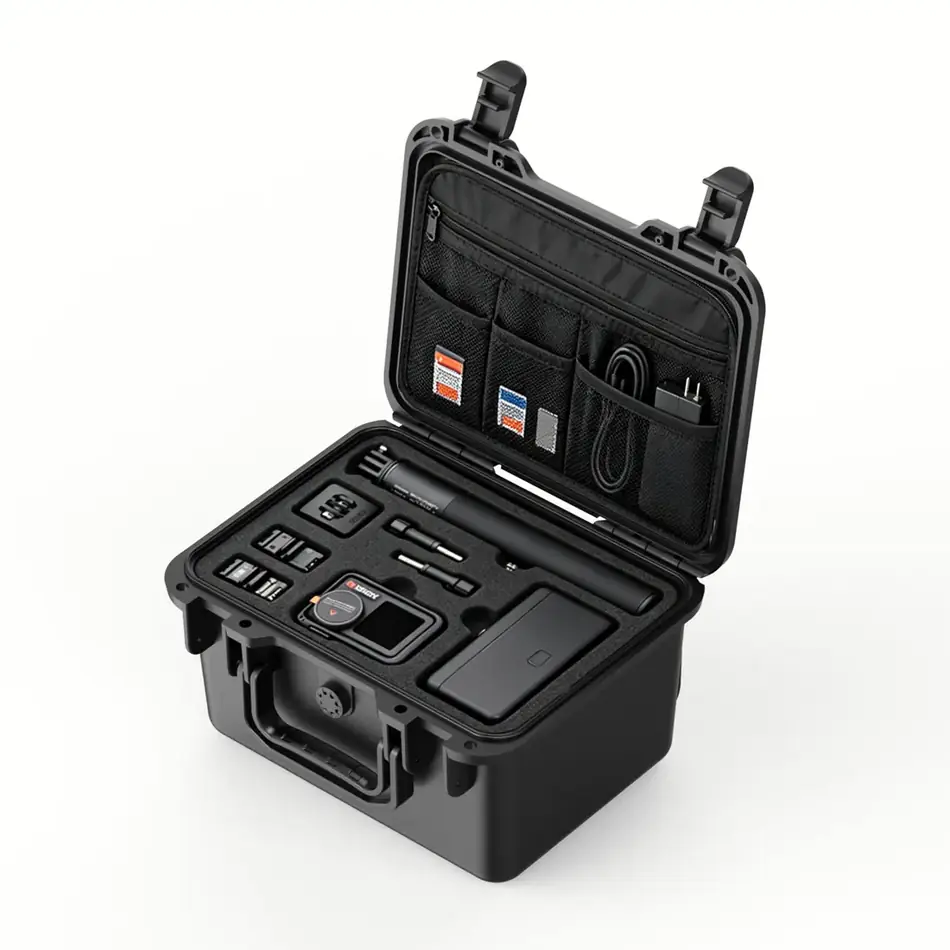
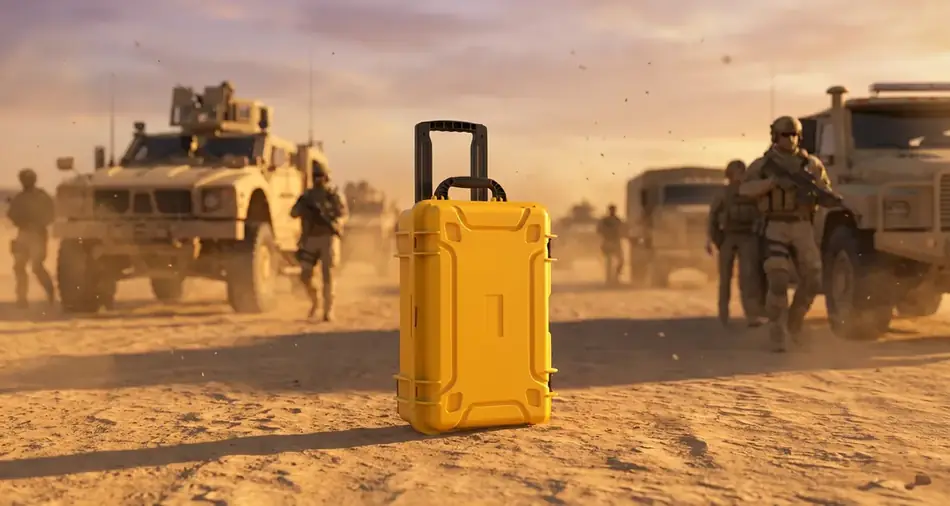
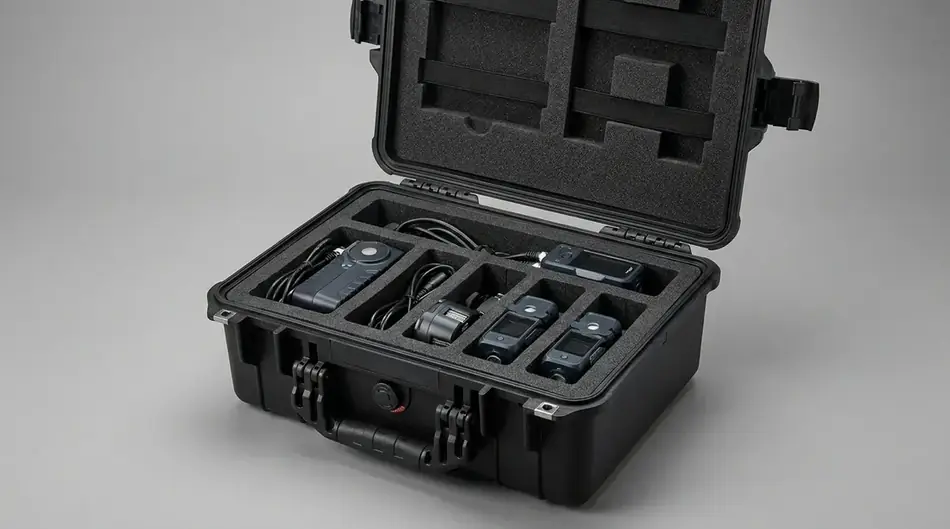
Sealed equipment cases with gasket channels and pressure equalisation options. 124 thick-wall models support a sealed configuration. No unverified IP rating is claimed.
A waterproof case keeps liquid out by compressing a gasket between the lid and the base on a continuous, uninterrupted rim, and by closing that rim with enough latches that the compression is even. A dustproof case needs the same rim but less compression. KeXin offers a sealed configuration on one hundred and twenty-four models with a wall thickness of 3.0 mm or more.
Key points
- Sealing is a rim-and-compression problem, not a material problem — the shell must not flex between latches.
- A pressure-equalisation valve is available where altitude or temperature cycling creates a vacuum lock.
- Gasket compression is set by latch count and spacing; we specify both per configuration.
- We publish a manufacturer description of the seal, and quote third-party IP testing as a separate work package.
How the seal actually works
The gasket sits in a moulded channel around the perimeter of the base. When the lid closes, the rim of the lid compresses the gasket against the channel floor. Two things decide whether that works: whether the channel is continuous and clean, and whether the lid is stiff enough that the compression at the middle of a long edge is close to the compression at the corners. A thin lid on a wide case will always leak at the middle, no matter how good the gasket is.
That is why we restrict the sealed configuration to models with a wall thickness of 3.0 mm or more, and why we specify latch count with it.
On IP ratings
Many buyers ask for IP67 as though it were a property of the case. It is a property of a specific assembly tested in a specific laboratory under a specific protocol. KeXin will quote that test against your exact configuration and will pass the report to you. What we will not do is print a rating on a catalogue because a competitor did.
In this family
Sorted by internal volume. Each card leads with the measured internal envelope, because that is the number you size on.
See all 0 Waterproof Cases models in the filterable database →
In this family: 6 sub-classifications
The family is not a flat list. Buyers come to us with a sub-type in mind, so each one below is a real filter over the same product database rather than a separate marketing page.
How to specify this family
Occasional splash
A close-fitting rim without a gasket is cheaper and easier to maintain.
Rain and washdown
Sealed configuration, four or more latches, stainless hardware.
Immersion or pressure change
Sealed configuration plus a pressure-equalisation valve, and a documented test.
Questions on Waterproof Cases
What is a waterproof protective case?
A case whose lid-to-base interface uses a compressible gasket on a continuous rim, closed by enough latches to hold even compression, so that liquid cannot enter under the conditions it was designed and tested for.
What should I check before buying one?
Whether the sealing rim is continuous, how many latches compress it, the wall thickness of the lid, whether a pressure valve is fitted, and whether the gasket is replaceable.
How do I maintain the seal?
Keep the channel free of grit, inspect the gasket for permanent set each season, and store the case open or with the latches released so the gasket is not compressed while idle.
Can a waterproof case be customised?
Yes. Foam, colour, hardware, valve and label options are all available on sealed models without changing the sealing geometry.
Do you state an IP rating?
Not in the catalogue. We quote an accredited test against a named model and configuration as a separate work package, and the report is issued to you.