Drone and UAV Field Operations
A drone kit is three different protection problems in one box: a light awkward airframe, heavy batteries, and a gimbal that must not be touched.
A drone kit is three different protection problems in one box: a light awkward airframe, heavy batteries, and a gimbal that must not be touched.
Zoned interiors
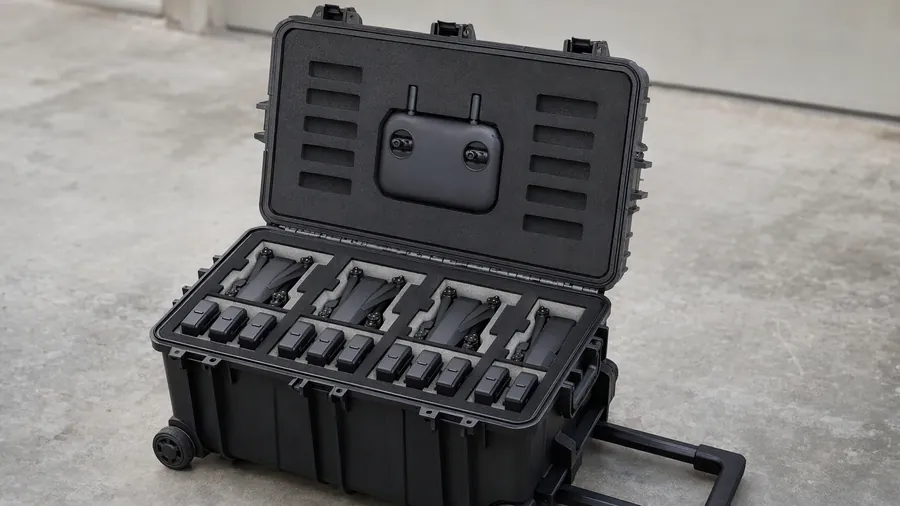
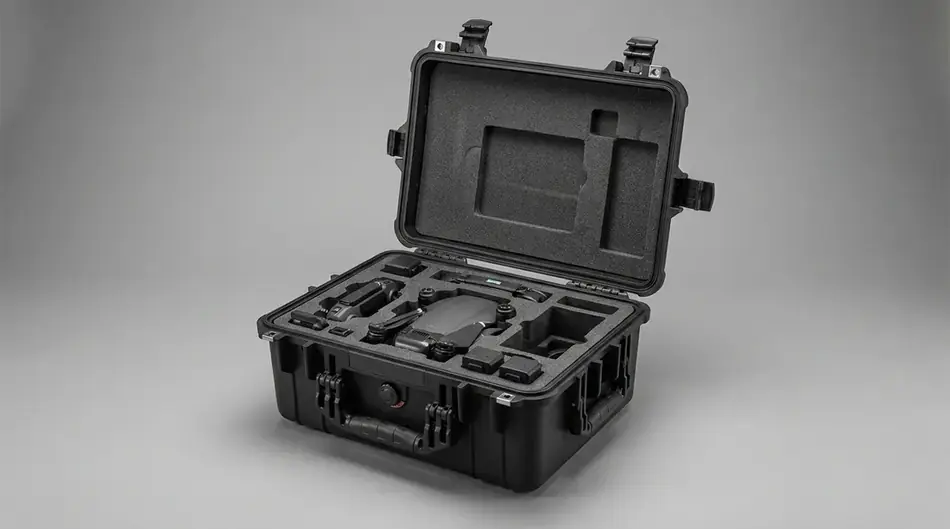
We cut drone cases in zones rather than one cavity. The airframe sits in a soft cradle with the gimbal suspended. Batteries go in individual pockets, terminals up, separated from connectors. Propellers, filters and ND sets sit in a shallow tray that can be counted before the lid closes. The controller and any tablet sit in the lid layer so they never carry the mass of the airframe.
Commercial drone programmes
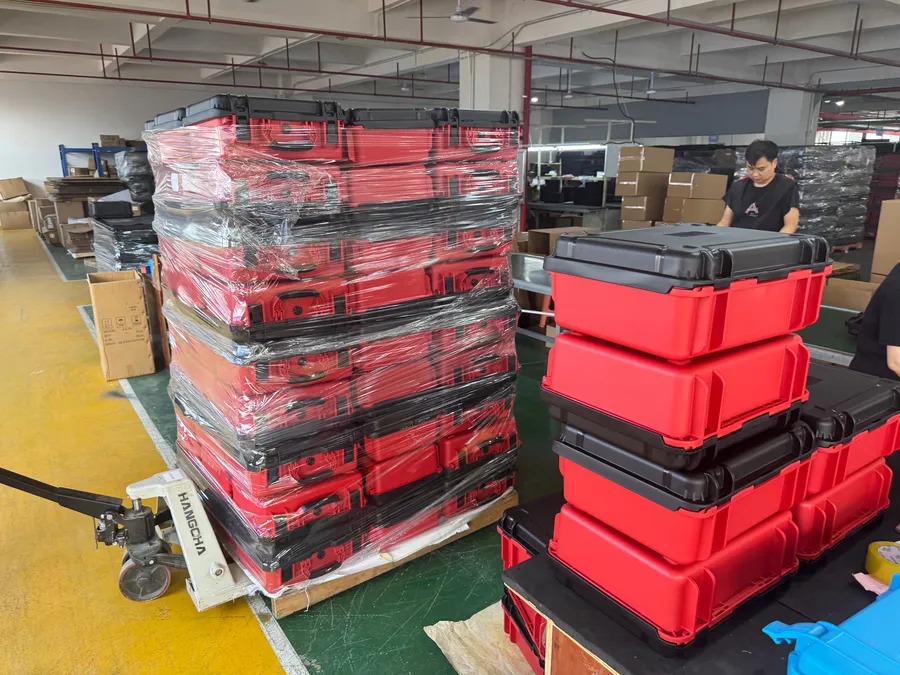
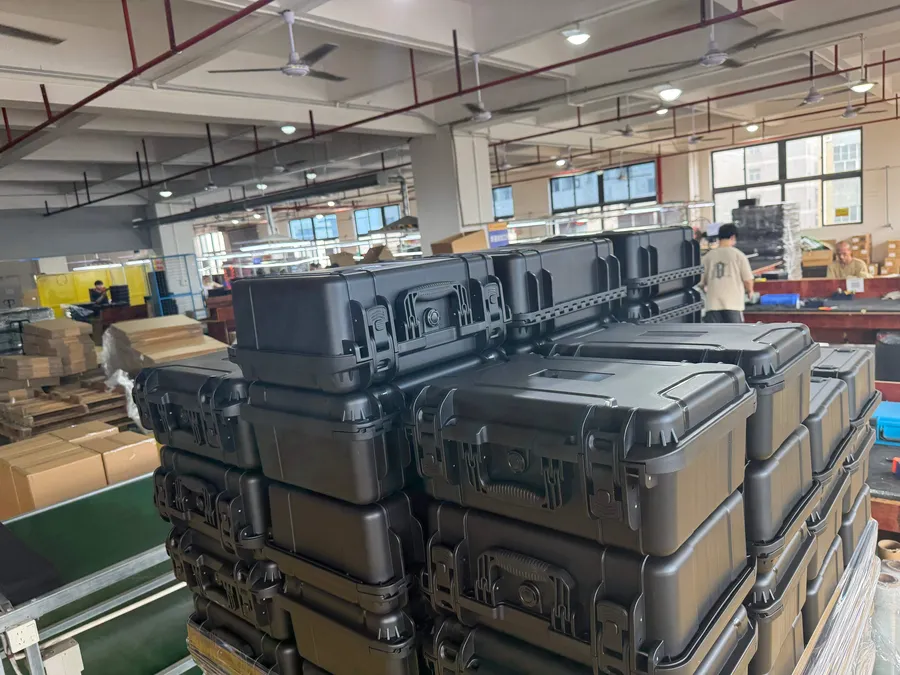
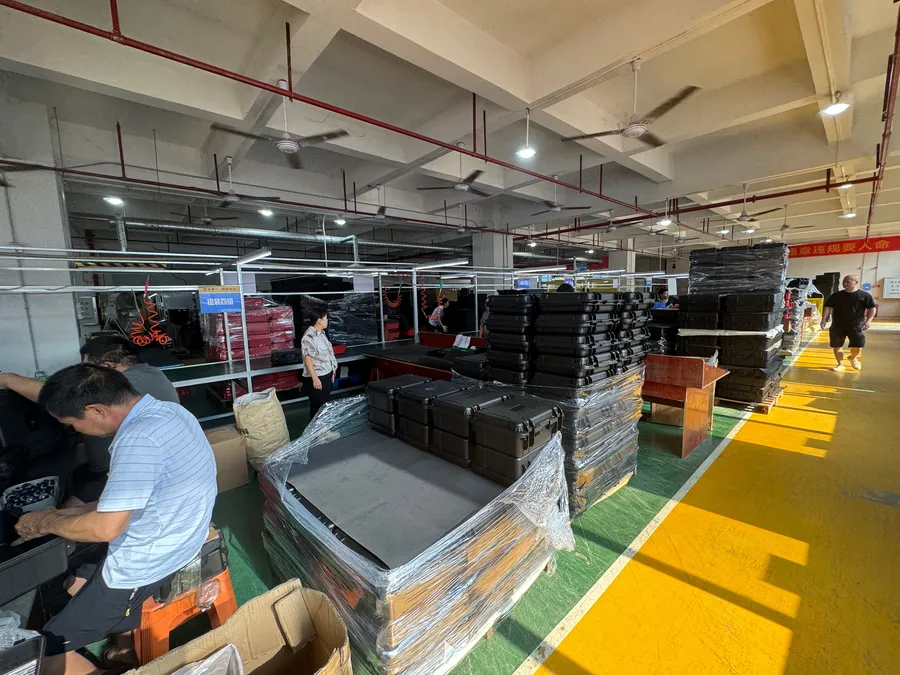
Drone brands and integrators buy these cases as an OEM component: colour, logo, a layout that matches their accessory list, and retail-ready packing. Minimum order starts at 300 units for a custom colour on an existing shell.
Drone case searches, answered with published model data
The table below lists the exact phrases buyers type when they look for drone transport packaging, and answers each one with numbers from our published catalogue: 155 models in total, of which 59 are listed under drone cases. Nothing in this table is a rating. Our product records list the ingress protection rating as not measured, so what we publish instead is internal dimensions, wall thickness and net weight per model, and laboratory testing can be quoted as a project item when a tender requires it.
| Search | What We Publish |
|---|---|
| military drone transport case | The catalogue splits into 59 drone-case models and 45 models under military equipment cases; the WL9-7227 Trolley publishes an internal 590 x 435 x 210 mm (53.9 L) with a 6.0 mm wall and 10000 g net weight. We publish dimensions and construction per model and record the protection rating as not measured, so no rating is claimed for any defence kit until the configured case has been tested by an accredited laboratory. |
| drone battery transport case | The interior method published on this page already covers batteries: individual pockets, terminals up, physically separated from connectors and cables. A WL6-4621 gives an internal 430 x 288 x 186 mm (23.0 L) for battery load-outs, CNC-cut to your cell dimensions. Carriage rules for lithium batteries stay with the operator and the airline; the case is packaging, not a dangerous-goods approval. |
| drone camera transport case | Gimbal protection is a layout question, and the published layout suspends the gimbal in a soft cradle while filters and ND sets sit in a shallow tray you can count before the lid closes. WL4822 publishes internal 460 x 330 x 210 mm with a lid depth of 165 mm and a base of 45 mm, so the controller travels in the lid layer under its own foam. |
| drone field operation case | For crews moving between sites the rolling formats carry the kit: WL8-5424 Trolley publishes internal 483 x 363 x 190 mm (33.3 L) at 6000 g net, with telescopic handle and wheels listed in the model record. Field-use ratings are recorded as not measured in the product database; what is published is the construction, so ask for material and hardware details per model before committing a field programme. |
| industrial drone transport case | Larger airframes go into the 60 L rolling class: WL8-6830 Trolley publishes internal 595 x 460 x 255 mm (69.8 L) at 10160 g net with a 4.8 mm wall. Bought as an OEM component, colour, logo and interior layout are cut to your accessory list; the published minimum order for a custom colour on an existing shell is 300 units. |
| multi-drone transport case | One case, several airframes: WL9-6127 Trolley publishes an internal 545 x 545 x 210 mm (62.4 L), and CNC-cut foam divides that volume into repeated bays so each aircraft travels in its own pocket. Send a drawing, a photograph of the kit laid out, or a sample, and we return a cutting file and a proposal; that input is the published requirement for custom foam. |
What we do not claim about drone case protection
The product database records the ingress protection rating of these shells as not measured, and no drop height, stacking load or temperature figure is published for them either. We state internal and external dimensions, wall thickness, shell material and net weight because those are the values we can stand behind, and we treat ratings as a project item: if a tender names a standard, we quote accredited third-party testing against that specification for the configured case.
This position is deliberate. A buyer who compares cases on printed codes alone is comparing paper, not hardware; the values that decide whether an airframe arrives intact are the internal layout, the foam engineering and the wall section, all of which are published per model in the catalogue and can be verified with KeXin New Materials (Guangdong) Co., Ltd. before an order is placed.
Cases used in this sector


Shells that fit Drone & UAV Operations work
Ranked by internal volume.
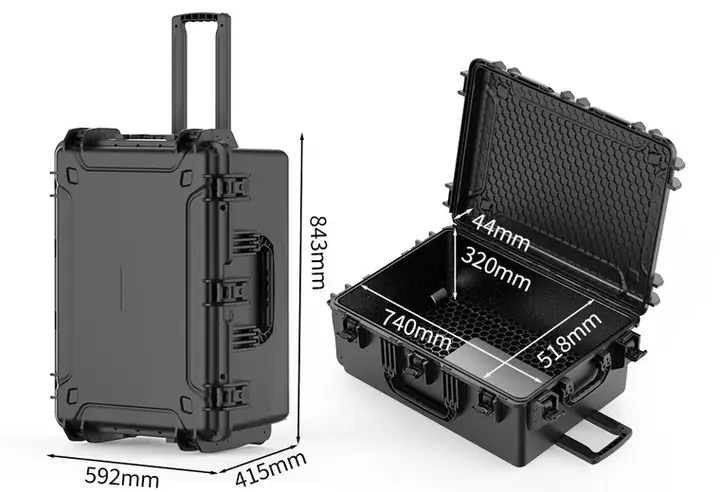
T Series Protective Case
External 843 × 592 × 415 mm
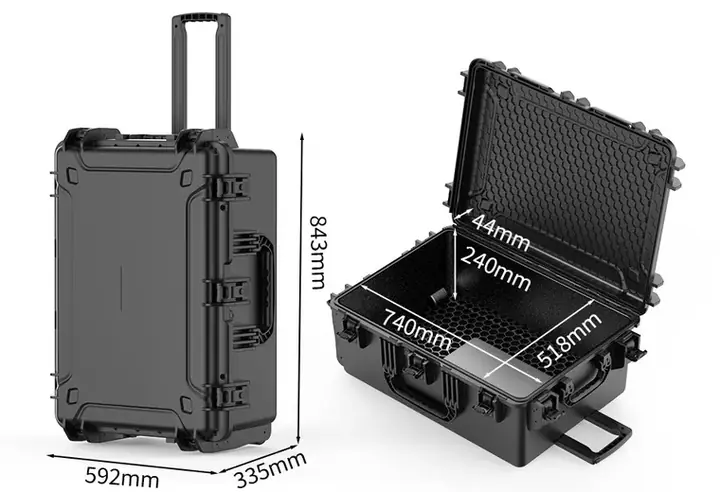
T Series Protective Case
External 843 × 592 × 335 mm
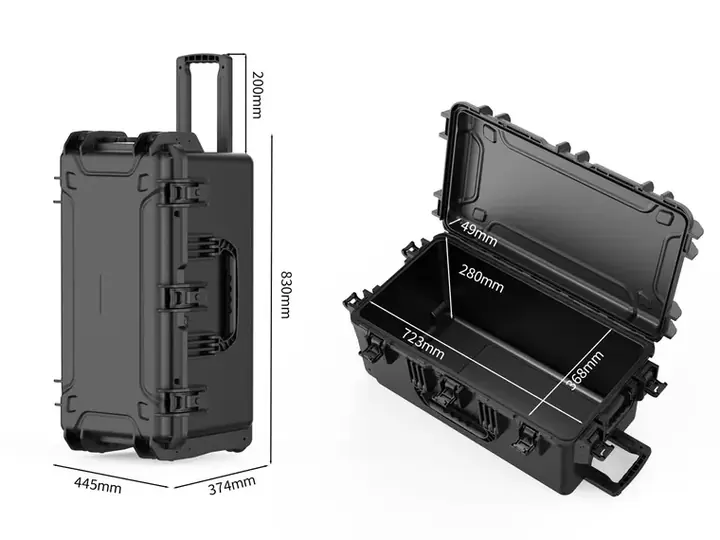
T Series Protective Case
External 830 × 445 × 374 mm
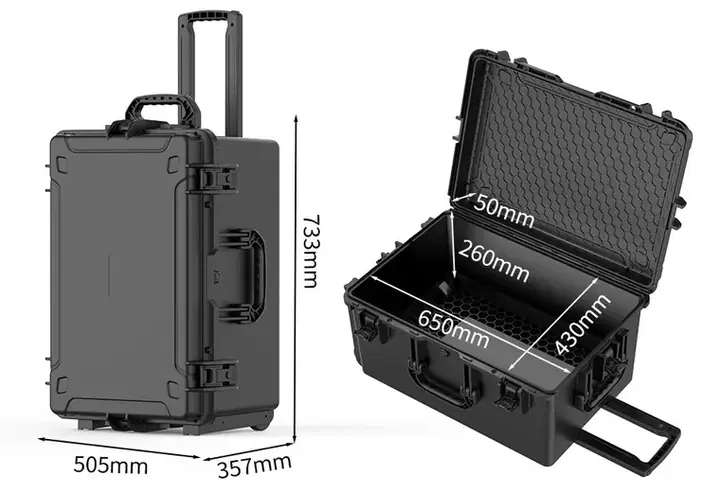
T Series Protective Case
External 733 × 505 × 357 mm
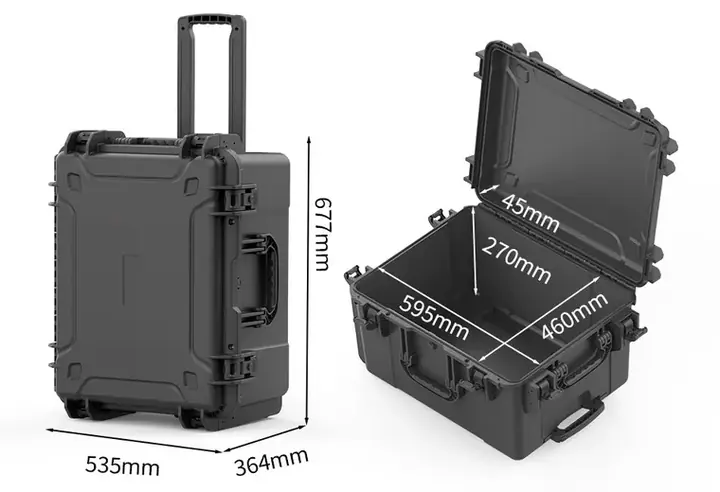
T Series Protective Case
External 677 × 535 × 364 mm
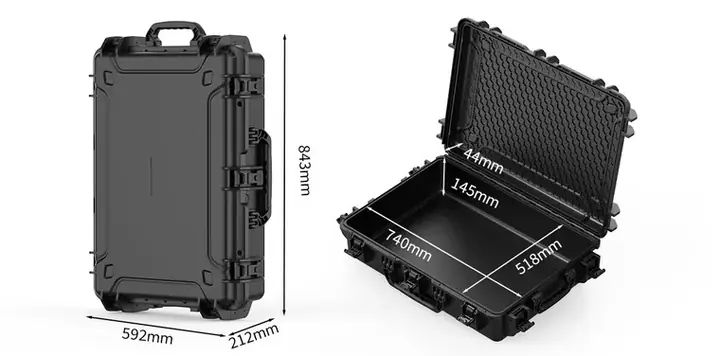
8 Series Protective Case
External 843 × 592 × 212 mm
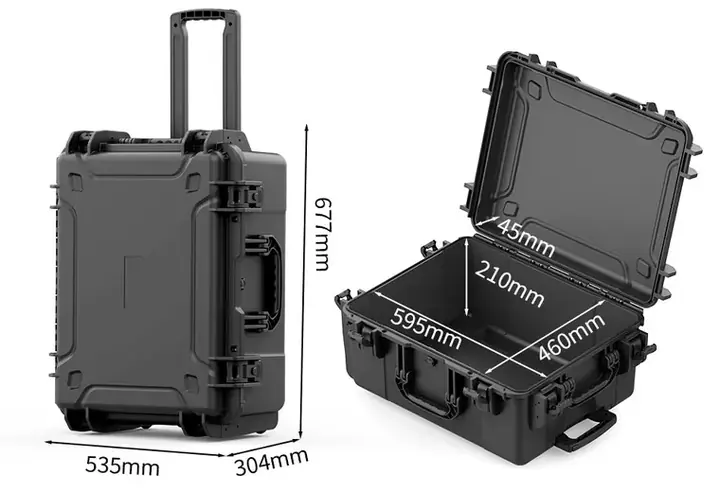
T Series Protective Case
External 677 × 535 × 304 mm
8 Series Protective Case
External 1356 × 154 × 408 mm
Questions in this sector
How should drone batteries be stored in a case?
In individual pockets, terminals protected and facing up, physically separated from connectors, cables and the airframe.
Can you match my specific drone?
Yes. Send a drawing, a photograph of the kit laid out, or a sample, and we return a cutting file and a proposal.
Are the cases suitable for air travel?
Dimensions can be matched to cabin and checked-baggage limits. Battery carriage rules are set by the airline and the aviation authority and remain the traveller responsibility.
Deeper reading