Firearm & Long Equipment Transport Cases
The packaging problem of long, rigid equipment: internal length, clearance, lid-to-base split and closure layout.
25 published in this cluster
Firearm & Long Equipment Transport Case Guide
A long item inside a long case behaves as a beam. When the case is carried at the ends the shell flexes in the middle, and anything rigid inside share…
What is a firearm transport case
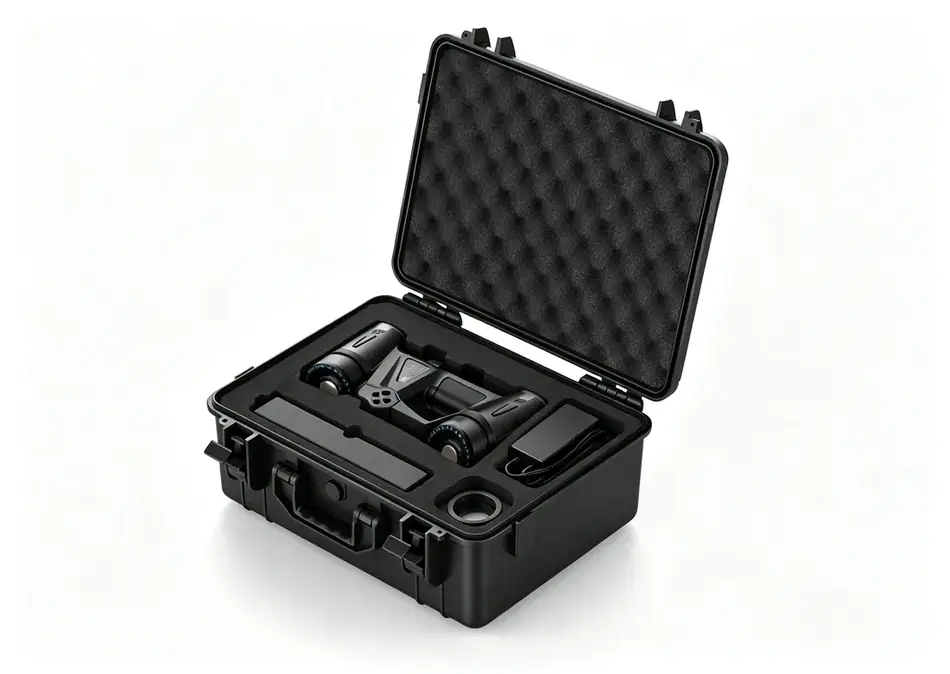
A firearm transport case is a rigid moulded shell, usually polypropylene or ABS, sized and foamed so that one or more long guns can be moved between t…
What is a Hard Firearm Case? Definition, Build and How to Choose One
A hard firearm case is a rigid, moulded shell—usually polypropylene or ABS rather than fabric—that keeps a firearm immobile inside a shaped insert. Th…
What is Pick-and-Pluck Foam? How the Insert Works and When to Choose It
Pick-and-pluck foam is a protective insert already cut into a regular grid of small cubes, joined only by a thin backing, that you remove by hand to t…
What is the difference between stock cases and OEM cases
The difference is who owns the moulding and whose identity the product carries. A stock case is built on an existing moulding from the manufacturer's …
What Is Foam-Padded Protection?
Foam-padded protection is the combination of a rigid outer shell and a shaped foam interior that does two jobs at once: it cushions the load when the …
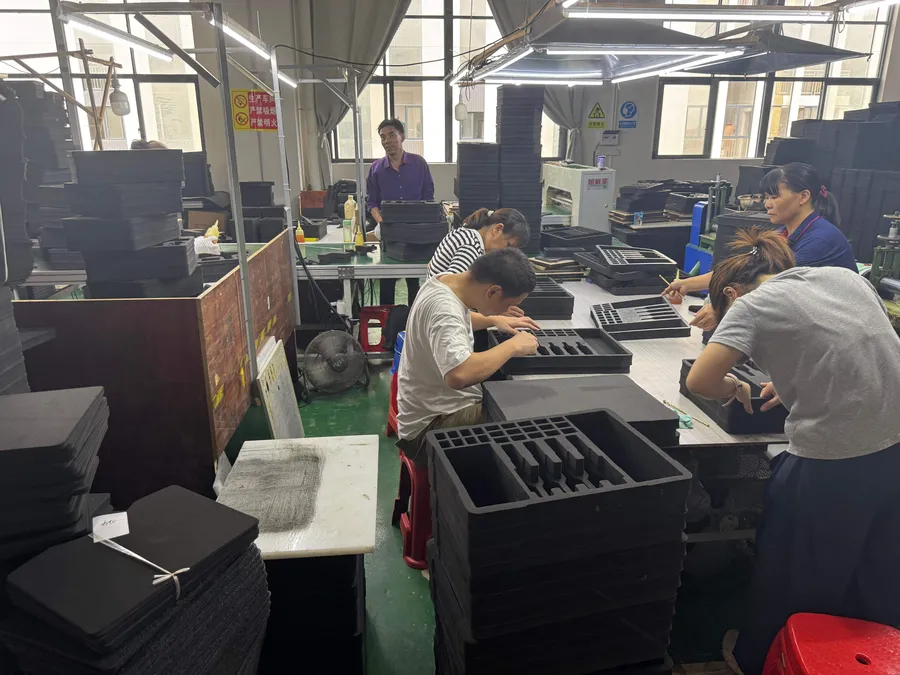
What Is CNC-Cut Foam? How A Machined Case Interior Is Made
CNC-cut foam is a case interior produced by a numerically controlled cutter that follows a digital outline of each item, so a receiver, barrel, optic,…
What Information Should Buyers Provide When Requesting Firearm Case Quotations?
Send six blocks and a firearm case quotation comes back as a firm price instead of a range: the firearm as it will actually be packed, with assembled …
What Should Buyers Consider When Selecting a Firearm Transport Case?
Work through seven checks in order, and the shortlist writes itself. First, measure the firearm as it will actually travel, assembled or broken down, …
How do hard cases protect equipment during transportation?
Hard cases protect equipment during transportation by combining three layers of defence: a rigid injection-moulded shell (polypropylene or ABS) that r…
What case dimensions should be considered before ordering?
Before ordering a hard case, evaluate the dimensions as a set rather than one number. The internal length, width and depth are what your equipment mus…
Can firearm transport cases have custom foam inserts?
Yes. Every model in the firearm-transport range is offered with custom foam, and the insert can be tailored in three independent ways: the material, t…
What are the characteristics of a hard protective case?
A hard protective case is defined by a set of physical characteristics that together separate it from a soft bag or a thin box. The first is a rigid, …
How Should Long Equipment Be Supported Inside a Case?
Long equipment should be supported along its full length, not just at the two ends. A single rifle, tripod column, mast section, boom, pole or bar tha…
Which Foam Is Suitable for Equipment Cases? A Material-and-Build Selection Guide
There is no single best foam for an equipment case; suitability is a match between a material family and a build type, chosen against three questions:…
How Should Firearm Case Dimensions Be Specified? A Six-Number Specification Method
Specify a firearm case from the inside out, and specify six numbers rather than one: internal length, internal width, the narrow internal width where …
What Affects the MOQ of Custom Protective Cases? The Six Drivers Explained
A custom protective case does not have one MOQ; it has a different minimum for each thing you change. On our model sheets the set is identical across …
How can a hard firearm case be customized?
A hard firearm case is customised in four independent layers: the interior foam layout, the shell geometry you choose from the published size grid, th…
How Does Hard-Shell Construction Protect Equipment? The Six Build Features
Hard-shell construction protects equipment by turning a local force into a spread one before it reaches the contents. Each half of the case is injecti…
What Interior Options Are Available For Hard Cases?
The interior of a hard case is specified in layers rather than as a single liner: a firm base that carries the weight, a top layer that clamps the ite…
How Do You Select A Long Protective Case?
A long protective case is selected from four published numbers in order: the total packed length of the item with accessories fitted, the internal len…
Can Long Cases Include Wheels? What Our Published Data Actually Says
Yes, within a size limit that is set by the shell rather than by the idea. Nineteen of our active models carry two moulded wheels and a telescopic han…
Can Foam Inserts Be Customized for Long Equipment? Zones, Not Thickness
Yes, and long equipment is the category where a custom cut earns its cost fastest. We cut interiors to the envelope you supply, in cross-linked PE, EV…
Why Is Internal Length Important When Selecting a Case?
Internal length decides whether long equipment fits straight, fits at an angle, or does not fit at all, and it is never the largest number on a listin…
What Type of Protective Case Is Suitable for Hunting Equipment? Match the Shell to Each Sub-Load
There is no single case type that suits a whole hunting kit, because a hunting kit is really four or five separate sub-loads that travel together: the…