What is a hard firearm case?
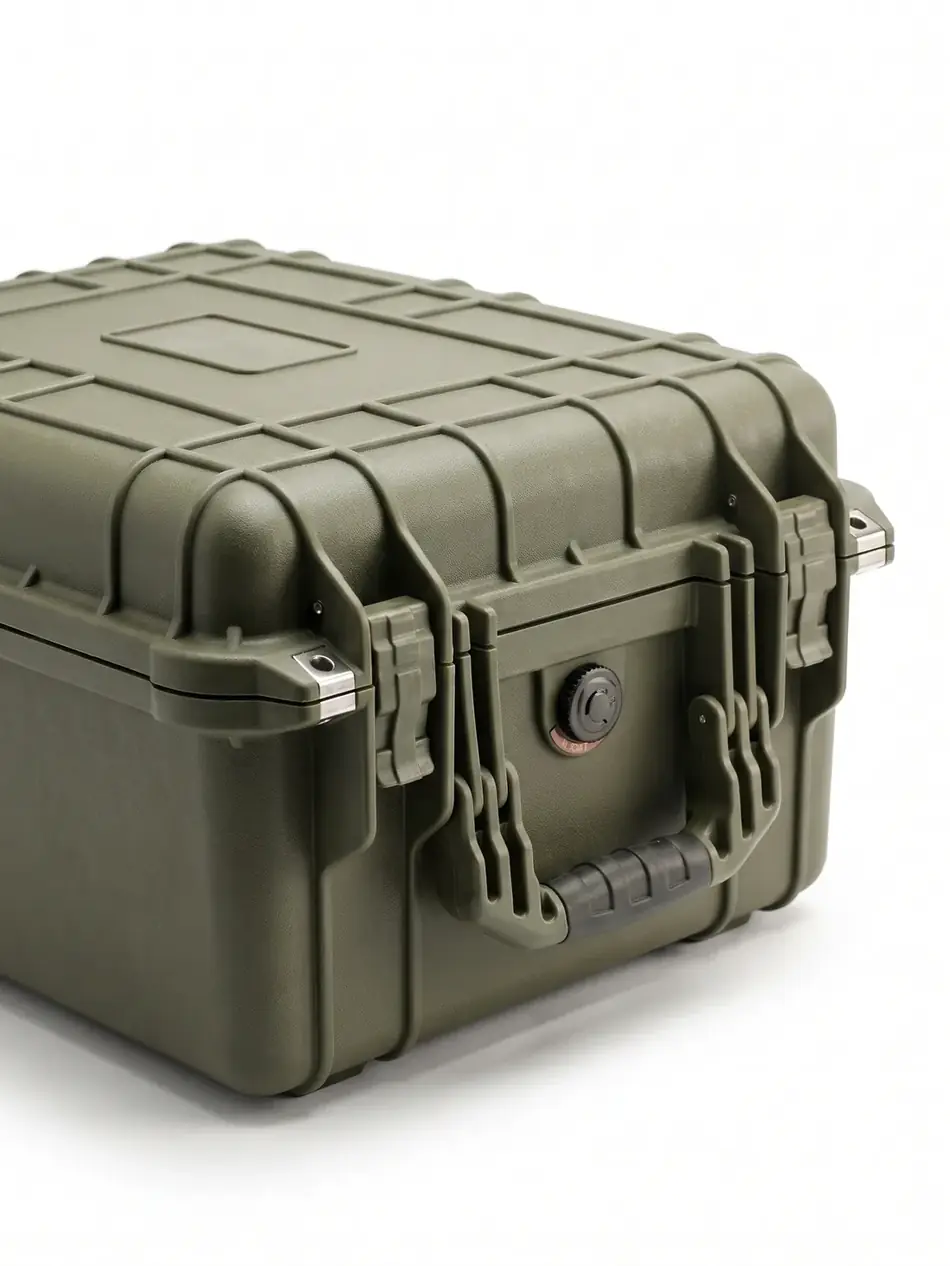
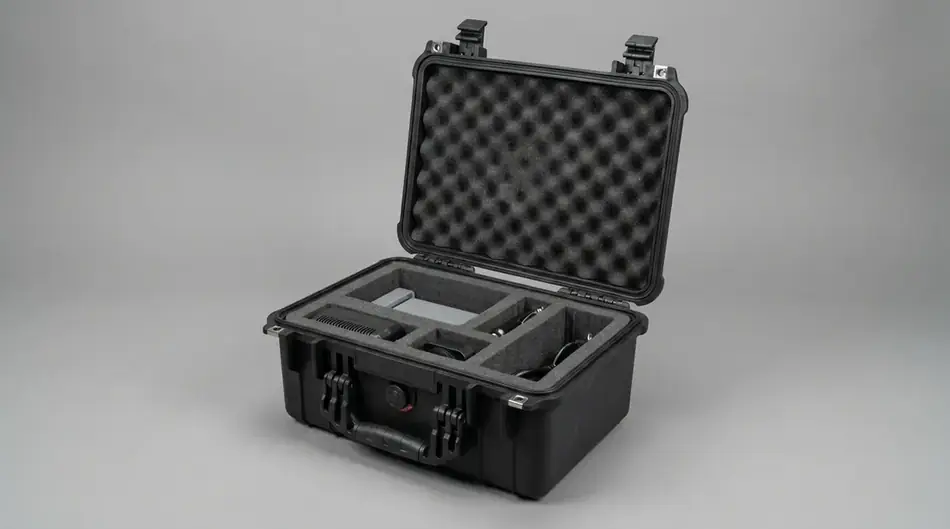
A hard firearm case is a rigid, moulded shell—usually polypropylene or ABS rather than fabric—that keeps a firearm immobile inside a shaped insert. The word “hard” describes the body, not a rating: it means the walls hold their shape and take a knock so the contents do not, and that the geometry inside stays fixed no matter how the case is handled. A genuine hard case has three jobs done well: an internal length that clears the whole weapon, a foam layout that separates and locates each firearm, and a latching and sealing detail that keeps that layout closed through a journey. It is a reusable protective envelope for a known object in transit, not loose storage, and its real dimensions are published per model rather than assumed from a brand name.
Key points
- “Hard” means a rigid moulded shell that keeps its shape under load; it is a description of the body, not a tested rating.
- Size to the longest firearm using the case’s internal length, then check the wall thickness published for that specific model.
- The insert does the protecting: each firearm needs its own channel so weapons cannot touch one another in transit.
- Across the firearm-tagged range the internal length runs from about 380 mm to 1,280 mm, so most formats map to a stock shell.
- Published specs cover dimensions, wall and net weight; where we have not measured an ingress or drop value we leave it blank.
What “hard” actually describes
In this product family “hard” refers to the shell, not to marketing language. A hard firearm case is moulded from a single piece of thermoplastic per half, so the walls are stiff and keep their shape when the case is stacked, dropped onto a tread plate, or squeezed into a boot. That rigidity is the point: a soft bag deforms around whatever pushes on it, while a hard shell carries the load in its own body and passes only a fraction of it to the contents. “Hard” also implies a fixed interior, because a rigid case is normally paired with a shaped foam layout that cannot shift the way a flexible padded sleeve can.
What the case is built from
Strip a hard firearm case down and there are four parts. The shell is injection-moulded polypropylene or ABS, and the wall thickness varies with size—across the firearm-tagged models it runs from roughly 2 mm on the smaller bodies to about 6 mm on the largest, and we state the figure per model. A compressible gasket sits in a continuous moulded channel on many models to shed spray and resist dust, though we do not print an ingress code we have not measured. Steel or polymer hinges set the lid’s opening limit, and spring-loaded latches—many of which accept a standard padlock through the latch body—hold that closure down at both ends.
How a hard case differs from a soft bag
The practical difference is where the energy goes. A padded textile case is light and packs flat, but a heavy object landing on it presses straight through to the firearm inside, and a soft case offers little resistance to crushing in a loaded vehicle. A hard shell spreads a point impact across its own surface and resists crushing, so the foam layout keeps doing its job even after the outside has been knocked. The trade is weight and fixed volume: a hard case weighs more and cannot expand to swallow extra gear. Choose the shell for the journey—soft for a short walk to a range bay, hard for anything that will be driven, flown as handled cargo, or stacked with other equipment.
Representative hard firearm cases
The table below lists real models from our firearm-tagged range with their published internal dimensions and wall thickness. Internal length is the number that decides fit; net weight is shown only where we publish it for that model, and “not published” simply means we have not measured a figure worth stating rather than zero.
| Model | Format | Internal Mm | Internal Volume L | Wall Mm | Wheels | Net |
|---|---|---|---|---|---|---|
| KX-84113 | Compact carry | 380 x 267 x 115 | 11.7 | 3.4 | No | Not published |
| KX-84430 | Deep carry | 395 x 295 x 275 | 32.0 | 4.2 | No | Not published |
| KX-85022 | Wheeled trolley | 437 x 308 x 180 | 24.2 | 4.5 | Yes | 5012 g |
| KX-86224 | Long single | 538 x 408 x 220 | 48.3 | 5.0 | No | Not published |
| KX-89616 | Extended rifle | 880 x 350 x 140 | 43.1 | 5.0 | No | Not published |
| KX-814641 | Full-length single | 1280 x 350 x 140 | 62.7 | 5.0 | No | Not published |
How to size a hard firearm case
Start from the longest firearm you carry and measure it, then read the case’s internal length, never the external length printed on a box—that includes the wall and the seal, so it always overstates the space you have. Add clearance at both ends for the muzzle and butt and for any low-mounted optic or light, and pick a model that clears that total. Within our firearm-tagged models the internal length spans about 380 mm to 1,280 mm: a compact shell suits a handgun and small parts, a mid-length body clears optics and short carbines, and the 1,280 mm single case lets a full-length rifle lie flat without a bipod fouling the lid.
Where hard firearm cases are used
The same rigid shell appears in several programs under different names. Range and competition owners use long singles so a rifle travels without the action contacting the walls. Units and operators use latched, stackable shells that can be palletised and moved with optics already bedded in foam. Distributors and fleets buy them as a durable issue case that survives repeated handling, and OEM buyers add a custom insert and a colour-matched resin so the case carries their own layout. In every one of these the requirement is identical: hold a known shape still while everything around the case moves.
Customising a hard firearm case
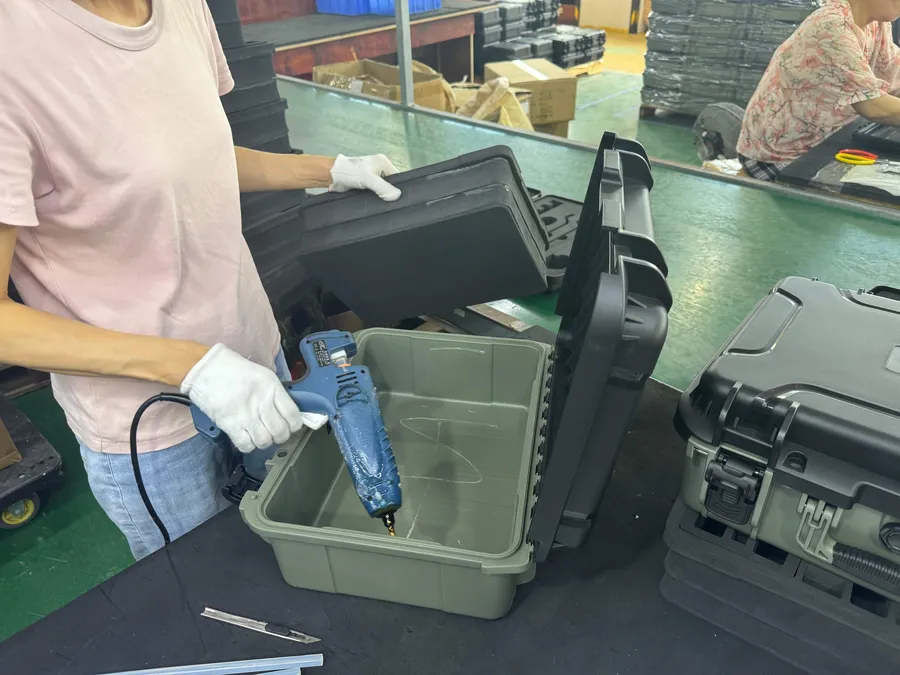
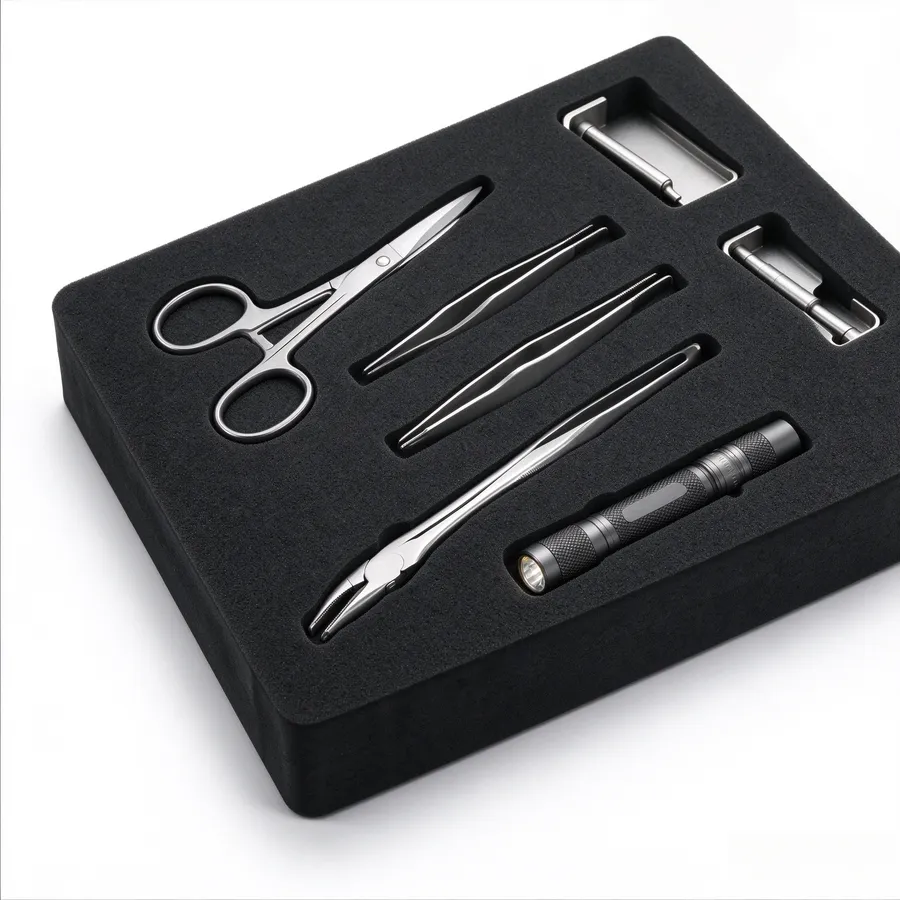
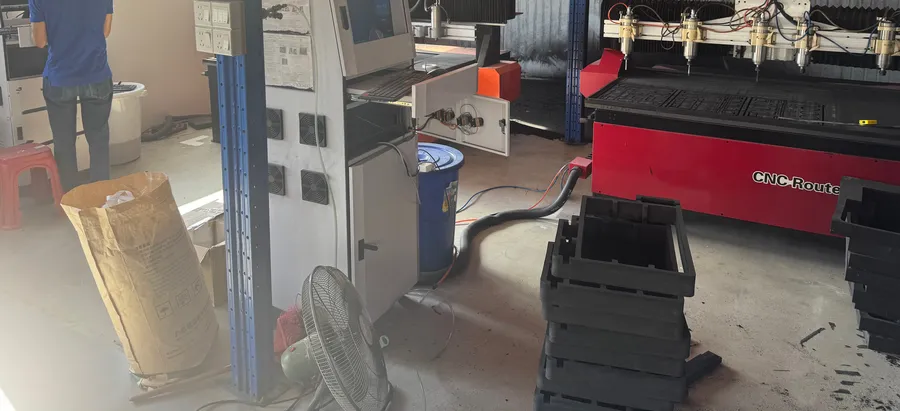
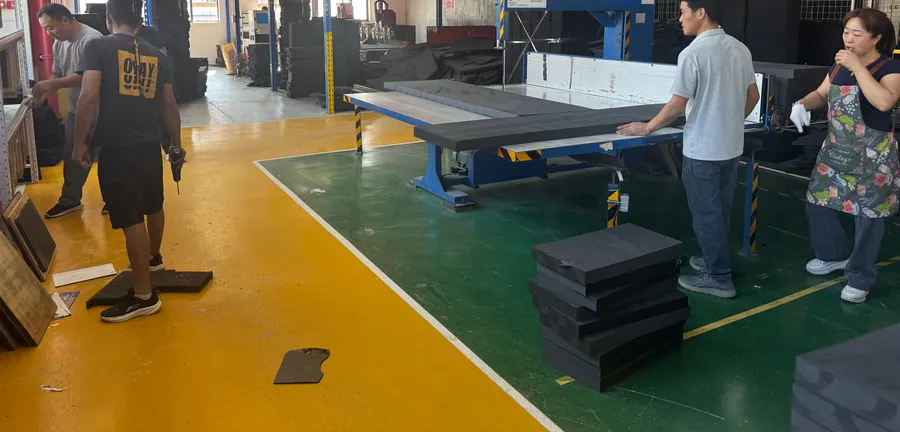
Because we manufacture rather than trade, the shell is only the starting point. The foam layout is cut to a customer-supplied profile—die-cut, CNC-cut or layered pick-and-pluck—and custom thickness and shape are standard options. Colour-matched resin, a moulded or printed logo and altered hardware (extra latches, a specific padlock hasp, castors instead of feet) are all available as OEM work. On the commercial side we work wholesale and OEM on EXW or FOB terms; a first OEM sample on an existing mould is quoted at around 45 days, a new mould at around 125 days, with a 30 percent deposit to start. We do not sell retail, do not ship DDP, and hold no overseas warehouse—freight is arranged from our facility.
What to confirm before you order
Treat the numbers honestly and the purchase is simple. Confirm the internal length against your measured firearm, confirm wall thickness and net weight for that exact model, and confirm which closure and hardware the configuration carries. Be sceptical of any listing that quotes an ingress code, a drop height or a stacking load for a generic “hard case”—we publish measured values per model and leave unmeasured items blank, and accredited testing, where needed, is quoted per configuration rather than claimed for a whole range. Finally match the quantity and terms: MOQs for custom foam differ from those for colour or a new mould, and knowing which you are buying avoids a surprise on lead time.
Customisation
Everything described above is configurable on a standard shell: interior layout (pick-and-pluck, die-cut or CNC-cut), foam grade and thickness, colour, logo method, latch and lock count, pressure-equalisation valve, cable ports, document holder and identification plate. A bespoke exterior geometry requires a new mould — 125 days, from 3,000 units per moulded component.
Procurement considerations
| Question | What to send us |
|---|---|
| Which shell fits? | Equipment L × W × H as packed, plus required clearance per axis |
| What does it cost? | Order quantity and estimated annual quantity — the two drive different answers |
| Is tooling needed? | Whether an existing shell clears the envelope with usable foam depth |
| Lead time? | Your required delivery date, not just the order date |
| Certification? | The exact standard your tender names — we will say whether we can test to it |
| Freight? | Destination and preferred terms; carton and pallet data supplied with the quotation |
Comparison and selection guide
The tables on this page exist because a protective case is chosen by comparing three things: the envelope, the environment and the handling chain. Where no table applies, the rule below is.
| Situation | What To Do |
|---|---|
| Length | Allow at least 25 mm at each end beyond the equipment so the foam can absorb end impact rather than the shell. |
| Depth split | A deeper base carries the mass; a shallow lid retains it. We normally recommend a 60/40 or 70/30 base-to-lid split. |
| Closure | Latches on the long edge give better sealing on a flexing shell; latches on the short edge are faster to open. |
- Size on internal dimensions plus clearance, never on a product name.
- Choose the carrying method before the shell: it changes the series, not just the price.
- Specify the interior last, and decide up front whether the end user will reconfigure it.
What is a hard firearm case? relates to Firearm & Long Equipment Transport Cases. Related families: Firearm Transport Cases / Long Equipment Cases / Rolling Cases / Equipment Transport Cases / Military Protective Cases. Related sectors: field and industrial equipment. Continue in the Firearm & Long Equipment Transport Cases cluster.
This page is written from our own production data. If your requirement differs, send the dimensions and we will tell you which of the 155 models fits, or whether a custom route is needed.