How do hard cases protect equipment during transportation?
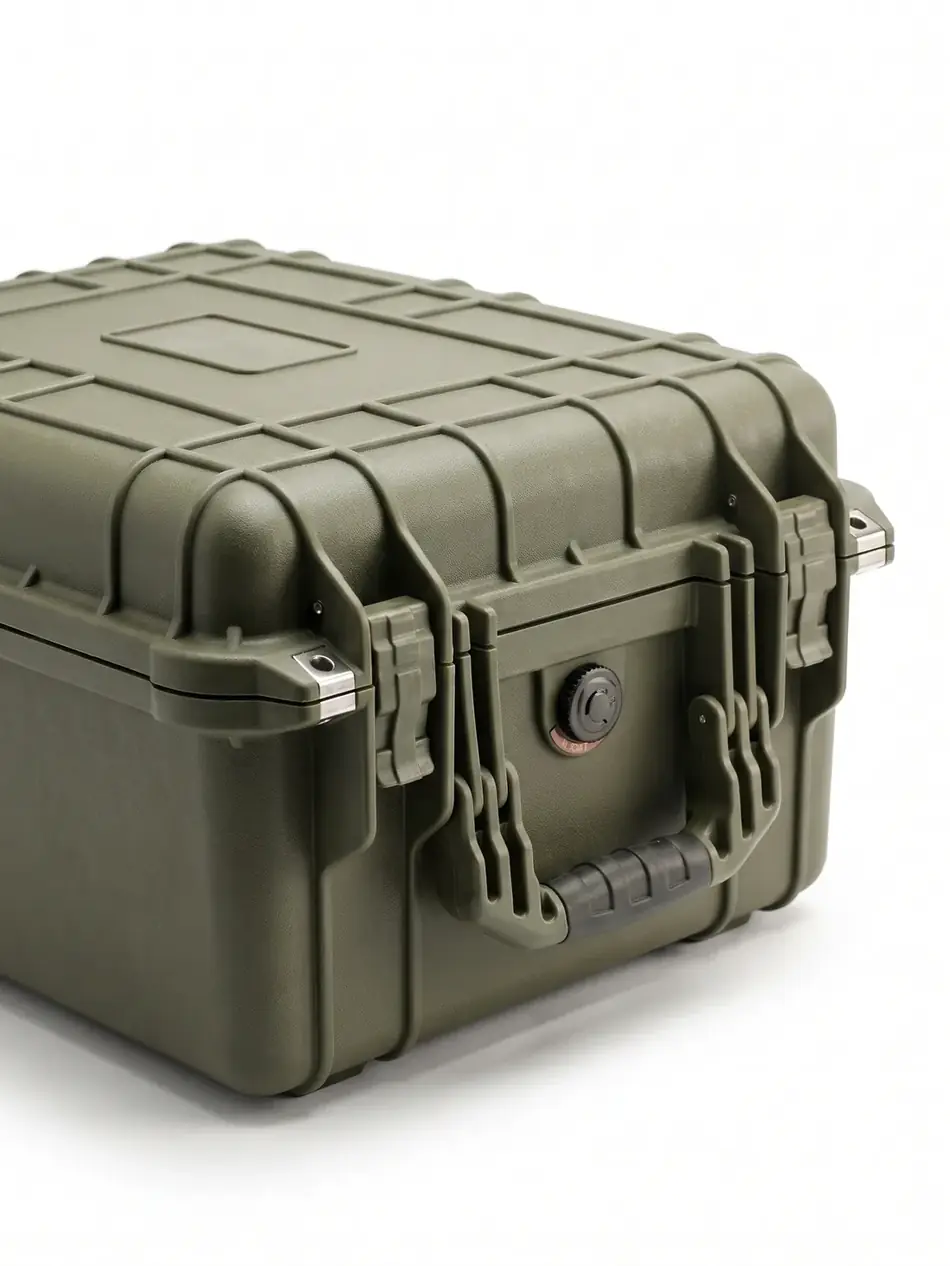
Hard cases protect equipment during transportation by combining three layers of defence: a rigid injection-moulded shell (polypropylene or ABS) that resists crushing and puncture, a wall thickness that spreads point loads across the panel instead of letting them reach the contents, and a custom foam insert that absorbs shock and stops the gear from shifting. The shell carries compressive load when cases are stacked, the latches and hinge keep the seam closed under vibration, and the internal geometry holds the item in one place so impact energy is dissipated through the foam rather than transmitted into the equipment. Protection is therefore a system of shell, wall, cushion and closure working together, and the published external dimensions, wall measurement and net weight of each model let a buyer judge how much of that system a given case provides.
Key points
- A hard case protects through shell strength, wall thickness and foam cushion acting as one system, not through any single part.
- Rigid PP and ABS shells carry compressive load when units are stacked, so panel rigidity decides how much weight the contents are shielded from.
- Wall thickness spreads a point impact across the panel; published models range from about 2.1 mm to 5.3 mm depending on size and shell material.
- A cut foam insert stops the equipment from moving, which matters more than shell hardness because shifting gear concentrates shock on one contact point.
- Latches, hinge and a tight seam keep the case closed under vibration so nothing is exposed mid-transit.
- Stackable geometry lets cases lock vertically, protecting lower units by routing their load into the stack rather than the contents.
The shell: a rigid load path around the contents
The first line of defence is the shell itself. KeXin hard cases are injection moulded from engineering polymers, most commonly polypropylene (PP) or acrylonitrile butadiene styrene (ABS), and the shell forms a closed box that surrounds the equipment on all six faces. During a fall or a crush, the load has to travel through this shell before it can reach anything inside. A rigid panel bends only slightly under the load and returns to shape, so the energy is spent deforming the plastic rather than the instrument. This is the core reason a hard case is used instead of a soft bag for fragile or valuable gear.
The choice of polymer changes how the shell behaves. PP is tougher and more flexible at low temperature and resists cracking when the case is dropped onto an edge, which is why many thin-walled field cases use it. ABS is stiffer and holds its shape under sustained compressive load, which is why the deeper, heavier models aimed at stacked storage tend to use it. Neither material is universally better; the right one depends on whether the dominant risk in your route is impact, crushing, or cold. Every model on this site lists its shell so the comparison is made on published data rather than assumptions.
Wall thickness: how point loads get spread out
A shell protects only if it is thick and profiled enough to refuse the load. Wall thickness is the measurement of the plastic panel, and its job is to take a small, concentrated force, such as a corner striking the floor of a vehicle, and distribute it across a wider area of the panel so no single point sees the full impact. Published wall figures across the firearm-transport range run from roughly 2.1 mm on lighter engineering-PP cases up to 5.3 mm on the largest ABS models, with mid-size cases typically around 3 to 4 mm. That spread is deliberate: a bigger panel needs a thicker wall to resist the same deflection, so wall and overall size move together.
What matters for the buyer is matching the wall to the risk profile of the route. A case that stays on a padded shelf between uses can tolerate a thinner wall, while one that will be loaded loose into a truck bed or handled by a courier benefits from the heavier panel. The datasheet approach used here is to publish the measured wall per model rather than to generalise a single number across the line, because the protection a given thickness provides depends on the panel area it braces.
Foam cushioning: absorbing energy and stopping movement
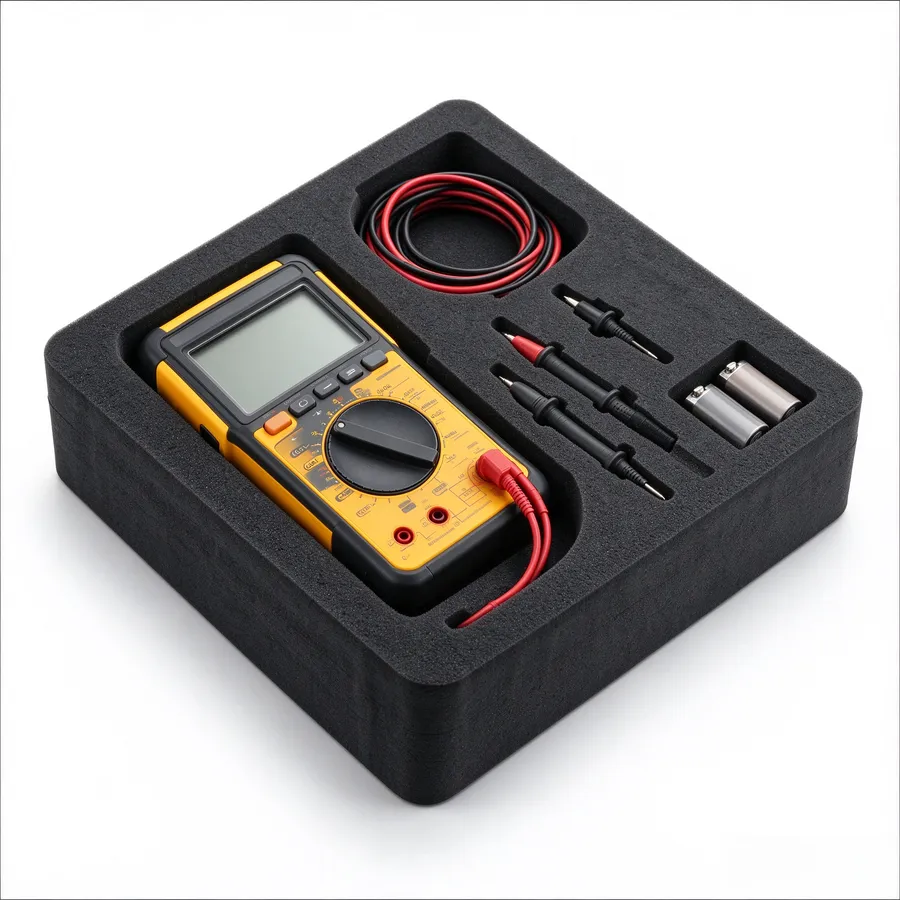
The shell handles the load; the foam handles the shock. A cut or pluck foam insert lines the base and lid so the equipment sits in a cradle that matches its shape. Two things happen here. First, the foam compresses on impact and converts a sharp spike of force into a longer, gentler deceleration, which is what actually protects delicate internals. Second, and often more important, a snug insert locks the gear in place. If the contents can slide, every jolt repositions them and concentrates force on whichever corner happens to hit the panel, so even a tough shell fails to protect loose equipment. Filling the void with layered or custom-cut foam is the single cheapest upgrade to transport protection.
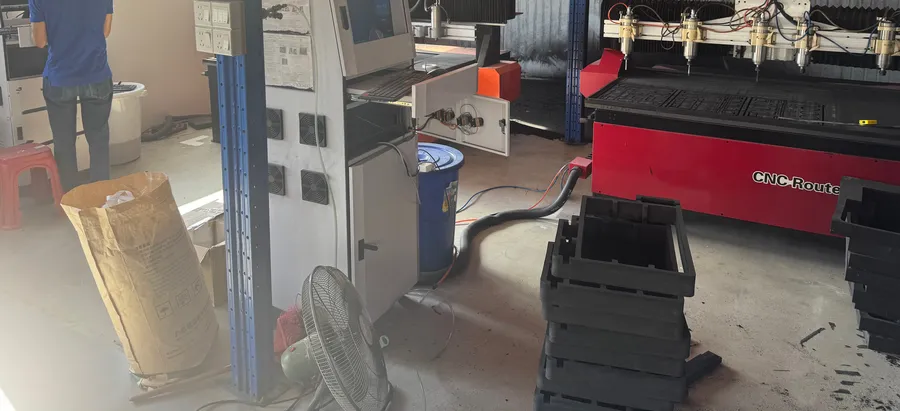
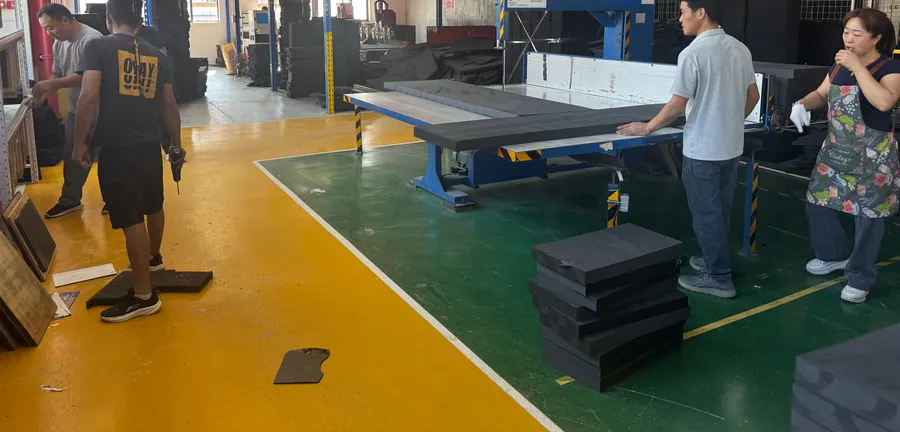
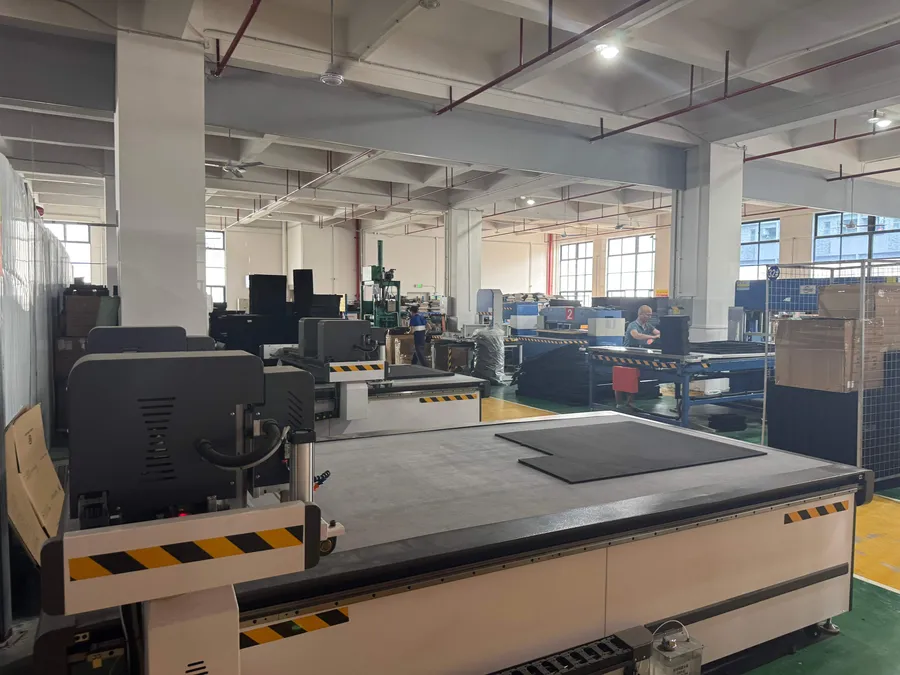
The range supports pick-and-pluck, die-cut, and CNC-cut foam, plus egg-crate and layered structures, so the insert can be tailored to the exact silhouette of the device. For irregular kits, a physical sample or a drawing of the packed contents is the reliable way to specify the cavity. This is why foam is treated as part of the protective system, not as packing you add later.
How the protective layers compare by published model
The table shows how the four protective variables move together across real models. As internal depth and footprint grow, the wall thickens and the net weight rises, because a larger panel needs more material to keep deflection under control. A shallow 88 mm-deep PP case braces a compact load with a 3.0 mm wall at about a kilogram, while the 190 mm-deep ABS case uses a 5.3 mm wall and weighs close to five kilograms to protect a bigger, heavier kit through the same kind of handling abuse. Use these published figures to locate your equipment on the curve rather than guessing a size.
| Model | Shell | External Mm | Internal Mm | Wall Mm | Net G | Stackable |
|---|---|---|---|---|---|---|
| KX-4010 | PP | 400 x 360 x 100 | 390 x 315 x 88 | 3.0 | 1015 | Yes |
| KX-4616 | PP | 460 x 367 x 155 | 455 x 338 x 148 | 3.0 | 1395 | Yes |
| KX-64112 | ABS | 413 x 336 x 123 | 393 x 280 x 112 | 3.8 | 1820 | Yes |
| KX-65522 | ABS | 545 x 440 x 215 | 507 x 385 x 190 | 5.3 | 4860 | Yes |
Closure, stacking and the seal against the route
Protection is only complete if the case stays closed and the stack stays stable. Latches clamp the lid to the base so vibration cannot work the seam open, and the hinge keeps the two halves aligned so the latch line stays true after many cycles. Stackability is the second structural feature: cases designed with interlocking geometry transfer the weight of the units above into their own rigid walls and feet, so the equipment inside a lower case never bears the load of the ones on top. This is why a stack of matched hard cases can be moved as one column through a warehouse, and why mixing non-stackable boxes into the same column is where damage usually starts. For routes with dust or splashing, models that add a gasketed closure limit how much particulate enters the seam; where a specific rating is required, that rating is confirmed against the model actually shipped, not inferred from the product family.
Choosing protection for your transport risk
Match the case to the worst thing that happens on your route. If the dominant risk is dropping, prioritise a tougher PP shell and generous lid foam so the impact face is cushioned. If it is crushing in a loaded vehicle or a shared pallet, prioritise an ABS shell, a thicker wall, and a model explicitly listed as stackable so lower units are protected by the stack design. If it is shifting and chafing, the fix is not a heavier shell but a better-fitting insert. KeXin works on a wholesale and OEM basis with EXW or FOB terms and does not sell single units at retail, so the protection you specify is replicated consistently across the batch; OEM first samples run around 45 days, new moulds around 125 days, on a 30 percent deposit. Tell us the equipment, the route, and how it is handled, and the case is chosen from published measurements rather than a datasheet promise.
Customisation
Everything described above is configurable on a standard shell: interior layout (pick-and-pluck, die-cut or CNC-cut), foam grade and thickness, colour, logo method, latch and lock count, pressure-equalisation valve, cable ports, document holder and identification plate. A bespoke exterior geometry requires a new mould — 125 days, from 3,000 units per moulded component.
Procurement considerations
| Question | What to send us |
|---|---|
| Which shell fits? | Equipment L × W × H as packed, plus required clearance per axis |
| What does it cost? | Order quantity and estimated annual quantity — the two drive different answers |
| Is tooling needed? | Whether an existing shell clears the envelope with usable foam depth |
| Lead time? | Your required delivery date, not just the order date |
| Certification? | The exact standard your tender names — we will say whether we can test to it |
| Freight? | Destination and preferred terms; carton and pallet data supplied with the quotation |
Comparison and selection guide
The tables on this page exist because a protective case is chosen by comparing three things: the envelope, the environment and the handling chain. Where no table applies, the rule below is.
| Situation | What To Do |
|---|---|
| Length | Allow at least 25 mm at each end beyond the equipment so the foam can absorb end impact rather than the shell. |
| Depth split | A deeper base carries the mass; a shallow lid retains it. We normally recommend a 60/40 or 70/30 base-to-lid split. |
| Closure | Latches on the long edge give better sealing on a flexing shell; latches on the short edge are faster to open. |
- Size on internal dimensions plus clearance, never on a product name.
- Choose the carrying method before the shell: it changes the series, not just the price.
- Specify the interior last, and decide up front whether the end user will reconfigure it.
How do hard cases protect equipment during transportation? relates to Firearm & Long Equipment Transport Cases. Related families: Firearm Transport Cases / Military Protective Cases / Equipment Transport Cases. Related sectors: field and industrial equipment. Continue in the Firearm & Long Equipment Transport Cases cluster.
This page is written from our own production data. If your requirement differs, send the dimensions and we will tell you which of the 155 models fits, or whether a custom route is needed.