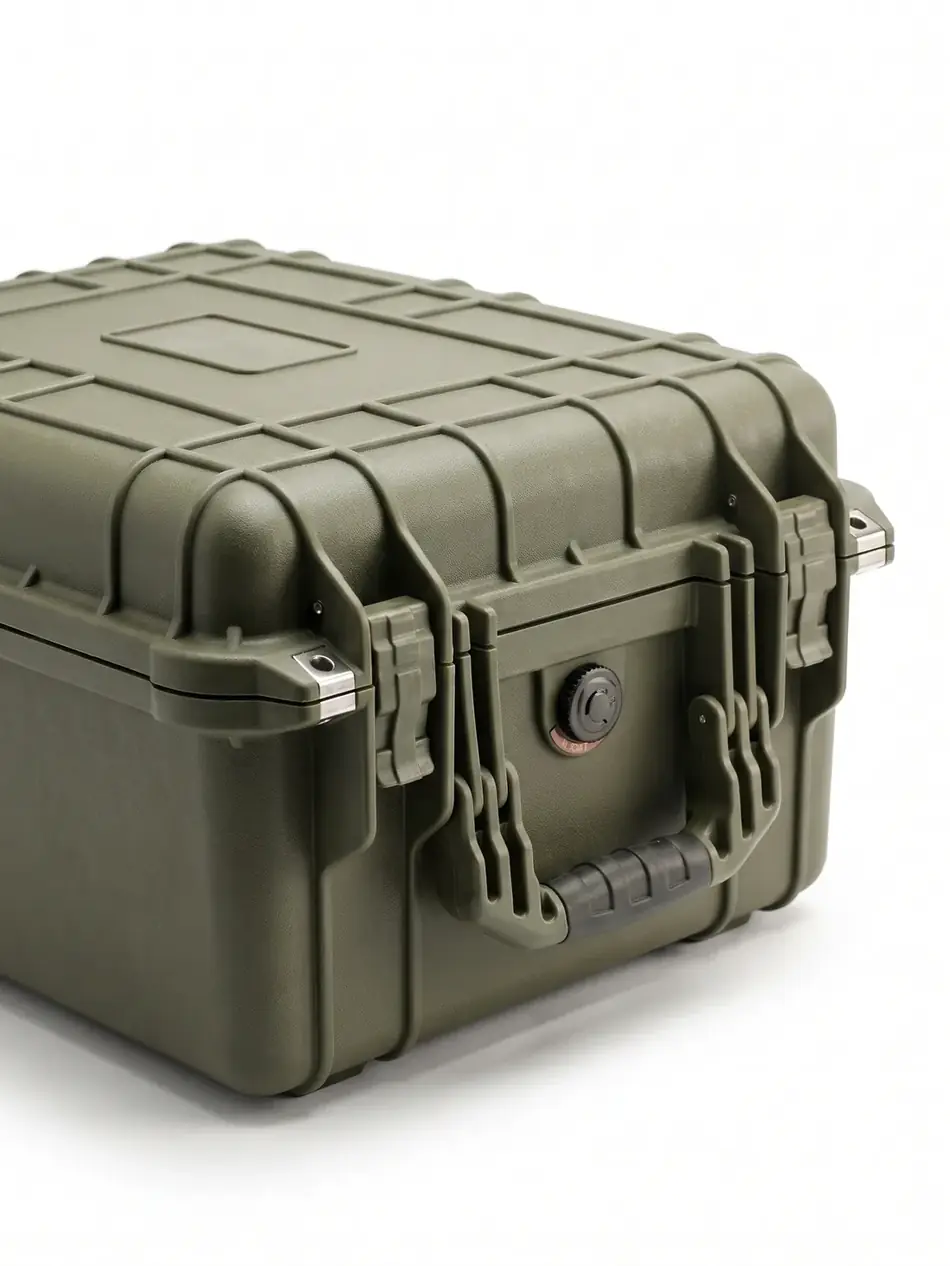
What case dimensions should be considered before ordering?
Before ordering a hard case, evaluate the dimensions as a set rather than one number. The internal length, width and depth are what your equipment must fit inside, with a few millimetres of foam allowance added on every side; the external length, width and depth are what must clear the shelf, vehicle, or pallet where the case will actually travel. The wall thickness tells you how much of the gap between the two is solid panel versus usable space, and the lid and base depth split the internal height into the two halves so you know how much room the top cover takes. Net weight, stackable footprint, and packing quantity then determine shipping cost and storage density. The right order comes from matching your item's measured size plus a cushioning allowance to the internal cavity, and then confirming the external box still fits the handling and transport envelope it will face.
Key points
- Specify dimensions as a set: internal cavity for the equipment, external box for the shelf, vehicle, or pallet that must receive it.
- Add a cushioning allowance, typically a few millimetres per face, between the item's measured size and the internal cavity so foam can do its job.
- Compare wall thickness to judge how much of the external size is solid panel and how much is usable internal space rather than assuming external minus internal is waste.
- Split internal height into lid and base depth so tall accessories or scopes are not blocked by a shallow top cover.
- Check net weight and stackable footprint before ordering, because they drive freight cost and how densely cases store in transit.
- Confirm the chosen model on published measurements per unit; the same footprint can carry a different wall and internal size between PP and ABS versions.
Internal cavity: the number that decides fit
The internal length, width and depth are the only dimensions that directly determine whether the equipment goes in. Measure the item at its widest, longest, and tallest points, then add a cushioning allowance so the foam can surround it. A case that matches the item exactly with no gap leaves nothing to absorb shock, so the practical target is the item size plus a few millimetres of foam on each face. In the firearm-transport range the internal depth is often noticeably smaller than the external depth because the wall, the seam, and the foam layer all consume height. That is why a buyer should read the internal figure first and treat the external figure as the constraint for storage, not for fit.
External footprint: the number that decides where it travels
The external length, width and height are what must clear the space the case will live in during transport. A rack, a vehicle boot, a standard shelf, or a pallet grid each imposes a maximum external size, and a case that fits the equipment but overflows the rack is still the wrong order. External dimensions also set how many units tile across a pallet and how the stack behaves. When you compare models, line the external box up against the handling envelope as carefully as the internal cavity against the item; both have to be satisfied at once, and only the published measurements, not a rough idea of the model name, can settle it.
Wall thickness and the internal-to-external gap
The difference between external and internal dimensions is not wasted space; most of it is wall thickness plus the allowance the mould leaves for the seam and the insert. A 3.0 mm wall, a 4.7 mm wall, and a 5.3 mm wall each remove a different amount from the same external shell, so two cases that look identical from the outside can offer meaningfully different internal room. Reading wall thickness lets you judge the trade-off between protection and usable space: thicker panels resist crushing better but shrink the cavity. Where the datasheet publishes both internal and external figures per model, the gap should reconcile with the wall, and that reconciliation is the sanity check before you order.
Lid and base depth: splitting the internal height
Internal height rarely belongs entirely to the base. The lid takes a share, and if your item has a tall feature, a mounted optic, a handle, or a control panel, the base depth is what actually receives it. Specifying dimensions without separating lid from base is one of the commonest causes of a near-miss: the total cavity looks big enough, but the item will not sit below the lid line once the cover closes. Ask for the lid and base split for the exact model, and confirm the item lies within the base depth so the lid closes without pressing on top of the gear, which turns a protective cover into a load point.
How real models compare across the dimension set
Read across these published models and the dimension set becomes concrete. KX-705 uses a thin 2.1 mm wall, so almost its whole external height converts into a 112 mm internal cavity at the lowest net weight, favouring space and light carry. KX-4312 gives up internal width to a narrower 300 mm footprint, useful when the shelf is narrow, but keeps good depth. KX-64619 sacrifices more of its 186 mm external height to a 4.7 mm ABS wall, still leaving a deep 166 mm cavity for taller kits at the cost of nearly three kilograms of shell. None of these is universally better; the correct order is the model whose internal cavity clears your item, whose external box clears your rack, and whose wall and weight match the handling it will meet.
| Model | Shell | External Mm | Internal Mm | Wall Mm | Net G | Stackable |
|---|---|---|---|---|---|---|
| KX-4010 | PP | 400 x 360 x 100 | 390 x 315 x 88 | 3.0 | 1015 | Yes |
| KX-4312 | PP | 430 x 300 x 115 | 420 x 260 x 104 | 3.5 | 1170 | Yes |
| KX-705 | Engineering PP | 425 x 320 x 115 | 420 x 270 x 112 | 2.1 | 830 | Yes |
| KX-64619 | ABS | 456 x 340 x 186 | 430 x 288 x 166 | 4.7 | 2840 | Yes |
Net weight, stacking and packing quantity
Dimensions decide fit; weight and stack behaviour decide cost and density. Net weight moves freight charges and how tired a case feels after repeated carries, and two similar boxes can differ by a factor of several because of shell material and wall. Stackable footprint decides how many units you can lock into one column in a vehicle or store in a rack, which is where case dimensions quietly become logistics economics. Packing quantity per carton and per pallet then shape your landed volume per shipment. Because KeXin supplies on a wholesale and OEM basis with EXW or FOB terms and does not sell single units at retail, getting these numbers right before ordering matters more than it would in a one-off purchase: the same dimensions repeat across the batch, and correcting a size mistake after a production run is expensive. OEM first samples run around 45 days and new moulds around 125 days on a 30 percent deposit, so the specification is agreed up front.
A practical ordering checklist
Before you place an order, assemble five numbers on one line: the item's own measured length, width and height; the internal cavity of the candidate model plus a foam allowance; the external footprint of that model against the tightest space it must clear; the lid and base split so nothing blocks the cover; and the net weight plus stackable footprint for freight and storage. Where a specific environmental rating is required, it is confirmed against the exact model and configuration that ships rather than assumed from the product family. Send us the measured equipment and the transport envelope, and the model is selected from published dimensions so the case fits the gear and the gear's journey at the same time.
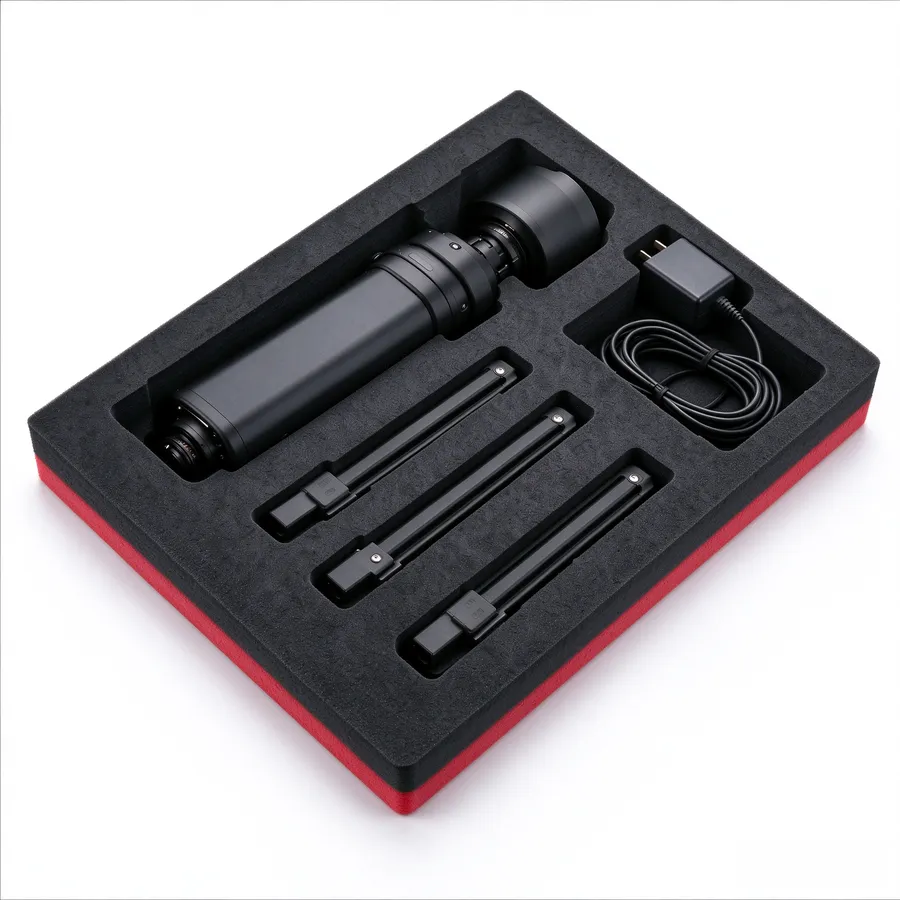
Customisation
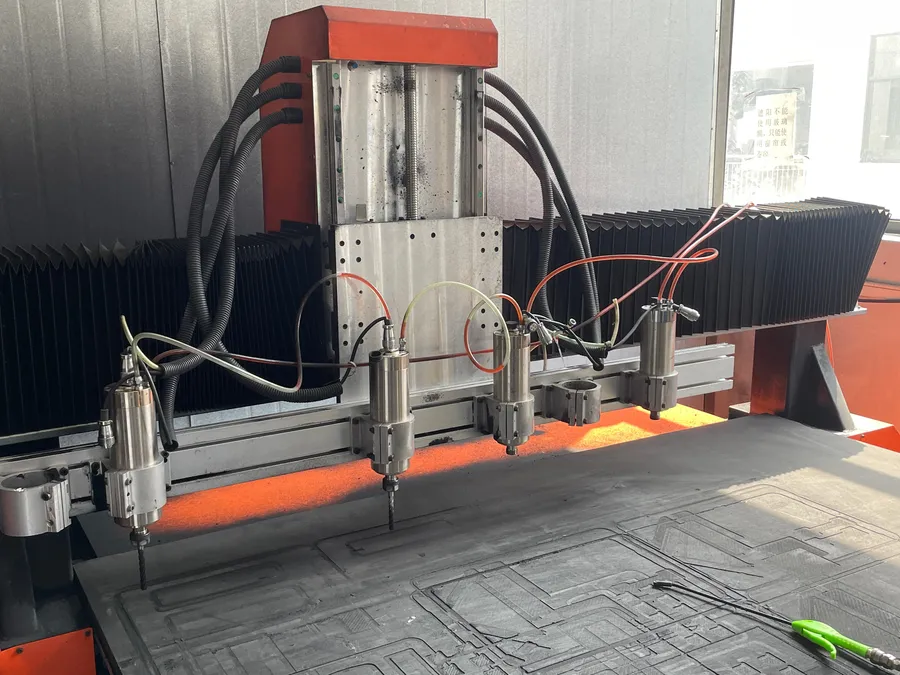
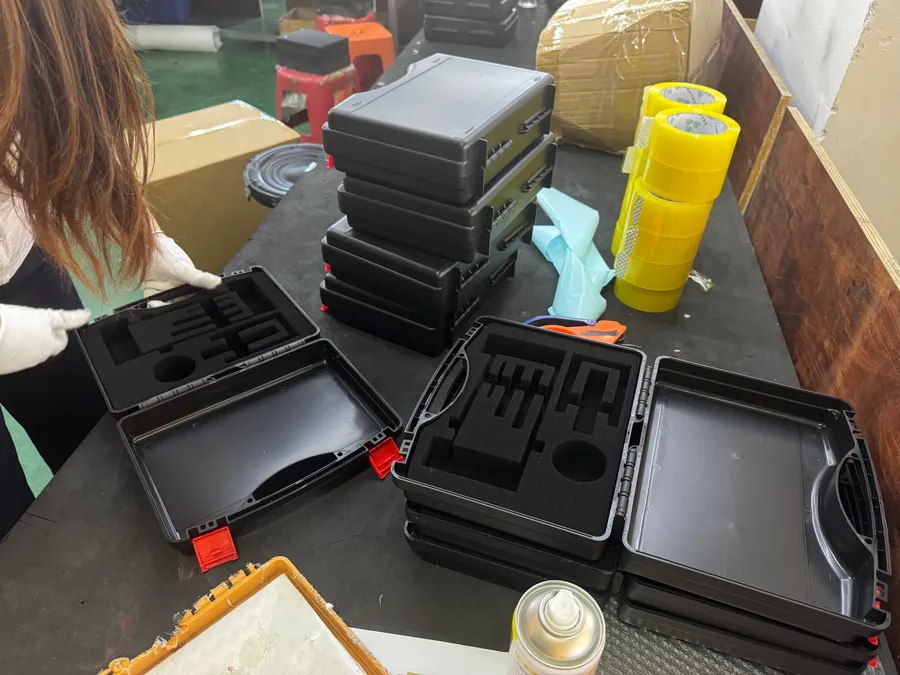
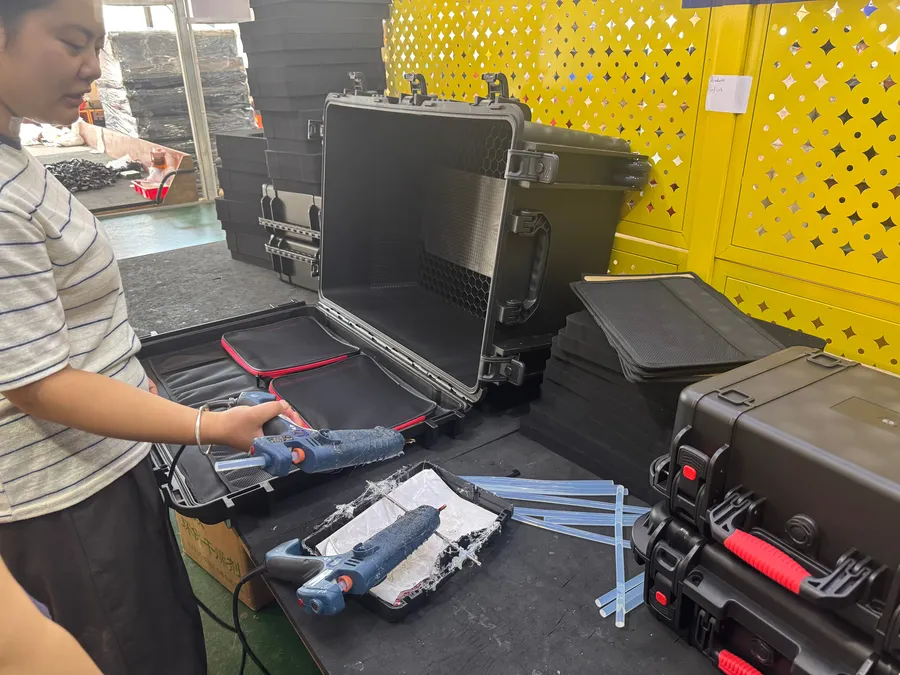
Everything described above is configurable on a standard shell: interior layout (pick-and-pluck, die-cut or CNC-cut), foam grade and thickness, colour, logo method, latch and lock count, pressure-equalisation valve, cable ports, document holder and identification plate. A bespoke exterior geometry requires a new mould — 125 days, from 3,000 units per moulded component.
Procurement considerations
| Question | What to send us |
|---|---|
| Which shell fits? | Equipment L × W × H as packed, plus required clearance per axis |
| What does it cost? | Order quantity and estimated annual quantity — the two drive different answers |
| Is tooling needed? | Whether an existing shell clears the envelope with usable foam depth |
| Lead time? | Your required delivery date, not just the order date |
| Certification? | The exact standard your tender names — we will say whether we can test to it |
| Freight? | Destination and preferred terms; carton and pallet data supplied with the quotation |
Comparison and selection guide
The tables on this page exist because a protective case is chosen by comparing three things: the envelope, the environment and the handling chain. Where no table applies, the rule below is.
| Situation | What To Do |
|---|---|
| Length | Allow at least 25 mm at each end beyond the equipment so the foam can absorb end impact rather than the shell. |
| Depth split | A deeper base carries the mass; a shallow lid retains it. We normally recommend a 60/40 or 70/30 base-to-lid split. |
| Closure | Latches on the long edge give better sealing on a flexing shell; latches on the short edge are faster to open. |
- Size on internal dimensions plus clearance, never on a product name.
- Choose the carrying method before the shell: it changes the series, not just the price.
- Specify the interior last, and decide up front whether the end user will reconfigure it.
What case dimensions should be considered before ordering? relates to Firearm & Long Equipment Transport Cases. Related families: Firearm Transport Cases / Military Protective Cases / Equipment Transport Cases. Related sectors: field and industrial equipment. Continue in the Firearm & Long Equipment Transport Cases cluster.
This page is written from our own production data. If your requirement differs, send the dimensions and we will tell you which of the 155 models fits, or whether a custom route is needed.