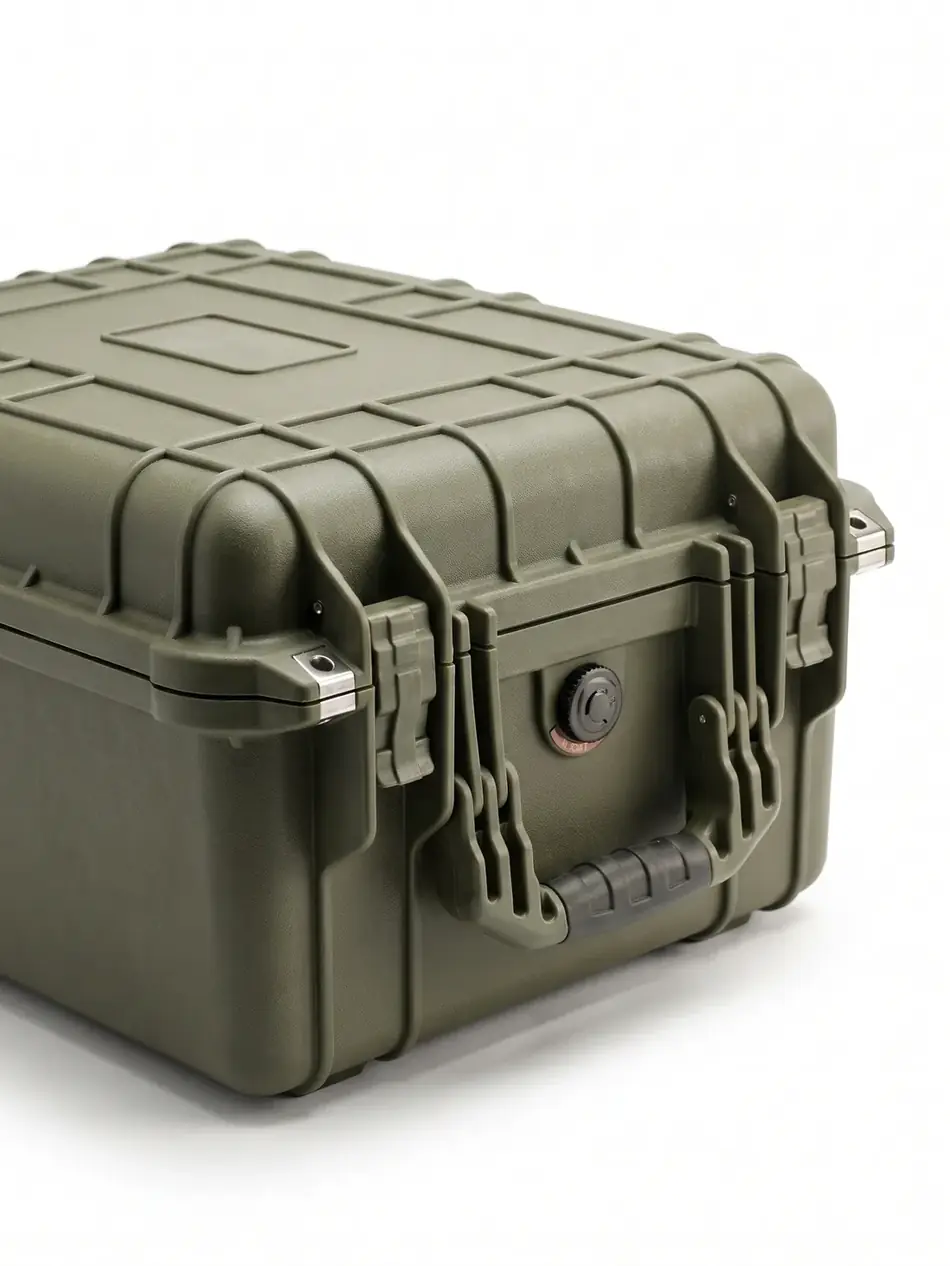
What affects the MOQ of custom protective cases?
A custom protective case does not have one MOQ; it has a different minimum for each thing you change. On our model sheets the set is identical across all 155 models: one unit for a stocked shell, one unit for custom foam, 300 units for a custom colour, 300 units for a logo, 300 units for an OEM build on existing moulds, and 3,000 units per moulded component for a bespoke shell geometry. What moves a quantity from the low tier to the high tier is not how many cases you want but where the change happens in the process: at the resin batch, on the print fixture, at the foam cutting tool, inside an existing mould, or in a new mould. Set-up and material that cannot be re-used between customers is what a minimum order actually pays for, so the way to reduce an MOQ is to move your change down that list, not to negotiate the number.
Key points
- Treat MOQ as six separate numbers: shell, foam, colour, logo, OEM build and new mould each have their own threshold.
- Our published set is one unit for a stocked shell and custom foam, 300 for colour, logo or OEM, and 3,000 per component for a new mould.
- Colour is decided at the resin stage, so the minimum is per colour: a two-colour programme is two 300-unit batches, not one 300-unit order.
- A printed mark is a fixture set-up at 300 units; the same mark embossed in the mould is a mould modification and moves to the tooling tier.
- Foam route decides volume sensitivity: pick-and-pluck and CNC-cut layouts change per unit, die-cut carries a tooling cost per layout.
- Features that are moulded into the shell cannot be added at the packing stage - 31 of our 155 models offer no seal channel at all.
- State your quantity in cartons and pallet positions, not pieces: published pack quantities run from 1 to 40 units per carton across the range.
Why a minimum order exists at all
A minimum order quantity is not a commercial preference dressed up as a policy. It is the quantity needed to cover something that has to be done once and cannot be shared with the next customer. On an injection-moulded case there are only four places where that happens: a resin batch with pigment in it, a printing or labelling fixture set up for one artwork, a foam cutting tool made for one layout, or a mould cut for one geometry. Everything else - assembling hardware, fitting an interior, closing a lid, packing a carton - is done per unit and is therefore priced per unit rather than gated by a minimum.
That distinction explains why the same case can be ordered in single units in one configuration and needs hundreds or thousands in another. The buyer-side question is therefore never 'what is your MOQ' but 'which of these four events does my change trigger'. Answer that and the number follows; argue with the number and it does not move, because it is a cost of set-up rather than a margin decision.
The published minimums, tier by tier
Every model sheet in our catalogue carries the same set of thresholds, which makes the tiers easy to plan against. The quantities below are per order line; the lead times are measured from approved drawing and confirmed deposit, which is also when the 30 percent deposit falls due.
| Tier | Published Minimum | Lead Time | What Gates It |
|---|---|---|---|
| Stocked shell, standard colour | From 1 unit | Stock | Nothing beyond availability of the moulded shell |
| Stocked shell, custom foam layout | From 1 unit | Included in production | Cutting file and layout approval, not tooling |
| Stocked shell, custom colour | From 300 units per colour | About 45 days | Pigment masterbatch batch and a trial shot |
| Stocked shell, custom logo or marking | From 300 units | About 45 days | Print fixture set-up for a new customer |
| OEM build on existing moulds | From 300 units | About 45 days | Production scheduling and inspection of a first article |
| Bespoke geometry, new mould | From 3,000 units per moulded component | About 125 days | A mould cut for one customer only |
Driver one: whether the shell geometry already exists
This is the largest single step in the whole ladder, and it is the one most often argued about unnecessarily. An existing shell is already moulded, already tooled and already inspected, so a quantity of one is economically rational: nothing has to be set up. A new geometry means a mould, and a mould is made for one customer, amortised over that customer's programme, and idle for everyone else - which is why the starting point is three orders of magnitude higher, at 3,000 units per moulded component. A case has more than one moulded component: a base and a lid are separate tools, so a fully bespoke shape is a two-component conversation, not a one-component one.
The practical consequence is that most programmes should exhaust the geometry you already have before buying a tool. Our catalogue covers 155 active models moulded in PP, engineering PP and ABS, spanning small shells with 115 mm of internal length to long shells with 880 mm, and every one of them accepts a custom interior from a single unit. A new mould usually earns its place only when an external envelope is genuinely binding - a rack pitch, a vehicle bay, a baggage limit - rather than when a standard shell is merely a little roomier than you would prefer.
Driver two: colour, which is a resin decision not a painting decision
Colour on these cases is chosen at the resin stage through pigment masterbatch, so it is part of the material rather than a finish sprayed afterwards. That is better for durability, because the colour does not chip, but it is what creates the 300-unit minimum: a batch has to be committed, matched to a PMS or RAL reference on a trial shot, and released before the moulding run - and the machine time spent reaching your colour cannot be sold to someone else. Two consequences follow for planning. First, the minimum is per colour, so a programme in two shell colours is two 300-unit batches even if the annual total is one order. Second, changing colour mid-programme resets the same cost, which is why colour is agreed at first-article stage and then held.
Where the quantity genuinely cannot reach 300, choose an available programme colour and put the identity in a replaceable marking instead - an identification plate, a label or a print on an existing shell. Black, olive drab, dark earth, safety orange, navy and grey are the colours requested most often across our programmes, and the closest match among them is almost always cheaper than the minimum order it would take to reach an exact custom pigment.
Driver three: marking method, where a print becomes a mould feature
The same logo can sit on two different tiers of this ladder depending only on how it is applied. Screen printing on a flat panel and pad printing on a curved or recessed surface are both line operations with a fixture to set up for a new customer's artwork, which is where the 300-unit marking minimum comes from. A moulded emboss is different in kind: the mark exists in the tool, so adding one is a mould modification, and the quantity question becomes a tooling question rather than a print question. Riveted or adhesive identification plates sit at the opposite end - they carry serial numbers, contents lists and calibration status, they are replaceable, and they do not create a minimum of their own.
Vector artwork in AI, EPS, PDF or SVG with PMS references removes a second hidden delay as well: a high-resolution raster is workable but slows the first proof, and a late proof pushes the production slot, which on a 300-unit line looks like a broken promise even though nothing went wrong on the machine.
Driver four: the interior, where volume barely matters
The interior is the cheapest place to make a case look and behave like yours, and it is the one that does not need a batch. Custom foam to a new layout is available from a single unit on a stocked shell, because the layout is produced from a cutting file rather than from steel. The route you choose inside foam still has quantity consequences, but they are smaller and they show up in unit cost rather than in a gate you have to clear before you can start.
| Foam Route | Best For | Quantity Effect |
|---|---|---|
| Pick-and-pluck | Kits that change between deployments | Lowest - layout is adjusted per unit, no tooling |
| CNC-cut | Fixed, high-value equipment layouts | Moderate - longer per-unit time, no per-layout tool |
| Die-cut | Repeatable medium-volume layouts | Higher - a tooling cost per layout rewards repeat runs |
| Layered PE, EPE, EVA | Support under mass, cleanable contact face | Material grade and thickness set per layer |
Driver five: moulded features you cannot add at the packing bench
Anything that is part of the shell itself behaves like geometry, not like an option. Sealing is the clearest example: 124 of our 155 models publish a compressible gasket running in a continuous moulded channel, and the remaining 31 state plainly that no seal is offered on that shell, because the channel was never moulded into it. Choosing among those two groups is a catalogue decision at one unit; asking us to create a channel in a shell that does not have one is a tool decision at the 3,000-unit tier. Wheels work the same way - 19 models ship with two wheels and 136 with none, so a wheeled variant is normally reached by selecting one of the wheeled shells rather than by adding fittings to a shell that has no provision for them.
Latch count, padlockable hasps, handle type, hinge configuration, pressure-equalisation vents and feet are hardware: they are specified per configuration on existing tooling, and custom hardware is available across the catalogue. Where a component has to be tooled or sourced to a new specification rather than taken from the existing set, the minimum stops being a case number and becomes a component number - which is worth asking about early, because it is the one threshold a buyer rarely expects.
Driver six: packing and pallet rounding
Quantities that look tidy in a spreadsheet stop looking tidy once cartons and pallets are involved. Our published pack data shows how wide the spread is: 58 models state a pieces-per-carton figure, and the values run from a single unit per carton on the largest shells - KX-5723, KX-6922, KX-66232 and KX-95419 all pack one to a carton - through 10 per carton on KX-4010 and KX-4312, six on KX-64619, three on KX-65522, 24 on KX-3207, 32 on KX-2805, and 40 on the small KX-2005 and KX-2305. A 300-unit minimum on KX-2005 is 7.5 cartons; the same number on KX-6922 is 300 cartons and a different conversation about warehouse space and container loading.
Six models publish carton dimensions without a pieces-per-carton figure, including KX-4610, KX-4613, KX-4616, KX-3607, KX-3608 and KX-3609, so where a number is missing we ask for it explicitly rather than infer one. State your quantity in cartons and pallet positions as well as pieces, and state the destination constraint - a full container, a part load, or an air shipment priced by volumetric weight, where an extra 150 mm of carton height can cost more than the minimum order itself.
How the drivers compare when you are choosing a route
Read the next table as a decision aid: the left column is the change you want, and the rest tells you which tier it puts you in and what you can do instead. In almost every programme the sequence is the same - exhaust the interior, then the marking, then the colour, then the shell - because that order moves you up the ladder only when the cheaper options have genuinely failed.
| Change You Want | Tier It Triggers | Lead Effect | Cheaper Alternative |
|---|---|---|---|
| New interior layout | 1 unit | Inside production | Pick-and-pluck while the layout is still moving |
| Your logo on the lid | 300 units | About 45 days | Identification plate or label on a standard shell |
| Exact brand colour | 300 units per colour | About 45 days plus trial shot | Nearest existing programme colour |
| Seal on a shell with no channel | Tooling tier | About 125 days | Select one of the 124 gasketed models |
| Bespoke case geometry | 3,000 units per component | About 125 days | Closest stock model plus a cut-foam layout |
Selection guidance: sequencing a programme to stay below the thresholds
Start with a sample on a stocked shell and a custom interior. One unit is a legitimate order on 155 models, so the fit, the lid effort, the carrying handle and the foam layout can all be settled before any batch logic applies. Then run a first article and a pilot batch rather than a full commitment: state the annual estimate instead of the opening quantity, because a minimum is usually set against what the factory has to reserve for you, and a credible twelve-month figure is often more useful than an inflated first order.
Freeze the things that carry set-up cost in one release - colour, artwork, foam layout, hardware list - and keep the things that do not open for revision. Re-cut foam between orders costs cutting time; re-match a pigment between orders costs a batch. If the volume genuinely sits below a threshold, the standard route is a standard shell with a custom interior and a replaceable marking, which keeps you at one-unit ordering indefinitely while still delivering an own-branded product on the shelf.
Applications: which buyer hits which ceiling
A distributor replenishing a known model in a known colour almost never touches the tooling tier; their constraint is lead time and carton rounding, and their real question is a replenishment schedule rather than a minimum. A brand putting its own name on a case meets the 300-unit marking and colour gates, and the sensible move is to combine the two into one 300-unit release rather than trigger them separately. A defence or law-enforcement programme with a rack or vehicle envelope is the one that legitimately reaches a mould, and for it the per-component figure is the number to plan around.
Firearm and field-equipment programmes usually sit in the middle: interiors change with the weapon fit, which is why the one-unit custom foam route matters more to them than any tooling conversation, and why a firearm case specification should be settled dimension by dimension before the quantity is discussed at all.
What you can customise without any batch at all
Custom foam layout, pluck-and-pluck interiors, additional trays and lid pockets, hardware selection from the existing set, packing to your own carton specification, and printed or riveted identification plates can all be done at quantities that start from one unit on a stocked shell. OEM and ODM routes, private labelling and custom colour are available across the catalogue as well, but each of those has its own trigger point in the process rather than in the order size. If a change can be undone by removing a part, it probably does not create a minimum; if it lives in steel, resin or an artwork fixture, it does.
Procurement notes: terms, deposits and what we do not quote
We supply wholesale and OEM only, on EXW or FOB terms from Guangdong, China. We do not sell retail, we do not quote DDP, and we hold no overseas warehouse, so the quantities in this article are order quantities against production, not stocking commitments somewhere near you. Payment runs a 30 percent deposit with the balance after inspection and before container loading, which is also the point at which an overstated minimum order shows up as working capital rather than as a line on a quotation.
Send an enquiry with the model or the equipment envelope, the configuration changes you want, the quantity now and the annual estimate, and the destination port. You will get back which thresholds your change actually triggers, and where a threshold is not worth clearing, the alternative that keeps you ordering at usable quantities.
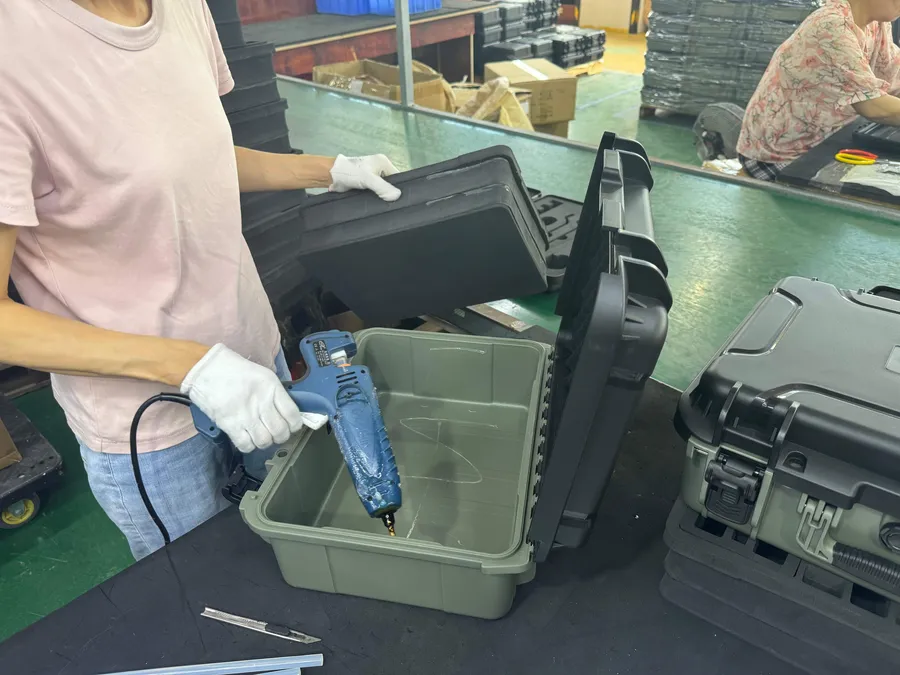
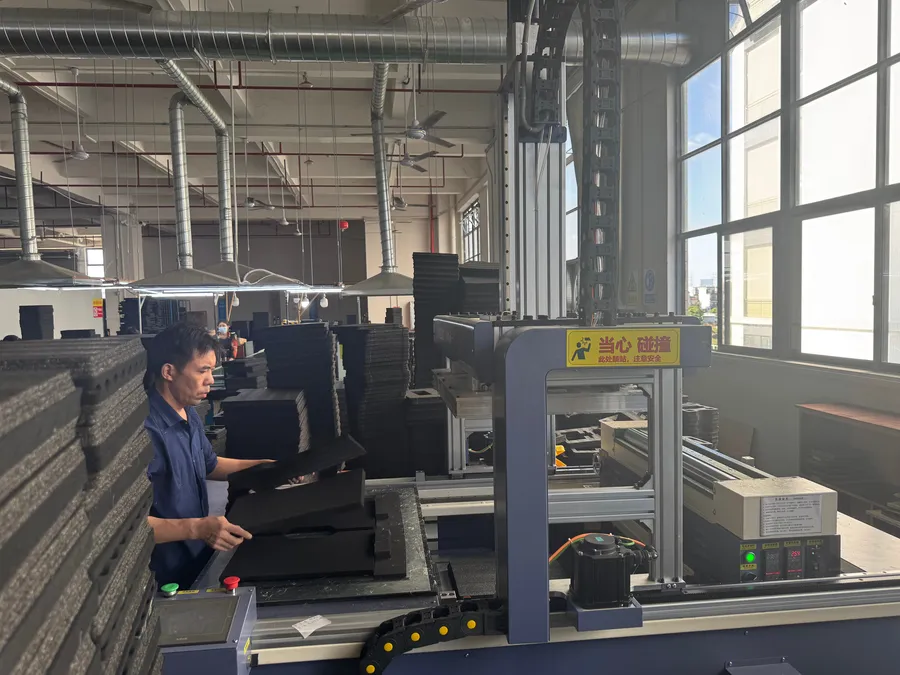
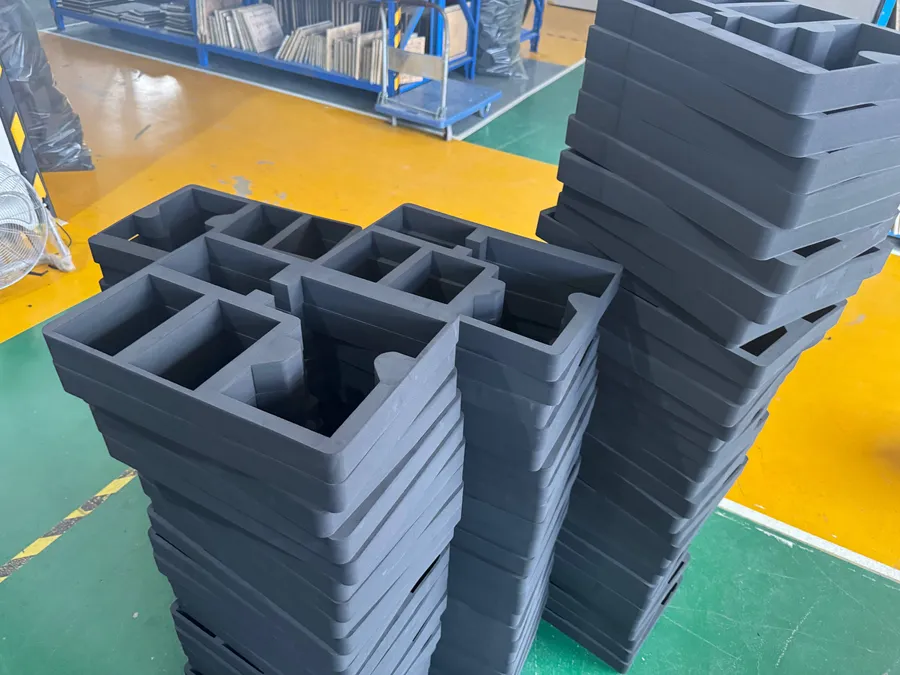
Customisation
Everything described above is configurable on a standard shell: interior layout (pick-and-pluck, die-cut or CNC-cut), foam grade and thickness, colour, logo method, latch and lock count, pressure-equalisation valve, cable ports, document holder and identification plate. A bespoke exterior geometry requires a new mould — 125 days, from 3,000 units per moulded component.
Procurement considerations
| Question | What to send us |
|---|---|
| Which shell fits? | Equipment L × W × H as packed, plus required clearance per axis |
| What does it cost? | Order quantity and estimated annual quantity — the two drive different answers |
| Is tooling needed? | Whether an existing shell clears the envelope with usable foam depth |
| Lead time? | Your required delivery date, not just the order date |
| Certification? | The exact standard your tender names — we will say whether we can test to it |
| Freight? | Destination and preferred terms; carton and pallet data supplied with the quotation |
Comparison and selection guide
The tables on this page exist because a protective case is chosen by comparing three things: the envelope, the environment and the handling chain. Where no table applies, the rule below is.
| Situation | What To Do |
|---|---|
| Fastest | Standard shell plus CNC foam — typically 45 days from approved drawing. |
| Branded | Standard shell plus custom colour and logo — MOQ applies to the resin colour. |
| Bespoke geometry | New mould — 125 days, MOQ from 3,000 units per component. |
- Size on internal dimensions plus clearance, never on a product name.
- Choose the carrying method before the shell: it changes the series, not just the price.
- Specify the interior last, and decide up front whether the end user will reconfigure it.
What affects the MOQ of custom protective cases? relates to Firearm & Long Equipment Transport Cases. Related families: Custom Protective Cases / Firearm Transport Cases / Military Protective Cases / Rolling Cases / Tool Cases. Related sectors: field and industrial equipment. Continue in the Firearm & Long Equipment Transport Cases cluster.
This page is written from our own production data. If your requirement differs, send the dimensions and we will tell you which of the 155 models fits, or whether a custom route is needed.