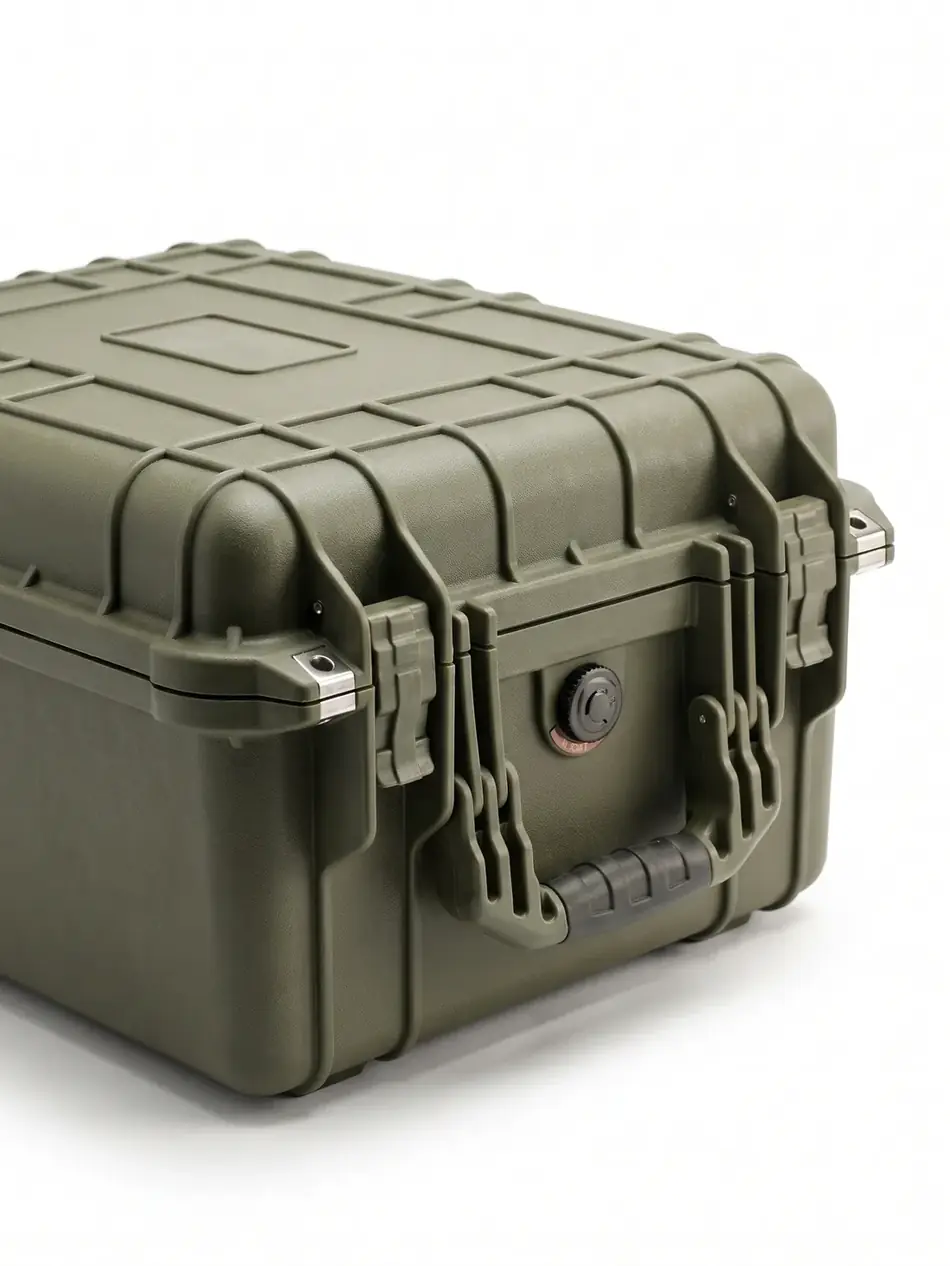
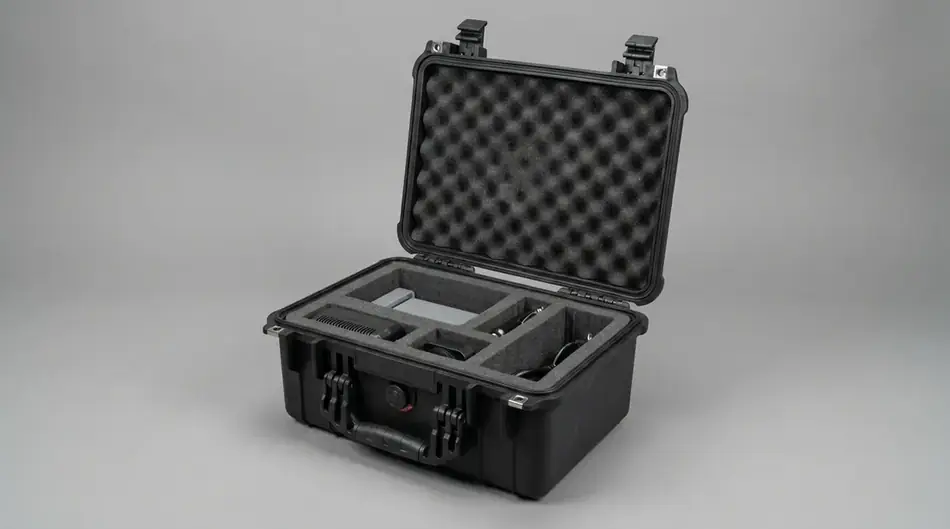
Can foam inserts be customized for long equipment?
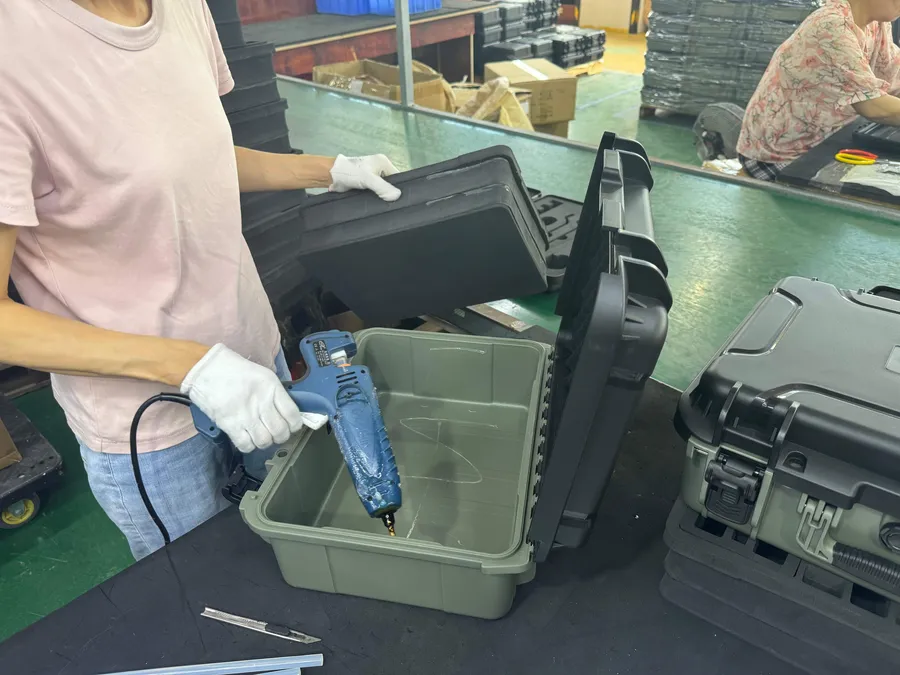
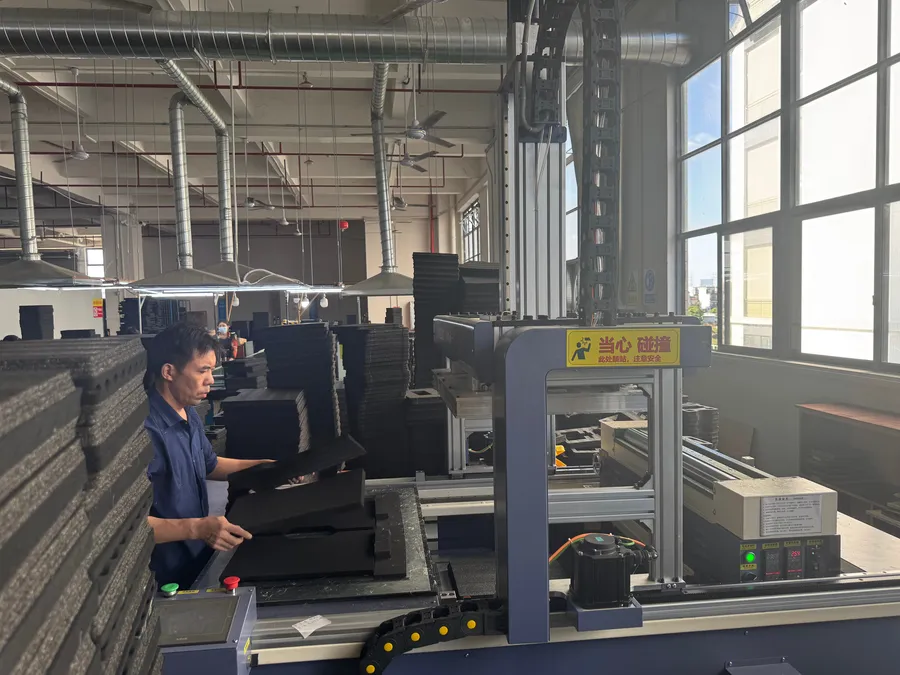
Yes, and long equipment is the category where a custom cut earns its cost fastest. We cut interiors to the envelope you supply, in cross-linked PE, EVA or EPS, as base foam, top foam, layered builds, convoluted or CNC-machined pockets, with custom thickness and custom shape both available and a drawing, a photograph of the packed kit or the physical item required before anything is cut. What changes for a long item is not the material but the support plan: a 1280 mm internal bay carries a load that touches down at two or three points, sags between them and travels fore-and-aft unless something stops it, so the insert has to be designed as zones along the length rather than as one continuous bed.
Key points
- A long item rests on a few contact points, so the cut must support between them, not only under the ends.
- Fore-and-aft travel is the failure to design out: an end stop or a captive carrier does more than extra thickness.
- Read the lid and base depth split before choosing orientation; KX-4318 gives a 140 mm base and a 38 mm lid, KX-4321 the reverse.
- A fitted interior consumes roughly 14 to 20 per cent of published volume, so the bay you measure is not the bay you keep.
- Specify narrow internal width as well as internal width, because the difference reaches 37 mm on some shells.
- A custom foam cut starts at 1 piece on an existing shell, which makes a long-item layout cheap to prototype.
Why long equipment is a different cutting problem
A compact instrument presents a block. A long item presents a span, and a span behaves differently under the same handling. The butt end and the muzzle end can sit in pockets while the middle of the item is unsupported, so every time the case is lifted the item bends around its own stiffness until it finds the walls. When the case is set down, that stored movement releases and the item travels along its length, which is the direction with the least foam between it and a hard face. The same item in a 15 mm pluck bed will survive the first month and then mark itself at the high points.
The remedy is structural rather than material: define along the bay where the item is held, where it is supported against sag, and where it is stopped from travelling. A layout that does those three things with 20 mm of firm polyethylene protects better than one that lines the whole shell with 50 mm of soft foam and leaves the item loose, and it costs less in both foam and interior volume.
Reading the bay before you cut anything
The lid and base split is the first number to look at, because it decides whether your item sits inside solid material or straddles the parting line where the latch loads arrive and where the section is weakest. Our two most common long-shell splits are 100 mm of lid over 40 mm of base and the reverse, 38 mm of lid over 140 mm of base. Those are opposite philosophies: the first presents a shallow tray that the item lies in and the lid covers, the second buries the item in a deep trough so the lid has nothing to press on.
The second number is the usable volume we publish against the internal volume. Fitted interiors take about a fifth of the bay: 50.2 litres usable against 62.7 litres internal on the KX-814641, 34.5 against 43.1 on the KX-89616, 28.4 against 35.5 on the KX-88015. If the item plus its carriers plus its accessories do not fit inside the usable figure, the layout is wrong however good the foam is.
The third is narrow internal width. On the 36 models where we publish it, the narrow figure is between 8 mm and 37 mm less than the nominal internal width, because ribs and the parting geometry intrude. A long item that is close to the width of the bay will meet those intrusions before it meets the end walls, and it is the single most common reason a first sample does not close.
| Model | Internal Mm | Lid Base Mm | Internal L | Usable L | What It Suits |
|---|---|---|---|---|---|
| KX-814641 | 1280 x 350 x 140 | 100 / 40 | 62.7 | 50.2 | A long item lying flat with a shallow lid; the base plane does the carrying. |
| KX-89616 | 880 x 350 x 140 | 100 / 40 | 43.1 | 34.5 | Shorter long items with side-by-side carriers and an accessory strip. |
| KX-88015 | 725 x 350 x 140 | 100 / 40 | 35.5 | 28.4 | Two or three zoned supports across one span. |
| KX-87926 | 737 x 257 x 240 | 175 / 65 | 45.5 | 36.4 | A long item stacked above other kit, or one that needs lid-side restraint. |
| KX-4318 | 407 x 187 x 178 | 38 / 140 | 13.5 | 11.6 | A deep base trough: the item sinks in and the lid closes without touching it. |
| KX-4321 | 411 x 208 x 202 | 164 / 38 | 17.3 | 14.9 | Protruding ends or tall accessories that need the space above the parting line. |
What we can actually cut, and what each option does
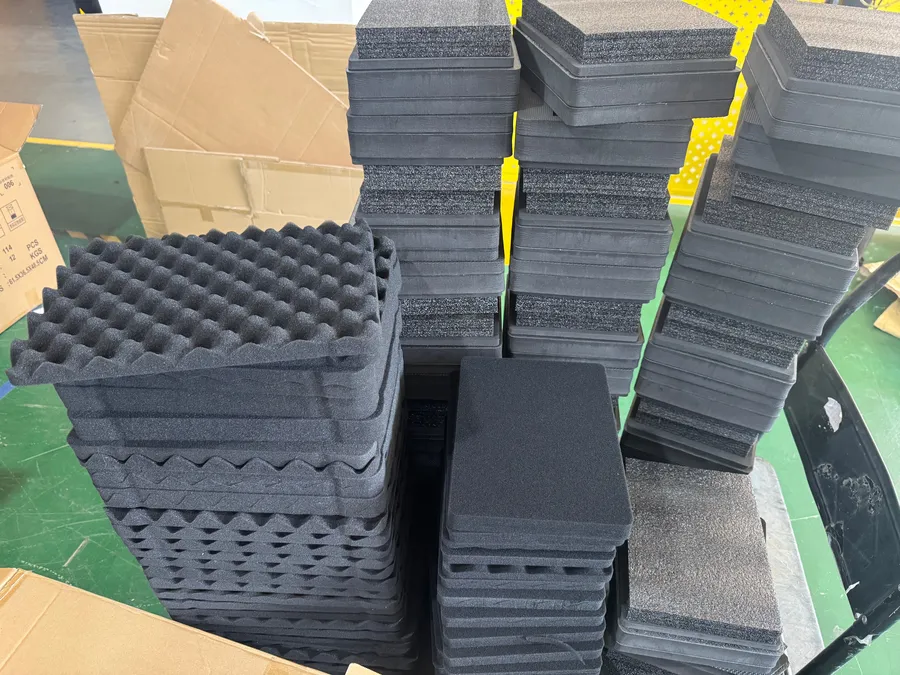
The interior options published on our product pages are pick and pluck, die-cut and CNC-cut, in cross-linked PE, EVA or EPS by zone, assembled as top foam, base foam, layered, egg-crate or convoluted, or as a custom cut. Custom thickness and custom shape are both available, and a new mould is not needed for any of it, which is why a long-item layout can be iterated cheaply on an existing shell.
For a span, the build that works most often is layered: a firm base layer that carries the item along its length, a machined or die-cut carrier on top of it that defines the contact points, and a convoluted or pluck layer above that to press the item down without needing to be exact. A full CNC cut from one material is the right answer when the geometry is complex and the quantity justifies the drawing time. A pure pick-and-pluck bed is the right answer when the same shell must serve several items and you accept looser control in exchange for reconfigurability.
Density is chosen per zone rather than per case. Under the contact points we use the firmer material so the item does not sink into a soft bed and tilt; over the span and against the ends we use the more compressible material so that a shock is stroked rather than reflected. That combination is the whole trick for long equipment, and it is why we ask what touches what instead of simply how thick the foam should be.
Designing the zones: carriers, stops and the sag problem
Work along the length in four decisions. First, the end stop: one machined shoulder at the heavier end, or a through-pocket with a lip, so the item cannot travel. Second, the two primary supports, placed where the item is stiffest rather than where it is prettiest; for a long firearm that is normally at the receiver and forward of the magazine, not at the muzzle. Third, the mid-span relief, a gap or a soft wave under anything that must not be lifted by the foam when the case is closed, such as a bipod, a sight mount or a cable run. Fourth, the accessory strip: magazines, optics, cleaning kits and batteries get their own pockets in a lane beside the item, never loose on top of it.
Indexing belongs in the same drawing. A long item put in the wrong way round still closes the case, and the damage is done later, so the carrier should be asymmetric enough that the incorrect orientation is obvious by hand. Where the contents must be auditable at a glance, a shadow line cut into the base layer shows a missing item without opening the case, and where a laser-cut outline is impractical, a colour contrast between layers does the same job.
Choosing between the options
Nothing in that table is a recommendation to buy the most precise option. A long item that is carried by two people and stowed flat usually wants a layered base with two machined carriers and a pluck top, which is quick to change when the accessory set changes. A shell that will be issued to a dozen different kits wants the flexibility of pluck and accepts the trade in control.
| Option | Best For | Support Quality | Volume Cost | When To Avoid |
|---|---|---|---|---|
| Pick and pluck | Shared shells, field reconfiguration | Loose; control depends on how carefully it is built | Low to moderate | A single high-value span with defined contact points |
| Die-cut carrier | Repeated layouts at volume | Consistent contact points, defined by the die | Moderate | Frequent design changes or one-off samples |
| CNC-cut | Complex geometry, tight tolerance | Exact; can carry end stops and mid-span relief | Highest, consumes most bay | When the envelope is not yet confirmed |
| Layered build | Long spans on existing shells | Firm where loaded, soft where absorbing | Efficient use of usable litres | Where a single clean presentation face is required |
Where these layouts are used
Firearm transport is the obvious family, and the reason it works is that the item has a known, unchanging silhouette: the cut can be drawn once and repeated. The same geometry serves survey tripods and instrument legs, mast and antenna sections, cable and reel sets, bipods and monopods, folding blades, telescopic poles and any kit where the packed length is far greater than the packed height.
The differences between those users are in what shares the case rather than in the span itself. A range or armoury layout adds magazine lanes and a lockable provision. A survey layout adds a dry pocket for the data collector and a place for the range rod. A communications layout has to route a cable and keep a connector unloaded, which usually means the carrier is cut around the body and the connector is left floating in a pocket of its own. In every one of those, the accessory lane is where a layout is won or lost, and it is the part buyers leave out of the first drawing.
Custom, OEM and what it costs to get a layout right
We work wholesale and OEM on EXW or FOB terms only. We do not sell retail, do not quote DDP and hold no overseas warehouse stock. On an existing shell, a custom foam cut starts from 1 piece, so a long-item layout can be prototyped as a single case before anything is committed; logo, colour and OEM configurations start at 300 pieces, and a new mould at 3,000 per component. A first OEM sample on an existing mould runs about 45 days, a new mould about 125 days, with a 30 per cent deposit to start.
For long equipment the cheapest path by a wide margin is to send the item. A photograph tells us the silhouette; the physical case and contents tell us where it actually touches, which end is heavier, whether the lid presses anything, and how the accessory set packs. We cut against that and return a layout you can approve, which turns a two-month argument about dimensions into one sample cycle.
What to confirm before ordering a long insert
Send five things with the enquiry: packed length, width and height including anything that cannot be removed; the mass and roughly where it sits along the span; which faces of the item are load-bearing and which must never be touched, such as a threaded muzzle, an optic tube or a glass face; the accessory list and whether it travels in the same bay; and the shell, or the stow constraint that selects it. If you already hold a case, the internal length, the narrow width and the lid and base split are the three numbers we need from it.
Then ask for the layout as a drawing before it is cut, and treat the sample as part of the specification rather than as a courtesy. Confirm the material and thickness per zone in writing, confirm whether the build is a single machined piece or a layered bond, and confirm what happens to the case when the item is upgraded next year, because a fully closed CNC cut for one silhouette is also a case that nothing else will fit. Durability statements should come with figures per model: we publish dimensions, wall thickness and mass as measured data, list impact and shock as configuration items, and state plainly that no drop height is claimed without a test record.
Customisation
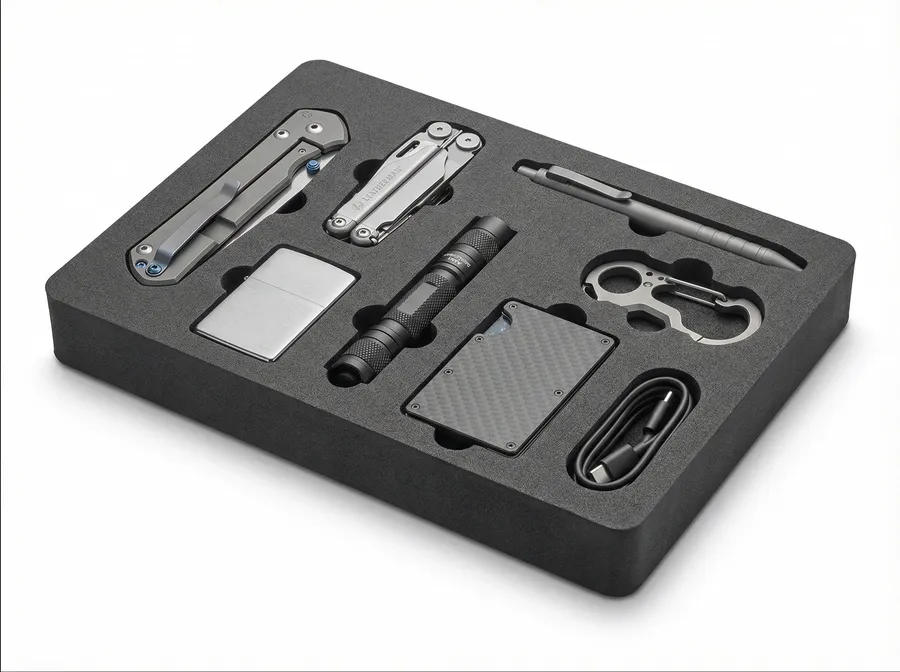
Everything described above is configurable on a standard shell: interior layout (pick-and-pluck, die-cut or CNC-cut), foam grade and thickness, colour, logo method, latch and lock count, pressure-equalisation valve, cable ports, document holder and identification plate. A bespoke exterior geometry requires a new mould — 125 days, from 3,000 units per moulded component.
Procurement considerations
| Question | What to send us |
|---|---|
| Which shell fits? | Equipment L × W × H as packed, plus required clearance per axis |
| What does it cost? | Order quantity and estimated annual quantity — the two drive different answers |
| Is tooling needed? | Whether an existing shell clears the envelope with usable foam depth |
| Lead time? | Your required delivery date, not just the order date |
| Certification? | The exact standard your tender names — we will say whether we can test to it |
| Freight? | Destination and preferred terms; carton and pallet data supplied with the quotation |
Comparison and selection guide
The tables on this page exist because a protective case is chosen by comparing three things: the envelope, the environment and the handling chain. Where no table applies, the rule below is.
| Situation | What To Do |
|---|---|
| Length | Allow at least 25 mm at each end beyond the equipment so the foam can absorb end impact rather than the shell. |
| Depth split | A deeper base carries the mass; a shallow lid retains it. We normally recommend a 60/40 or 70/30 base-to-lid split. |
| Closure | Latches on the long edge give better sealing on a flexing shell; latches on the short edge are faster to open. |
- Size on internal dimensions plus clearance, never on a product name.
- Choose the carrying method before the shell: it changes the series, not just the price.
- Specify the interior last, and decide up front whether the end user will reconfigure it.
Can foam inserts be customized for long equipment? relates to Firearm & Long Equipment Transport Cases. Related families: Firearm Transport Cases / Long Equipment Cases / Military Protective Cases. Related sectors: field and industrial equipment. Continue in the Firearm & Long Equipment Transport Cases cluster.
This page is written from our own production data. If your requirement differs, send the dimensions and we will tell you which of the 155 models fits, or whether a custom route is needed.