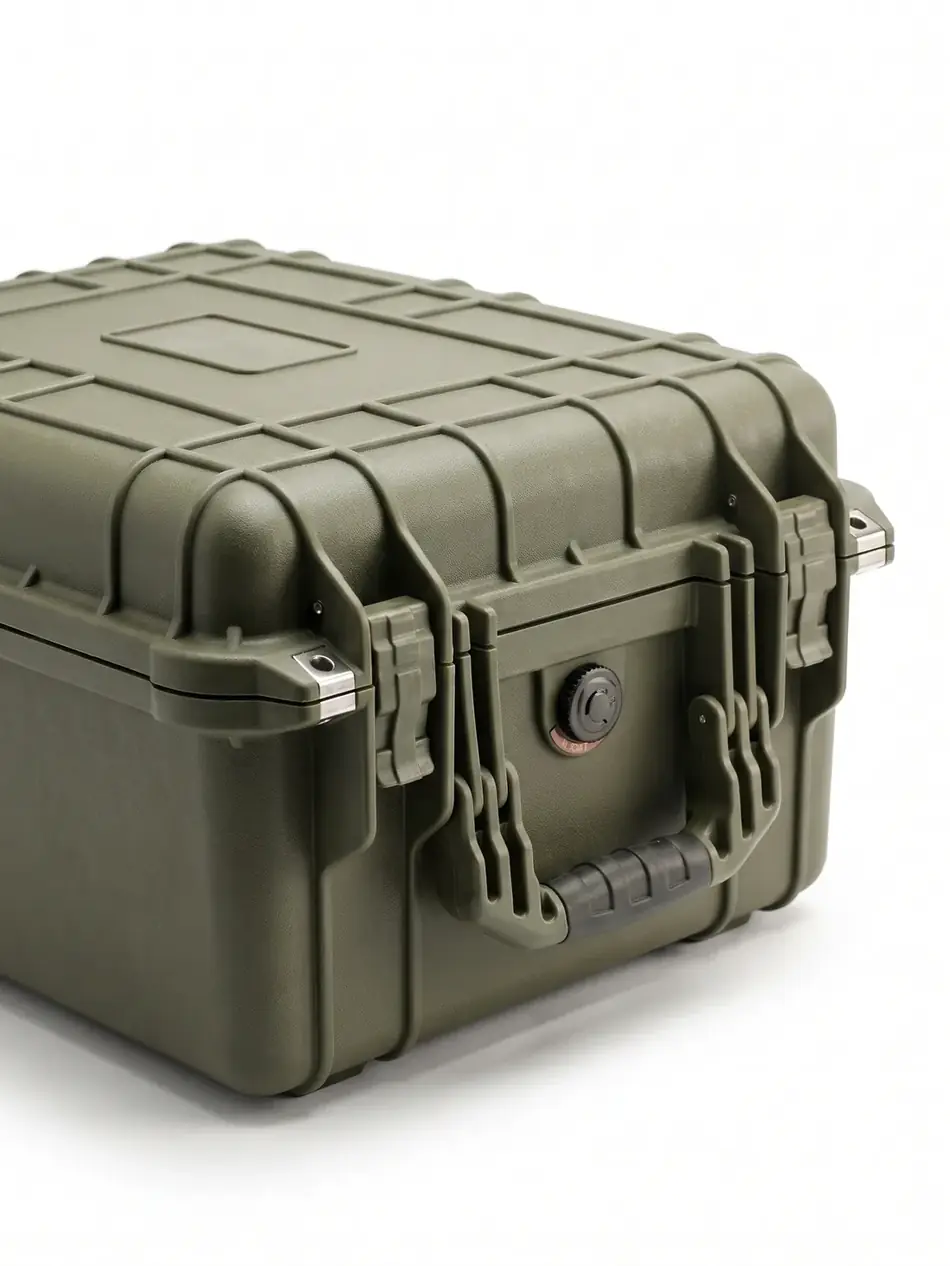
What interior options are available for hard cases?
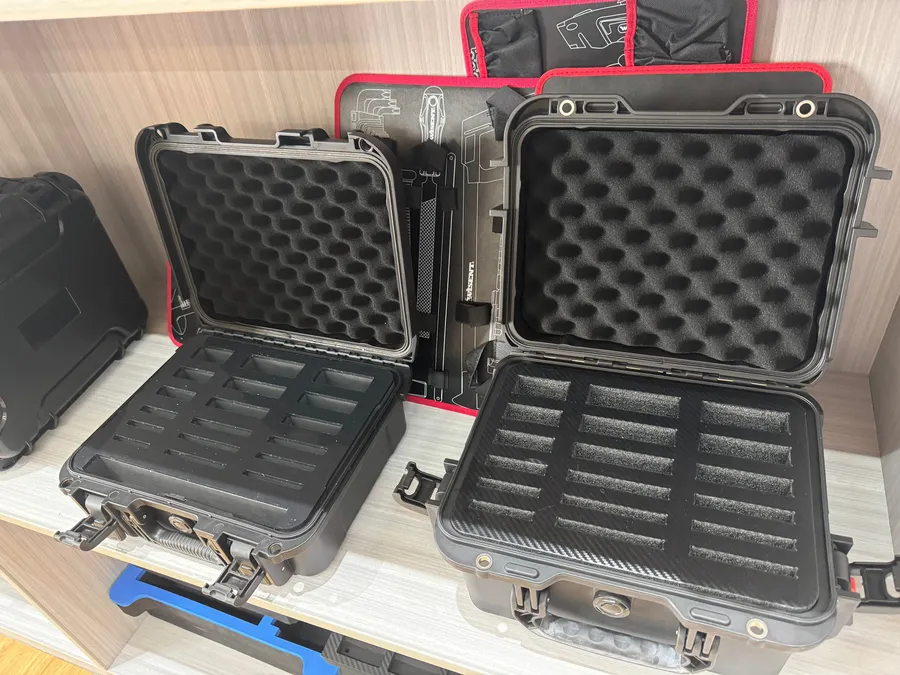
The interior of a hard case is specified in layers rather than as a single liner: a firm base that carries the weight, a top layer that clamps the item against movement, and small pockets for accessories. KeXin builds that interior from pick-and-pluck foam, convoluted (egg-crate) layers, die-cut or CNC-cut foam made to a drawing, and firmer EVA or EPE boards where a positive seat is needed. The same shell can therefore ship as a loose utility box, a reconfigurable carrier, or a fixed-geometry case where a short-content check takes one second. What changes between those builds is the foam structure and thickness, so the decision is made from published per-model internal size, lid and base depth split, and wall figures, not from a generic padding claim.
Key points
- Specify the interior as layers: a firm carrier for weight and a clamping top layer against movement, not one block of foam.
- Pick-and-pluck suits kits that change between trips; die-cut or CNC-cut foam suits fixed kits and instant short-content checks.
- Read the published lid and base depth split; it decides whether connectors, optics or handles clear the lid once foam is added.
- Foam structure and thickness reduce what reaches the equipment; the shell alone is not a shock figure, so layout is quoted per configuration.
- Send a drawing, a photograph of the packed kit, or a physical sample, because a custom cut interior is specified from the real footprint.
What the interior options actually cover
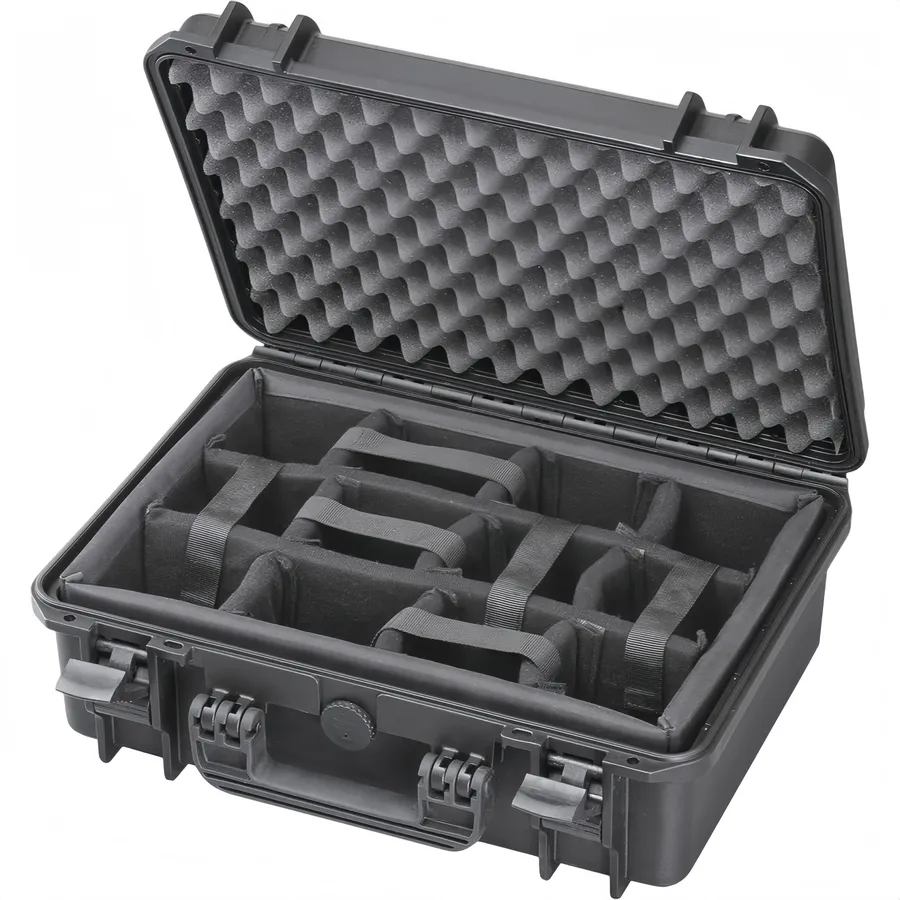
A hard case shell protects from the outside; everything between the shell and the equipment is the interior, and it is where most of the practical protection is decided. KeXin publishes the interior as a set of buildable options rather than one fixed liner: foam types that include pick-and-pluck, die-cut, CNC-cut, EVA, PE and EPE, and structures that include a top foam layer, a base foam layer, egg-crate or convoluted surfaces, custom cut seats and layered builds. A layered build, for example, pairs a firm CNC-cut base that carries a device or a weapon in its own seat with a convoluted or pick-and-pluck top that presses the kit down and absorbs the difference when accessories change. Every model page lists the internal envelope the interior has to fit, so options are chosen against published dimensions for that shell, and nothing is inherited across sizes.
Loose-fit and reconfigurable layers
The simplest interior is a base layer with a flexible top, and the two common ways to make it flexible are pick-and-pluck foam and convoluted egg-crate foam. Pick-and-pluck ships as a grid of cubes that you tear out to the outline of your item, which makes it the standard choice when contents change between orders or when a distributor supplies cases to end users who cut them on site. A convoluted layer is cheaper to keep in service and tolerant of small shape differences, but it clamps loosely, so it works best as the top layer over something firmer. Where the equipment needs a defined edge to sit against, an EVA or EPE board is used instead of soft PE foam, because it holds a cut edge and adds little pack volume. These are comfort and organisation decisions with a protective consequence: a loose item shifts, and a shift concentrates the handling loads on one corner of the equipment.
Fixed-cut interiors: die-cut and CNC-cut foam
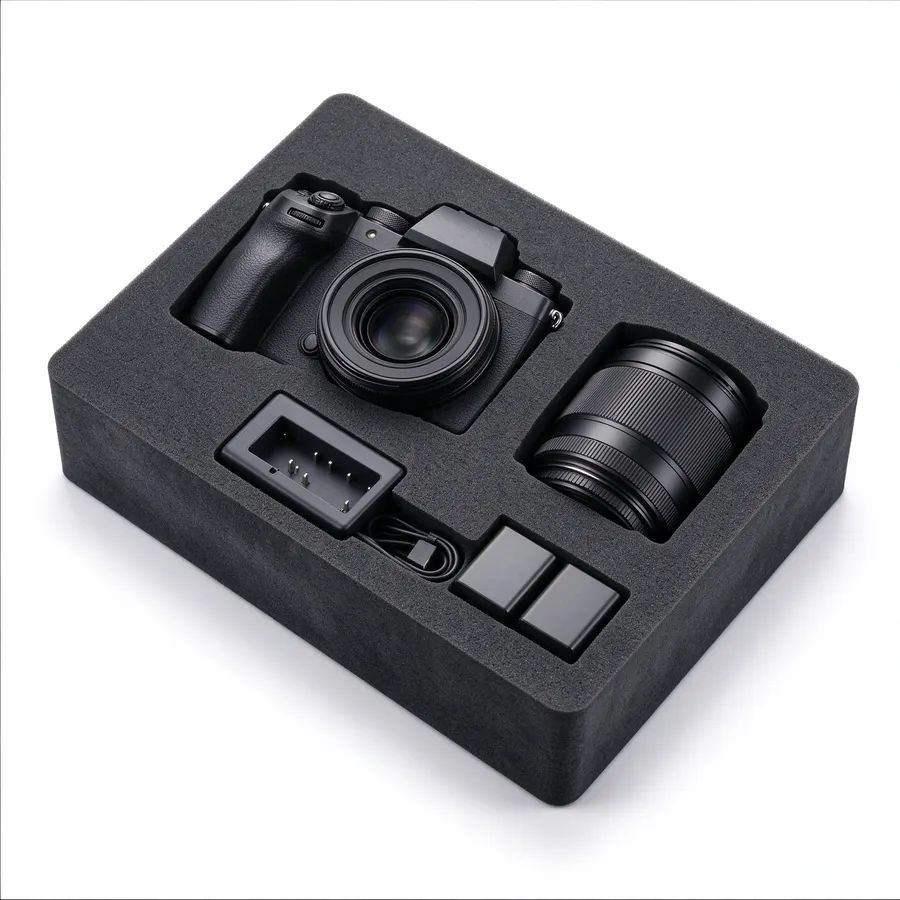
When the kit is known, a fixed cut gives a seat per item and the shortest possible loading routine. Die-cut interiors are formed with a tool, which suits repeated builds of the same layout, while CNC-cut foam follows a digital drawing and is the usual route for prototype runs, unusual depths, or layouts that change as the equipment matures. Both produce the same practical result: each device, optic or accessory rests in its own pocket, nothing touches the case wall, and anyone closing the lid can see at a glance what is missing. KeXin takes the input for a custom cut as a drawing, a photograph of the packed kit, or a physical sample, which matters for firearm and long-equipment layouts because the packed footprint of an assembled item is rarely the same as its catalogue dimensions.
How the lid and base depth split changes the interior
The published lid and base depth figures are the quiet constraint on every interior decision. KX-4010 splits its 88 mm internal depth as 44 plus 44 mm, so a device with a raised control or connector can be seated with the projection entering the lid foam instead of being pressed flat. KX-64618 is the opposite build: 140 mm of lid over a 25 mm base, which puts nearly all the working depth above the part line and suits items that stand proud of a shallow carrier. KX-5321 inverts that again with 43 mm of lid over 149 mm of base, keeping the mass low and the base seat deep. Choosing an interior without reading that split is why a case that is nominally 20 mm too deep in total still refuses to close over a mounted accessory.
Interior options at a glance
| Option | What It Does | Best For | Input Needed |
|---|---|---|---|
| Pick-and-pluck layer | User-cuttable grid that conforms to changing contents | Mixed kits, distributor stock, field re-packing | Approximate item shapes; no tooling |
| Convoluted egg-crate top | Clamps items over a firm base and tolerates size drift | Kits with frequent accessory changes | Total packed depth allowance |
| CNC-cut custom foam | Digital-drawing seats with one pocket per item | Fixed kits, prototypes, short-content checks | Drawing, packed-kit photo, or sample |
| Die-cut interior | Tooled seats repeated identically across units | Stable layouts in volume | Frozen layout for the tool |
| EVA or EPE board | Firm board that holds a defined cut edge | Heavy points, defined edges, thin closures | Load points and cut depth |
Matching the interior to how the case is used
The usage cycle picks the layout. A case that goes to a range or a training site gets opened in daylight with gloves on, so wide finger clearance around each seat matters as much as the seat itself. A unit that travels between depots spends most of its life stacked and handled, so a fixed CNC-cut base plus a clamping top does more for the contents than extra shell depth. A case that stores issued equipment answers a different question entirely: the layout should make a missing item obvious without unpacking, which is exactly what one-pocket-per-item achieves. Carry hardware is part of the same decision, because interior weight adds to published net mass; on small bodies such as KX-4010 at about 1.015 kg the foam you add can rival the empty case, so specify it deliberately.
Specifying, customising and buying an interior
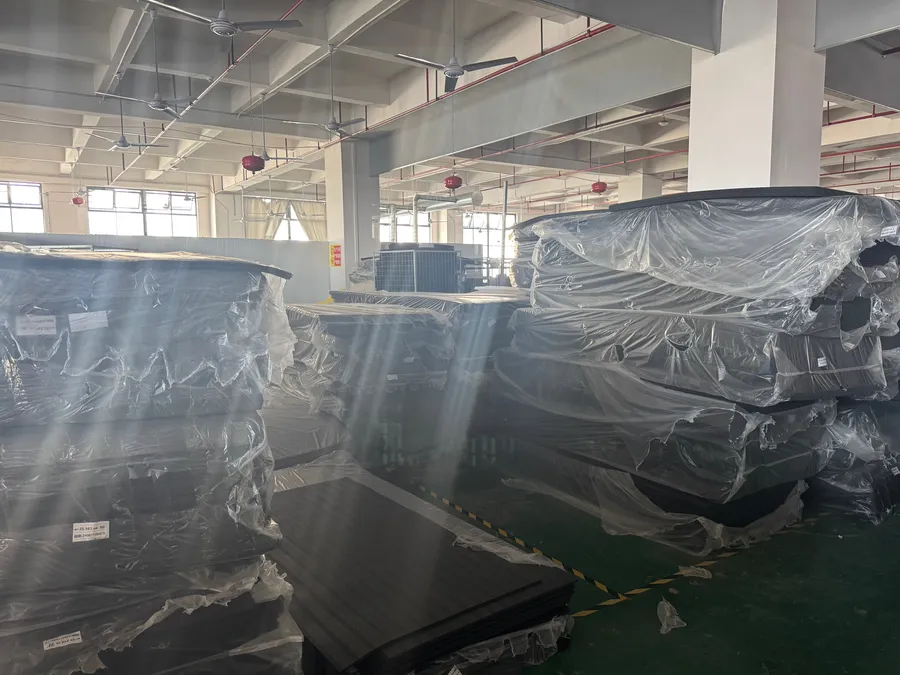
Interiors are supplied as part of a wholesale or OEM build rather than as boxed accessories. Send the model you are quoting, the packed dimensions with accessories fitted, the expected packed mass, and a drawing, photograph or sample for anything that should sit in a fixed cut. The published MOQ fields on KeXin model pages list custom foam from a single-unit configuration, with logo, colour and OEM builds from 300 units and a custom mould from 3,000 per component; OEM first samples run about 45 days and a new mould about 125 days, against a 30 percent deposit. Terms are EXW or FOB, with no retail sale and no overseas warehouse stock, and gasket availability, internal size and depth split are confirmed per the exact model being quoted.
Customisation
Everything described above is configurable on a standard shell: interior layout (pick-and-pluck, die-cut or CNC-cut), foam grade and thickness, colour, logo method, latch and lock count, pressure-equalisation valve, cable ports, document holder and identification plate. A bespoke exterior geometry requires a new mould — 125 days, from 3,000 units per moulded component.
Procurement considerations
| Question | What to send us |
|---|---|
| Which shell fits? | Equipment L × W × H as packed, plus required clearance per axis |
| What does it cost? | Order quantity and estimated annual quantity — the two drive different answers |
| Is tooling needed? | Whether an existing shell clears the envelope with usable foam depth |
| Lead time? | Your required delivery date, not just the order date |
| Certification? | The exact standard your tender names — we will say whether we can test to it |
| Freight? | Destination and preferred terms; carton and pallet data supplied with the quotation |
Comparison and selection guide
The tables on this page exist because a protective case is chosen by comparing three things: the envelope, the environment and the handling chain. Where no table applies, the rule below is.
| Situation | What To Do |
|---|---|
| Length | Allow at least 25 mm at each end beyond the equipment so the foam can absorb end impact rather than the shell. |
| Depth split | A deeper base carries the mass; a shallow lid retains it. We normally recommend a 60/40 or 70/30 base-to-lid split. |
| Closure | Latches on the long edge give better sealing on a flexing shell; latches on the short edge are faster to open. |
- Size on internal dimensions plus clearance, never on a product name.
- Choose the carrying method before the shell: it changes the series, not just the price.
- Specify the interior last, and decide up front whether the end user will reconfigure it.
What interior options are available for hard cases? relates to Firearm & Long Equipment Transport Cases. Related families: Firearm Transport Cases / Military Protective Cases / Tactical Equipment Cases / Long Equipment Cases. Related sectors: field and industrial equipment. Continue in the Firearm & Long Equipment Transport Cases cluster.
This page is written from our own production data. If your requirement differs, send the dimensions and we will tell you which of the 155 models fits, or whether a custom route is needed.