What type of protective case is suitable for hunting equipment?
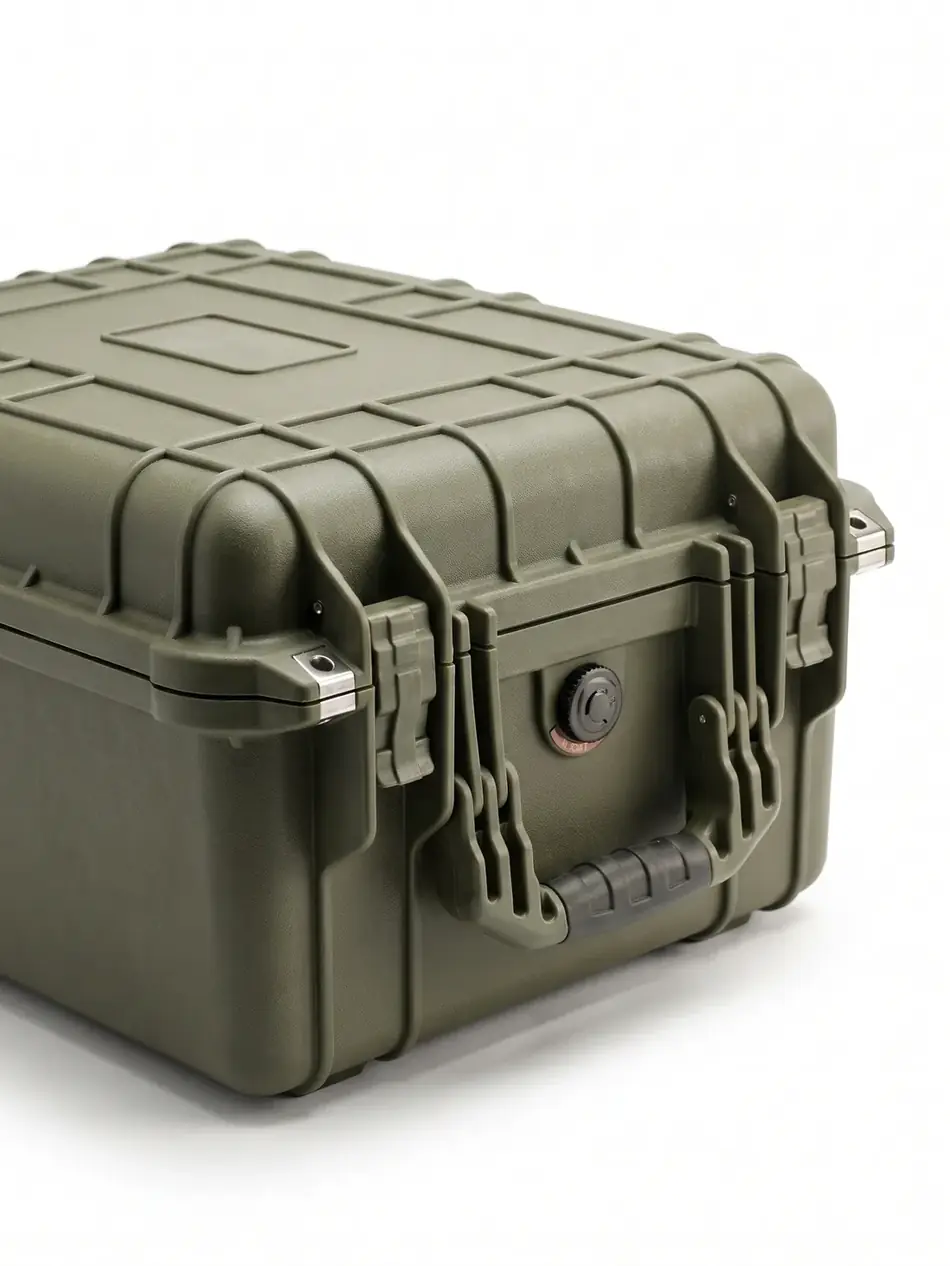
There is no single case type that suits a whole hunting kit, because a hunting kit is really four or five separate sub-loads that travel together: the long gun, the optics, the electronics, the ammunition and the field-gear bundle. The rifle governs the shell - its broken-down length sets the internal length you need before anything else is decided - and everything else falls into cases and foam pockets around it. Our published data covers 155 models with internal dimensions, narrow internal width, wall thickness, lid and base depth split, weight and packing recorded per model, so a fit can be checked against numbers rather than photographs. Foam decides what the contents feel in transit; the gasketed or plain rim decides what gets in; the shell mostly decides how the case stacks, carries and ages.
Key points
- Size the gun case on internal length first: if a rifle cannot break down under that number, nothing else about the shell matters.
- Optics and electronics want their own medium case with a cut or pluck foam bed; loose in a gun case they knock against the stock and each other.
- Ammunition travels in its own low box: our 68 published ammunition models run internal lengths from 115 to 455 mm.
- Wall thickness is published per model from 2.0 to 6.0 mm across the range; a thicker wall answers stacking and racking, not fragility.
- Foam, not the shell, decides what the contents feel: die-cut and CNC-cut layouts are recorded as options on all 155 models.
- Sealing is a construction feature we publish; the waterproof field in our data reads not tested, so no rating is claimed on any model.
Start with the load list, not the case
A hunting load is best split into sub-loads before you look at a single shell: the long gun or bow; the optics group - rifle scope if it stays mounted, binoculars, monocular, rangefinder; the electronics group - GPS tracker or handheld, camera, headlamp, spare batteries; the ammunition and edge tools - cartridges, broadheads, knives, a bone saw; and the field-gear bundle - gloves, game bags, tape, a repair kit, something to sit on. Each group fails in a different way and is governed by a different dimension, which is why a single 'hunting case' rarely serves the trip properly.
The order of work matters. The longest item - usually a rifle with the bolt or stock configuration you actually travel with - sets the shell length, and every remaining group becomes a pocket problem inside that shell or a second, smaller case that stacks beside it. The commonest sizing mistake we see quoted back to us is choosing on total volume. Volume is an arithmetic figure; a 60-litre shell with the wrong internal length still cannot hold a 1.2-metre rifle, and a correctly long shell with 140 mm of internal height will not stand a compound bow limb the way its owner hoped.
Everything cited below comes from our published specification data: 155 models with internal and external dimensions in millimetres, the narrow internal width where a shell tapers, wall thickness, the lid-depth and base-depth split, net weight where recorded, internal volume in litres, and the packing figures for the 64 models that publish carton data. Treat every number as per model, never as a house standard.
Case types that fit hunting equipment
| Load Group | Case Type | Deciding Dimension | From Our Published Data |
|---|---|---|---|
| Rifle or shotgun with mounted optic | Long gun transport case, cut foam base | Internal length, then narrow internal width | 98 models carry the firearm-transport tag; internal length runs 380 to 1,280 mm with a median of 459 mm |
| Compound bow or takedown recurve | Long equipment case, depth split checked | Internal height and lid depth against limb clearance | 35 long-equipment models, internal height 130 to 364 mm; wall thickness published from 3.3 to 6.0 mm |
| Binoculars, rangefinder, spotting scope | Sealed medium case with die-cut pockets | Internal height plus gasket construction | Example: KX-64120, internal 378 x 307 x 187 mm, 4.0 mm wall, 2.64 kg net, 21.7 litres |
| GPS, camera, batteries, torch | Small instrument-size case, pluck or cut foam | Accessory volume - these usually outgrow expectations | Example: KX-1905, internal 180 x 160 x 40 mm, 3.0 mm wall, 250 g net, gasket channel recorded |
| Cartridges and edge tools | Ammunition storage box, low profile | Internal length and base depth for stacked rounds | 68 ammunition models, internal length 115 to 455 mm; 60 of them record a seal available |
| Gloves, game bags, repair kit | Larger shallow case or the lid layer of a gun case | Lid depth and whether soft goods travel compressed | Lid and base depth split is published per model across the range |
Sizing the rifle or bow case properly
Measure the gun as you will travel with it, not as it sits in the rack. With a mounted scope, the length is usually what defeats people: the longest internal envelope we publish is model KX-814641 at 1,280 by 350 by 140 mm internal, wall thickness 5.0 mm and 62.7 litres - a single-mould shell that takes a full-length rifle without disassembly - and the next-longest published shell is KX-89616 at 880 mm internal. If your rig exceeds the first figure and cannot be broken down, no case in our data fits it intact; that is the honest answer rather than a suggestion to force a lid.
Length alone is not fit. Two other published fields decide whether the gun sits safely: the narrow internal width, because many shells taper at the corners, and the lid-depth and base-depth split, which determines whether the rifle nests in the base or bridges the parting line where the seal and the latches run. A rifle wants continuous support under stock, action and fore-end - two-point contact transfers every truck-bed jolt through the receiver - and a mounted scope must clear the lid with foam between, not touch it. Where the contents vary between trips, a pick-and-pluck top layer over a cut base is the standard layout; where a fleet must audit at a glance, a keyed die-cut face shows a missing item immediately.
Carry hardware is the last decision. Every one of our 155 models lists a fixed handle; 19 add wheels and a telescopic handle, and those models start around 4.9 kg empty, which is rarely what you want on a foot path to a stand. For most hunting use, a fixed folding handle plus the shoulder-strap option recorded in our hardware field beats a trolley; wheels pay for themselves at an ranges or a shoot where the run from car to bay is long and paved.
Optics and electronics: small case, different priorities
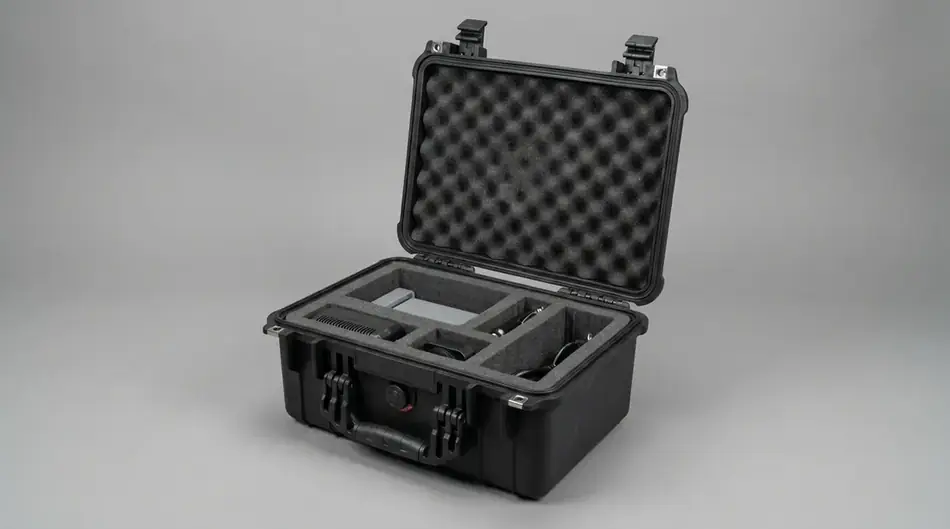
A rifle case protects a rifle; it does not protect a reticle. Binoculars, spotting scopes and rangefinders fail differently - internal fogging, a knocked erector, a scratched objective - and the sensible answer is a separate sealed medium case with cut pockets, so the glass travels on continuous contact and nothing shares its volume with a dusty stock or a box of cartridges. On that class of shell our data records a compressible gasket in a continuous moulded channel as the seal type on 124 of the 155 models; KX-64120 (internal 378 x 307 x 187 mm, 4.0 mm wall) and KX-65522 (507 x 385 x 190 mm, 5.3 mm wall, 4.86 kg) are two published examples with room for a kit and its accessories.
Electronics want the same thinking with one addition: batteries travel separately from the device they power, in their own pocket, terminals protected. The water and dust fields across all our published models are recorded as not tested, and so is the service-temperature field - a gasketed shell is a barrier you can specify, not a rating you can tender against without commissioning a test of the configuration. Cold itself is a content problem rather than a case problem: a case slows temperature exchange, it does not stop it, and lithium cells behave accordingly.
Ammunition, knives and the field-dressing bundle
Cartridges and edge tools are low, dense loads and they live badly with glass. Our ammunition-box range is 68 models with internal lengths from 115 to 455 mm and wall thickness from 2.0 to 5.0 mm on every model that records it; 60 of the 68 list a seal as available. Examples with published figures: KX-3213 at 308 x 230 x 118 mm internal and 860 g net, and KX-63413 at 310 x 255 x 106 mm with a 4.8 mm wall - one a volume box, the other built thicker for stacking. Knives and bone saws want pockets that capture the profile rather than a lump of soft foam, which is a die-cut or CNC job; both construction options are recorded on all 155 models.
Storage and transport rules for ammunition and firearms are set by jurisdiction, and they vary by state, country and carrier - nothing on a datasheet replaces checking the rule that applies to your route. The case maker's contribution is mechanical: a closed shell, a latch that accepts a padlock where the listing records it, and a layout that keeps edge tools away from anything you will grab without looking. Field-dressing gloves and game bags are the soft third of the load; they travel honestly in the lid layer or a shallow second case, and neither choice needs new tooling.
The foam layout that makes one case serve the kit
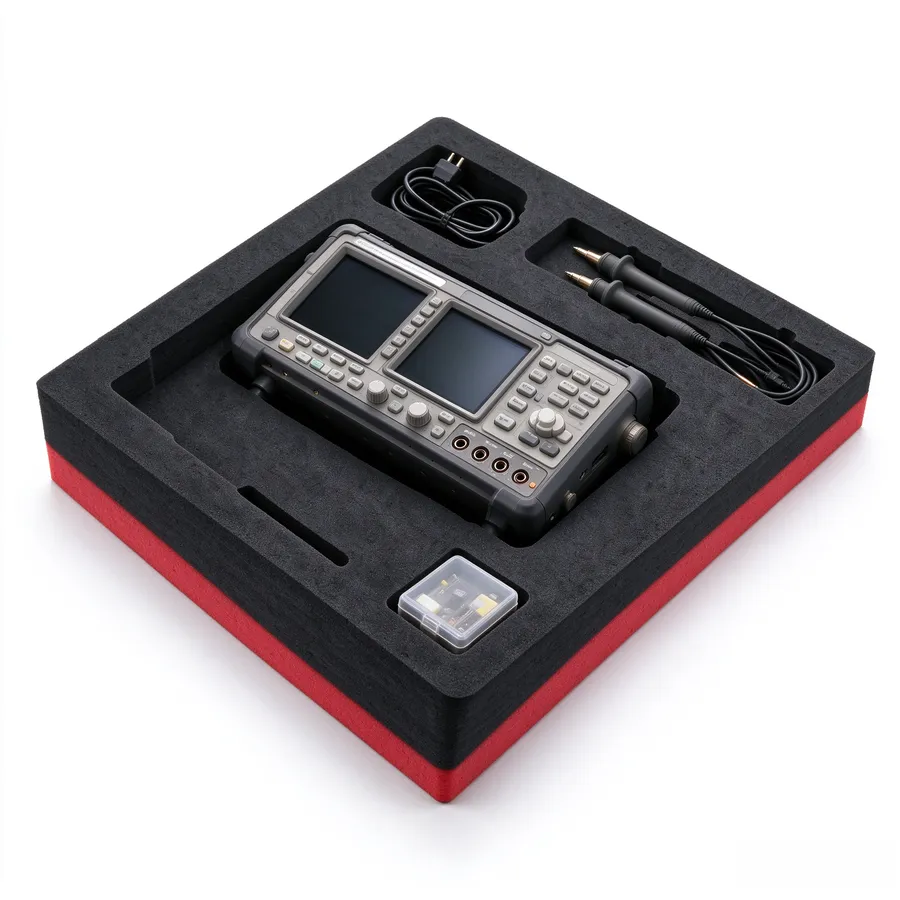
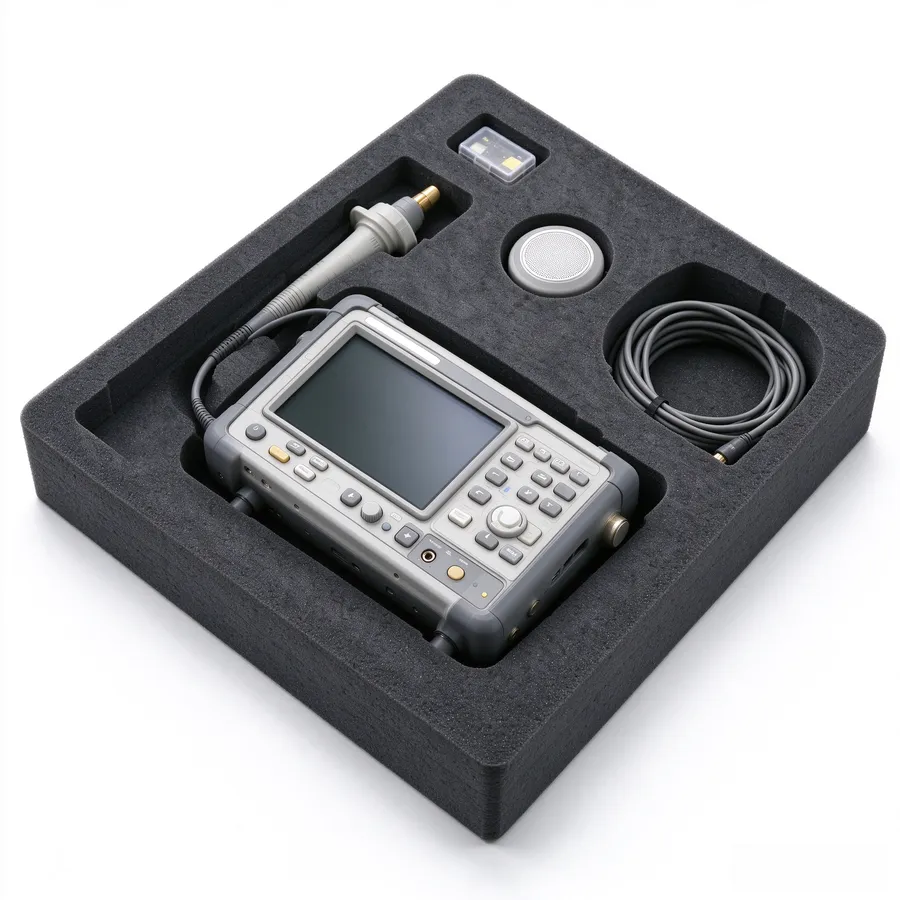
Where the whole kit must travel in one shell, the interior is the case. Our published foam programme lists six options - pick-and-pluck, die-cut and CNC-cut construction, and EVA, PE and EPE as materials - with base foam, top foam, egg-crate or convoluted layers, and custom thickness and custom shape recorded against all 155 models. The mixed-hunting layout that works most often is a cut or routed base carrying the rifle profile, a pluck or convoluted lid layer that swallows whatever soft goods changed between trips, and a separate closed pocket for cartridges and tools so brass and blades never share air with a scope.
Thickness is set against the drop you expect rather than copied from a catalogue: a fixed-geometry pocket in a vehicle that rocks needs different depth than a carry case lifted into a treestand. We ask for the packed item, a photograph of the kit as it travels, or a physical sample, because the data records drawing-required as exactly that. Custom foam starts at one set and no new mould, which makes the interior the cheapest part of the program to get right and the first thing a fleet should standardise on a signed layout drawing.
Shell material and wall thickness for a field life
Across the 155 published models the shell materials split roughly into 94 standard PP, 38 engineering PP and 22 ABS, with one hybrid listing. Polypropylene is the default for a field case: it takes cold impact without going brittle, shrugs off fuel, solvent and tree sap better than most styrenics, and scuffs rather than crazes. ABS reads stiffer and takes a printed or embossed finish better, which is why it appears more often where a case is also signage. Wall thickness runs from 2.0 to 6.0 mm on the 148 models that record it - the long-equipment subset medians higher, around 5.0 mm, because those shells get stacked in truck beds and gear rooms.
Stacking behaviour is a lid-and-rim geometry question more than a wall question, and 136 models list a stackable construction in the published field. A hunting case spends its life loaded in odd corners - a sled, a quad bed, a rack above a workbench - so the external footprint is worth checking against the space you actually have, using the external dimensions published per model next to the internal ones. Colour is a function here too: an olive or dark shell in a truck bed gets noticed less than a bright one, and our colour option (minimum 300 pieces) exists for fleets and outfitters rather than single buyers.
Customising for outfitters, dealers and teams
For anyone buying cases as a branded or standardised fleet, the programme on record is: custom logo and custom colour from 300 pieces, OEM and private-label from the same threshold on existing mouldings, first sample at 45 days with a 30 per cent deposit, and a new mould only when the shell geometry itself must change - 125 days from 3,000 pieces per moulded component. Custom foam starts at one set, so a standard interior for an entire outfitter fleet costs no tooling at all; it costs one good drawing that every order reproduces.
The fleet use cases we are asked for most are keyed foam that makes a missing item obvious before a group leaves the truck, a consistent pocket map so every guide's kit packs the same way, and lid-layer volume that can differ between seasons without changing the shell. All three are layout decisions rather than mould decisions. Send the packed dimensions of the longest gun you accept as your standard, the optic group and the ammunition quantity, and the review comes back as a proposed shell and drawing.
Buying notes: terms, samples and what to send
We sell wholesale and OEM volume on EXW or FOB terms only - there is no retail channel, no delivered-duty-paid quotation and no overseas warehouse stock - so a case programme is planned into your own inbound freight with the production batch it belongs to. Standard models carry a minimum of one piece, which makes a single shell an affordable way to check fit before committing an interior; 64 models publish carton and pieces-per-carton data so a pallet plan can start from real packing figures rather than estimates.
What makes a quotation fast is the same list a fitting needs: broken-down length, width and height of the gun as it travels, the optic and electronics group, cartridge volume, whether one case or two, and how the load moves - foot, vehicle, or checked baggage, noting that any airline's size and weapon rules are theirs to set and yours to verify. The shell exists to fit the envelope and take the stacking; the foam exists to protect the contents; the seal exists for the weather you actually meet. Get those three answers in that order and the right case type stops being a mystery.
Customisation
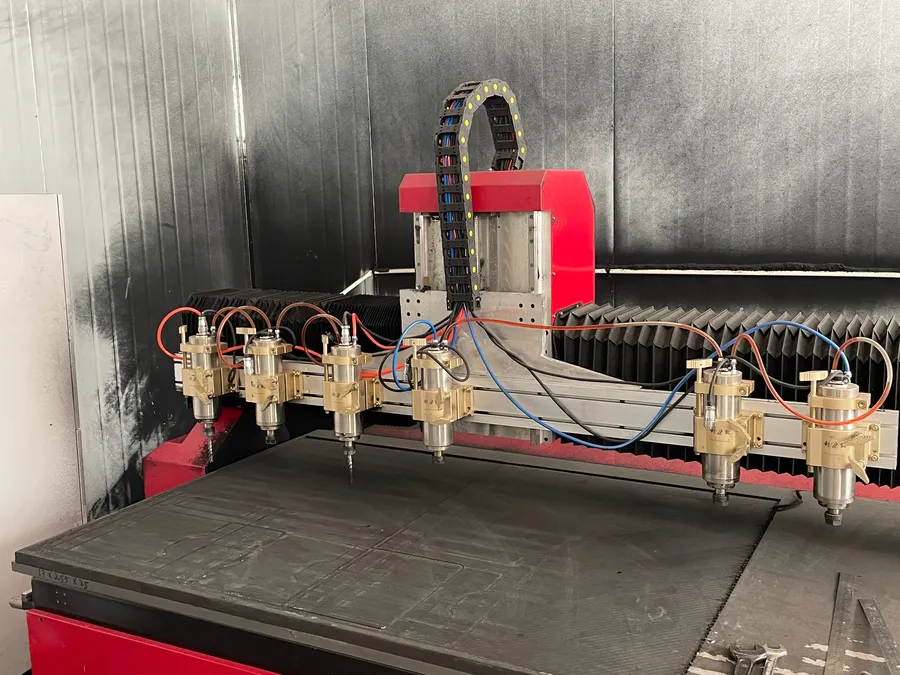
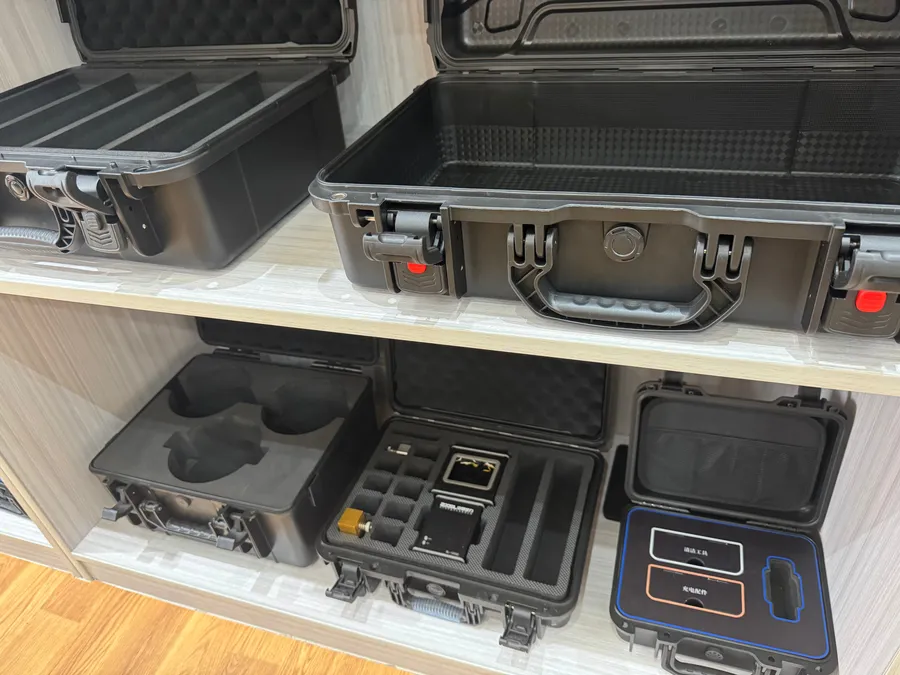
Everything described above is configurable on a standard shell: interior layout (pick-and-pluck, die-cut or CNC-cut), foam grade and thickness, colour, logo method, latch and lock count, pressure-equalisation valve, cable ports, document holder and identification plate. A bespoke exterior geometry requires a new mould — 125 days, from 3,000 units per moulded component.
Procurement considerations
| Question | What to send us |
|---|---|
| Which shell fits? | Equipment L × W × H as packed, plus required clearance per axis |
| What does it cost? | Order quantity and estimated annual quantity — the two drive different answers |
| Is tooling needed? | Whether an existing shell clears the envelope with usable foam depth |
| Lead time? | Your required delivery date, not just the order date |
| Certification? | The exact standard your tender names — we will say whether we can test to it |
| Freight? | Destination and preferred terms; carton and pallet data supplied with the quotation |
Comparison and selection guide
The tables on this page exist because a protective case is chosen by comparing three things: the envelope, the environment and the handling chain. Where no table applies, the rule below is.
| Situation | What To Do |
|---|---|
| Marine or wet | Sealed configuration with a drain-friendly interior and stainless hardware. |
| Dry and dusty | A close-fitting rim and a lid that can be opened one-handed without spilling contents. |
| Carried far | Under 10 kg packed, with a padded handle or shoulder webbing. |
- Size on internal dimensions plus clearance, never on a product name.
- Choose the carrying method before the shell: it changes the series, not just the price.
- Specify the interior last, and decide up front whether the end user will reconfigure it.
What type of protective case is suitable for hunting equipment? relates to Firearm & Long Equipment Transport Cases. Related families: Outdoor Protective Cases / Firearm Transport Cases / Long Equipment Cases / Ammunition Storage & Transport Boxes / Optical Equipment Cases. Related sectors: field and industrial equipment. Continue in the Firearm & Long Equipment Transport Cases cluster.
This page is written from our own production data. If your requirement differs, send the dimensions and we will tell you which of the 155 models fits, or whether a custom route is needed.