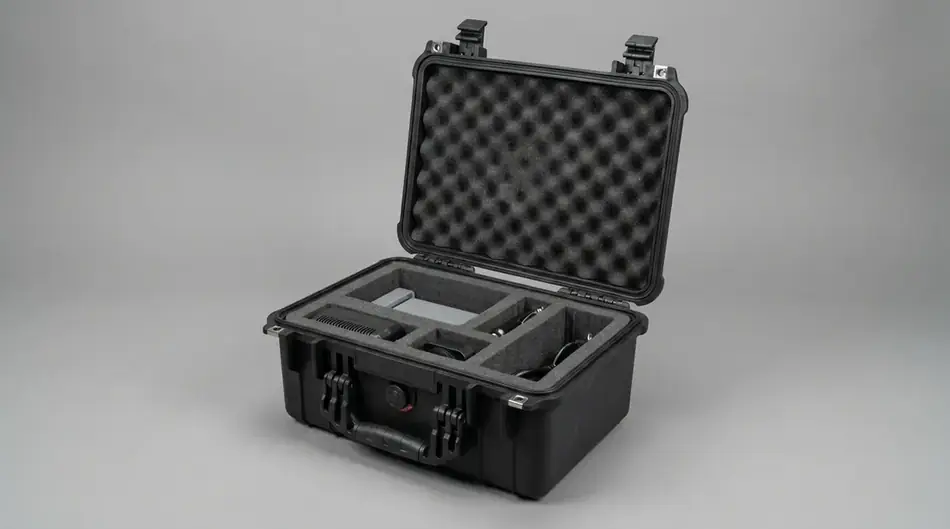
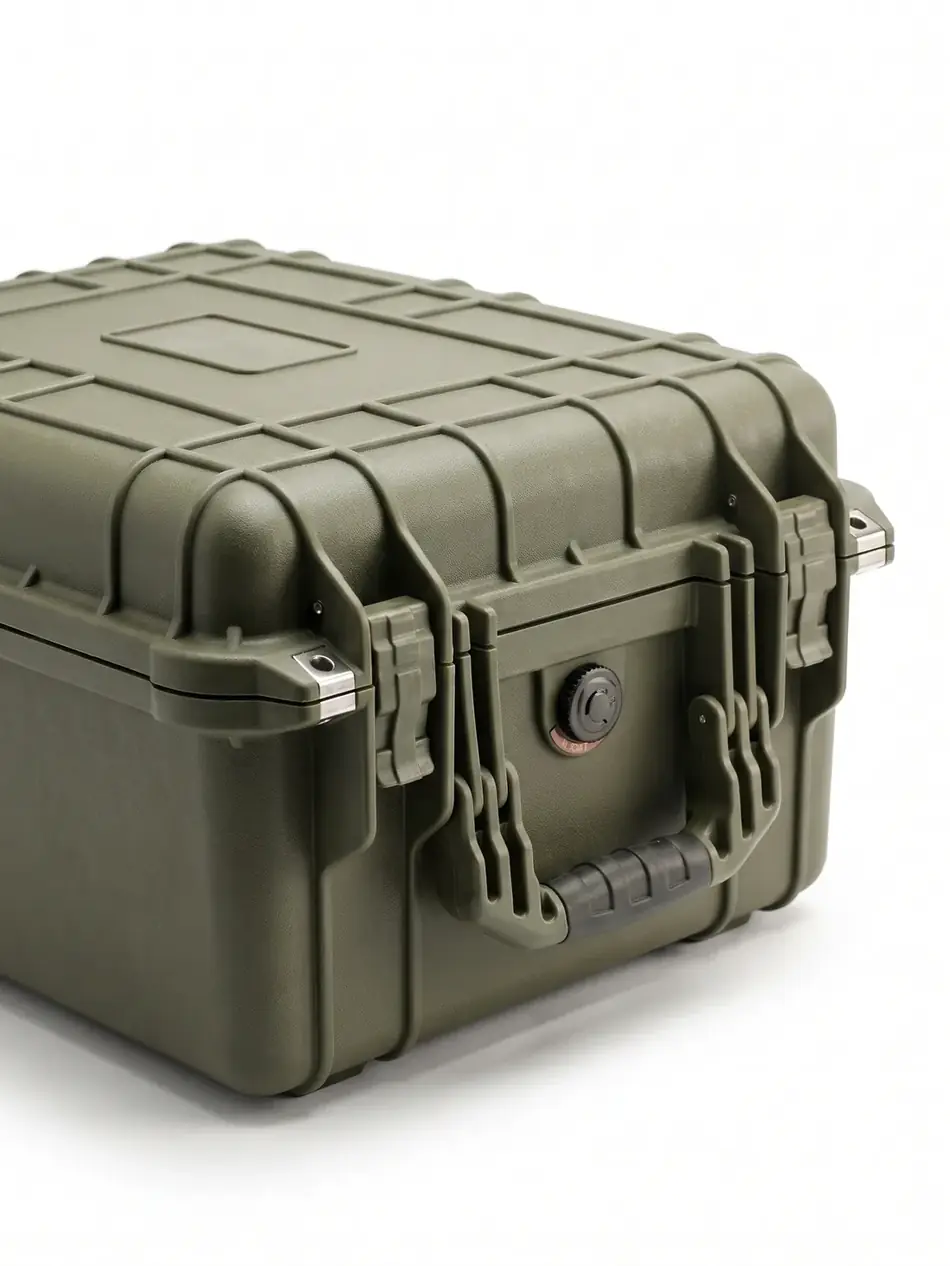
How do you select a long protective case?
A long protective case is selected from four published numbers in order: the total packed length of the item with accessories fitted, the internal length of the shell minus the foam you plan to add, the lid and base depth split at the tallest point of the load, and the external footprint against the route it will travel. KeXin long bodies run from shells with a 725 mm internal length to one with 1,280 mm inside and 1,356 mm outside, with internal widths between roughly 257 and 368 mm, so the job is matching, not guessing. Gasket availability, wall thickness and mass are listed per model, and the same figures decide whether the case is hand-carried, shouldered, or moved on wheels and a telescopic pull.
Key points
- Measure packed length with bipods, optics and handles fitted; accessories add length a bare item never shows.
- Compare that total against internal length minus planned foam, not against the nominal case size or a photograph.
- Check the lid and base depth split at the tallest point; a shallow lid fouls a mounted optic even when length fits.
- On shells past roughly a metre, external footprint decides vehicles, doors and pallets more than net mass does.
- Wheels, telescopic handles and gaskets are published per model; confirm them for the exact SKU you quote.
Start from packed length, not case length
Long equipment rarely travels as a clean rectangle. A rifle travels with a sling, sometimes a optic or a bipod; a tripod keeps its head plate and spike; a pole set keeps its connectors. The selection therefore begins with the item laid out exactly as it will be packed, measured at its overall extremes with those accessories fitted, and with a second measurement at the tallest projection above the line of the body. Those two numbers, total length and maximum height above the seat line, drive every later decision. Case pages are specified in the opposite direction, by internal envelope, so a buyer who starts from a favourite model instead of from the packed measurement ends up either sawing foam out of a case that was close, or shipping air inside one that was two sizes too large.
Internal versus external: where the centimetres go
Published pairs of figures make the trade concrete. KX-89616 lists an external 956 by 408 by 154 mm against an internal 880 by 350 by 140 mm; KX-88015 lists an external 800 by 408 by 153 mm against an internal 725 by 350 by 140 mm; the longest body here, KX-814641, lists an external 1356 by 154 by 408 mm against an internal 1280 by 350 by 140 mm, with a 5.0 mm wall noted on all three. Roughly 75 mm of external length is consumed by shell geometry and closure before any foam is added, so a packed item of 880 mm does not fit a case marketed near 900 mm external. Read internal first, then use external only for the route and the pallet.
Depth split and width: the two figures people skip
Long shells are shallow by nature, which makes the vertical numbers decisive. The published lid and base split shows how depth is divided: the 140 mm internal of KX-814641 is built as 100 mm of lid over 40 mm of base, leaving the working depth above the part line where a mounted sight or connector lives. Where a taller accessory set is normal, the alternative within arm's reach of the same footprint is KX-87926, whose 240 mm internal depth is split 175 plus 65 mm at a 737 by 257 mm internal plan, trading a little length and nearly 100 mm of width for real height. Internal width across these bodies runs from 257 to 368 mm, which decides whether two slim items lie side by side or only one lies centred.
Carry, closure and what is actually published
A body approaching a metre and a half is carried differently from a box, so hardware is part of sizing. The long narrow models listed above ship with a fixed handle and an available gasket per their published fields; KeXin states measured internal size, wall and seal availability per model rather than quoting a water or dust code, because such a code would require accredited testing of that exact build. Where the load grows in every dimension rather than only in length, the range answers with rolling bodies such as KX-88337, internal 723 by 368 by 329 mm at about 10.87 kg net with wheels and a telescopic pull, and KX-88442 at 740 by 518 by 364 mm inside and about 15.32 kg. Latch count, strap options and lock provisions are set per configuration and confirmed on the quotation.
Long-case selection at a glance
| Load | Reference Model | Depth Split | Carry |
|---|---|---|---|
| Single long item, minimum width | KX-814641, internal 1280x350x140 mm | 100 lid + 40 base mm | Fixed handle, gasket offered |
| Long item near 880 mm packed | KX-89616, internal 880x350x140 mm | 100 lid + 40 base mm | Fixed handle, gasket offered |
| Tall accessory set on a long plan | KX-87926, internal 737x257x240 mm | 175 lid + 65 base mm | Fixed handle, gasket offered |
| Long and bulky crew kit | KX-88337, internal 723x368x329 mm | 280 lid + 49 base mm | Wheels and telescopic pull |
| Maximum volume, still one person | KX-88442, internal 740x518x364 mm | 320 lid + 44 base mm | Wheels and telescopic pull |
Matching length to the route and the pallet
After the item fits, the environment has to. An external 1356 mm case will not close a car door the way a 956 mm one will, will stand differently in a rack, and will not share a standard pallet footprint without an overhang plan, which is why long bodies are checked against door widths, vehicle interiors and storage bays before ordering. For shipments, KeXin calculates pallet stacking from the carton footprint against the buyer's pallet size and supplies 20GP, 40GP and 40HQ loading figures with the quotation rather than publishing a generic number per shell. A 50.2 litre body such as KX-814641 and a 111.6 litre rolling case such as KX-88442 answer different logistics questions even when both are described simply as long.
Ordering, customisation and terms
Long cases are quoted as configurations: shell, gasket availability, closure, interior cut and carry hardware on one line. Interiors follow the packed measurements from step one, with custom foam available from a single-unit configuration, while logo, colour and OEM builds begin at 300 units and a custom mould at 3,000 per component, as published on the model pages. OEM first samples run about 45 days and a new mould about 125 days against a 30 percent deposit. Supply is wholesale and OEM on EXW or FOB terms; there is no retail sale and no overseas warehouse stock. Send packed length, tallest projection, expected mass and handling notes, and the shortlist returns with the exact figures already checked against those numbers.
Customisation
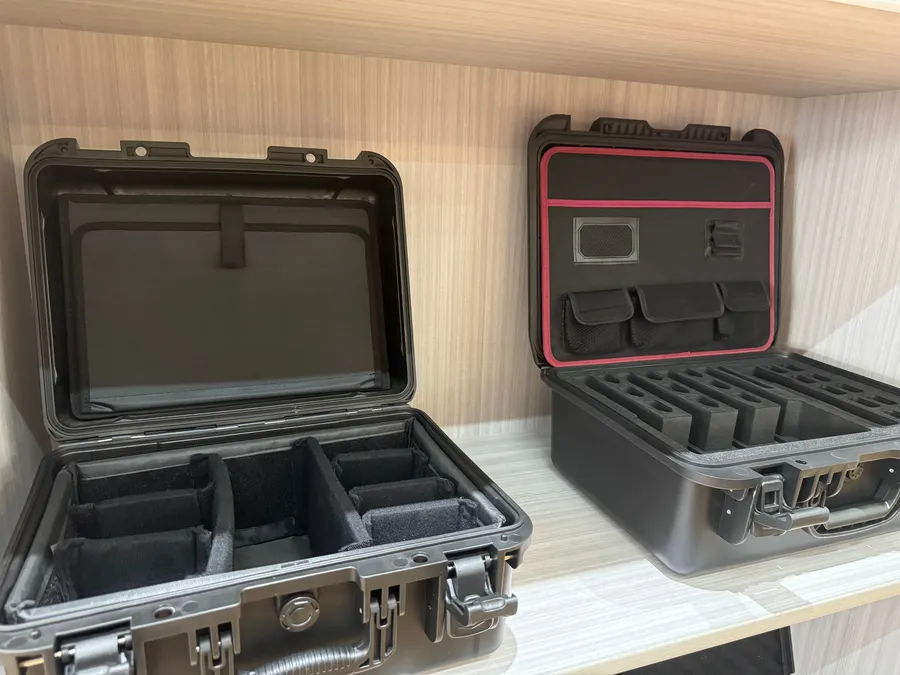
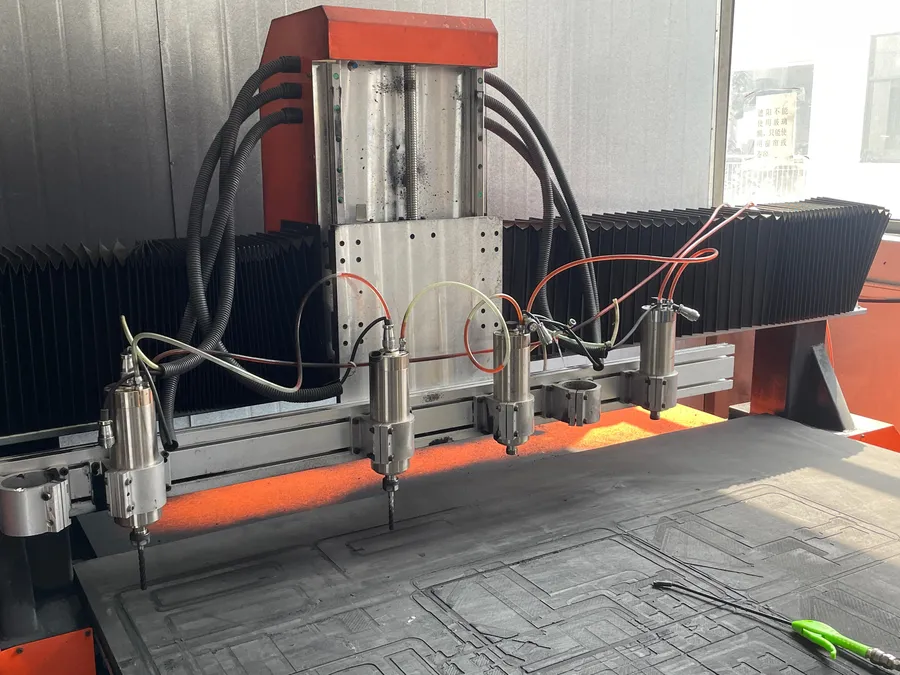
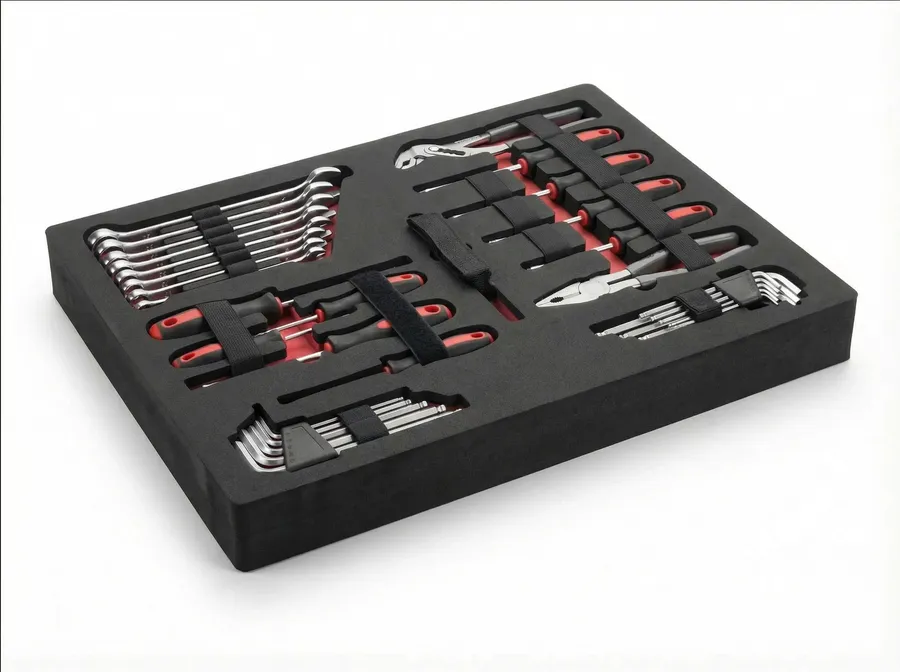
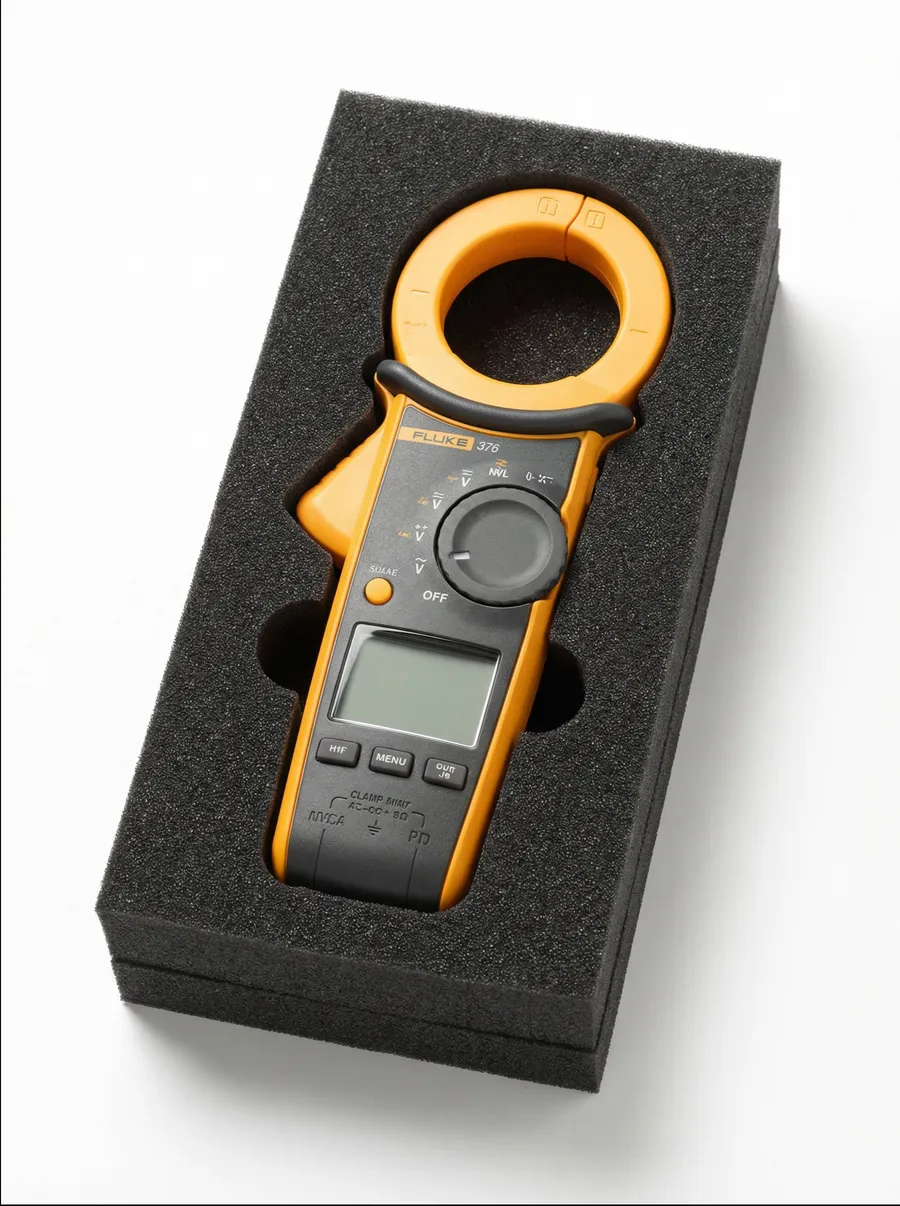
Everything described above is configurable on a standard shell: interior layout (pick-and-pluck, die-cut or CNC-cut), foam grade and thickness, colour, logo method, latch and lock count, pressure-equalisation valve, cable ports, document holder and identification plate. A bespoke exterior geometry requires a new mould — 125 days, from 3,000 units per moulded component.
Procurement considerations
| Question | What to send us |
|---|---|
| Which shell fits? | Equipment L × W × H as packed, plus required clearance per axis |
| What does it cost? | Order quantity and estimated annual quantity — the two drive different answers |
| Is tooling needed? | Whether an existing shell clears the envelope with usable foam depth |
| Lead time? | Your required delivery date, not just the order date |
| Certification? | The exact standard your tender names — we will say whether we can test to it |
| Freight? | Destination and preferred terms; carton and pallet data supplied with the quotation |
Comparison and selection guide
The tables on this page exist because a protective case is chosen by comparing three things: the envelope, the environment and the handling chain. Where no table applies, the rule below is.
| Situation | What To Do |
|---|---|
| Rigid items | Two end carriers, no contact along the middle. |
| Bulky items | Full-length cradle with a deeper base half. |
| Air travel | Check external dimensions against the airline oversize limit before choosing. |
- Size on internal dimensions plus clearance, never on a product name.
- Choose the carrying method before the shell: it changes the series, not just the price.
- Specify the interior last, and decide up front whether the end user will reconfigure it.
How do you select a long protective case? relates to Firearm & Long Equipment Transport Cases. Related families: Long Equipment Cases / Firearm Transport Cases / Military Protective Cases / Equipment Transport Cases. Related sectors: field and industrial equipment. Continue in the Firearm & Long Equipment Transport Cases cluster.
This page is written from our own production data. If your requirement differs, send the dimensions and we will tell you which of the 155 models fits, or whether a custom route is needed.