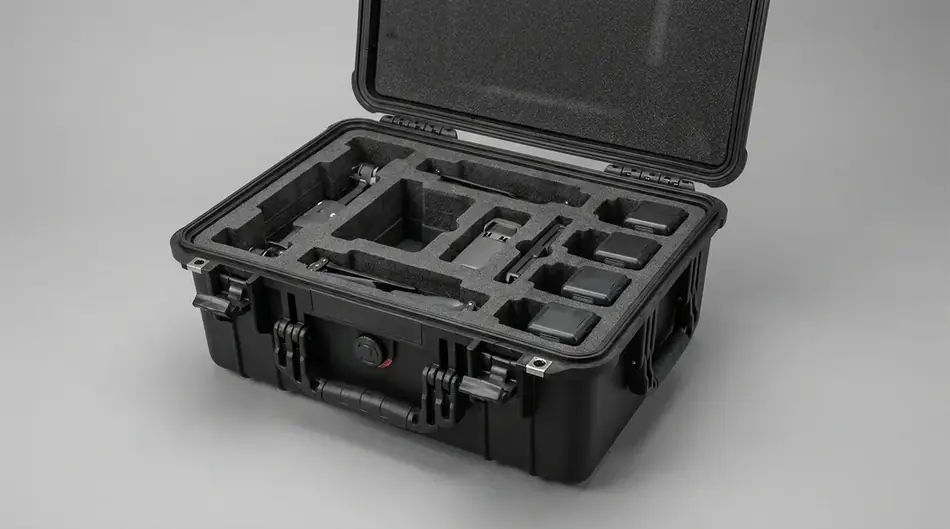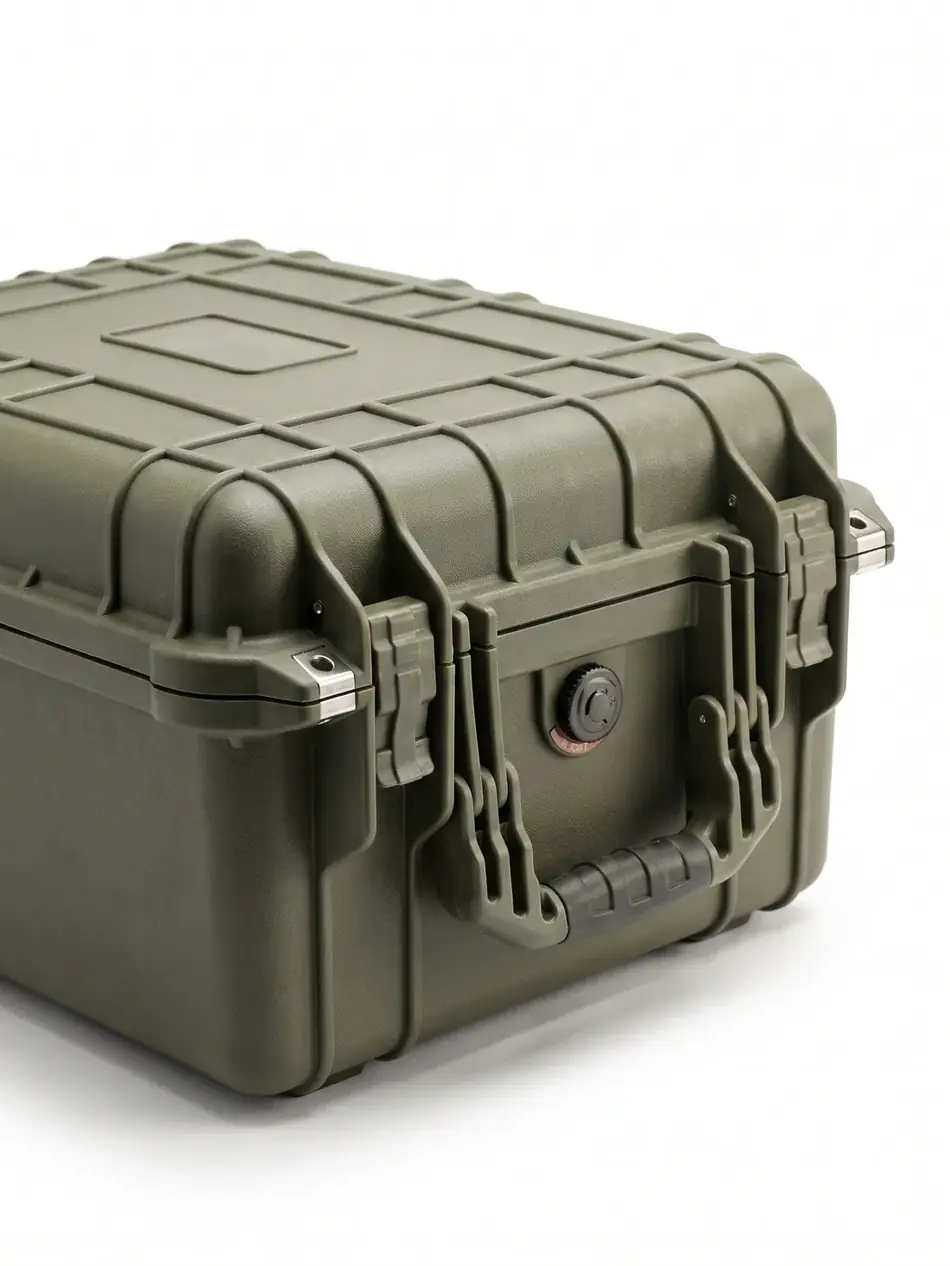
Firearm Transport Cases
Hard-shell firearm and long equipment transport cases with lockable latches, foam-padded interiors and published internal dimensions. Manufacturer direct, OEM available.
A firearm transport case is a rigid container whose internal geometry, padding and closure are designed to move long or irregular equipment safely between two points. KeXin manufactures these cases as an equipment-protection product: the specification covers internal length, foam layout, latching and locking, and case dimensions. We do not sell firearms and we do not advise on their use.
Key points
- Internal lengths up to 1,280 mm cover long-format equipment in a single shell.
- Foam layouts can be cut to a customer-supplied profile, or supplied as layered pick-and-pluck.
- Latches are configured to accept padlocks; two-hasps options are available for sealed transport.
- Ninety-eight models have an internal length of 380 mm or more, so most transport formats map to a stock shell.
What the case specification actually covers
Long equipment is awkward to protect because its mass is distributed along a lever. A case that flexes in the middle will transmit that flex into whatever is inside. The relevant specifications are therefore internal length versus the equipment length, the depth split between lid and base, the wall thickness of the shell, and whether the closure runs along the long edge or the short edge.
We publish all of these per model. Where a customer needs a case for a specific profile, they send the dimensions and a photograph; we return a recommended shell and a foam layout.
Regulatory responsibility
Transport rules for regulated items are set by the jurisdiction the shipment crosses, not by the case. A case can satisfy a mechanical protection requirement and still not satisfy a carrier or border requirement. Buyers are responsible for confirming the applicable rules with their own forwarder and authority; we supply documentation on case construction and dimensions to support that process, and nothing beyond it.
In this family
Sorted by internal volume. Each card leads with the measured internal envelope, because that is the number you size on.
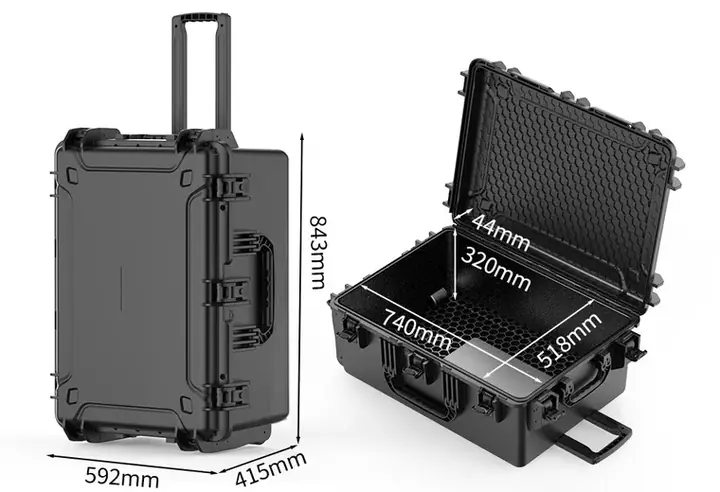
T Series Protective Case
External 843 × 592 × 415 mm
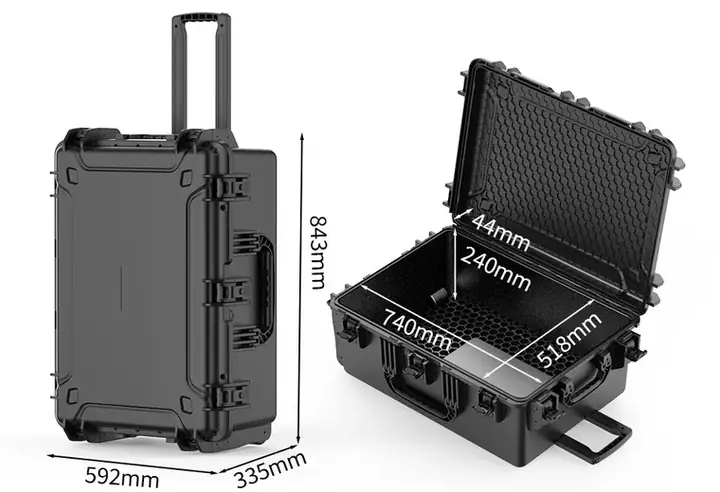
T Series Protective Case
External 843 × 592 × 335 mm
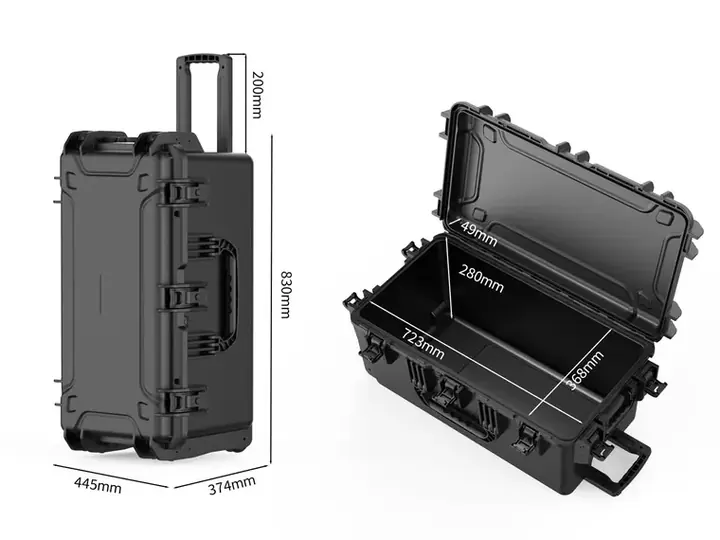
T Series Protective Case
External 830 × 445 × 374 mm
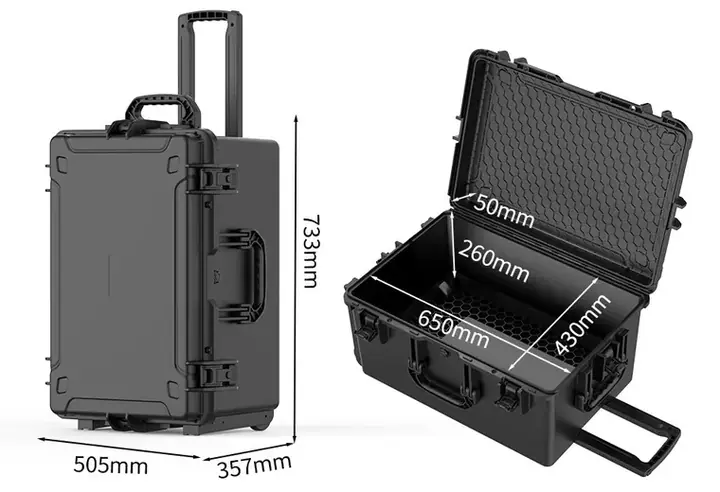
T Series Protective Case
External 733 × 505 × 357 mm
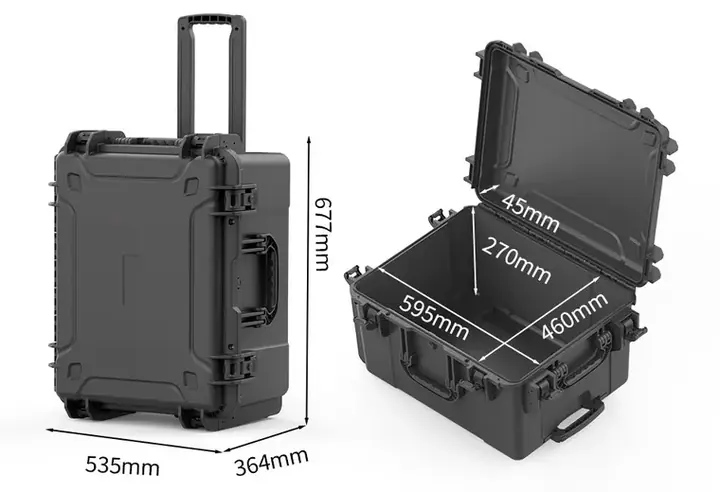
T Series Protective Case
External 677 × 535 × 364 mm
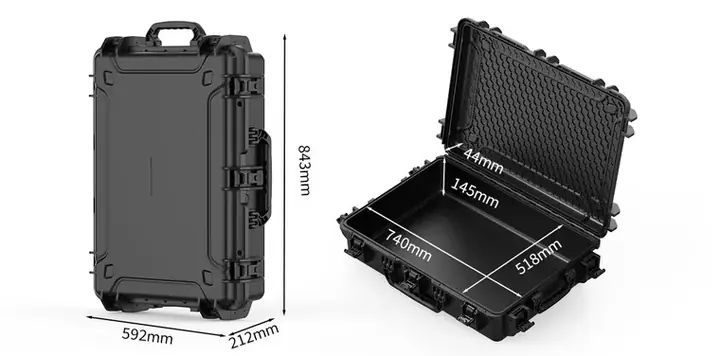
8 Series Protective Case
External 843 × 592 × 212 mm
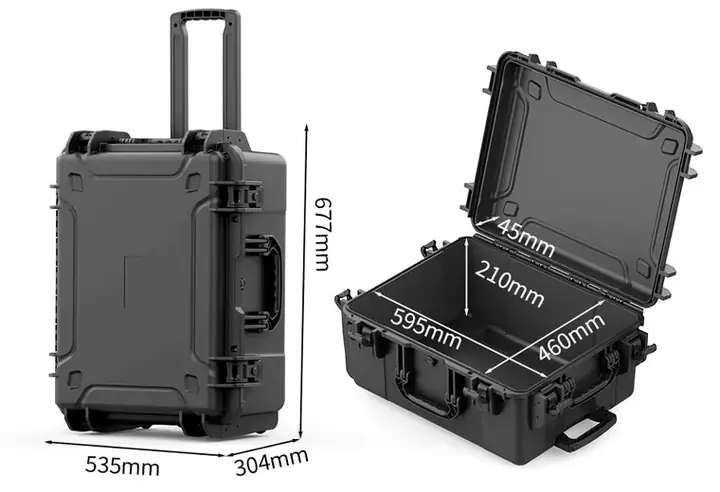
T Series Protective Case
External 677 × 535 × 304 mm
8 Series Protective Case
External 1356 × 154 × 408 mm
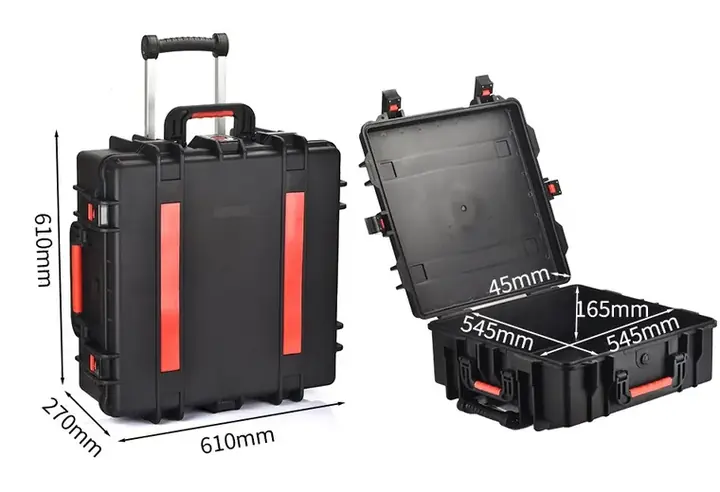
T Series Protective Case
External 610 × 610 × 270 mm
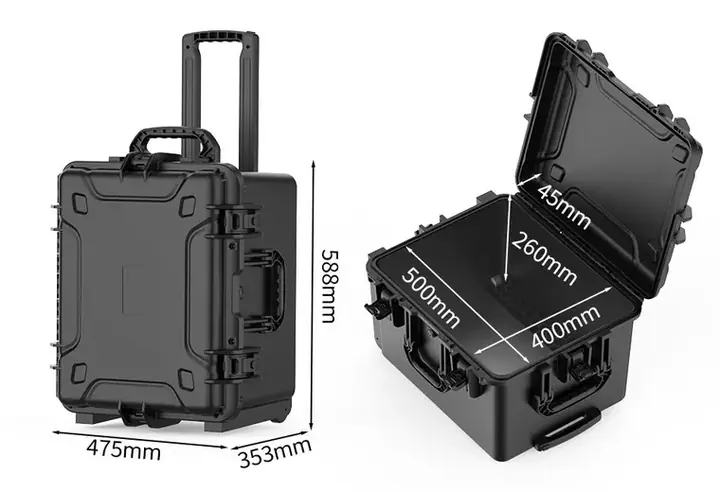
T Series Protective Case
External 588 × 475 × 353 mm
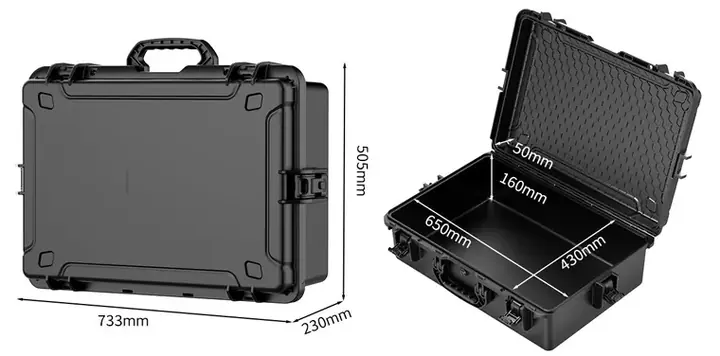
8 Series Protective Case
External 733 × 505 × 230 mm
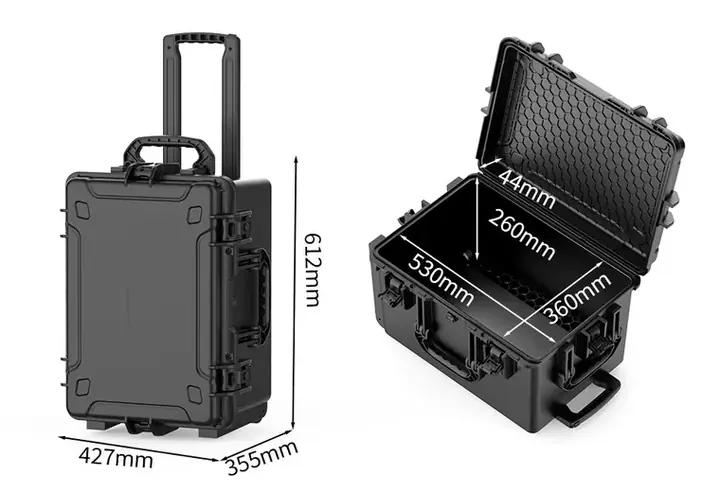
T Series Protective Case
External 612 × 427 × 355 mm
See all 98 Firearm Transport Cases models in the filterable database →
In this family: 7 sub-classifications
The family is not a flat list. Buyers come to us with a sub-type in mind, so each one below is a real filter over the same product database rather than a separate marketing page.
How to specify this family
Length
Allow at least 25 mm at each end beyond the equipment so the foam can absorb end impact rather than the shell.
Depth split
A deeper base carries the mass; a shallow lid retains it. We normally recommend a 60/40 or 70/30 base-to-lid split.
Closure
Latches on the long edge give better sealing on a flexing shell; latches on the short edge are faster to open.
Questions on Firearm Transport Cases
What is a firearm transport case?
A rigid, lockable container sized for long or irregular equipment, with a foam interior shaped to hold items in position and separate them from the shell during handling and transport.
What case dimensions should I consider before ordering?
Internal length, width and height first, then the external dimensions if the case must fit a rack, a vehicle or a pallet. Also check the narrow internal width if the shell tapers, which we publish separately for models where it applies.
Can the cases be fitted with custom foam?
Yes. We cut foam to a supplied profile, a drawing, or a physical sample, and we also supply pick-and-pluck, egg-crate and flat foam as standard configurations.
Are the cases lockable?
Yes. Most models accept padlocks through the latch body, and twin-hasps options are available where two locks or a lock plus a security seal are required.
Do you supply to individual consumers?
No. KeXin is a wholesale manufacturer. We sell to distributors, equipment brands, institutional buyers and OEM programmes, on EXW or FOB terms.
Applications, adjacent families and deeper reading
Firearm Transportation
Military
Law Enforcement