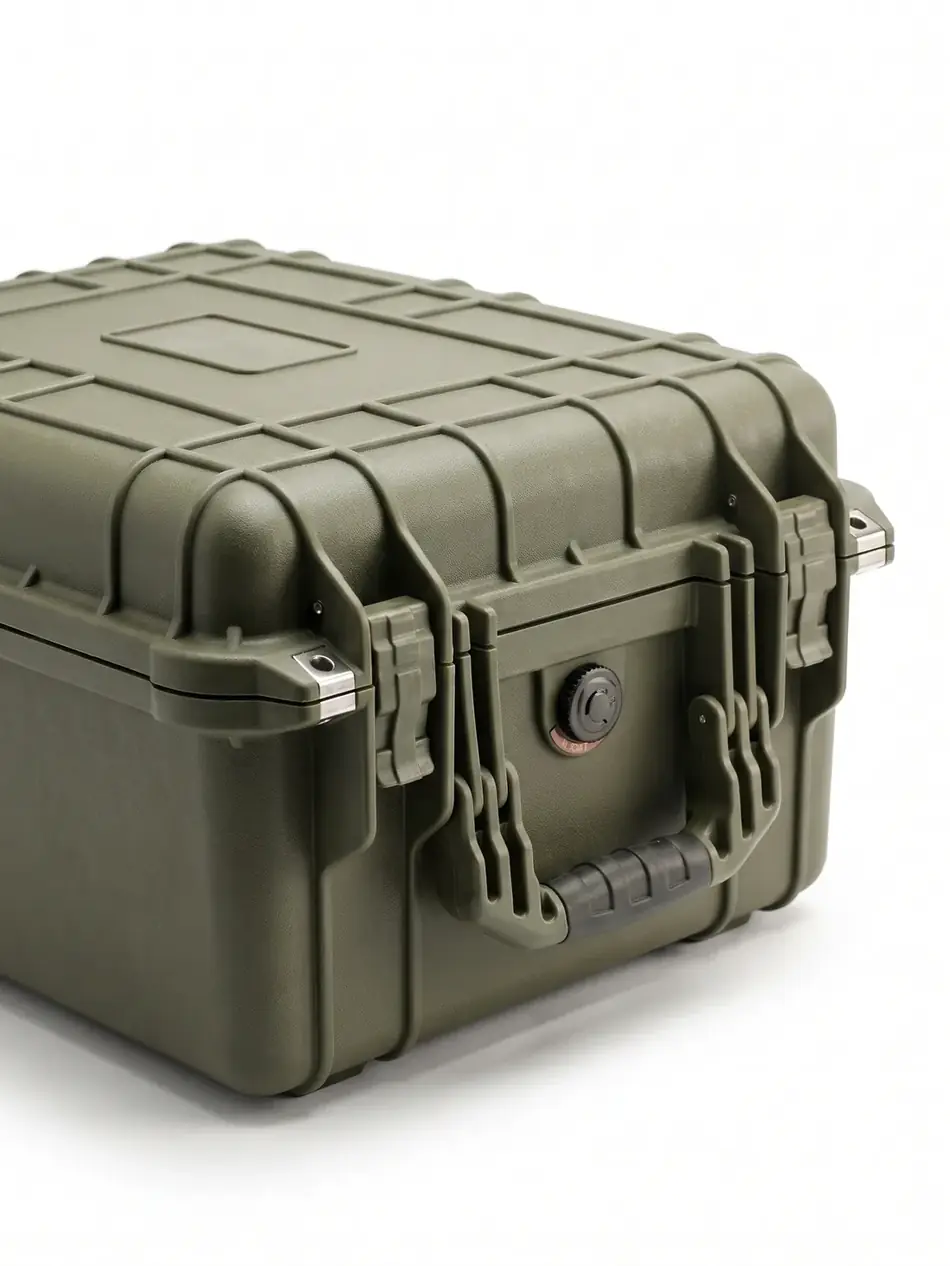
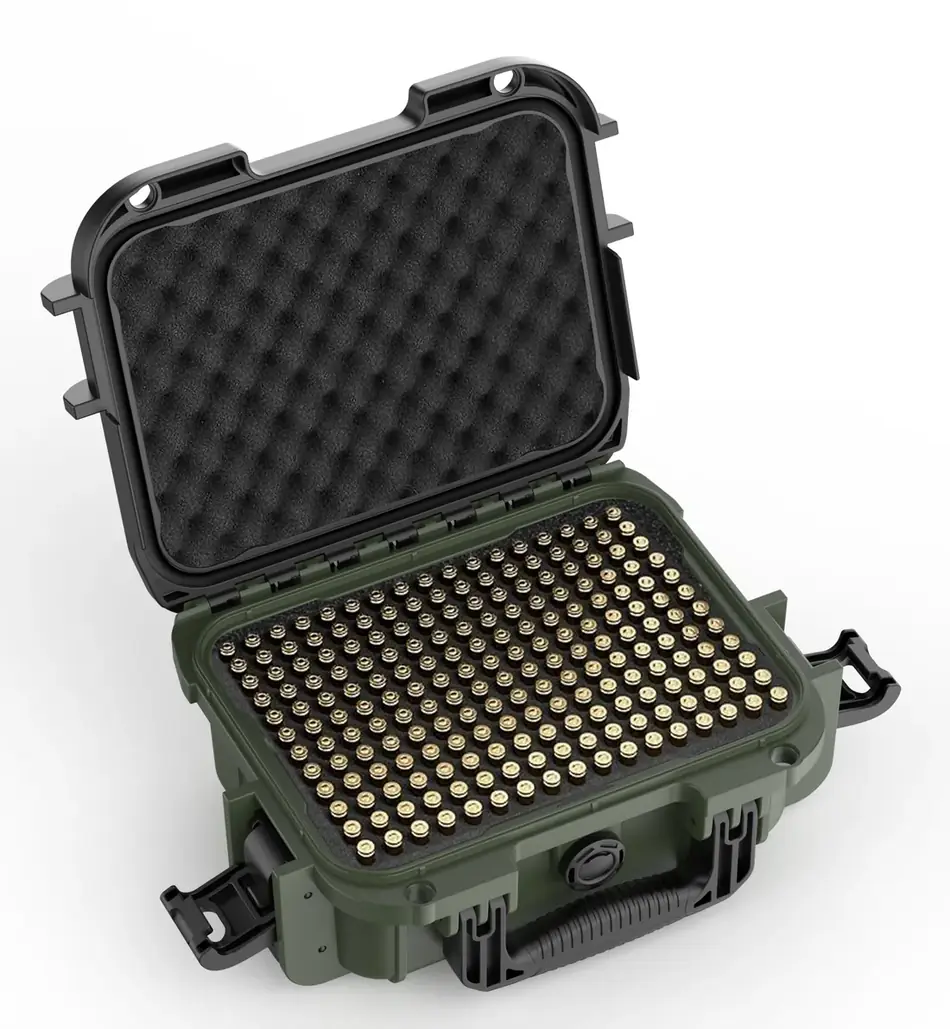
What is the difference between stock cases and OEM cases?
The difference is who owns the moulding and whose identity the product carries. A stock case is built on an existing moulding from the manufacturer's catalogue, so it has a low minimum, a short lead time and no tooling cost: you buy the box as made and optionally add a logo. An OEM case is produced for you: your brand, colour, foam and hardware on an existing tooling, or, if the shape itself must change, a new moulding commissioned in your name. Stock answers speed and small runs; OEM answers brand ownership and exact fit. KeXin sells both wholesale and OEM on EXW or FOB, from the same 155-model catalogue, and does not retail, quote DDP, or hold an overseas warehouse.
Key points
- A stock case uses an existing moulding; an OEM case applies your identity to tooling you do not have to pay for.
- True custom geometry means a new mould, which raises the minimum and the lead time well above stock and OEM work.
- On the KeXin line stock samples start at one unit, logo and OEM branding start around 300 pieces, a new mould around 3,000.
- First sample on existing tooling is about 45 days; a brand-new moulding tool is about 125 days from a 30 percent deposit.
- OEM still means wholesale terms: EXW or FOB, manufacturer direct, no retail sale, no DDP, no overseas warehouse.
- Pick stock to test a market fast; pick OEM to own the look; pick custom moulding only when no catalog size fits.
Stock cases and OEM cases defined
A stock case is a finished moulding the factory already makes and keeps available to any buyer: the tooling is paid for, the geometry is fixed, and the catalogue lists its published internal and external dimensions, wall thickness and net weight. You order it as it exists and, at most, add a logo or a different foam insert. An OEM case starts from that same reality but is finished for you: your brand mark, your shell colour, your chosen hardware and your cut foam, still produced on existing tooling so no new mould is required. The word OEM here means the product is made by us but presented as yours. The boundary to remember is tooling. Stock and branding-only OEM both reuse an existing mould; the moment the outline itself has to change to fit a specific firearm, optic or instrument, you are no longer in stock or simple OEM territory, you are into a commissioned moulding with its own cost and schedule.
The three levels of customization
It helps to separate the request into three levels so the minimum order and lead time are never a surprise. Level one is a stock case bought as made, sampled from a single unit so fit can be verified before a run. Level two is OEM on existing tooling: a custom logo, custom colour, custom foam or divider, alternative latches or feet and custom packaging, applied to a catalogue shell, each beginning around 300 pieces. Level three is a custom mould, where the shape itself is designed for your product; this needs a new tool, a higher minimum of roughly 3,000 pieces per component, and the longest schedule. Most buyers asking about the difference between stock and OEM really mean level two, but the conversation must surface level three early because it changes both cost and timing.
Stock versus OEM at a glance
The comparison below is built from the factory's own commercial parameters so that a purchasing decision can be made on numbers rather than impressions, and every figure is confirmed again on quotation. Read it as three columns of the same product family: the box you buy now, the box that carries your brand on an existing tool, and the box that needs a tool cut for you.
| Factor | Stock Case | Oem Case | Custom Mould |
|---|---|---|---|
| Tooling | Existing catalogue moulding | Existing moulding, your identity applied | New tool commissioned |
| Minimum order | Sample from 1 unit; stock run low | Logo / colour / branding about 300 pieces | About 3,000 pieces per component |
| Lead time | Short, from stock or standard schedule | First sample about 45 days | New tool about 125 days |
| Cost basis | Unit price only | Unit price plus branding setup | Tooling investment plus unit price |
| Best for | Testing a market, fast restock | Private label, brand ownership | A product no catalog size fits |
When a stock case is the right call
Choose a stock case when the catalogue already contains a box that clears your item and you value speed and low commitment over exclusivity. Because there is no new tool to fund and no long mould break-in, a stock case can be sampled from a single unit, ordered in modest runs, and re-ordered reliably from the same moulding, which keeps the interior dimensions identical between batches. This is the usual route for a distributor testing demand, for a reseller who wants a dependable container for a known firearm or instrument size, or for any buyer whose foam layout, not whose shell, is the real customization. You can still add foam cut to your product on a stock shell, so the load is protected exactly even though the box outline is standard.
When OEM is worth the step up
Move to OEM when the box must carry your brand or a specific colour to sit in a product line, yet the standard outline already fits. On existing tooling we can apply a custom logo, match a shell colour, change hardware such as latches, handles and feet, cut foam or dividers by zone, and print or label the packaging, with branding minimums starting around 300 pieces and a first sample in roughly 45 days. The appeal is ownership without tooling risk: your customers see your identity, but you avoid the cost and the twelve-to-thirteen-week schedule of a new mould. OEM is where most private-label firearm and equipment case programmes land, because the catalogue geometry is broad enough that a fit is almost always available; a new mould is reserved for genuinely unusual shapes.
How to specify OEM firearm and equipment cases
A good OEM brief is measured, not described. Give the item to be carried with its overall length, height and weight, and note whether it breaks down; the factory then reads interior dimensions off the catalogue and proposes the smallest shell that clears the load, because a box chosen by interior volume wastes pallet and shelf space. State the branding you need, the shell colour, and the hardware preferences such as padlock-ready latches or a shoulder-strap option, and describe the foam by zone rather than asking for a generic padding. Where a tighter lid interface is wanted, a compressible gasket is offered as a configuration choice; where you need a protection rating, note that we publish measured figures only for models and configurations actually tested rather than assuming one.
Procurement terms across stock and OEM
The commercial frame is the same whether you buy stock or OEM, and it is worth stating plainly because it filters the wrong enquiries early. KeXin is the manufacturer and sells wholesale and OEM on EXW or FOB: we do not sell single retail units, we do not quote DDP landed prices, and we hold no overseas warehouse, so the buyer arranges onward freight from the factory or port. Stock sampling can begin at one unit to verify fit; branding and OEM work begin around 300 pieces; a custom mould begins around 3,000 pieces per component. A first sample on existing tooling takes about 45 days and a new moulding tool about 125 days, both running from a 30 percent deposit. A buyer who orders repeatedly and wants a known container is served well here; a one-off retail purchase is not.
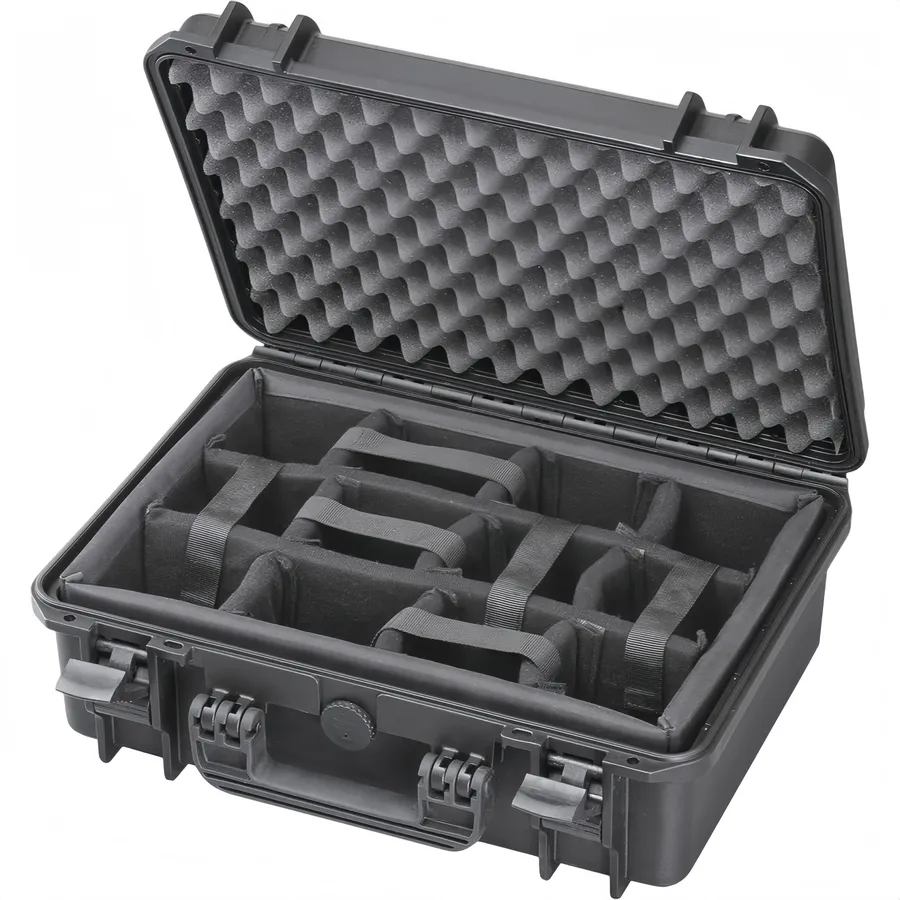
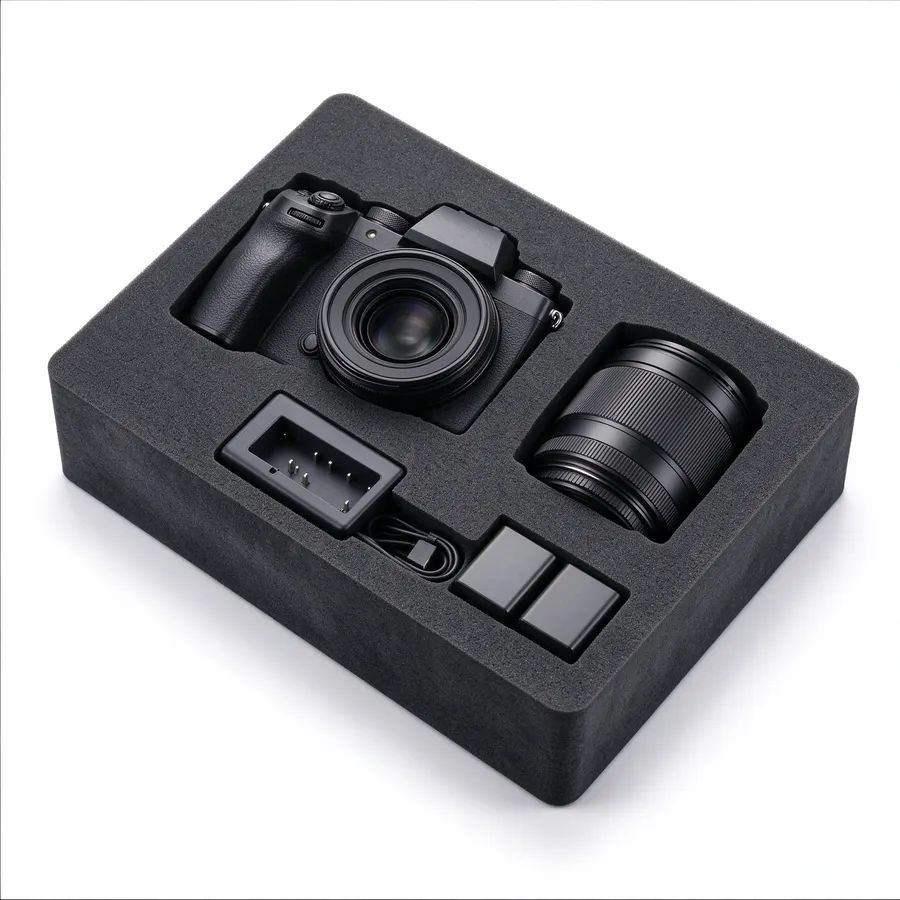
Customisation
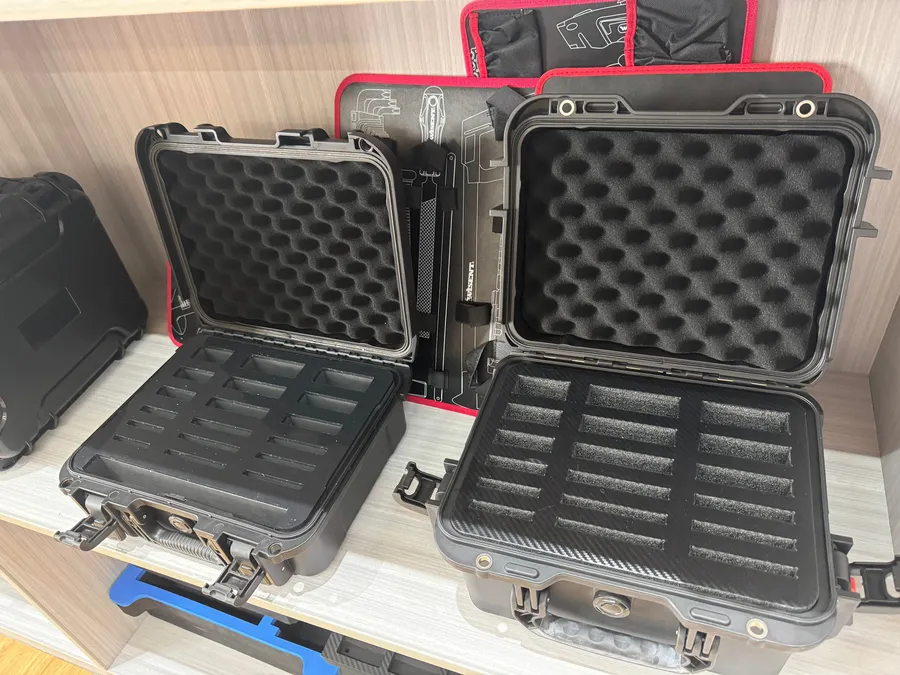
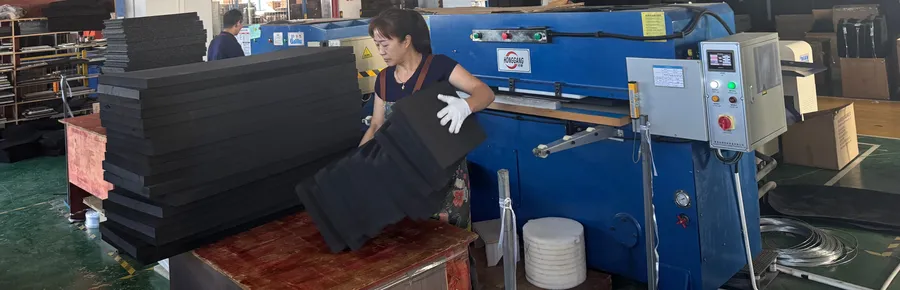
Everything described above is configurable on a standard shell: interior layout (pick-and-pluck, die-cut or CNC-cut), foam grade and thickness, colour, logo method, latch and lock count, pressure-equalisation valve, cable ports, document holder and identification plate. A bespoke exterior geometry requires a new mould — 125 days, from 3,000 units per moulded component.
Procurement considerations
| Question | What to send us |
|---|---|
| Which shell fits? | Equipment L × W × H as packed, plus required clearance per axis |
| What does it cost? | Order quantity and estimated annual quantity — the two drive different answers |
| Is tooling needed? | Whether an existing shell clears the envelope with usable foam depth |
| Lead time? | Your required delivery date, not just the order date |
| Certification? | The exact standard your tender names — we will say whether we can test to it |
| Freight? | Destination and preferred terms; carton and pallet data supplied with the quotation |
Comparison and selection guide
The tables on this page exist because a protective case is chosen by comparing three things: the envelope, the environment and the handling chain. Where no table applies, the rule below is.
| Situation | What To Do |
|---|---|
| Length | Allow at least 25 mm at each end beyond the equipment so the foam can absorb end impact rather than the shell. |
| Depth split | A deeper base carries the mass; a shallow lid retains it. We normally recommend a 60/40 or 70/30 base-to-lid split. |
| Closure | Latches on the long edge give better sealing on a flexing shell; latches on the short edge are faster to open. |
- Size on internal dimensions plus clearance, never on a product name.
- Choose the carrying method before the shell: it changes the series, not just the price.
- Specify the interior last, and decide up front whether the end user will reconfigure it.
What is the difference between stock cases and OEM cases? relates to Firearm & Long Equipment Transport Cases. Related families: Firearm Transport Cases / Ammunition Storage & Transport Boxes. Related sectors: field and industrial equipment. Continue in the Firearm & Long Equipment Transport Cases cluster.
This page is written from our own production data. If your requirement differs, send the dimensions and we will tell you which of the 155 models fits, or whether a custom route is needed.