What Is Foam-Padded Protection?
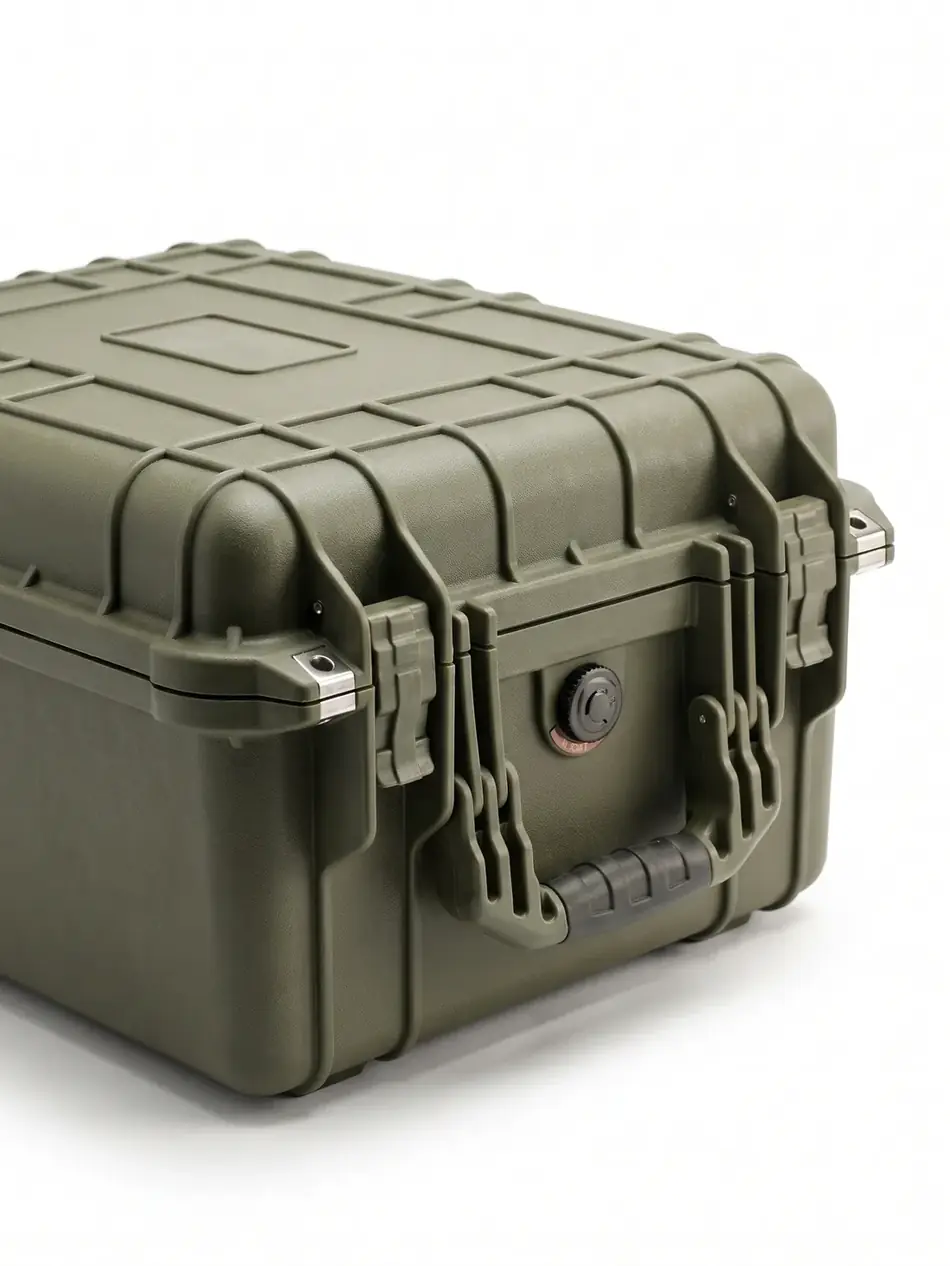
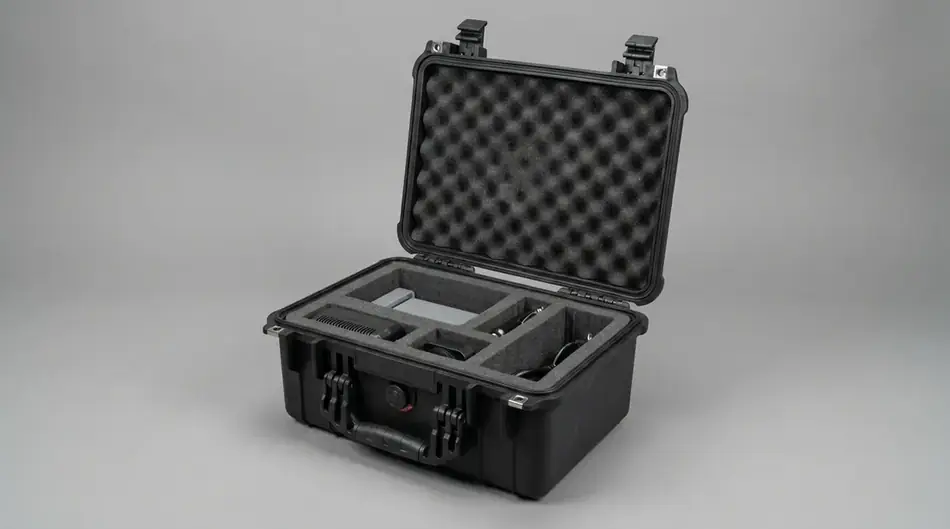
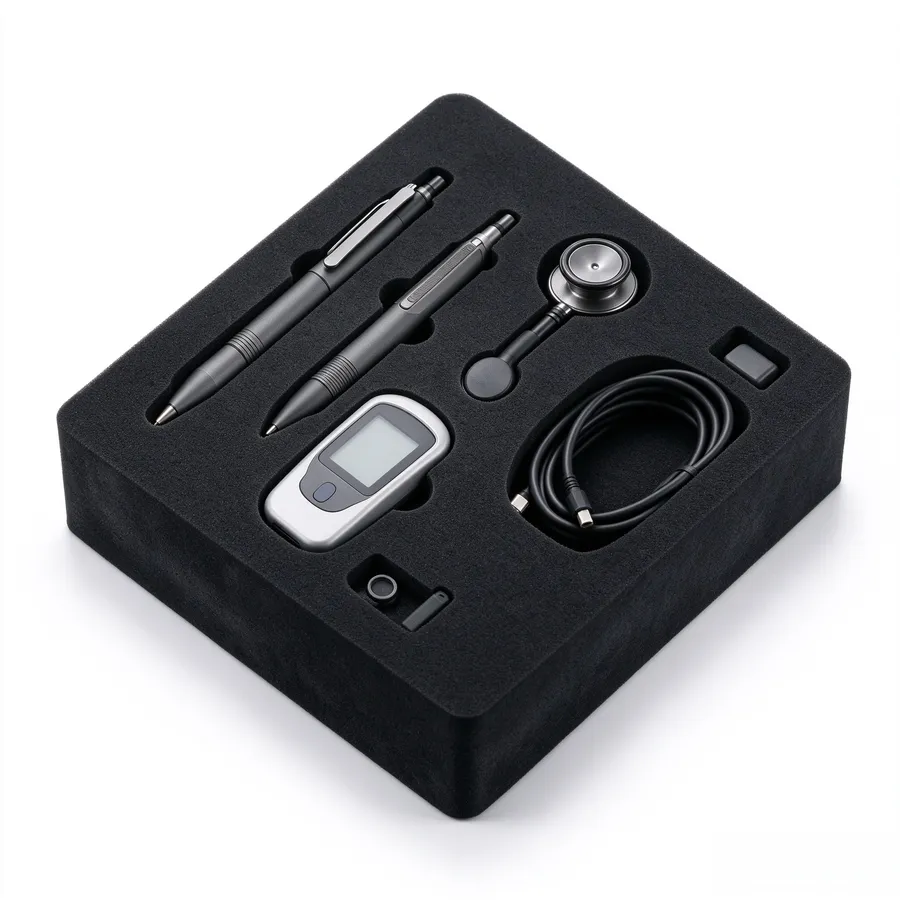
Foam-padded protection is the combination of a rigid outer shell and a shaped foam interior that does two jobs at once: it cushions the load when the case is knocked or dropped, and it locates each item so it cannot slide, tip or rattle inside. A bare shell only stops the outside from reaching the inside; it is the foam that decides whether the firearm, its optic, its suppressor and its magazines survive the trip, because a hard object moving freely inside a closed box strikes the wall with full force on every jolt. Padding is therefore graded and placed by zone, with a firm carrier under the mass and a softer contact face where the item touches, rather than one uniform sheet everywhere.
Key points
- Foam padding cushions and locates at the same time; a case that only holds a loose firearm is not padded in any useful sense.
- The failure mode is contact, so the pad must stop the firearm and its optic from striking the shell wall or each other.
- Grade the foam by zone: firm base foam carries the mass, soft or egg-crate foam faces the delicate parts.
- Read the pad against the internal dimensions and the published lid-and-base split, not the outside size of the case.
- Padding is a manufacturer option that needs a specified layout; it is not, on its own, a shock rating.
- As an OEM or ODM item the padding can be cut to your firearm, but wholesale runs on EXW or FOB terms with no retail sale.
The two jobs foam padding does
A firearm case fails in transport for one of two reasons: something outside hits the case, or something inside hits the case wall. Foam padding is how you defend against the second, which is by far the more common damage. When a closed case is dropped or a vehicle takes a rough corner, an unlocked item inside keeps its own momentum and meets the shell at full effect, so the muzzle, the scope bell or the suppressor takes a point impact. A shaped pocket removes that travel: it surrounds the item closely enough that it never gathers speed, and the foam compresses to soak up whatever force does arrive. That is the whole idea behind the phrase, and it is why the interior matters as much as the plastic around it.
The cushioning half and the locating half pull in slightly opposite directions, which is why a pad is graded rather than uniform. Soft foam absorbs a shock well but lets a heavy item sink and lean, so a soft layer alone can be a poor carrier; firm foam holds a thing still but transmits more of a jolt. The usual answer is a firm base layer under the mass and a softer or convoluted top layer over it, so the load is held by the carrier and protected at the contact face. The published lid-and-base depth split on a model page tells you how much of that layout has to live in the base and how much in the lid.
Foam grades and the role of each pad
Across our firearm and long-equipment shells the same pad vocabulary applies, and the build is chosen by what sits on top of it. The table sets out each role, what it does, and where it normally goes in a firearm layout.
| Pad Role | What It Does | Where It Goes |
|---|---|---|
| Firm base foam | Carries the mass and stops the item sinking or leaning | Under the receiver, the optic body or a magazine stack |
| Soft contact layer | Absorbs the jolt at the face the item touches | Lid face, muzzle and stock ends, scope bells |
| Egg-crate (convoluted) | Springy peaks that bridge small height differences | Top cover over handguards, bipods and loose parts |
| CNC or die-cut tray | Precise outline pockets that locate each part | A fixed rifle-and-optic layout repeated on every build |
| Pick-and-pluck foam | Hand-torn pockets you shape to the kit you have | Mixed or changing loads, field re-packing |
| Divider and wall pads | Keeps adjacent items from touching each other | Between a rifle and its suppressor or spare mag |
Matching the pad to what you actually carry
The right layout depends on the geometry of the item, so start from the internal dimensions rather than the model name. A pistol with a mounted red dot and a couple of spare magazines wants a deep base so the optic sits below the parting line: on KX-4318 the interior is 407 x 187 x 178 mm with a 140 mm base and only a 38 mm lid, which lets the gun lie in the deep base with the dot protected and a thin contact pad closing over the muzzle. A long, flat load such as a folding-stock carbine or a disassembled rifle is the opposite problem: KX-86216 gives a 582 x 300 x 130 mm interior with a 100 mm lid and a shallow 30 mm base, so the layout is two facing cut layers that clamp a long item in the middle rather than a single deep pocket.
A scoped rifle that stays assembled, or a short gun with a suppressor and optics, needs more all-round height and a firmer wall to carry it. KX-5021 offers a 465 x 315 x 196 mm interior with a 134 mm lid and a 62 mm base and an ABS shell, a useful middle ground where a CNC-cut rifle channel plus a separate mag pocket works well. A shared or multi-weapon load pushes you to a big footprint such as KX-88442, whose 740 x 518 x 364 mm interior and about 111.6 litres let you build several parallel firearm channels with divider pads between them, so two long guns never touch each other in transit.
Where foam padding earns its keep
Padding matters most where the case is handled by people or machines other than you: the boot of a car, the hold of a bus, the belt and stack of checked baggage, and a shelf or rack in storage where a case is pulled out and dropped on its edge. In every one of those the threat is not a crushing load from outside but a series of short, sharp contacts from inside, and that is exactly what a well-placed pocket and a graded pad are built to absorb. A loose firearm in an empty hard case is the worst arrangement, because the box is doing nothing but adding a wall for the gun to hit.
Storage is the case people forget. A firm base pad is also what stops a heavy optic or a loaded magazine from taking a permanent set into soft foam over months of standing still. This is why a pad is graded by firmness by zone: the contact face can be gentle, but the layer that carries the mass has to resist creep, or the item slowly sinks until it is resting on the shell and the padding has quietly stopped protecting anything.
Foam padding as an OEM or ODM item
Because every firearm and accessory combination is different, the padding is usually ordered as OEM or ODM rather than bought as a generic sheet. We offer custom foam, custom thickness and custom shape on these shells, with both CNC and die-cut available, and the foam itself is graded by zone from cross-linked PE, EVA or EPS so a firm carrier can sit under a softer contact face. To specify a layout, send a drawing, a photograph of the packed case, or the physical firearm and accessories, and we cut to that; a sample is the quickest route when a suppressor or a left-hand cocking handle is hard to describe in words.
The commercial terms are wholesale and OEM on EXW or FOB only: we do not sell single retail units, do not quote DDP and hold no overseas warehouse, so the freight leg after the agreed term is yours to arrange. A cut-to-fit foam insert can begin from a quantity of one on an existing shell, while a printed logo or a body colour typically starts around 300 pieces, and a bespoke shell rather than a bespoke insert runs about 45 days on existing tooling or about 125 days with a new mould and a 30 percent deposit.
What foam padding does not promise
It is worth being precise about the limits, because padding is easy to overstate. A foam-lined shell is not, by itself, a shock or drop rating: on our model pages shock and impact are described as a manufacturer option that requires a specified foam layout, since the shell alone is not a shock rating and no drop height is claimed for a configuration that has not been put through a test. The measured facts are physical ones published per model, such as internal and external dimensions, wall thickness, the lid-and-base split and net weight, plus a compressible gasket in a moulded channel on sealed variants. No IP code is attached to a build unless that assembled configuration has been through accredited testing quoted per configuration.
So a good request is a specific one. Tell us the firearm and every accessory that travels with it, with the optic and suppressor fitted, note the fragile faces, give the quantity band, your target EXW or FOB port and your launch date, and where possible courier a sample or a clear photograph of the current packed layout. That lets us confirm the parting-line fit and the pad grades before any foam is cut, so the padding actually stops the contacts that would otherwise be doing the damage.
Customisation
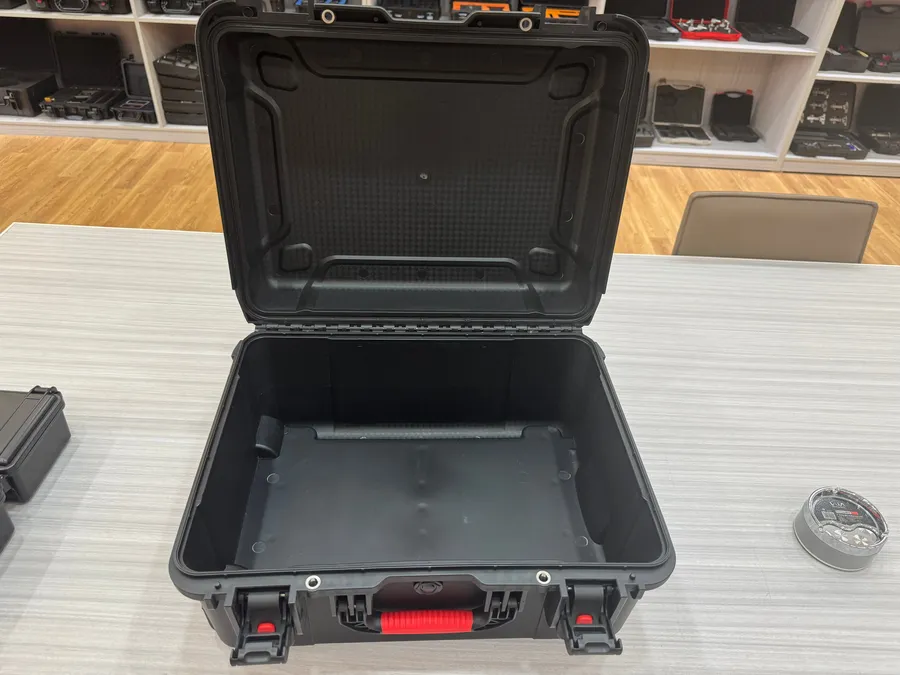
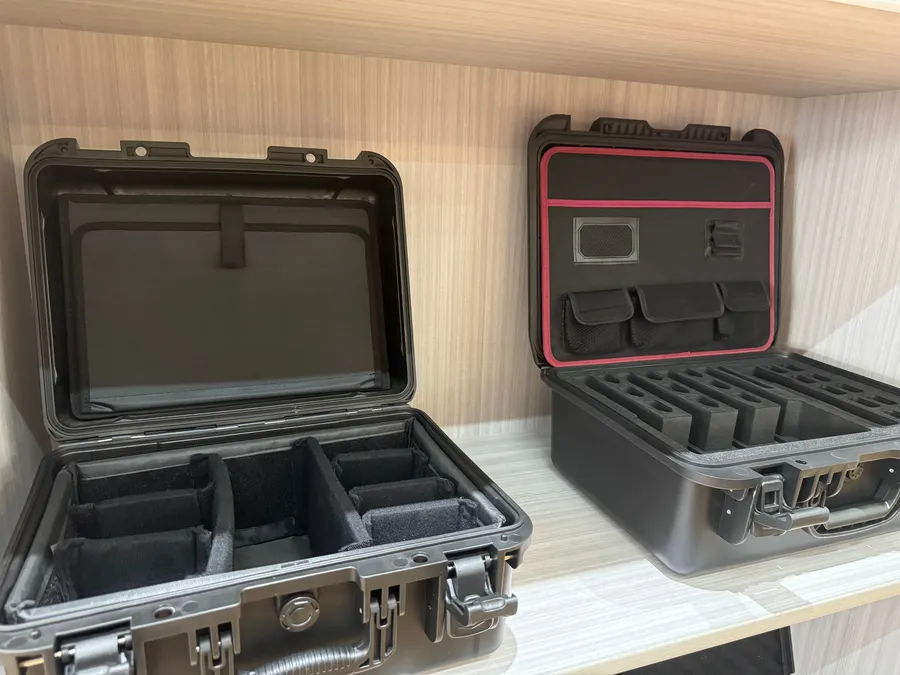
Everything described above is configurable on a standard shell: interior layout (pick-and-pluck, die-cut or CNC-cut), foam grade and thickness, colour, logo method, latch and lock count, pressure-equalisation valve, cable ports, document holder and identification plate. A bespoke exterior geometry requires a new mould — 125 days, from 3,000 units per moulded component.
Procurement considerations
| Question | What to send us |
|---|---|
| Which shell fits? | Equipment L × W × H as packed, plus required clearance per axis |
| What does it cost? | Order quantity and estimated annual quantity — the two drive different answers |
| Is tooling needed? | Whether an existing shell clears the envelope with usable foam depth |
| Lead time? | Your required delivery date, not just the order date |
| Certification? | The exact standard your tender names — we will say whether we can test to it |
| Freight? | Destination and preferred terms; carton and pallet data supplied with the quotation |
Comparison and selection guide
The tables on this page exist because a protective case is chosen by comparing three things: the envelope, the environment and the handling chain. Where no table applies, the rule below is.
| Situation | What To Do |
|---|---|
| Length | Allow at least 25 mm at each end beyond the equipment so the foam can absorb end impact rather than the shell. |
| Depth split | A deeper base carries the mass; a shallow lid retains it. We normally recommend a 60/40 or 70/30 base-to-lid split. |
| Closure | Latches on the long edge give better sealing on a flexing shell; latches on the short edge are faster to open. |
- Size on internal dimensions plus clearance, never on a product name.
- Choose the carrying method before the shell: it changes the series, not just the price.
- Specify the interior last, and decide up front whether the end user will reconfigure it.
What Is Foam-Padded Protection? relates to Firearm & Long Equipment Transport Cases. Related families: Firearm Transport Cases / Long Equipment Cases / Custom Protective Cases. Related sectors: field and industrial equipment. Continue in the Firearm & Long Equipment Transport Cases cluster.
This page is written from our own production data. If your requirement differs, send the dimensions and we will tell you which of the 155 models fits, or whether a custom route is needed.