What is a firearm transport case?
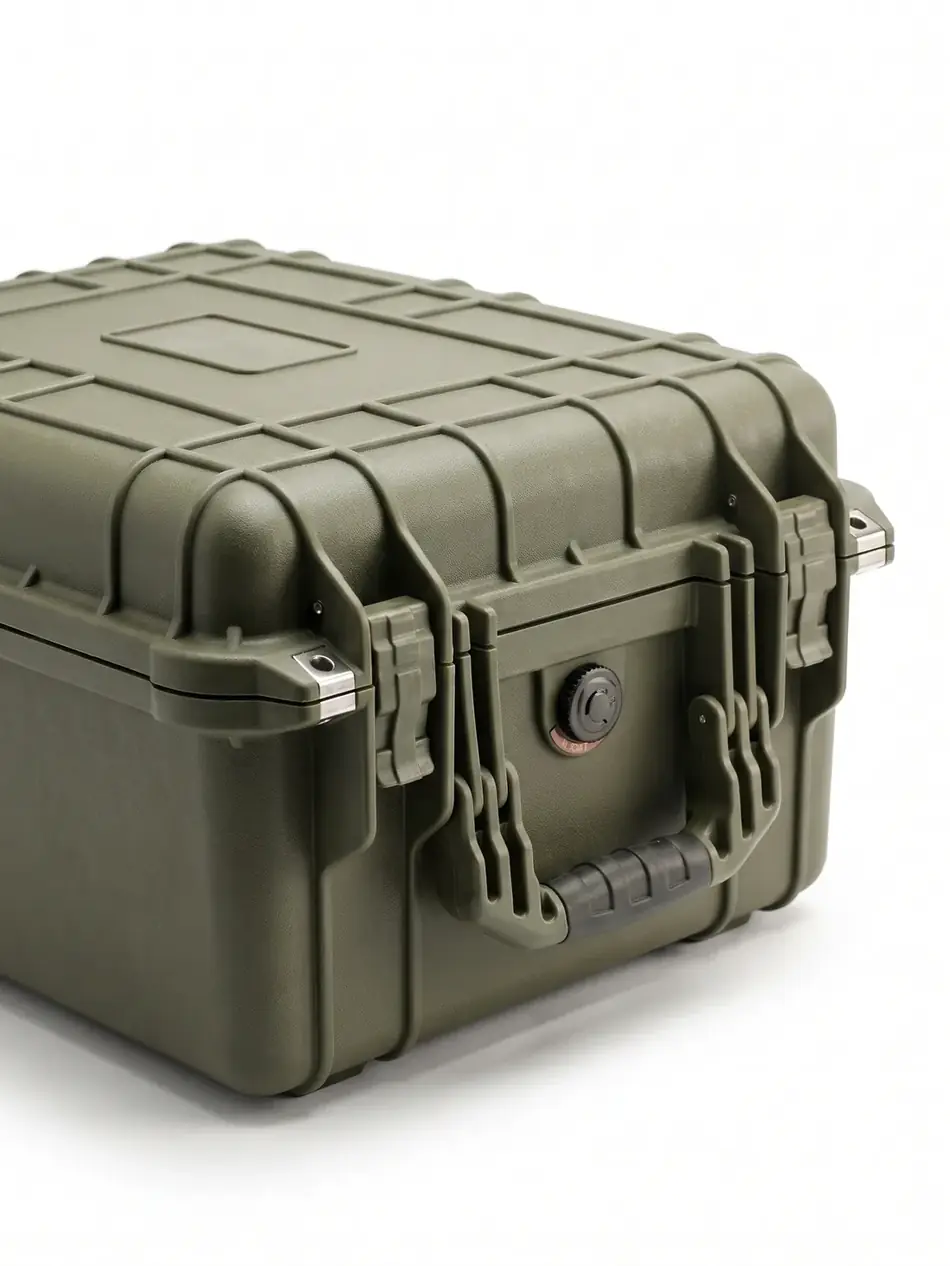
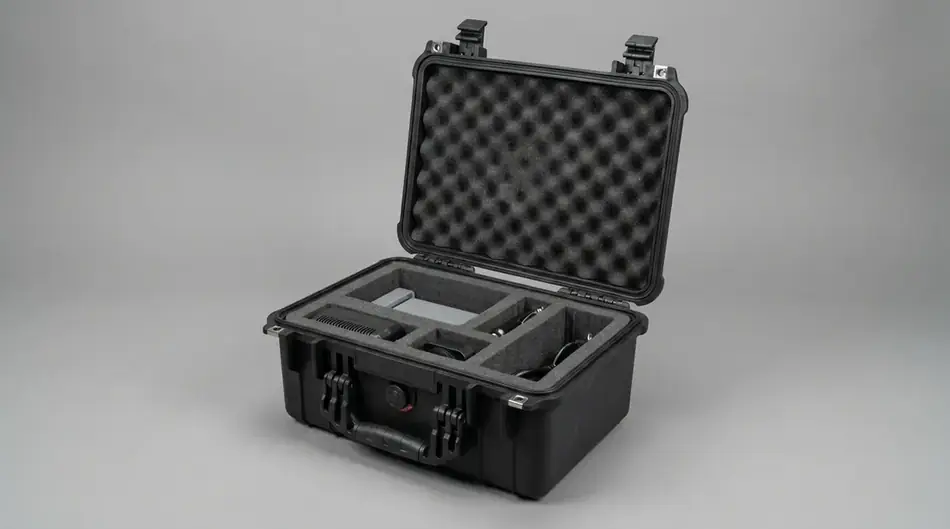
A firearm transport case is a rigid moulded shell, usually polypropylene or ABS, sized and foamed so that one or more long guns can be moved between two points without the barrels, optics or stocks knocking against each other or against the wall. It is defined by three things: an internal length that clears the whole weapon, an insert that separates and locates each firearm, and closure plus hardware that keep that layout settled through a journey. It is not storage for loose ammunition and it is not a shipping pallet; it is a reusable protective envelope whose real job is to hold a known geometry still while everything around it moves.
Key points
- Size to the longest firearm you own, then check the internal length against the case, not the external length printed on the box.
- Separate every firearm with its own foam channel or sleeve; a shared cavity lets weapons contact each other, which is the damage cases exist to prevent.
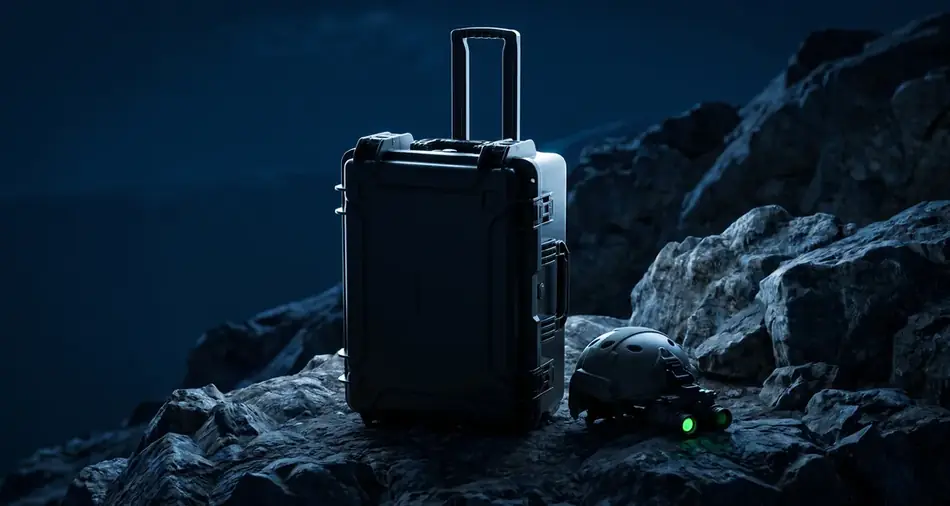
- Match the carry style to the journey: a shoulder or hand case for short trips, a wheeled case with a telescopic handle once you add optics and accessories.
- Read wall thickness per model rather than trusting a brand: catalogue shells run from roughly 3.0 mm up to 5.0 mm depending on size.
- Treat ratings honestly: published specs cover dimensions, wall and net weight, while any ingress or drop rating we have not measured is left blank.
What makes a case a firearm transport case
The defining feature is geometry, not decoration. A firearm is long, rigid and asymmetric, with a barrel that must not bear a load, an action that must not snag, and often a mounted optic that is the most fragile part of the whole object. A transport case answers that shape with an internal cavity long enough to lie the weapon flat, a base foam with a channel that cradles the stock and receiver, and a lid that presses down without pinching a sight. Add a closure at each end and the case becomes a fixed volume that holds a known object still. Storage boxes work differently; they hold many interchangeable small items, so the transport case is judged by how well it protects one specific layout.
The three parts that do the work
First the shell: a moulded polypropylene or ABS body, wall thickness published per model, that resists crushing and keeps the contents in one envelope. Second the insert: cross-linked PE or die-cut foam that separates firearms, fills the space a barrel would otherwise rattle through, and stops accessories moving loose. Third the hardware: latches that hold the lid under a stack, a handle sized for the intended carry, hinges that survive repeated opening, and on the larger formats wheels and a telescopic handle so the mass of a loaded case is rolled rather than lifted. Remove any one of the three and the others cannot do the job alone; a tough shell with no foam still lets two rifles knock against each other.
Single cases, doubles and trolleys
Formats scale with how many weapons you carry and how far. A compact case such as the KX-4010 has a 390 x 315 x 88 mm interior and suits short firearms and accessories. A long single case such as the KX-814641 stretches to a 1280 mm internal length so a full rifle lies flat with room for a low-mount optic. Once you add a second firearm or a tripod, a wheeled trolley earns its place: the KX-85021 is a rolling case at 495 x 370 x 210 mm, while the KX-85726 adds a telescopic handle and the KX-88337 is a larger loaded trolley. Choose the format by the longest item plus the number of separations you need, not by how many boxes you can fit in a boot.
Representative models and their published numbers
Every figure below is taken from the model's own datasheet, in millimetres for the interior and grams for the empty shell. Note that the long case buys its capacity in internal length while staying relatively narrow, whereas the trolleys buy depth and add wheels, which is why their empty weight climbs quickly. Compare internal length to your firearm and net weight to how you will carry it, and treat any field a listing leaves blank as simply not measured for that configuration rather than as an assumed capability.
| Model | Type | Internal Mm | Internal Volume L | Wall Mm | Wheels | Net |
|---|---|---|---|---|---|---|
| KX-4010 | Compact carry | 390 x 315 x 88 mm | 10.8 | 3.0 | No | 1015 g |
| KX-814641 | Long single | 1280 x 350 x 140 mm | 62.7 | 5.0 | No | Not published |
| KX-85021 | Trolley | 437 x 308 x 164 mm | 22.1 | 4.5 | Yes | 4912 g |
| KX-85726 | Trolley + handle | 520 x 296 x 210 mm | 32.3 | 4.2 | Yes | 5600 g |
| KX-88337 | Large trolley | 723 x 368 x 329 mm | 87.5 | 5.0 | Yes | 10866 g |
How to choose the right case
Work in a fixed order. Measure the longest firearm you need to carry and add clearance at both ends, then eliminate every model whose internal length falls short. Decide how many firearms travel together and how many optic mounts must be protected, because that sets the number of foam channels and the internal width. Then pick the carry style: a hand or shoulder case if the distance is short and the load light, a wheeled trolley once the loaded weight makes repeated lifting a nuisance. Only at the end do you worry about colour, logo and foam detail, which are configuration choices and should never be allowed to override an internal size that is marginally too short.
Where these cases are used
The common thread is movement between controlled points. A retailer uses them to ship a rifle to a customer or move stock between counters. A club or training unit uses them to carry weapons to a range and back, often stacked in a vehicle. A professional user moves sensitive instruments and firearms together and needs each kept in its own channel. Across all of these the case is a reusable envelope, emptied and reloaded many times, which is why the latches, hinges and handle wear matter as much as the shell. It is transport protection for a known object, distinct from storing loose items in inventory boxes.
Customising a case for your fleet
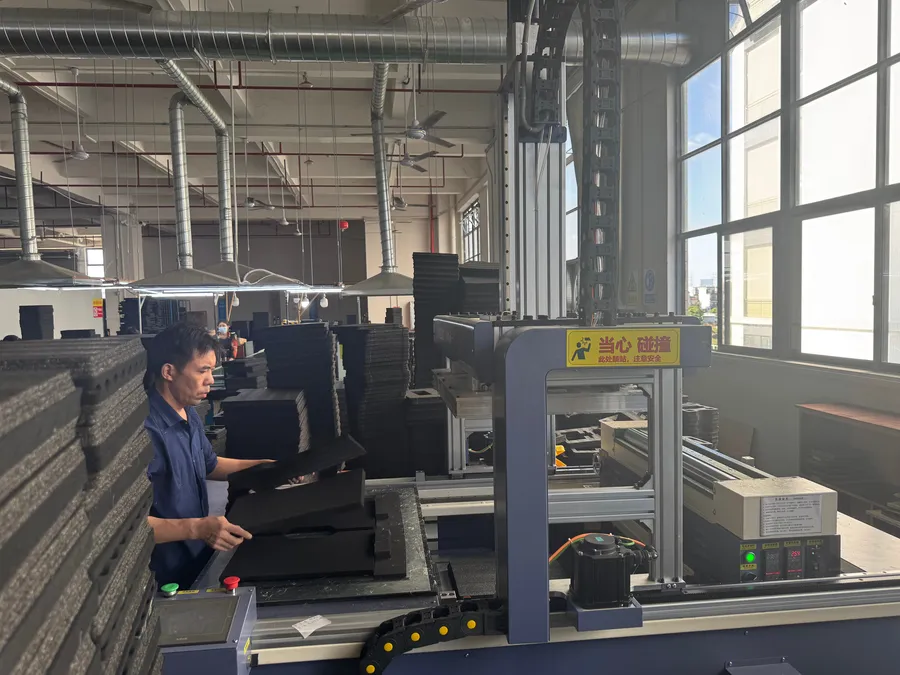
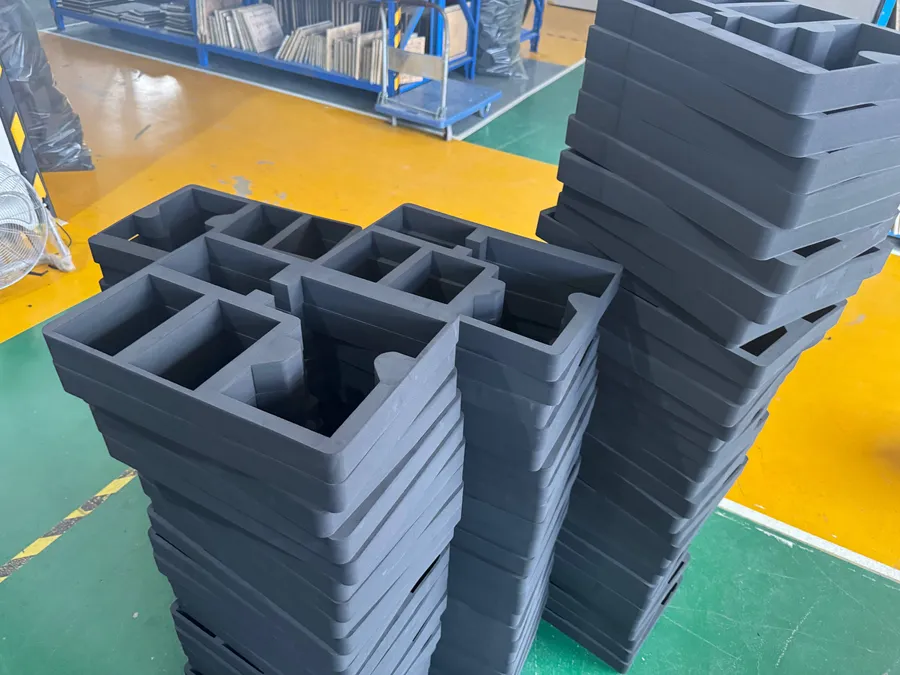
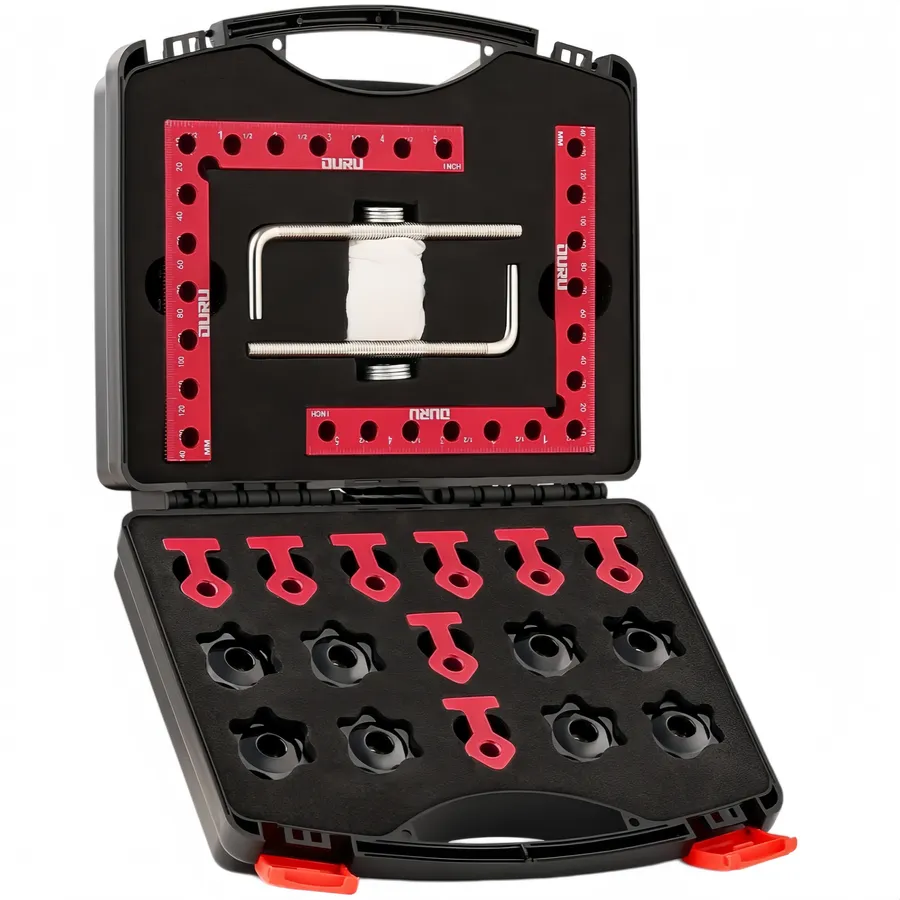
Because the shells are our published tools, a transport case can be branded and reconfigured without new moulds. Foam is cut to your specific weapons, so a red-dot or a fixed-stock rifle sits in a channel shaped for it rather than a generic slab. Logo and matched colour, additional latches for a padlock, a shoulder strap, or a different handle are configuration against an existing model, each with its own order floor. A genuinely new internal length that no published model offers is a separate tooling decision with a longer lead time, so if a fleet standardises on an odd size, plan for that case rather than assuming decoration will solve it.
Notes before you buy
Ask for the datasheet and check the internal number, not the picture. Confirm the empty weight against whoever will lift it, because a loaded trolley climbs fast once you add weapons and optics. Fix foam by supplying a drawing, a photograph of the packed kit or a physical sample, so the channels match the real objects. And read the commercial terms plainly: this is wholesale and OEM work quoted EXW or FOB with a deposit up front, we do not retail, do not ship DDP and hold no overseas stock, and we do not assert a protection rating that has not been measured on the configuration you order.
Two adjacent searches, answered from the published catalogue
The two search phrases below arrive at this page from neighbouring questions, because instruments and robots move through the same logistics chain as firearms — a point the page already makes where a professional user carries sensitive instruments and weapons together, each in its own foam channel. Each row is answered only with figures already published in the model catalogue or already stated on this page, so every number traces back to a named model.
| Search | What We Publish |
|---|---|
| oscilloscope transport case | An oscilloscope travels face-up with probes and leads in a second layer, so the useful published numbers are internal width and the lid-to-base split. KX-85221 gives a 483 x 363 x 195 mm internal cavity, a 150 mm lid over a 45 mm base and 27.4 usable litres in engineering polypropylene on a 4.5 mm wall; KX-85823 widens that to 500 x 400 x 210 mm internal, a 165 mm lid over a 45 mm base and 33.6 usable litres in polypropylene on a 4.75 mm wall. The insert is cut to the instrument's footprint — Pick & Pluck, die-cut or CNC-cut from a drawing, photograph or sample — and custom foam starts from 1 set. |
| robot transport case | A robot needs depth for folded arms and width for its base, which is where the large trolley shells earn their keep. KX-88337 — already tabled above as the large trolley — publishes a 723 x 368 x 329 mm internal cavity, 87.5 L internal volume, a 5.0 mm wall, two wheels and 10,866 g empty. The wider alternative is KX-88434 at 740 x 518 x 284 mm internal, 108.9 L internal volume, a 5.0 mm wall, 14,030 g empty, two wheels and a 295 mm telescopic handle. Joints, grippers and the controller are held by shaped foam channels cut to drawing, again from 1 set. |
How an enquiry for either search is quoted
Both searches are answered the way a firearm fleet is: the object's packed dimensions decide the shell, then the foam decides the layout. Send the instrument or robot as a dimensioned list, a photograph of it packed, or the item itself, and the reply comes back per model number with the datasheet attached, quoted EXW or FOB from Guangdong, China on wholesale and OEM terms. Wall thickness is published for 148 of the 155 models, between 2.0 and 6.0 mm, and the resin mix is 94 polypropylene, 38 engineering polypropylene, 22 ABS and 1 PP/ABS shell, so a width or mass target can usually be met in more than one candidate.
Configuration floors are the published ones: custom foam from 1 set with no tooling, logo, colour or OEM hardware from about 300 pieces, and a genuinely new shell size from 3,000 pieces at about 125 days, against about 45 days for a first OEM sample on an existing mould. Payment is a 30 per cent deposit with the balance after inspection, third-party inspection is welcome, and the standing limits hold — no retail channel, no DDP quotation, no overseas warehouse.
What we do not claim for instrument or robot transport
No ingress code, shock figure, vibration profile, free-fall height or temperature range is published for any model, so neither row above carries one — a delicate instrument travels on its foam layout, not on an unpublished rating. The seal record is published instead: a compressible gasket in a continuous moulded channel is recorded on 124 of the 155 shells, and 31 record none offered on the shell. Where a datasheet field says not measured, that is the answer the enquiry receives, and accredited third-party testing can be commissioned on the exact build as a separate work package.
Customisation
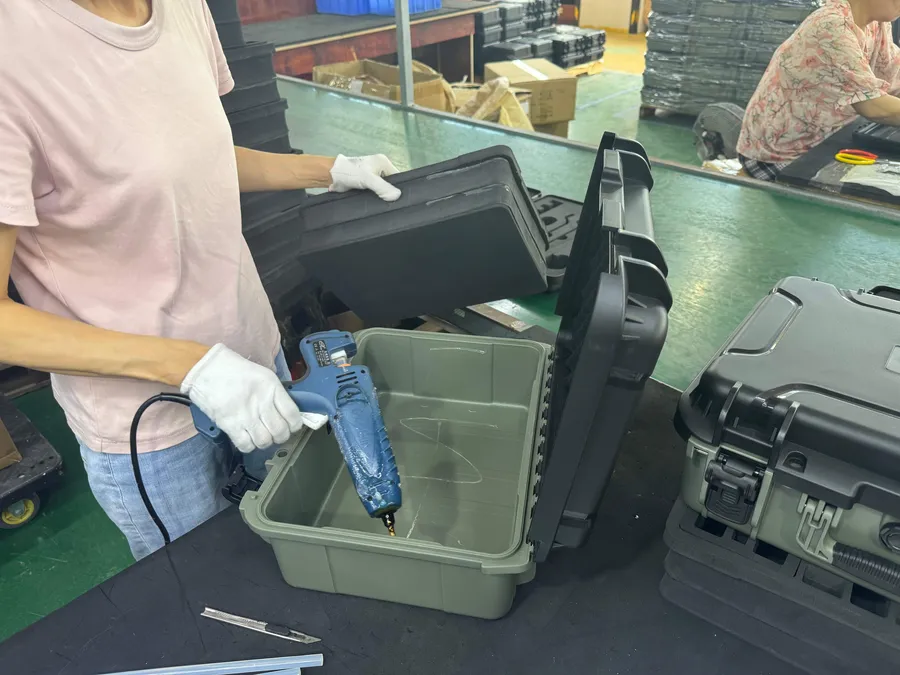
Everything described above is configurable on a standard shell: interior layout (pick-and-pluck, die-cut or CNC-cut), foam grade and thickness, colour, logo method, latch and lock count, pressure-equalisation valve, cable ports, document holder and identification plate. A bespoke exterior geometry requires a new mould — 125 days, from 3,000 units per moulded component.
Procurement considerations
| Question | What to send us |
|---|---|
| Which shell fits? | Equipment L × W × H as packed, plus required clearance per axis |
| What does it cost? | Order quantity and estimated annual quantity — the two drive different answers |
| Is tooling needed? | Whether an existing shell clears the envelope with usable foam depth |
| Lead time? | Your required delivery date, not just the order date |
| Certification? | The exact standard your tender names — we will say whether we can test to it |
| Freight? | Destination and preferred terms; carton and pallet data supplied with the quotation |
Comparison and selection guide
The tables on this page exist because a protective case is chosen by comparing three things: the envelope, the environment and the handling chain. Where no table applies, the rule below is.
| Situation | What To Do |
|---|---|
| Length | Allow at least 25 mm at each end beyond the equipment so the foam can absorb end impact rather than the shell. |
| Depth split | A deeper base carries the mass; a shallow lid retains it. We normally recommend a 60/40 or 70/30 base-to-lid split. |
| Closure | Latches on the long edge give better sealing on a flexing shell; latches on the short edge are faster to open. |
- Size on internal dimensions plus clearance, never on a product name.
- Choose the carrying method before the shell: it changes the series, not just the price.
- Specify the interior last, and decide up front whether the end user will reconfigure it.
What is a firearm transport case? relates to Firearm & Long Equipment Transport Cases. Related families: Firearm Transport Cases / Long Equipment Cases / Rolling Cases / Equipment Transport Cases / Military Protective Cases. Related sectors: field and industrial equipment. Continue in the Firearm & Long Equipment Transport Cases cluster.
This page is written from our own production data. If your requirement differs, send the dimensions and we will tell you which of the 155 models fits, or whether a custom route is needed.