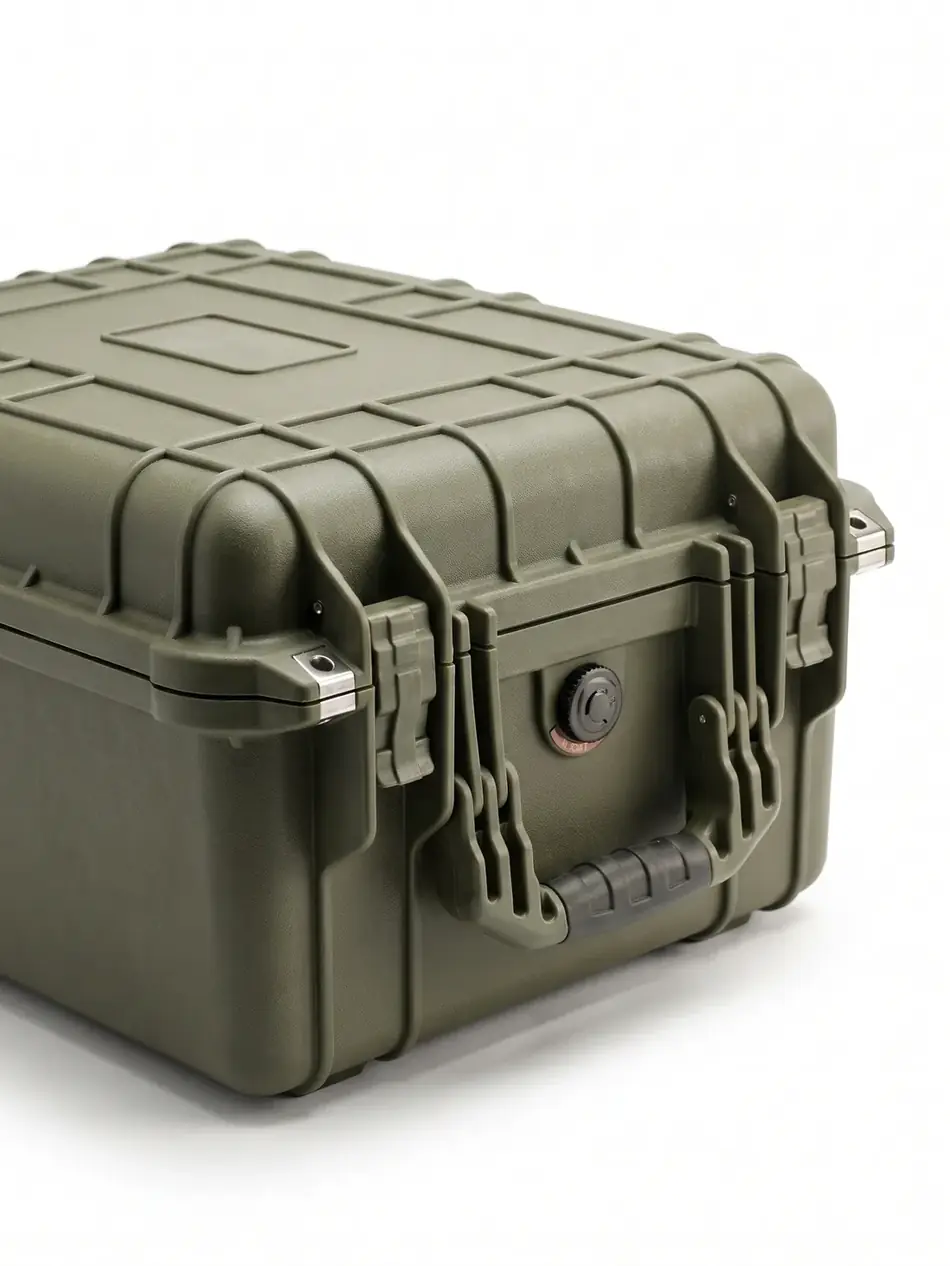
Which foam is suitable for equipment cases?
There is no single best foam for an equipment case; suitability is a match between a material family and a build type, chosen against three questions: how heavy is the item, how fragile is it, and does the packing layout need to change. For most equipment cases we work with polyethylene (PE) and beaded polyethylene (EPE) foams as the load-bearing base, because they are firm, light, low-absorption and cut cleanly, with ethylene-vinyl acetate (EVA) where a firmer, smoother, more durable face is wanted. On top of the material, the construction decides the fit: pick-and-pluck for layouts the user must reconfigure, die-cut or CNC-cut foam for a fixed contour that traces the item, and a layered base-plus-top build where a heavy or delicate item needs a firm bed with a softer or convoluted press layer above. Choose the material by load and environment, then the construction by how the case is used, and the right foam follows.
Key points
- Two separate choices: the foam material family (PE, EPE, EVA) and the build type (pick-and-pluck, die-cut, CNC-cut, layered).
- PE and EPE make a good general base because they are light, firm, cut cleanly and absorb little water; EVA suits a firmer, tougher face layer.
- Pick-and-pluck wins when the layout must change in the field; a cut contour wins when it must not.
- For heavy or delicate items, go layered: a firm base to carry the mass, a softer or convoluted top to press evenly.
- Higher-density grades carry heavier items and hold edges longer; specify density against the load, not one figure across a whole range.
- Match the foam to the equipment risk, not to the shelf: optics, electronics, machined tools and field kit each want a different build.
Two decisions, not one
People ask 'which foam' as if there were a single correct product. In practice an equipment case gets its protection from two independent choices made together. The first is the material family: the polymer the foam is made from, which sets firmness, weight, how cleanly it cuts, how it ages, and how much moisture it takes up. The second is the construction: how the foam is shaped and combined, which decides how well the item is cradled and whether the fit can change. A firm material badly cut protects worse than a softer material cut to the exact contour, and the reverse is equally true. Deciding them separately stops you buying the wrong thing for the right reason.
The inputs to both decisions are the same three facts about the load: its mass, its fragility, and whether the packing layout will need to be revised. Mass drives material firmness and thickness. Fragility drives how the contact is distributed and how soft the top layer is. Reuse drives the construction, because a layout that changes cannot be a single glued contour.
PE, EPE and EVA: what each material brings
Polyethylene (PE) foam is the general-purpose workhorse in equipment cases. Cross-linked PE is firm for its weight, cuts and bevels cleanly, and takes up very little water, which makes it predictable in changing storage and transport conditions. Beaded polyethylene (EPE) is lighter and more economical in bulk; it is a good base and void-fill where you want cushioning volume without mass. Ethylene-vinyl acetate (EVA) is denser and tougher with a smooth, closed face; it holds crisp edges under a cutting tool, resists tearing, and is the usual choice where the foam is handled often or must carry a firmer, cleaner look.
None of these is universally better. PE is a strong default base; EPE is the light, cheap bulk option; EVA is the firm, durable face for parts that are packed and unpacked repeatedly. Where a case carries both a heavy item and delicate accessories, we combine them: a PE or EPE base carrying the mass, an EVA or softer top where edges and frequent handling matter. Density and grade are then set against the load rather than copied from a datasheet across a whole product range.
| Material | Brings | Typical Role |
|---|---|---|
| PE (cross-linked polyethylene) | Firm for its weight, clean cuts, low water uptake | General base and contour layers |
| EPE (beaded polyethylene) | Light, economical in bulk, good volume cushioning | Base fill, void fill, lighter items |
| EVA (ethylene-vinyl acetate) | Dense, tough, smooth closed face, holds crisp edges | Firm top/face layer, frequently handled fits |
Pick-and-pluck when the layout must change
Pick-and-pluck foam is a grid of pre-cut fingers that the user pushes out to match the item, leaving a plug-shaped pocket. Its virtue is flexibility without tooling: a mixed kit whose members change between trips can be re-fitted in minutes, and there is no drawing, die, or cutting file to commission. It is the right answer for field cases, spares kits, and situations where whoever packs the case is not the person who designed it.
Its limits are equally clear. The grid is a fixed pitch, so it cannot produce a tight, true contour, and the plugs leave gaps that let a slender or heavy item tilt on an edge. For an expensive, rigid, or unbalanced item, pick-and-pluck works best as a top layer over a firmer, cut base rather than as the only protection. When the exact fit matters and the layout is fixed, a cut contour is the better build.
Die-cut versus CNC-cut when the fit is fixed
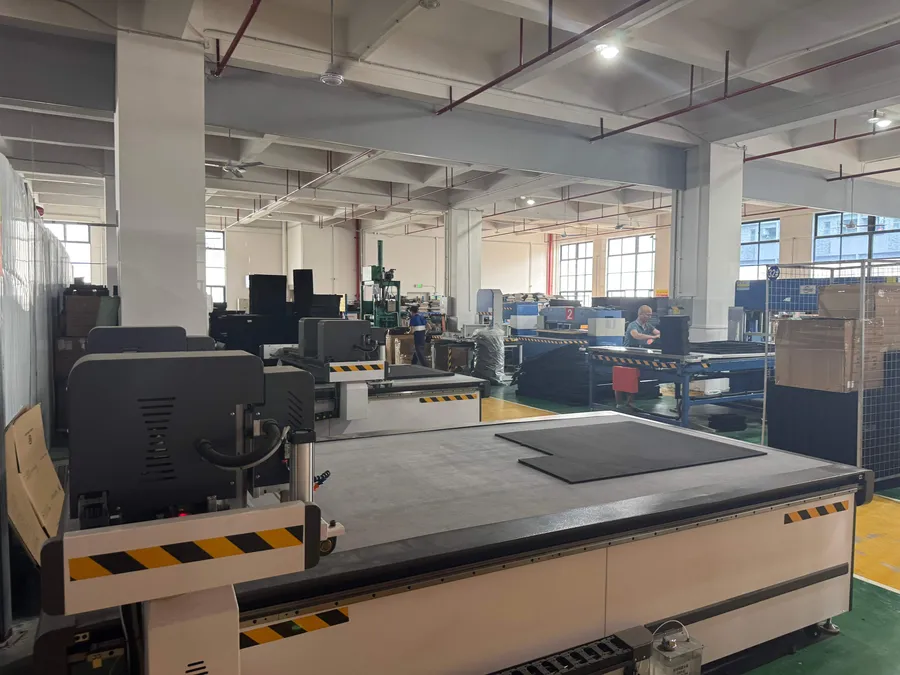
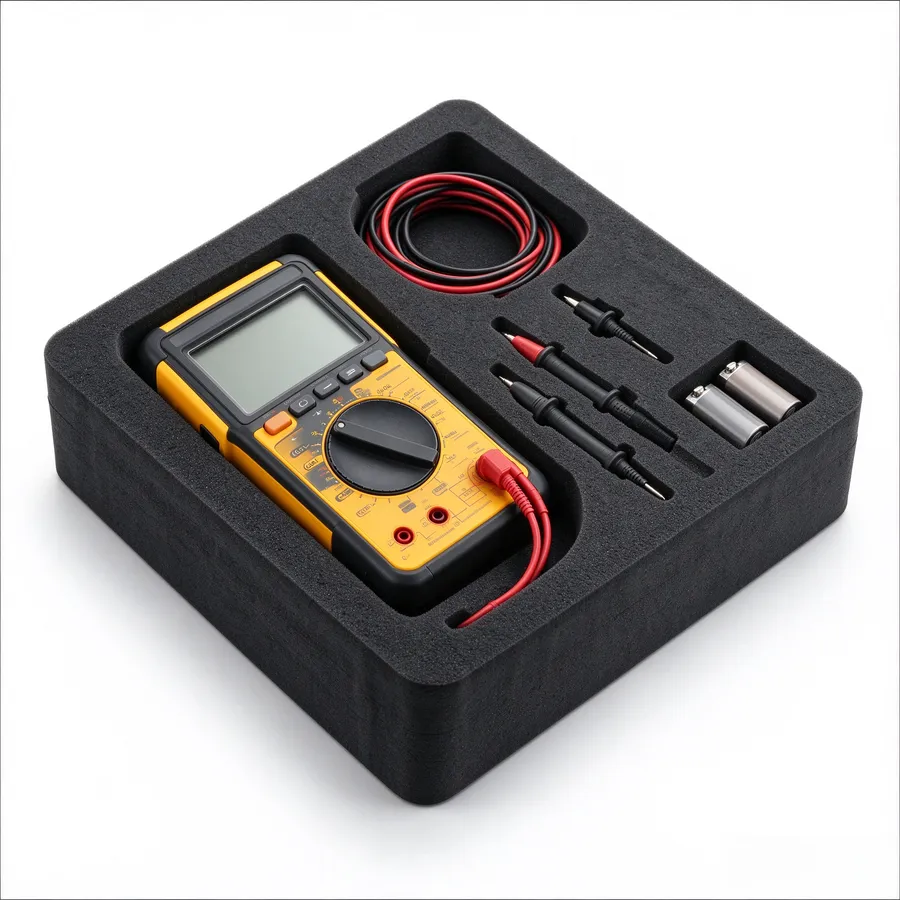
When the item is known and the layout will not change, you get the fit from cutting the foam to the contour. Two routes exist. Die-cutting presses a shaped steel die through the sheet, which is fast and cheap at volume but carries a tooling cost and favours simpler profiles. CNC-cutting guides a hot wire or router from a drawing, which needs no die and can carve deep, true, complex pockets, so it suits low-to-medium volumes and intricate shapes. Both give continuous contact that spreads load along the underside instead of concentrating it on a few points, which is exactly what protects optics, machined edges, and thin-walled parts.
The practical split is volume and complexity: a simple, high-run insert trends to die-cutting; a complex or shorter-run insert trends to CNC. Either way we ask for a drawing, a photograph of the packed kit, or a physical sample so the pocket matches the real part rather than an assumption about it.
Layered builds: a firm base and a soft top
Most well-behaved equipment cases are layered rather than a single block. The base layer carries the mass and holds the contour; the top layer presses the item down and absorbs initial movement. Making the base firmer than the top gives you support and cushioning at once: the item sits on a platform that does not slump under its own weight, and is covered by a softer or convoluted (egg-crate) layer that conforms to an uneven underside and spreads pressure evenly. This is the configuration for heavy or delicate items, and it lets a firm, edge-holding material such as EVA serve as the face while a lighter PE or EPE does the load work underneath.
Thickness is a matched set of base, item, and top, chosen so the item is fully enclosed with clearance and the lid does not bow; it is the subject of a dedicated page on choosing foam thickness, so we do not restate the calculation here. The rule of thumb for the material question is that softer, more fragile items want a thicker and gentler top, and heavier items want a firmer base of adequate density.
Matching the foam to the equipment risk
Different equipment fails in different ways, so the 'suitable' foam is whichever one answers that failure mode. A high-value optical or instrument item is destroyed by point loading and vibration, so it wants a close CNC-cut contour with a soft or convoluted top and enough clearance that nothing touches a lens face. General electronics, drones and cameras travel well on layered PE with pick-and-pluck flexibility. Rigid field tools and machined parts want a firm base and often an EVA face to hold edges under repeated handling. Long or heavy items want continuous support along their length, and firearms in shallow rifle-bay cases want a fixed cut cradle plus retention, not loose blocks.
| Equipment | Risk | Foam Build |
|---|---|---|
| Optics and instruments | Point loading, vibration | CNC-cut contour, soft/convoluted top, firm base |
| Electronics, cameras, drones | Shifting, mixed kit | Layered PE with pick-and-pluck or cut pockets |
| Tools and machined parts | Edge wear, repeated handling | Firm PE base, EVA face, cut to contour |
| Long / heavy items | Mid-span flex, sliding | Full-length cradle plus retention and end stops |
Applications and worked examples
In our own line the same material logic scales from small shells to large formats. A rifle-bay shell such as KX 8-14641 gives roughly 50 litres of usable interior across a shallow 350 by 140 mm section, so it is built around a full-length PE cradle with a strap and end stop rather than blocks. A deeper general shell such as KX 8-8421, about 58 litres usable, suits layered base and top with die-cut or CNC-cut pockets for an instrument kit, while a wheeled trolley body such as KX 8-8434, with roughly 87 litres usable and a published net mass near 14 kg, needs a firmer, denser base under the heavy end. The case size changes; the material-and-build decision does not.
Custom foam and OEM options
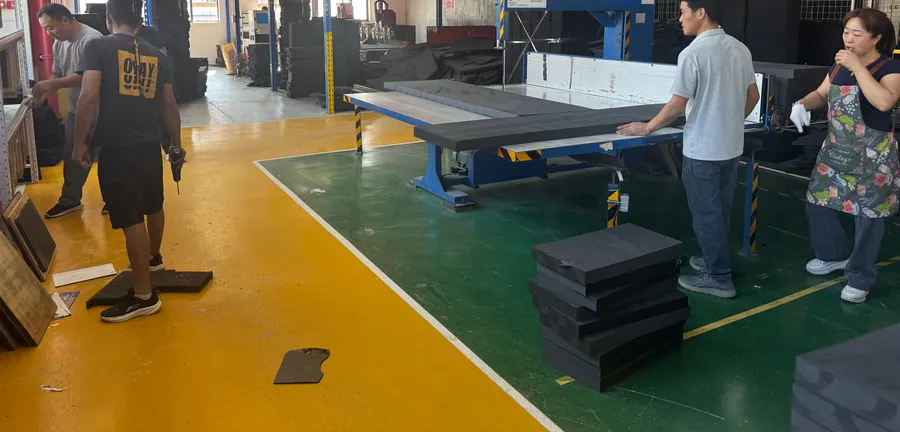
Custom foam is where most equipment cases are specified, because the contour is the product. We offer custom thickness, custom shape, and both CNC and die-cut construction, with Pick & Pluck, Die-Cut, CNC-Cut, EVA, PE and EPE listed as options per model. To start we ask for a drawing, a photograph of the packed kit, or a physical sample; a sample is the most reliable because it removes guesswork about real contact points. OEM and ODM builds add custom logo, colour, packaging and hardware around the foam. The commercial parameters are fixed: OEM on an existing mould runs to a first sample in about 45 days and a new mould in about 125 days, with a 30 percent deposit, and minimum order quantity is one piece for standard and custom foam before it rises for logo, colour, OEM and a dedicated mould. We work wholesale and OEM only, on EXW or FOB terms; we do not retail, do not quote DDP, and keep no overseas warehouse.
Procurement notes: what to confirm before ordering foam
Before you order a foam insert, write down the item's mass, its most fragile station, its footprint, and whether the layout will change. Those four answers pick the material and the build almost by themselves: heavy and fixed wants a firm dense base and a cut contour; light and changing wants EPE and pick-and-pluck; delicate wants a soft top over a close-cut base. Ask for the density or grade specified for your load rather than accepting one value quoted across a whole catalogue, and read any protection figure per model, because a foam insert says nothing about a case's sealing or dust performance.
Prototype before committing to a run. Fit a sample, pack the real item as it will travel, and shake it in hand and from a short step. If the item moves, tighten the contour or add retention; if it rocks on an edge, thicken and firm the base under that point; if the foam crushes flat, raise the grade rather than the thickness. A sample revision costs almost nothing compared with a production run of an insert that let the item touch the shell.
Case materials by sector: buyer search phrases and our published data
The sections above settle what goes inside the case. Buyers running a medical or electronics programme usually ask the next question in the same breath: what is the case itself made of, and which grade belongs on that programme. The table below takes the two search phrases those buyers use and answers each one with figures from our published 155-model table rather than with a general polymer brochure.
Every figure below is a recorded parameter: shell polymer, wall thickness, usable interior volume and the construction options listed per model. Where a property has not been measured on a model, the row says so. That is deliberate. A polymer name tells you how a shell was moulded; it does not tell you how that shell behaves in a drop, a wash-down or a cleaning cycle, and we do not convert one into the other.
| Search | What We Publish |
|---|---|
| medical case material selection guide | In the 71 models we list under medical equipment cases, 42 use PP, 20 use Engineering PP, eight use ABS and one combines PP with ABS. Published usable interior volume runs from 16.5 to 111.6 litres, 53 of the 71 are above 20 litres, 19 are wheeled, 52 are stackable and 64 list a seal option. Wall thickness is published at 2.5 to 6.0 mm on 66 models, split by material as 3.0 to 5.0 mm for PP, 2.5 to 6.0 mm for Engineering PP and 3.5 to 5.3 mm for ABS. The interior is closed-cell PE with a smooth skin, or a moulded tray, so the surface can be wiped; water and dust behaviour is not measured, and no ingress rating is printed. |
| pp material selection for electronic equipment cases | Of the 127 models we list under electronics cases, 71 use PP, 35 use Engineering PP, 20 use ABS and one combines PP with ABS. Published usable interior volume runs from 0.3 to 35.2 litres, 32 models exceed 20 litres, wall thickness is published at 2.0 to 5.8 mm on 121 models, 100 list a seal option and 119 are stackable. PP covers 2.0 to 5.0 mm and is not limited to small shells: the largest electronics models we list, 35.2 litres and 7,800 g net, are standard PP at 5.0 mm. Engineering PP covers 2.1 to 5.8 mm where a thinner wall has to stay stiffer, and ABS covers 3.0 to 5.3 mm on the models with a harder, deeper-coloured face. |
Why PP carries most of the range
Of the 155 models in the table, 94 are moulded in PP, 38 in Engineering PP, 22 in ABS and one in a PP and ABS combination. The split follows the job rather than a house style. PP is the lightest of the three polymers we mould, takes up little water, tolerates repeated flexing at lid edges and hinges, and moulds long thin ribs and screw bosses without the notch sensitivity that makes a brittle shell split at a fixing point. That combination is why it is the default for a case that is carried, stacked and opened many times.
Engineering PP appears where the same section has to hold shape over a longer span or carry more local load. The grades are recorded as a separate material in the table, so you can see which models use them instead of assuming that every PP model shares one grade. ABS is quoted where a harder, smoother face and deeper colour are wanted, and it sits behind several of our very small shells. Published wall thickness runs from 2.0 to 6.0 mm across 148 models, and the figure moves with the format rather than with the polymer: the largest medical trolley we list, KX 8-8442 at 111.6 litres and 15,320 g net, is standard PP at 5.0 mm.
Two practical consequences follow. First, a wall figure is a moulding fact, not a protection rating; a 5.0 mm wall tells you how the shell is built, not what height it survives. Second, polymer substitution is not a line-item swap: moving a model from PP to ABS changes the tool, the shrink allowance and the colour depth, so it is quoted as a new configuration.
Medical case selection: what changes when the cargo is a device
Medical work changes the priority order. The device usually travels from a store to a ward, a clinic, an ambulance or a field post, is unpacked and repacked by clinical staff, and has to be visibly complete at each handover. Cleanability and a fast visual check therefore rank alongside cushioning. We list 71 models under medical equipment cases: 42 PP, 20 Engineering PP, eight ABS and one mixed shell. Published usable volume runs from 16.5 to 111.6 litres, 53 models are above 20 litres, 19 are wheeled and 52 are stackable. The last two figures matter more than they look, because a kit that one clinician cannot wheel or lift safely does not get used as intended.
Inside, the medical category page already sets the rule: closed-cell PE with a smooth skin, or a moulded tray with a cover film, so a spill sits on the surface instead of soaking in. Open-cell foam is excluded for that reason. On the shell, PP and Engineering PP give a wipeable moulded surface, and the eight ABS models cover the smaller, harder-faced shells. Wall thickness in this group is 3.0 to 5.0 mm for PP, 2.5 to 6.0 mm for Engineering PP and 3.5 to 5.3 mm for ABS.
What we will not do is turn those material facts into a hygiene claim. Cleaning-agent compatibility, surface condition after repeated wiping and residue retention have not been measured for any model, and we do not claim a validated cleaning or sterilisation process. If your protocol names a disinfectant, test it on a sample of the actual shell and foam before the production order. Interface protection matters just as much: transducers, probes and optical faces should sit in a cut contour with nothing pressing on the active face, and the insert should be closed-cell so a spill does not reach the device through the foam.
Electronics: choosing between PP, Engineering PP and ABS
Electronics programmes ask the material question in a different form, because the failure modes are different: a board or module is damaged by movement and point load, connectors are damaged by abrasion and dust, and an ESD-sensitive assembly is damaged by charge rather than by mass. We list 127 models under electronics cases: 71 PP, 35 Engineering PP, 20 ABS and one mixed. Published usable volume runs from 0.3 to 35.2 litres, 32 models exceed 20 litres, wall thickness is published at 2.0 to 5.8 mm on 121 models, and 100 list a seal option.
PP is the default for the reasons set out above, and it is not reserved for small shells: the largest electronics models in the table, at 35.2 litres and 7,800 g net, are standard PP at 5.0 mm. Engineering PP covers 35 models at 2.1 to 5.8 mm, where a thinner wall has to stay stiffer. ABS covers 20 models at 3.0 to 5.3 mm, typically where a hard, deep-coloured face is specified. The decision should follow the mass, the span between supports and the handling cycle, and only then the polymer, rather than starting from a material name.
Two items are quoted separately from the shell. The first is the insert: cross-linked PE is the general carrier, and anti-static or conductive foam is a material substitution priced against the ESD requirement rather than assumed. The second is the seal: 100 electronics models list a seal option, but a seal is a construction choice and water and dust behaviour is not measured on these models, so no ingress rating is printed. If your programme needs a documented figure, accredited testing is quoted as a separate work package.
What we do not claim, and what to send with an enquiry
Our table records water, dust, impact, UV and stack-load behaviour as not measured for most models. Where a value is absent we do not infer it from the polymer, the wall thickness or the foam. We also do not print ingress or durability codes on a model that has not been through the corresponding test programme, and we do not describe a foam insert as sealing the case: sealing, where ordered, comes from the shell joint, the gasket and the closure, not from the foam.
For a quotation, send the device mass and footprint, the fragile points, the number of units per case and how the case will be handled, whether hand-carried, on a trolley or palletised. A drawing, a photograph of the packed kit or a physical sample lets us set the shell, the wall, the insert and the retention against the real part. We work wholesale and OEM only, on EXW or FOB terms: no retail, no DDP and no overseas warehouse. OEM on an existing mould reaches a first sample in about 45 days, and a new mould in about 125 days, with a 30 percent deposit; minimum order quantity is one piece for standard and custom work before it rises for logo, colour, OEM and a dedicated mould.
Customisation
Everything described above is configurable on a standard shell: interior layout (pick-and-pluck, die-cut or CNC-cut), foam grade and thickness, colour, logo method, latch and lock count, pressure-equalisation valve, cable ports, document holder and identification plate. A bespoke exterior geometry requires a new mould — 125 days, from 3,000 units per moulded component.
Procurement considerations
| Question | What to send us |
|---|---|
| Which shell fits? | Equipment L × W × H as packed, plus required clearance per axis |
| What does it cost? | Order quantity and estimated annual quantity — the two drive different answers |
| Is tooling needed? | Whether an existing shell clears the envelope with usable foam depth |
| Lead time? | Your required delivery date, not just the order date |
| Certification? | The exact standard your tender names — we will say whether we can test to it |
| Freight? | Destination and preferred terms; carton and pallet data supplied with the quotation |
Comparison and selection guide
The tables on this page exist because a protective case is chosen by comparing three things: the envelope, the environment and the handling chain. Where no table applies, the rule below is.
| Situation | What To Do |
|---|---|
| Length | Allow at least 25 mm at each end beyond the equipment so the foam can absorb end impact rather than the shell. |
| Depth split | A deeper base carries the mass; a shallow lid retains it. We normally recommend a 60/40 or 70/30 base-to-lid split. |
| Closure | Latches on the long edge give better sealing on a flexing shell; latches on the short edge are faster to open. |
- Size on internal dimensions plus clearance, never on a product name.
- Choose the carrying method before the shell: it changes the series, not just the price.
- Specify the interior last, and decide up front whether the end user will reconfigure it.
Which foam is suitable for equipment cases? relates to Firearm & Long Equipment Transport Cases. Related families: Firearm Transport Cases / Instrument & Equipment Cases / Electronics Cases / Military Protective Cases. Related sectors: field and industrial equipment. Continue in the Firearm & Long Equipment Transport Cases cluster.
This page is written from our own production data. If your requirement differs, send the dimensions and we will tell you which of the 155 models fits, or whether a custom route is needed.