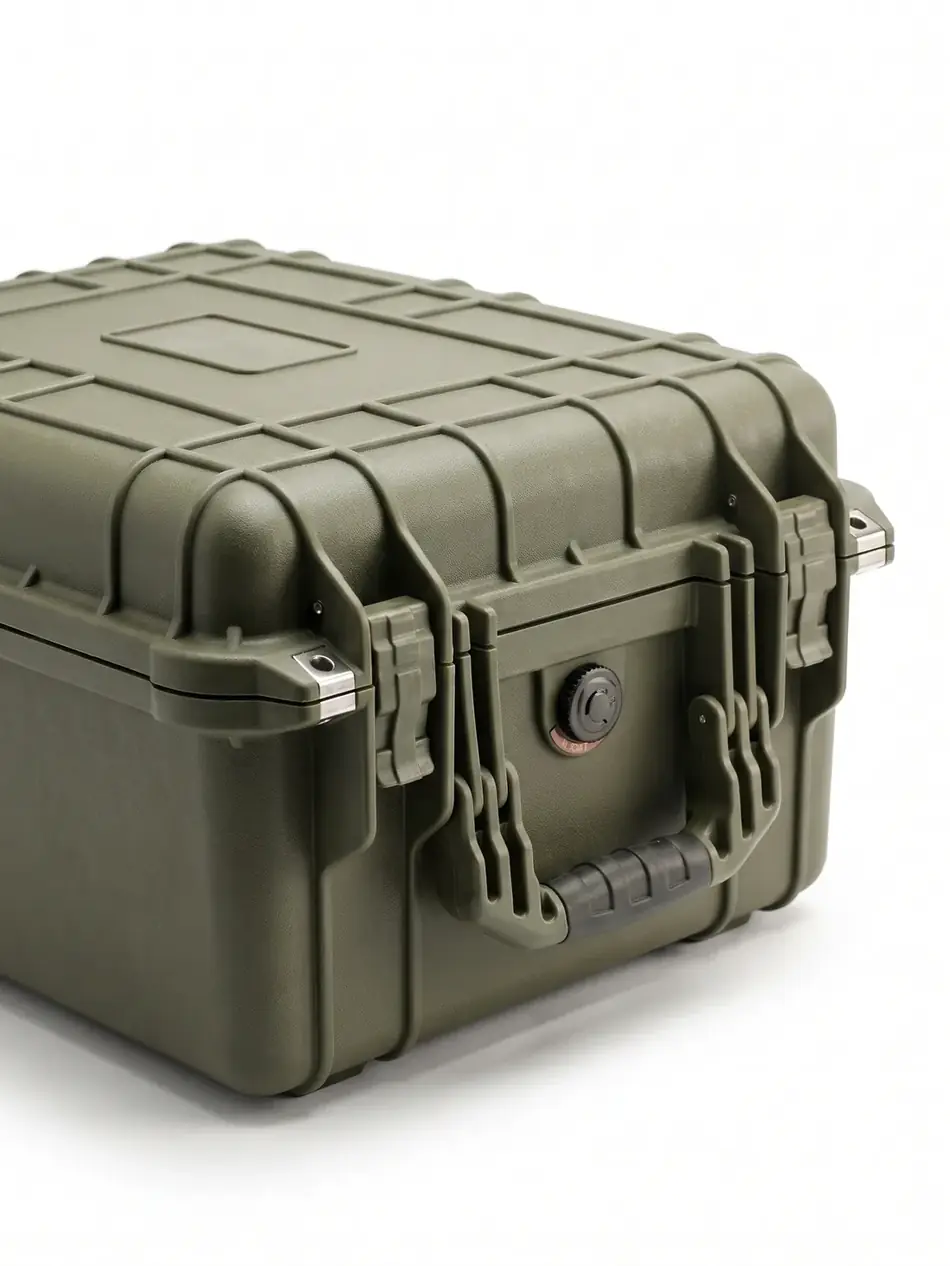
How can a hard firearm case be customized?
A hard firearm case is customised in four independent layers: the interior foam layout, the shell geometry you choose from the published size grid, the hardware fitted to that shell, and the brand finish applied to the outside. The fastest route keeps the existing mould and changes only the foam, colour, logo and packing, which covers most wholesale and OEM requests; a new mould is needed only when the internal envelope itself must change to hold a specific action, optic, stock or long-gun length. Because these cases are shipped as lawful transport equipment, every change is quoted on the buyer's own specification, on EXW or FOB wholesale and OEM terms, with no retail, DDP or overseas-warehouse arrangement.
Key points
- Start from the published internal dimensions and net footprint of a real SKU, then customise the interior to the firearm, optic and accessories rather than the other way round.
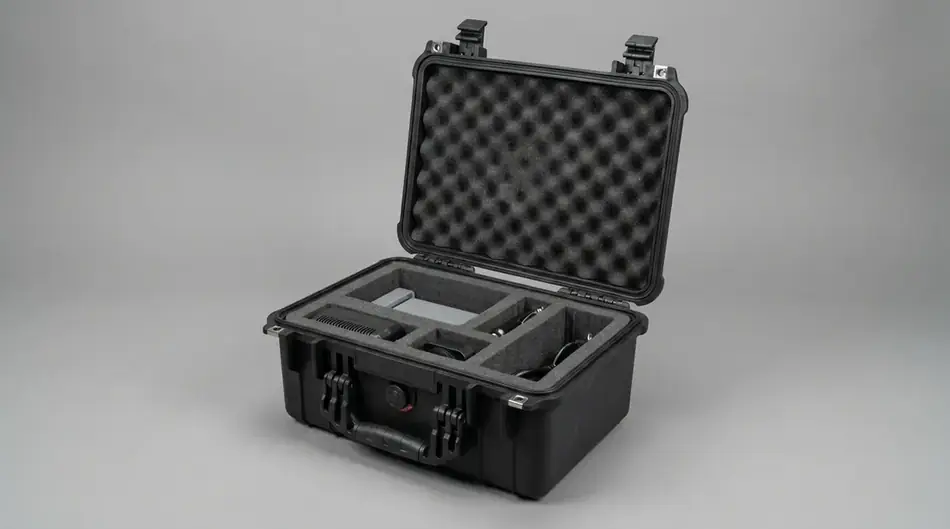
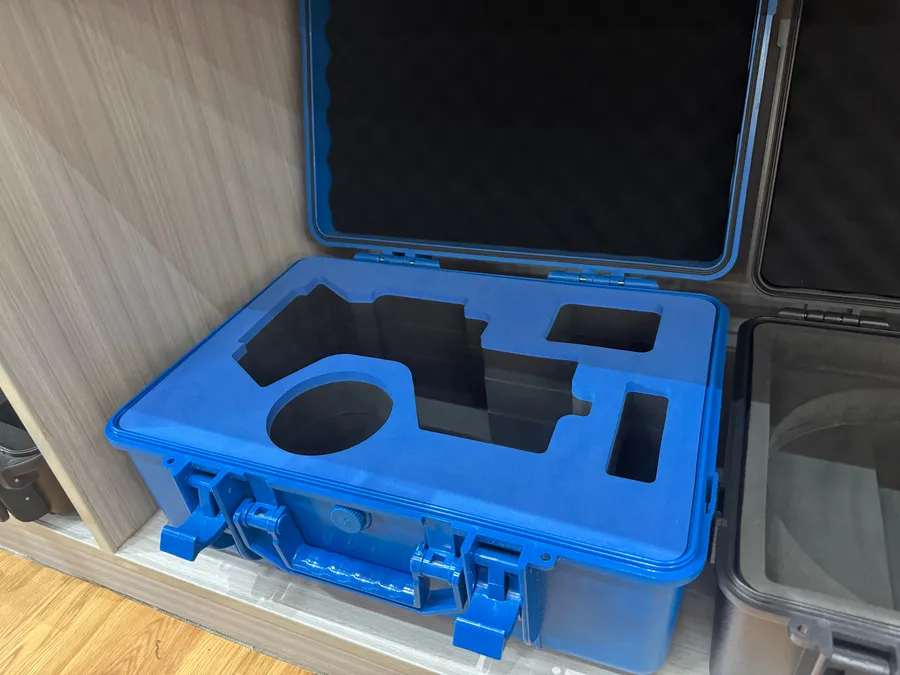
- Foam layout is the highest-value customisation: a die-cut or CNC-cut top and base isolate the action, barrel, magazine and optics as separate cavities.
- Several shell depths share one footprint, so a longer barrel or a mounted optic is often solved by choosing a deeper lid on the same case family, not by a new mould.
- Logo, colour and buyer packaging run on existing moulds at the standard OEM quantity band; a bespoke geometry is what triggers a new mould and its higher quantity.
- Fix the hardware list before quoting: latches, hinges, folding handle, wheels, and optional pressure valve or document pocket are configured per model.
- Protection ratings beyond published dimensions and wall thickness are only stated for a SKU where the value has actually been measured.
Layer one: the interior foam layout
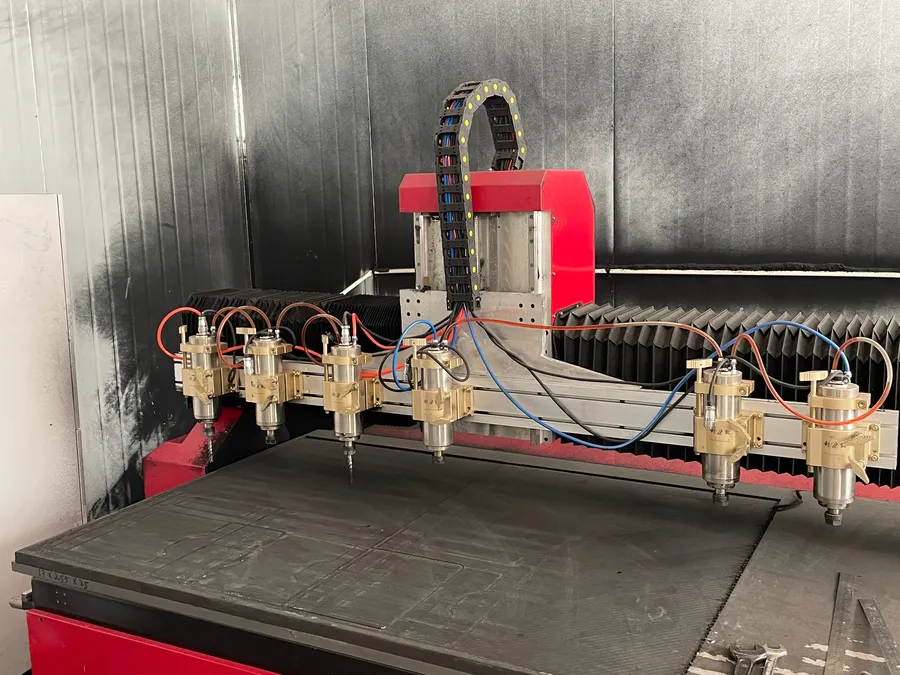
The interior does the protecting, so it is where most customisation value sits. KeXin works from the buyer's actual firearm, optic, spare magazine, suppressor-mount or cleaning kit and returns a layered proposal: a base layer that cradles the receiver and barrel, a top layer with pockets for the sight, muzzle device and magazine, and a separate channel for cables, tools and paperwork. Closed-cell PE, EVA and EPE are offered in pick-and-pluck, die-cut, CNC-cut, egg-crate and layered structures, so the same SKU can ship as a low-cost pluck interior for a dealer pack-out or as a precision CNC-cut insert for an optics-fitted long gun. A technical drawing or a physical sample is required before a die-cut run, which keeps the cut aligned to the real part lines rather than a photograph.
Layer two: shell geometry from the published size grid
Hard firearm cases are injection-moulded shells, and the practical lever is choosing the right internal length and depth from the size grid instead of inventing one. A 1280 mm internal length carries a full long gun flat; an 880 mm shell covers a shorter rifle or a broken-down set; a 650 by 430 mm footprint suits a pistol kit with spares. Depth matters as much as length once a scope, red-dot or suppressor is mounted, and several shells share one footprint at different depths, so a taller lid is usually a catalogue change rather than a new mould. Wall thickness is published per model; the long-gun and deep shells above are listed at 5.0 mm walls, which is the range that resists a corner load when the case is stacked in a vehicle.
Layer three: hardware fitted to the shell
Hardware is configured per model and listed on the datasheet. Standard fitting covers a fixed folding carry handle, moulded hinges, a latch count that follows the case length, and locking provisions; wheeled variants add wheels and a pull for the deeper long-gun shells. Optional additions such as a shoulder strap, a pressure-relief valve for altitude or temperature swings, and a document holder for proof-of-ownership or specification sheets are offered as manufacturer options and must be requested on the order, because not every shell carries the mounting feature. The right approach is to lock the hardware list before a quote so the latch pattern and any valve or pocket are engineered into the tooling and the packing, not improvised later.
What changes and what stays on the same mould
| Customisation | Needs New Mould | Typical Route | Moq Signal |
|---|---|---|---|
| Interior foam layout | No | Die-cut or CNC-cut to buyer drawing | Starts at standard OEM foam band |
| Case colour | No | Colour match on existing shell | From about 300 pieces |
| Logo print or in-mould label | No | Silk-screen or IML on finished shell | From about 300 pieces |
| Buyer packaging and labels | No | Private-label packing list | From standard OEM band |
| Bespoke internal envelope | Yes | New mould to custom geometry | From about 3,000 per component |
Choosing the right shell for the load
| Load | Reference Model | Closure Focus |
|---|---|---|
| Pistol with spares and tools | KX-87319, internal 650 x 430 x 170 mm, 5.0 mm wall | Latch pattern per length, gasket option |
| Short rifle or broken-down set | KX-89616, internal 880 x 350 x 140 mm, 5.0 mm wall | Sealed long-gun shell, folding handle |
| Full long gun flat | KX-814641, internal 1280 x 350 x 140 mm, 5.0 mm wall | Full-perimeter latching, gasket |
| Optic-fitted or deep accessory kit | KX-88442, internal 740 x 518 x 364 mm, wheels | Deep lid, wheels and pull |
| Mixed dealer pack-out | KX-87926, internal 737 x 257 x 240 mm, 4.0 mm wall | Pluck foam, colour and logo |
Typical customisation scenarios
A dealer or range operator usually wants a recognisable colour, a printed logo and a pick-and-pluck interior so staff can reconfigure the case between different firearms; that is an existing-mould job and turns around fastest. A manufacturer bundling its own firearm with a matched case wants a die-cut interior that holds the exact receiver, barrel length and optic, plus buyer packaging and a document pocket; still an existing-mould programme as long as the shell size exists. Only a distributor standardising on a non-catalogue internal dimension, or a defence or law-enforcement buyer with a specific multi-weapon or kit envelope, typically justifies the new-mould path, and that decision should be weighed against simply adopting the nearest published shell.
The OEM and private-label programme
OEM and ODM work is supported across the range: custom logo, colour, foam, hardware and private-label packaging are all available on shells the factory already moulds. The commercial shape is fixed and transparent. Standard OEM changes on an existing mould begin around 300 pieces for logo and colour; a new mould begins around 3,000 pieces per component; a first OEM sample on an existing mould follows the standing lead time of about 45 days, and a new mould about 125 days after drawing sign-off; and orders start on a 30 percent deposit against the proforma. Everything is quoted wholesale and OEM on EXW or FOB terms, and cases ship as lawful transport equipment on the buyer's own specification.
Procurement notes for firearm case buyers
Confirm the exact firearm, mounted optic and accessories, and send the internal length and height you actually need so the shell is chosen from published data rather than estimated. Ask for the specific SKU's internal dimensions, published wall thickness and seal type, and treat any field marked not measured as unknown instead of borrowing a figure from a similar case. Fix the hardware and option list, including wheels, valve or document pocket, before the tooling and packing are set. Because the pipeline is wholesale and OEM only, plan quantities and lead times around the deposit and the 45 or 125 day windows, and settle the balance under EXW or FOB before shipment.
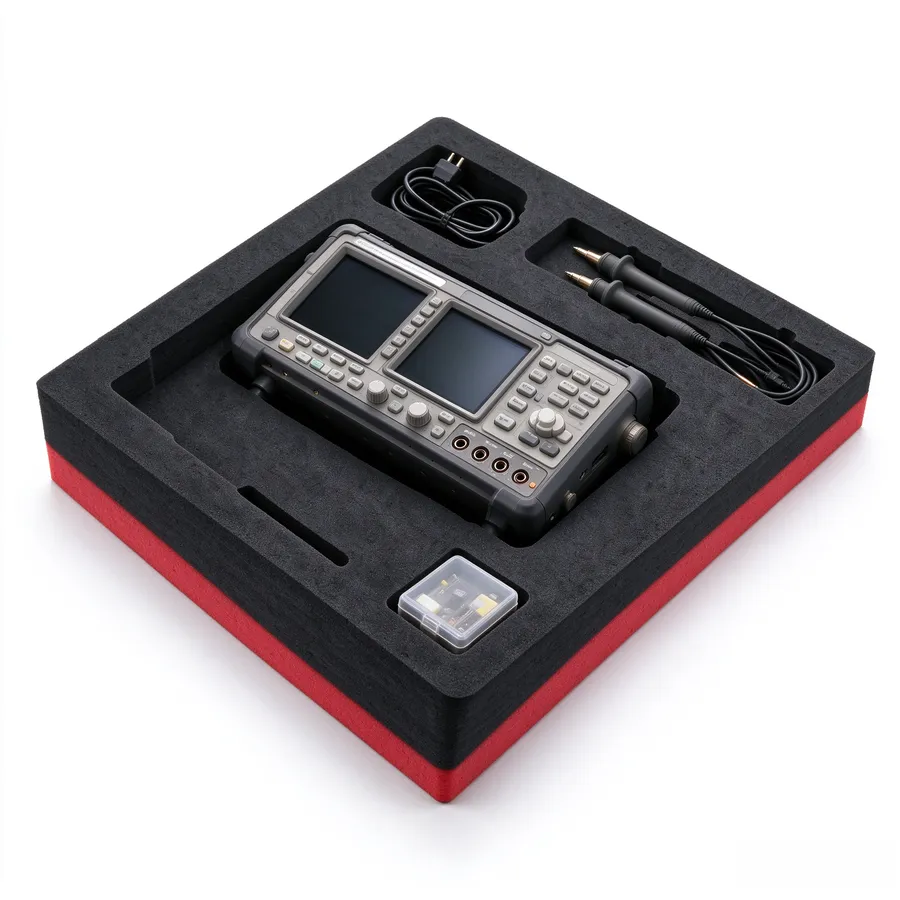
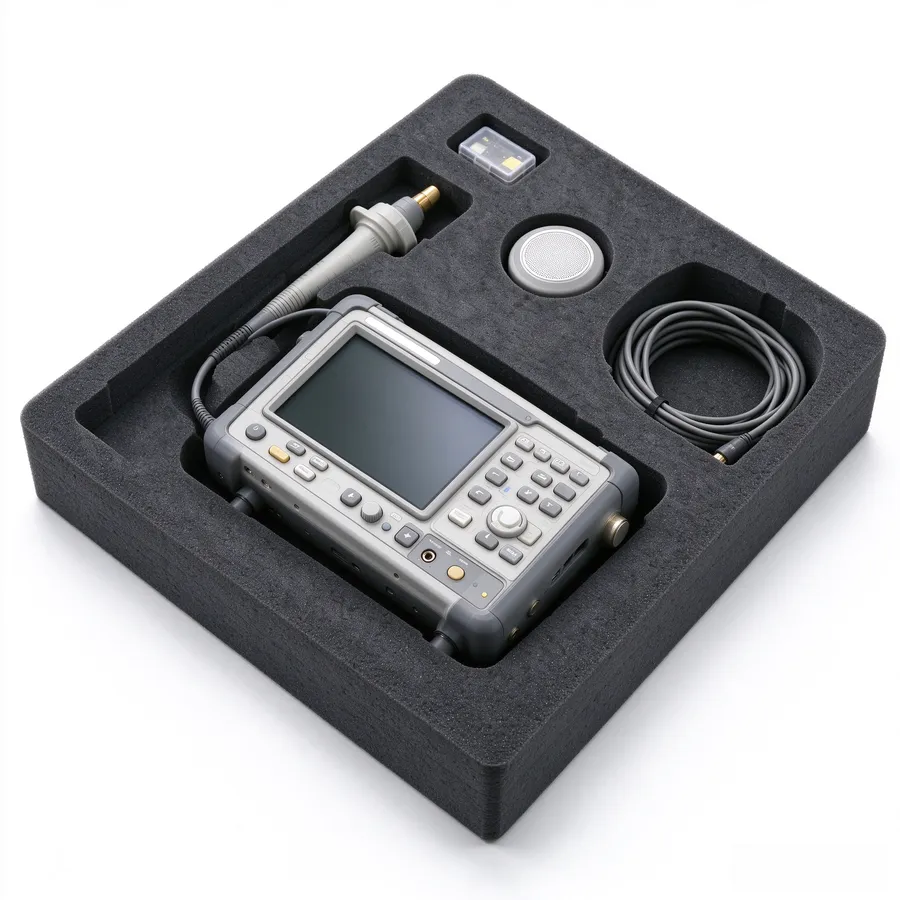
Customisation
Everything described above is configurable on a standard shell: interior layout (pick-and-pluck, die-cut or CNC-cut), foam grade and thickness, colour, logo method, latch and lock count, pressure-equalisation valve, cable ports, document holder and identification plate. A bespoke exterior geometry requires a new mould — 125 days, from 3,000 units per moulded component.
Procurement considerations
| Question | What to send us |
|---|---|
| Which shell fits? | Equipment L × W × H as packed, plus required clearance per axis |
| What does it cost? | Order quantity and estimated annual quantity — the two drive different answers |
| Is tooling needed? | Whether an existing shell clears the envelope with usable foam depth |
| Lead time? | Your required delivery date, not just the order date |
| Certification? | The exact standard your tender names — we will say whether we can test to it |
| Freight? | Destination and preferred terms; carton and pallet data supplied with the quotation |
Comparison and selection guide
The tables on this page exist because a protective case is chosen by comparing three things: the envelope, the environment and the handling chain. Where no table applies, the rule below is.
| Situation | What To Do |
|---|---|
| Length | Allow at least 25 mm at each end beyond the equipment so the foam can absorb end impact rather than the shell. |
| Depth split | A deeper base carries the mass; a shallow lid retains it. We normally recommend a 60/40 or 70/30 base-to-lid split. |
| Closure | Latches on the long edge give better sealing on a flexing shell; latches on the short edge are faster to open. |
- Size on internal dimensions plus clearance, never on a product name.
- Choose the carrying method before the shell: it changes the series, not just the price.
- Specify the interior last, and decide up front whether the end user will reconfigure it.
How can a hard firearm case be customized? relates to Firearm & Long Equipment Transport Cases. Related families: Firearm Transport Cases / Long Equipment Cases / Military Protective Cases / Tactical Equipment Cases. Related sectors: field and industrial equipment. Continue in the Firearm & Long Equipment Transport Cases cluster.
This page is written from our own production data. If your requirement differs, send the dimensions and we will tell you which of the 155 models fits, or whether a custom route is needed.