What Information Should Buyers Provide When Requesting Firearm Case Quotations?
Send six blocks and a firearm case quotation comes back as a firm price instead of a range: the firearm as it will actually be packed, with assembled and broken-down lengths plus the optic, suppressor and magazine positions; how many firearms go in one case and in which direction they lie; the internal envelope you need, stated as a length, a width including the narrow width where a shell tapers, and a depth split between lid and base; the interior brief, naming the layout you want rather than asking for foam; the hardware and closure requirements such as padlockable latches, handle type and wheels; and the commercial facts, which are first-order quantity, twelve-month estimate, colour or logo, destination port, target date and whether you want EXW or FOB. The reason is structural: a long gun is a rigid beam in a shallow box, so the variables that decide cost and survivability are geometry and layout, not the model name you happened to like.
Key points
- Quote the firearm as packed, not the firearm as advertised: assembled length, muzzle to butt, optic height and suppressor fitted.
- State how many firearms sit in one case and which way they lie; the count per case changes the shell size before the price does.
- Give the internal envelope you need, and ask for the narrow internal width as well as the nominal width where the shell tapers.
- Describe the interior as a function: separated channels, machined pockets or a pluck layer, and what must never touch what.
- Fix padlockable closure, handle type and wheels in the enquiry, because hardware changes both unit cost and net mass.
- Give quantity with a twelve-month estimate, name EXW or FOB and your port, and the answer becomes comparable between factories.
Why a model name is not an enquiry
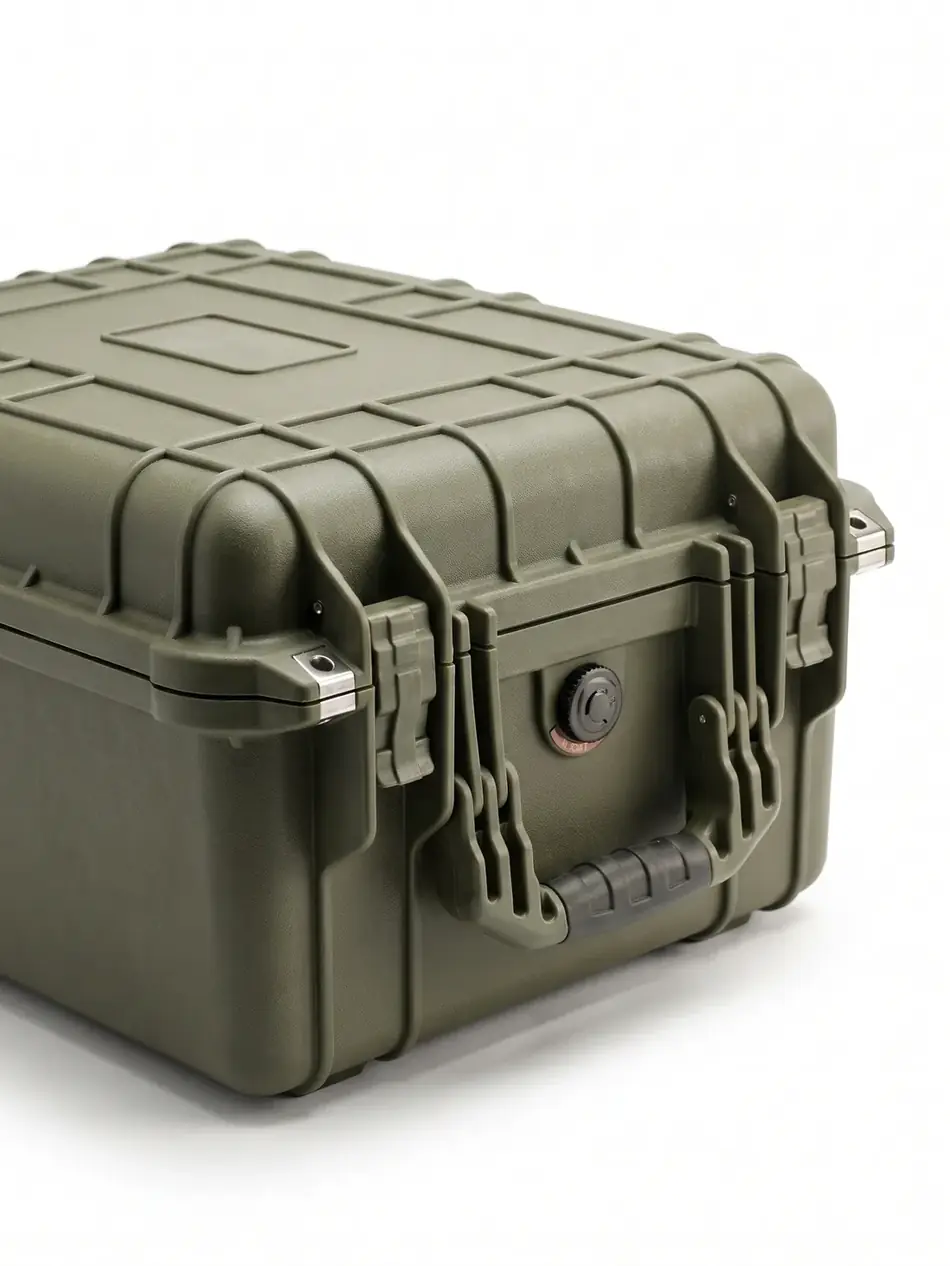
Most firearm case enquiries arrive as a photograph of a case we already make and one question: what does it cost. That is answerable only as a band, because the case in the picture is a shell, and the thing the buyer actually needs is a shell plus a layout. Two buyers pointing at the same published model can need interiors that differ by a factor of several in foam volume and labour, and the shell itself may be the wrong choice once the real load is described. A quotation request therefore has to carry the load, not the wish.
There is a second reason specific to this product group. A long firearm behaves as a beam: when a case is lifted at the handle the shell flexes slightly in the middle, and anything rigid inside shares that flex. That is why the internal length, the clearance at each end and the lid-to-base depth split matter more here than in a box carrying a camera. Information about the weapon is therefore not a nicety; it is the input to a structural decision, and a factory that does not have it cannot price the layout responsibly.
Block one — the firearm as it will actually be packed
Give us the firearm in its transport configuration, with numbers. We need overall length assembled, and overall length with the bolt, stock or moderator separated if it travels that way. We need the height added by whatever stays on the weapon: a sight with its mount, a night-vision unit on a flip mount, a bipod folded or removed, a suppressor on the muzzle, a sling on its studs. We need the mass of the weapon with everything left in place, and whether magazines travel in the same case, in a pouch, or not at all.
The reason for asking for both assembled and broken-down lengths is that they point at different shells. A firearm that travels assembled sets the internal length; one that travels stripped into a stock bag and a receiver bag sets a layout instead, and often allows a much shorter case with more of them per case. If a suppressor or an optic cannot come off, say so in the enquiry and give its projection beyond the muzzle or beyond the butt, because that overhang is what hits the wall on the first corner taken too fast. Our standing sizing guidance is at least 25 mm of clearance at each end so the foam, not the steel, takes the impact, and the same logic applies top and bottom where an optic raises the load.
Block two — how many firearms per case, lying which way
The single biggest lever on the quotation is the count per case. One weapon per case is a shallow flat lid with a channel. Four weapons per case is a different internal width, a different foam budget between neighbours, and possibly a trolley because of the mass. State the number of firearms per case, whether they lie face up or alternate face up and face down, whether optics are removed and stacked separately, and whether the case is expected to hold anything else: gloves, tools, cleaning kit, documents, batteries.
Direction matters because of the width budget. Where a shell tapers, the catalogue publishes a narrow internal width in addition to the nominal internal width, and it is the narrow figure that limits what fits: on the KX-4010 the internal width is 315 mm but the narrow internal width is 282 mm, a 33 mm difference that will quietly ruin a layout designed from the outside dimensions. Tell us the orientation you want and we can check it against the narrow width, the internal height and the lid-to-base split of the specific shell before a price is issued.
Block three — the internal envelope you need
Send target numbers rather than a picture: the internal length you must clear, the internal width you must have, the total internal depth you can live with, and any external maximum you cannot exceed because the case has to fit a rack, a locker, a vehicle bay or a baggage allowance. If you have a published model in mind, name it: the KX-88015 gives 725 by 350 by 140 mm internal in a 800 mm shell, the KX-89616 gives 880 by 350 by 140 mm, and the KX-814641 gives 1,280 by 350 by 140 mm internal in a 1,356 mm body, all three with a 100 mm lid over a 40 mm base, which is why they suit a weapon lying flat with a low optic.
Where the load is tall rather than long, a different family applies: the KX-4318 publishes 407 by 187 by 178 mm internal with a shallow 38 mm lid over a deep 140 mm base, and the KX-88442 publishes 740 by 518 by 364 mm internal with 320 mm of lid above a 44 mm base on wheels. Those two splits are opposite answers, and which one is right depends entirely on whether your firearm lies flat, stands in a slot, or travels with a mounted sight that must not be compressed. Give the envelope and the orientation together, and the shell selection becomes a lookup rather than a guess.
Block four — the interior, written as a job to do
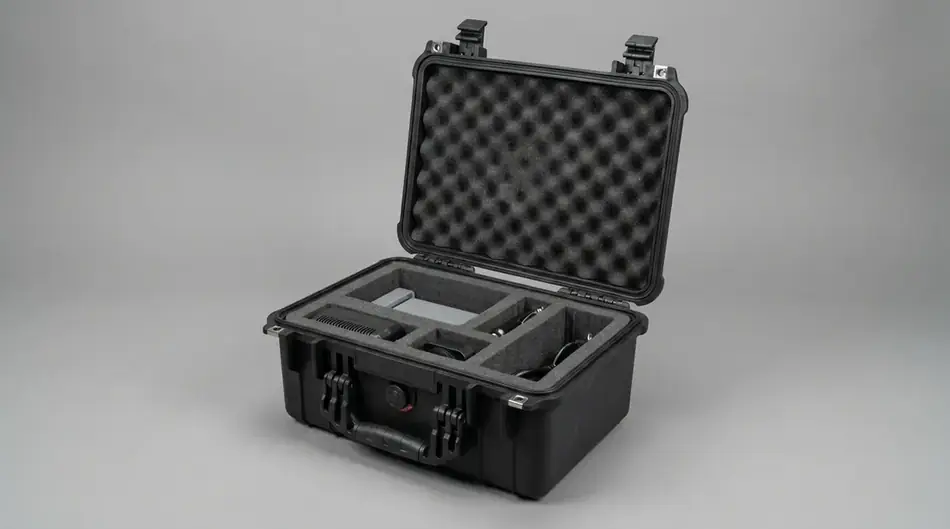
Do not write foam in the enquiry; write what the interior has to achieve. Separated channels so no two weapons touch is a different instruction from one machined carrier with a pluck layer above it, which is again different from a plain cube-cut bed the armourer re-shapes each season. Say which items are permanent and which rotate, whether the end user is allowed to re-cut the fit, and whether the case must show at a glance that something is missing.
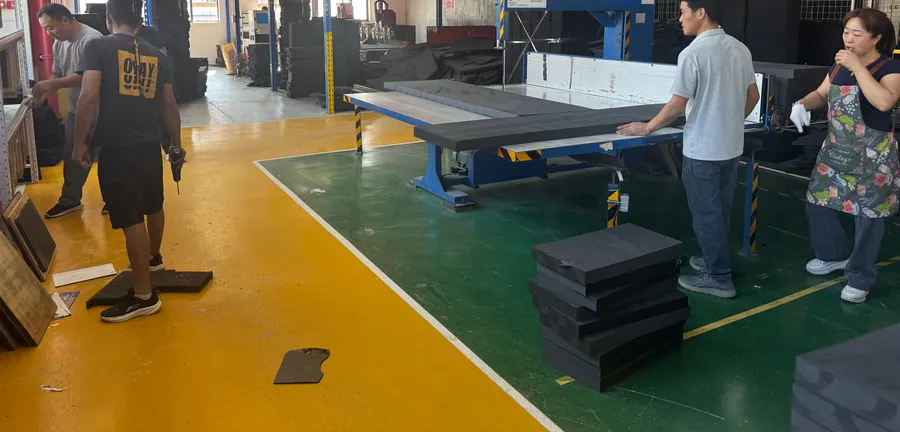
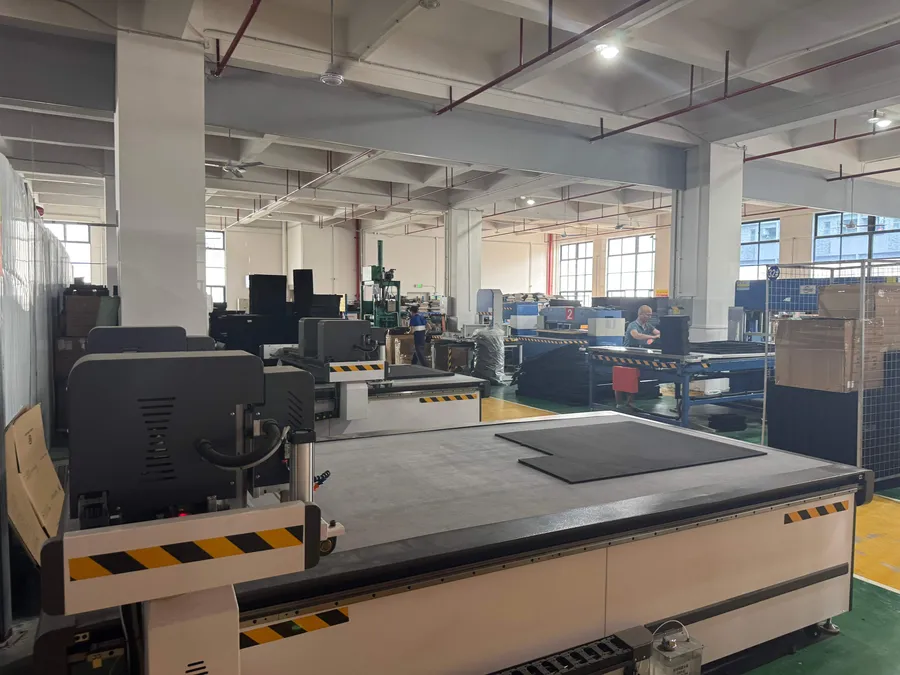
Name the material family only if you have a reason. The published options are pick-and-pluck, die-cut and CNC-cut layouts in PE, EPE and EVA, built as base foam, top foam, layered or egg-crate assemblies, with material by zone treated as a configuration choice rather than one grade everywhere. A firm machined carrier under a softer contact face is the normal answer for a weapon with a finish and an optic; a full pluck interior is the normal answer for a shared fleet. Custom foam on an existing shell starts at a single unit, so an interior can be proven before a run is committed, and the drawing, a photograph of the packed kit or a physical sample is what we cut from.
What each piece of information does to the answer
Read this table as a guide to what is worth measuring before you write. The first three rows are geometry, and geometry is cheap for you to supply and expensive for us to guess, so it belongs at the top of the message. The hardware and interior rows are configuration choices, and each of them carries its own order floor and lead time, which is why an unfinished interior brief turns a price into a placeholder. The last row is commercial and is the one most often omitted entirely, which is precisely why so many enquiries come back as a range rather than a number a buyer can take to a budget holder.
| Input | Moves | Note |
|---|---|---|
| Firearms per case | Shell size, foam volume, net mass | The largest single lever; settles the size class first |
| Assembled length plus overhang | Internal length and end clearance | Drives the model band more than any other number |
| Optic and suppressor fitted or removed | Internal height, lid-to-base split | Can turn a flat case into a deep-base case |
| Interior layout type | Labour, foam grade by zone, unit price | Often one of the biggest cost lines on a custom case |
| Wheels, telescopic handle, padlockable latch | Hardware count, mass, tooling choices | Latch count is specified per configuration, not fixed |
| Logo, matched colour, new mould | MOQ band and lead time | 300 units for decoration, 3,000 for a new tool |
| Quantity and delivery terms | Unit price and what is included | EXW or FOB from the factory; no retail or DDP |
Block five — hardware, closure and identification
State what the closure must do. Every model page in this group records the latch body as accepting a standard padlock, but the number of latches is specified per configuration rather than fixed by the shell, so if your rule is one lock per weapon or a tamper seal across two latches, say so. Tell us whether you need a fixed folding handle, a telescopic handle and wheels, or a shoulder strap, and give the distance and surface the case will be moved over: the KX-88442 ships with two wheels and a telescopic plus fixed folding handle at about 15.3 kg before you load it, which is the point at which wheels stop being a comfort item.
Then cover identification and access: shell colour or a matched RAL, printed logo or an engraved plate, a document pocket for paperwork, and whether the interior should be colour-coded by role. Decoration is a separate band of the enquiry because it carries its own order floor: printing and matched colour start at 300 units, the same band as OEM production on an existing mould, with a first sample scheduled at 45 days. If you are outfitting a unit where each case has to be attributable to a person or a rack number, mention it early, because numbering schemes are cheaper to cut into the interior than to add later.
Block six — quantity, terms and dates
Commercial facts decide whether we can price a run rather than a hope. Give the first-order quantity, the twelve-month estimate, and the repeat pattern if the programme is rolling. Fix the delivery terms as EXW or FOB and name the port, and tell us the date you need goods, not the date you need a price. Published carton data is what lets you work out your own freight: the KX-4010 ships ten units to a carton of 710 by 410 by 500 mm, the KX-65522 ships three to a carton of 565 by 450 by 665 mm, the KX-4321 ships twelve to a carton of 885 by 515 by 650 mm, and at the top of the size range the KX-66232 ships one case to its own carton.
On our side the terms are fixed and worth stating in the enquiry so nobody wastes a round: this is wholesale and OEM manufacture only, quoted EXW or FOB from the factory, with no retail sale, no DDP door-to-door service and no overseas warehouse, and a 30 percent deposit before production starts. A new shell size is a moulding project rather than a decorated stock item, quoted at 125 days and from 3,000 units per component, so if a weapon genuinely cannot fit a published internal length, that is the branch you are choosing and it should be discussed before a price is compared.
A one-page brief you can copy
Write the enquiry in six short paragraphs and it will be answerable in one return. One: firearm make and model, assembled overall length, broken-down length if it is stripped, optic and suppressor fitted or removed, mass loaded. Two: firearms per case and orientation, plus accessories that travel inside. Three: internal length, width including narrow width, and depth you need, and any external maximum from a rack or vehicle. Four: interior as a job, naming permanent items and rotating items and whether the user may re-cut the fit. Five: closure and carry, covering padlock or seal, handle type, wheels, strap, document pocket. Six: quantity now, quantity over twelve months, colour or logo, destination port, target delivery date, and EXW or FOB.
Applications change the emphasis rather than the list. A range or training fleet with frequent handover leans towards a durable pluck or cube layout that an armourer can re-shape, while a competition or field kit with a known sight package earns a machined carrier with the optic cleared. Enforcement and unit issue usually add the identification requirement, and long-haul movement in and out of vehicles puts the external footprint and the handle position first, because the case is carried with a weapon already on the shoulder. Send the same six paragraphs in any of those settings and the quotation comes back comparable line for line.
Purchasing notes and the mistakes that cost the most
Three errors account for most of the rework. The first is quoting a case from the outside dimensions of a case that already works, which was itself sized from an interior that nobody wrote down; measure the firearm, not the box. The second is comparing two quotations without comparing their inclusions, because a lower number that omits the machined interior, assumes a different wall thickness or drops the padlockable latch is not lower. The third is treating protection claims as equivalent: we publish internal and external dimensions, narrow width, lid and base depth, wall thickness from 2.0 mm to 6.0 mm by model, and net weight, all as measured figures for that model, while shock and impact protection are recorded as manufacturer options that depend on the interior ordered.
Where a protection value has not been measured on the assembled configuration, our model pages leave the field blank rather than state one, and accredited testing can be commissioned as a separate work package if a tender requires documented figures. We do not publish content about the use or modification of firearms and we do not sell them; the enquiry is about the packaging. Set the expectation in your own brief accordingly, ask for the datasheet with the quotation, and insist that the interior drawing is attached to the price you approve, because that drawing, not the photograph, is what you will be re-ordering against in a year's time.
Customisation
Everything described above is configurable on a standard shell: interior layout (pick-and-pluck, die-cut or CNC-cut), foam grade and thickness, colour, logo method, latch and lock count, pressure-equalisation valve, cable ports, document holder and identification plate. A bespoke exterior geometry requires a new mould — 125 days, from 3,000 units per moulded component.
Procurement considerations
| Question | What to send us |
|---|---|
| Which shell fits? | Equipment L × W × H as packed, plus required clearance per axis |
| What does it cost? | Order quantity and estimated annual quantity — the two drive different answers |
| Is tooling needed? | Whether an existing shell clears the envelope with usable foam depth |
| Lead time? | Your required delivery date, not just the order date |
| Certification? | The exact standard your tender names — we will say whether we can test to it |
| Freight? | Destination and preferred terms; carton and pallet data supplied with the quotation |
Comparison and selection guide
The tables on this page exist because a protective case is chosen by comparing three things: the envelope, the environment and the handling chain. Where no table applies, the rule below is.
| Situation | What To Do |
|---|---|
| Length | Allow at least 25 mm at each end beyond the equipment so the foam can absorb end impact rather than the shell. |
| Depth split | A deeper base carries the mass; a shallow lid retains it. We normally recommend a 60/40 or 70/30 base-to-lid split. |
| Closure | Latches on the long edge give better sealing on a flexing shell; latches on the short edge are faster to open. |
- Size on internal dimensions plus clearance, never on a product name.
- Choose the carrying method before the shell: it changes the series, not just the price.
- Specify the interior last, and decide up front whether the end user will reconfigure it.
What Information Should Buyers Provide When Requesting Firearm Case Quotations? relates to Firearm & Long Equipment Transport Cases. Related families: Firearm Transport Cases / Long Equipment Cases / Custom Protective Cases / Military Protective Cases / Rolling Cases. Related sectors: field and industrial equipment. Continue in the Firearm & Long Equipment Transport Cases cluster.
This page is written from our own production data. If your requirement differs, send the dimensions and we will tell you which of the 155 models fits, or whether a custom route is needed.