How can protective cases improve equipment organization?
A protective case improves organisation at two levels: the tidy interior it gives one load, and the orderly system it creates across a whole fleet. Inside a single case, a cut interior gives every item a defined address and an empty slot shows what is missing. Across a fleet, standardised case sizes stack cleanly on a shelf or a pallet, colour-coded shells and interiors group gear by function, lid document pockets keep the checklist with the kit, and a drawing-controlled interior means any unit can be restocked identically and any case can take another's contents. Organisation becomes a property of the system of cases rather than a habit of whoever packed the box last, which is why the choice of shell series matters as much as the foam inside it.
Key points
- Organisation is a system property: standardised sizes across a fleet matter as much as the interior of one case.
- Stackable, flat-lid geometry turns a pile of cases into a shelf, a rack or a pallet.
- Colour-coded shells and interiors group gear by function so anyone can find it fast.
- A lid document pocket keeps the packing list or checklist physically with the equipment.
- A drawing-controlled interior makes every unit restock identically and any case interchangeable.
- Choosing one shell series early keeps spare lids, foam and cartons interchangeable for years.
Organisation inside one case
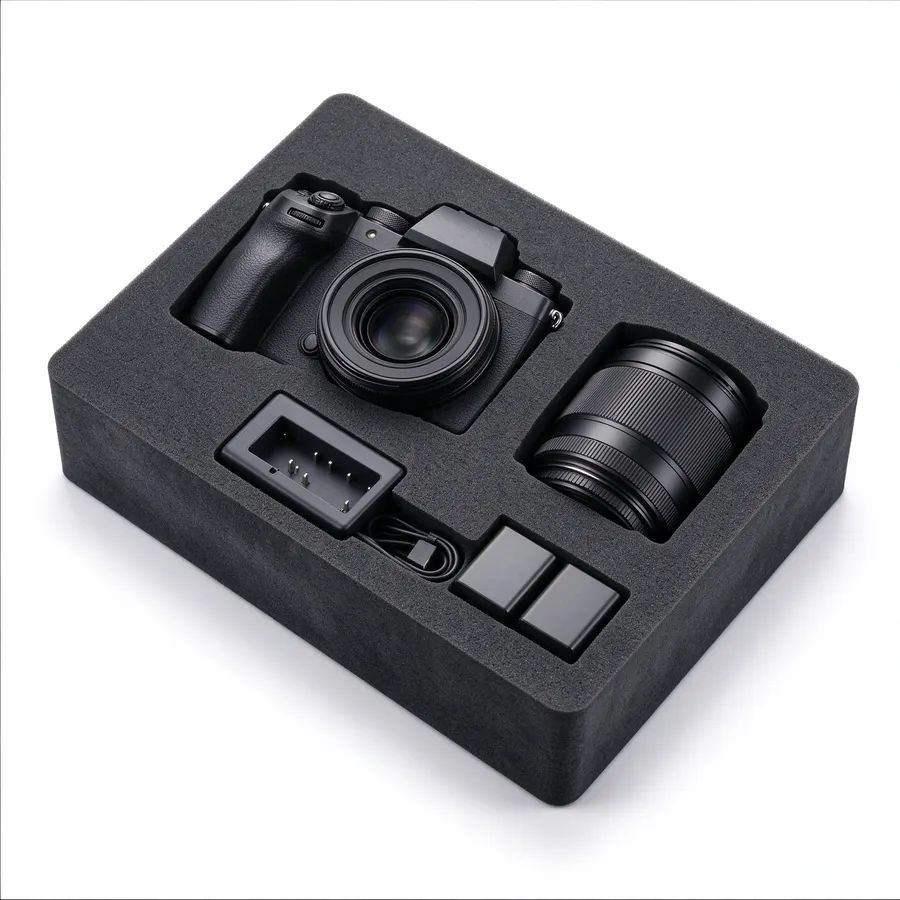
At the smallest scale, a case organises by giving each item a fixed place. A die-cut or CNC-cut interior shapes a pocket around every device, tool, cable and accessory so nothing floats loose, and a relief under fragile protrusions means those places are chosen for protection as well as order. Because the layout leaves a visible empty slot when something is missing, it doubles as a completeness check. That single feature removes the most common source of disorganisation in the field, which is not messy packing but no reliable way to know the kit is whole before it closes.
Standardised sizes organise the whole fleet
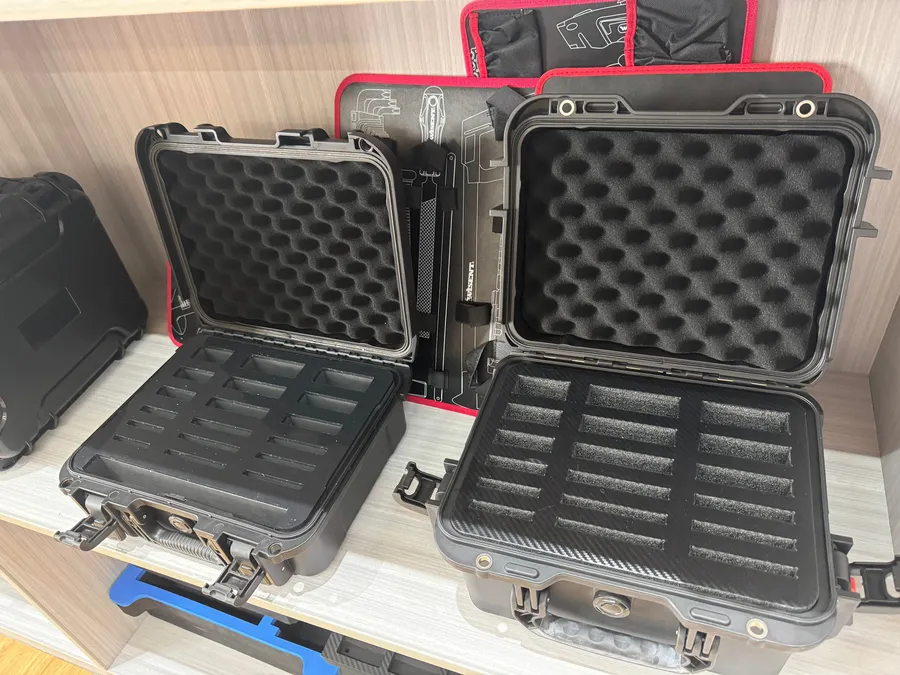
The larger benefit is system-wide. When a fleet is bought from one shell series, the cases share a footprint family, so they stack predictably, fit the same shelving, and take the same outer cartons. KeXin publishes internal and external dimensions per model, which means a buyer can build a rack or a pallet plan from real numbers rather than guessing. A mixed bag of one-off case sizes cannot be organised at the shelf level no matter how tidy each box is inside, because the containers themselves are irregular. Standardising the shells is what scales order from one case to a warehouse.
Stackable geometry as a storage system
Stackability is what converts individual boxes into a storage system. Moulded feet let one case index onto the lid of the one beneath so a stack does not walk sideways, and a flat-lid shell keeps its shape under the units above it. Many shells in the military and equipment range are marked stackable on their datasheet; the deep wheeled variants trade stacking for mobility. Selecting a stackable profile for the units that spend most of their life on a shelf or a pallet is a deliberate organisational choice, because it lets an entire load be stored and moved as one block.
Colour coding and visual grouping
Colour is the fastest organising signal in a busy environment. Matching a shell colour or a case label to a function, a team or a mission type lets anyone identify the right case at a glance without opening it, and colour-coded foam zones inside make each part return to its slot by match rather than by reading a label. Case colour is available as an OEM change on existing moulds, so a whole fleet can carry a consistent visual scheme. This turns a wall of identical boxes into a legible system.
Case features that organise the workflow
| Case Feature | Organises By | Fleet Effect |
|---|---|---|
| Published, repeating footprint | Letting cases stack and fit fixed shelving | A pallet or rack plan from real numbers |
| Stackable flat lid and feet | Indexing one case onto another | Whole loads stored and moved as one block |
| Colour-coded shell or foam | Visual grouping by function or team | Right case identified without opening it |
| Lid document holder | Keeping the checklist with the kit | Instructions never separated from equipment |
| Drawing-controlled interior | Fixing each item's address | Identical restock and interchangeable cases |
Interchangeable cases and reorderable layouts
A genuine organisational system survives staff changes, attrition and growth. If every unit of a fleet uses the same signed interior layout, any case can take another's contents and still pack the same way, and a reorder eighteen months later matches the first batch rather than drifting. This is the operational value of specifying a moulding series and a foam drawing early: it makes each case interchangeable and each restock predictable, so organisation stops depending on the memory of whoever last packed the kit.
Configuring cases for an organisation programme
Building the system is an OEM decision. Choose one or two shell series that span the load sizes you actually carry, lock a colour scheme, define the interior layouts from drawings for each kit type, and add lid document holders or carry options where the workflow needs them. Custom foam, colour, logo and buyer packaging all run on existing moulds at the standard OEM bands, with a first sample following the standing 45-day window. A bespoke footprint only needs a new mould if no published size fits the load; almost all of the organisational gain sits inside standard series, standard colour and signed interiors.
Procurement notes
Specify the case as a system, not a purchase. Standardise on published sizes so the shelf and pallet plans come from real external dimensions, keep interiors on controlled drawings so restocks match, and combine colour, logo and packaging changes on one order so the whole fleet presents the same scheme. Where a value such as a stack load is marked not measured on a model, plan around the unknown instead of assuming it. Orders are wholesale and OEM on EXW or FOB terms with a 30 percent deposit; there is no retail, DDP or overseas-warehouse arrangement, so build inbound logistics into the fleet plan.
Customisation
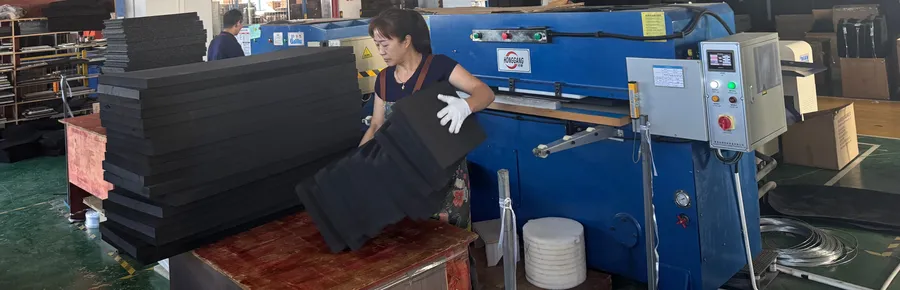
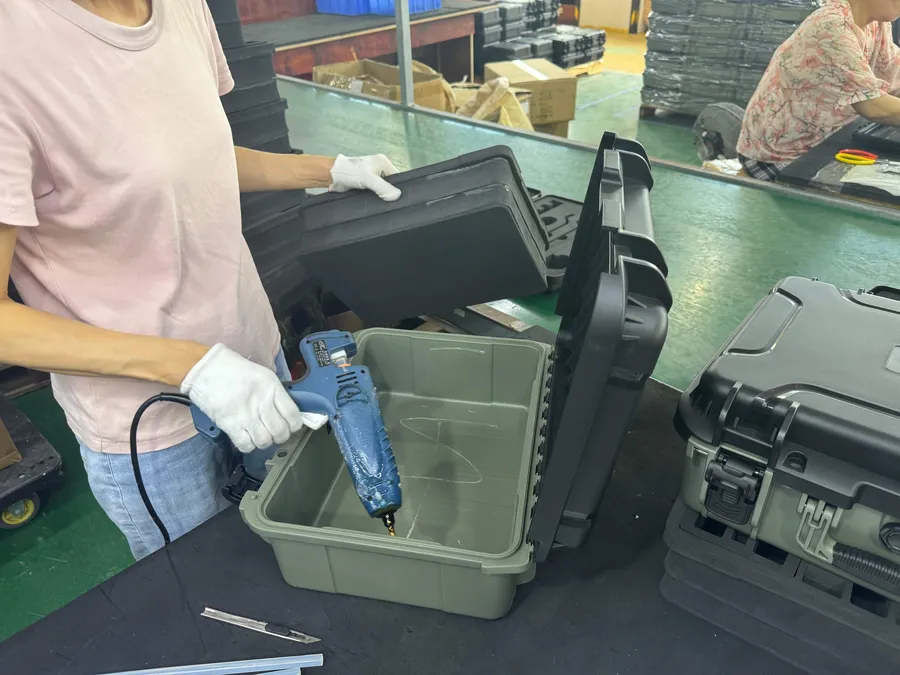
Everything described above is configurable on a standard shell: interior layout (pick-and-pluck, die-cut or CNC-cut), foam grade and thickness, colour, logo method, latch and lock count, pressure-equalisation valve, cable ports, document holder and identification plate. A bespoke exterior geometry requires a new mould — 125 days, from 3,000 units per moulded component.
Procurement considerations
| Question | What to send us |
|---|---|
| Which shell fits? | Equipment L × W × H as packed, plus required clearance per axis |
| What does it cost? | Order quantity and estimated annual quantity — the two drive different answers |
| Is tooling needed? | Whether an existing shell clears the envelope with usable foam depth |
| Lead time? | Your required delivery date, not just the order date |
| Certification? | The exact standard your tender names — we will say whether we can test to it |
| Freight? | Destination and preferred terms; carton and pallet data supplied with the quotation |
Comparison and selection guide
The tables on this page exist because a protective case is chosen by comparing three things: the envelope, the environment and the handling chain. Where no table applies, the rule below is.
| Situation | What To Do |
|---|---|
| Start from the equipment, not the case | Measure the tallest, widest and longest points of the packed equipment including antennas, handles and connectors. Add 20 mm minimum clearance per axis before selecting a shell. |
| Then choose the carrying method | Under 8 kg, a fixed handle is lighter and cheaper. Over 12 kg or any journey over 30 m, specify the T series with telescopic handle and wheels. |
| Then decide the interior | Pick-and-pluck for kits that change. Die-cut or CNC-cut for fixed layouts that must be auditable at a glance. |
- Size on internal dimensions plus clearance, never on a product name.
- Choose the carrying method before the shell: it changes the series, not just the price.
- Specify the interior last, and decide up front whether the end user will reconfigure it.
How can protective cases improve equipment organization? relates to Logistics & Packing Guide. Related families: Military Protective Cases / Equipment Transport Cases / Field Equipment Cases / Custom Protective Cases. Related sectors: field and industrial equipment. Continue in the Logistics & Packing Guide cluster.
This page is written from our own production data. If your requirement differs, send the dimensions and we will tell you which of the 155 models fits, or whether a custom route is needed.


