How should case load capacity be specified in a protective case RFQ?
In a protective case RFQ, do not ask for a single load-capacity number. Specify the loads the case will actually meet: the mass of the payload and how it sits inside, the interior envelope your equipment needs, how many cases you intend to stack one on top of another, and the transport leg each case travels. We then answer with the values we measure and publish for each model - external and internal dimensions, internal volume, wall thickness, net weight, and whether the model is a stacking design - because a generic compression or drop rating is recorded as not measured in our catalogue and is not something we invent. Where a documented figure is required, name the test method in the RFQ and we will quote accredited third-party testing against it for the chosen model.
Key points
- Replace 'what is the load capacity' with concrete inputs: payload mass, interior envelope, stack height and transport mode.
- Judge a case from published geometry - internal size, wall thickness, net weight and stacking behaviour - not a vague one-number rating.
- Ask the factory to confirm which models stack and which are caster travel designs; those two answer different load questions.
- If you need a compression or drop figure, state the test standard in the RFQ so accredited testing can be quoted per model.
- Tie the load request to quantity and tooling, because foam, wall and hardware choices change both behaviour and unit cost.
- Keep commercial scope clear from the start: wholesale and OEM terms, EXW or FOB, no retail or DDP, no overseas warehouse.
What case load capacity really asks for
The phrase load capacity hides three different questions, and a good RFQ separates them. First is payload: the mass of the contents and how that mass is distributed inside the interior envelope. Second is stacking: how many filled cases you intend to stand on top of each other in a store or a container, and for how long. Third is handling and transport: whether the case moves by hand, on a trolley, on casters, or rides in a freight container through several legs. A shell that is comfortable carrying twenty kilos of optics on a shoulder is a different problem from one that must sit four-high under the weight of the cases above it. Naming each of these in the enquiry is what lets the manufacturer size wall thickness, hardware and interior packing correctly.
Separate your inputs from the values we publish
Split the load conversation into what only you know and what we measure. You supply the payload mass, the footprint and height your equipment needs inside, the lid clearance for connectors or knobs, the number of units you plan to stack, and the transport chain. We supply the published, per-model figures: external dimensions, internal dimensions, internal volume, wall thickness in millimetres, net weight, the shell material, and whether the model is a stacking design or a caster travel design. What we do not do is attach a single load number to a family, because in our catalogue the compression and load fields are recorded as not measured and we will not present an unmeasured value as a specification.
Published case specs that carry the load information
These rows are drawn from individual model pages in our catalogue; the figures belong to each model, not to the whole range. Use them as the shape of the data a supplier should return for a load enquiry, and read the last column as the practical answer to your stacking question.
| Model | Internal Size Mm | Wall Mm | Net Weight Kg | Stacks In Use |
|---|---|---|---|---|
| KX-1204 | 115 x 78 x 32 | 2.6 | 0.10 | Yes |
| KX-3308 | 325 x 236 x 76 | 2.3 | 0.58 | Yes |
| KX-63912 | 360 x 240 x 104 | 3.8 | 1.60 | Yes |
| KX-4616 | 455 x 338 x 148 | 3.0 | 1.40 | Yes |
| KX-85827 | 500 x 400 x 220 | 5.0 | 7.80 | No, caster travel |
State the stacking and transport scenario, not a target rating
The most useful line you can add is the scenario. Tell us the cases will be stacked three or four units high in a warehouse for months, or shipped loose in a container, or nested on pallets, and whether filled cases are lifted by hand or rolled on casters. From the table above you can see why this matters: the smaller models are stacking designs, while the large high-volume cases are built as caster travel cases that are not intended to carry a column of other cases on their lid. Once the scenario is clear we can point to the models whose published geometry and stacking behaviour match it. If your quality team still needs a compression figure, specify the standard and we will arrange accredited third-party testing against it for that model rather than guessing.
How to write the load section of the RFQ
A compact structure keeps the enquiry answerable. Open with payload mass and centre of gravity, then the required interior envelope in millimetres with lid clearance, then the stacking condition (units high, on pallets or on the floor, duration), then the transport legs and how the case is handled between them, then any environmental note such as storage temperature. Close with annual volume and target quantity, because that determines whether a stock shell, a custom foam insert, or a custom mould is the right answer. What to leave out: a demand for a generic rating that no measured model carries, and any expectation of a certificate the factory has not tested. The goal is a specification the manufacturer can meet with real published data or an honest test quote.
Where these specs fit your application
For electronics and instrument payloads, the envelope and the interior packing decide the case more than raw mass, so give us the board or device outline and let the wall thickness and foam carry the protection. For field and industrial kits that are lifted and set down repeatedly, prioritise a stacking design with a load path through the corners so cases can be stood on each other. For heavier deployed equipment, a caster travel case protects the shell from stacking loads entirely by keeping the mass on the floor. Pick the family that matches the handling reality, then confirm the load answer against that family's published model pages.
Customisation that changes load behaviour
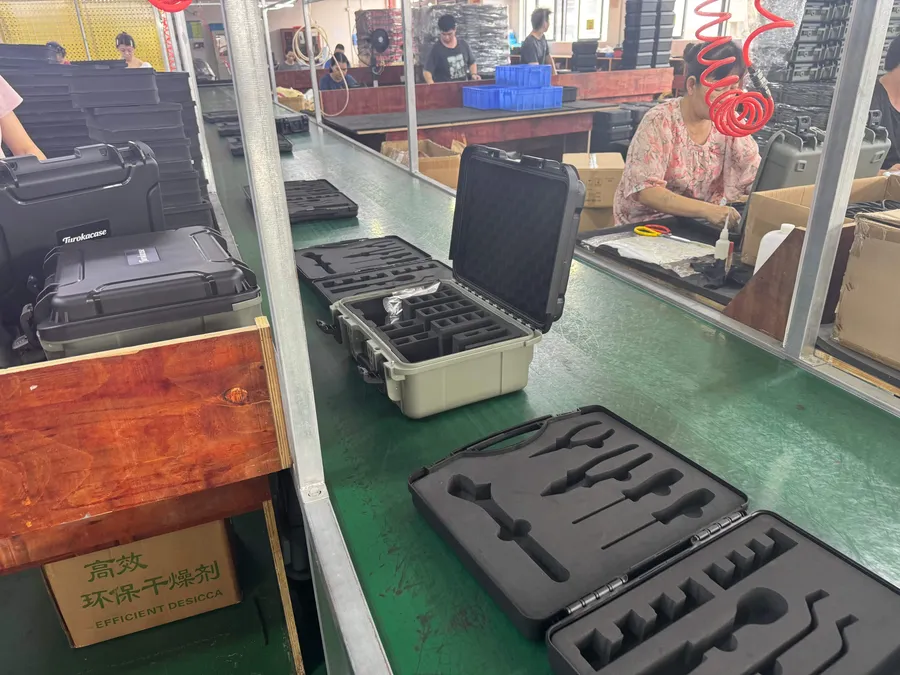
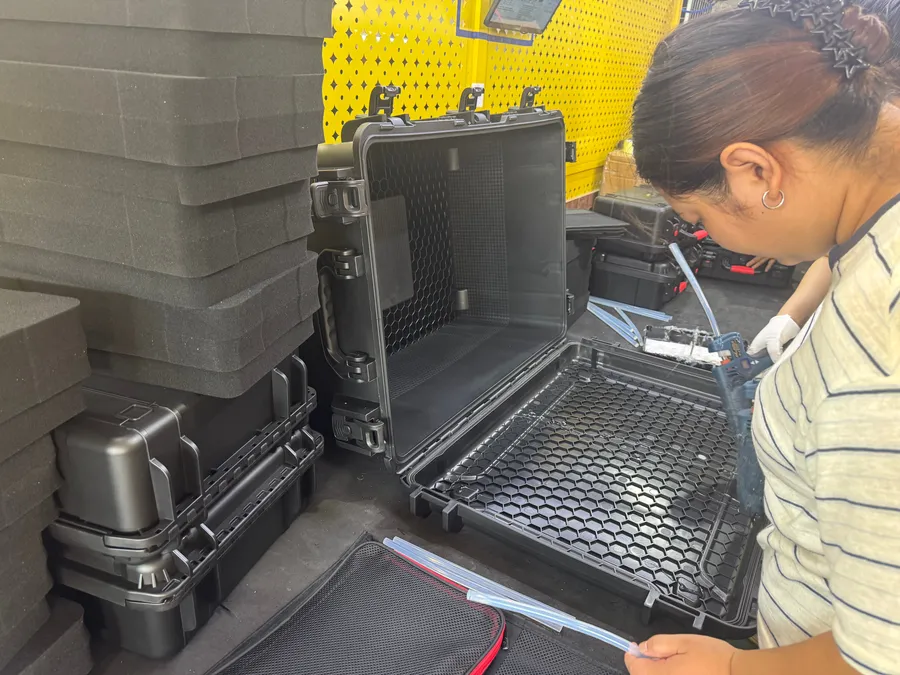
Several options move the answer. Interior foam - pick and pluck, die-cut, CNC-cut, EVA, PE or EPE - controls how payload mass reaches the walls and how stacking loads spread, and foam thickness is chosen from the payload, not guessed. Wall thickness and hardware, including handles, hinges and latches, set how much the shell itself carries. Casters and telescopic handles turn a case into a travel design that should not be stacked. On the commercial side, custom logo, colour and OEM start at a 300-unit MOQ and a custom mould at 3000 units; an OEM first sample on an existing mould runs about 45 days and a new mould about 125 days, with a 30 percent deposit. State these alongside the load needs so pricing and lead time come back consistent with the specification.
Commercial terms and what we do not claim
We work on wholesale and OEM terms with EXW or FOB delivery; we do not sell retail, do not offer DDP, and hold no overseas warehouse, so plan landed cost and destination clearance on your side. On claims, the discipline is the same as the numbers: we publish measured geometry and stacking behaviour per model and record unmeasured items as not measured. We do not print an IP code, and we do not present military-standard or air-cargo conformance, or a load certificate, as a property of a case unless an accredited laboratory has tested that specific configuration against a named method and you have asked us to arrange it.
Customisation
Everything described above is configurable on a standard shell: interior layout (pick-and-pluck, die-cut or CNC-cut), foam grade and thickness, colour, logo method, latch and lock count, pressure-equalisation valve, cable ports, document holder and identification plate. A bespoke exterior geometry requires a new mould — 125 days, from 3,000 units per moulded component.
Procurement considerations
| Question | What to send us |
|---|---|
| Which shell fits? | Equipment L × W × H as packed, plus required clearance per axis |
| What does it cost? | Order quantity and estimated annual quantity — the two drive different answers |
| Is tooling needed? | Whether an existing shell clears the envelope with usable foam depth |
| Lead time? | Your required delivery date, not just the order date |
| Certification? | The exact standard your tender names — we will say whether we can test to it |
| Freight? | Destination and preferred terms; carton and pallet data supplied with the quotation |
Comparison and selection guide
The tables on this page exist because a protective case is chosen by comparing three things: the envelope, the environment and the handling chain. Where no table applies, the rule below is.
| Situation | What To Do |
|---|---|
| Fastest | Standard shell plus CNC foam — typically 45 days from approved drawing. |
| Branded | Standard shell plus custom colour and logo — MOQ applies to the resin colour. |
| Bespoke geometry | New mould — 125 days, MOQ from 3,000 units per component. |
- Size on internal dimensions plus clearance, never on a product name.
- Choose the carrying method before the shell: it changes the series, not just the price.
- Specify the interior last, and decide up front whether the end user will reconfigure it.
How should case load capacity be specified in a protective case RFQ? relates to Logistics & Packing Guide. Related families: Custom Protective Cases / Electronics Cases / Military Protective Cases / Ammunition Storage & Transport Boxes / Equipment Transport Cases. Related sectors: field and industrial equipment. Continue in the Logistics & Packing Guide cluster.
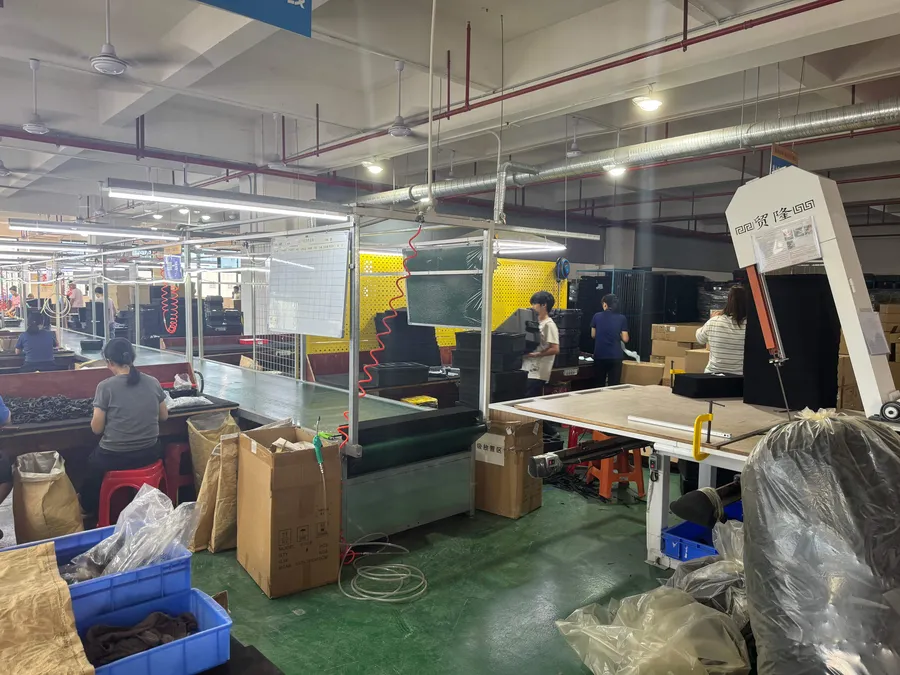
This page is written from our own production data. If your requirement differs, send the dimensions and we will tell you which of the 155 models fits, or whether a custom route is needed.


