What information should be provided about case load capacity before a quotation?
Before we can quote case load capacity honestly, send the inputs that decide the answer rather than asking for one rating. Give the payload mass and where its weight sits, the interior envelope and lid clearance your equipment needs, how many filled cases you will stack and for how long, and each transport and handling leg. Add your target quantity and annual volume, because those turn the same load requirement into a stock shell, a custom foam insert, or a custom mould at very different prices. We reply with the published per-model figures we actually measure - external and internal size, internal volume, wall thickness, net weight, and whether the model is a stacking or caster travel design - and we treat any compression or handling figure you still need as a named test we can quote accredited third-party testing against, not a number we make up.
Key points
- A quotation is only as good as the load inputs you attach: mass, centre of gravity, interior envelope and clearances.
- Say how many cases stack and for how long, because a stacking design and a caster travel case price differently.
- Attach quantity and annual volume - the same load need can mean stock shell, custom foam or custom mould at different cost.
- List the transport legs and handling method, since casters, handles and hardware are add-ons the quote must carry.
- Name any documentation you require as a test method so accredited third-party testing can be scoped, not assumed.
- State your commercial frame up front: wholesale and OEM, EXW or FOB, no retail or DDP, no overseas warehouse.
Why load information changes the price, not just the design
Load capacity is not a line item you pick from a menu; it is the result of several inputs that each move cost and lead time. The mass of what you carry decides the wall and the interior packing. How many cases stand on each other decides whether you need a stacking design or a caster travel case that keeps weight off the lid. The quantity you order decides whether a stock shell is affordable or a custom mould makes sense. When those inputs arrive with the enquiry, the quotation can be specific and stable. When they are missing, a supplier either over-quotes to cover the risk or quotes a number nobody has measured, and both are useless to a purchasing decision.
Payload and interior envelope come first
Two figures anchor everything else: the payload mass with a note on where the weight sits, and the interior envelope your equipment requires, including lid clearance for connectors, knobs or a handle. Interior size is published per model, so giving us the equipment outline lets us match it. For example our catalogue carries a compact case with a 115 by 78 by 32 millimetre interior and 2.6 millimetre wall, up to a large travel case with a 723 by 368 by 329 millimetre interior and a 5.0 millimetre wall for roughly 87.5 litres of volume. Those are real published values for two different models, not a range average, and they show why the envelope you request selects the specific case rather than a family.
Information blocks that determine a load-capacity quotation
Use the table as a fill-in checklist for your enquiry. Each block is something only you know at the moment of quoting, and each one maps to a concrete decision we make about the shell, the interior or the hardware, and therefore to the unit price and the tooling route.
| What You Provide | Concrete Example | How It Moves The Quotation |
|---|---|---|
| Payload mass and centre of gravity | Around 12 kg, weight toward the lid | Sets foam grade and wall, so unit cost and MOQ band |
| Interior envelope and lid clearance | Equipment outline plus 30 mm lid room | Selects a stock model or triggers a custom mould |
| Stack units and storage duration | Four high in a store for months | Separates stacking designs from caster travel cases |
| Transport legs and handling | Two legs, rolled on casters between them | Adds casters, handle and hardware the quote must carry |
| Target quantity and annual volume | Roughly 1,200 units per year | Decides stock shell, custom foam or custom mould pricing |
Stacking and transport conditions to declare
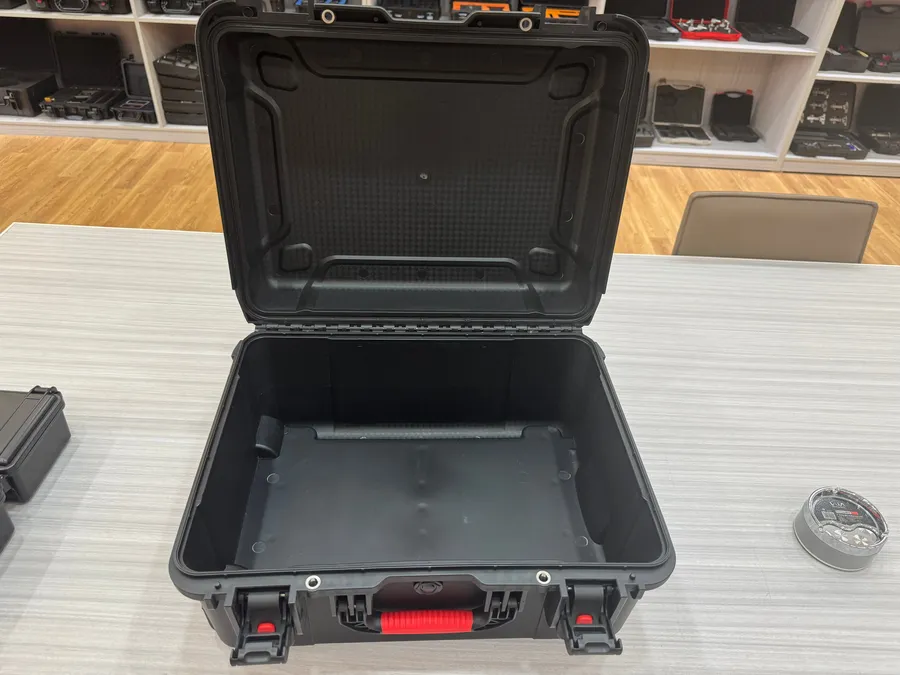
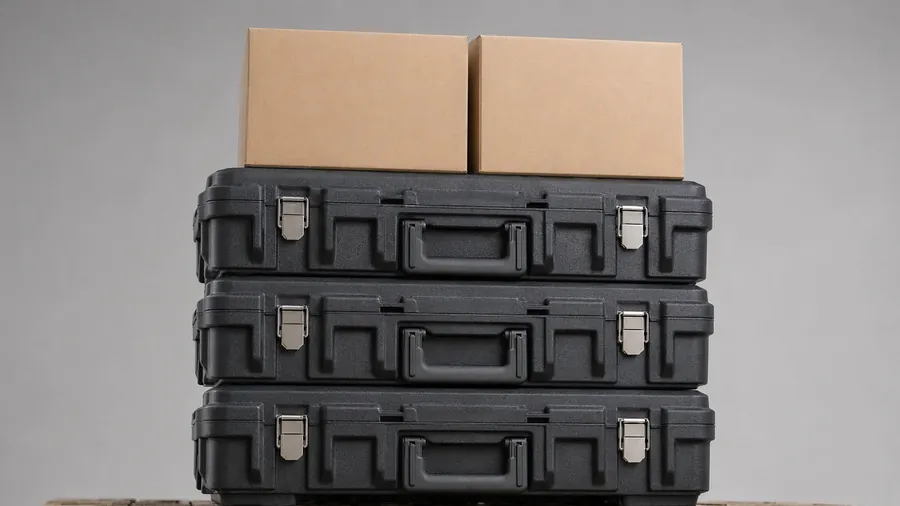
Be explicit about the two moments a case carries load: shipping and storage. In transit, are cases palletised, shrink-wrapped and stacked, or loaded loose in a container? In storage, how many filled cases stand on the bottom one, and for how long? Our published data answers part of this: the smaller models are stacking designs, while the large high-volume cases are caster travel designs that are not meant to bear a column of other cases on their lid. Telling us the stacking height and the transport legs lets us confirm which models fit and which hardware, such as casters or a telescopic handle, belongs on the quotation.
Quantity, tooling and how the load answer is priced
The same load requirement can be met three ways, and quantity chooses between them. A stock shell with a cut foam insert suits modest volumes. Custom logo, colour and OEM start at a 300-unit MOQ, and a custom mould starts at 3000 units because tooling is amortised across the run. On timing, an OEM first sample on an existing mould runs about 45 days and a new mould about 125 days, with a 30 percent deposit. So when you send annual volume and target order size with the load details, the quotation can propose the right route and price rather than the most expensive safe one.
Documentation and figures you may need to receive
If your quality or logistics team needs a documented compression or handling figure rather than published geometry, ask for it as a test. State the method and the configuration, and we will quote accredited third-party testing against it for that specific model and return the report. What we will not do is hand over a number the model does not carry. In our catalogue the compression and load fields are recorded as not measured, and we do not print an IP code or claim military-standard or air-cargo conformance as a standing property. Framing documentation as a scoped test keeps the quotation accurate and keeps the liability where the evidence is.
Customisation options that affect the load answer
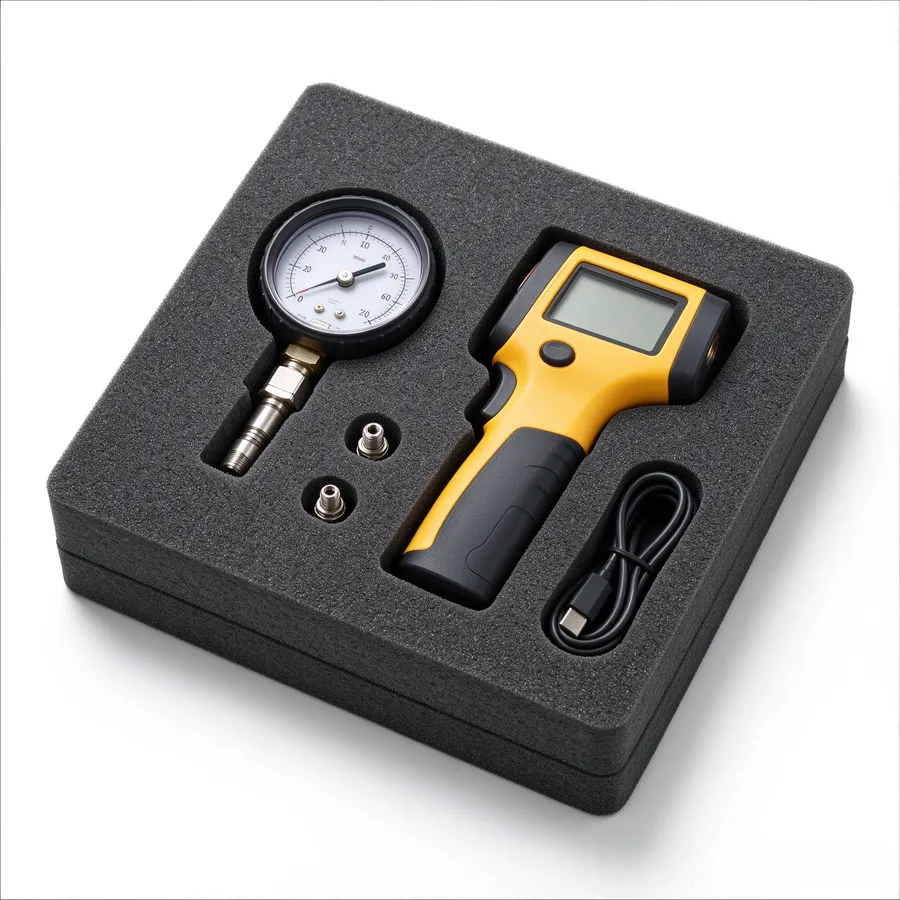
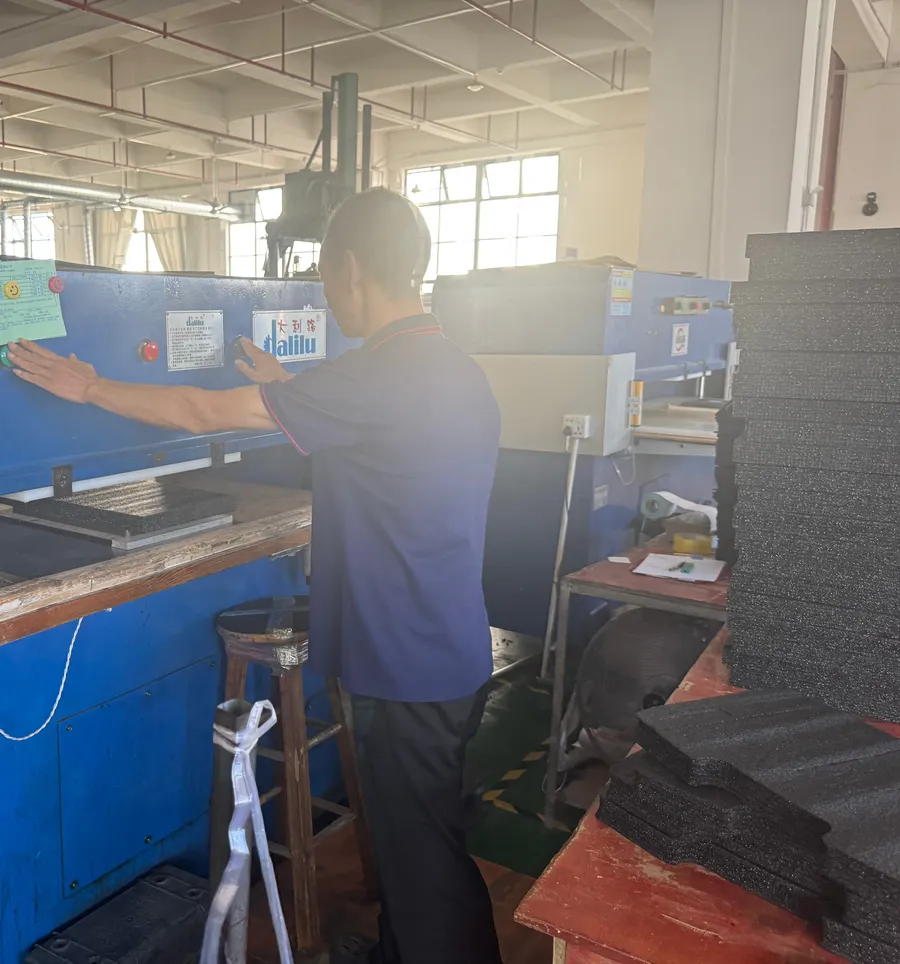
Options change both behaviour and cost, so list them with the enquiry. Interior foam comes as pick and pluck, die-cut, CNC-cut, EVA, PE or EPE, and thickness is chosen from the payload rather than guessed. Wall thickness and hardware, including handles, hinges and latches, control what the shell carries. Casters and a telescopic handle convert a case into a travel design that should not be stacked. Each option is a line in the quotation, so the more of them you name alongside the mass, envelope and stacking condition, the closer the first quote lands to the final one.
Commercial scope to state before a quotation
Close the information package with the commercial frame so the quote is actionable. We work on wholesale and OEM terms with EXW or FOB delivery; we do not sell retail, do not offer DDP, and hold no overseas warehouse, so budget destination clearance and landed cost on your side. Give us the delivery term you want, the target market and the expected reorder rhythm, and the quotation can reflect real freight and tooling assumptions instead of placeholders, alongside the load inputs above.

Customisation
Everything described above is configurable on a standard shell: interior layout (pick-and-pluck, die-cut or CNC-cut), foam grade and thickness, colour, logo method, latch and lock count, pressure-equalisation valve, cable ports, document holder and identification plate. A bespoke exterior geometry requires a new mould — 125 days, from 3,000 units per moulded component.
Procurement considerations
| Question | What to send us |
|---|---|
| Which shell fits? | Equipment L × W × H as packed, plus required clearance per axis |
| What does it cost? | Order quantity and estimated annual quantity — the two drive different answers |
| Is tooling needed? | Whether an existing shell clears the envelope with usable foam depth |
| Lead time? | Your required delivery date, not just the order date |
| Certification? | The exact standard your tender names — we will say whether we can test to it |
| Freight? | Destination and preferred terms; carton and pallet data supplied with the quotation |
Comparison and selection guide
The tables on this page exist because a protective case is chosen by comparing three things: the envelope, the environment and the handling chain. Where no table applies, the rule below is.
| Situation | What To Do |
|---|---|
| Fastest | Standard shell plus CNC foam — typically 45 days from approved drawing. |
| Branded | Standard shell plus custom colour and logo — MOQ applies to the resin colour. |
| Bespoke geometry | New mould — 125 days, MOQ from 3,000 units per component. |
- Size on internal dimensions plus clearance, never on a product name.
- Choose the carrying method before the shell: it changes the series, not just the price.
- Specify the interior last, and decide up front whether the end user will reconfigure it.
What information should be provided about case load capacity before a quotation? relates to Logistics & Packing Guide. Related families: Custom Protective Cases / Equipment Transport Cases / Military Protective Cases / Ammunition Storage & Transport Boxes / Outdoor Protective Cases. Related sectors: field and industrial equipment. Continue in the Logistics & Packing Guide cluster.
This page is written from our own production data. If your requirement differs, send the dimensions and we will tell you which of the 155 models fits, or whether a custom route is needed.


