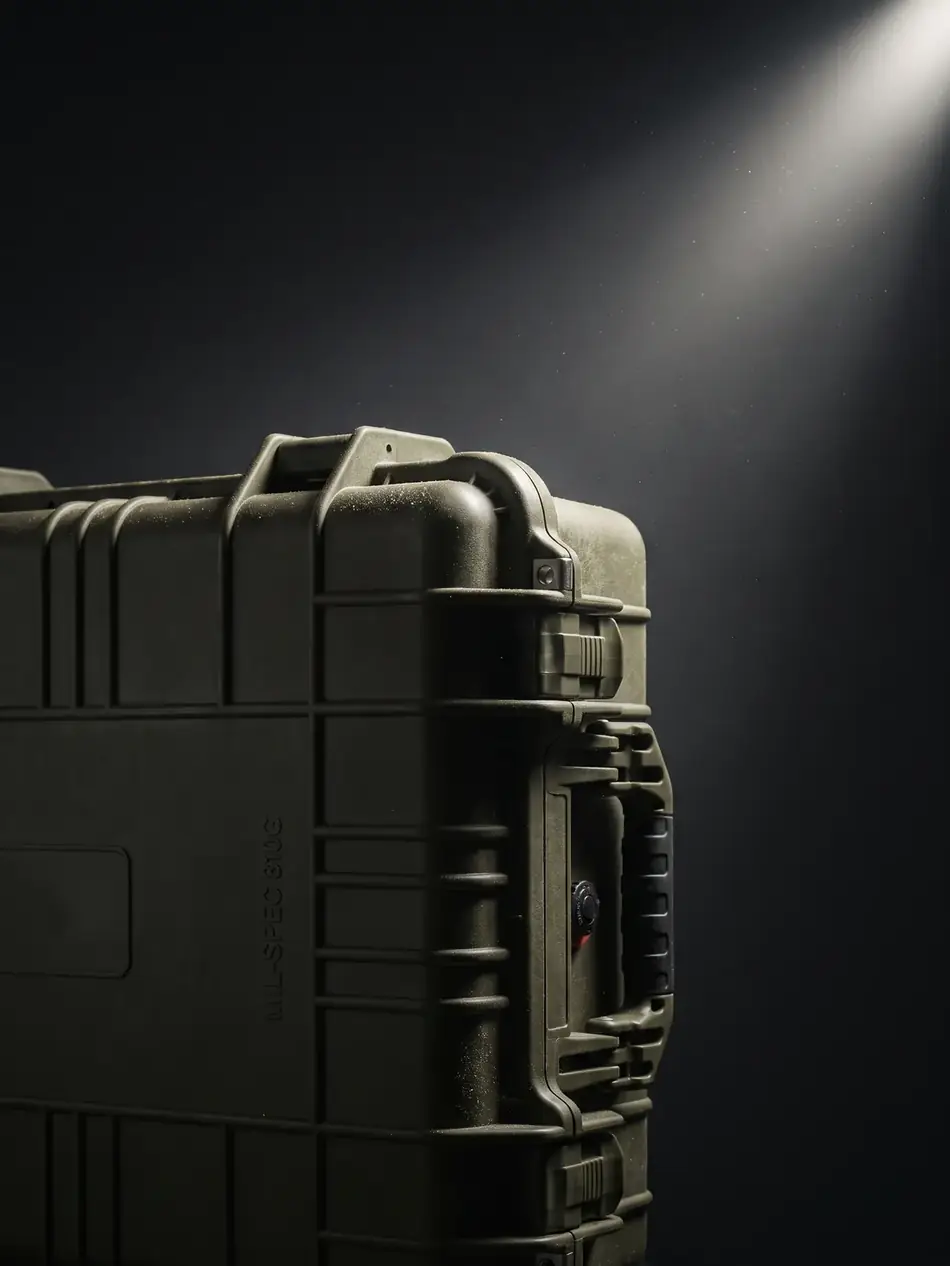
Can military equipment cases be fitted with custom foam?
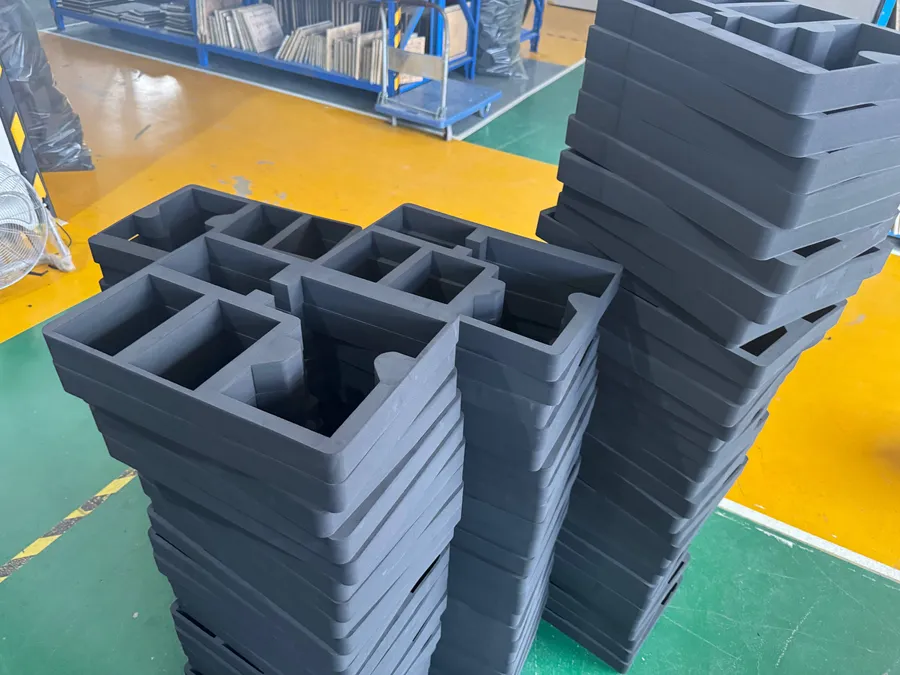
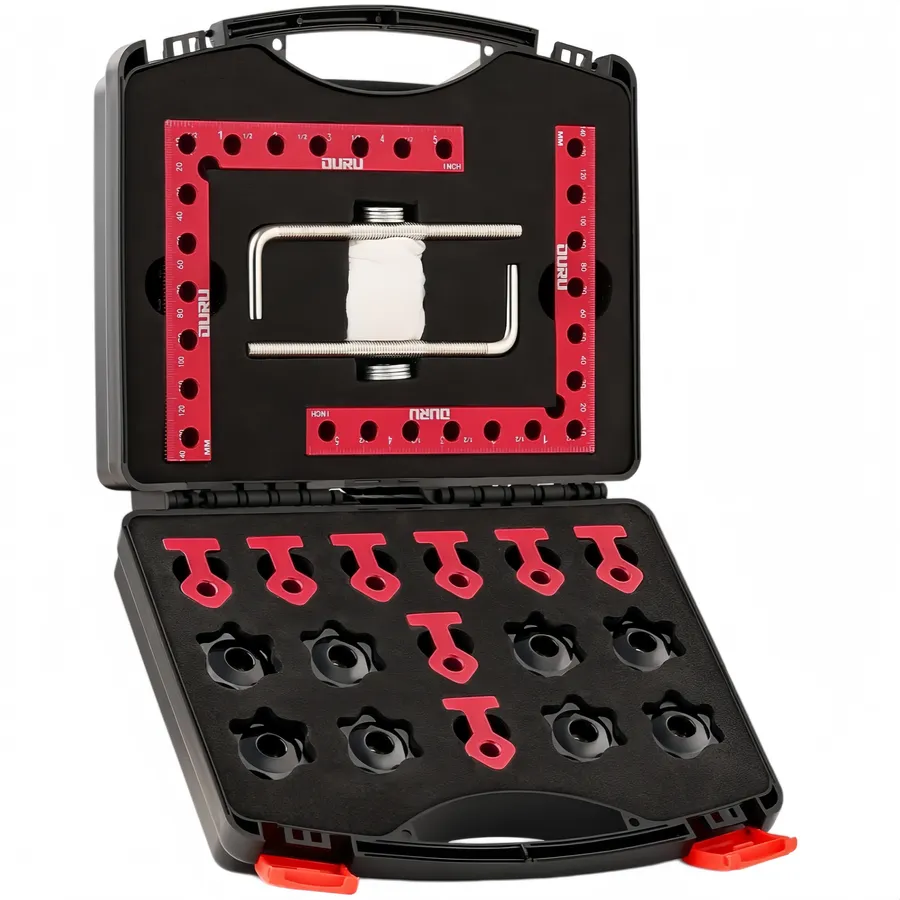
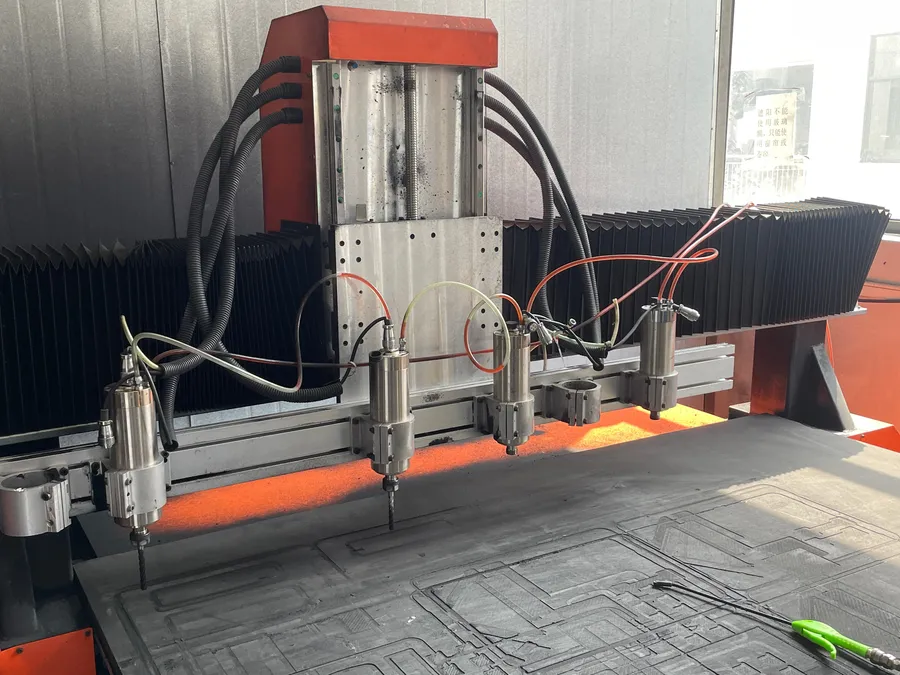
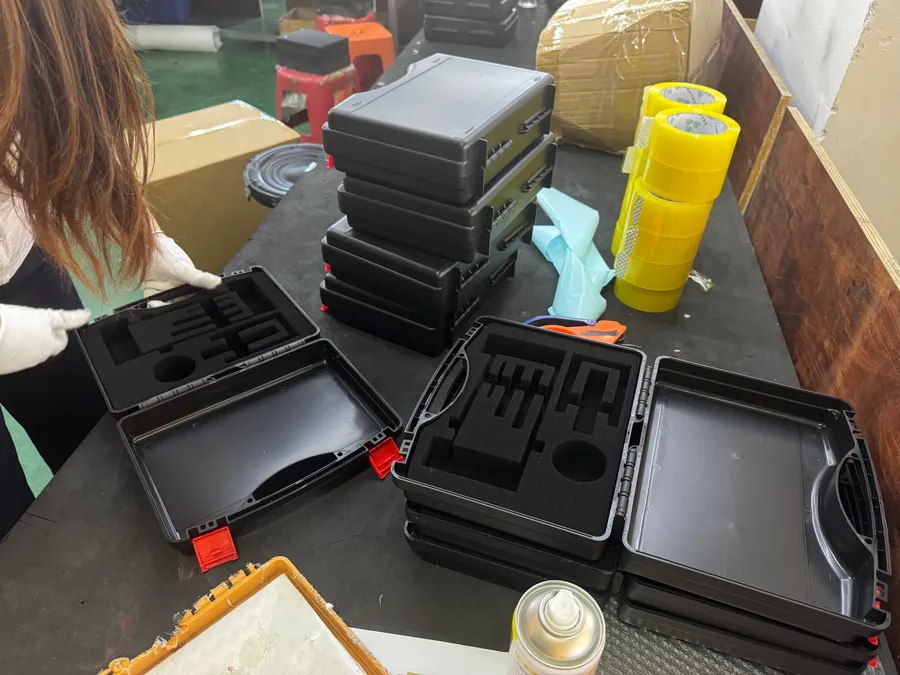
Yes. Every standard military case in the range is designed to be fitted with a custom foam interior rather than shipped empty, and the interior is the layer that actually protects the equipment. KeXin cuts closed-cell PE, EVA and EPE foam as pick-and-pluck, die-cut or CNC-cut layouts, and arranges them in layered structures such as a die-cut base with a pluck top or an egg-crate lid over a shaped cavity. The foam is cut to your drawing, a photograph of the packed kit, or a physical sample, so a radio set, an optic, a medical kit or a weapon gets a dedicated pocket with relief under any fragile protrusion. Because this is done on an existing mould, it is one of the fastest OEM changes available and does not require new tooling.
Key points
- Custom foam is a standard option on military cases, not a special request, and it is cut to a real reference rather than estimated.
- Pick-and-pluck suits a load that changes; die-cut or CNC-cut suits a fixed fleet pack-out.
- Layered top plus base lets cables, spares and tools live without resting weight on the main item.
- Relief pockets under optics, connectors, antennas and eyepieces are what prevent the most common field damage.
- A signed foam layout becomes the reorder reference so every future batch matches the first.
- Foam changes need no new mould, so they turn around on the standard OEM sample window.
The interior is the protective layer
A hard shell protects the case; the foam protects the contents. In military use this distinction matters because the equipment is expensive, sensitive and repeatedly handled in poor conditions. A radio transceiver with a handset and antenna, a thermal optic, a set of surgical instruments, a rifle with a mounted sight and a spare magazine, or a data logger with probes and cables each has its own fragile points, and the foam is what isolates them. Fitting a custom interior converts a generic box into a mission-specific cradle, and it is the single most valuable configuration a buyer makes on a military case.
Foam types on offer
KeXin works with closed-cell polyethylene, EVA and EPE foams in several cut methods. Pick-and-pluck gives users a grid they can punch out themselves, which is ideal where the kit changes between missions or where an operator reconfigures the load in the field. Die-cut produces a precise cavity from a cutting die, which is economical and repeatable once the contents are stable. CNC-cut produces the same precision straight from a drawing without a die, which is faster to iterate on complex shapes with reliefs and undercuts. All three can be combined in one case, for example a die-cut base that fixes a receiver with a pluck top layer that holds whatever accessories travel with it on a given outing.
How the layout is derived
The cut is driven by a real reference, not a guess. Send a technical drawing with dimensions, a clearly measured photograph of the packed kit, or a physical sample, and the factory returns a proposed layout mapped to the chosen case's published internal dimensions. Every part gets its own seat, and any protrusion that could bear load, an eyepiece, a connector, an antenna stub, a suppressor or a lens, gets a relief pocket beneath it so nothing presses on it when the lid is closed. The usable interior after foam is confirmed against the datasheet so a case that looked right on paper is not too shallow once the liner is in.
Structures mapped to military load types
| Load Type | Recommended Structure | Why |
|---|---|---|
| Radio or comms set with handset, antenna and cables | Die-cut base plus pluck top with cable channels | Keeps the transceiver fixed and the spares reconfigurable |
| Thermal or optical sight | CNC-cut single cavity with lens relief | No bearing point on the glass or turret |
| Rifle with mounted optic and magazine | Layered die-cut base and convoluted lid | Separates barrel, action, optic and magazine |
| Field medical or surgical kit | CNC-cut trays in a two-layer stack | Instrument-specific pockets, quick visual check |
| Data logger with probes and batteries | Pluck top over a shaped base | Probe and battery slots change with each job |
| Mixed engineer or EOD-style kit | Full pluck interior in a thick-wall shell | Maximum reconfiguration between deployments |
Matching the foam to the case size
The interior is only as good as the shell that houses it, so the case is chosen from published data first. A compact comms accessory set fits a mid-size thick-wall shell such as KX-5321 with an internal 481 x 373 x 192 mm and a 5.8 mm engineering-PP wall. A larger system fits KX-6621 at an internal 587 x 434 x 192 mm and a 6.0 mm wall. The point is to fix the usable interior, then cut the foam to it, because foam thickness subtracts from depth quickly and a shallow shell cannot carry a deep die-cut cavity plus a tall accessory. The factory confirms the interior after foam before committing the layout.
Why a signed layout matters for a fleet
The operational benefit of custom foam is repeatability. Once a layout is approved, it becomes the reference for every unit and every reorder, so a case bought eighteen months later packs exactly like the first one, and any unit in a fleet can take any other unit's contents. This is where organisations are lost in ad-hoc packing: a pluck interior shaped by whoever packed the box last is not a standard. A drawing-controlled die-cut or CNC-cut layout makes the packing list visual and consistent, so a missing item is obvious the moment the lid opens.
Ordering custom foam as an OEM change
Custom foam runs on the existing case moulds, so it needs no new tooling and starts at a low quantity band; logo, colour and buyer packaging can be added to the same order at the standard OEM thresholds. A first OEM sample on an existing mould follows the standing lead time of about 45 days with a 30 percent deposit against the proforma. Only a bespoke internal case geometry triggers a new mould, which starts at a higher quantity and follows about 125 days after drawing sign-off. Orders are wholesale and OEM on EXW or FOB terms; there is no retail, DDP or overseas-warehouse arrangement.
Procurement notes
Send a real reference and the case SKU together so the layout is drawn against the exact usable interior. Ask for the interior-after-foam figure, not just the internal dimensions, before you sign. Specify the structure by how the kit is repacked between missions, not only by what is in it today. Keep the approved drawing as the reorder standard so a fleet stays identical across years and batches. Describe the transport route, and where any protection value is marked not measured on the datasheet, treat it as unknown rather than assumed.
Custom foam for military cases: buyer wording matched to published figures
The table below records the phrases wholesale buyers actually type and answers each one from our own model data rather than from a promise. Every figure is read from the published datasheet fields of the 155 active models: internal and external dimensions, lid and base depth, wall thickness, usable interior volume, order minimums and lead times. Where a value is not on the datasheet the row says so instead of inventing one.
| Search | What We Publish |
|---|---|
| custom foam for military cases | All 155 model records carry the same interior options: pick-and-pluck, die-cut and CNC-cut in PE, EVA or EPE foam, built as top, base, egg-crate, custom-cut or layered structures. A foam change is cut on the existing shell, so the published minimum is 1 unit and a first OEM sample follows a 45-day window with a 30 percent deposit against the proforma. |
| die-cut or CNC-cut foam for a military case | Die-cutting needs a cutting die and pays off once the pack-out is stable; CNC-cutting comes straight off a drawing, a measured photograph of the packed kit or a physical sample, which iterates faster on reliefs and undercuts. Both methods are listed on all 155 model sheets and neither needs new tooling, so both sit inside the 45-day sample window rather than the 125-day mould window. |
| how much internal depth does foam remove | Depth is published per model, so the liner is designed against a real number: KX-5321 lists 481 x 373 x 192 mm internal with a 149 mm base and a 43 mm lid, and 34.4 L internal volume against 27.5 L usable interior. On 154 of the 155 models the usable interior sits below the internal volume, and lid and base depth are published on 100 model records. |
| pick and pluck foam for field reconfiguration | Pick-and-pluck is one of the six interior types published on every model sheet and is the usual choice when contents change between deployments, often with a die-cut or CNC-cut base underneath to fix the main item. Because the change uses an existing shell, the published minimum order for custom foam is 1 unit and rises to 300 units only when a logo or colour is added to the same order. |
| foam relief under optics, connectors and antennas | The layout is drawn from a supplied reference and every load-bearing protrusion gets a clearance pocket so a closed lid presses nothing; that is a drawing decision, not a measured cushioning value. No shock or impact figure is published as measured on the 155 model records, so we specify geometry and wall thickness instead of quoting an energy number. |
| waterproof or dust rating for a foam-lined case | We publish no ingress-protection rating: the waterproof and dust columns are recorded as not measured on all 155 models, and the 124 models that list a seal describe a build feature, not a rating. Accredited third-party testing is quoted per configuration when a programme requires a number, which keeps the datasheet honest between enquiries. |
| MOQ and lead time for a custom foam order | Published bands are 1 unit for standard and custom-foam work on an existing shell, 300 units where logo, colour or OEM packaging joins the order, and 3,000 pieces per component for a bespoke mould. Lead time is 45 days for an OEM sample on an existing mould and 125 days for a new mould after drawing sign-off, with a 30 percent deposit. |
Sizing the shell before the liner is cut
A foam layout is only as good as the envelope it is cut into, so the shell is chosen from published dimensions first and the interior after foam is confirmed before the layout is signed. The range runs from KX-1204 at an internal 115 x 78 x 32 mm with a 2.6 mm wall, a 16 mm lid and a 16 mm base and a 100 g net weight, to KX-88442 at an internal 740 x 518 x 364 mm with a 5.0 mm wall, a 320 mm lid, a 44 mm base and a 15,320 g net weight.
Between those ends, KX-83715 publishes 340 x 220 x 135 mm internal and 10.1 L against 8.7 L usable, KX-5321 publishes 481 x 373 x 192 mm and 34.4 L against 27.5 L usable behind a 5.8 mm engineering-PP wall, KX-65522 publishes 507 x 385 x 190 mm and 37.1 L against 29.7 L usable in ABS, and KX-6621 publishes 587 x 434 x 192 mm and 48.9 L against 39.1 L usable behind a 6.0 mm wall. Wall thickness across the catalogue is published between 2.0 and 6.0 mm and 136 models are published as stackable, which matters once a lid is carrying a column of loaded cases rather than sitting on a shelf.
Where the published data stops and a test would have to start
The columns buyers most often ask us to fill in - water and dust ingress, ultraviolet exposure, temperature range, stack load and load capacity - are recorded as not measured, and no ingress-protection code is printed on any of the 155 model records. Shock protection is listed as a manufacturer option that requires a specified foam layout, so the shell alone is not a cushioning figure, and the impact column quotes a wall thickness without a drop height because no drop height has been recorded for that SKU.
What we can commit to is geometry and process: a layout drawn against a real reference, clearance under the parts that break, a signed drawing that becomes the reorder standard, and accredited testing quoted per configuration when a programme needs a number. Where a value is not measured we write not measured rather than filling the gap with an adjective, because a fleet spec built on an invented figure fails at the first audit.
Ordering the interior on wholesale terms
KeXin New Materials (Guangdong) Co., Ltd. works on wholesale and OEM orders only, on EXW or FOB terms, with no retail channel, no delivered-duty-paid arrangement and no overseas warehouse, so buyers plan their own inbound freight. The published order bands are 1 unit for standard and custom-foam work on an existing shell, 300 units where a logo, colour or OEM package joins the order, and 3,000 pieces per component only if the case geometry itself has to be tooled.
In practice, send the reference and the SKU together - a drawing, a measured photograph of the packed kit or a physical sample, plus the model the liner is to be cut for - and ask for the interior-after-foam figure before approving the layout. Keep that signed layout as the reorder standard, so a case bought two years later packs exactly like the first one and any unit in a fleet can carry another unit's contents.
Customisation
Everything described above is configurable on a standard shell: interior layout (pick-and-pluck, die-cut or CNC-cut), foam grade and thickness, colour, logo method, latch and lock count, pressure-equalisation valve, cable ports, document holder and identification plate. A bespoke exterior geometry requires a new mould — 125 days, from 3,000 units per moulded component.
Procurement considerations
| Question | What to send us |
|---|---|
| Which shell fits? | Equipment L × W × H as packed, plus required clearance per axis |
| What does it cost? | Order quantity and estimated annual quantity — the two drive different answers |
| Is tooling needed? | Whether an existing shell clears the envelope with usable foam depth |
| Lead time? | Your required delivery date, not just the order date |
| Certification? | The exact standard your tender names — we will say whether we can test to it |
| Freight? | Destination and preferred terms; carton and pallet data supplied with the quotation |
Comparison and selection guide
The tables on this page exist because a protective case is chosen by comparing three things: the envelope, the environment and the handling chain. Where no table applies, the rule below is.
| Situation | What To Do |
|---|---|
| Start from the equipment, not the case | Measure the tallest, widest and longest points of the packed equipment including antennas, handles and connectors. Add 20 mm minimum clearance per axis before selecting a shell. |
| Then choose the carrying method | Under 8 kg, a fixed handle is lighter and cheaper. Over 12 kg or any journey over 30 m, specify the T series with telescopic handle and wheels. |
| Then decide the interior | Pick-and-pluck for kits that change. Die-cut or CNC-cut for fixed layouts that must be auditable at a glance. |
- Size on internal dimensions plus clearance, never on a product name.
- Choose the carrying method before the shell: it changes the series, not just the price.
- Specify the interior last, and decide up front whether the end user will reconfigure it.
Can military equipment cases be fitted with custom foam? relates to Foam Insert Guide. Related families: Military Protective Cases / Defense Equipment Cases / Custom Protective Cases / Field Equipment Cases. Related sectors: field and industrial equipment. Continue in the Foam Insert Guide cluster.
This page is written from our own production data. If your requirement differs, send the dimensions and we will tell you which of the 155 models fits, or whether a custom route is needed.