What are the characteristics of PP cases?
PP cases are made from polypropylene, a thermoplastic that is moulded into a hard, light shell, and in our catalogue the PP family is the most common shell material across the published models. Its defining characteristics are a combination of low weight, resistance to water and most chemicals, good fatigue resistance, and enough toughness to be moulded with a thin living hinge so the lid and body can be one continuous piece rather than a separate hinge. It is stiff and dents rather than shatters under ordinary handling, keeps damp and dust out of the plastic itself, and tolerates repeated snapping of the latch area without cracking where a brittle plastic would. The trade-offs are real: plain PP is waxy to print on, can stiffen and get more brittle in sustained cold, and loses strength to prolonged sunlight unless the resin is stabilised. For most carrying, storage and shipping cases those traits make PP a dependable default; a programme that needs a glossy face, tight moulded detail or better cold toughness may look at ABS or an engineering-grade PP instead.
Key points
- PP is a thermoplastic moulded into a light, hard shell; the PP family is the most-used shell material across our published catalogue models.
- It resists water and most household and industrial chemicals, so the plastic itself does not rot or soak up damp.
- Good fatigue resistance lets PP be moulded with a living hinge, keeping the lid and body as one continuous piece.
- Plain PP takes paint and printing poorly and weakens under long UV exposure unless a stabilised grade is specified.
- It stiffens in sustained cold; for sub-zero service choose an engineering PP grade or ABS rather than general PP.
What polypropylene is as a case material
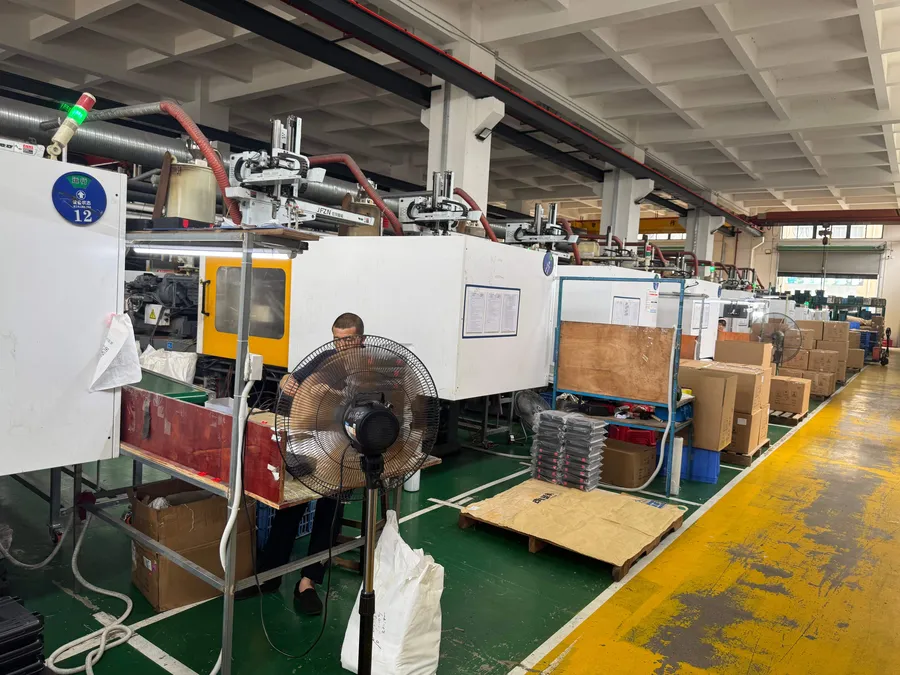
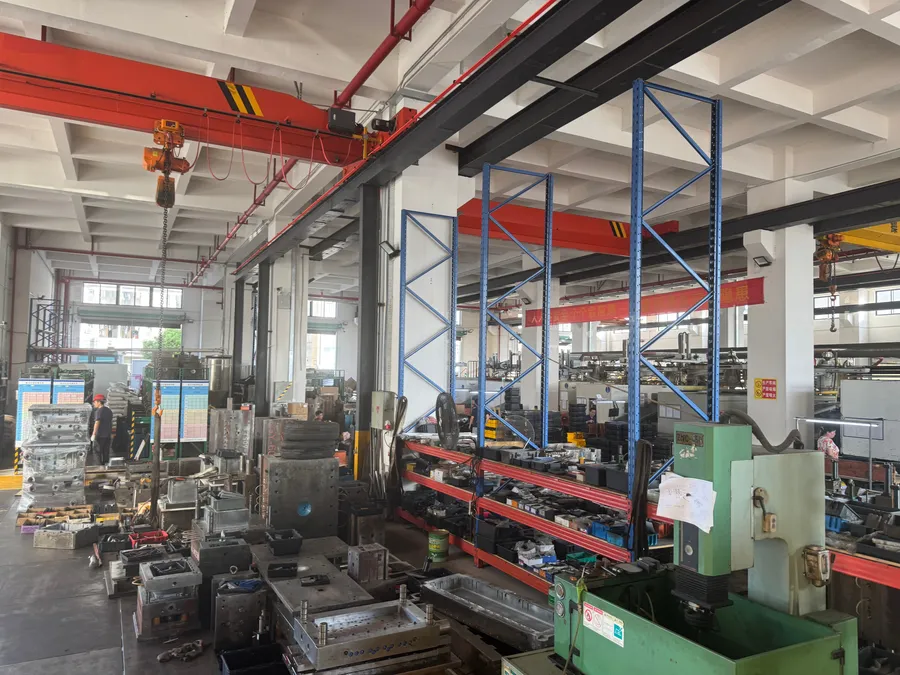
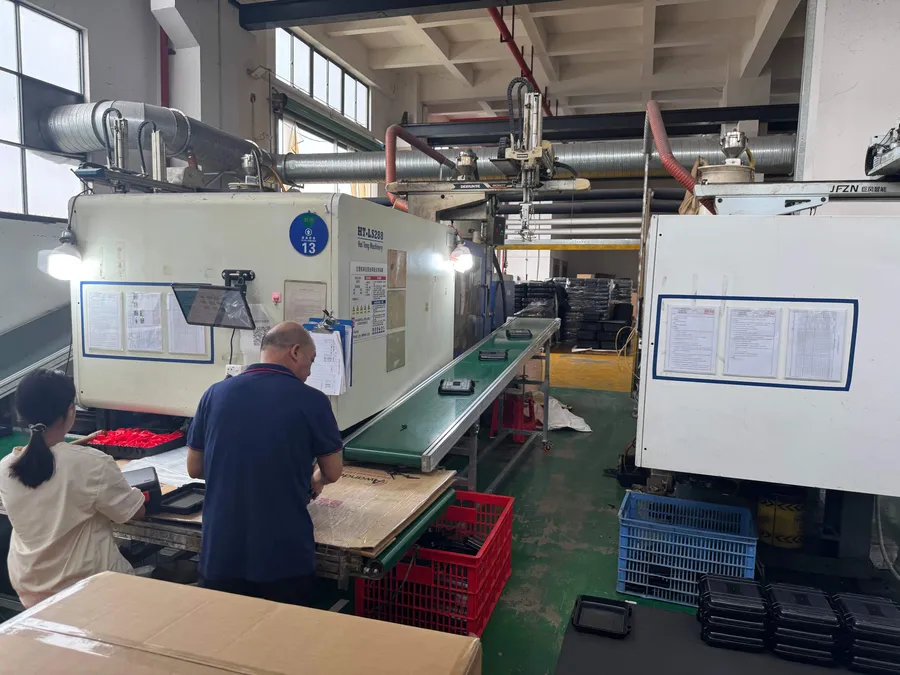
Polypropylene, abbreviated PP, is one of the most widely used thermoplastics in the world and, in our catalogue, the PP family makes up the majority of published shell models. A thermoplastic can be melted, moulded and cooled repeatedly, which is why PP shells are made by injection moulding: molten resin is pressed into a steel mould, cooled, and ejected as a finished lid or body in seconds. That process is what makes a stock PP case affordable and repeatable in volume, and what allows the wall thickness to be controlled per model. PP on its own is a semi-crystalline plastic with a low density, so a PP shell is light for its size; where extra toughness is needed we use an engineering PP grade, a modified formulation with the same basic behaviour but better impact performance. The shell material, its grade and its wall thickness are published per model so a buyer can compare one SKU against another rather than assume a single figure applies to every case.
The characteristics that matter in a case
A handful of material traits decide how a PP case actually behaves in service. PP is hydrophobic and closed to water, so it does not absorb moisture, swell or support mould the way a damp material can; a wet field trip leaves the shell unchanged. It is chemically resistant to a wide range of cleaners, oils, salts and dilute acids and alkalis, which is why it suits marine, industrial and field gear that gets dirty and is wiped down. Its most useful structural trait for a case is fatigue resistance: PP can be bent, or in this case flexed at a hinge, a very large number of times without breaking, and that is exactly what allows a living hinge to be moulded as a thin web between lid and body, giving a one-piece shell with no metal hinge to corrode or snag. Add decent toughness at room temperature and it becomes a dependable all-round carrying and shipping plastic.
How PP behaves against the alternatives
The table below compares PP with the other shell materials we publish, on the properties that decide a choice. It describes material behaviour in general terms, not measured ratings for a given case; where a model carries a real figure for wall thickness, weight or dimensions, that figure is stated per model on its page.
| Property | Standard Pp | Engineering Pp | Abs | Note |
|---|---|---|---|---|
| Weight | Low, light for its size | Low | Heavier and stiffer | Per model, published net weight varies with size and wall |
| Hinge style | Living hinge possible | Living hinge possible | Usually bolted or pin hinge | One-piece lid depends on moulding, not on a rating |
| Chemical and water | Very resistant | Very resistant | Good, attacks by some solvents | Material property, not an ingress rating |
| Surface and print | Waxy, hard to print | Waxy, hard to print | Takes paint and print well | Affects logo and finish options |
| Cold behaviour | Stiffens, more brittle | Better cold toughness | Holds toughness in cold | Choose grade for the temperature the case will see |
Where a PP shell is the right choice
PP earns its place when the job is repeated carrying and shipping rather than showing off a glossy detail face. Field kits, instrument boxes, tool cases, electronics transit shells and general storage bins benefit from the light weight, the water resistance and the living-hinge convenience, because those are used daily and dropped onto benches and into vehicle floors. A stock PP case with a specified foam interior protects its contents through many open-close cycles, and the fact that the plastic will dent rather than shatter means a hard knock leaves a mark but keeps the shell intact and the item inside covered. Where the buyer wants a smooth, paintable exterior for a retail brand, tight moulded lettering, or better toughness in sustained cold, ABS or an engineering PP grade is often the better starting point, and a programme can mix materials across sizes so each SKU gets the grade that matches its service.
Common applications for PP cases
Because those traits line up with everyday handling, PP shells appear across a broad spread of uses. They house electronics and instruments where light weight and a protective foam bed matter more than a decorative face. They form field and tool cases that are opened and closed constantly, so the living hinge and fatigue resistance are doing real work. They suit outdoor and marine gear that gets wet and is then stowed, since the plastic does not absorb the water or corrode hardware the way a metal body might. And in wholesale and OEM supply they are a common base shell that a distributor colour-matches, logos and packs retail-ready as an OEM component, with the interior finished as pick-and-pluck, die-cut or CNC-cut foam to hold the specific product.
Custom PP cases and how to specify them
On the supply side we work wholesale and OEM only, on EXW or FOB terms, and we do not sell retail, quote DDP or ship from an overseas warehouse. A PP case can be customised in colour, with a printed or embossed logo, with a chosen interior and with retail-ready carton packing, and custom foam can start at low quantities. Colour-matched resin, a logo or an OEM run carries a higher minimum than a stock shell, and an entirely new mould is the largest commitment, quoted at around 125 days with a much higher volume minimum; a first OEM sample on an existing mould is around 45 days, with a 30 percent deposit to begin. When you specify a PP shell, ask for the published wall thickness, internal and external dimensions and net weight for the exact model, and state the temperature and sunlight the case will face so the correct PP grade is chosen rather than a default.
Notes before you order a PP case
Two cautions keep a PP specification honest. First, do not read a tough plastic as a tested rating: a hard shell is not by itself a shock, drop or ingress number, and the protection an item actually feels comes from the foam layout inside it and from how the case is closed and latched. We publish measured dimensions and weights per model and state the seal or gasket option per configuration, and for performance figures that have not gone through an accredited test we leave the value blank instead of claiming one. Second, match the grade to the service: plain PP is a fine general choice, but sustained cold, long outdoor sunlight or a need for a printed face are the conditions where you should move to engineering PP or ABS deliberately, per model, rather than assume one material covers every programme.
Customisation
Everything described above is configurable on a standard shell: interior layout (pick-and-pluck, die-cut or CNC-cut), foam grade and thickness, colour, logo method, latch and lock count, pressure-equalisation valve, cable ports, document holder and identification plate. A bespoke exterior geometry requires a new mould — 125 days, from 3,000 units per moulded component.
Procurement considerations
| Question | What to send us |
|---|---|
| Which shell fits? | Equipment L × W × H as packed, plus required clearance per axis |
| What does it cost? | Order quantity and estimated annual quantity — the two drive different answers |
| Is tooling needed? | Whether an existing shell clears the envelope with usable foam depth |
| Lead time? | Your required delivery date, not just the order date |
| Certification? | The exact standard your tender names — we will say whether we can test to it |
| Freight? | Destination and preferred terms; carton and pallet data supplied with the quotation |
Comparison and selection guide
The tables on this page exist because a protective case is chosen by comparing three things: the envelope, the environment and the handling chain. Where no table applies, the rule below is.
| Situation | What To Do |
|---|---|
| Fastest | Standard shell plus CNC foam — typically 45 days from approved drawing. |
| Branded | Standard shell plus custom colour and logo — MOQ applies to the resin colour. |
| Bespoke geometry | New mould — 125 days, MOQ from 3,000 units per component. |
- Size on internal dimensions plus clearance, never on a product name.
- Choose the carrying method before the shell: it changes the series, not just the price.
- Specify the interior last, and decide up front whether the end user will reconfigure it.
What are the characteristics of PP cases? relates to Material Guide. Related families: Custom Protective Cases / Electronics Cases / Tactical Equipment Cases / Instrument & Equipment Cases. Related sectors: field and industrial equipment. Continue in the Material Guide cluster.
This page is written from our own production data. If your requirement differs, send the dimensions and we will tell you which of the 155 models fits, or whether a custom route is needed.


