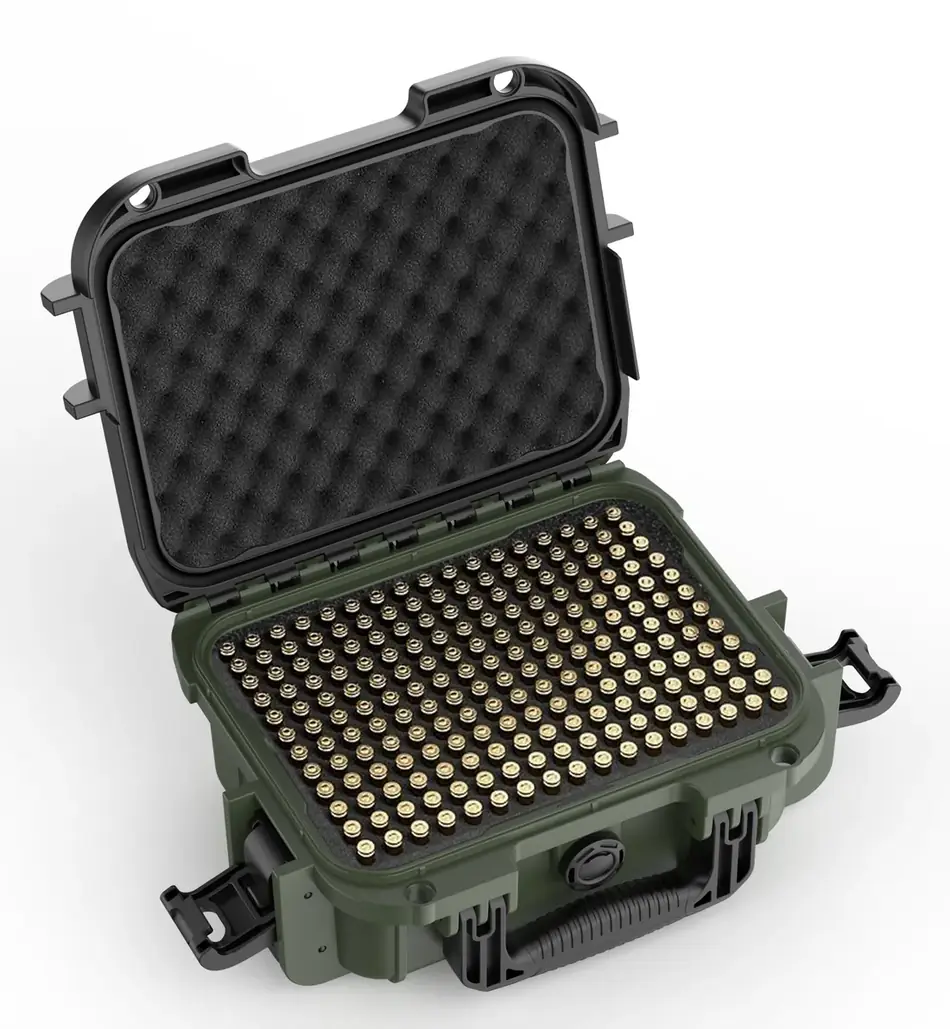
What is an ABS protective case?
An ABS protective case is a hard shell moulded from acrylonitrile butadiene styrene, a thermoplastic that is rigider and denser than polypropylene and finishes with a smooth, glossy face. ABS gets its name from its three parts: acrylonitrile gives chemical and heat resistance, butadiene gives toughness and impact resistance, and styrene gives the rigid, easily moulded structure and the good surface. In a case that shows up as a stiff shell that holds tight moulded detail, keeps its shape, takes paint, printing and a brand finish far better than waxy PP, and keeps useful toughness across a wider temperature range, including cold. In our published catalogue ABS models tend to carry thicker walls and higher net weight than the small general PP boxes, so an ABS shell is chosen where rigidity, a printable face and cold toughness matter more than the very lowest weight. The trade-offs: ABS is attacked by strong solvents, is not as broadly chemical-resistant as PP, and can chalk or discolour under long sunlight unless a stabilised grade is used. It is a common choice for tactical, ammunition, instrument and retail-branded cases.
Key points
- ABS is a three-part thermoplastic: acrylonitrile for chemical and heat resistance, butadiene for toughness, styrene for rigidity and surface.
- It moulds a stiff, glossy shell that holds fine detail and takes paint and printing far better than waxy polypropylene.
- ABS keeps useful toughness over a wider temperature range, including cold, where plain PP stiffens.
- Published ABS models in our catalogue generally show thicker walls and higher net weight than small PP boxes.
- The trade-offs are solvent attack, narrower chemical resistance than PP, and UV chalking unless a stabilised grade is specified.
What ABS is as a case material
ABS stands for acrylonitrile butadiene styrene, a copolymer that blends three ingredients to get properties none of them gives alone. The acrylonitrile component brings resistance to chemicals and to heat, the butadiene component is a rubbery phase that absorbs energy and gives impact toughness, and the styrene component provides the rigid, stiff backbone that makes the plastic easy to mould and gives it a smooth, glossy surface. Because it is a thermoplastic, an ABS case shell is made the same way a PP one is: molten resin is injected into a steel mould, cooled and ejected as a finished lid or body. ABS is one of the shell materials we publish, used across a spread of models where buyers want a harder, more rigid and better-finished exterior than a plain polypropylene shell gives. As with every material here, the actual behaviour of a given case depends on its grade, its wall thickness and its interior foam, and the real figures for a specific model are published on that model rather than assumed across the range.
The characteristics that matter in a case
A few traits decide where ABS is chosen over the alternatives. ABS is rigid and stiff, so a shell resists flexing and keeps its shape under load, which is useful when a case is stacked or when the wall itself must hold a latch and hinge in true alignment. It moulds fine detail cleanly, so moulded lettering, ribs, corners and a glossy face come out sharp, and unlike waxy polypropylene the surface takes paint, silkscreen and pad printing, which is why retail and brand-facing cases often start on ABS. Its impact toughness holds across a wider temperature band than plain PP, so a shell that must be carried outdoors into the cold keeps more of its toughness instead of becoming brittle. ABS also machines, sands, glues and fastens predictably, which helps for secondary operations and hardware fitting. Its low points are a narrower chemical window than PP and a sensitivity to strong solvents and to prolonged sunlight.
How ABS compares with PP and other shells
The table compares ABS with the other materials we publish, on the properties that drive the choice. It describes general material behaviour, not a rating for one case; where a model carries a measured wall thickness, weight or size, that value is stated per model on its page.
| Property | Abs | Standard Pp | Engineering Pp | Note |
|---|---|---|---|---|
| Rigidity and stiffness | High, holds shape under load | Lower, stiffer but flexes | Tougher general PP | Choose by how the shell is stacked and latched |
| Surface and print | Glossy, takes paint and print | Waxy, hard to print | Waxy, hard to print | Drives logo and retail-finish options |
| Cold toughness | Holds toughness in cold | Stiffens, more brittle | Better cold than plain PP | Set by the service temperature per programme |
| Weight | Heavier, denser | Light for its size | Light | Published ABS models often weigh more than small PP boxes |
| Chemicals | Attacked by strong solvents | Very broad resistance | Very broad resistance | Match the material to what it will be wiped with |
When to choose an ABS case
ABS is the right starting point when rigidity, a printed face or cold toughness outrank absolute lightness. A tactical or field case that is stacked and latched hard, an instrument or electronics transit shell that needs the wall to hold its hardware square, and any retail or branded case that must carry a logo, a colour and a sharp moulded detail are typical cases where ABS earns its extra weight. In our catalogue the published ABS models cluster in the tougher, thicker boxes: a small ABS tactical shell might show a 3.5 millimetre wall, while larger ABS ammunition and military shells are published with 4.0 to 4.8 millimetre walls and net weights running from around nine hundred grams to close to two kilograms, against the lighter general PP carry boxes. Those are per-model figures, so the honest way to choose is to read the published wall and weight for the exact SKU you want rather than generalise a single number across a line.
Common applications for ABS cases
Because the traits above suit heavier-duty and show-facing work, ABS shells appear in tactical and field cases, in ammunition and storage boxes where a rigid wall and a secure latch matter, and in instrument and electronics transit shells that need the exterior to stay true while the foam inside does the cushioning. They are also a frequent choice for consumer and professional products sold under a brand, since the glossy, printable surface presents well on a shelf or in a kit, and it holds moulded detail like part numbers, keying and ribs. The same material logic applies across those uses: pick ABS when the case must look finished, hold its shape when stacked, and keep toughness when the temperature drops, and pair it with an interior specified for the contents.
Custom ABS cases and how to specify them
We supply wholesale and OEM only, on EXW or FOB terms, and we do not sell at retail, quote DDP or ship from an overseas warehouse. An ABS shell can be colour-matched, printed or embossed with a logo, finished for retail display and packed to a chosen carton, and the interior can be built as pick-and-pluck, die-cut or CNC-cut foam set from the packed mass and fragility of the item. Custom foam can start at low quantities; colour-matched resin, a logo or an OEM run carries a higher minimum, and a brand-new mould is the largest commitment at around 125 days with a high per-component volume minimum, while a first OEM sample on an existing mould is around 45 days with a 30 percent deposit to open the job. When you specify ABS, state the temperature, sunlight and any solvents the case will meet so the grade and any UV stabiliser are chosen deliberately.
Notes before you order an ABS case
The same discipline applies as for any shell: read the material as behaviour, and read the numbers as published. A rigid ABS wall is not a shock, drop or ingress rating on its own; how well contents ride is set by the foam layout and by how the lid is sealed and latched, so specify those on purpose. We publish measured dimensions and weights per model and describe the seal or gasket as an option per configuration, and where a performance figure has not been through an accredited test we leave it blank rather than invent one. Then match the material to the service: choose ABS for a printed, rigid, cold-tough shell, and choose PP where broad chemical contact and the lowest weight dominate. Comparing the two directly is a separate decision, and a programme can carry both so each size gets the material that fits its job.
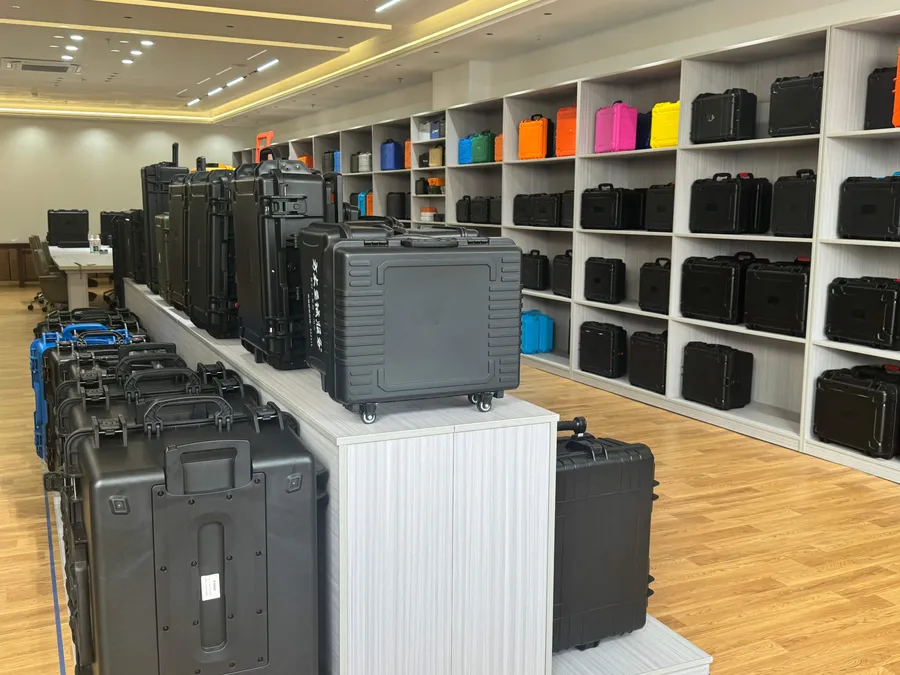

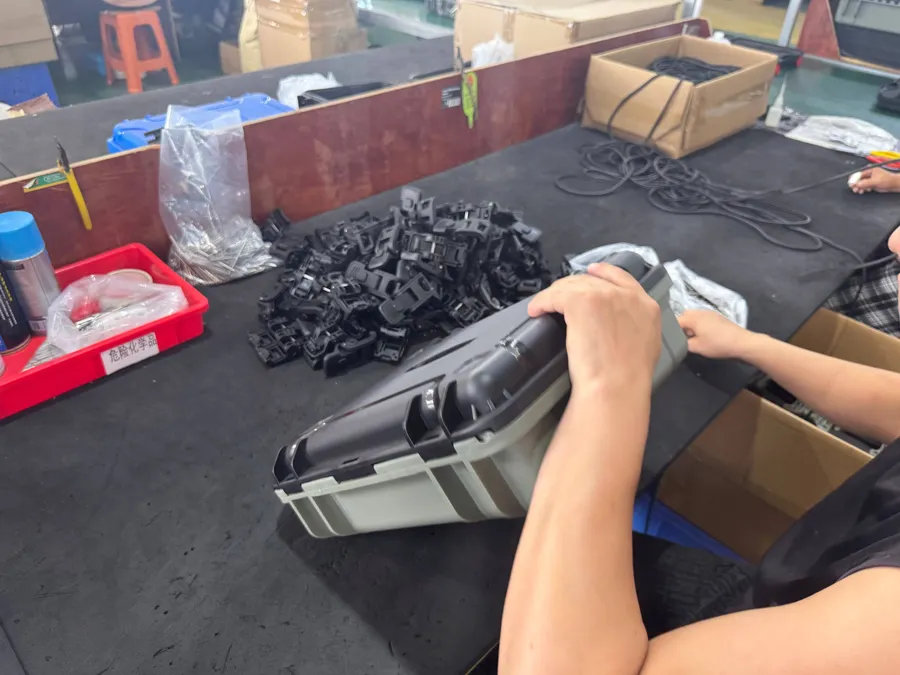
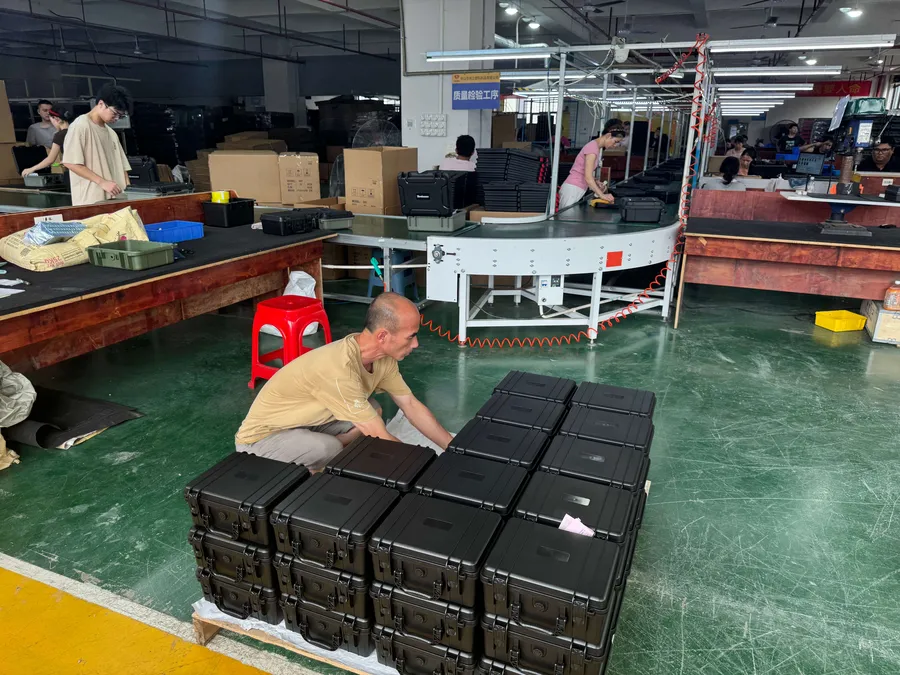
Customisation
Everything described above is configurable on a standard shell: interior layout (pick-and-pluck, die-cut or CNC-cut), foam grade and thickness, colour, logo method, latch and lock count, pressure-equalisation valve, cable ports, document holder and identification plate. A bespoke exterior geometry requires a new mould — 125 days, from 3,000 units per moulded component.
Procurement considerations
| Question | What to send us |
|---|---|
| Which shell fits? | Equipment L × W × H as packed, plus required clearance per axis |
| What does it cost? | Order quantity and estimated annual quantity — the two drive different answers |
| Is tooling needed? | Whether an existing shell clears the envelope with usable foam depth |
| Lead time? | Your required delivery date, not just the order date |
| Certification? | The exact standard your tender names — we will say whether we can test to it |
| Freight? | Destination and preferred terms; carton and pallet data supplied with the quotation |
Comparison and selection guide
The tables on this page exist because a protective case is chosen by comparing three things: the envelope, the environment and the handling chain. Where no table applies, the rule below is.
| Situation | What To Do |
|---|---|
| Fastest | Standard shell plus CNC foam — typically 45 days from approved drawing. |
| Branded | Standard shell plus custom colour and logo — MOQ applies to the resin colour. |
| Bespoke geometry | New mould — 125 days, MOQ from 3,000 units per component. |
- Size on internal dimensions plus clearance, never on a product name.
- Choose the carrying method before the shell: it changes the series, not just the price.
- Specify the interior last, and decide up front whether the end user will reconfigure it.
What is an ABS protective case? relates to Material Guide. Related families: Custom Protective Cases / Ammunition Storage & Transport Boxes / Tactical Equipment Cases / Instrument & Equipment Cases. Related sectors: field and industrial equipment. Continue in the Material Guide cluster.
This page is written from our own production data. If your requirement differs, send the dimensions and we will tell you which of the 155 models fits, or whether a custom route is needed.