What materials are commonly used for protective cases?
Three thermoplastic shell materials cover the whole of our published range: polypropylene on 94 of the 155 models, engineering polypropylene on 38, ABS on 22, plus one model that combines PP and ABS. Inside the shell the materials are not one item but four: a compressible gasket listed as EPDM or equivalent on the 124 models that publish a seal, an interior recorded as cross-linked polyethylene, EVA or EPS by zone, hardware specified as metal or polymer by configuration, and a latch body that accepts a standard padlock on every model. What the material list does not do is carry a protection rating. Water, dust, ultraviolet, service temperature, load and stack figures read untested across all 155 listings, and impact and shock are recorded as construction options rather than measured results, so a material name on a specification is a starting point for a build, not a performance claim.
Key points
- Shell material on our range is a three-name list: PP on 94 models, engineering PP on 38, ABS on 22, one PP/ABS combination.
- Published wall thickness runs 2.0 to 5.0 mm on PP, 2.1 to 6.0 mm on engineering PP and 3.0 to 5.3 mm on ABS, per model.
- Mass is the most visible difference: PP models publish from 100 g to 15,320 g, ABS from 310 g to 7,940 g for the shells we make.
- Interior material is zoned, not one grade: cross-linked PE, EVA and EPS by zone, with six foam options listed on all 155 models.
- A gasket is a rim and material configuration on 124 models; 31 listings publish no seal, so sealing is a build question, not a default.
- Colour, logo and hardware follow MOQ thresholds of 300 pieces; only a new shell geometry is a mould project at 125 days and 3,000 pieces per component.
What our published material list actually says
The honest version of this question is answerable from our own data rather than from a generic plastics primer. Every one of the 155 models we publish carries a shell_material field, and the field takes only four values: PP on 94 models, Engineering PP on 38, ABS on 22 and a single PP / ABS combination on KX-95419. That distribution is the answer to what materials are commonly used for protective cases in a factory that actually moulds them, and it tells you something the brochure language usually hides: the range is overwhelmingly polypropylene, with ABS as a deliberate minority choice rather than an alternative default.
The second thing the list says is that a case is not one material. Alongside the shell, each model records a gasket as EPDM or equivalent compressible gasket, an interior as cross-linked PE, EVA or EPS by zone, and hardware as metal or polymer by configuration. Those three fields are options recorded at the same level as the shell, which is why two cases of identical external size can behave very differently in the field and why a specification that names only the shell material is incomplete.
The third thing is what the list refuses to say. Across all 155 models the water, dust, ultraviolet, service temperature, load capacity and stack load fields read untested, and impact and shock resistance are recorded as construction options. Material names are therefore an input description. They tell you what the shell, the seal and the interior are made from; they do not tell you a result, and no combination of the three on our list should be read as a rating.
Polypropylene: why it is the default shell
Polypropylene is a semi-crystalline thermoplastic, and in case use it is chosen because it combines three properties that are hard to get together cheaply: resistance to the flex fatigue that cracks a brittle shell at a hinge or a corner, resistance to a wide set of oils, solvents and cleaning agents, and a low density that keeps mass per litre modest. On our range PP is published on 94 models, with wall thickness recorded between 2.0 mm and 5.0 mm on 88 of them and a median of 3.7 mm across the group.
That wall range is what makes one polymer cover such a wide span of products. At the small end, KX-1204 is a 120 x 90 x 40 mm utility shell with a 2.6 mm wall and a published net weight of 100 g. At the other end, KX-88442 is an 843 x 592 x 415 mm shell with a 5.0 mm wall and 15,320 g of moulded plastic, enclosing 207.1 litres externally. Both listings read PP, and both are honest descriptions of the material, which is a useful reminder that a material name on a purchase order says nothing until the wall, the geometry and the depth of the shell are stated with it.
The limitation of ordinary PP follows from the same chemistry. It shrinks more than an amorphous plastic as it cools, so very flat, tight-tolerance faces and crisp decorative surfaces are harder to hold; it is a low-surface-energy material, so printing and adhesive bonding need a treatment or a mechanical key rather than a direct application; and it becomes more brittle at low temperature than at room temperature. None of that is a defect in the material - it is the reason a thick-wall PP shell is used where a case must survive being dropped on, dragged and chemically wiped, while a glossy, close-tolerance retail shell tends to be a different plastic.
Engineering polypropylene: the thicker-wall end of the same family
Engineering PP on our listings is the same polymer family with a different compound and a heavier section. It appears on 38 models, all 38 of which publish a wall thickness, ranging from 2.1 mm to 6.0 mm with a median of 4.3 mm against 3.7 mm for the ordinary PP group. The thickest shells we make are in this class: KX-6621 at 6.0 mm and 6,420 g with 68.8 litres externally, and KX-97227 at 6.0 mm and 10,000 g with 97.2 litres.
The practical difference a buyer feels is stiffness per unit of deflection rather than any change in chemical behaviour. A thicker section in a semi-crystalline polypropylene resists the flexing that, over many cycles, works a shell at its corners and latch lines; that is why the large-format military and field shells in our data sit in this group and why 136 of the 155 models are recorded as stackable while the very largest, where a stacked column would load the shell beyond its section, are not.
The cost of that stiffness is mass. The engineering PP group publishes net weights from 350 g to 10,000 g, and its walls are the heaviest section on our list. Where a case is carried on a person for hours, mass is a real specification item, and it is why a mid-size engineering PP shell and a mid-size ABS shell can be argued about honestly: one is a thicker section in a family chosen for flex tolerance, the other holds moulded detail in a tighter wall range.
ABS: the third shell material on our list
ABS is an amorphous copolymer - styrene and acrylonitrile with a rubber phase dispersed in the matrix - and it is the material we publish on 22 models. Every one of them records a wall thickness, between 3.0 mm and 5.3 mm, with a median of 3.9 mm. Net weights in the group run from 310 g on the small KX-62205, a 222 x 128 x 50 mm shell with a 3.5 mm wall, to 7,940 g on KX-66232, a 615 x 440 x 320 mm article enclosing 86.6 litres externally.
ABS is chosen where the moulding has to hold detail. An amorphous plastic flows and cools with less shrinkage than polypropylene, so faces stay flatter, edges read crisper, radii come out consistent and a shell takes printing, labelling and paint more readily. For an instrument or electronics case whose interior is dimensioned against a machined foam layout, that dimensional steadiness is not cosmetic: the tolerance of the shell sets how much clearance the cut interior can assume.
The trade is chemical and energy absorption. ABS is more vulnerable to some solvents and cleaning agents than polypropylene, and it can craze around a stress point where a PP shell would simply flex. That is why a seal type is published on all 22 ABS models in our data, against 75 of the 94 PP models and 27 of the 38 engineering PP models: ABS is where a rim, a gasket and a flat closing face are designed together, KX-65522 being one of the heavier examples at 5.3 mm wall and 4,860 g with a published seal and a stackable base. Treat that as a construction observation rather than a measured sealing result, and compare it with the polypropylene group's habit of heavier wall and mass at the large end of the range.
The three shell materials side by side
The table below is built only from fields published in our own product data, so every figure in it can be traced to a named model page. Ranges describe what we currently list, not what the material can theoretically do, and a blank means the field is not published rather than that it is absent from the part.
| Published Field | Polypropylene (Pp) | Engineering Pp | Abs |
|---|---|---|---|
| Models on our list | 94 of 155 | 38 of 155 | 22 of 155 |
| Wall thickness range | 2.0 to 5.0 mm (88 models publish it), median 3.7 mm | 2.1 to 6.0 mm, median 4.3 mm | 3.0 to 5.3 mm, median 3.9 mm |
| Net weight range | 100 g to 15,320 g | 350 g to 10,000 g | 310 g to 7,940 g |
| External volume | 0.4 L to 207.1 L | 4.5 L to 97.2 L | 1.4 L to 86.6 L |
| Typical size example | KX-4312, 430 x 300 x 115 mm, 3.5 mm wall, 1,170 g | KX-705, 425 x 320 x 115 mm, 2.1 mm wall, 830 g | KX-63912, 389 x 295 x 120 mm, 3.8 mm wall, 1,600 g |
| Where our range puts it | The lightest and the largest shells we list, from a 100 g box to a 207 litre body | The thickest sections we list, including both 6.0 mm shells | The group where a seal type is published on every model, 1.4 L to 86.6 L |
| Seal type published | 75 of 94 models | 27 of 38 models | 22 of 22 models |
| Protection rating implied | None; water and dust fields read untested | None; water and dust fields read untested | None; water and dust fields read untested |
The materials that are not the shell
Gasket. Our material record lists EPDM or equivalent compressible gasket as the sealing element, and 124 of the 155 models publish a seal type while 31 do not. A compressible gasket only works where the rim that holds it is true and the closure loads it evenly, which is why sealing follows the rim, latch count and compression of a named configuration rather than the shell polymer. Where a project needs a measured sealing result, it is commissioned as a test of that configuration; it is not inherited from a material name.
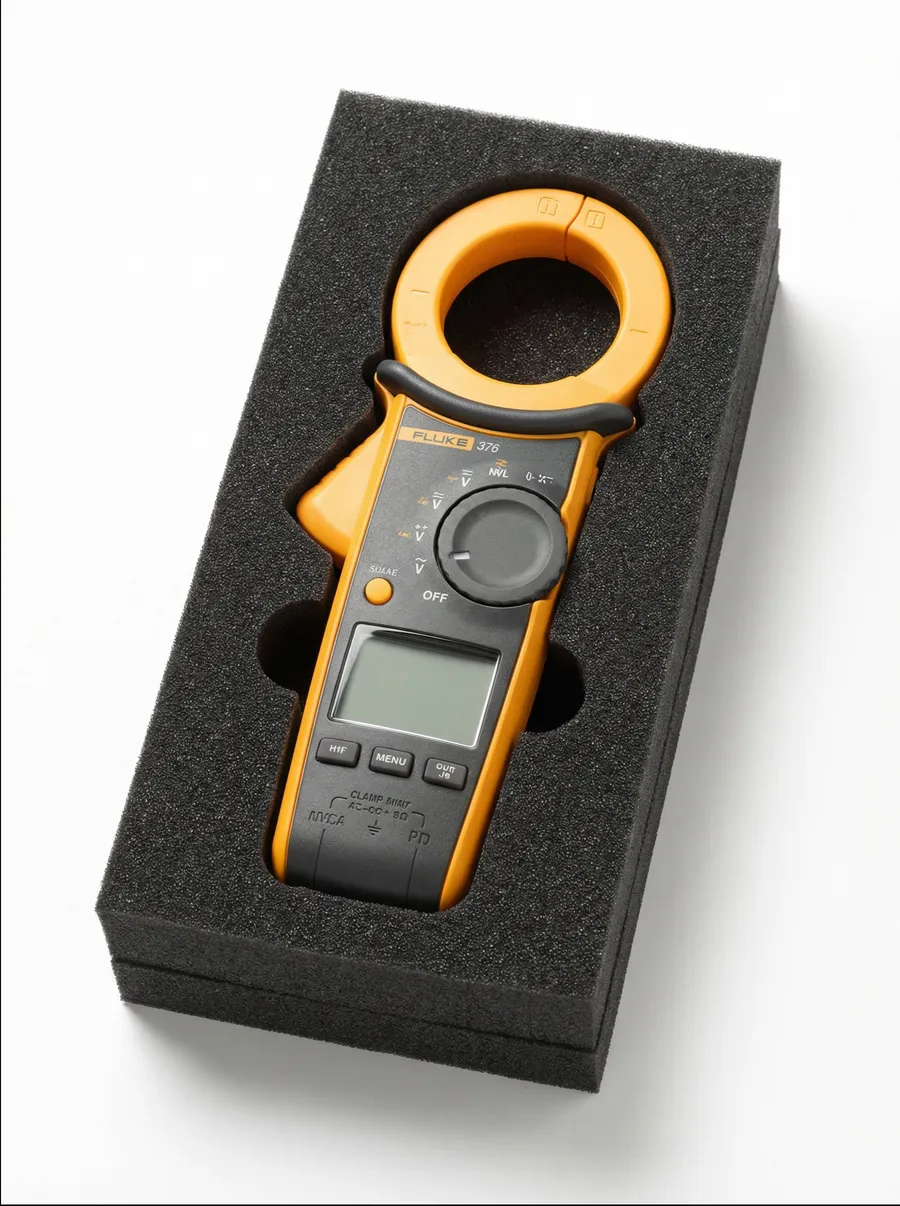
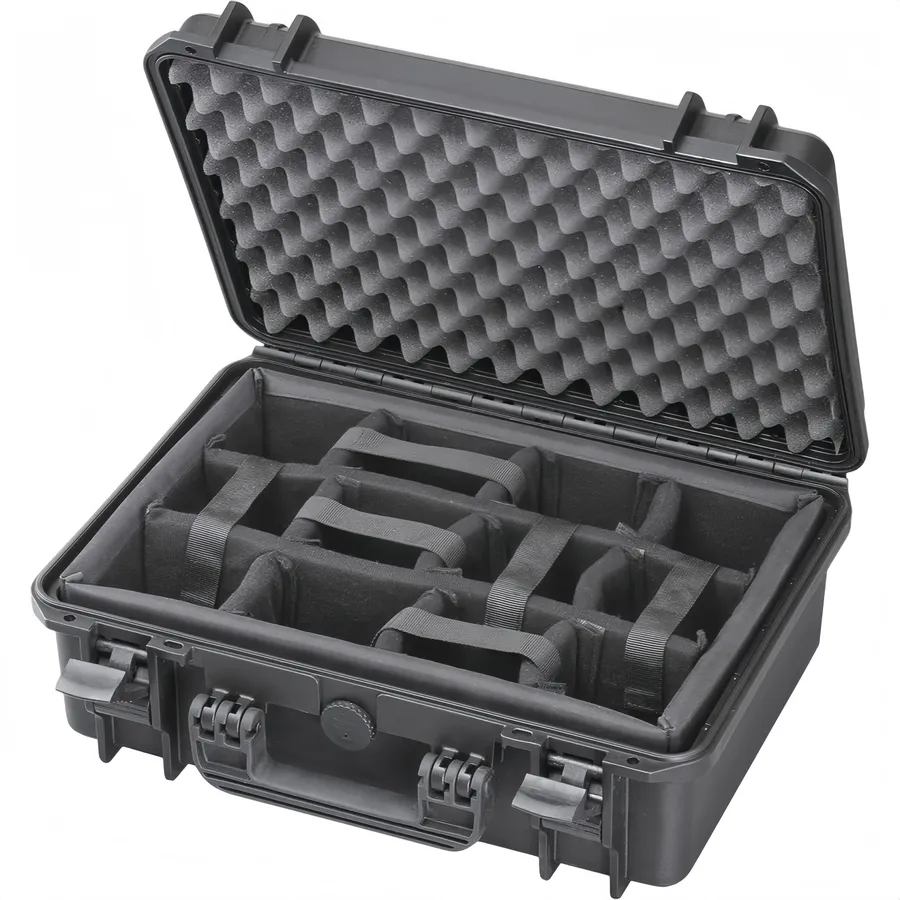
Interior. The interior field reads cross-linked PE, EVA and EPS by zone, and the foam programme on all 155 models lists six options: pick-and-pluck, die-cut and CNC-cut construction plus EVA, PE and EPE as materials, in five structural forms - top foam, base foam, egg-crate or convoluted, custom cut and layered. Zoning is what makes an interior cheap or expensive, light or heavy, and it is drawn from a picture or sample of your kit rather than selected from a catalogue block.
Hardware. Recorded as metal or polymer by configuration, and in practice it is the part of a case a buyer most often under-specifies. Every listing carries a hinge and feet, and every latch body accepts a standard padlock; 136 models have a fixed folding handle only, while 19 add two wheels and a telescopic handle. Shoulder strap, pressure equalisation valve and document holder are configuration options, not defaults. Polymer hardware is not automatically cheaper and metal is not automatically stronger; the choice is made against the load path and the environment the case sees.
How to choose between the three
Start with the exposure, not the drop. If the case will be wiped with solvents, degreased, or stored against fuel and oil, the polypropylene family is the natural first answer and the argument becomes how thick a wall you can afford in mass. If the contents are dimensioned against a machined interior and the shell faces must be flat, printed or labelled to a consistent line, ABS earns its place through how steadily it moulds and finishes.
Then read the numbers against your own carry limit rather than against a material preference. On matched footprints the difference is easy to see: in the roughly 15 litre class our listings show KX-4312 in PP at 1,170 g with a 3.5 mm wall, KX-705 in engineering PP at 830 g with a 2.1 mm wall, and KX-63912 in ABS at 1,600 g with a 3.8 mm wall. Same order of size, a factor of two in mass, and all three are correct shells for different reasons.
Finally, treat protection claims as a separate decision. Because impact and shock are recorded on all 155 models as a construction option with no drop height, and because water, dust, ultraviolet, temperature, load and stack read untested, no material choice in this article closes a specification that asks for a rating. Ask instead for the configuration you need - wall, gasket, latch count, interior zones - and then decide whether that configuration should be tested as an article in its own right.
Where each material is specified
Polypropylene covers the widest span of use in our data because it spans the widest span of size: from the pocket boxes used for components and ammunition-adjacent storage, through electronics and tool kits, to the 207-litre field shells that carry a system and its accessories as one unit. Engineering PP is where the same family is pushed at the section rather than at the chemistry - the large military and field shells that are stacked, dragged and repeatedly loaded.
ABS is where we go when the shell and the contents have to agree on dimensions, when faces need to read flat and an edge needs to stay crisp, and when a gasket has to be compressed evenly all the way round a rim - which is consistent with the fact that all 22 ABS listings publish a seal type. It is also the group whose walls cluster tightest, 3.0 mm to 5.3 mm, because an amorphous plastic lets a designer hold a section without the shrinkage movement a polypropylene part shows on the same tool.
The one PP / ABS model in our data, KX-95419, is listed as a 540 x 445 x 190 mm shell of 3,600 g combining the two polymers, and it is worth reading as evidence that the choice is per component rather than per product. Our record does not state which component carries which polymer, and a hybrid shell deliberately puts two sets of shrinkage and thermal movement into the same parting line, which is exactly why it is a designed exception rather than a default.
Customising by material
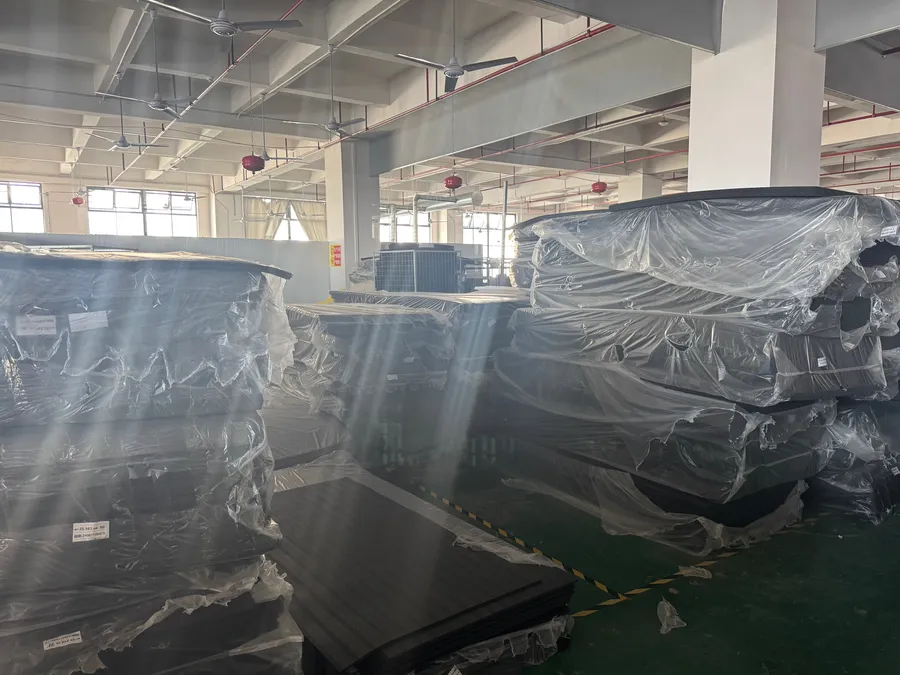
Material choice and customisation meet at the tool, so the thresholds matter. On every model we publish the same commercial ladder: standard order from one piece, custom foam from one set, colour and logo work from 300 pieces, OEM from 300 pieces, and a custom mould from 3,000 pieces per moulded component at 125 days. OEM on existing mouldings reaches a first sample at 45 days against a 30 per cent deposit, which is why the vast majority of custom programmes change interior, colour, hardware or logo and leave the tool alone.
A new shell geometry is where material really does cost money, because the mould, the gate layout and the shrink allowance are all set for one polymer. Switching a design from ABS to polypropylene, or from ordinary PP to an engineering compound, is not a line item on a quotation - it is a re-work of the tool, and it belongs in the 125-day, 3,000-piece-per-component bucket. Interior, colour and hardware changes never require it.
For a fleet, the useful control document is the configuration sheet rather than the material name: shell and wall per model, gasket or no gasket, latch and hinge count, handle and wheel option, and the signed interior drawing with its zones. Five orders placed against that sheet produce the same article; five orders described as a PP case with foam will not.
What our published data does not state
We state measured figures only where a figure exists. For all 155 models the water, dust, ultraviolet, service temperature, load capacity and stack load fields read untested, and we do not print a protection rating of any standardised code for them. Impact and shock resistance are recorded as a construction option, with no drop height claimed, because the shell alone is not a shock rating - the interior layout is what decides what the contents experience.
We also do not publish a resin grade, a melt flow index, a flame class or a recycled content figure for our shells, and we do not quote one material's performance across the range. Wall thickness, mass and volume are published per model, so an engineering PP shell at 6.0 mm and an ordinary PP shell at 2.0 mm are both correctly described as polypropylene and are not interchangeable in a load path.
Where a specification genuinely needs numbers, the route is a test of the named configuration - shell, gasket, interior and load - commissioned as its own work package. The report then describes the article that was in the chamber. That is a slower and more expensive answer than a catalogue claim, which is exactly why catalogue claims are common and why we do not make them.
Procurement notes
Send the exposure and the contents, not a material preference. A request that says ABS case tells us to quote a shell; a request that says which chemicals it will meet, how often it is carried, whether it is stacked, what the interior must locate and whether faces must take a print tells us which of the three materials is the right one and how thick its wall has to be. Attach the packed dimensions and the internal envelope you are working to.
Check the interior envelope against the published figures before you commit a layout. On all 155 models we publish usable interior volume alongside nominal internal volume, and on 154 of them the usable figure is smaller, with a median ratio of 0.85 and a minimum of 0.797. Internal height across the range runs from 32 mm to 364 mm and the longest external edge from 120 mm to 1,356 mm, so the shell geometry, not the polymer, is usually what decides whether a kit fits.
Commercially we supply wholesale and OEM volume on EXW or FOB terms only. There is no retail channel, no delivered-duty-paid quotation and no overseas warehouse stock, so material and configuration decisions are scheduled with the production batch they belong to and planned into your own inbound freight. Third-party inspection of finished goods is welcome, and a sample shell with its interior layout is the fastest way to close a material question before a fleet order.
Customisation
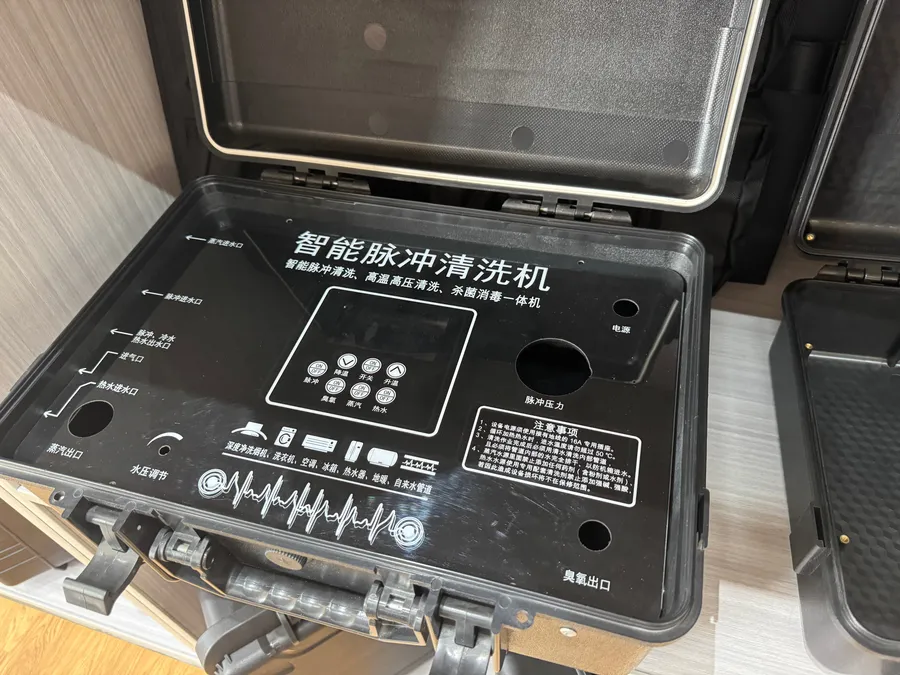
Everything described above is configurable on a standard shell: interior layout (pick-and-pluck, die-cut or CNC-cut), foam grade and thickness, colour, logo method, latch and lock count, pressure-equalisation valve, cable ports, document holder and identification plate. A bespoke exterior geometry requires a new mould — 125 days, from 3,000 units per moulded component.
Procurement considerations
| Question | What to send us |
|---|---|
| Which shell fits? | Equipment L × W × H as packed, plus required clearance per axis |
| What does it cost? | Order quantity and estimated annual quantity — the two drive different answers |
| Is tooling needed? | Whether an existing shell clears the envelope with usable foam depth |
| Lead time? | Your required delivery date, not just the order date |
| Certification? | The exact standard your tender names — we will say whether we can test to it |
| Freight? | Destination and preferred terms; carton and pallet data supplied with the quotation |
Comparison and selection guide
The tables on this page exist because a protective case is chosen by comparing three things: the envelope, the environment and the handling chain. Where no table applies, the rule below is.
| Situation | What To Do |
|---|---|
| Fastest | Standard shell plus CNC foam — typically 45 days from approved drawing. |
| Branded | Standard shell plus custom colour and logo — MOQ applies to the resin colour. |
| Bespoke geometry | New mould — 125 days, MOQ from 3,000 units per component. |
- Size on internal dimensions plus clearance, never on a product name.
- Choose the carrying method before the shell: it changes the series, not just the price.
- Specify the interior last, and decide up front whether the end user will reconfigure it.
What materials are commonly used for protective cases? relates to Material Guide. Related families: Custom Protective Cases / Electronics Cases / Instrument & Equipment Cases / Military Protective Cases / Outdoor Protective Cases / Tool Cases / Waterproof Cases. Related sectors: field and industrial equipment. Continue in the Material Guide cluster.
This page is written from our own production data. If your requirement differs, send the dimensions and we will tell you which of the 155 models fits, or whether a custom route is needed.


