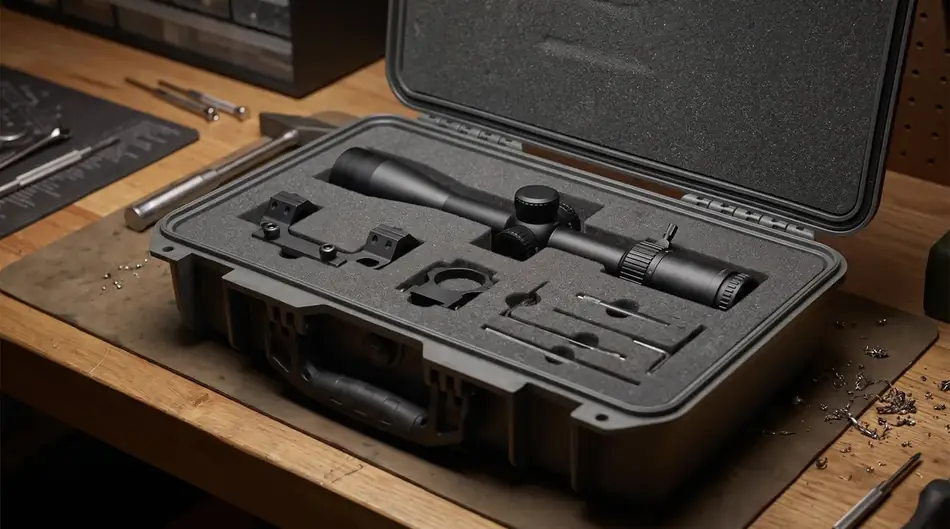
Can camping equipment cases be customized?
Yes. Camping equipment cases are customized on five published axes - the cut interior, the shell colour, the printed or in-mould logo, the hardware configuration and the retail packaging - and all of it is done on existing moulds before anyone talks about a new tool. What is customized is the layout, not the physics: KeXin publishes internal and external dimensions, wall thickness between 2.0 and 6.0 mm per model, lid and base depth, usable volume, empty mass, narrow internal width and gasket construction for each of the 155 models, and custom foam is quoted from a single piece so a camp kit can be proven before a brand commits a run. Colour, logo and OEM production begin near 300 pieces with a first article in about 45 days, and a dedicated new mould near 3,000 pieces per component at about 125 days from approved drawings. What no amount of customization buys you is a rating: no ingress figure, no ultraviolet resistance figure and no temperature range is published for any model, so a camp box is specified by construction and by the tests you commission.
Key points
- Customise in this order: cavity layout, then colour and logo, then hardware, then packaging - a new mould is the last resort, not the first.
- Custom foam is quoted from one piece, so a single camp kit can be proven before a 300-piece branded run is committed.
- Small lightweight camp shells are the ones published without a gasket, so a sealed camp box is a model choice rather than an add-on.
- Read lid depth and the narrow internal width before drawing a divider: the KX-3308 tapers to 217 mm inside a nominal 236 mm.
- No ingress, UV or temperature figure is published for any model, so a camp specification must name tests rather than adjectives.
- A new mould needs about 3,000 pieces per component and 125 days; if the annual run is smaller, a stock shell plus cut plank wins.
Short Answer: What Can And Cannot Be Changed
The honest answer to whether camping equipment cases can be customized is that almost everything a buyer notices is configurable and almost nothing a buyer measures is. Configurable on existing tooling: the foam interior in every form we publish, including pick-and-pluck, die-cut, CNC-cut, layered plank, egg-crate and custom profiles; the shell colour; a printed or in-mould logo; latch count and hardware choice, quoted as metal or polymer by configuration; optional shoulder strap, document holder and breather; and buyer-branded packaging. Also configurable: private-label supply and OEM or ODM production of the whole item. Not configurable by request: the internal envelope of an existing mould, which is fixed by the model you choose and published model by model; and any protection rating, because no ingress figure, no ultraviolet resistance figure, no temperature range, no shock rating and no drop height is published for any of the 155 models. That distinction is the whole practical shape of a camp-case programme. You are designing a kit layout on top of a shell whose numbers already exist, and you are choosing between two economic paths: decorate a known tool, which begins near 300 pieces and takes about 45 days for a first OEM article, or open a new mould, which begins near 3,000 pieces per component and takes about 125 days from approved drawings.
Camping Equipment Cases Customized: The Interior First
A camp kit is a bad fit for a generic case precisely because it is a mixed load: a stove with a fuel canister, a cook set that nests, a headlamp with a cable, pegs and a hammer, a first-aid pouch, a power bank and a cable that always seems to be the last thing to close the lid. The interior is where the product is made, and we cut it in layers rather than filling a box with one slab of soft foam. A firm carrier layer takes mass, a softer face layer sits against a finished instrument, through-pockets locate bottles and canisters so they cannot lie across each other, routed channels stop a cable pushing its own plug, and a printed or routed outline makes a missing peg hammer visible at a glance. Two published choices dominate camp work. Where the kit is fixed - a retailer's own bundle, a rental issue, a branded kit sold as one SKU - a die-cut or CNC-cut plank gives an accurate cavity and a repeatable pack-out. Where the kit changes between seasons, a fixed base with a pick-and-pluck top is cheaper to keep current. Size to the published cavity, not to the shape of the bag: the polypropylene KX-2808 gives 265 by 190 by 76 millimetres internal at about 430 grams and 3.3 litres for a stove-and-fuel kit, and the KX-3308 covers 325 by 236 by 76 millimetres at about 575 grams and 5.0 litres for a two-person cook set lying in a plank.
Outdoor Camping Equipment Cases Customized For A Brand Programme
A brand programme adds three questions that a single custom cut does not raise, and these are the ones that decide whether an outdoor camping equipment cases customized order goes smoothly or stalls in samples. First, colour: shell colour is a manufacturer option with a minimum near 300 pieces, and it is quoted per component, so a programme that wants a body in one colour and a lid in another is two line items. Second, marking: a printed logo and an in-mould logo are both available, and they behave differently outdoors - a printed mark is cheaper and can be changed, an in-mould mark cannot wear off because it is part of the moulding, and neither is presented as UV-tested because no ultraviolet resistance figure is published for any model. Third, repeatability: the interior drawing becomes the reorder standard, so it must be versioned like any other piece of packaging artwork, with the pocket per item named on it. Where a programme spans several sizes, the published series ladder does the work for you - mini and compact utility shells such as the KX-2005 at 190 by 135 by 40 millimetres and about 175 grams, small protective shells such as the KX-2614 at 240 by 200 by 120 millimetres and 5.0 litres, mid-size equipment shells such as the KX-63612 at 333 by 217 by 114 millimetres and about 1,300 grams, and large equipment shells such as the KX-707 at 465 by 310 by 140 millimetres and 17.4 litres - so a brand can grow a range without commissioning new tooling for every stock-keeping unit.
Hardware, Closure And The Things Camp Buyers Ask For
Camp cases get dropped on gravel, sat on, and opened with cold hands, so hardware is worth specifying rather than accepting. Latch count is published as specified per configuration, which is the mechanism by which closing pressure is spread around the rim instead of being concentrated at two corners - and on a case that will be stacked in a boot, even compression is the difference between a lid that stays shut and one that works open. The latch body is published as accepting a standard padlock on the models where it is measured, which is what rental fleets and event-kit programmes ask for when a box is checked in. A shoulder strap, a document holder and a pressure-equalisation option are manufacturer options quoted per build, and feet, hinge and a fixed folding handle are published per model. Where a camp kit has to be carried a long way loaded, the carry format is a model choice rather than an accessory: only 19 of the 155 models publish wheels and a telescopic handle, such as the engineering-polypropylene KX-85021 at 437 by 308 by 164 millimetres, about 4,912 grams empty and 17.7 litres, and every one of those wheeled models publishes stackable as false, because wheels and a stack are contradictory instructions. Long items - a collapsed mat, tent poles, a tripod - need the long bodies instead, such as the KX-88015 at 725 by 350 by 140 millimetres and 28.4 litres.
Sealing, Weather And What Customization Cannot Buy
The most common request in this category is also the one that needs the clearest answer: make it waterproof. No ingress figure is published for any of the 155 models, so we do not offer a camp case as waterproof or dustproof in the sense a purchaser's specification means it, and no amount of colour, logo or foam work changes that. What is published is construction. A compressible gasket - EPDM or equivalent - set in a continuous moulded channel is published on 124 of the 155 models, and the models without it are usually the light, thin-walled small shells: the KX-2808, KX-3308, KX-2614, KX-3114 and KX-2813 all publish no gasket, while the KX-3207, KX-3607, KX-83015, KX-92817 and KX-93221 publish one. A sealed camp box is therefore a shortlist decision at the model stage, not an add-on at the quotation stage. Ultraviolet exposure and temperature are in the same position: neither figure is published, and a box that lives on a rear carrier or in a boot in August is exactly the case where a buyer should stop relying on a catalogue adjective. If your retail listing, your tender or your internal standard names an ingress procedure, a UV exposure or a temperature condition, send it as a test requirement and we will quote accredited testing against the exact model and configuration you intend to order, priced as a separate work package.
The Published Size Ladder You Customise On Top Of
| Camp Load | Customise | Published Shell |
|---|---|---|
| Pegs, headlamp, repair kit, small parts | Cut plank with a pocket per item; colour and printed logo from near 300 pieces | KX-2005: 190 x 135 x 40 mm internal, 2.0 mm wall, 20/20 mm lid/base, 127 mm narrow width, about 175 g, 0.9 L, published without a gasket |
| Stove, fuel canister, lighter, wind shield | Through-pocket for the canister, channel for the gas hose, retainer so nothing lifts | KX-2808: 265 x 190 x 76 mm internal, PP, 2.2 mm wall, 38/38 mm lid/base, about 430 g, 3.3 L |
| Two-person cook set and mess tins | Nesting cavities cut to the actual pots, with a separate utensil strip | KX-3308: 325 x 236 x 76 mm internal, 2.3 mm wall, 38/38 mm lid/base, 217 mm narrow width, about 575 g, 5.0 L |
| First aid, hygiene and a power bank | Gasketed shell with a pick-and-pluck top so the kit changes between seasons | KX-3607: 355 x 280 x 60 mm internal, 3.0 mm wall, 30/30 mm lid/base, gasket published, about 800 g, 5.2 L |
| Camera, drone or navigator with a lens or antenna | Relieved cavity under the optics, one pocket per accessory, foam wall between bodies | KX-3113: 296 x 258 x 121 mm internal, engineering PP, 2.9 mm wall, 83/38 mm lid/base, about 1,060 g, 7.9 L |
| Lantern or bottles travelling standing up | Deep-base cavity so items stand below the lid line, with shoulder relief cut | KX-93221: 300 x 200 x 200 mm internal, 5.0 mm wall, 165/35 mm lid/base, gasket published, about 1,230 g, 9.6 L |
| Group or base-camp kit for one vehicle | Zoned interior with colour-coded pockets per person, printed outlines for the count | KX-4616: 455 x 338 x 148 mm internal, 3.0 mm wall, 74/74 mm lid/base, 302 mm narrow width, about 1,395 g, 19.6 L |
| Loaded kit carried over distance or rolled to a pitch | Wheels and telescopic handle chosen at model level; strap retainers in the foam | KX-85021: 437 x 308 x 164 mm internal, engineering PP, wheels, telescopic handle, about 4,912 g, 17.7 L, stackable published false |
| Tent poles, collapsed mat, tripod, long tools | Long single cavity with end support and a strap over the beam | KX-88015: 725 x 350 x 140 mm internal, 5.0 mm wall, 100/40 mm lid/base, gasket published, 28.4 L |
How To Specify A Customised Camp Case In One Enquiry
A complete enquiry is faster than three rounds of questions, and it has six parts. One, the kit list with the packed-state dimensions of each item, or a scale photograph of the layout as you want it to close, or a physical sample - we publish drawing, photograph or sample as the accepted basis for a cut. Two, the target cavity rather than the target external size, with the working clearance you want kept in the cut. Three, the shortlist you are open to, or the wall thickness and lid depth you need, and we will confirm which published models satisfy it rather than guessing across a series. Four, the cosmetic specification: shell colour per component, printed or in-mould logo with artwork, and any packaging, label or barcode position for retail. Five, the hardware specification: latch count, padlock requirement, strap, document holder, breather. Six, the commercial shape: annual quantity, split per size, destination port, and any test you must evidence, named as a test rather than as an adjective. On that basis you get a nominated model, an interior drawing, a sample plan and a quotation on EXW or FOB terms. We will also say plainly when a stock shell plus a cut plank is closer and cheaper than new tooling, which for most camp programmes it is.
Where Customised Camp Cases Are Used
The buyers who customise camping cases are rarely campers themselves. Outdoor and adventure retailers bundle a kit as one stock-keeping unit and need the interior to be the pack-out standard, so the same box returns the same way from every store. Equipment brands take a shell, a colour, a logo and a bespoke cut as the packaging of the product they actually sell. Rental and experience operators - ski touring hire, climbing camps, dive and safari logistics - need a case that can be checked, padlocked and counted at the door, which is where a printed outline and a padlockable latch earn their cost. Overland and expedition builders kit out a vehicle with a fixed set of sizes and want them matched to drawers and racks rather than to each other. Event, film and field-research teams issue kits per crew. Schools, scout associations and youth expeditions buy a branded box in one size across many units. Manufacturers of camp electronics, portable power and cooking equipment use the same shells as the retail container for the product. All of these are the same operation: pick a published model, cut the interior, decorate the shell, and repeat it exactly - and none of them needs a new mould to start.
Customisation And Procurement Terms
KeXin New Materials (Guangdong) Co., Ltd. supplies on wholesale and OEM or ODM terms only, on EXW or FOB, with no retail channel, no delivered-duty-paid quotation and no overseas warehouse. The customisation minimums are published per model: one piece on a standard model, one piece for a custom foam layout, around 300 pieces for colour, logo or OEM production, and around 3,000 pieces per component for a dedicated new mould. A first OEM article on existing tooling takes about 45 days; a new mould about 125 days from approved drawings. Payment runs on a 30 per cent deposit with the balance before shipment after inspection, and third-party inspection at our facility is welcome. Logistics figures are handled honestly: 58 of the 155 models publish a carton size and a pieces-per-carton count, pallet quantities are calculated from the carton footprint against your pallet size, and 20GP, 40GP and 40HQ loading is supplied with the quotation rather than estimated from a screen. Every physical figure quoted comes from the published record for the exact model - internal and external dimensions, wall thickness, lid and base depth, usable volume, empty mass, narrow internal width and gasket construction - and where a field has not been measured it is recorded as not measured. Enquiries go to Fred Zhao or the KeXin Sales Team, WhatsApp +86 135 3588 0002.
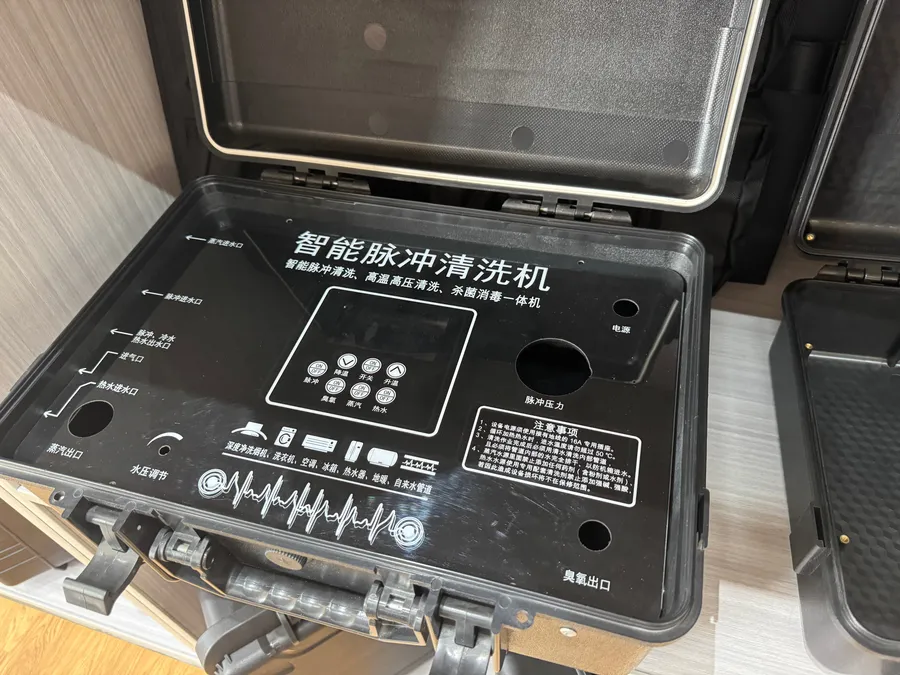
Customisation
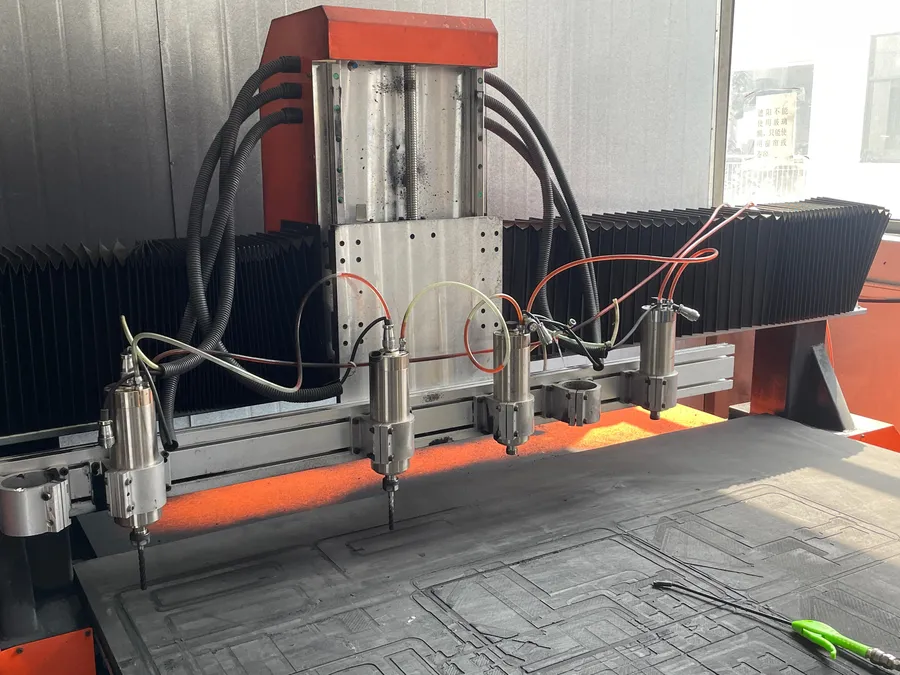
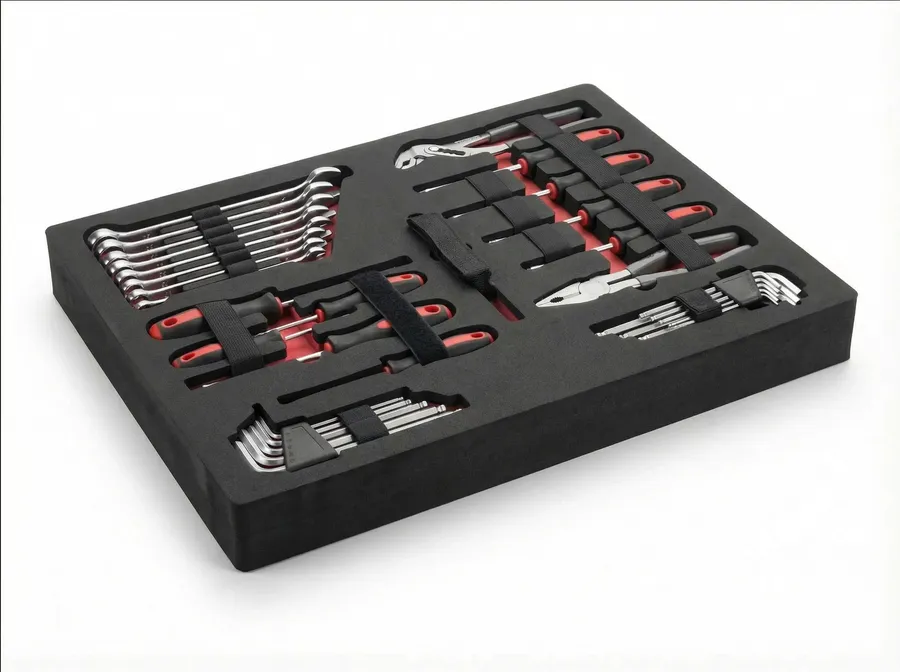
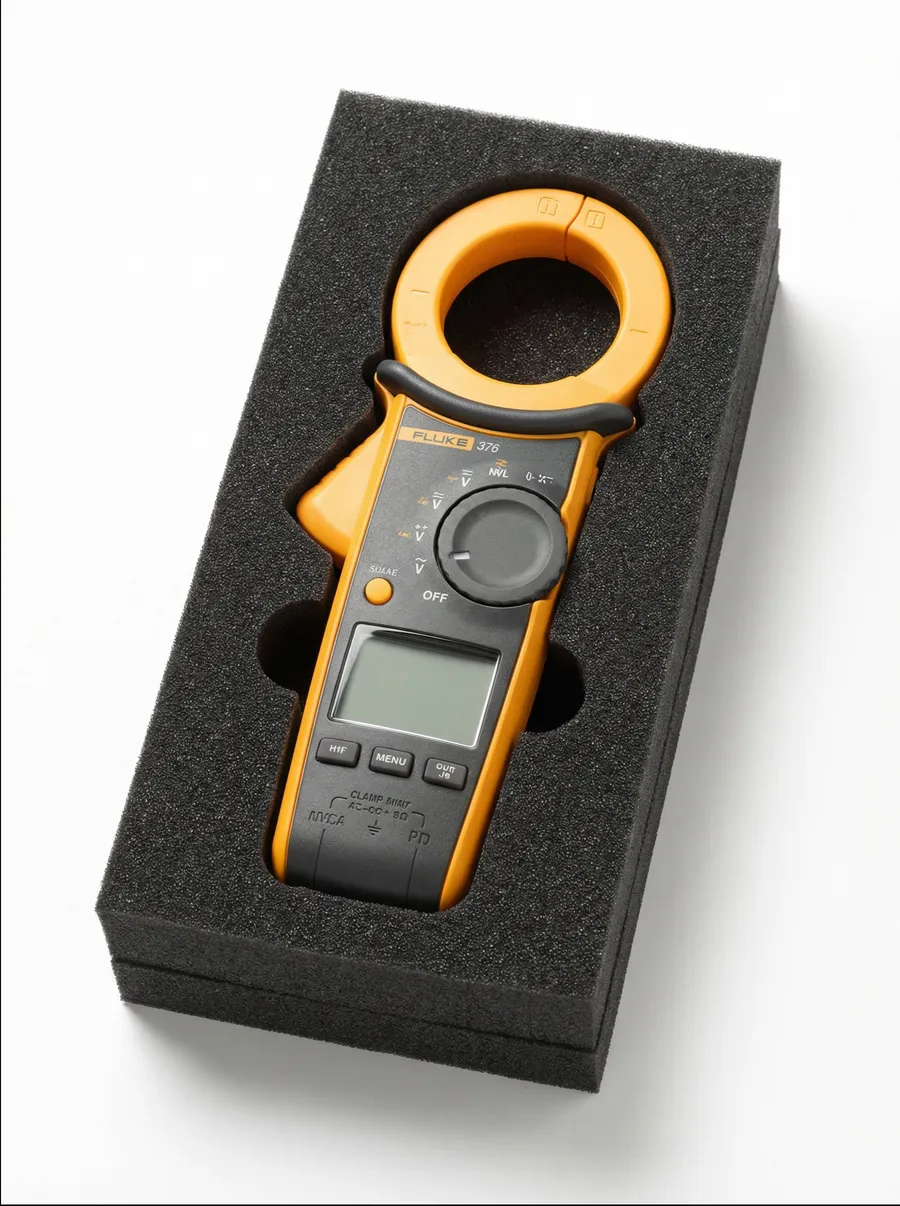
Everything described above is configurable on a standard shell: interior layout (pick-and-pluck, die-cut or CNC-cut), foam grade and thickness, colour, logo method, latch and lock count, pressure-equalisation valve, cable ports, document holder and identification plate. A bespoke exterior geometry requires a new mould — 125 days, from 3,000 units per moulded component.
Procurement considerations
| Question | What to send us |
|---|---|
| Which shell fits? | Equipment L × W × H as packed, plus required clearance per axis |
| What does it cost? | Order quantity and estimated annual quantity — the two drive different answers |
| Is tooling needed? | Whether an existing shell clears the envelope with usable foam depth |
| Lead time? | Your required delivery date, not just the order date |
| Certification? | The exact standard your tender names — we will say whether we can test to it |
| Freight? | Destination and preferred terms; carton and pallet data supplied with the quotation |
Comparison and selection guide
The tables on this page exist because a protective case is chosen by comparing three things: the envelope, the environment and the handling chain. Where no table applies, the rule below is.
| Situation | What To Do |
|---|---|
| Marine or wet | Sealed configuration with a drain-friendly interior and stainless hardware. |
| Dry and dusty | A close-fitting rim and a lid that can be opened one-handed without spilling contents. |
| Carried far | Under 10 kg packed, with a padded handle or shoulder webbing. |
- Size on internal dimensions plus clearance, never on a product name.
- Choose the carrying method before the shell: it changes the series, not just the price.
- Specify the interior last, and decide up front whether the end user will reconfigure it.
Can camping equipment cases be customized? relates to Procurement Guide. Related families: Outdoor Protective Cases / Custom Protective Cases / Tool Cases / Tactical Equipment Cases / Camera & Photography Cases / Rolling Cases / Long Equipment Cases / Ammunition Storage & Transport Boxes / Military Protective Cases. Related sectors: field and industrial equipment. Continue in the Procurement Guide cluster.
This page is written from our own production data. If your requirement differs, send the dimensions and we will tell you which of the 155 models fits, or whether a custom route is needed.