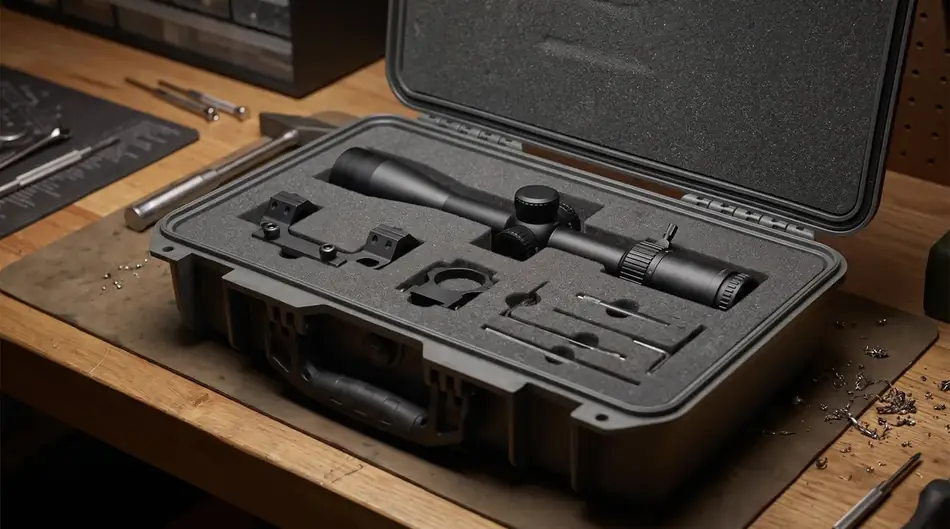
Protective Cases for Machinery, Moulds & Spare Parts
Short answer: choose the shell by the mass and the handling route, not by the part name. A heavy mould half, gearbox or spare pump wants a thick wall and a deep base so the load sits below the closure line; a matched set of precision components wants a small, rigid, gasketed cavity with die-cut foam; a spare-parts shelf kit wants a shallow box a person can read at a glance. KeXin is the injection-moulding source factory behind 155 thermoplastic models and publishes internal and external dimensions, wall thickness, lid and base depth, net weight, interior volume and carton packing for each one, and records an unmeasured field as not measured rather than estimating it. We state no ingress code, no free-fall height and no stack figure, because those depend on the exact shell, gasket, latch and foam you order and no accredited report exists for our published configurations.
Key points
- Heavy mould halves and gearboxes want base depth before footprint: KX-6621 pairs a 6.0 mm wall with a 149 mm base over a 43 mm lid so the mass sits low.
- Precision components want a small rigid body: KX-62810 publishes 253 x 182 x 86 mm internal at a 4.0 mm ABS wall, 900 g and a carton of ten.
- Long, dense mechanical assemblies move on wheels: KX-97227 gives 590 x 435 x 210 mm internal at a 6.0 mm wall, 10000 g and a 485 mm telescopic handle.
- Wear resistance is a wall-and-resin reading, not an adjective: published engineering-PP and ABS shells run to 5.3-6.0 mm, and we record no abrasion rating.
- Sealing is per model: 124 of the 155 shells record a compressible gasket in a continuous moulded channel and 31 record none, and we print no IP code.
- Only a shell-geometry change needs a tool: about 125 days and 3000 units per component, while foam, dividers and hardware start from one unit.
Match the shell to the mass and the route, then to the part
Enquiries in this family arrive as a parts list: change-over mould halves, gearboxes, servo drives, spare pumps, machined brackets, precision bearings, gauges and fastener assortments. They are not one product, and the useful first split is by mass and by how the box actually travels. A mould half moved by two people from a rack to a press is a wall-and-base decision. A matched set of machined components posted to a customer is a small rigid body with cut foam. A consumables shelf picked open every shift is a shallow, legible cavity. Only after mass and route are fixed does the part name matter, because those two answers decide which published number you read first: wall thickness and base depth for mass, internal length for long assemblies, lid depth and divider layout for consumables.
Heavy mechanical parts transit protection case: wall, base and wheels
A mould half, a gearbox or a spare pump carries its own mass, and the shell has to keep that mass away from the closure line, so this is a lid-and-base decision before it is a size decision. KX-5723 publishes a 5.0 mm engineering-PP wall, 500 x 340 x 211 mm internal, a 169 mm lid over a 42 mm base, 4680 g and 35.9 litres. KX-6621 inverts that split for very heavy single items: 587 x 434 x 192 mm internal, a 6.0 mm wall, a 43 mm lid over a 149 mm base, 6420 g and 48.9 litres, so the payload sits low. KX-4821 (447 x 312 x 194 mm internal, 4.5 mm, 3670 g) and ABS KX-5021 (465 x 315 x 196 mm internal, 3.7 mm, 3430 g) cover the mid-format case. Where people wheel rather than lift, KX-97227 puts a 6.0 mm wall and a 590 x 435 x 210 mm internal on two wheels at 10000 g with a 485 mm telescopic handle, and KX-88442 reaches 740 x 518 x 364 mm internal and 139.5 litres at 15320 g.
Precision components case: rigid small bodies and die-cut foam
Machined components, gauge blocks, arbors and matched pin sets are small, dense and ruined by a point load or by touching each other, so they want a rigid, compact body with a cavity cut to their exact profile. Rigid ABS shells suit this class: KX-62810 publishes 253 x 182 x 86 mm internal at a 4.0 mm wall and 900 g with a carton of ten, and KX-63317 gives 300 x 178 x 152 mm internal at a 4.0 mm wall and 1370 g when the set is taller. The thick-wall polypropylene pair KX-2811 (253 x 180 x 98 mm internal, 5.0 mm wall, 890 g, a 71/27 mm lid-and-base split) and KX-92817 (253 x 180 x 152 mm internal, 5.0 mm wall, 940 g) keep the mass low and the closure line above the parts. What matters is the cut, not the label: a drawing, a photograph of the packed set or the physical sample lets us open full-depth pockets with reliefs for raised controls and datum faces.
EOD robot protective transport container: what we can and cannot state
Buyers searching for an EOD or disposal-robot transport container usually mean one rugged box that carries a small tracked robot, its tether reel and a controller between a vehicle and a work area. That is a size-and-handling brief we can answer from published data, and it is where the wheeled large formats fit: KX-96127 is a square 545 x 545 x 210 mm internal at a 4.8 mm wall and 8540 g; KX-86136 gives 530 x 360 x 304 mm internal with a 260 mm lid for a tall body plus controller; KX-88434 reaches 740 x 518 x 284 mm internal at 14030 g. What we will not do is attach a rating: we publish no blast, fragmentation, electrostatic or containment claim, no standard name and no ingress code for these shells, and any such requirement is a specification you verify against an accredited report you commission for the exact build.
Spare parts storage case: legibility and a shallow even split
A shelf or van stock of fasteners, seals, fittings and small spares is used by a person reading the contents, so legibility beats protection depth. An even lid-to-base split keeps the second layer visible: KX-4010 publishes 390 x 315 x 88 mm internal with a 44/44 mm split at 1015 g and a carton of ten, and KX-4616 goes to 455 x 338 x 148 mm internal with a 74/74 mm split and 1395 g when the kit adds a hand tool or a meter. KX-3218 (308 x 230 x 172 mm internal, 900 g, a carton of twelve) is the deep-but-narrow option for boxed consumables. Divider layout follows the closure line, so read lid depth before choosing cell count: fixed grids are fastest to pick from but wasteful the moment one part outgrows its cell.
Wear-resistant heavy-duty injection-moulded case: read wall and resin
The phrase wear-resistant is where a supplier can quietly over-claim, so we answer it with two published fields instead of an adjective. The first is wall thickness, recorded per model across 148 of the 155 shells and running from 2.0 mm on a light polypropylene tray to 6.0 mm on engineering-PP heavy boxes, with thick ABS formats such as KX-65522 (507 x 385 x 190 mm internal, 5.3 mm wall, 4860 g), KX-64621 (430 x 288 x 186 mm internal, 4.7 mm, 3000 g) and KX-64120 (378 x 307 x 187 mm internal, 4.0 mm, 2640 g) in between. The second is resin: PP, engineering PP or ABS. Scuff and abrasion behaviour of a textured shell is a construction statement, not a test result; we record no abrasion or mar rating, and if a tender needs one we quote accredited testing as a separate work package rather than printing a figure we cannot document.
Waterproof request and the automatic pressure release valve
The waterproof-with-a-valve request arrives with survey gear, sealed assemblies and altitude or hot-vehicle use, and it needs a plain split between what a shell does and what a valve does. A compressible gasket in a continuous moulded channel, recorded on 124 of our 155 shells, closes the moisture and dust path between lid and body; 31 shells record no gasket and are open by design. That is a construction fact, not an IP code - we state no ingress rating and we do not call any shell waterproof as a tested property. A pressure-equalisation valve is a manufacturer option quoted per configuration, not standard fitment on a named model, so we specify its type, where it sits against the gasket channel and whether the latch line stays clear once fitted. Gasketed bodies commonly used here include KX-64819 (454 x 325 x 173 mm internal, 3.5 mm ABS, 2800 g) and KX-63917 (360 x 240 x 150 mm internal, 3.8 mm, 1810 g). We record no temperature range for these shells.
Injection moulded container source factory OEM: the tooling ladder
KeXin is the injection-moulding source factory for these shells, which is the difference between changing an interior and cutting a new tool. We work wholesale, OEM and ODM only, on EXW or FOB terms: no retail, no DDP quotation and no overseas warehouse stock, so a landed cost is your FOB figure plus your own freight and customs. The minimum order quantity follows what you change - standard shells and custom foam from one unit, logo, colour and OEM hardware from 300 units, and a custom mould from 3000 units per component. An OEM first sample on an approved existing shell, with new foam and hardware, is about 45 days; a brand-new mould is about 125 days. Payment is a 30 percent deposit with the balance after inspection, and third-party factory inspection is welcome. Because the tool rung is expensive, the large majority of machinery, mould and spare-part enquiries close as a foam-and-hardware programme on a published model with no tooling spend at all.
Comparison table: the buyer query, the deciding figure, and examples
Read the table as a shortlisting method, not a performance claim. Every figure belongs to the model named, so a comparison is only valid against your own measured packed envelope and the mass you will actually carry. Sealing, shock and impact behaviour are configuration decisions; where a tender needs proof, we quote accredited testing for that exact build as a separate work package instead of printing a rating we cannot document.
| Query | Deciding Figure | Published Examples |
|---|---|---|
| Heavy mechanical parts transit case | Wall thickness, base depth, net weight | KX-5723: 5.0 mm, 42/169 mm, 4680 g; KX-6621: 6.0 mm, 149/43 mm, 6420 g; KX-4821: 4.5 mm, 3670 g |
| Precision components case | Rigid small body, cut foam | KX-62810: 253 x 182 x 86 mm ABS, 4.0 mm, 900 g; KX-2811: 253 x 180 x 98 mm, 5.0 mm, 71/27 mm |
| EOD robot transport container | Internal size, wheels, no rating stated | KX-96127: 545 x 545 x 210 mm, 8540 g; KX-86136: 530 x 360 x 304 mm; KX-88434: 740 x 518 x 284 mm, 14030 g |
| Spare parts storage case | Shallow even lid-to-base split | KX-4010: 390 x 315 x 88 mm, 44/44 mm, 1015 g; KX-4616: 455 x 338 x 148 mm, 1395 g |
| Wear-resistant heavy-duty case | Wall thickness and resin (no abrasion rating) | KX-65522: 5.3 mm ABS, 4860 g; KX-64621: 4.7 mm, 3000 g; engineering PP to 6.0 mm |
| Waterproof case with pressure valve | Whether the shell records a gasket; valve is an option | 124 of 155 gasketed, 31 none; KX-64819: 454 x 325 x 173 mm ABS; KX-63917: 360 x 240 x 150 mm, 8 pcs/carton |
| Source factory OEM programme | Published lead time and tool MOQ | New mould about 125 days from 3000 pcs per component; OEM sample on an approved shell about 45 days |
Selection guidance: five questions that collapse 155 models
One: what is the heaviest single item, and can it sit below the closure line? That filters to the 4.5 to 6.0 mm wall group. Two: what is the longest packed dimension once connectors and cable are counted? That filters the long-format group, where internal length is published up to 1280 mm. Three: how many SKUs share the cavity, and does the mix change month to month? Fixed dividers, die-cut foam or a pluck top answer that. Four: does anyone wheel it, and through what doorway? Wheels add mass and remove a flat stacking face, so check external dimensions and telescopic height. Five: what must be provable to your customer, and who pays for the test? Answer those five on one page and a machinery or spare-parts enquiry usually reduces to two or three models.
Applications: depot, field repair, integrator store and export
The same shells appear in four jobs. In a depot or tool room, mould halves and change-over fixtures move between a rack and a press, so base depth and a padlock-ready latch matter. In field repair, one case carries drives, a meter, a laptop and spare sensors across a site, so a wheeled mid-format body with die-cut foam is the usual answer. In an integrator's parts store, mixed SKUs are picked against an order, so divider layout and carton packing drive the choice. For export pallets, carton dimensions and pieces per carton decide how many cases fill a load. Tell us which of these four you are buying for and the model list usually halves before we quote.
Customisation: foam, dividers, hardware, marking and colour
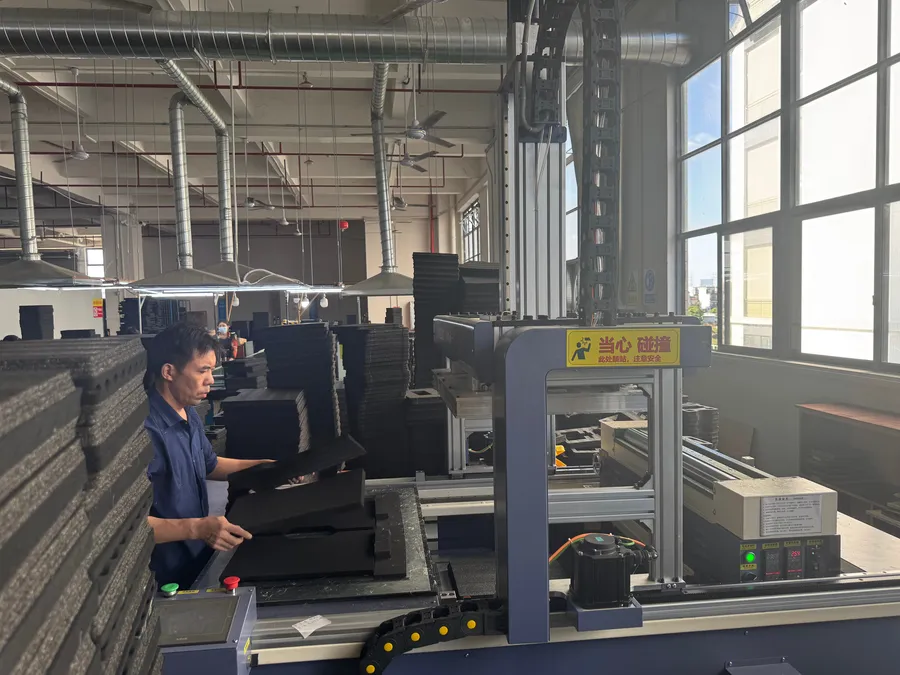
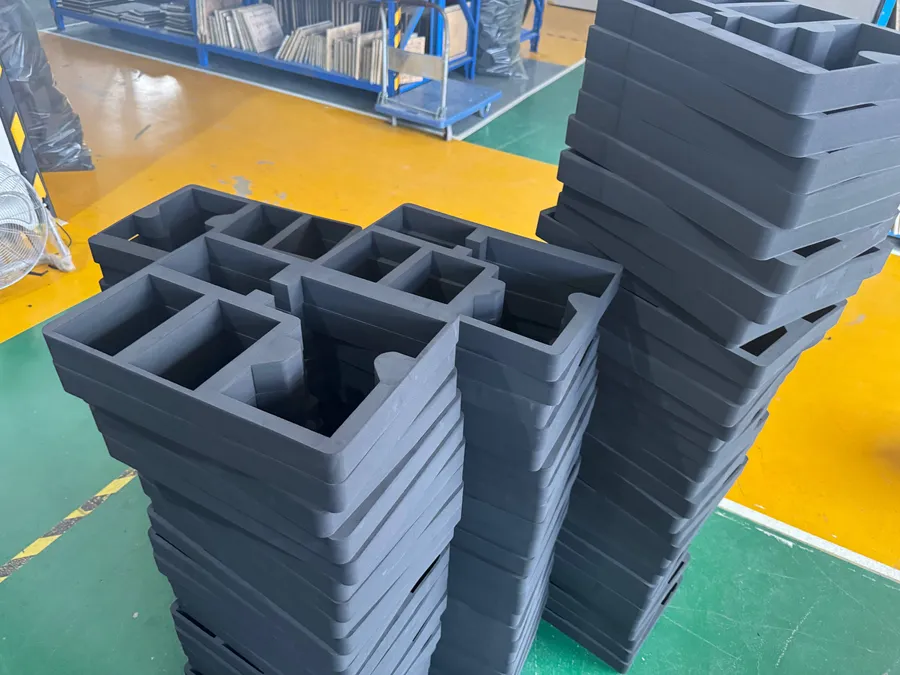
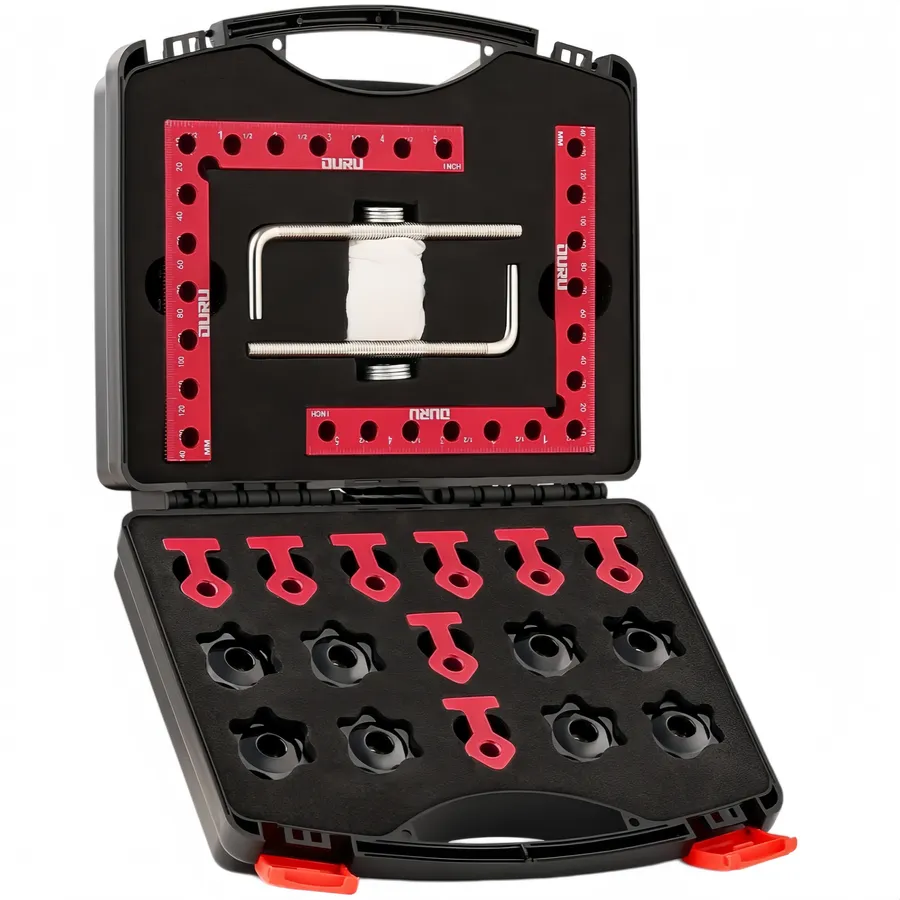
Interior work is the fast path and is quoted from one unit: shaped pockets, layered tops, grid dividers and reliefs for connectors, handles and feet, with a lid zone left clear where something must not be compressed. Published foam options are pick-and-pluck, die-cut, CNC-cut, EVA, PE and EPE in top, base, egg-crate, custom-cut and layered structures, and a drawing, a photograph of the packed kit or a physical sample is required before we cut. Hardware follows the same logic - latch count, hinge and stay arrangement, handle, padlock-ready latch bodies, pressure-equalisation valve and document holder are all ordered decisions. Colour, logo and OEM packaging start at 300 units. Only a change to the shell itself needs a mould, which is why a machinery or spare-parts request is nearly always finished as an interior and hardware programme on a published model.
Purchasing notes: wholesale terms and how to verify any supplier
KeXin manufactures these shells and works wholesale, OEM and ODM only on EXW or FOB terms; we do not sell retail, do not quote DDP and hold no overseas warehouse stock. Minimum order quantity follows what you change: standard shells and custom foam from one unit, logo, colour and OEM hardware from 300, a custom mould from 3000 per component. Hold any supplier, including us, to three questions before you sign: which accredited report produced this figure, what method and conditions were used, and does that report cover the exact shell, gasket, latch and foam being bought. Where our data sheet records a field as not measured, that is exactly what we will tell you, and we would rather lose the order than print a rating we cannot stand behind.
Production line spare parts case: the maintenance kit, answered from published data
A search for a production line spare parts case usually describes the kit a maintenance team carries to a stopped machine: servo drives, sensors, contactors, fuses, belts and a few hand tools packed as one mixed set. That is a mixed-SKU brief, so the deciding figures are the interior envelope, the lid-to-base split and the divider layout rather than a part name. The row below quotes only figures published per named model in the catalog, and marks what the sheets leave unmeasured.
| Search | What We Publish |
|---|---|
| production line spare parts case | Divider-friendly mid shells published for mixed kits: KX-4616, interior 455 by 338 by 148 mm at a 3.0 mm wall and 1395 g; KX-62810, interior 253 by 182 by 86 mm at a 4.0 mm wall and 900 g; KX-3218, interior 308 by 230 by 172 mm at a 3.0 mm wall and 900 g. Each records a compressible gasket in a continuous moulded channel; drop, stack and ingress figures for these shells are not measured, and we do not claim a rating. |
How the kit maps to interior work, order quantities and terms
Fixed grid dividers suit a stable bill of materials that is picked against an order; pluck foam plus a loose tray suits a kit whose contents change between machines. Foam, dividers and interior work are quoted from one unit with no tooling; logo, colour and OEM hardware start at 300 units, and only a new external geometry opens a mould, from 3000 units per component with up to about 125 days to a production-ready tool. Terms stay wholesale and OEM only, EXW or FOB, with a 30 percent deposit — no retail, no DDP quotation and no overseas warehouse stock.
One boundary is held on purpose: temperature range, ingress rating and chemical compatibility are not part of the published sheet for these shells, so the buyer should read the model data as envelope, wall and mass, and treat any sealing note as a construction fact about the gasket channel rather than a rating.
Customisation
Everything described above is configurable on a standard shell: interior layout (pick-and-pluck, die-cut or CNC-cut), foam grade and thickness, colour, logo method, latch and lock count, pressure-equalisation valve, cable ports, document holder and identification plate. A bespoke exterior geometry requires a new mould — 125 days, from 3,000 units per moulded component.
Procurement considerations
| Question | What to send us |
|---|---|
| Which shell fits? | Equipment L × W × H as packed, plus required clearance per axis |
| What does it cost? | Order quantity and estimated annual quantity — the two drive different answers |
| Is tooling needed? | Whether an existing shell clears the envelope with usable foam depth |
| Lead time? | Your required delivery date, not just the order date |
| Certification? | The exact standard your tender names — we will say whether we can test to it |
| Freight? | Destination and preferred terms; carton and pallet data supplied with the quotation |
Comparison and selection guide
The tables on this page exist because a protective case is chosen by comparing three things: the envelope, the environment and the handling chain. Where no table applies, the rule below is.
| Situation | What To Do |
|---|---|
| Fixed inventory | CNC or die-cut silhouette with part numbers printed on the foam. |
| Variable kit | Pluck foam plus a loose tray. |
| Bench work | Removable trays that lift out square so the case doubles as a stand. |
- Size on internal dimensions plus clearance, never on a product name.
- Choose the carrying method before the shell: it changes the series, not just the price.
- Specify the interior last, and decide up front whether the end user will reconfigure it.
Protective Cases for Machinery, Moulds & Spare Parts relates to Procurement Guide. Related families: Tool Cases / Custom Protective Cases / Equipment Transport Cases / Instrument & Equipment Cases / Rolling Cases / Military Equipment Cases / Defense Equipment Cases. Related sectors: field and industrial equipment. Continue in the Procurement Guide cluster.
This page is written from our own production data. If your requirement differs, send the dimensions and we will tell you which of the 155 models fits, or whether a custom route is needed.