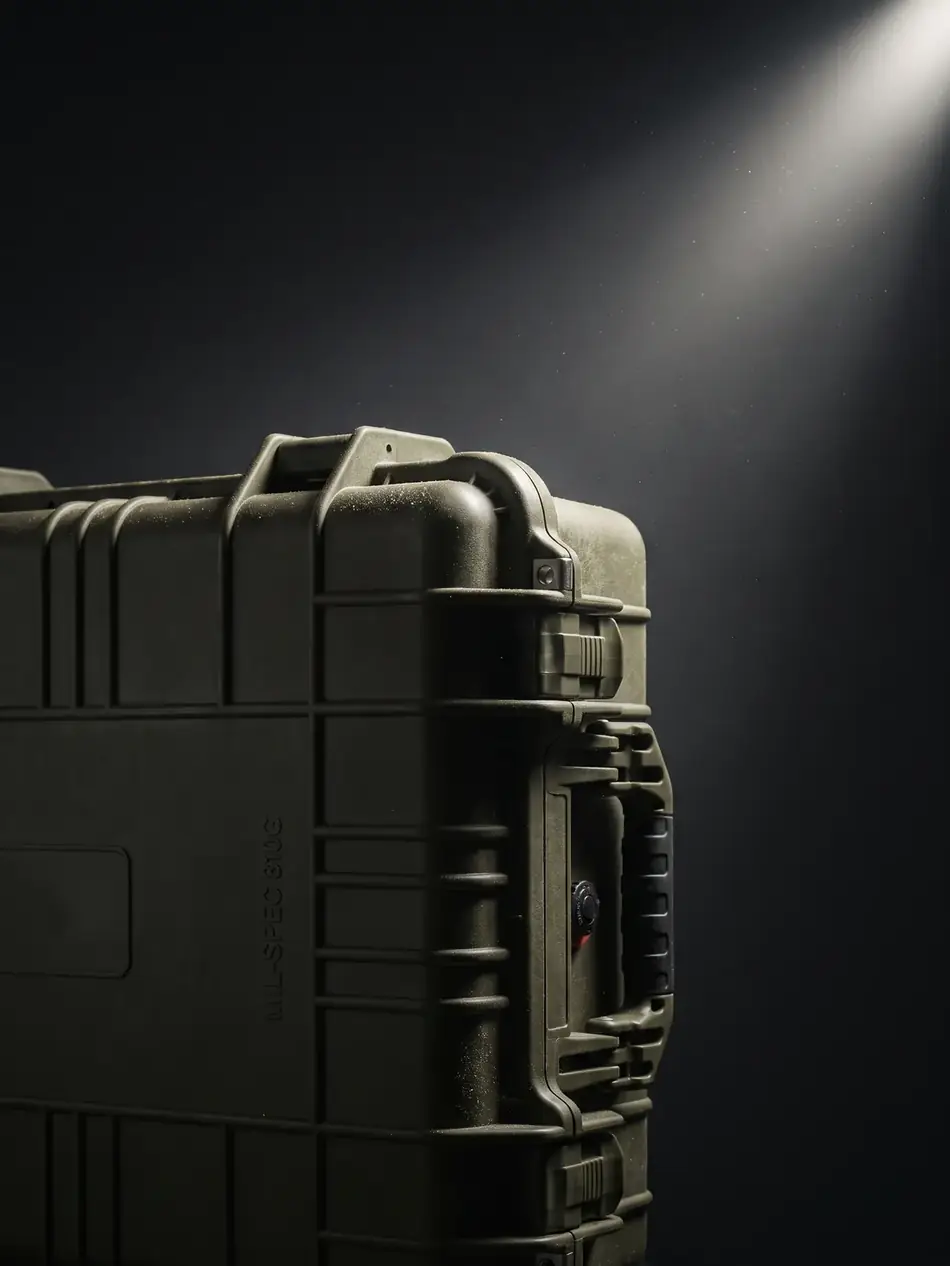
Can defense equipment cases be customized?
Yes. Defense equipment cases are customized as a normal part of how this factory works, not as an exception. The internal envelope, wall thickness within the moulding window, lid-and-base depth split, foam interior, closure and latch count, colour and exterior markings can all be set to the equipment being protected, provided the request stays inside injection-moulding and assembly limits and meets the wholesale minimum. What changes quickly is the interior and the finish; what changes slowly is any new external geometry, because that opens a mould.
Key points
- Interior and finish changes ride on an existing shell and can move in days to a couple of weeks.
- A genuinely new external size is a tooling project: budget up to about 125 days for a new mould.
- Send the packed-state internal envelope plus roughly 20 mm clearance on each axis before quoting.
- A bespoke first sample runs about 45 days once the geometry is fixed.
- We quote EXW or FOB on wholesale and OEM terms with a 30 percent deposit, never retail or DDP.
- Wall thickness and mass are published per model, so do not generalise one figure across the range.
What can and cannot be customized
Almost every visible and internal parameter of a defense case is adjustable to fit the hardware: internal length, width and height, the depth split between lid and base, the wall thickness within the moulding window, the foam grade and cut, the number of latches around the seal, the handle and wheel option, the shell colour and any silk-screened or engraved identification. What is not freely adjustable is the parting line and corner radius of an already-cut tool, because changing those means a new mould rather than a new setting.
Keeping that line straight saves time and money. Most defense buyers who ask for a custom case actually need a custom interior on a stock shell, which is fast; only a genuinely new outer size or shape becomes a tooling project with its own cost and lead time.
Where your change lands in the process
| Element | What It Touches | Schedule Impact |
|---|---|---|
| Internal foam and layout | Insert cut only, no shell change | Days to a couple of weeks |
| Colour and markings | Masterbatch and print plate | Added to the normal run |
| Latch count and gasket | Closure assembly | Minor |
| Handle, wheels, hardware | Option on select shells | Minor, model dependent |
| Wall thickness | Mould within tolerance | Reviewed per tool |
| New external size | New or modified mould | Up to about 125 days |
The numbers behind the customization window
The commercial reference points are stable. A bespoke first sample takes about 45 days once the geometry is fixed; a brand-new mould takes up to about 125 days from sign-off to a production-ready tool; a 30 percent deposit releases the order, with the balance against the agreed shipping terms. These are business parameters, not performance claims. Physical values such as wall thickness and mass are published per model and should be read model by model.
The physical range is wide enough to matter. Across the catalog a defense interior can be as compact as a 507 by 385 by 190 millimetre envelope with a 5.3 millimetre published wall on one sealed model, or as capacious as about 44 litres in a sealed wheeled shell. Those are figures published for named models, not a single blanket capability applied to every case.
How a request moves through the factory
Send the packed-state dimensions of the equipment, its mass, and how it will be carried and stored. We match that against existing shells first, because the cheapest and fastest customization is often the correct stock shell with a bespoke interior. Only when no shell clears the envelope with reasonable clearance do we open a tooling conversation covering the geometry, the quantity band and the target landed cost.
You approve a sample, confirm the foam and the markings against it, and only then does the production run start. Every step is documented so that the reference sample and the delivered shipment agree with the same drawing.
Where customized defense cases are used
The same shell family carries different interiors. A communications set needs channel foam and cable cut-outs; an optical instrument needs a soft contact layer over a firm carrier and a deeper lid; a field-medical or field-electronics kit needs a layout that can be checked at a glance the moment the lid opens. Customization is really the discipline of matching the interior to the failure mode of whatever sits inside.
Markings, high-contrast colour and a keyed latch arrangement are common on defense and security work, where cases must be told apart quickly in poor light and a specific unit identified without opening it.
Options we regularly supply
The recurring list includes CNC or pick-and-pluck foam grades and cuts, closure and seal arrangements with a chosen gasket and latch count, corner guards, fixed or telescopic handles and wheel hardware, document pockets, key locks, and surface identification by engraving or pad-printed stencils. Each is configured on wholesale or OEM terms, and the shell itself is either selected from the published range or tooled to the envelope you provide.
Procurement notes and the lines we hold
We are a wholesale and OEM manufacturer. We quote EXW or FOB, take a 30 percent deposit and do not sell at retail, quote DDP, or hold overseas warehouse stock. Minimum order quantities apply and scale with whether a job reuses an existing shell or opens a new tool.
We also keep the record clean: please do not ask us to state a protection rating, a drop height or a stacking figure that is not published for the specific model. Where a value is absent from the model sheet we leave it unclaimed rather than extend a neighbouring model's number across the range.
Dental equipment tool case: what the published model sheets actually state
A search for a dental equipment tool case usually means a shallow, hand-carried shell for hand instruments — mirrors, probes, forceps, scaler and handpiece kits — rather than a large equipment case. The honest comparison is against the smallest interiors published in the catalog, read model by model. The row below states what the model sheets publish for that size band and what they deliberately leave unmeasured, using the same per-model discipline the rest of this page follows.
| Search | What We Publish |
|---|---|
| dental equipment tool case | Instrument-size shells published in the catalog: KX-701, interior 260 by 180 by 76 mm, 2.1 mm wall, 350 g shell mass; KX-2808, interior 265 by 190 by 76 mm, 2.2 mm wall, 430 g; KX-3207, interior 308 by 230 by 64 mm, 3.0 mm wall, 570 g, with a compressible gasket in a moulded channel. All figures above are published per named model on the product pages; ingress, temperature and chemical-resistance figures for these shells are not measured, and we do not claim a rating for them. |
How a dental kit maps onto the customization process on this page
Send the packed-state length, width and height of the instrument kit and its mass. A hand-instrument set normally clears one of the published interiors above with roughly 20 mm of clearance per axis, so the fast route is a stock shell with die-cut or CNC-cut instrument foam; custom foam work is quoted from a single piece on the model sheets. Colour, logo and OEM configuration start at 300 pieces, and a new external geometry opens tooling at 3,000 units with up to about 125 days to a production-ready mould. Terms remain EXW or FOB with a 30 percent deposit; no retail, no DDP, no overseas warehouse stock.
One line is held deliberately: instrument cleaning and sterilization behaviour, like every environmental figure on these shells, is not part of the published sheet, so the dental buyer should treat the model data as envelope, wall and mass only.
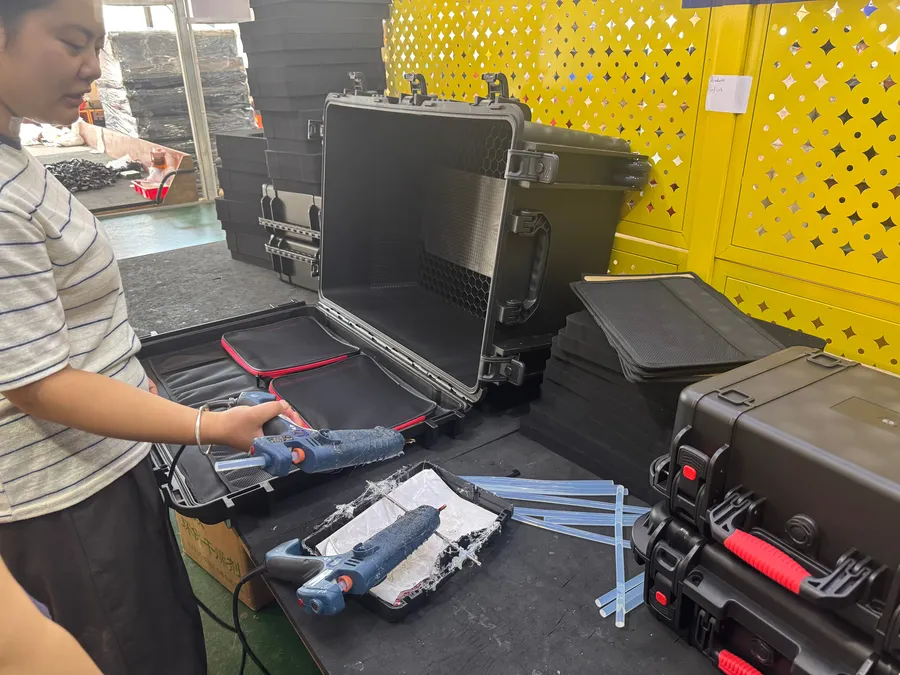
Customisation
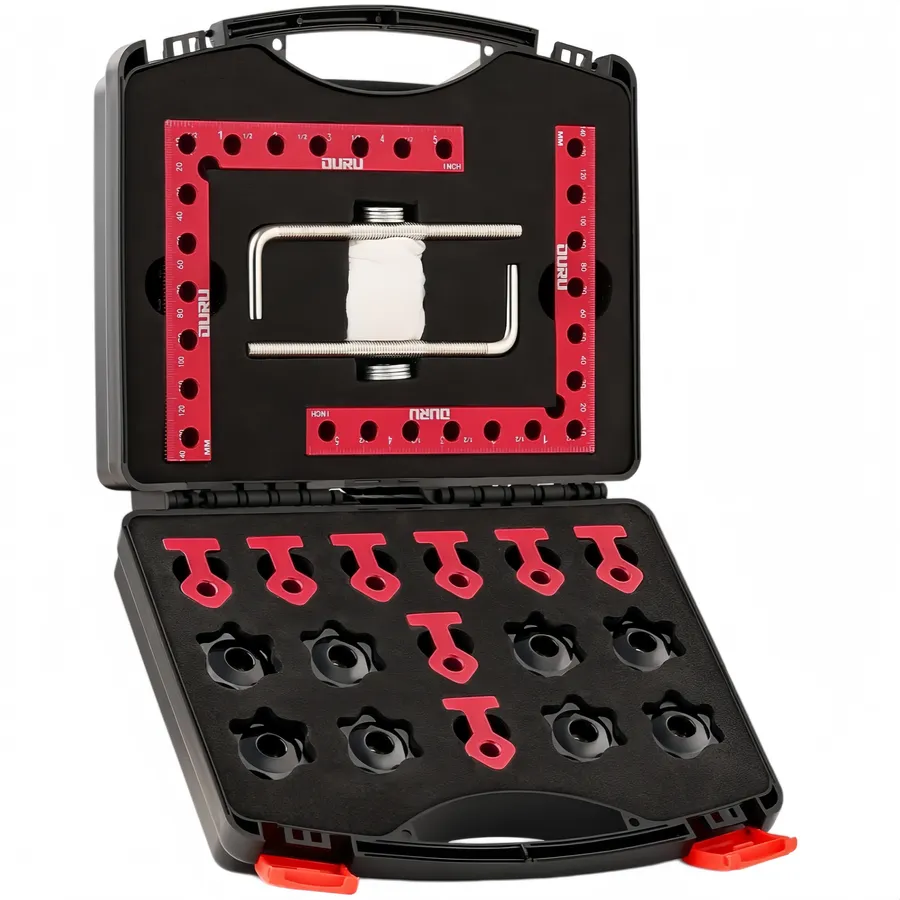
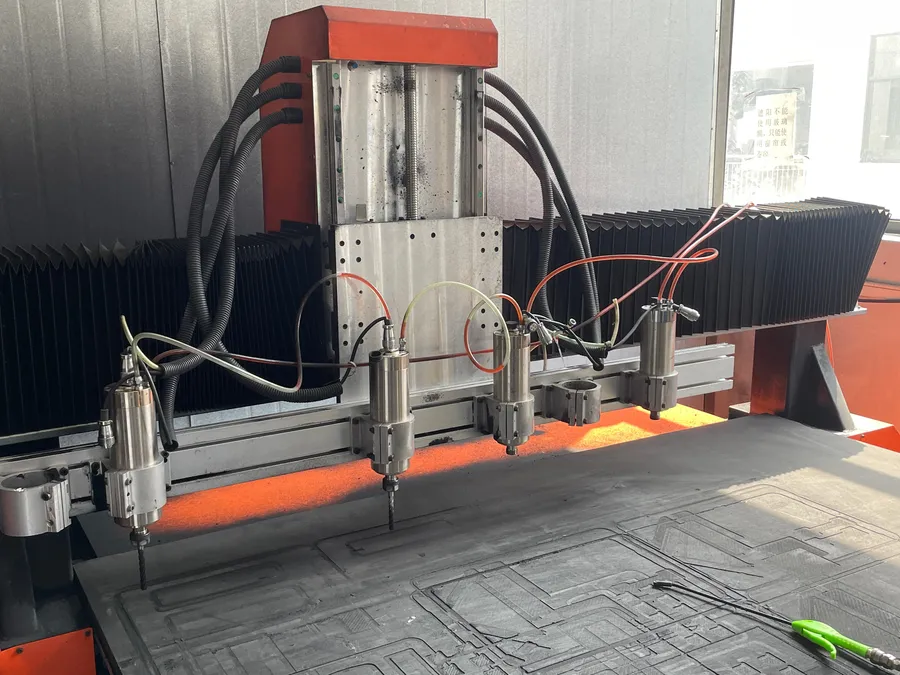
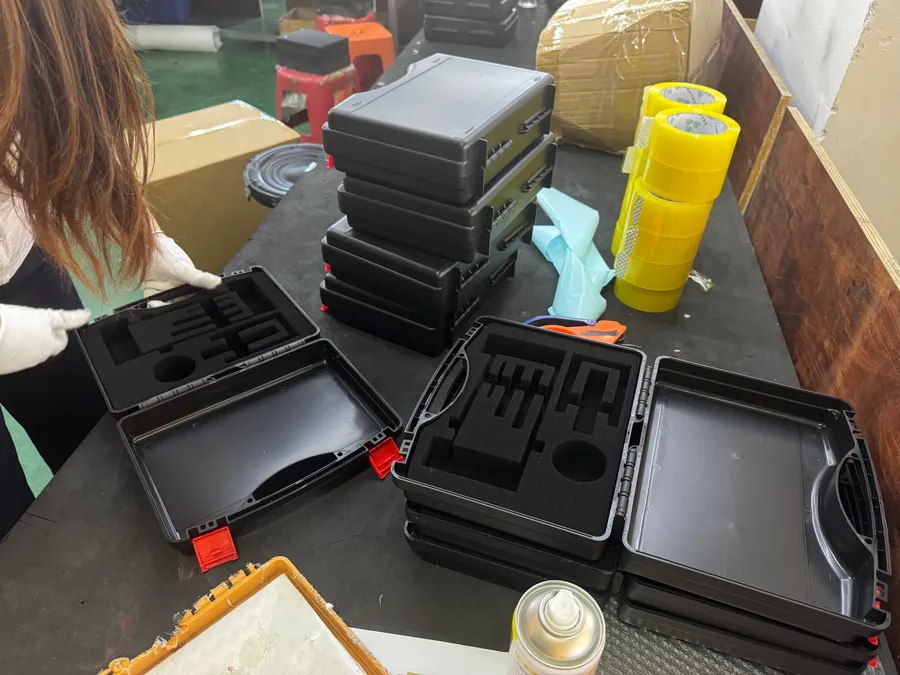
Everything described above is configurable on a standard shell: interior layout (pick-and-pluck, die-cut or CNC-cut), foam grade and thickness, colour, logo method, latch and lock count, pressure-equalisation valve, cable ports, document holder and identification plate. A bespoke exterior geometry requires a new mould — 125 days, from 3,000 units per moulded component.
Procurement considerations
| Question | What to send us |
|---|---|
| Which shell fits? | Equipment L × W × H as packed, plus required clearance per axis |
| What does it cost? | Order quantity and estimated annual quantity — the two drive different answers |
| Is tooling needed? | Whether an existing shell clears the envelope with usable foam depth |
| Lead time? | Your required delivery date, not just the order date |
| Certification? | The exact standard your tender names — we will say whether we can test to it |
| Freight? | Destination and preferred terms; carton and pallet data supplied with the quotation |
Comparison and selection guide
The tables on this page exist because a protective case is chosen by comparing three things: the envelope, the environment and the handling chain. Where no table applies, the rule below is.
| Situation | What To Do |
|---|---|
| Free-drop height | With a 50 mm base foam layer, a 15 kg assembly sees a markedly lower peak deceleration than with 20 mm. Where the case is handled by hand off a vehicle, we specify the deeper base. |
| Stacking | A case that will be shipped stacked needs a wall thickness and rim geometry that carries the load through the shell, not through the lid. |
- Size on internal dimensions plus clearance, never on a product name.
- Choose the carrying method before the shell: it changes the series, not just the price.
- Specify the interior last, and decide up front whether the end user will reconfigure it.
Can defense equipment cases be customized? relates to Procurement Guide. Related families: Defense Equipment Cases / Custom Protective Cases / Military Equipment Cases / Military Protective Cases. Related sectors: field and industrial equipment. Continue in the Procurement Guide cluster.
This page is written from our own production data. If your requirement differs, send the dimensions and we will tell you which of the 155 models fits, or whether a custom route is needed.