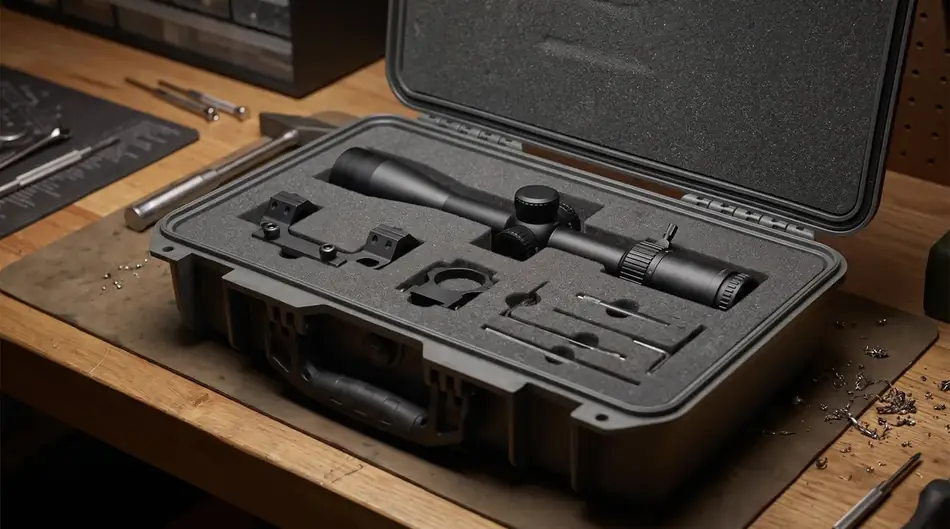
Protective Cases for Test, Measurement & Inspection Instruments for Automotive Service Bays
Short answer: buy the case by the instrument, not by the brand. A service-bay tool kit is a procurement problem: list every meter, gauge, caliper, sensor, microphone, data logger and gas detector, capture the tallest and longest packed item plus the foam, and match that to the published internal cavity of a model. Electronics want a snug pocket that stops them sliding; steel gauges and calipers want a base thick enough to carry their weight; any sealed or anti-static claim is a configuration you specify and then verify against an accredited-laboratory report for that exact build. KeXin sells wholesale and OEM or ODM only on EXW or FOB terms, quotes to your stated spec, and publishes measured internal dimensions per model so a buyer can size honestly before asking for a sample.
Key points
- Build the kit list first: instrument, packed size, weight and how often it is opened decide the case far more than the outer shell.
- For a portable acoustic measurement mic case, protect the diaphragm with a full-depth pocket and keep the calibrator in a separate well.
- A gas detector must be stored powered-down with the sensor port unobstructed, and its expiry and calibration date logged on the case.
- Sealing and anti-static behaviour are options you name on the order and prove with a lab report, not adjectives you accept from a listing.
- OEM or ODM protective box work for electronic measuring instruments starts from your drawing and reaches a first sample in about 45 days.
- Quote the whole configuration, foam and hardware included; a bare-shell price and a kitted price are not the same number.
Treat the case as a line item in the tool procurement, not an accessory
In a service bay the case is part of the instrument's total cost of ownership, so handle it in the same purchase order as the device. For every tool record the packed footprint, the weight, the port or diaphragm that must never be compressed, and how often the lid is opened in a day. Those four facts decide whether a small utility shell, a portable calibrator heavy duty safety box, or a wheeled trolley is the right buy. KeXin publishes the internal cavity and net weight for each of the 155 models, so a procurement officer can shortlist by real numbers before asking a supplier anything at all.
Grouping the bay by instrument family
Sort the kit into families because each has a different failure mode. A portable acoustic measurement mic case must hold the microphone so nothing presses the diaphragm, with the windscreen and any calibrator in their own wells. An automotive sensor equipment case deals with loose connectors and cable that tangle, so it wants channels and strap points rather than a single big cavity. A steel caliper or gauge is heavy and blunt, so its box needs a thick base and a foam that will not crush under mass.
Sizing table: instrument type to case job
Read the table as a sizing exercise, not a rating sheet. Pick the shell family that matches the risk, then confirm the internal length, width and depth against your own packed measurement and the published figure for that specific model before you commit.
| Instrument | Risk | Job | Shell |
|---|---|---|---|
| Microphone and acoustic meter | Diaphragm damage, lost calibrator | Full-depth pocket, separate small well, lid tray | Mid hard shell with cut foam |
| Calipers, gauges, thickness tool | Mass and blunt edges crushing thin foam | Thick base, dense pockets, edge relief | Engineering-PP box, deeper model |
| Gas detector and data logger | Blocked sensor port, damp storage, missed calibration | Unobstructed port relief, dry base, log tag | Small to mid sealed-closure option |
| Handheld electronic meter | Sliding, scratched lens, dead battery left in | Snug pocket, lid restraint, battery notch | Small utility or ABS shell |
Evaluating an automotive testing case supplier before you issue the RFQ
When you shortlist an automotive testing case supplier, judge them on how they answer, not on how they advertise. A good supplier asks for your packed dimensions and your kit list, quotes to that configuration, and volunteers which performance numbers they can back with an accredited-laboratory report and which they cannot. Push any vendor on three points: the report behind each rating, the exact test method and conditions, and confirmation the report covers the gasket, latch and foam combination you are buying. KeXin works wholesale and OEM only, welcomes third-party factory checks, and will send a chosen build for independent testing on request with the cost reflected in the quote.
Handling medical-adjacent and handheld meters in a mixed bay
Some bays run a portable blood glucose meter custom protective case alongside engine diagnostics, so treat cross-contamination as a storage problem. Keep the medical meter in its own wiped-down pocket, away from oily calipers, and choose a shell with a smooth base you can clean. For any battery-powered handheld, leave the battery compartment reachable without opening the main cavity and confirm the case does not press a live cell. Colour-code the foam so a technician grabs the right meter without reading labels at four in the afternoon.
Sealing, moisture and anti-static: options, not adjectives
Buyers of an industrial caliper and gauge protective box or an industrial coating thickness gauge tool box often ask for dust, moisture or anti-static behaviour. Those are properties of a configuration, so name them on the order. A gasketed, latch-compressed closure resists splash and dust; a conductive or anti-static foam is a material you specify and then require a surface-resistivity report for. If a spec sheet quotes a number, ask which accredited laboratory produced it and under what method; if no report exists, mark the figure unverified rather than assuming the shell delivers it. We do not print a rating we cannot point to in a test record for your exact build.
Data loggers and gas detectors: the case has a duty of care
A data logger protective case should stop the logger sliding against a metal shell and protect the sensor tip, and it should let you read the device without unpacking it, because loggers are checked often. For gas detection there are two related asks: a gas detector case that keeps the sampling port clear and the unit powered down, and, for a fleet, a gas detector portable safety protective box sized so the calibration gas cylinder and the detector travel together without rattling. Gas sensors age and drift, so log the calibration and expiry date on the case and store it dry, not in a cold oily corner of the bay.
Electronic measuring instruments, OEM and ODM routes
The generic category a buyer calls an electronic measuring instrument case splits into two procurement paths. If an off-the-shelf shell already fits, you are buying stock, and the only change is foam and marking. If the instrument is irregular or the brand wants its own carrying solution, an electronic measuring instrument OEM/ODM protective box programme is the right frame: you send the drawing, we build foam and hardware to it for a first sample in about 45 days, and only drop into a new-mould programme, near 125 days, if the shell geometry itself must change. Decide which path you are on before you set a delivery date.
Mobility: hand-carry versus a wheeled bench trolley
A bay that moves instruments to the vehicle or up onto a lift will value a wheeled shell with a telescopic handle, but wheels add weight and remove the flat stacking face, so do not specify them for tools that live on a shelf. For handheld meters keep the case light enough to carry one-handed and to open flat on a bench. A simple rule fits most bays: if a technician carries it more than ten metres a day, consider wheels; if it mostly sits on a shelf, spend the money on better foam instead.
MOQ, lead time and commercial terms for this category
KeXin is a manufacturer of the shells and does wholesale and OEM or ODM only, on EXW or FOB terms, with no retail, no DDP and no overseas stock warehouse. Payment is a 30 percent deposit with the balance after inspection, and third-party factory checks are welcome. An OEM first sample runs about 45 days and a new mould about 125 days. The MOQ is set by the model, colour masterbatch and hardware you specify, so send your kit list and the configuration you want and the MOQ and price come back tied to that same build.
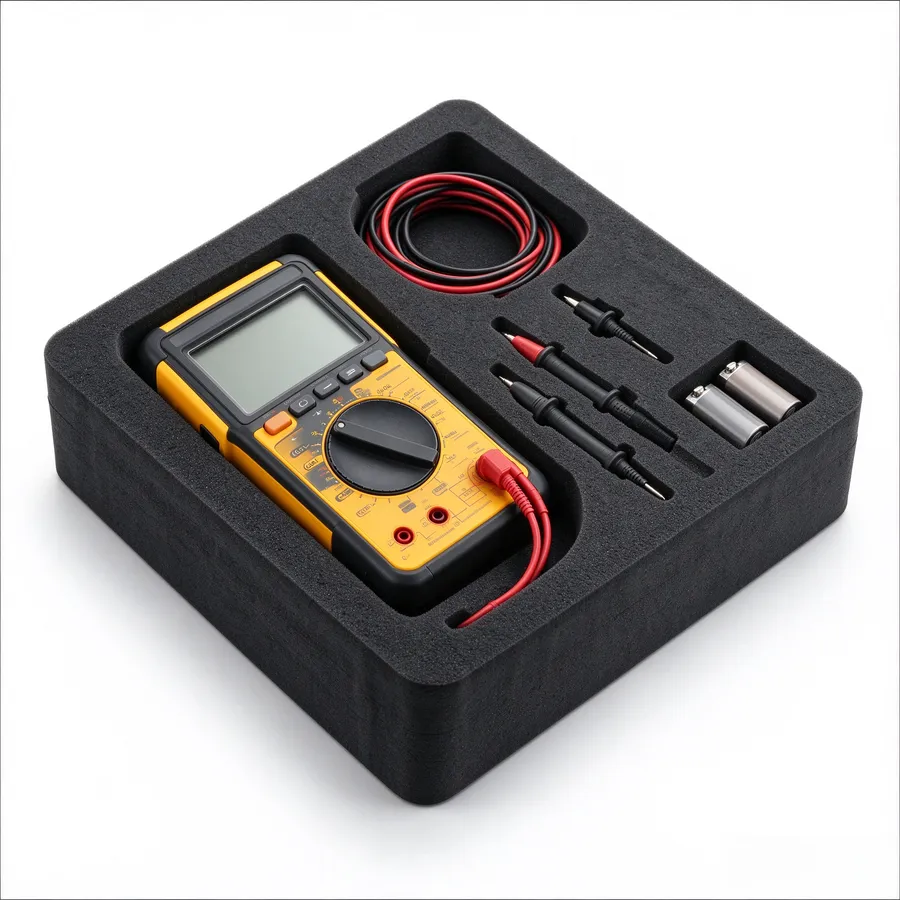
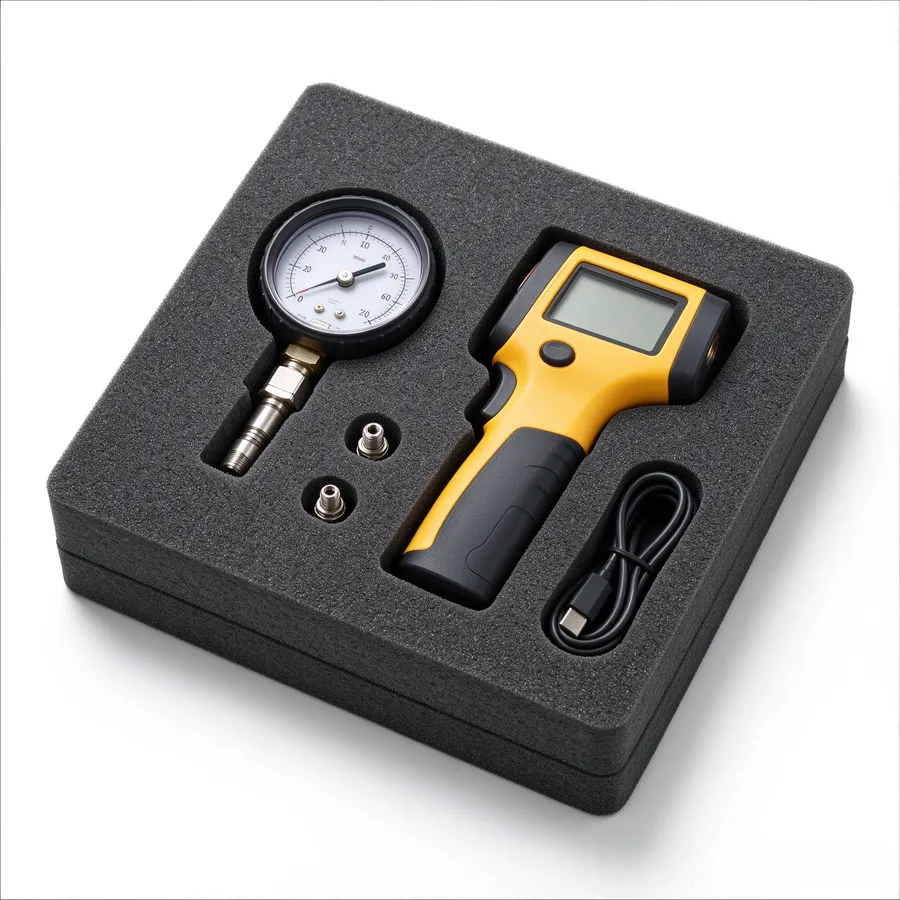
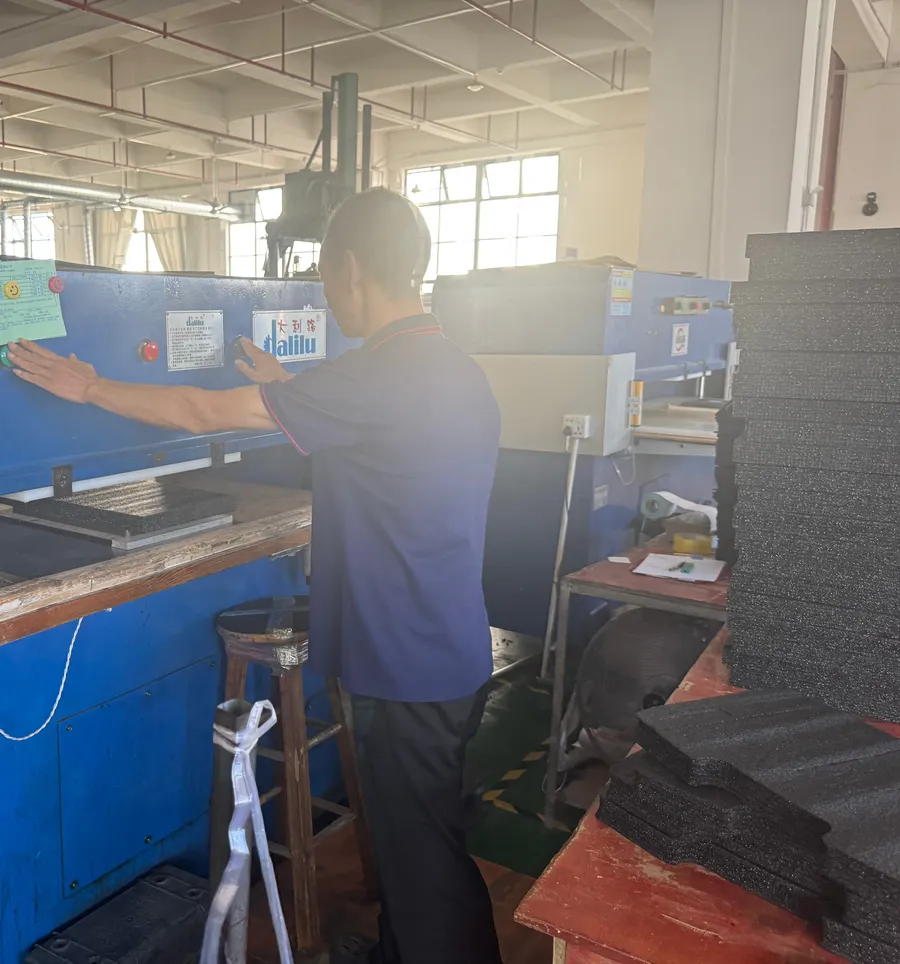
Customisation
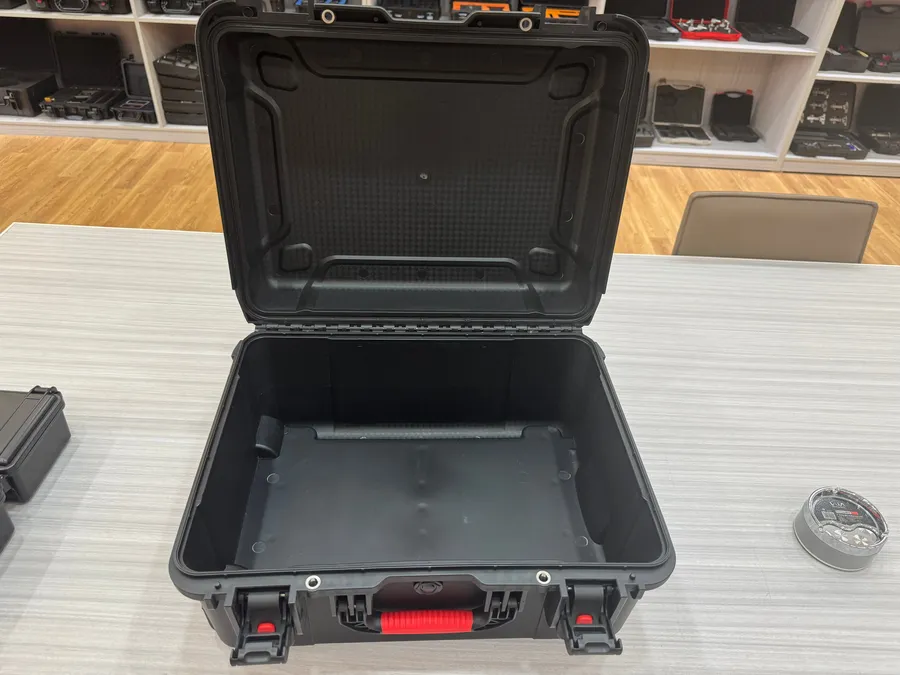
Everything described above is configurable on a standard shell: interior layout (pick-and-pluck, die-cut or CNC-cut), foam grade and thickness, colour, logo method, latch and lock count, pressure-equalisation valve, cable ports, document holder and identification plate. A bespoke exterior geometry requires a new mould — 125 days, from 3,000 units per moulded component.
Procurement considerations
| Question | What to send us |
|---|---|
| Which shell fits? | Equipment L × W × H as packed, plus required clearance per axis |
| What does it cost? | Order quantity and estimated annual quantity — the two drive different answers |
| Is tooling needed? | Whether an existing shell clears the envelope with usable foam depth |
| Lead time? | Your required delivery date, not just the order date |
| Certification? | The exact standard your tender names — we will say whether we can test to it |
| Freight? | Destination and preferred terms; carton and pallet data supplied with the quotation |
Comparison and selection guide
The tables on this page exist because a protective case is chosen by comparing three things: the envelope, the environment and the handling chain. Where no table applies, the rule below is.
| Situation | What To Do |
|---|---|
| Benchtop mass | Firm base carrier, 50 mm minimum, with a soft contact layer. |
| Optical head | Suspend the body and clear the lenses entirely; never let foam touch a coated surface under load. |
| Field kit | CNC base for the instrument, pluck-foam top for probes and consumables. |
- Size on internal dimensions plus clearance, never on a product name.
- Choose the carrying method before the shell: it changes the series, not just the price.
- Specify the interior last, and decide up front whether the end user will reconfigure it.
Protective Cases for Test, Measurement & Inspection Instruments for Automotive Service Bays relates to Procurement Guide. Related families: Instrument & Equipment Cases / Electronics Cases / Tool Cases / Medical Equipment Cases. Related sectors: field and industrial equipment. Continue in the Procurement Guide cluster.
This page is written from our own production data. If your requirement differs, send the dimensions and we will tell you which of the 155 models fits, or whether a custom route is needed.