What information should a buyer provide when requesting a protective case quotation?
A protective case quotation only becomes firm when the buyer hands over four blocks of information: the packed dimensions and mass of the equipment plus the clearance you require, the order quantity and the annual estimate, the interior and material brief including foam, colour and logo, and the delivery terms including destination and whether you need EXW or FOB. Anything less and a manufacturer can only return a price range, because the variables that move unit cost and tooling have not been fixed. Give the complete package and you can compare real numbers between suppliers.
Key points
- Give quantity, annual estimate and packed mass, not just a model name you liked.
- State the internal dimensions you need and the external footprint you must not exceed.
- Describe the interior as a function, pluck, cube or machined, and name the foam thickness per axis.
- Fix EXW or FOB and the destination so freight and responsibility are not guessed.
- Compare quotes line by line; a price that excludes foam or changes the wall is not lower.
Why a thin enquiry returns a range, not a price
A supplier prices the specific article you will actually receive, so every undefined variable is a risk they add back into the quote or quietly leave out. If quantity is missing, the tooling share and the packaging are guessed; if the interior is missing, the foam is estimated; if the destination and the term are missing, freight and responsibility stay unclear. The buyer who supplies the complete brief receives a comparable number, while the buyer who does not receives a brochure price that cannot be checked.
Writing the brief down also protects you, because the same page becomes the acceptance criteria and the purchase-order attachment rather than a chain of scattered messages.
The specification block
Start with the physical facts: the internal length, width and height you need with the clearance stated as a number, the packed mass, the quantity for the first order and the expected annual volume. Add the external constraint when the case must fit a pallet, a rack, a vehicle bay or an airline limit, because that caps the shell you are allowed to buy just as surely as the equipment sets a floor for it.
The interior, material and finish brief
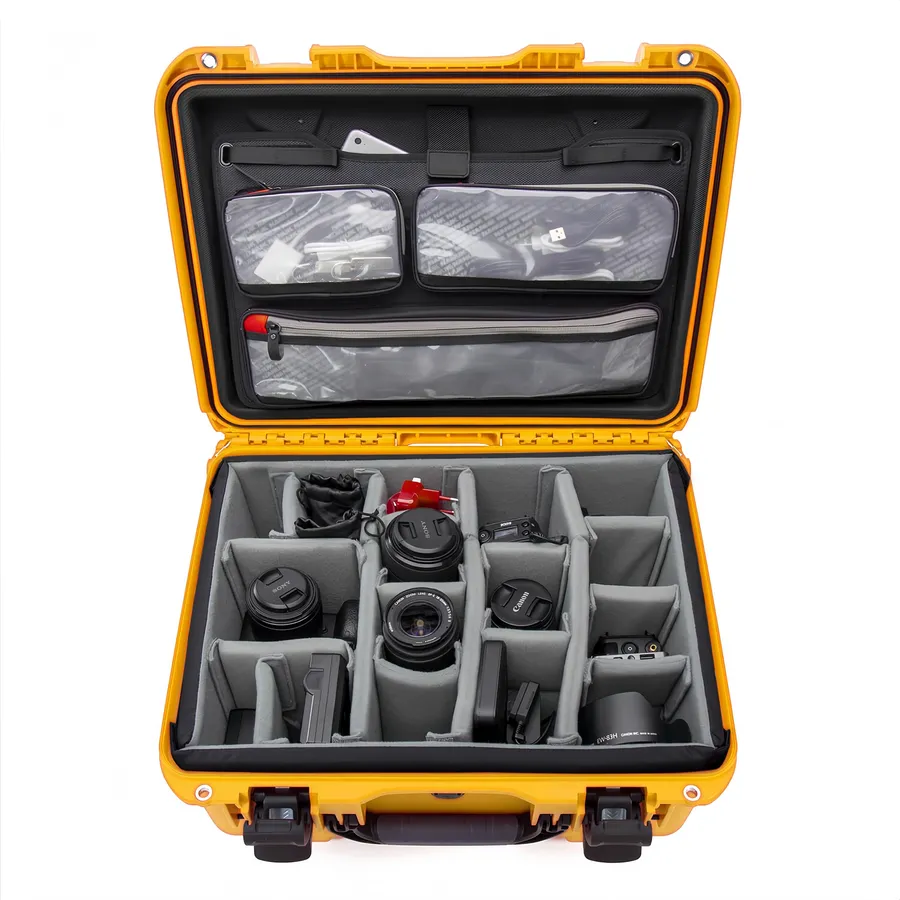
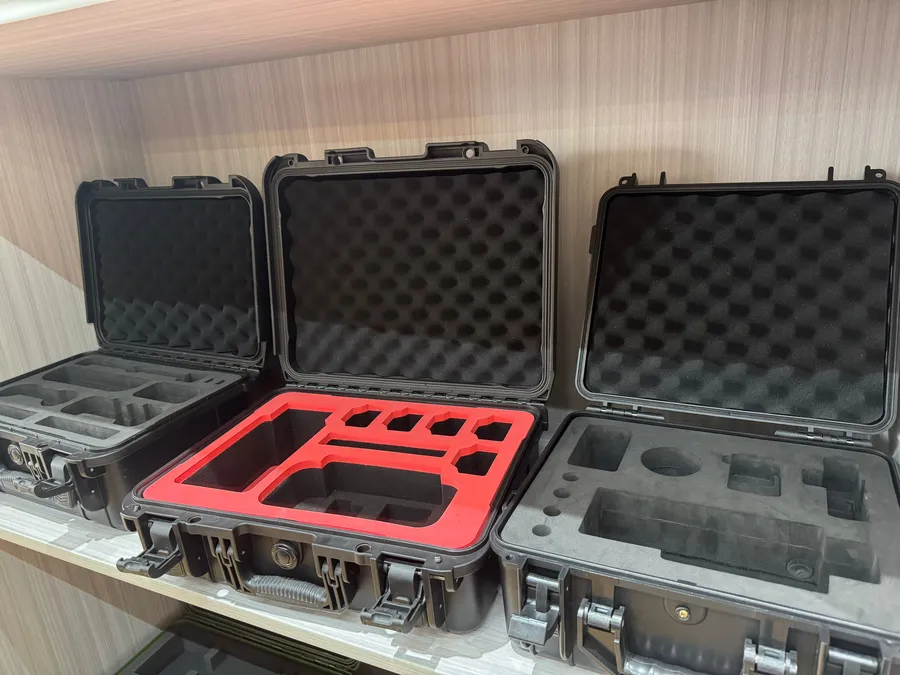
Describe the interior as a function rather than a mood: pluck foam, cube-cut foam, a machined pocket for each item, or an empty shell with dividers, and note which items must stay together. State the shell material preference if you hold one, the colour, whether a logo is moulded, printed or on a plate, and any hardware such as latches, hinges, a pressure-equalising valve, wheels or a telescopic handle. Each of those choices changes the unit price on its own line, so naming them up front is what makes two quotes comparable.
What moves the quote versus what only changes the finish
Separate the answers that change the tooling or the unit price from the ones that only change decoration. That way you know what must be fixed before a quote can be trusted and what can be settled later without reopening the price. The table below is a plain reading of that split for a typical case enquiry.
| Rfq Item | Moves | Give |
|---|---|---|
| Order quantity and annual estimate | unit price and tooling share | first order quantity plus a 12-month forecast |
| Packed dimensions and mass | shell size, wall and handling | internal L x W x H plus stated clearance and packed kg |
| Interior type and foam | material and labour | pluck, cube or machined, with thickness per axis |
| Colour and logo | mostly decoration and minimum order | colour reference and logo file with method |
| Delivery term and destination | responsibility and paperwork | EXW or FOB, and the port or city |
Delivery terms, destination and what KeXin does not offer
State the term you want and the destination, and expect the quotation to be issued EXW or FOB from the factory. KeXin works on wholesale and OEM orders only: there is no retail sale, no DDP door delivery and no overseas warehouse, so your own forwarder and customs process handle the leg from the port. Plan the schedule around the factory gate and the shipping window rather than assuming local stock.
Applications and how the same brief changes by use
A field kit driven to a site and back, an instrument air-freighted once, and a communication set that lives on a shelf all need different answers even when the equipment box is the same size. Say which one it is, because the application changes wall thickness, closure count, foam grade and whether wheels make sense, and a supplier who knows the use can flag where a stock shell already fits your case.
Customisation, OEM and private label
If no published model fits, ask for OEM or a custom shell and provide the measurement record and the target quantities up front. A first-article sample of an OEM configuration generally takes about forty-five days and a new mould about one hundred and twenty-five days, with a thirty percent deposit; say which you need so the quote reflects tooling rather than a stock item. KeXin New Materials (Guangdong) Co., Ltd. supplies under these wholesale and OEM terms and will confirm the route before production.
Purchasing notes and comparing quotes
When quotes arrive, compare them line by line against the same brief: quantity, unit price and its tooling share, sample and production lead time, the interior specification, and the term the price is quoted on. A lower number that excludes foam or quotes a thinner wall is not a lower price. Fix the specification in writing before the balance is paid so that goods-in is a check against an agreed sheet, not a surprise.
Customisation
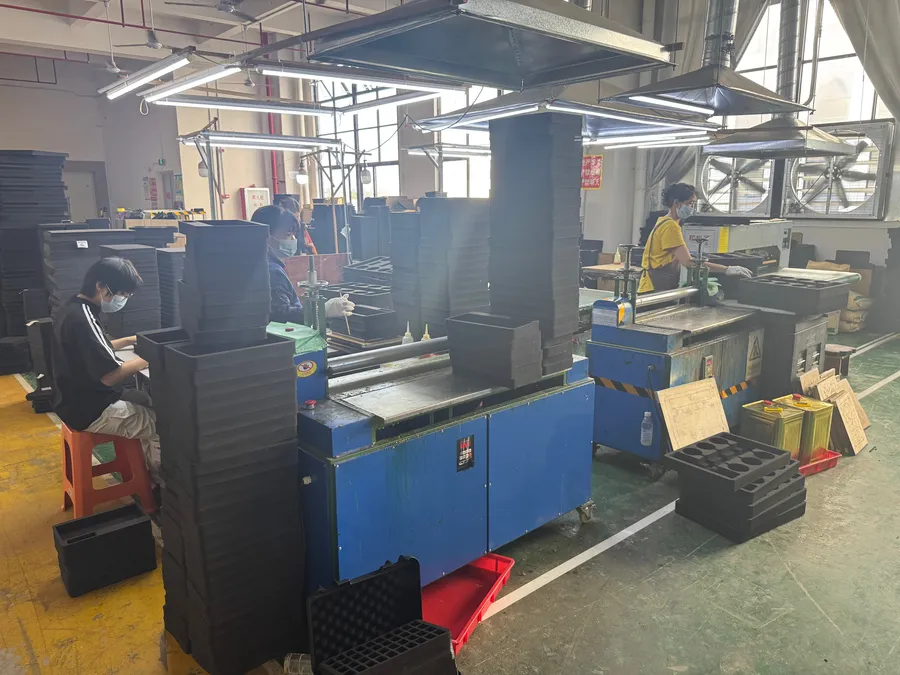
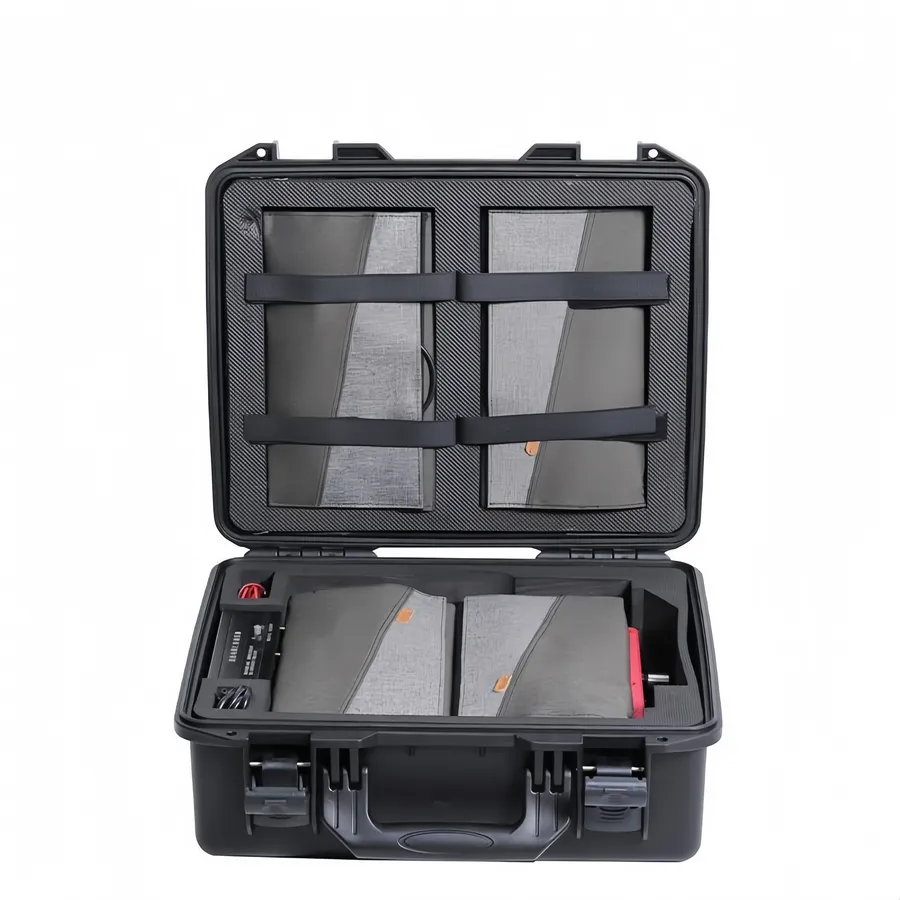
Everything described above is configurable on a standard shell: interior layout (pick-and-pluck, die-cut or CNC-cut), foam grade and thickness, colour, logo method, latch and lock count, pressure-equalisation valve, cable ports, document holder and identification plate. A bespoke exterior geometry requires a new mould — 125 days, from 3,000 units per moulded component.
Procurement considerations
| Question | What to send us |
|---|---|
| Which shell fits? | Equipment L × W × H as packed, plus required clearance per axis |
| What does it cost? | Order quantity and estimated annual quantity — the two drive different answers |
| Is tooling needed? | Whether an existing shell clears the envelope with usable foam depth |
| Lead time? | Your required delivery date, not just the order date |
| Certification? | The exact standard your tender names — we will say whether we can test to it |
| Freight? | Destination and preferred terms; carton and pallet data supplied with the quotation |
Comparison and selection guide
The tables on this page exist because a protective case is chosen by comparing three things: the envelope, the environment and the handling chain. Where no table applies, the rule below is.
| Situation | What To Do |
|---|---|
| Start from the equipment, not the case | Measure the tallest, widest and longest points of the packed equipment including antennas, handles and connectors. Add 20 mm minimum clearance per axis before selecting a shell. |
| Then choose the carrying method | Under 8 kg, a fixed handle is lighter and cheaper. Over 12 kg or any journey over 30 m, specify the T series with telescopic handle and wheels. |
| Then decide the interior | Pick-and-pluck for kits that change. Die-cut or CNC-cut for fixed layouts that must be auditable at a glance. |
- Size on internal dimensions plus clearance, never on a product name.
- Choose the carrying method before the shell: it changes the series, not just the price.
- Specify the interior last, and decide up front whether the end user will reconfigure it.
What information should a buyer provide when requesting a protective case quotation? relates to Procurement Guide. Related families: Military Protective Cases / Custom Protective Cases / Equipment Transport Cases. Related sectors: field and industrial equipment. Continue in the Procurement Guide cluster.
This page is written from our own production data. If your requirement differs, send the dimensions and we will tell you which of the 155 models fits, or whether a custom route is needed.


