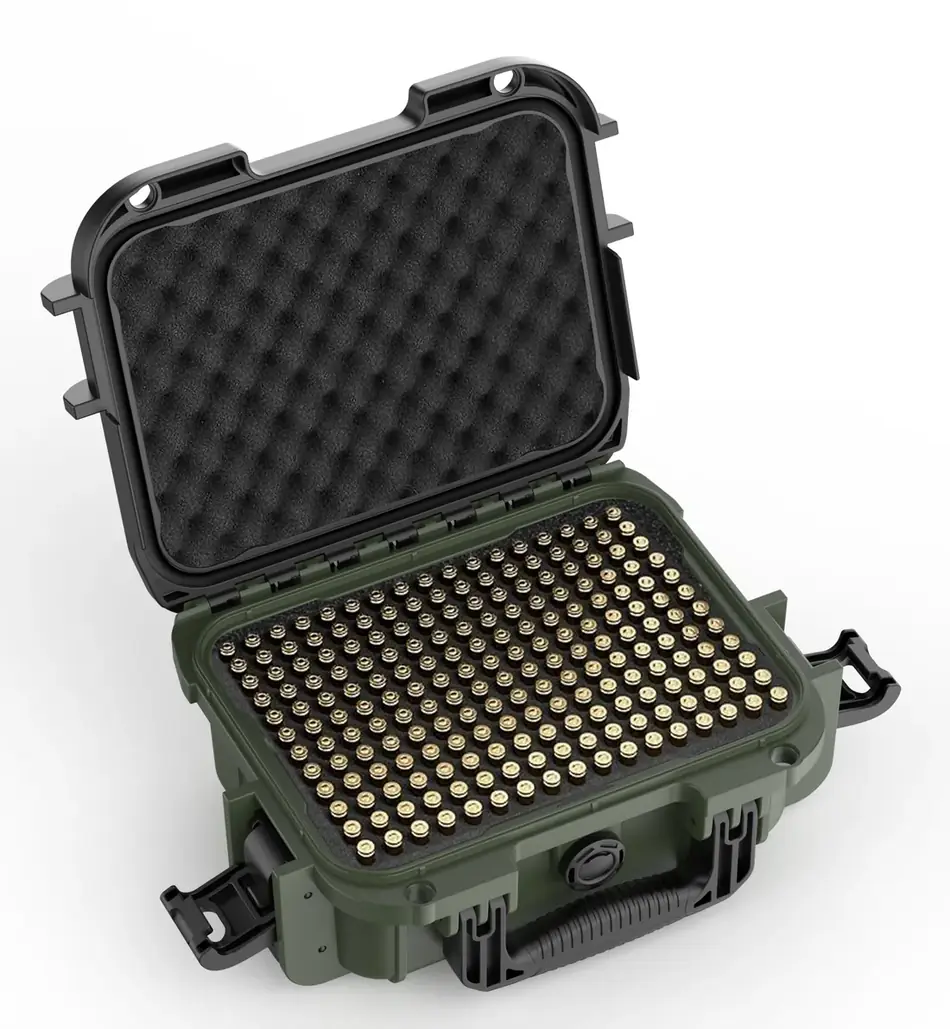
How should international buyers evaluate a protective box supplier?
Evaluate a protective box supplier on what they publish and how they price, not on what they promise. A serious supplier lets you specify from a per-model datasheet rather than a marketing page, states a real minimum order quantity for standard units, colour, logo and new mould, quotes the tooling and lead time honestly, and sets out shipping terms in a way you can cost. The clearest signals of a real manufacturer are transparency about what is measured and what is not, and consistent answers when you ask for the same figure twice. KeXin is an injection-moulding manufacturer working wholesale and OEM on EXW or FOB terms, and the evaluation steps below mirror the questions any international buyer should put to any supplier before committing an order.
Key points
- Judge a supplier by the per-model datasheet they publish, not by a family-level claim about durability or protection.
- Ask what is measured and what is not; an honest supplier leaves an untested rating blank instead of extrapolating it.
- Get MOQ in writing for four separate things: standard units, colour, logo and a new mould, because each has a different floor.
- Confirm tooling responsibility and the new-mould lead time before agreeing to a bespoke internal geometry.
- Verify the shipping term (EXW or FOB) and deposit structure so landed cost is calculable, not guessed.
- Distinguish a moulding factory from a trading company by whether it can discuss wall thickness, latch pattern and foam cutting in real detail.
Start from what the supplier publishes per model
The first test is whether the supplier lets you buy from data. A protective box manufacturer that injection moulds its own shells should publish, for each model, the internal and external dimensions, the shell material, the wall thickness, the net weight, the closure and handle type, whether a gasket channel exists, and the carton packing quantity. KeXin lists 155 standard models this way, and the practical value to a buyer is that a quotation can be checked against a fixed reference instead of a verbal description. If a supplier can only describe their range in general terms and will not commit to a per-SKU sheet, you cannot verify the product after it arrives, which is the core risk in cross-border sourcing.
Ask what is measured and what is not
The second test is honesty about limits. Ratings such as a water or dust ingress classification, a drop height or a stack load are only meaningful if that specific model was tested in that configuration. A trustworthy supplier publishes a measured value where it exists and states plainly where a value has not been measured, rather than attaching a rating to a whole family. KeXin records untested fields as not measured and does not extrapolate a neighbouring model's number onto the SKU you order. A buyer should read any datasheet with that lens: an unusually complete set of impressive ratings on a supplier who cannot explain the test method is a warning sign, not a selling point.
Get MOQ in writing for four separate items
| Order Item | What A Good Answer Looks Like | Kexin Position |
|---|---|---|
| Standard units off the shelf | A concrete piece count, often low for stocked shells | Standard and custom foam from 1 |
| Case colour change | A stated MOQ on the existing mould | From about 300 pieces |
| Printed or in-mould logo | A stated MOQ plus artwork spec | From about 300 pieces |
| A new mould for bespoke geometry | A per-component MOQ and tooling cost | From about 3,000 per component |
Confirm tooling and lead time before a bespoke request
Tooling is where cross-border projects stall, so pin it down early. For a colour, logo or foam change on an existing shell there is no new tool, and a first OEM sample typically follows the standing sample window of about 45 days. For a genuinely new internal geometry you are asking the supplier to cut a new mould; that carries a new-mould lead time of about 125 days after drawing sign-off and a higher quantity floor. A supplier who is comfortable describing this split, and who will put it on the proforma, is managing the project; a supplier who promises a bespoke box as fast as a colour change has not thought about the tooling.
Verify shipping terms and deposit so landed cost is calculable
The commercial frame tells you a lot about how a supplier operates. KeXin sells wholesale and OEM only and quotes EXW or FOB, with a 30 percent deposit against the proforma and the balance settled before shipment; it does not sell retail, does not offer DDP, and does not keep overseas warehouse stock. That clarity is useful precisely because it lets the buyer build landed cost and inbound freight into the evaluation instead of discovering them later. When comparing suppliers, ask each one to state the exact term (EXW or FOB), the currency, the deposit percentage and who books the freight, then compare on the same basis; suppliers who blur these points are usually hiding a cost that will surface at the port.
Telling a moulding factory from a trading company
| Question | Factory Signal | Risk Signal |
|---|---|---|
| What is the wall thickness on this exact SKU? | Answers from the datasheet without hesitation | Gives a family figure or changes the subject |
| Can the latch pattern and gasket channel be confirmed on this model? | Reads the per-model attribute and the closure option | Says everything is waterproof or fully sealed |
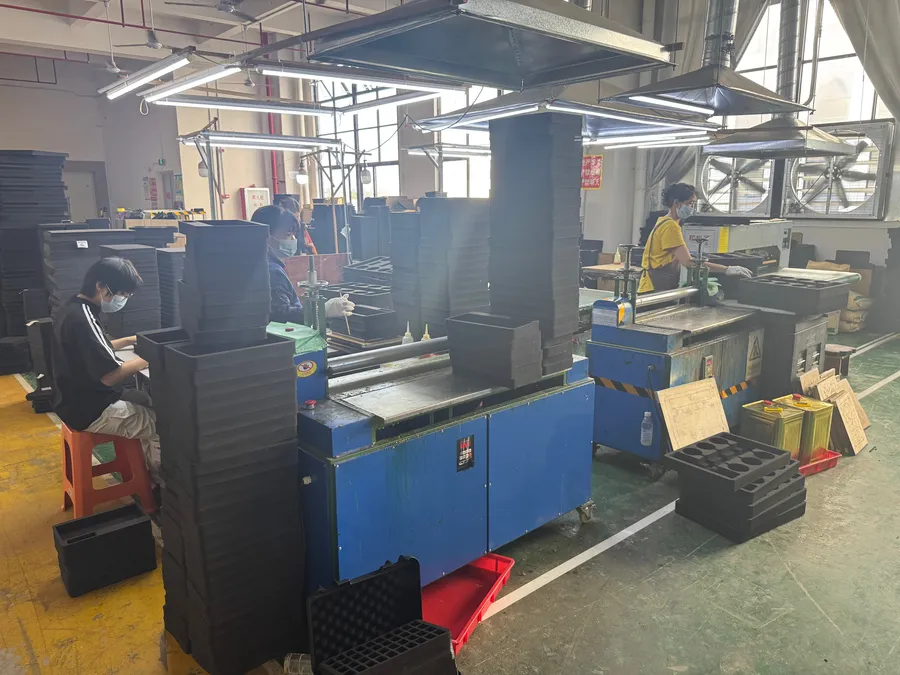
| Who cuts the foam and to what reference? | Explains die-cut or CNC-cut to a drawing or sample | Treats foam as an afterthought accessory |
| Who owns the mould for a bespoke size? | States tooling cost, ownership and MOQ plainly | Cannot separate a colour change from a new mould |
Run a sample and a documentation check
Before a first container, evaluate the supplier's follow-through. Order an OEM sample and check its published dimensions, wall thickness, seal type and hardware against the datasheet you were quoted, because the gap between the two is the real measure of reliability. Ask for the specific SKU sheet in writing, request the carton packing list for your freight calculation, and confirm that any rating claimed for that model can be traced to a measurement. This is a documentation and consistency test, not a certification test; a supplier that keeps honest records will pass it easily, and one that does not will reveal it in the sample.
Scoring a supplier shortlist
Score each candidate on the same axes: per-model data quality, honesty about unmeasured fields, MOQ transparency across four order types, tooling and lead-time realism, shipping and deposit clarity, and demonstrated consistency in the sample. Weight the ones you cannot verify after arrival most heavily, because those are where cross-border disputes happen. On that framework KeXin's position is deliberately narrow: a moulding manufacturer with published specs and measured-where-tested data, wholesale and OEM EXW or FOB terms, clear MOQ bands and standing sample and mould lead times. Use the same questions with every supplier and the decision becomes arithmetic instead of trust.
Customisation
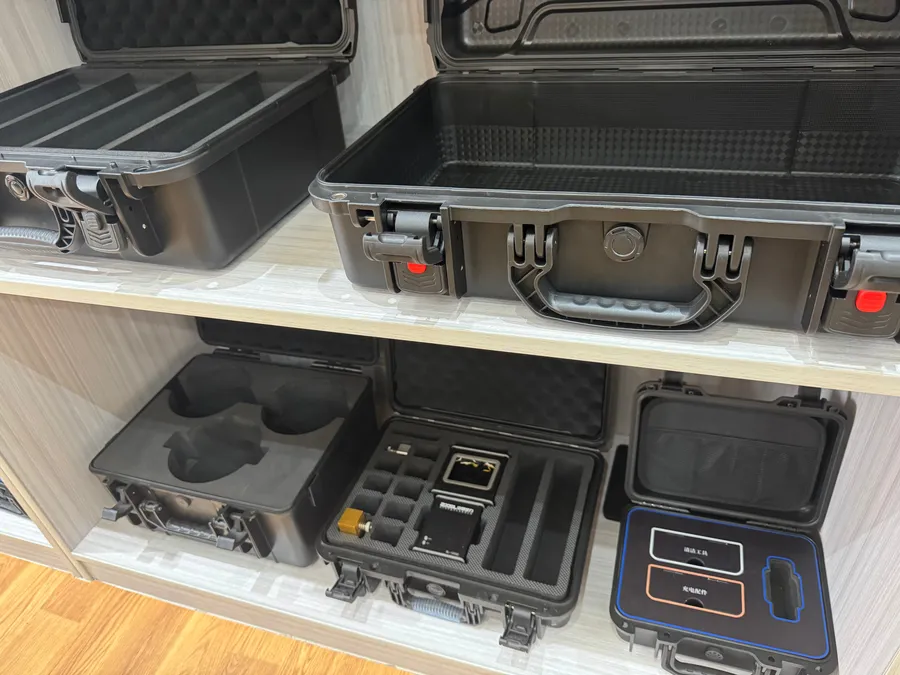
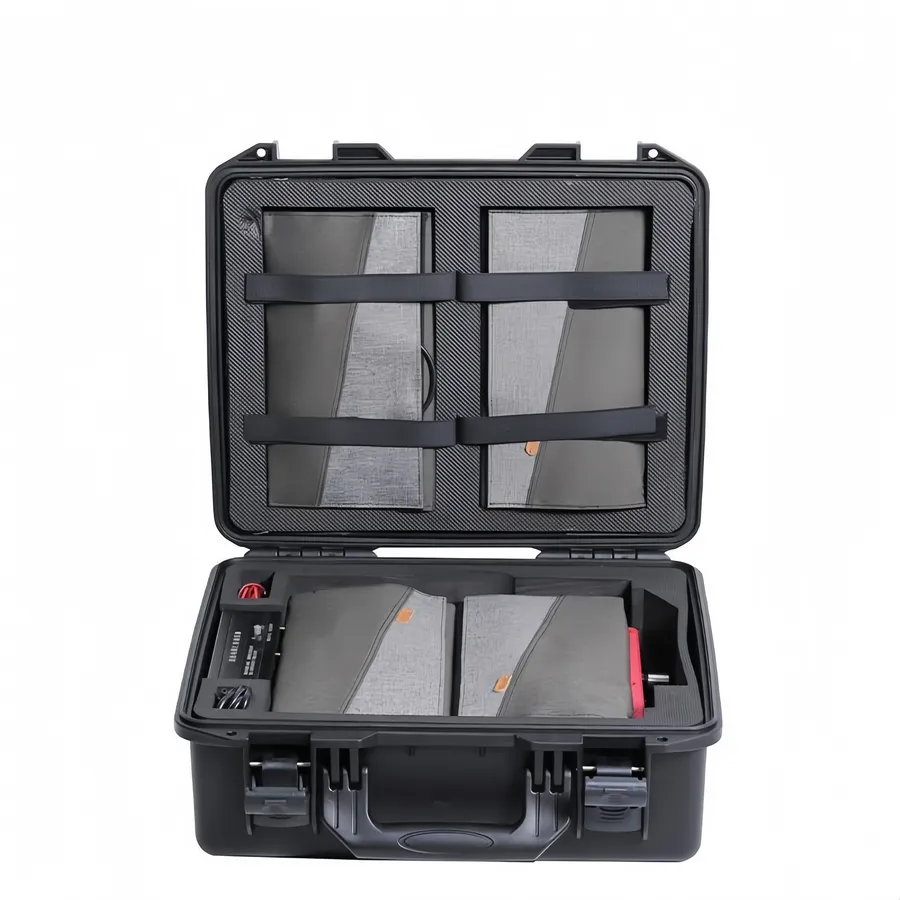
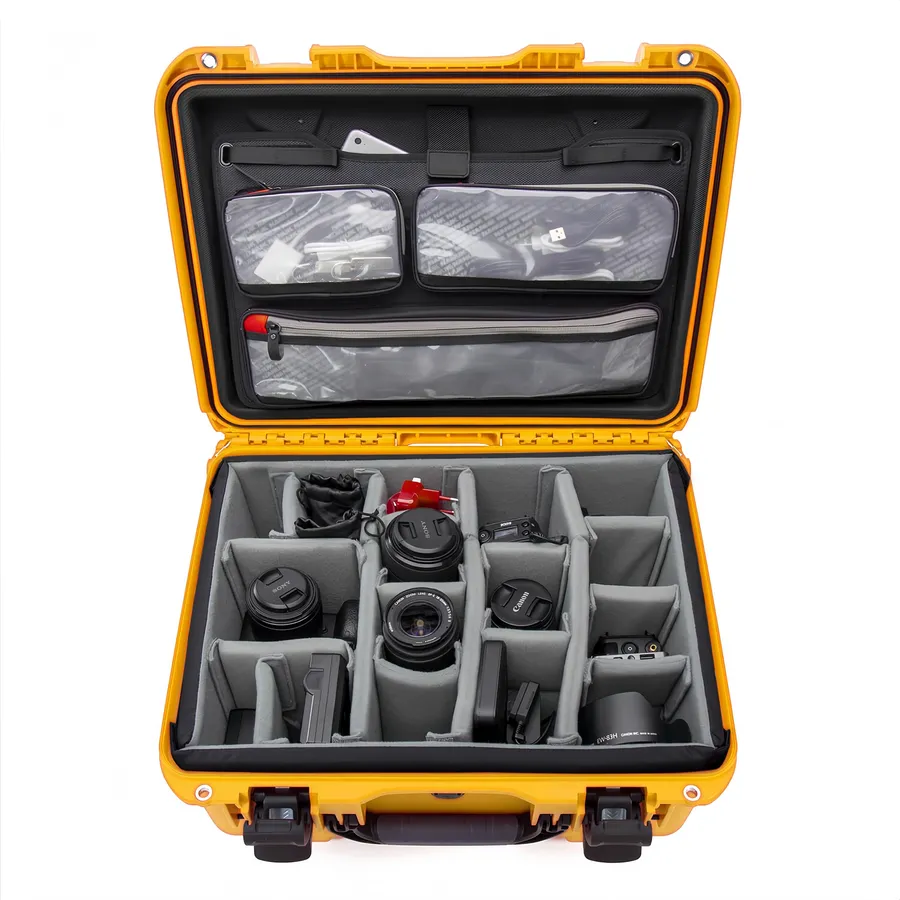
Everything described above is configurable on a standard shell: interior layout (pick-and-pluck, die-cut or CNC-cut), foam grade and thickness, colour, logo method, latch and lock count, pressure-equalisation valve, cable ports, document holder and identification plate. A bespoke exterior geometry requires a new mould — 125 days, from 3,000 units per moulded component.
Procurement considerations
| Question | What to send us |
|---|---|
| Which shell fits? | Equipment L × W × H as packed, plus required clearance per axis |
| What does it cost? | Order quantity and estimated annual quantity — the two drive different answers |
| Is tooling needed? | Whether an existing shell clears the envelope with usable foam depth |
| Lead time? | Your required delivery date, not just the order date |
| Certification? | The exact standard your tender names — we will say whether we can test to it |
| Freight? | Destination and preferred terms; carton and pallet data supplied with the quotation |
Comparison and selection guide
The tables on this page exist because a protective case is chosen by comparing three things: the envelope, the environment and the handling chain. Where no table applies, the rule below is.
| Situation | What To Do |
|---|---|
| Fixed installation | Choose a box whose external height matches your racking pitch, and check the narrow internal width if the shell tapers. |
| Mobile use | Prefer a four-latch configuration and a lid that can be removed cleanly with gloves. |
| Inventory control | Specify a foam or partition layout so that a shortage is visible without opening compartments. |
- Size on internal dimensions plus clearance, never on a product name.
- Choose the carrying method before the shell: it changes the series, not just the price.
- Specify the interior last, and decide up front whether the end user will reconfigure it.
How should international buyers evaluate a protective box supplier? relates to Procurement Guide. Related families: Ammunition Storage & Transport Boxes / Custom Protective Cases / Military Protective Cases / Equipment Transport Cases. Related sectors: field and industrial equipment. Continue in the Procurement Guide cluster.
This page is written from our own production data. If your requirement differs, send the dimensions and we will tell you which of the 155 models fits, or whether a custom route is needed.