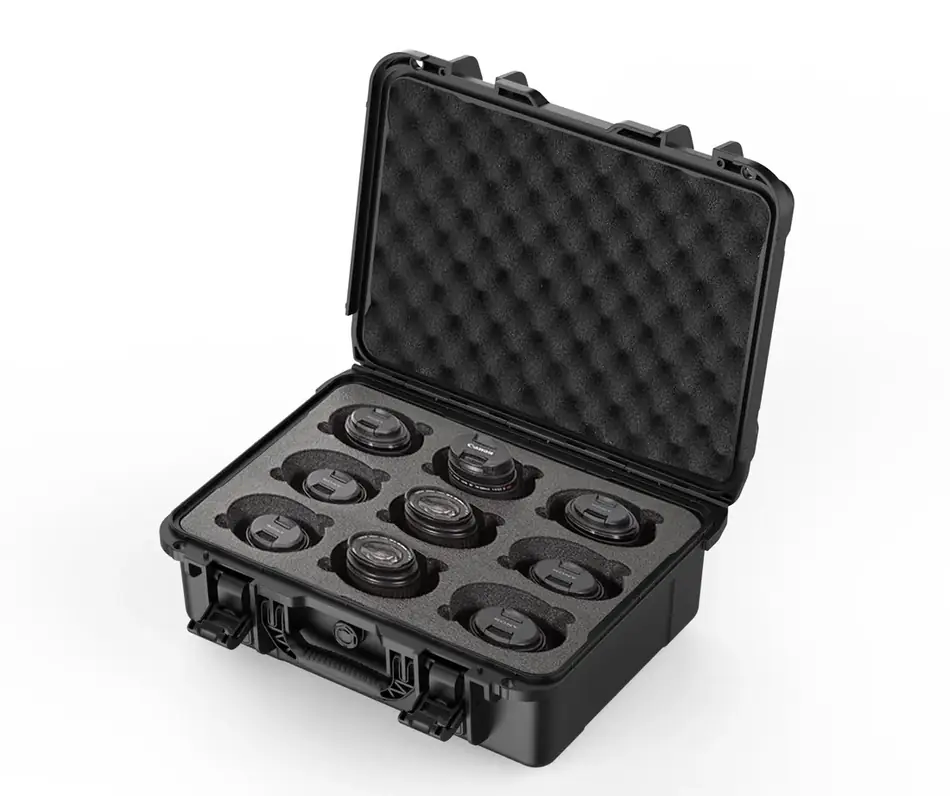
Can photography cases be customized?
Yes — photography cases can be customized, and the fastest route is usually not a new mould. A stock shell cut with foam fitted to your bodies, lenses and lights answers most briefs; colour, logo and hardware changes on an existing mould come next; a full OEM shell is for kit shapes that no stock internal envelope can hold. Send the equipment list and dimensions, and the factory answers with the route, the cost drivers and the timeline: about 45 days for a first OEM sample on an existing shell, about 125 days when a new mould is required.
Key points
- Customization runs at three levels: made-to-measure foam in a stock shell, modified colour and branding, or a full OEM mould.
- Most photography kits fit a published internal envelope, so the foam rather than the shell is what usually needs to be custom.
- Colour, silkscreen branding and hardware changes sit on existing tooling, so they cost a sampling cycle, not a mould.
- A new mould is justified only when no stock internal envelope fits the kit; budget about 125 days of tooling time for it.
- Protection figures travel with the model, not with the customization: fields not measured on a shell stay unmeasured after branding.
- Ask for carton and pallet data with the quotation; packing volume decides the landed cost more than the unit price does.
What buyers actually mean by photography cases customized
The phrase a buyer types is photography cases customized, and behind it sit three different briefs: a case interior that actually fits a specific camera kit, a case that carries the buyer's own brand, or a shell dimension that no catalogue size covers. The three need different tooling, different order sizes and very different timelines, so the first job of a quotation is to sort out which one you are asking for.
The mistake that wastes the most time is assuming customization starts with the shell. In practice it starts with the interior. A stock shell with a CNC-cut or pick-and-pluck foam layout matched to your bodies, lenses, batteries and filters behaves like a custom case in every way the equipment can feel, and it ships in weeks rather than months.
Level 1 — a stock shell with a made-to-measure interior
The smaller shells in our outdoor family already cover the common camera-kit sizes. Model WL6-2205 measures 222 × 128 × 50 mm externally with a 200 × 98 × 41 mm internal envelope, a 3.5 mm ABS wall and a usable volume of 0.7 litres — enough for a compact body with a prime lens. WL6-2109 steps up to a 195 × 128 × 81 mm interior and 1.7 litres, and WL1905 gives a square 180 × 160 × 40 mm envelope with a 25 mm lid and a 15 mm base. For a working kit with two bodies, lenses and a flash, WL712# holds 6.4 usable litres in a 308 × 250 × 96 mm envelope on a 2.8 mm engineering-PP wall.
Customization at this level means the foam, the layer order and the cut-outs. Send the equipment list with dimensions; the interior is laid out with clearance around each item, heavy items supported near the hinge edge, and a pluck layer on top for whatever changes between trips.
Level 2 — modified standard cases: colour, branding, hardware
The next level changes the case you can see. Shell colour is a pigmentation decision made in the moulding material, so a run in your colour is a production parameter rather than a paint job — and the pigment is specified as part of the material system, which matters for a case that lives outdoors. Branding is applied by silkscreen on the lid or moulded into the tooling, and hardware such as latch count, handle type or a wheel set on the trolley shells is selected per model.
Because all of this sits on existing tooling, the timeline is a sampling cycle, not a mould: a first OEM sample on an existing shell takes about 45 days. The commercial terms are the factory's standard ones — wholesale and OEM/ODM only, priced EXW or FOB, with a 30% deposit and the balance after inspection.
Level 3 — full OEM: when a new mould is worth it
A new mould is the right answer only when no stock internal envelope holds the kit — long lens sets, unusual instrument shapes, or a dimensional brief tied to a rack or a vehicle drawer. Tooling a new shell is about a 125-day project, and the economics only work above the quantity where the per-unit saving overtakes the tooling cost; the honest answer for most photography briefs is that a stock shell with a custom interior does the same job for less.
If you do go to tooling, the decisions that matter are wall thickness for the stacking load you plan, the lid-to-base split for how the kit sits, and the seal channel where the route demands one. Those are the same numbers published per model in our catalogue, so a quotation can be checked line by line against a datasheet.
Stock, modified or full OEM — a comparison
The table is deliberately unsentimental: most photography briefs stop at row one, brand programmes stop at row two, and tooling is for the kit that genuinely does not fit. Ask for the check against the equipment list before asking for a mould — the answer is often that the envelope you need already exists in the catalogue, which changes both the price and the delivery date.
| Route | What Changes | Timeline | Best For |
|---|---|---|---|
| Stock shell + cut foam | Interior layout only | Weeks, from the equipment list | Camera kits that fit a published envelope |
| Modified standard | Colour, logo, hardware on an existing mould | About 45 days to a first sample | Brand programmes and rental fleets |
| Full OEM shell | New tooling: dimensions, wall, split, seal | About 125 days including the mould | Kit shapes no stock envelope holds |
| Private label | Your brand on a selected stock platform | Sampling cycle on an existing shell | Distributors building a house brand |
Outdoor photography cases customized: what changes outside the studio
Outdoor photography cases customized for field work have to answer dust, sand, rain on the move and handling by people who did not pack the kit. On the shell side that means the seal channel — 114 of the 145 shells in our outdoor family are offered with a compressible gasket in a continuous moulded channel — plus wall thickness for stacking in the vehicle, and on the largest kits the trolley platform: the 720 × 500 × 270 mm WL9-7227 with a 485 mm telescopic handle moves a full location kit between vehicle and set without a second pair of hands.
It is worth being precise about what a seal is and is not. A gasket in a continuous channel is a build feature we can show you on the model; an ingress-protection number is a test result from a defined method. We do not convert build features into ratings on a datasheet, and any supplier who quotes a protection figure should be asked to name the test method and produce the report.
What we do not claim about protection
Our product database records the protection fields per model exactly as measured or not measured. For the shells in this family, waterproofing, dust resistance, UV and temperature range are recorded as not measured; impact behaviour is a manufacturer option that depends on the foam layout you specify; and corrosion resistance is measured, because the thermoplastic shell has no ferrous corrosion path. We do not print an IP code on any datasheet, and no drop height is claimed without a test.
That is not modesty; it is the difference between a build feature and a test result. If your tender or brand standard demands a rating, we will say plainly which fields carry data and quote accredited third-party testing on the configured case against the method your buyer names. Hold every supplier in this market to the same two things: the report and the method.
How to brief the factory so the quotation comes back fast
Five things shorten the loop: the equipment list with dimensions as the kit is packed; the foam preference (CNC cut, pick-and-pluck or layered); colour and branding files; the annual quantity and order size; and the delivery port or Incoterm you buy on. With those, the answer comes back as a route (foam, modified or tooling), a price on EXW or FOB terms, and a timeline — about 45 days for a first sample on an existing shell, about 125 days when tooling is required.
KeXin New Materials (Guangdong) Co., Ltd. sells wholesale and OEM/ODM only — no retail, no DDP, no overseas warehouse — and third-party factory audits are welcome before you commit. Contact Fred Zhao or the KeXin sales team on WhatsApp +86 135 3588 0002 with the equipment list, and the first reply will tell you honestly whether your kit needs a custom case at all.
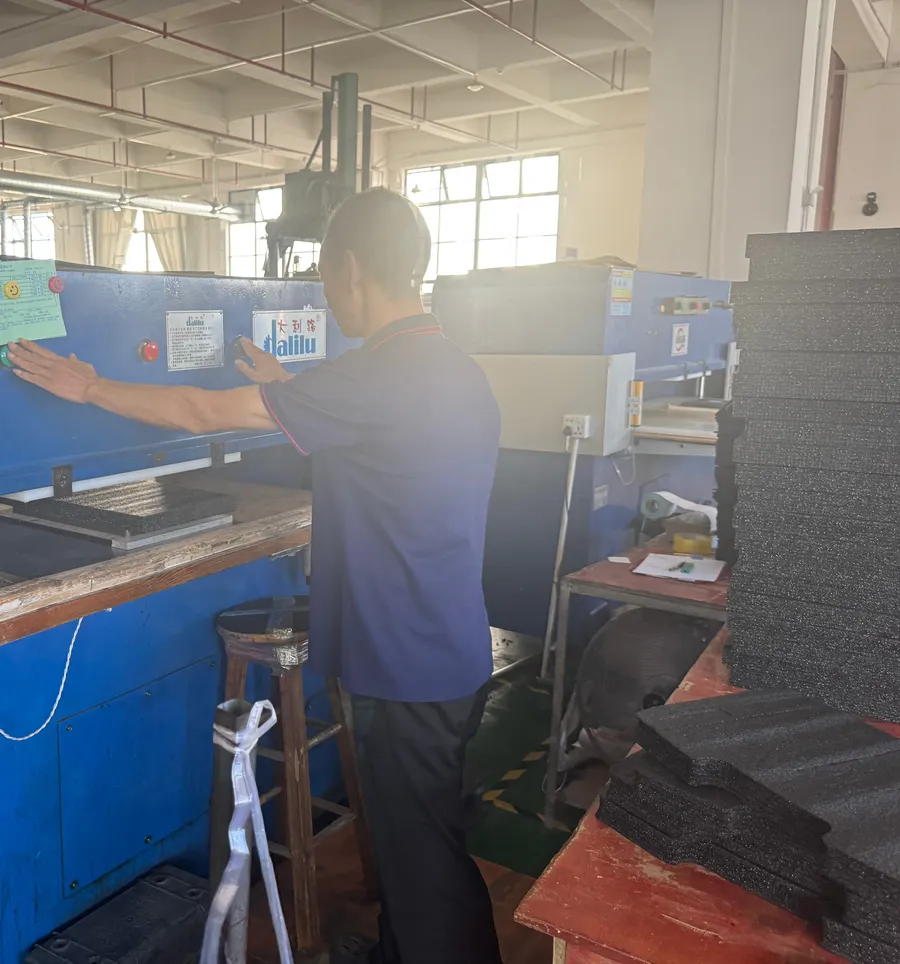
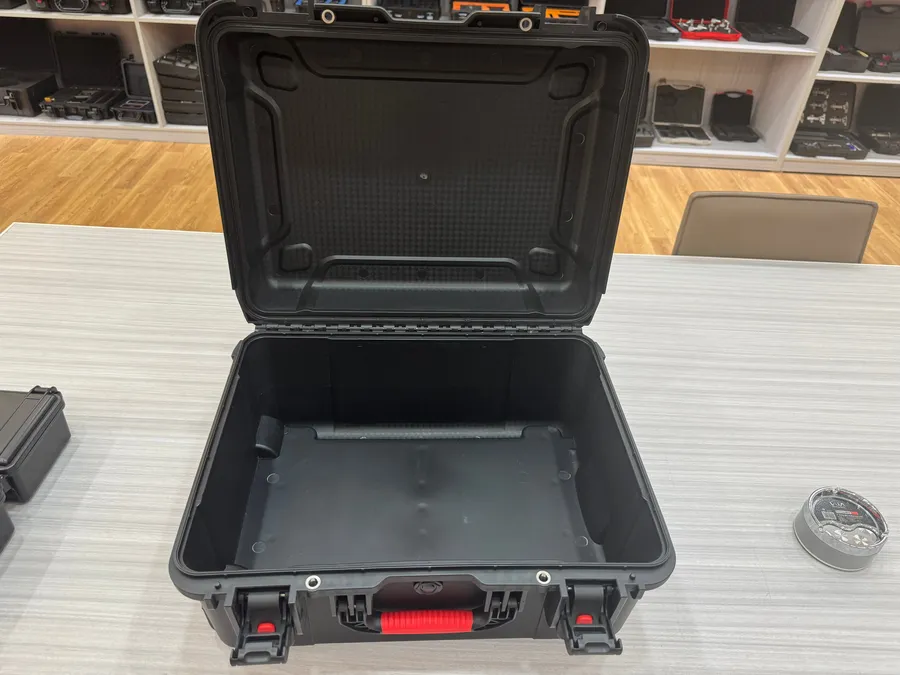
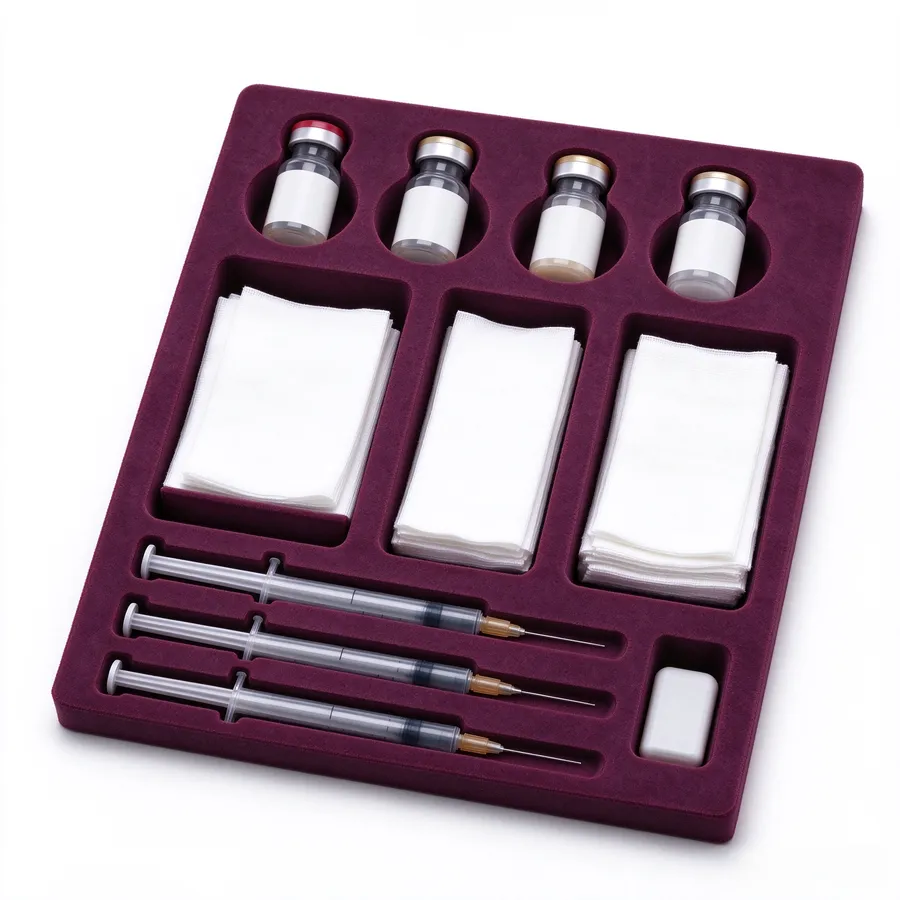
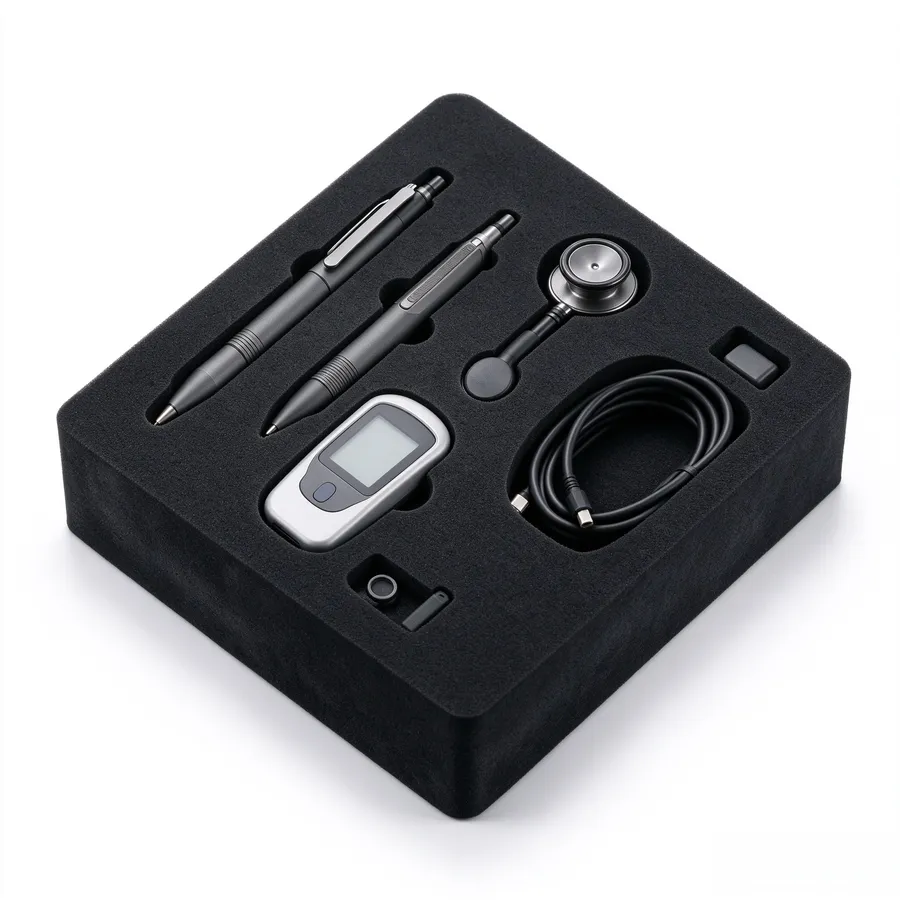
Customisation
Everything described above is configurable on a standard shell: interior layout (pick-and-pluck, die-cut or CNC-cut), foam grade and thickness, colour, logo method, latch and lock count, pressure-equalisation valve, cable ports, document holder and identification plate. A bespoke exterior geometry requires a new mould — 125 days, from 3,000 units per moulded component.
Procurement considerations
| Question | What to send us |
|---|---|
| Which shell fits? | Equipment L × W × H as packed, plus required clearance per axis |
| What does it cost? | Order quantity and estimated annual quantity — the two drive different answers |
| Is tooling needed? | Whether an existing shell clears the envelope with usable foam depth |
| Lead time? | Your required delivery date, not just the order date |
| Certification? | The exact standard your tender names — we will say whether we can test to it |
| Freight? | Destination and preferred terms; carton and pallet data supplied with the quotation |
Comparison and selection guide
The tables on this page exist because a protective case is chosen by comparing three things: the envelope, the environment and the handling chain. Where no table applies, the rule below is.
| Situation | What To Do |
|---|---|
| Changing kits | Layered pluck foam, rebuilt by hand. |
| Fixed rental fleet | CNC silhouette with serial pockets and an inventory list. |
| Harsh locations | Sealed shell plus desiccant provision in the lid. |
- Size on internal dimensions plus clearance, never on a product name.
- Choose the carrying method before the shell: it changes the series, not just the price.
- Specify the interior last, and decide up front whether the end user will reconfigure it.
Can photography cases be customized? relates to Procurement Guide. Related families: Camera & Photography Cases / Custom Protective Cases / Outdoor Protective Cases / Optical Equipment Cases. Related sectors: field and industrial equipment. Continue in the Procurement Guide cluster.
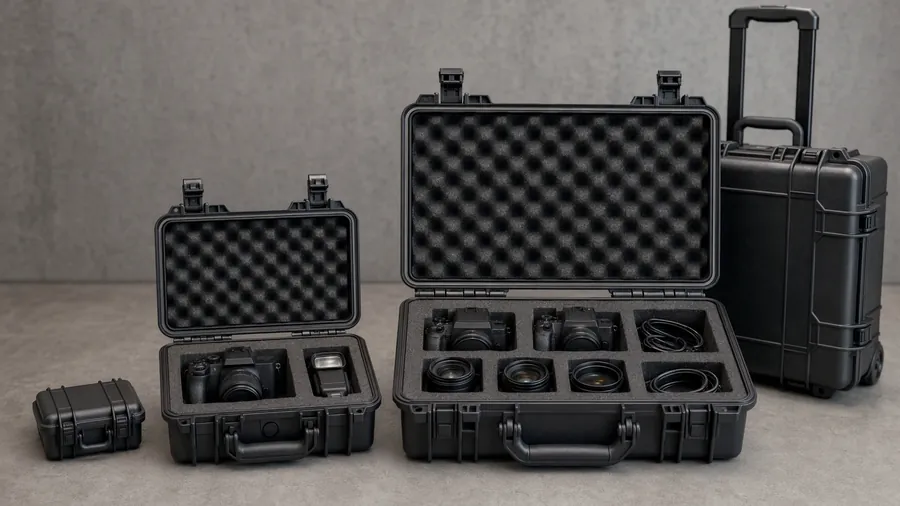
This page is written from our own production data. If your requirement differs, send the dimensions and we will tell you which of the 155 models fits, or whether a custom route is needed.