Storage & Transport Boxes For Organised Inventory
A storage box is bought as a system, not as an object. The four numbers that decide whether it works are internal volume, wall thickness, the lid-to-base depth split, and the carton data that lets you plan a pallet. Everything else — colour, latch style, division — follows from those.
Key points
- Stacking load is carried by the rim and the walls, never by the lid panel.
- A box that tapers has a narrow internal width that is smaller than its external width.
- Interior division is what converts a box into an inventory system.
- Carton dimensions and pieces-per-carton are published for sixty-four KeXin models.
Stackability, properly understood
A stack is stable when each box locates squarely on the one below and the load travels through the walls. A rim that is too shallow lets boxes shift; a wall that is too thin creeps under a static load over months, which is why a stack that is fine in week one can fail in month six.
Protecting contents in storage
In a depot the enemy is dust and condensation rather than impact. A perforation-free moulded shell with a continuous rim handles dust; a gasket option handles moisture; and storing the boxes with lids slightly ajar prevents the gasket taking a permanent set during long idle periods.
Applications
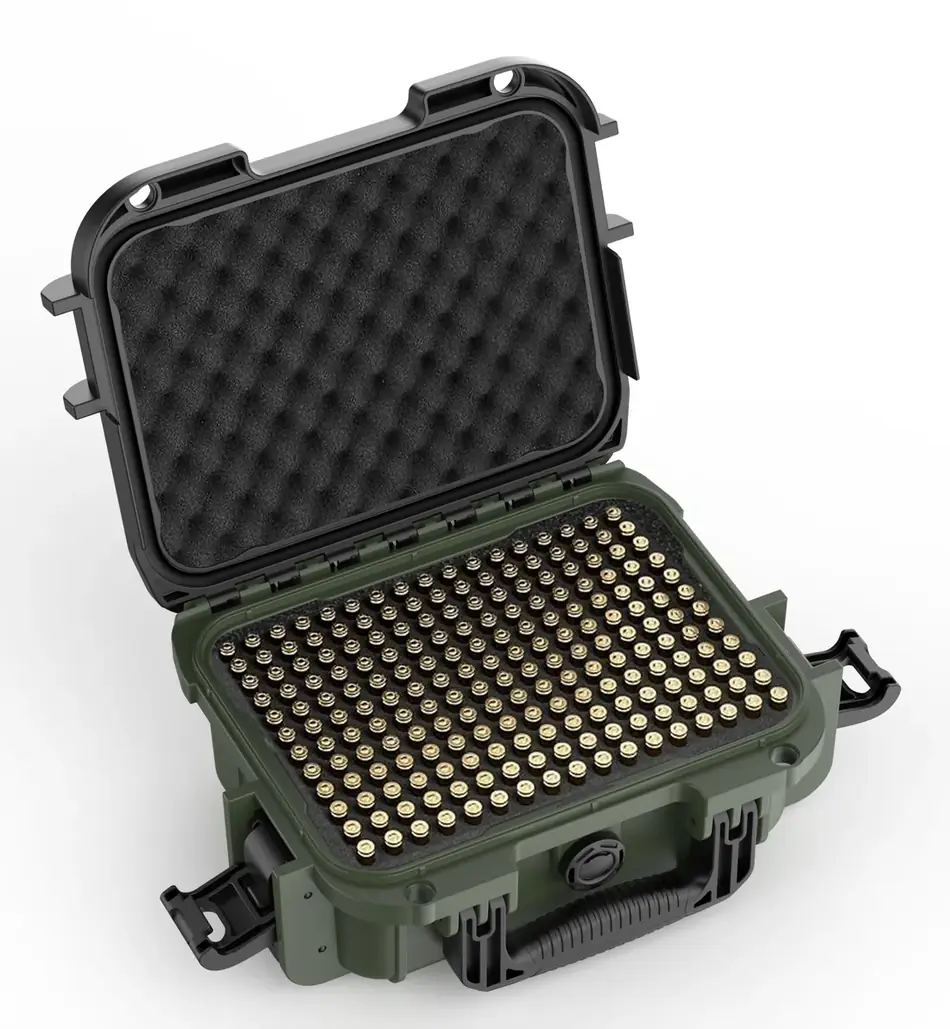
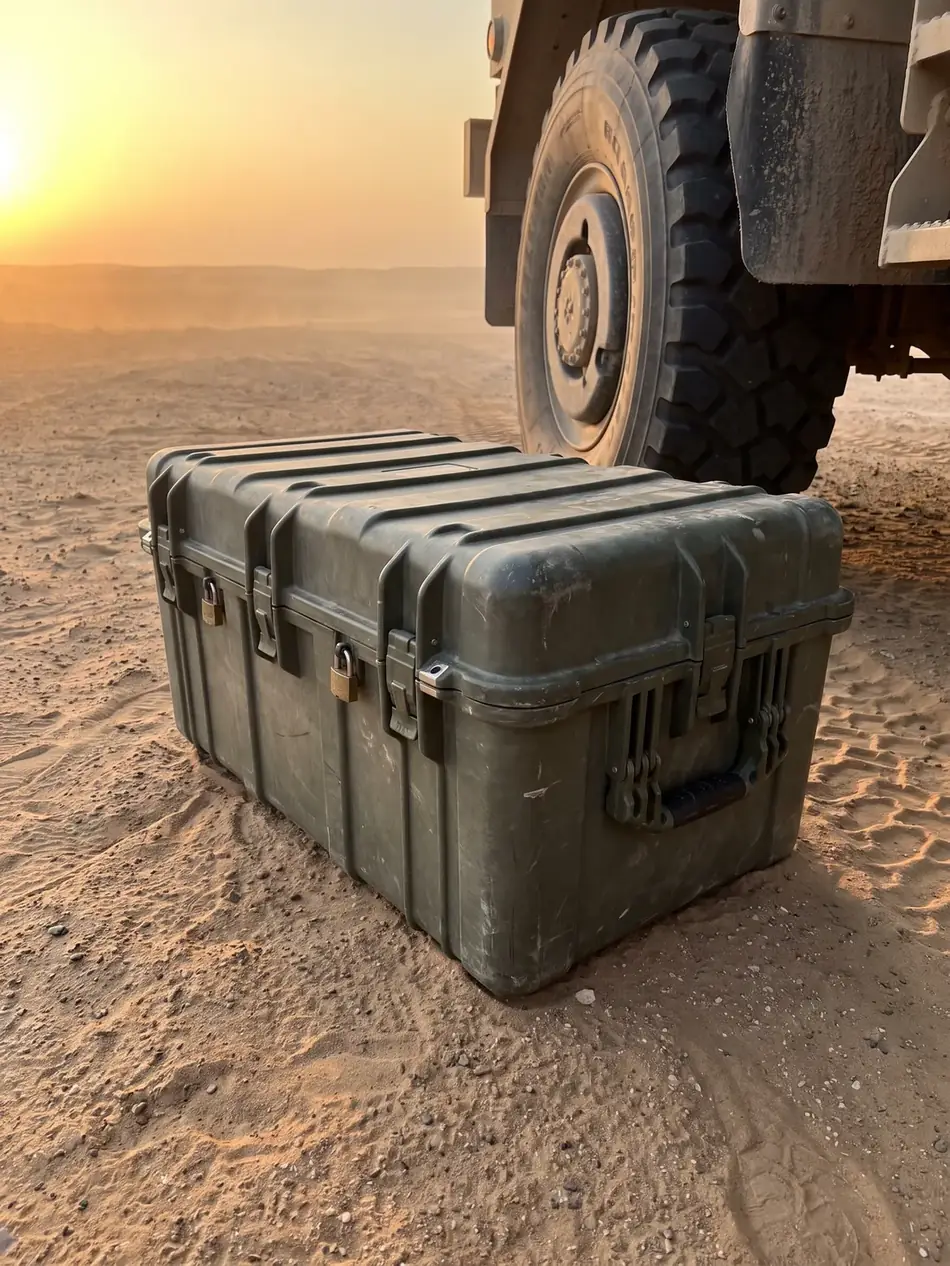
This matters most where the case is part of a movement chain rather than shelf packaging. In ammunition & inventory transport and military the same shell is specified differently because the handling, the environment and the verification requirement differ.
- Ammunition & Inventory Transport — Storage boxes are bought by the pallet-load, and the numbers that matter are volume, stacking be…
- Military — Military equipment moves through a chain of handlers, none of whom own the equipment and all of …
Customisation
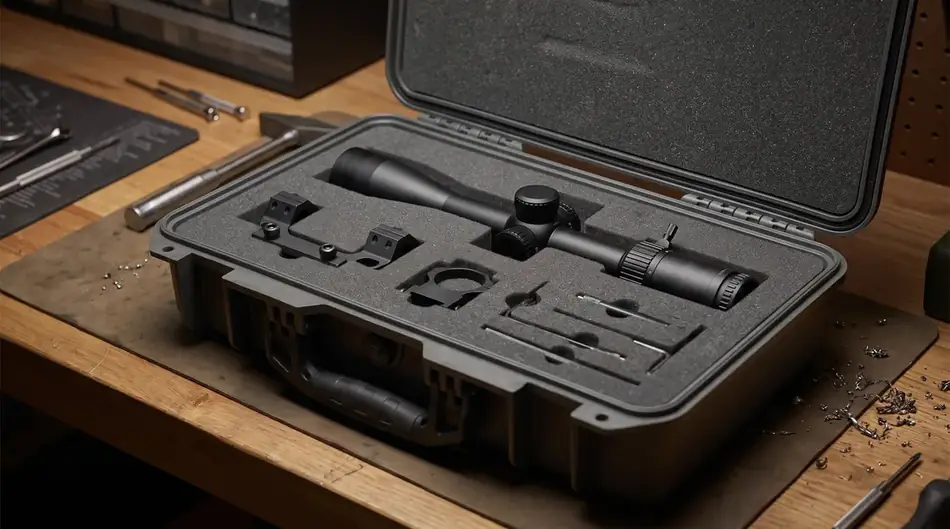
Everything described above is configurable on a standard shell: interior layout (pick-and-pluck, die-cut or CNC-cut), foam grade and thickness, colour, logo method, latch and lock count, pressure-equalisation valve, cable ports, document holder and identification plate. A bespoke exterior geometry requires a new mould — 125 days, from 3,000 units per moulded component.
Procurement considerations
| Question | What to send us |
|---|---|
| Which shell fits? | Equipment L × W × H as packed, plus required clearance per axis |
| What does it cost? | Order quantity and estimated annual quantity — the two drive different answers |
| Is tooling needed? | Whether an existing shell clears the envelope with usable foam depth |
| Lead time? | Your required delivery date, not just the order date |
| Certification? | The exact standard your tender names — we will say whether we can test to it |
| Freight? | Destination and preferred terms; carton and pallet data supplied with the quotation |
Comparison and selection guide
The tables on this page exist because a protective case is chosen by comparing three things: the envelope, the environment and the handling chain. Where no table applies, the rule below is.
| Situation | What To Do |
|---|---|
| Fixed installation | Choose a box whose external height matches your racking pitch, and check the narrow internal width if the shell tapers. |
| Mobile use | Prefer a four-latch configuration and a lid that can be removed cleanly with gloves. |
| Inventory control | Specify a foam or partition layout so that a shortage is visible without opening compartments. |
- Size on internal dimensions plus clearance, never on a product name.
- Choose the carrying method before the shell: it changes the series, not just the price.
- Specify the interior last, and decide up front whether the end user will reconfigure it.
Storage & Transport Boxes For Organised Inventory relates to Storage & Transport Box Guide. Related families: Ammunition Storage & Transport Boxes / Tool Cases. Related sectors: Ammunition & Inventory Transport / Military. Continue in the Storage & Transport Box Guide cluster.
This page is written from our own production data. If your requirement differs, send the dimensions and we will tell you which of the 155 models fits, or whether a custom route is needed.