How should storage boxes protect contents from moisture and dust?
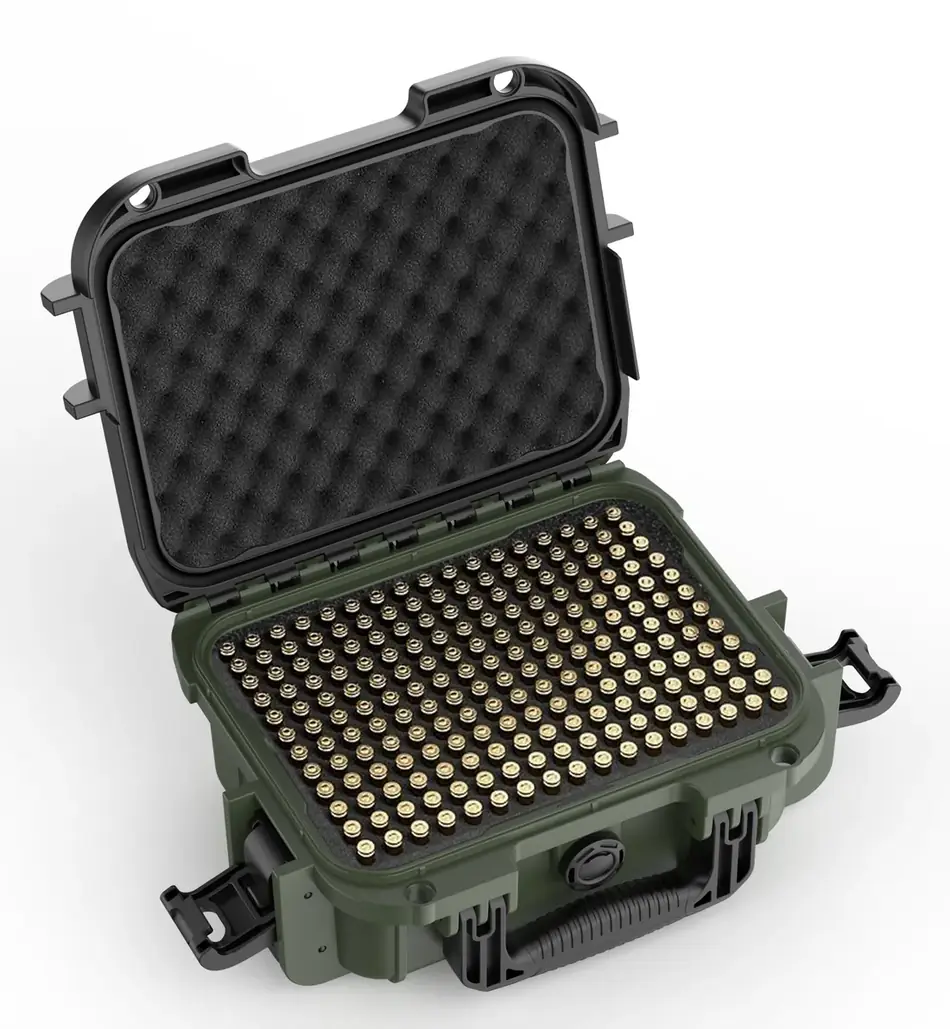
A storage box protects contents from moisture and dust by keeping one seam reliably closed for months at rest, and that is a different job from surviving a drop in transit. The defence has three published parts: a compressible gasket seated in a continuous moulded channel between lid and base, enough latches to hold that channel closed along its whole length, and geometry, feet and a stacking rim, that keeps the seam true while boxes sit in a pile on a shelf or floor. Every one of the 20 models in our ammunition storage box range publishes the gasket as a measured construction feature, and the shell's contribution to corrosion is published the same way: a thermoplastic wall with no ferrous corrosion path. What we do not publish is an ingress code, because no box leaves our factory with a moisture or dust figure that no test has measured; for storage planning, pair the sealed box with desiccant, an acclimatisation pause before opening, and a cleaning cadence for the channel.
Key points
- Dust and moisture attack a stored box slowly, so the seam that stays closed for months at rest matters more than impact performance.
- All 20 ammunition storage box models publish a compressible gasket in a continuous moulded channel as a measured feature.
- The gasket only works under latch compression: keep the channel clean and the latches doing up fully, or the seal leaks at the corners first.
- Temperature cycling pumps humid air across any seal; a pressure-equalising valve is available as a manufacturer option.
- Let a cold box acclimate before opening it in a warm room; condensation forms on the contents, not on the seal.
- The published corrosion claim is construction-based: a thermoplastic shell with no ferrous corrosion path, stated as measured.
- No ingress code is stated without a test record on that model; plan desiccant, handling and inspection on that honest basis.
Storage is a slower attack than transport
In transport, the threats are sudden: a knock, a drop, a downpour crossed in the rain between buildings. In storage the threats are slow and patient. Dust settles on every horizontal surface, works into latch detents and hinge knuckles, and waits to be carried inside the next time the lid opens. Moisture does not need an opening at all if the air inside the box is exchanged often enough: warm days and cool nights expand and contract the trapped air, and each cycle pushes humid air out and pulls it back in, leaving its water behind on the contents. Over a season of storage, that exchange does more damage than any single splash.
That difference changes what matters in the box. Impact ratings, wall stiffness and handling geometry still matter when the box moves, but the storage-critical features are the ones that keep the seam closed and stable while nothing is happening: the seal itself, the closure that compresses it, and the way the box behaves in a stack where its lid carries the weight of the boxes above it. Every figure quoted in this article is a published, measured value from a model page in the ammunition storage box range, or a construction fact stated there.
The seam: gasket, channel and the compression that closes it
The published seal on this range is a compressible gasket seated in a continuous moulded channel between lid and base, and all 20 models state it as a measured feature. Continuity is the point: a channel that is moulded in one unbroken loop has no end joints to peel or gaps to find, and a captive gasket cannot shift out of position when the lid is opened and closed hundreds of times a year. The gasket material is chosen to spring back after compression, because a gasket that takes a permanent set stops being a seal within its first year on a shelf.
The gasket, however, is only half of the joint. Something has to press the lid down evenly, and that is the latch line. Latch count is specified per configuration rather than assumed, because a long edge with too few latches bows away from the gasket in the middle and leaks exactly where you cannot see it. Every model in the range publishes a latch body that accepts a standard padlock, which means the same latches that hold the seam closed also secure the contents. In storage service the practical maintenance is simple and worth scheduling: keep the channel free of grit, confirm each latch actually bottoms out, and replace any latch that no longer pulls the lid down hard.
Dust paths that bypass the gasket, and how the box answers them
Dust rarely defeats a gasket head-on; it takes the detours. The hinge knuckle, the latch detents and the gap around a padlock shackle are the places where grit settles and eventually migrates. The moulded channel helps here too, because a captive gasket leaves no crumb-trap along the seam line, and the hinge and latch furniture on these models sit outside the sealed boundary rather than piercing it. What pierces the shell has to be justified, and on this range the published hardware list, hinges, latches, feet, is short for exactly that reason.
The second dust path is the floor. A box standing directly on a concrete store floor sits in the dust film and, in bad weather, in the film of water that sweeps across slabs. All 20 models in this range publish moulded feet as a measured feature, which holds the base clear of the surface, and all 20 publish a stacking rim, so a pile of boxes keeps its seams aligned instead of letting the weight above twist a lid out of true. Stack straight and the seal line stays straight; that is a storage practice as much as a product feature, and the stackable flag on every model page tells you the geometry was designed for it.
Moisture: what the box keeps out, and what it cannot
A closed seam stops splash, drips and settling dust well; what it cannot stop is the slow exchange of air that temperature cycling drives. Every sealed box breathes a little as it warms and cools, and the moisture carried in stays behind when the air moves out. The published countermeasure is optional: a pressure-equalising valve is offered as a manufacturer option across the range, and on a box that will see real temperature swings, an unheated store, a container deck, a vehicle parked outside, the valve is the difference between a sealed box and a box that pumps. Our separate article on pressure equalisation explains the mechanism in detail.
The second moisture event in storage is condensation, and it happens at the moment of opening. A box brought from a cold store into a warm room chills its contents below the dew point of the new air, and moisture condenses on the first cold surfaces it touches: the metalwork, the optics, the packed kit. The practice that prevents this costs nothing: let the closed box sit and warm through before opening it. The third tool is desiccant, and it belongs to the packing plan rather than the box: the seal reduces how much humid air gets in, but it does not dry air that was humid when the lid closed, so a sachet sized to the cavity and replaced on a schedule is part of honest storage planning. What we do not do is claim an ingress rating for a box that has not been tested; the model pages state the seal construction and nothing more.
Corrosion and the shell material
For ammunition, tools and any contents with bare metal, the box itself should never be the rust source, and that is a published claim on this range rather than a promise: corrosion resistance is stated as measured, with the note that the thermoplastic shell has no ferrous corrosion path. Polypropylene, engineering polypropylene and ABS neither rust nor feed rust, and the moulded hardware keeps steel parts outside the sealed boundary or thermoplastically isolated. Twelve of the 20 models are PP, three are engineering PP for higher stiffness, and five are ABS where surface finish matters more than chemical inertia.
The claim has a boundary that matters for storage planning: it describes the shell, not the contents. Brass and steel inside the box still need their own preservation, oils, wraps, and a humidity target, because the box's job is to keep the environment stable and exchange-free, not to chemically protect what you put in it. Read the corrosion note as: the box adds no rust, and gives you a sealed space worth conditioning.
Published storage-box figures to specify against
The table below lists seven published models across the series that make up this range, with the figures a storage planner actually uses: the envelope for shelf depth planning, the internal and usable volumes for cavity and desiccant planning, and the mass that decides how high the stack can go. All values are measured per model; every model listed publishes the gasket as measured.
| Model | Series | Shell | Wall Mm | External Mm | Internal Mm | Usable L | Net G | Gasket |
|---|---|---|---|---|---|---|---|---|
| KX-3213 | 0 | PP | 3.0 | 315 x 260 x 128 | 308 x 230 x 118 | 7.2 | 860 | Yes, measured |
| KX-3609 | 0 | PP | 3.0 | 360 x 310 x 90 | 355 x 280 x 80 | 6.9 | 900 | Yes, measured |
| KX-3508 | 1 | Engineering PP | 3.0 | 350 x 300 x 79 | 344 x 268 x 72 | 5.7 | 995 | Yes, measured |
| KX-63317 | 6 | ABS | 4.0 | 328 x 232 x 167 | 300 x 178 x 152 | 6.5 | 1370 | Yes, measured |
| KX-63912 | 6 | ABS | 3.8 | 389 x 295 x 120 | 360 x 240 x 104 | 7.7 | 1600 | Yes, measured |
| KX-83514 | 8 | PP | 4.9 | 345 x 290 x 135 | 315 x 235 x 122 | 7.2 | Not published | Yes, measured |
| KX-3315 | 9 | Engineering PP | 4.1 | 334 x 287 x 150 | 303 x 224 x 135 | 7.4 | 1670 | Yes, measured |
Selection guide: matching the box to the storage risk
Start from the worst environment the box will actually sit in, not the average one. A conditioned armoury or store room with stable temperature puts the least demand on the seam, and any model in the range with a gasket and a sound latch line will hold dust out for the long term; there the selection decision is really about cavity size and stacking plan. An unheated store, a shipping container or a vehicle parked outdoors cycles temperature daily, and that is where the pressure-equalising valve option and a disciplined desiccant schedule stop being optional extras.
Then size the cavity for the contents plus their preservation. Usable interior volume across the range runs from 3.0 to 7.7 litres per model against empty internal volumes of 3.5 to 9.2 litres, and the difference between those two figures is the room foam, dividers and desiccant take before the contents go in. Deep-bodied models such as the KX-63317 at 152 millimetres of internal height suit boxed ammunition and upright items; shallow trays such as the KX-3609 suit pistol magazines and flat kits where every item should be visible at a glance.
Finally plan the stack and the shelf before the boxes arrive. Every model here is published stackable, walls run 3.0 to 5.0 millimetres, and empty mass runs from 570 grams to 1.68 kilograms, so a modest shelf carries a real inventory; but a stack is only as straight as its worst-placed box, and a twisted pile works every seam below it. Leave the heaviest boxes low, keep stacks to a height one person can serve without climbing, and leave a hand's width behind each row so the latch line stays reachable for inspection.
Where these storage boxes earn their keep
The obvious service is ammunition and magazine storage in armouries and unit stores, where the combination that matters is a sealed seam, a padlock-accepted latch and a stack that holds a squad's worth of kit on one shelf. The same three features serve the adjacent loads: battery stocks and night-vision spares that hate humidity, optics and laser modules waiting between range days, and precision tools in vehicle stores that see every degree of every season.
The pattern generalises beyond defence as well, because a sealed, stackable, small-envelope box is the right answer anywhere dust and damp are the enemies: electronics spares in coastal workshops, photographic and survey kits in transit stores, and medical consumables that need a clean, closable container. The ammunition transport application page and the storage box category collect the configurations we build most often for these roles.
Customising the storage configuration
Every model accepts a custom interior: Pick and Pluck for kits that evolve, die-cut for stable volumes, CNC-cut cavities for items where location matters, in EVA, PE or EPE grades with layered, egg-crate or custom structures. Dividers keep round items from migrating, a soft face layer protects finishes, and a reserved pocket for desiccant keeps the sachet off the contents and in the airflow. The published requirement is a drawing, a photograph of the packed kit, or the physical sample.
Shell-level options follow the OEM route: colour at 300 pieces, logo at 300, a new mould at 3,000, with the pressure-equalising valve and document holder quoted as options per configuration. Lead time is 45 days on an existing mould and 125 days on a new one, with a 30 percent deposit on custom orders. For most storage programmes the interior and the valve are enough, which is why we ask for the packed-kit photo before any conversation about a bespoke shell.
Purchasing notes and the limits of what we claim
We manufacture and sell wholesale and OEM only, quoted EXW or FOB, with no retail channel, no DDP shipping and no overseas warehousing. The published minimums are one piece for a standard box and one for custom foam, 300 for colour or logo work, and 3,000 for a new mould. Pallet quantities on this range are published as calculated per customer pallet rather than measured, so tell us your pallet footprint early and we will quote the fit instead of guessing it.
On claims, the model pages are the contract: seal construction and corrosion behaviour are stated as measured construction facts, dimensions, wall thickness and mass are published per model, and no ingress code is stated for any model without a test record on that exact model. If your programme requires a rated figure, we quote accredited testing against the specific configuration. A storage box that is specified on its published numbers, conditioned with desiccant and valve where the climate demands it, and stacked and inspected on a schedule will outlast the contents' service interval; a box bought on an unmeasured promise will not, whatever the brochure says.
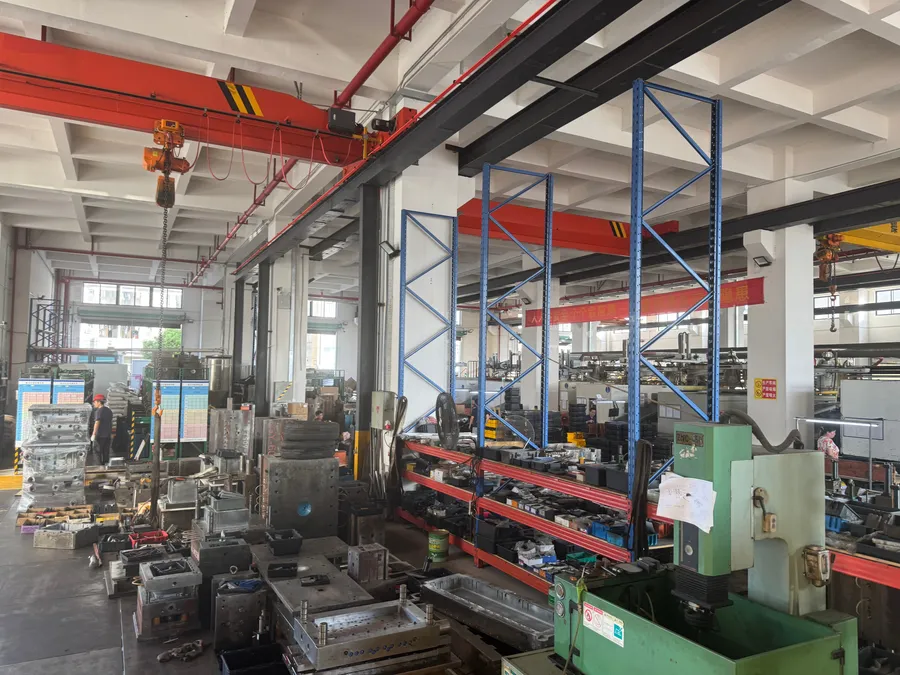
Customisation
Everything described above is configurable on a standard shell: interior layout (pick-and-pluck, die-cut or CNC-cut), foam grade and thickness, colour, logo method, latch and lock count, pressure-equalisation valve, cable ports, document holder and identification plate. A bespoke exterior geometry requires a new mould — 125 days, from 3,000 units per moulded component.
Procurement considerations
| Question | What to send us |
|---|---|
| Which shell fits? | Equipment L × W × H as packed, plus required clearance per axis |
| What does it cost? | Order quantity and estimated annual quantity — the two drive different answers |
| Is tooling needed? | Whether an existing shell clears the envelope with usable foam depth |
| Lead time? | Your required delivery date, not just the order date |
| Certification? | The exact standard your tender names — we will say whether we can test to it |
| Freight? | Destination and preferred terms; carton and pallet data supplied with the quotation |
Comparison and selection guide
The tables on this page exist because a protective case is chosen by comparing three things: the envelope, the environment and the handling chain. Where no table applies, the rule below is.
| Situation | What To Do |
|---|---|
| Fixed installation | Choose a box whose external height matches your racking pitch, and check the narrow internal width if the shell tapers. |
| Mobile use | Prefer a four-latch configuration and a lid that can be removed cleanly with gloves. |
| Inventory control | Specify a foam or partition layout so that a shortage is visible without opening compartments. |
- Size on internal dimensions plus clearance, never on a product name.
- Choose the carrying method before the shell: it changes the series, not just the price.
- Specify the interior last, and decide up front whether the end user will reconfigure it.
How should storage boxes protect contents from moisture and dust? relates to Storage & Transport Box Guide. Related families: Ammunition Storage & Transport Boxes / Military Protective Cases / Waterproof Cases / Custom Protective Cases. Related sectors: field and industrial equipment. Continue in the Storage & Transport Box Guide cluster.
This page is written from our own production data. If your requirement differs, send the dimensions and we will tell you which of the 155 models fits, or whether a custom route is needed.