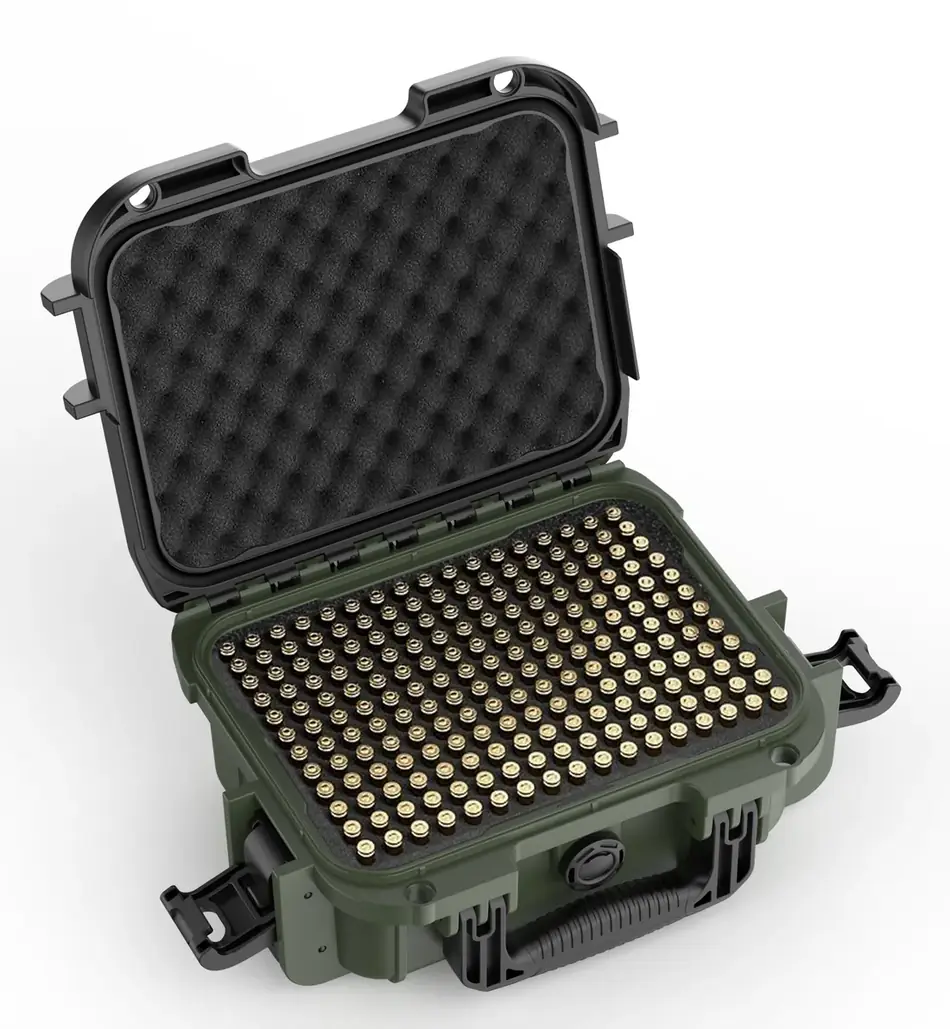
How should heavy contents be supported?
Support heavy contents with three coordinated layers rather than one thick wall. The shell carries the load: wall thickness across our stackable storage box range is published per model, from 2.0 mm on small utility shells to 5.0 mm on deep stacking models, and it is the number that decides how a box behaves under a stack. The interior spreads the load: a firm carrier layer under a softer contact layer turns a point load into a distributed one and keeps dense items from printing onto the base panel. The closure completes the path: latches and the lid-to-base rim hold the gasket evenly compressed and keep the boxes in a stack aligned. Specify all three against the packed mass you actually ship, then verify every figure on the datasheet of the exact model, because internal volume alone tells you very little about carrying behaviour.
Key points
- Size the support system to the packed mass you ship, not to the box name; two models of equal volume can behave very differently under load.
- Wall thickness decides stacking behaviour; published figures run from 2.0 mm to 5.0 mm across the range, listed per model.
- Check the lid and base depth split before planning the interior; it decides which half carries the dense part of the load.
- Foam cushions, structure carries: put a firm carrier layer under a soft contact layer to spread point loads.
- Latches and rim alignment are part of the load path in a stack, not decoration; treat hardware as a wear item.
- Ask for packing data with the quote: pieces per carton, a pallet count calculated to your pallet, and container loading figures.
Where the load actually goes
When a loaded box sits in a stack, the force path runs from the contents, through the interior, into the base panel, and then through the rim and corners into the box below. Every element in that path matters. The base panel carries the contents. The side walls stiffen the panel so it cannot dish inward under a dense load. The rim spreads the contact area into the box beneath, and the latches keep the two halves clamped so the rim stays engaged instead of separating under vibration. Feet and stacking registers keep boxes from sliding sideways on the shelf or the pallet.
Wall thickness is the clearest published indicator of this system. Across our range it runs from 2.0 mm on small utility shells to 5.0 mm on deep stacking models, and it is listed for each model in our product database. An 8.4 litre shell at a 3.0 mm wall and a 17.3 litre shell at a 3.0 mm wall are not interchangeable under a stack, because the larger footprint puts more bending moment into the same panel thickness. Read the figure for the exact model you are buying, and treat any claim of a single universal load rating with suspicion. We publish dimensions, wall thickness and packing data per model rather than one blended number.
Start from the base, not the lid
The published lid and base depth split tells you which half of the shell is engineered to contain the load. Some shells split evenly, such as the 4.5 litre model at 315 x 260 x 70 mm with a 32/32 mm split. Others are deliberately unbalanced: the 8.4 litre model at 315 x 260 x 128 mm is published with an 86/32 mm split, and the 8.6 litre model at 355 x 277 x 153 mm with an 85/50 mm split. A deep half gives dense contents more containment and keeps the mass below the rim line, which matters when boxes are lifted, tilted onto a trolley, or stacked more than one high in a vehicle.
For heavy contents, plan the interior so the mass sits low and centred in the deeper half, and keep clearance between the load and the opposite half so the closure never has to preload the contents. A lid that has to squeeze the load to close will fight the latches, wear the gasket unevenly and eventually hold the rim slightly open, which is how a well-built box starts behaving like a loose one.
Let the interior do the spreading
A dense item resting directly on the base panel turns every bump in the road into a point load on one small patch of plastic. The interior exists to convert that into a distributed load. A firm carrier layer, typically a dense foam or a fabricated insert, takes the weight and spreads it over the largest practical area of the base. A softer contact layer on top of the carrier protects the finish of the contents and stops them migrating. Thickness does more work than hardness here: our foam guide explains why stopping distance reduces transmitted force faster than density does, which is counterintuitive to most buyers.
Interiors are configured per order rather than fixed at the shell. Custom foam inserts are available from a single piece under our OEM programme, with CNC-cut layouts for fixed kits and pick-and-pluck layouts where contents change. If the load profile will vary over the life of the box, design the carrier for the heaviest recurring case and leave the variable zone in pluck foam, so one interior serves both.
Match the support strategy to the content
| Content Profile | Support Strategy | Verify On The Datasheet |
|---|---|---|
| Dense small items: hardware, batteries, munitions components | Firm flat carrier over the whole base; compartmented cells so mass cannot migrate to one corner | Base depth in the split, wall thickness, internal envelope |
| Long rigid items: bars, assemblies, instruments in sleeves | Full-length contact along the body, clearance at the ends, mass centred between hinge and latch lines | Internal length and width, lid and base depth split |
| Mixed kits: one heavy unit plus light accessories | Fixed carrier for the heavy core, pluck-foam zone for the rest; heavy unit low and centred | Internal volume, usable interior volume |
| Stacked inventory loads on shelving or pallets | Uniform footprint, aligned rim contact, nothing protruding past the rim line | Stackable designation, packing data per carton |
A short selection guide for heavy loads
Work in this order. First, the packed mass and its handling: who lifts it, how far it travels, and whether the boxes will be stacked in transit or on shelving. Second, the internal envelope with clearance, measured on the equipment in its transport configuration, not on a brochure drawing. Third, the shell numbers, in this sequence: wall thickness for the stacking expectation, the lid and base depth split for load containment, internal volume for the kit, and seal availability, which is marked per model and should not be assumed from size, because a few small utility shells are offered without a gasket while others of similar size include one. Only after the shell is fixed should the interior be designed, because the interior is the cheapest part to change and the shell is the most expensive.
Where this matters in practice
Ammunition and inventory transport is the clearest case. Boxes live in stacks, move on trolleys and shelves, and carry contents that are dense relative to their volume, so the rim, the base panel and the interior carrier do most of the protective work. The same logic applies to tool kits that ride in vehicles, maintenance sets that move between benches, and instrument cases where the heavy unit sits beside light accessories. In each of these the real question is not whether the box is strong in the abstract, but whether the specific load path, from base panel through carrier to rim and latches, has been specified for that mass in that stacking arrangement. Our ammunition transport application page collects these handling cases in one place.
Customising support for a specific load
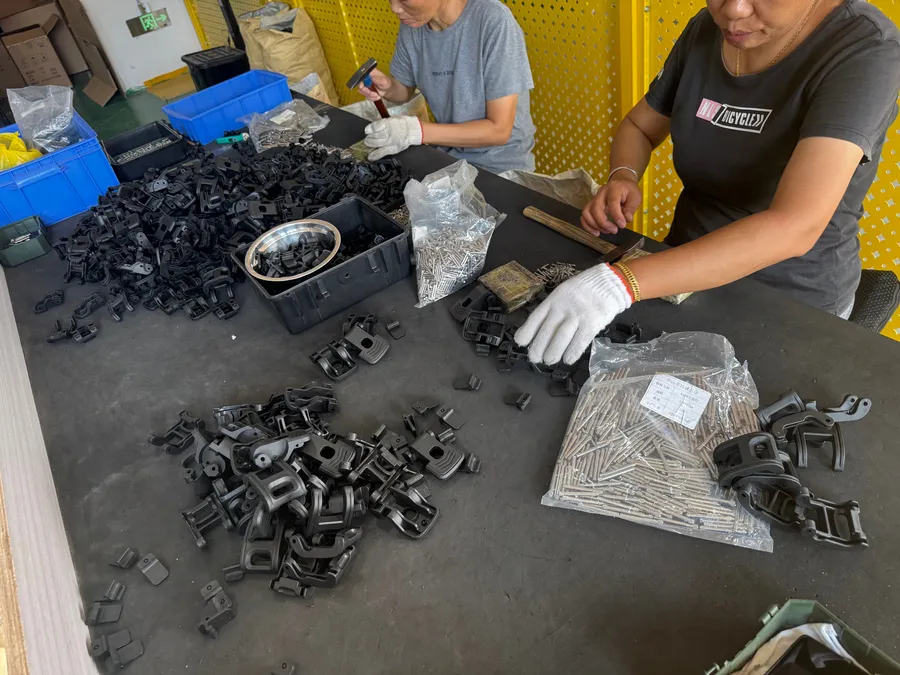
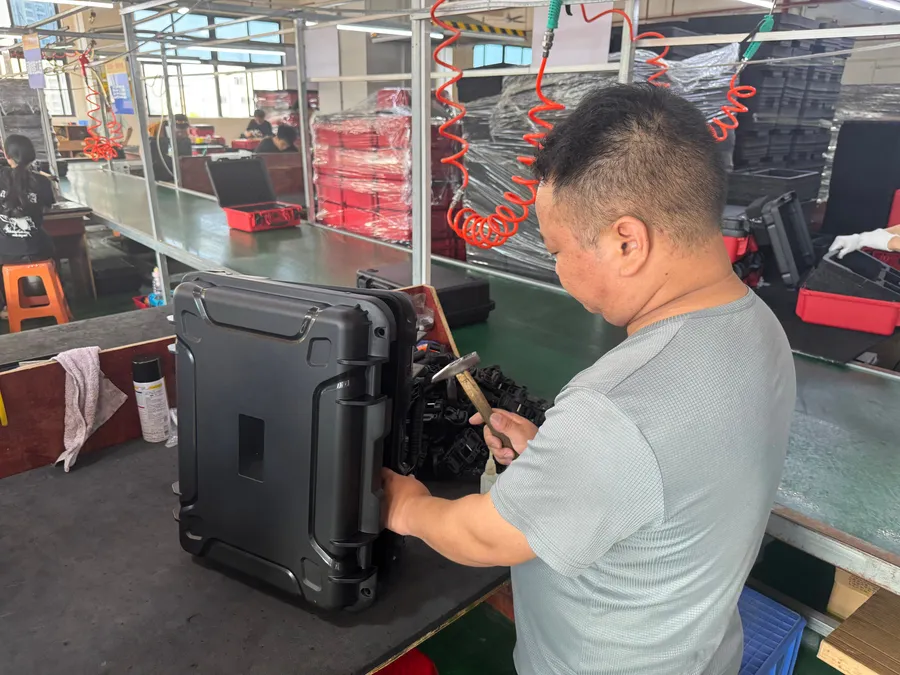
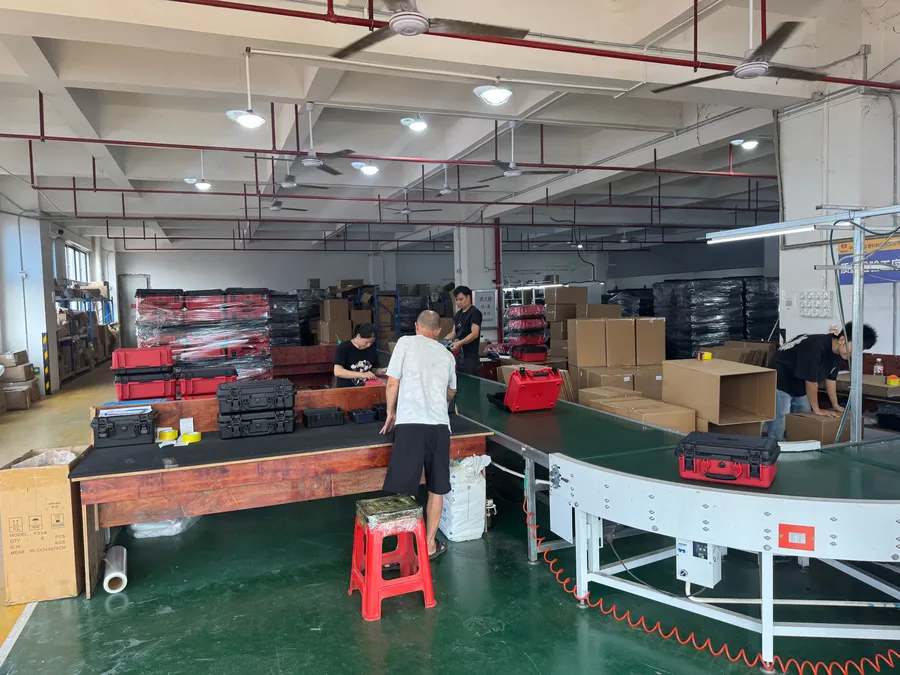
As a manufacturer working on wholesale and OEM terms, we treat support as a design item rather than an accessory. Send the item dimensions in transport configuration, the packed mass, and the stacking or racking arrangement, and the interior layout is engineered against a specific shell from the published range. Custom foam inserts start from a single piece, logo and colour options start at 300 units, and a custom mould starts at 3,000 units. On programme timelines, a first OEM sample takes about 45 days and a new mould about 125 days, with a 30 percent deposit to open tooling. Commercial terms are EXW or FOB; we do not sell retail, do not ship DDP, and do not operate overseas warehouses.
Buying notes before you commit
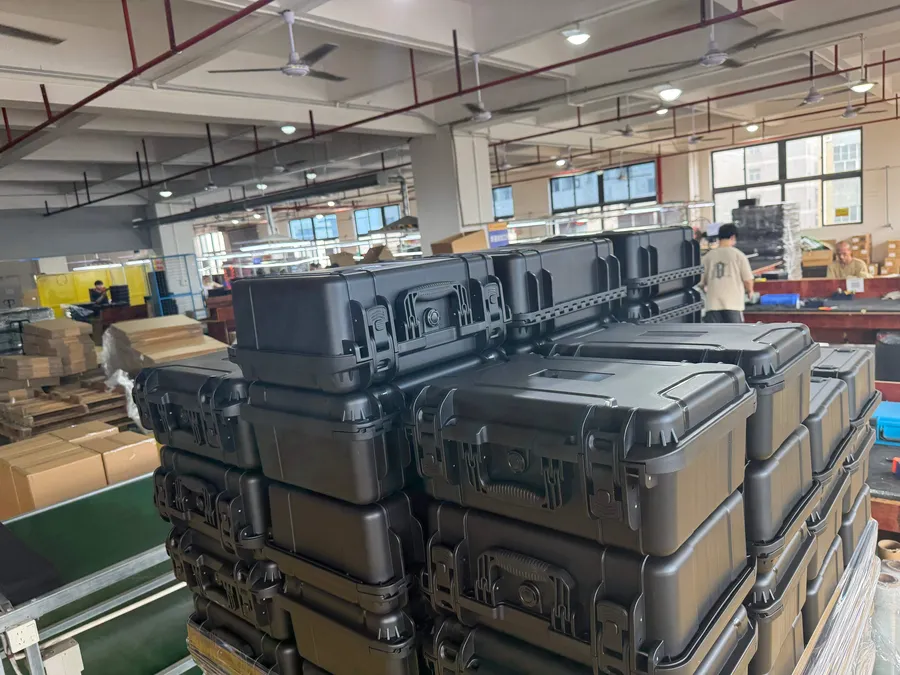
Three checks belong in the RFQ. First, packing data: many models publish pieces per carton, for example 16 per carton for the 8.4 litre shell, 24 per carton for the 4.5 litre shallow model, and 8 per carton for the 8.1 litre ABS model, while pallet quantities are calculated from the carton footprint against your pallet size rather than quoted generically. Second, container loading: 20GP, 40GP and 40HQ figures are supplied with the quotation for the exact model mix you are buying. Third, the support evidence itself: confirm wall thickness, the lid and base split, and the stackable designation on the datasheet of the model quoted, and keep those figures with the purchase order so that later batches can be compared like for like.
Customisation
Everything described above is configurable on a standard shell: interior layout (pick-and-pluck, die-cut or CNC-cut), foam grade and thickness, colour, logo method, latch and lock count, pressure-equalisation valve, cable ports, document holder and identification plate. A bespoke exterior geometry requires a new mould — 125 days, from 3,000 units per moulded component.
Procurement considerations
| Question | What to send us |
|---|---|
| Which shell fits? | Equipment L × W × H as packed, plus required clearance per axis |
| What does it cost? | Order quantity and estimated annual quantity — the two drive different answers |
| Is tooling needed? | Whether an existing shell clears the envelope with usable foam depth |
| Lead time? | Your required delivery date, not just the order date |
| Certification? | The exact standard your tender names — we will say whether we can test to it |
| Freight? | Destination and preferred terms; carton and pallet data supplied with the quotation |
Comparison and selection guide
The tables on this page exist because a protective case is chosen by comparing three things: the envelope, the environment and the handling chain. Where no table applies, the rule below is.
| Situation | What To Do |
|---|---|
| Fixed installation | Choose a box whose external height matches your racking pitch, and check the narrow internal width if the shell tapers. |
| Mobile use | Prefer a four-latch configuration and a lid that can be removed cleanly with gloves. |
| Inventory control | Specify a foam or partition layout so that a shortage is visible without opening compartments. |
- Size on internal dimensions plus clearance, never on a product name.
- Choose the carrying method before the shell: it changes the series, not just the price.
- Specify the interior last, and decide up front whether the end user will reconfigure it.
How should heavy contents be supported? relates to Storage & Transport Box Guide. Related families: Ammunition Storage & Transport Boxes / Equipment Transport Cases. Related sectors: field and industrial equipment. Continue in the Storage & Transport Box Guide cluster.
This page is written from our own production data. If your requirement differs, send the dimensions and we will tell you which of the 155 models fits, or whether a custom route is needed.