How does box size affect transportation efficiency?
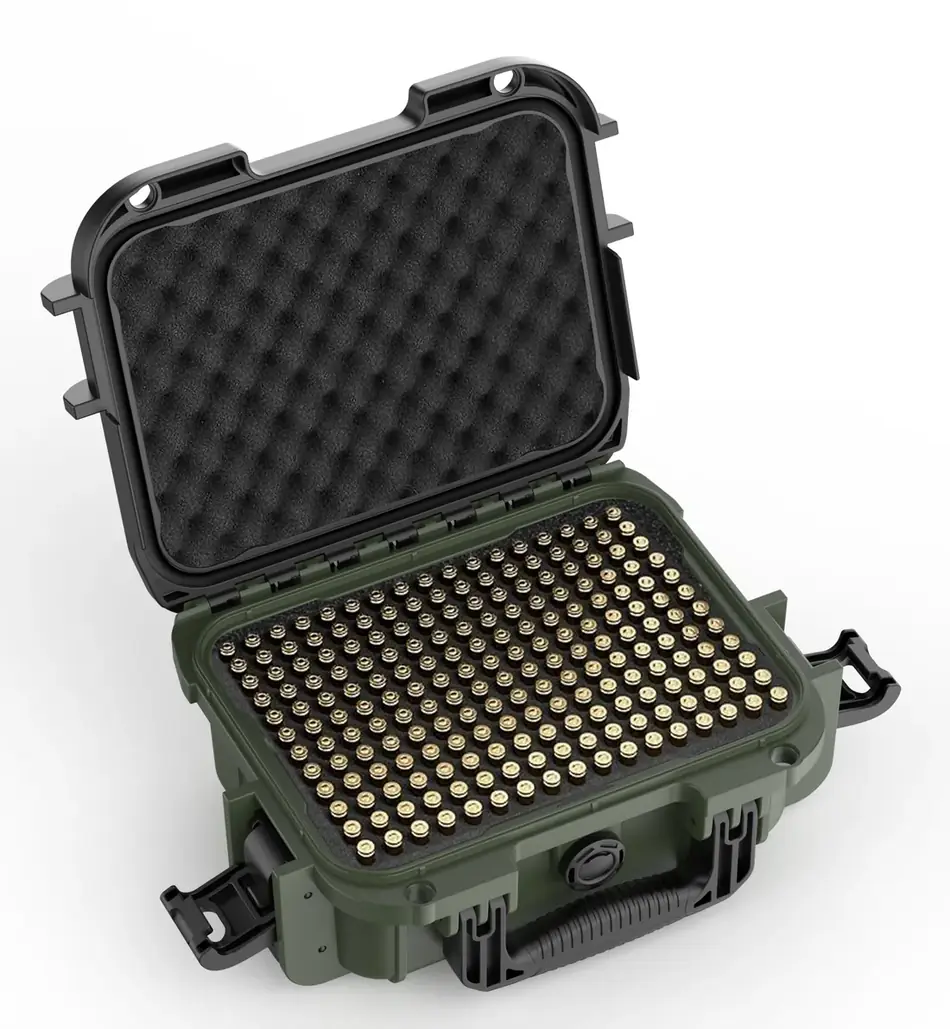
Box size affects transportation efficiency because it multiplies: the external footprint decides how many boxes fit a carton, the carton decides how many sit in a pallet layer, the pallet stack height decides what a container swallows, and every percentage lost at the first step compounds through the rest. The published ammunition storage range shows the effect in real numbers — the shallow 4.5 litre KX 3207, at 315 x 260 x 70 mm outside, packs twenty-four boxes into one 645 x 530 x 430 mm carton, while the deeper 8.1 litre KX 6-3317 packs only eight into its 510 x 350 x 750 mm carton. Size is therefore a freight decision before it is a storage decision: a buyer who plans on carton and pallet data, published per model, spends less per unit moved than one who chose a box on internal volume alone.
Key points
- Freight is paid on cartons and pallets, not on single boxes — pieces per carton, published per model, is the first efficiency number to read.
- External size, not internal volume, fills the truck: walls, rims and taper all consume container space that internal litres never show.
- Compare boxes of equal internal volume: the KX 3213 and KX 6-3317 both hold about 8 litres, yet pack sixteen and eight per carton respectively.
- Stack height multiplies pallet efficiency, and stack behaviour is set by the rim and wall thickness — published per model between 2.0 and 5.0 mm.
- Pallet fit is calculated from the carton footprint against your pallet size; where a count is not measured we do not state it.
- Container loading figures for 20GP, 40GP and 40HQ are supplied with the quotation, so plan the lane before fixing the box size.
The short answer
Size affects transport efficiency through a chain of multiplications, not through any single property. A box's external dimensions decide how many nest into a carton; the carton's footprint decides how many sit on a pallet layer; the pallet's stack height decides how many layers ride in a container; and a loss at any step multiplies through every step after it. This is why two boxes with almost the same internal volume can ship at very different cost per piece: the published ammunition range contains an 8.4 litre box that packs sixteen per carton and an 8.1 litre box that packs eight, because their external envelopes and carton sizes differ. The efficiency levers are therefore external footprint, carton packing, stackability and pallet plan — read in that order.
The chain: box, carton, pallet, container
Start at the box. Every wall, rim and handle adds external volume around the internal one — the KX 3207 holds 4.5 litres inside a 5.7 litre external envelope, and the KX 6-3317 holds 8.1 litres inside 12.7, so the deeper box moves noticeably more air per litre of capacity. At the carton step, boxes are counted rather than measured: twenty-four KX 3207 boxes fill one 645 x 530 x 430 mm carton, while only eight KX 6-3317 fit its 510 x 350 x 750 mm carton. At the pallet step the carton footprint meets a real pallet size, and at the container step the pallet stack meets the door and ceiling of a 20GP, 40GP or 40HQ unit. Each step is calculable from published data — which is why carton dimensions and pieces-per-carton are printed on every datasheet where they have been measured.
What the published carton data shows
Carton data is published where it has been measured, and the table below lists the eight ammunition storage models that carry both a carton size and a pieces-per-carton figure. Other models in the category publish a carton size only, and the deep 8 Series boxes are quoted with order data rather than a printed count. Treat every row as a per-model fact, not a category average: the spread from twenty-four pieces per carton down to eight is exactly why box size is a freight decision.
| Model | External Mm | Carton Mm | Pieces Per Carton |
|---|---|---|---|
| KX 3207 | 315 x 260 x 70 | 645 x 530 x 430 | 24 |
| KX 3213 | 315 x 260 x 128 | 645 x 530 x 520 | 16 |
| KX 3508 | 350 x 300 x 79 | 730 x 615 x 428 | 20 |
| KX 6-2810 | 275 x 226 x 100 | 480 x 293 x 550 | 10 |
| KX 6-3317 | 328 x 232 x 167 | 510 x 350 x 750 | 8 |
| KX 6-3413 | 339 x 310 x 125 | 670 x 365 x 710 | 10 |
| KX 6-3612 | 356 x 267 x 120 | 585 x 385 x 560 | 8 |
| KX 6-3912 | 389 x 295 x 120 | 625 x 405 x 635 | 10 |
Why equal volumes pack differently
The clearest illustration of size versus volume sits in two models with nearly the same capacity. The KX 3213 offers 8.4 litres inside a 315 x 260 x 128 mm shell and packs sixteen per carton; the KX 6-3317 offers 8.1 litres inside a 328 x 232 x 167 mm shell and packs eight. Same job, half the pieces per carton. The difference is external: the deeper, thicker-walled 6 Series shell consumes more carton space per unit, and its taller, narrower carton wastes the corner volume that a flatter carton fills. Multiplied across a pallet or a container, that gap becomes a shipping budget line. It is also why a datasheet's internal volume is never a freight number — external dimensions and the published carton data are what the forwarder actually sees.
Sizing the box to your lane
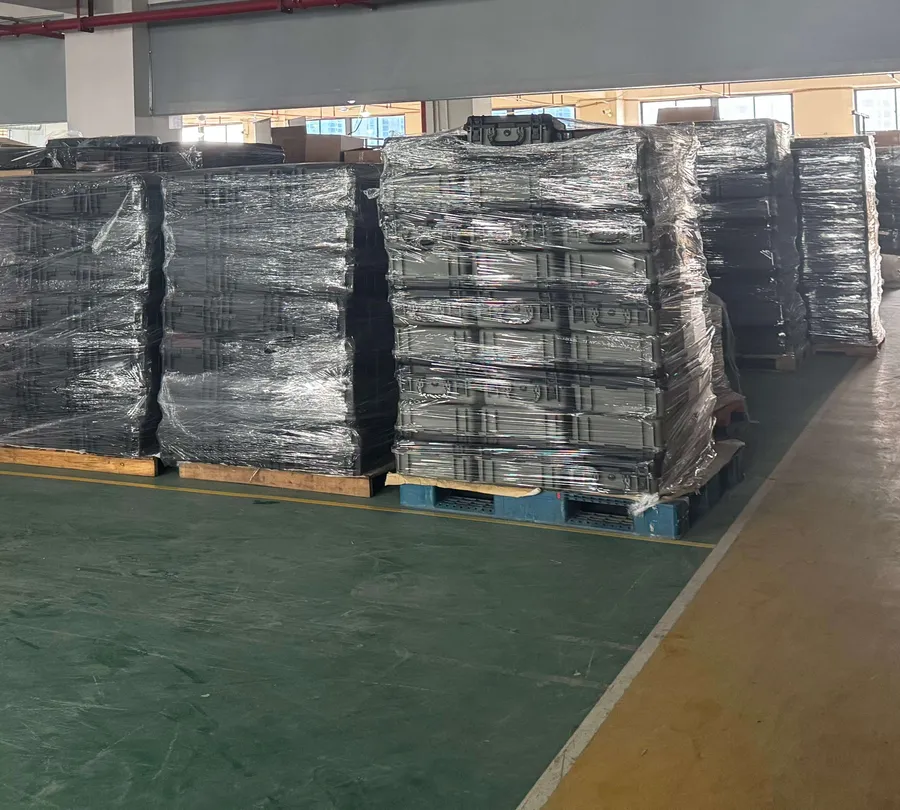
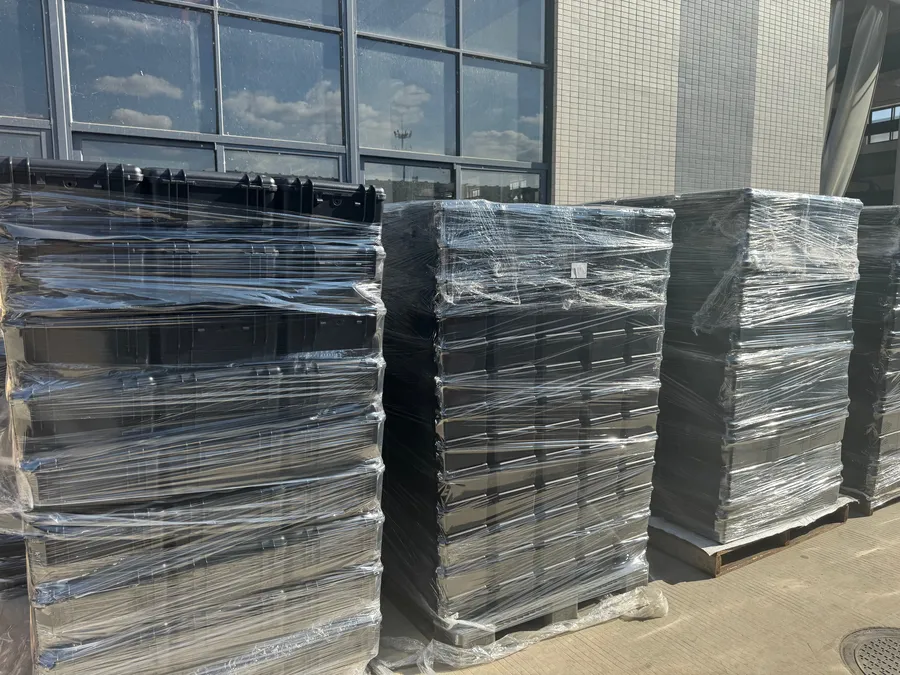
Because quotations run on EXW or FOB terms, freight is the buyer's contract, and the box size that wins is the one that fits the buyer's actual lane. Work the chain backwards: start from your pallet size and your container programme, calculate how many cartons of each candidate model fit a pallet layer, and only then compare internal volumes for the contents. Two datasheet checks matter most in that arithmetic: the external footprint against the pallet bay, and the stacking behaviour — every model in the ammunition range is stackable, and the per-model wall thickness between 2.0 and 5.0 mm tells you how confidently a column of loaded boxes rides. For models that taper, the narrow internal width is published as well, because a rack slot or a cage section can reject a box that looks compatible in plan view. Container loading figures for 20GP, 40GP and 40HQ are supplied with the quotation rather than printed, since they depend on the configuration you order.
Size, stacking and pallet density
Stackability is where box size pays its second dividend. A stackable, fixed-footprint box converts floor area into vertical volume, so a pallet's efficiency is stack height times cartons per layer — and both numbers come from the box's external geometry. The load in a stack is carried by the rim and the walls, never by the flat of the lid panel, which is why wall thickness is published as a per-model figure instead of being left to impression. What we do not publish is a general stacking load in kilograms: no stack-load figure is stated for these models because no test record exists, and accredited testing can be commissioned as a separate work package. Plan stacks on geometry and on the published wall thickness, and validate the column with a loaded trial before committing a warehouse layout.
Optimising size on a custom programme
Where a catalogue size wastes freight, size becomes a design input. An existing mould can be sampled as an OEM first piece in about 45 days; a new mould is quoted at about 125 days with a 30 percent deposit and a 3,000-piece minimum — the route to take when the contents and the pallet bay argue for a footprint no catalogue box provides. The same programme logic covers the interior: foam, dividers and trays change what a box must hold, not what a truck can carry, so interior and exterior are optimised together rather than sequentially. Buyers who run recurring lanes usually fix the footprint first and let the interior follow; buyers who ship irregular loads work the other way round. Either way the arithmetic is done on published carton and pallet data, not on internal litres.
Notes before you buy
We sell wholesale and OEM — to distributors, integrators and programme buyers — and do not retail single boxes; quotations are EXW or FOB, with no DDP and no overseas warehouse stock, so freight planning sits with the buyer and the numbers above are its inputs. Order against the datasheet of the exact model: external dimensions, carton size and pieces-per-carton are per-model figures, and models differ inside the same category. Where a pallet or container count has not been measured for a model, we do not state a value; the quotation team supplies 20GP, 40GP and 40HQ loading figures against the configuration you order, and pallet fit is calculated from the carton footprint against your own pallet size.
Customisation
Everything described above is configurable on a standard shell: interior layout (pick-and-pluck, die-cut or CNC-cut), foam grade and thickness, colour, logo method, latch and lock count, pressure-equalisation valve, cable ports, document holder and identification plate. A bespoke exterior geometry requires a new mould — 125 days, from 3,000 units per moulded component.
Procurement considerations
| Question | What to send us |
|---|---|
| Which shell fits? | Equipment L × W × H as packed, plus required clearance per axis |
| What does it cost? | Order quantity and estimated annual quantity — the two drive different answers |
| Is tooling needed? | Whether an existing shell clears the envelope with usable foam depth |
| Lead time? | Your required delivery date, not just the order date |
| Certification? | The exact standard your tender names — we will say whether we can test to it |
| Freight? | Destination and preferred terms; carton and pallet data supplied with the quotation |
Comparison and selection guide
The tables on this page exist because a protective case is chosen by comparing three things: the envelope, the environment and the handling chain. Where no table applies, the rule below is.
| Situation | What To Do |
|---|---|
| Fixed installation | Choose a box whose external height matches your racking pitch, and check the narrow internal width if the shell tapers. |
| Mobile use | Prefer a four-latch configuration and a lid that can be removed cleanly with gloves. |
| Inventory control | Specify a foam or partition layout so that a shortage is visible without opening compartments. |
- Size on internal dimensions plus clearance, never on a product name.
- Choose the carrying method before the shell: it changes the series, not just the price.
- Specify the interior last, and decide up front whether the end user will reconfigure it.
How does box size affect transportation efficiency? relates to Storage & Transport Box Guide. Related families: Ammunition Storage & Transport Boxes / Military Transport Cases / Equipment Transport Cases. Related sectors: field and industrial equipment. Continue in the Storage & Transport Box Guide cluster.
This page is written from our own production data. If your requirement differs, send the dimensions and we will tell you which of the 155 models fits, or whether a custom route is needed.