Can transport boxes be designed for specific dimensions?
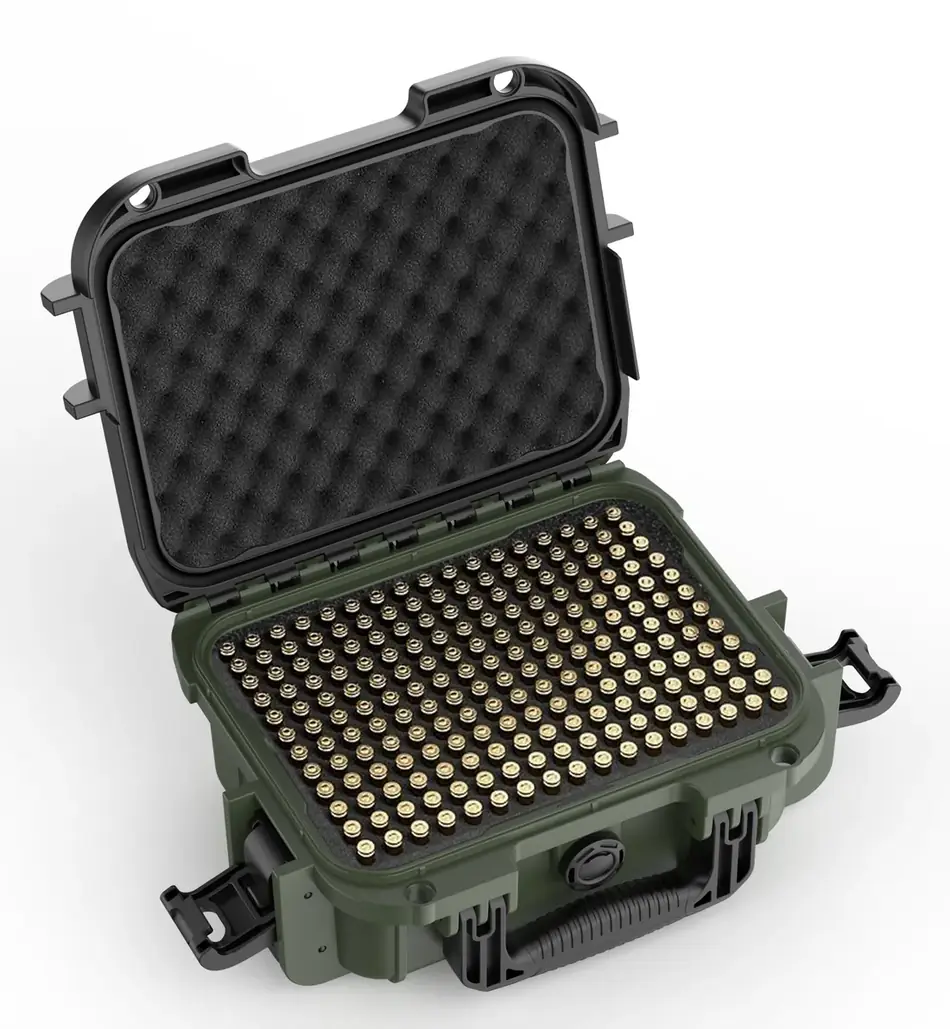
Yes. A transport box can be built to a specific set of dimensions, but the practical question is which dimension you actually control. Three routes exist: select a stock shell whose internal envelope already clears your item plus clearance, keep the shell and re-engineer only the interior with custom foam on existing moulds, or develop a new mould when no stock footprint fits. The first two are cheap and fast; the third buys an exact external geometry at a real tooling cost. Below we map each route against the published figures of the ammunition and transport range.
Key points
- Specify the internal envelope plus clearance, then confirm the narrow internal width on any shell that tapers.
- A footprint family already covers most height requests: the same 360 x 310 mm base ships at 70, 80 and 90 mm.
- Custom foam on an existing mould is the fastest made-to-measure route and needs no new tooling.
- A bespoke mould is only worth it when no stock shell clears the envelope with usable foam depth.
- Per-axis wall, lid and base depths are published per model; read the exact datasheet before you commit.
What specific dimensions mean for a transport box
A box has two dimension sets and they are not interchangeable. The external envelope decides whether the case fits a rack, a vehicle bay or a pallet; the internal envelope decides whether the item and its accessories fit at all. On a published ammunition shell such as the KX-3607 the external size is 360 x 310 x 70 mm while the internal size is 355 x 280 x 60 mm. The per-axis gap is not slack: it is the two wall thicknesses plus the lid and base overlap that keeps the halves aligned and the gasket compressed.
A third figure matters when the item is rigid. Several shells in the range list a narrow internal width below the nominal internal width, because the wall curves inward near the parting line. The KX-3207, for example, gives an internal width of 230 mm but a narrowest internal width of 205 mm. If you pack a 215 mm instrument by nominal width it will bridge and stand proud of the sealing face, so the narrower value is the one to size against.
Finally, the lid depth and base depth are published separately. On some models the halves are equal; on others such as the KX-2811 the lid is 71 mm and the base only 27 mm, which changes whether the item sits fully in the base or bridges the two halves. Designing to specific dimensions means controlling all four numbers, not just length, width and height.
The three routes from a drawing to a finished box
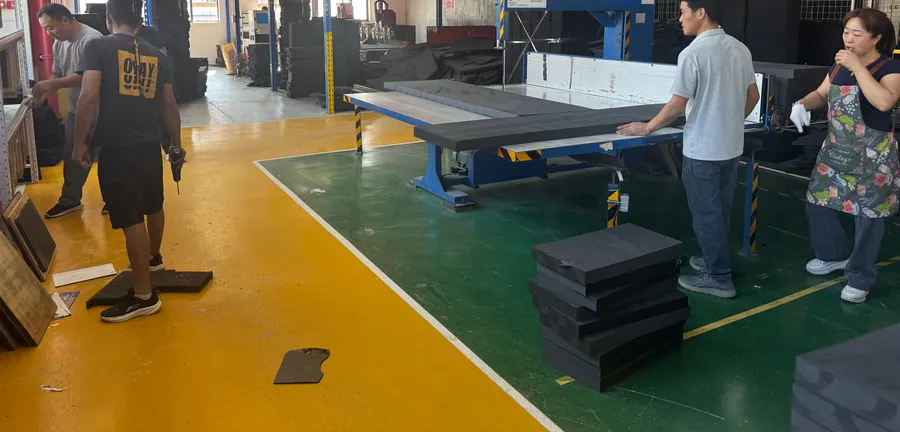
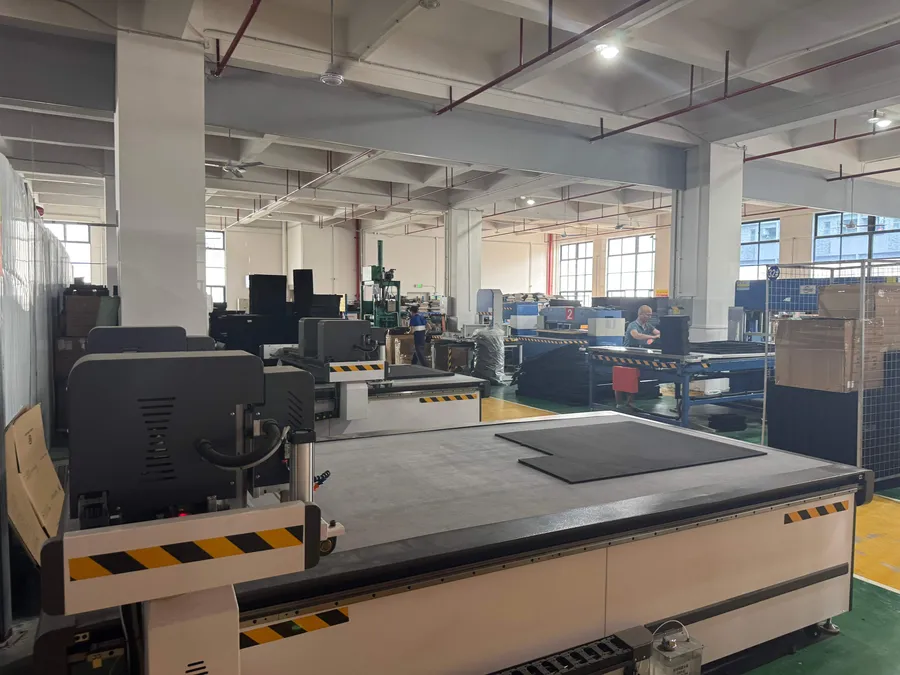
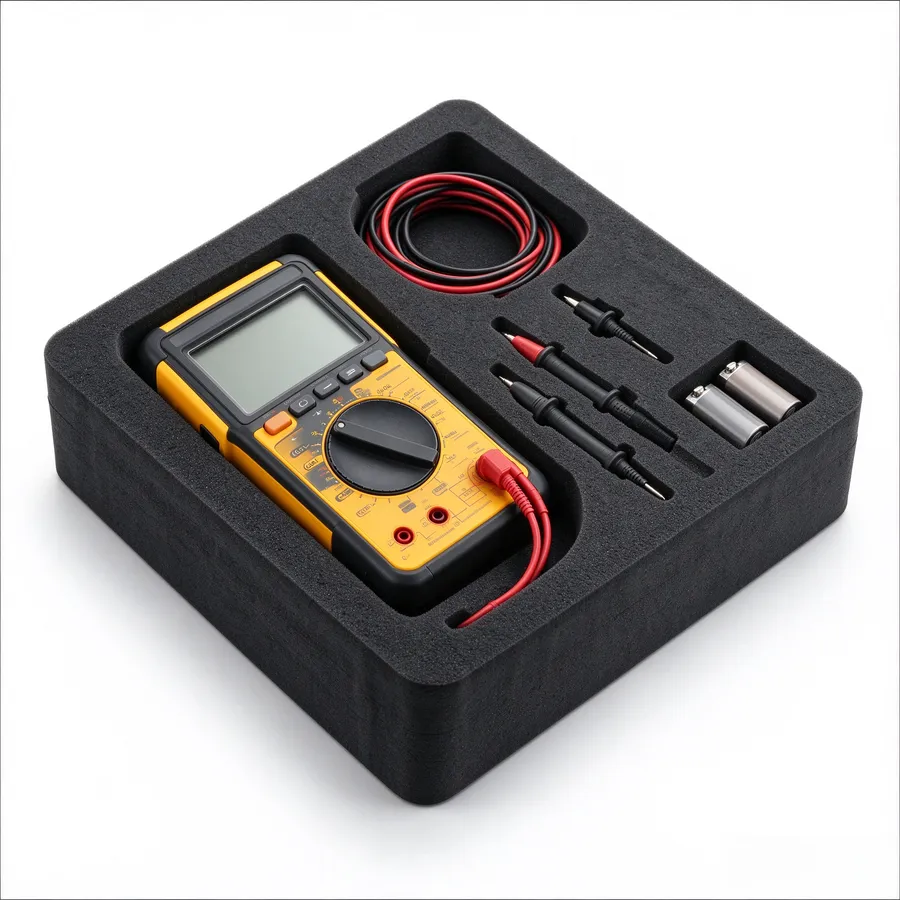
Route one is selection, not manufacture: choose a stock shell whose internal length, width and height already exceed your packed item plus clearance. Most dimension requests are answered inside the existing range, and the lead time is that of a stock order. Route two keeps the shell and customises the interior only. You supply a drawing, a photograph of the packed kit, or a physical sample, and we cut a pick-and-pluck, die-cut or CNC foam layout to that envelope on existing moulds. Route three is a new mould: a bespoke exterior geometry with an exact footprint, a distinctive shape or a structural feature no stock shell offers.
The commercial profile of the three routes is very different, and it is the reason we recommend them in that order. A stock shell with custom foam carries no tooling charge. A bespoke mould is quoted as a distinct project because it is one: it opens a new tool, adds tooling cost and a much longer development window before the first shipment.
Where a footprint family already covers the request
Before reaching for a mould, look at the footprint families. A footprint family shares one external length and width and varies only the height, so the same pallet position and the same rack slot stay valid while you tune the interior volume. The table below reads directly from published model data in the ammunition range.
| Model | External Mm | Internal Mm | Internal Volume L | Net Weight G |
|---|---|---|---|---|
| KX-3607 | 360 x 310 x 70 | 355 x 280 x 60 | 6.0 | 800 |
| KX-3608 | 360 x 310 x 80 | 355 x 280 x 70 | 7.0 | 870 |
| KX-3609 | 360 x 310 x 90 | 355 x 280 x 80 | 8.0 | 900 |
| KX-3207 | 315 x 260 x 70 | 308 x 230 x 64 | 4.5 | 570 |
| KX-3213 | 315 x 260 x 128 | 308 x 230 x 118 | 8.4 | 860 |
Clearance, wall thickness and usable interior
Sizing to a specific fit is a subtraction exercise run from the other end of the datasheet. Take your packed item in its transport configuration with handles folded and cables coiled, add clearance on every axis, then reject any shell whose internal figure does not exceed the result. Published wall thickness across the ammunition shells ranges from 3.0 mm to 5.0 mm per model, and thickness is a structural choice, not padding: it drives stacking and racking behaviour, so you generally do not want to shave it to buy a few millimetres of interior.
When a bespoke mould is worth it, and when it is not
A new mould earns its cost only when no stock footprint clears the envelope with usable foam depth, or when the exact external geometry is itself the requirement, for example a case that must interlock inside a vehicle frame. Where that is true, plan it as a project: a bespoke mould is quoted at 125 days to develop from an approved drawing, with a minimum order from 3,000 units per moulded component and a 30 per cent deposit to open the tool. Where it is not true, an existing shell plus a CNC foam interior delivers the same fit at a fraction of the cost and in about 45 days, from a low first order on the stock shell.
We work wholesale and OEM on EXW or FOB terms; we do not sell retail, do not quote DDP and hold no overseas warehouse, so a made-to-measure programme is scoped as a production order rather than an off-the-shelf purchase. If a stock shell already fits, we will tell you so instead of selling you a mould.
How to send a dimension request that comes back right
The single biggest cause of a wrong fit is sending the box the item arrived in instead of the item. Send the packed length, width and height of the equipment as it will sit, the clearance you need per axis, the total carry mass, the orientation it must be stored in, and whether the end user will reconfigure the interior between missions. Then add the two commercial numbers, order quantity and estimated annual quantity, because those two, not the shape, decide whether the answer is a stock shell, a custom interior or a mould.
Applications
This matters most where the case is part of a movement chain rather than shelf packaging. In ammunition & inventory transport and military and defense the same shell is specified differently because the handling, the environment and the verification requirement differ.
- Ammunition & Inventory Transport — Storage boxes are bought by the pallet-load, and the numbers that matter are volume, stacking be…
- Military — Military equipment moves through a chain of handlers, none of whom own the equipment and all of …
- Defense — Defence support equipment is the unglamorous half of the inventory — test sets, spares, ground p…
Customisation
Everything described above is configurable on a standard shell: interior layout (pick-and-pluck, die-cut or CNC-cut), foam grade and thickness, colour, logo method, latch and lock count, pressure-equalisation valve, cable ports, document holder and identification plate. A bespoke exterior geometry requires a new mould — 125 days, from 3,000 units per moulded component.
Procurement considerations
| Question | What to send us |
|---|---|
| Which shell fits? | Equipment L × W × H as packed, plus required clearance per axis |
| What does it cost? | Order quantity and estimated annual quantity — the two drive different answers |
| Is tooling needed? | Whether an existing shell clears the envelope with usable foam depth |
| Lead time? | Your required delivery date, not just the order date |
| Certification? | The exact standard your tender names — we will say whether we can test to it |
| Freight? | Destination and preferred terms; carton and pallet data supplied with the quotation |
Comparison and selection guide
The tables on this page exist because a protective case is chosen by comparing three things: the envelope, the environment and the handling chain. Where no table applies, the rule below is.
| Situation | What To Do |
|---|---|
| Fixed installation | Choose a box whose external height matches your racking pitch, and check the narrow internal width if the shell tapers. |
| Mobile use | Prefer a four-latch configuration and a lid that can be removed cleanly with gloves. |
| Inventory control | Specify a foam or partition layout so that a shortage is visible without opening compartments. |
- Size on internal dimensions plus clearance, never on a product name.
- Choose the carrying method before the shell: it changes the series, not just the price.
- Specify the interior last, and decide up front whether the end user will reconfigure it.
Can transport boxes be designed for specific dimensions? relates to Storage & Transport Box Guide. Related families: Ammunition Storage & Transport Boxes / Custom Protective Cases / Military Protective Cases. Related sectors: Ammunition & Inventory Transport / Military / Defense. Continue in the Storage & Transport Box Guide cluster.
This page is written from our own production data. If your requirement differs, send the dimensions and we will tell you which of the 155 models fits, or whether a custom route is needed.