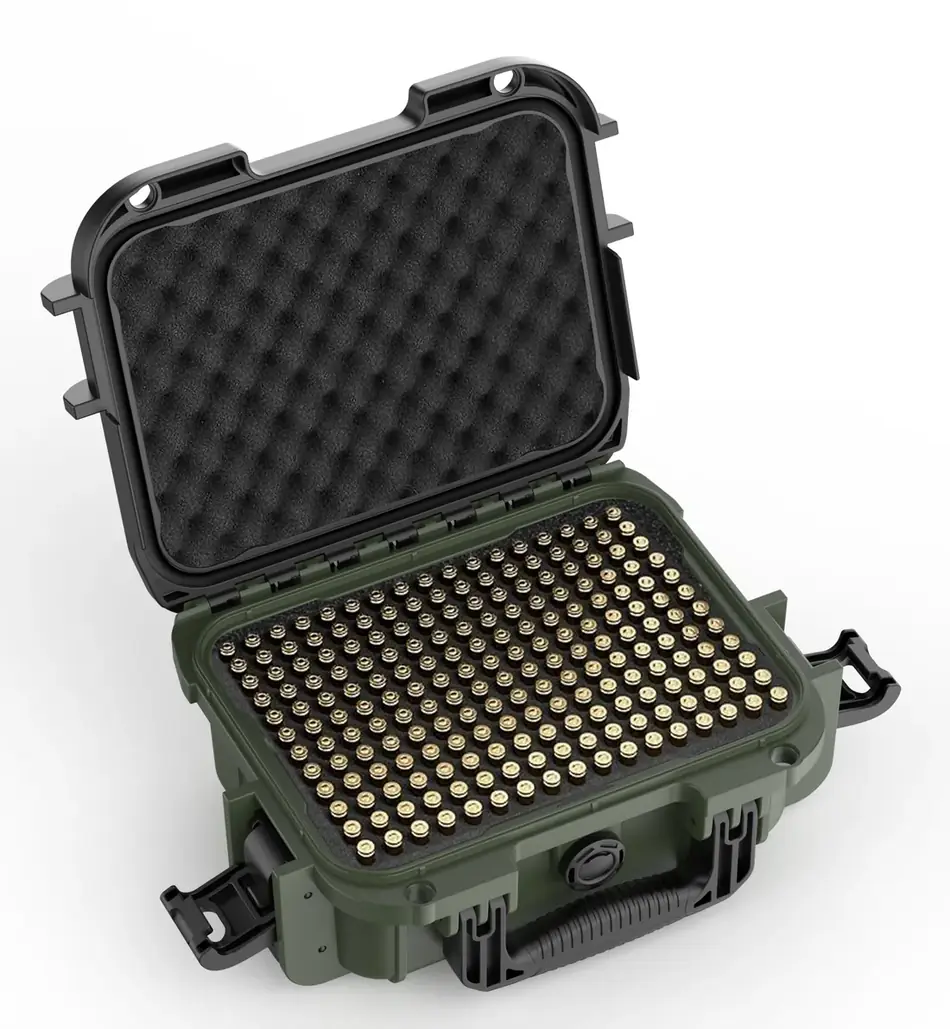
How does MOQ affect custom box pricing?
MOQ affects custom box pricing because every step up the customisation ladder attaches a fixed cost that only makes sense spread across enough units. A stock ammunition box or a cut-to-shape foam insert carries almost no fixed cost, so both can start from a single unit. A printed logo, a body colour change or an OEM build adds setup that begins to pay off around three hundred units, and a dedicated custom mould is only economical at a much higher volume. The unit price you are quoted is therefore inseparable from the quantity you commit to: ask for tiered pricing at the MOQ you can actually reach, not a single number.
Key points
- The lower-cost custom work is cut, not tooled: a foam insert can start from one unit because there is no mould to amortise.
- A printed logo, a body colour and an OEM build each publish a minimum near three hundred units, where fixed setup is spread thin enough to pay.
- A dedicated custom mould jumps to around three thousand units because tooling is the largest fixed cost in the part.
- Crossing a threshold can cut unit price while raising total spend; judge MOQ against the number you will actually use, not the cheapest quote.
- Ask for tiered quotes at each MOQ step so you can see where the next price break sits before you commit.
- Terms stay wholesale: EXW or FOB, a thirty percent deposit, and a lead time that grows with the tier you choose.
What MOQ is really gating
A minimum order quantity is not an arbitrary hurdle a supplier sets to be difficult. It is the point at which the fixed cost of doing something custom stops being silly. Every factory has two kinds of cost in a part: variable cost, which is roughly plastic, labour and cycle time per box, and fixed cost, which is setup, screens for a print, a colour run on the extruder or the mould steel itself. Variable cost is the same whether you buy ten or ten thousand. Fixed cost does not shrink when you order fewer; it just gets divided across fewer units, so the per-box share climbs steeply as quantity falls. MOQ is simply the quantity where the fixed-cost share has fallen far enough that a custom part is worth making at all.
That is why MOQ does not affect every kind of customisation in the same way. Anything that is cut rather than tooled has almost no fixed cost, so it can be bought one at a time. Anything that needs the machine reconfigured, a colour introduced, or a new tool cut has fixed cost that only makes sense at volume. Read the rest of this page as a map of which customisation belongs to which bucket.
The published MOQ tiers, and what each one unlocks
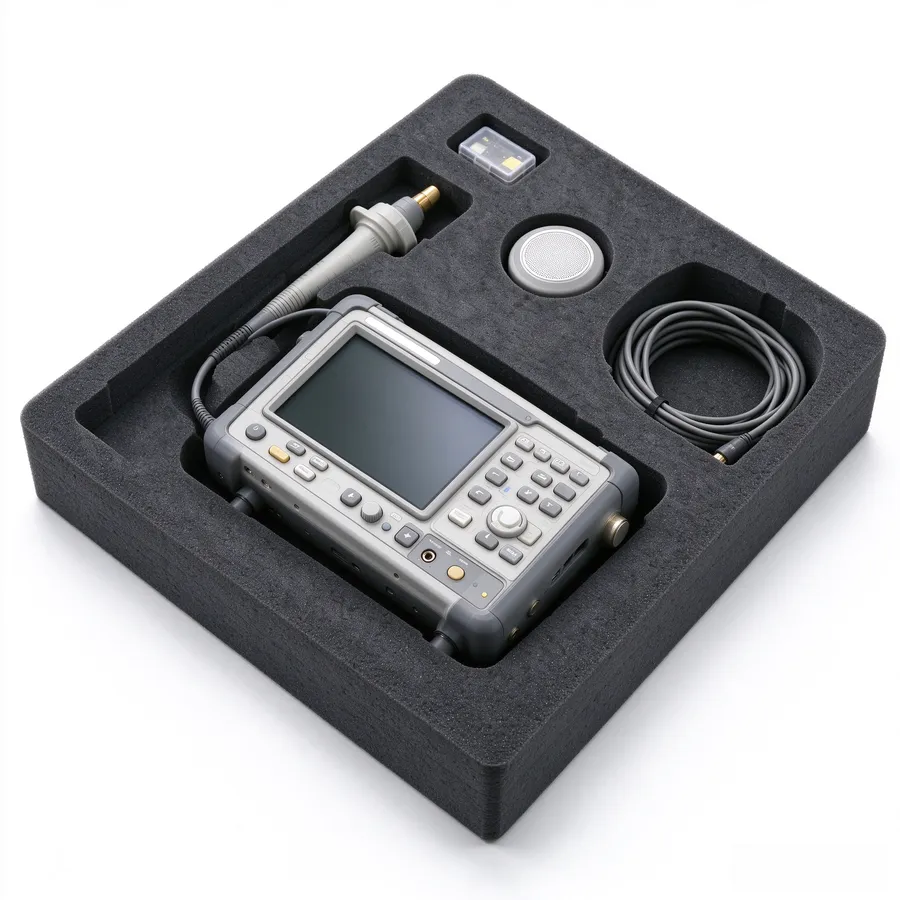
On our model pages the minimum order quantities are published per tier rather than negotiated from a blank sheet, which keeps quotes honest. A standard stock model has a minimum of one unit: it already has its own tooling, so ordering one is just a pick from finished production. A custom foam insert also starts from one unit, because the interior is cut to a drawing rather than moulded, so a small trial order can still arrive with a fitted, protective interior. That combination is what makes an evaluation practical: you can take a box and its foam at a real quantity before you scale.
Where the fixed cost appears
The tiers above roughly three hundred units are where fixed cost starts to bite, which is exactly why a minimum exists at all. A printed logo needs artwork separated onto screens and a print pass added to the line; the setup is the same whether you print fifty lids or five thousand, so a low quantity would load nearly all of that setup onto a handful of boxes. A body colour change means running a coloured masterbatch through the machine, and colour makers work in minimum resin lots, so the minimum is set by how much coloured material is sensible to introduce and purge, not by the lid count alone. An OEM build, meaning your specification built on an existing mould, sits at a similar level because it still consumes planning, samples and a production slot. A dedicated custom mould is a separate league: the tool is the single largest fixed cost in the part, so the published minimum is far higher, and the lead time and the deposit are sized around tooling rather than around a run.
Why a bigger MOQ can lower unit price but raise the bill
Because the fixed cost is divided across more units, a higher quantity almost always produces a lower price per box. That is genuinely good news right up to the point where it is not: if you buy three thousand moulded boxes to save a few cents on each and then store or scrap most of them, the cheaper unit price cost you money overall. The number that matters is landed cost divided by the boxes you will actually put into service, not the sticker unit price on its own. A disciplined buyer asks the supplier for quotes at each MOQ step, plots where the next price break sits, and stops at the quantity that matches real consumption over a defined period rather than chasing the deepest discount. Where MOQ and your realistic need do not line up, it is usually better to choose a stock shell with a cut foam than to force a colour or mould tier you cannot fill.
How tooling and lead time move with MOQ
Quantity and time are linked, because the same customisation that raises your minimum also lengthens your schedule. A cut-foam order at a one-unit minimum can move quickly, since no new tool is waiting to be cut. An OEM build on an existing mould is planned around roughly forty-five days to a first sample, and a new custom mould is planned around one hundred and twenty-five days because the tool must be made before the first part can exist. A thirty percent deposit typically opens the tooling work. The practical consequence is that when you ask how MOQ affects pricing, you should ask it alongside lead time in the same breath: the cheapest unit price on a slow custom mould may lose you more than a faster, slightly pricier tier wins you on a schedule that is already tight.
A comparison of the MOQ ladder
| Customisation | Published Moq | Fixed Cost Driver | Planning Note |
|---|---|---|---|
| Standard stock model | 1 unit | None (existing tooling) | Pick from production; fastest tier. |
| Custom foam insert | 1 unit | Cutting drawing only | Fitted interior without new tooling. |
| Printed logo | Around 300 units | Screens and print setup | Setup amortised across the run. |
| Body colour change | Around 300 units | Minimum coloured-resin lot | Bound by colour run, not lid count. |
| OEM on existing mould | Around 300 units | Planning, samples, line slot | Roughly 45 days to first sample. |
| Dedicated custom mould | Around 3000 units | New tool steel | Roughly 125 days; deposit opens tooling. |
The pricing questions to ask before you commit
Translate all of this into an email a supplier can answer precisely. Ask which MOQ tier your request falls into and why; ask for tiered pricing at one unit, at the logo or colour minimum, and at the mould minimum, so you can see the shape of the curve rather than one point on it. Ask what fixed cost sits behind each tier and how it is being amortised, and ask for the lead time that comes with each so you can weigh price against schedule. Confirm the commercial frame too: we work wholesale and OEM only, quoted EXW or FOB with a thirty percent deposit, and we do not price retail, DDP landed cost or hold overseas warehouse stock. A buyer who gets the ladder, the fixed costs and the lead times in one reply can pick the cheapest quantity that actually matches the boxes they will use, which is the whole point of asking how MOQ affects custom box pricing.
Customisation
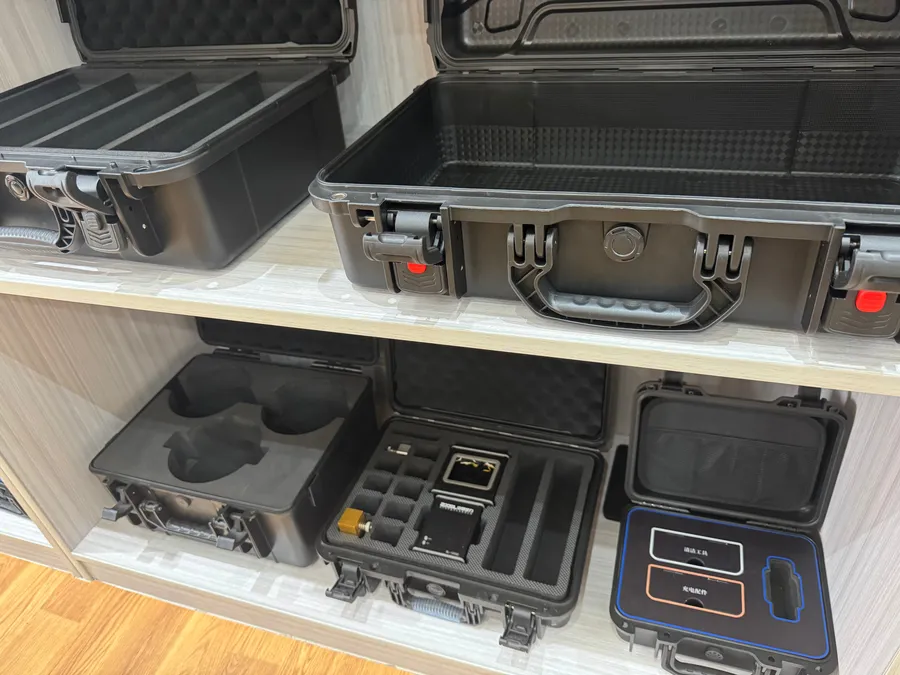
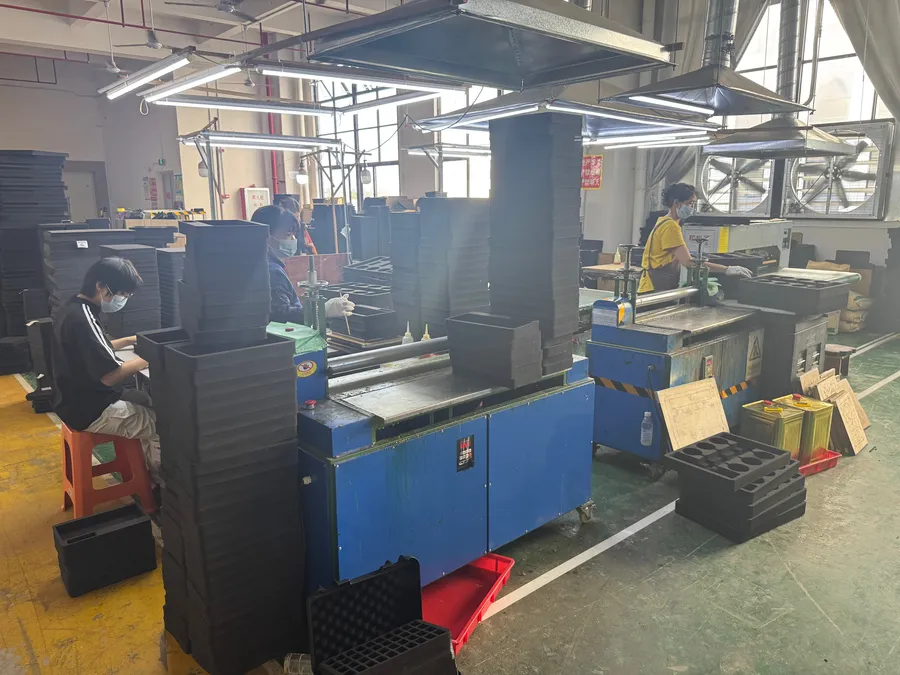
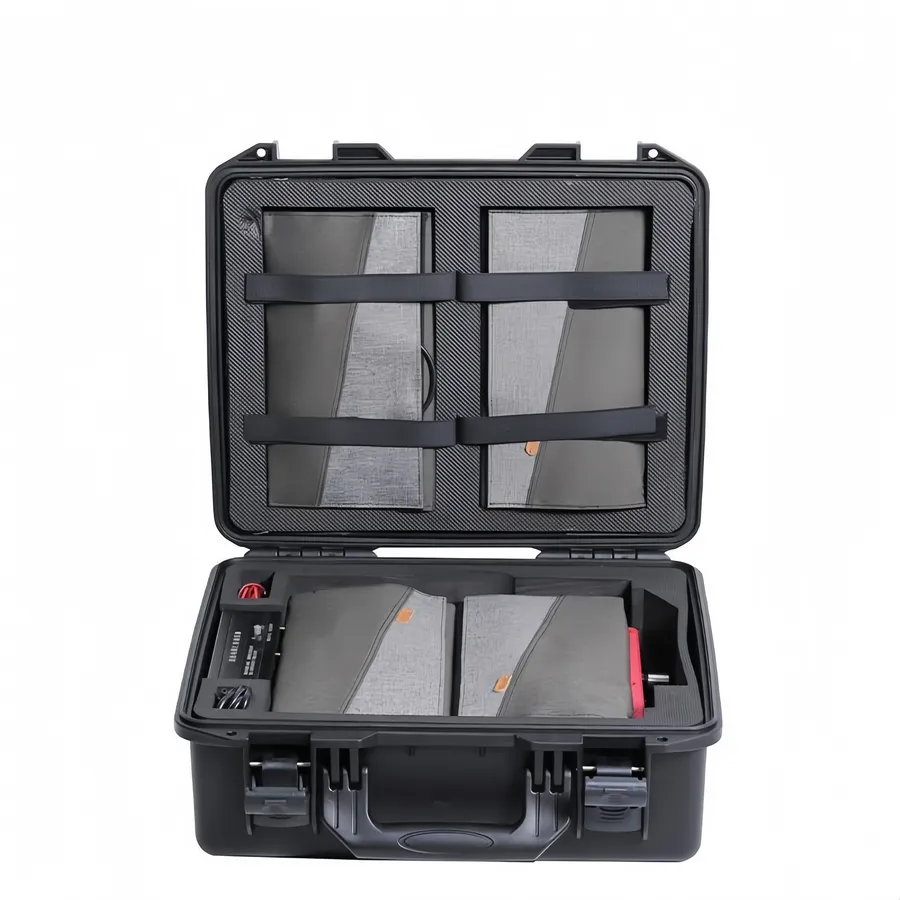
Everything described above is configurable on a standard shell: interior layout (pick-and-pluck, die-cut or CNC-cut), foam grade and thickness, colour, logo method, latch and lock count, pressure-equalisation valve, cable ports, document holder and identification plate. A bespoke exterior geometry requires a new mould — 125 days, from 3,000 units per moulded component.
Procurement considerations
| Question | What to send us |
|---|---|
| Which shell fits? | Equipment L × W × H as packed, plus required clearance per axis |
| What does it cost? | Order quantity and estimated annual quantity — the two drive different answers |
| Is tooling needed? | Whether an existing shell clears the envelope with usable foam depth |
| Lead time? | Your required delivery date, not just the order date |
| Certification? | The exact standard your tender names — we will say whether we can test to it |
| Freight? | Destination and preferred terms; carton and pallet data supplied with the quotation |
Comparison and selection guide
The tables on this page exist because a protective case is chosen by comparing three things: the envelope, the environment and the handling chain. Where no table applies, the rule below is.
| Situation | What To Do |
|---|---|
| Fixed installation | Choose a box whose external height matches your racking pitch, and check the narrow internal width if the shell tapers. |
| Mobile use | Prefer a four-latch configuration and a lid that can be removed cleanly with gloves. |
| Inventory control | Specify a foam or partition layout so that a shortage is visible without opening compartments. |
- Size on internal dimensions plus clearance, never on a product name.
- Choose the carrying method before the shell: it changes the series, not just the price.
- Specify the interior last, and decide up front whether the end user will reconfigure it.
How does MOQ affect custom box pricing? relates to Storage & Transport Box Guide. Related families: Ammunition Storage & Transport Boxes / Custom Protective Cases. Related sectors: field and industrial equipment. Continue in the Storage & Transport Box Guide cluster.
This page is written from our own production data. If your requirement differs, send the dimensions and we will tell you which of the 155 models fits, or whether a custom route is needed.