How can heavy-duty boxes be customized?
Heavy-duty boxes are customized along four independent axes: the shell (wall thickness, material grade and external footprint), the closure and hardware (latch count, hinge type, handle and optional wheels), the interior (cut foam zones, dividers and tie-down points sized to the payload), and the finish (colour, logo and packaging). KeXin builds these to your specification on existing moulds or, for new external dimensions, on a new tool. Each axis can be changed on its own, so a buyer usually only pays for the changes the actual mission requires.
Key points
- Confirm whether your change touches an existing mould or needs a new tool; that single choice drives cost and lead time more than any other.
- Interior foam is customised from one piece with no tooling charge, so payload-shaped cutouts are the cheapest first customisation to request.
- Custom colour, logo and packaging are batch items at a 300-unit minimum, while custom moulds for a new shell start at 3,000 units per component.
- Wall thickness is published per model from 2.0 to 6.0 mm; request the exact figure for the model you are modifying rather than assuming a line-wide value.
- Give the manufacturer the payload weight, the handling sequence and the pallet size, because those three inputs determine the hardware and stack rims.
What customization actually changes
A heavy-duty box is not one part but a small assembly: a moulded shell, a lid, one or more latches, a hinge or hinge plate, a handle, sometimes wheels, and a cut foam insert. Customization means choosing the configuration of that assembly for a specific payload rather than buying whatever the shelf happens to hold. The most useful mental model is that the shell geometry is the expensive, slow variable and everything bolted or glued to it is the cheap, fast variable. If you can meet your goal by changing the insert, the hardware or the print while keeping the outer shell, you will move faster and spend less.
KeXin works from 155 published models, so most enquiries start from a close existing part number and adjust it. Where the required external dimensions or corner geometry do not exist on any current mould, a new tool is opened. That distinction is the first thing to settle in a specification conversation, because it changes the schedule from weeks to months and the minimum order from a batch of hundreds to thousands of units.
Shell, wall thickness and material
The shell carries the stack load and the impacts, so it is customised carefully. Wall thickness is published per model and spans roughly 2.0 to 6.0 mm across the catalogue; thicker walls raise mass and cost but give the compression margin a tall warehouse stack needs. Shell material is offered in polypropylene, an engineering-grade PP and ABS, with some models combining the two. Where a box must be cut, welded with accessories or over-moulded with mounting bosses, the material grade and the mould have to match, which is why a change here usually means a tool review rather than a simple option tick.
External footprint is the other shell variable worth planning early. Choosing an outside dimension that divides cleanly into your pallet lets the same customised box ship efficiently later. The internal measurement is always smaller than the external by roughly twice the wall plus the rim geometry, so specify the payload and let the published internal dimensions of the chosen model confirm the fit rather than guessing interior space.
Interior protection and foam zones
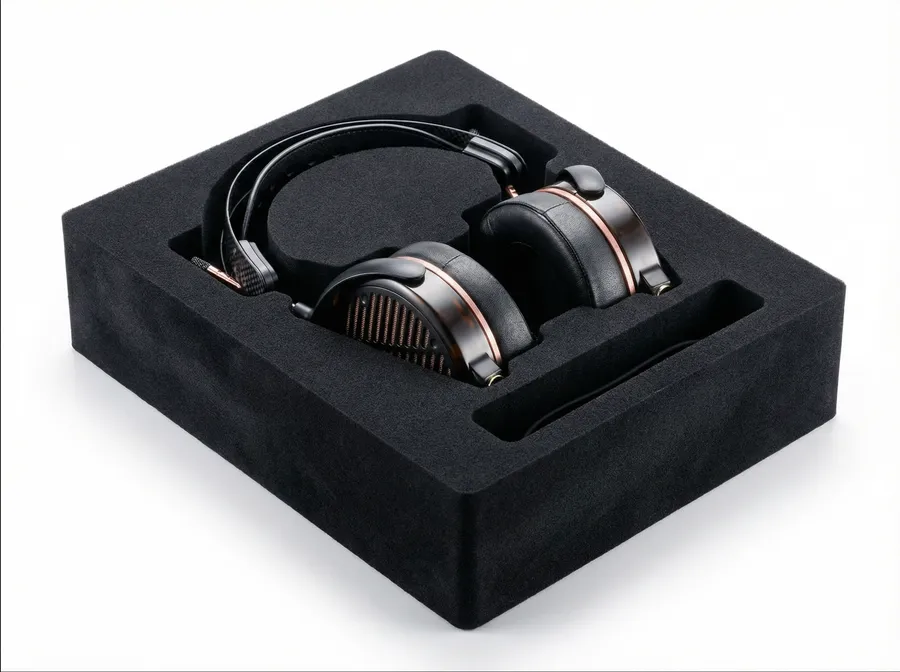
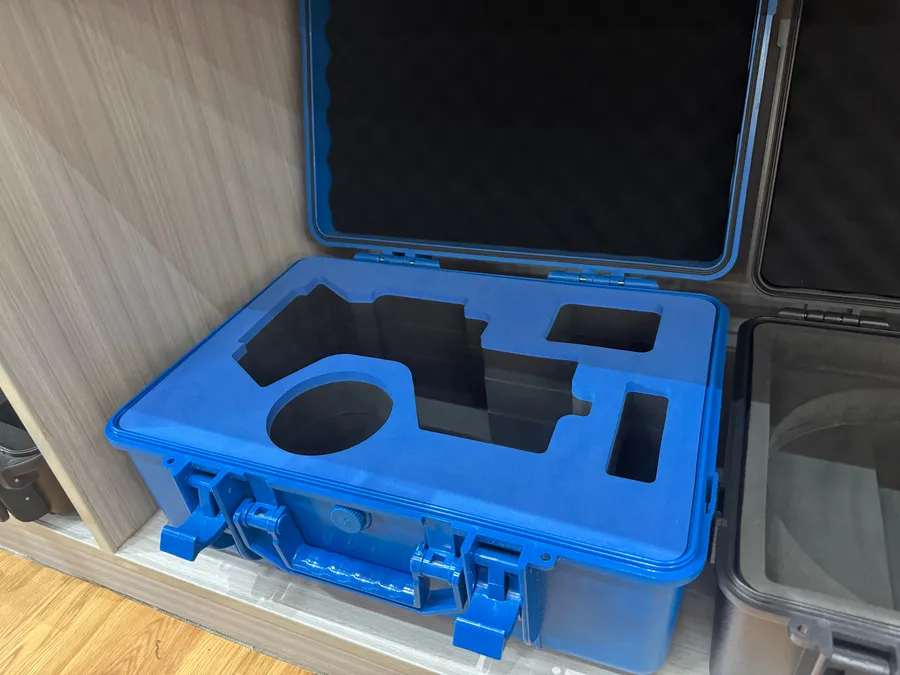
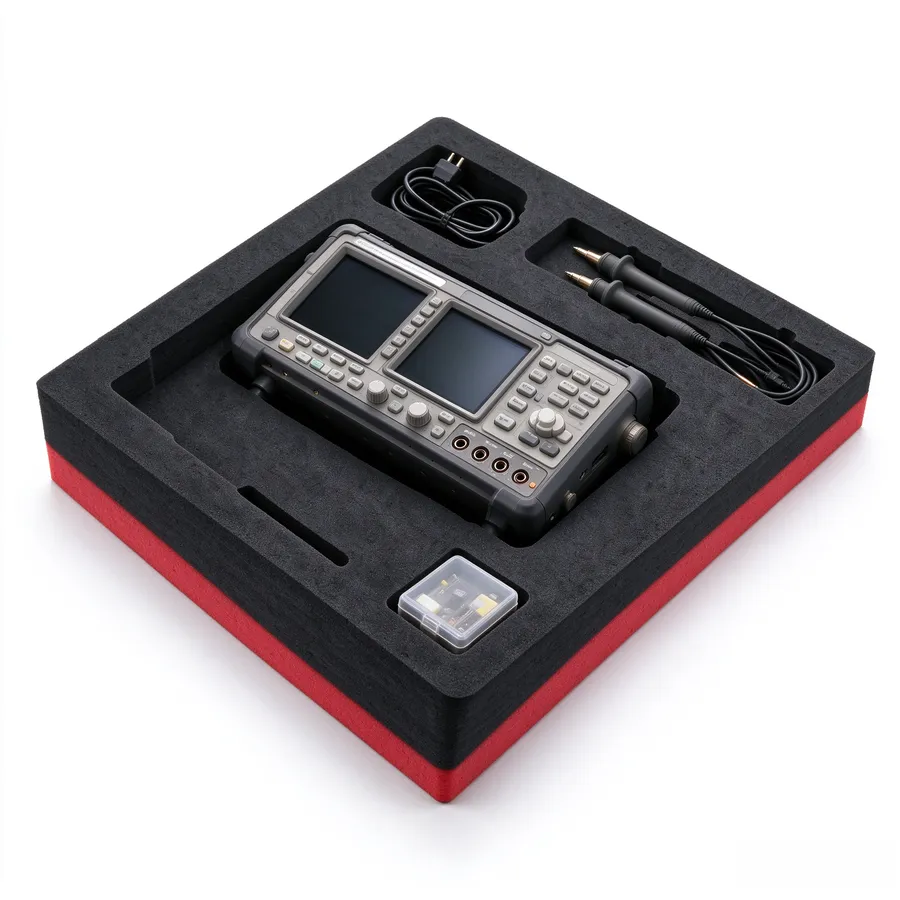
The insert is where customization delivers the most protection per euro. Interior foam is cut from board stock in cross-linked PE, EVA or EPS by zone, so a dense layer sits under a heavy corner while a softer layer cradles a lens or connector. Dividers, pluck foam, machined pockets and tie-down rails are added to match the actual handling sequence: how the item is laid in, what touches what, and which surface must not be scratched. Because this is cutting rather than moulding, a customised interior carries no tooling charge and can be revised between batches as the payload evolves.
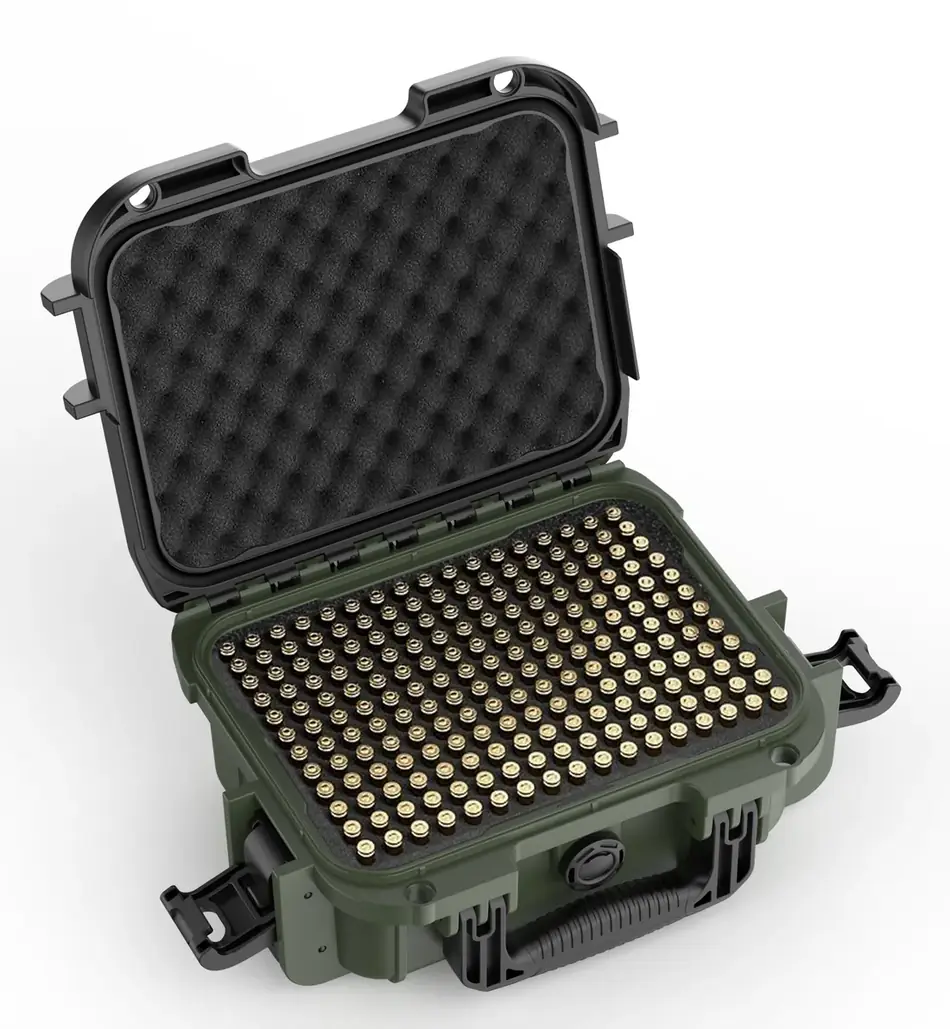
For ammunition and ordnance handling, the interior is shaped to keep individual items separated and located so that shifting in transit cannot concentrate a load on one wall. The layout is agreed from a sample or a dimensioned drawing of the contents; KeXin does not publish a generic round count for a box, because the safe interior depends on the specific item being carried.
Closure, hardware and handling options
| Option | Default Model | Custom Change | Effect On Schedule | Effect On Moq |
|---|---|---|---|---|
| Shell tooling | Existing mould | New external geometry | Adds about 125 days | From 3,000 per component |
| Interior foam | Standard board cut | Payload-shaped zones | Days, no tool | From 1 unit |
| Colour / logo | Moulded natural | Pantone body, printed mark | Batch lead time | From 300 units |
| Latches / handles / wheels | Standard set | Count and type | Batch lead time | From 300 units |
How to choose your customization path
Start from the payload, not the box. Write down its dimensions, mass, the surfaces that must not be marked, and how a person actually lifts and moves it. Then ask three questions in order. Can a published model's internal dimensions hold it? If yes, customise only the insert and the print and keep the tool. If the footprint is wrong but a similar mould exists, compare a small wall change against a new tool. If the geometry is genuinely new, budget the new-mould path and its 3,000-unit minimum. This order keeps you on the cheap, fast variables until you are forced onto the expensive one.
Where the same box serves several products, a modular insert with interchangeable layers beats a single bespoke cut, because you change a foam tray instead of re-tooling the shell. Where the box will stack in a rack or on a pallet, prioritise the rim and wall specification over cosmetics, since those govern whether the stack survives.
Typical applications for customised boxes
Customised heavy-duty boxes are specified where the standard configuration does not match the item: instrument sets with odd protuberances, communication and optics payloads needing shielded zones and lens pockets, field equipment carried in a fixed sequence by a team, and ammunition or components whose shape and mass demand located separation. The customisation is rarely exotic; it is usually the right insert on a close existing shell, which is why beginning from a published model number shortens the whole process.
Procurement notes and terms
KeXin supplies wholesale and OEM only, on EXW or FOB terms; there is no retail, no DDP and no overseas warehouse. OEM on an existing mould runs about 45 days to first sample, a new mould about 125 days, against a 30 percent deposit. State on the enquiry which of the four axes you need, provide a dimensioned drawing or a physical sample of the payload, and give your pallet size so the footprint and carton counts can be planned. Protection, pallet and container figures are published per model where measured; where a value is not measured the quotation supplies it for your configuration rather than assuming a line-wide number.
Applications
This matters most where the case is part of a movement chain rather than shelf packaging. In ammunition & inventory transport and defense and military the same shell is specified differently because the handling, the environment and the verification requirement differ.
- Ammunition & Inventory Transport — Storage boxes are bought by the pallet-load, and the numbers that matter are volume, stacking be…
- Defense — Defence support equipment is the unglamorous half of the inventory — test sets, spares, ground p…
- Military — Military equipment moves through a chain of handlers, none of whom own the equipment and all of …
Customisation
Everything described above is configurable on a standard shell: interior layout (pick-and-pluck, die-cut or CNC-cut), foam grade and thickness, colour, logo method, latch and lock count, pressure-equalisation valve, cable ports, document holder and identification plate. A bespoke exterior geometry requires a new mould — 125 days, from 3,000 units per moulded component.
Procurement considerations
| Question | What to send us |
|---|---|
| Which shell fits? | Equipment L × W × H as packed, plus required clearance per axis |
| What does it cost? | Order quantity and estimated annual quantity — the two drive different answers |
| Is tooling needed? | Whether an existing shell clears the envelope with usable foam depth |
| Lead time? | Your required delivery date, not just the order date |
| Certification? | The exact standard your tender names — we will say whether we can test to it |
| Freight? | Destination and preferred terms; carton and pallet data supplied with the quotation |
Comparison and selection guide
The tables on this page exist because a protective case is chosen by comparing three things: the envelope, the environment and the handling chain. Where no table applies, the rule below is.
| Situation | What To Do |
|---|---|
| Fixed installation | Choose a box whose external height matches your racking pitch, and check the narrow internal width if the shell tapers. |
| Mobile use | Prefer a four-latch configuration and a lid that can be removed cleanly with gloves. |
| Inventory control | Specify a foam or partition layout so that a shortage is visible without opening compartments. |
- Size on internal dimensions plus clearance, never on a product name.
- Choose the carrying method before the shell: it changes the series, not just the price.
- Specify the interior last, and decide up front whether the end user will reconfigure it.
How can heavy-duty boxes be customized? relates to Storage & Transport Box Guide. Related families: Ammunition Storage & Transport Boxes / Custom Protective Cases / Military Protective Cases. Related sectors: Ammunition & Inventory Transport / Defense / Military. Continue in the Storage & Transport Box Guide cluster.
This page is written from our own production data. If your requirement differs, send the dimensions and we will tell you which of the 155 models fits, or whether a custom route is needed.