What features should a storage box have for organized storage?
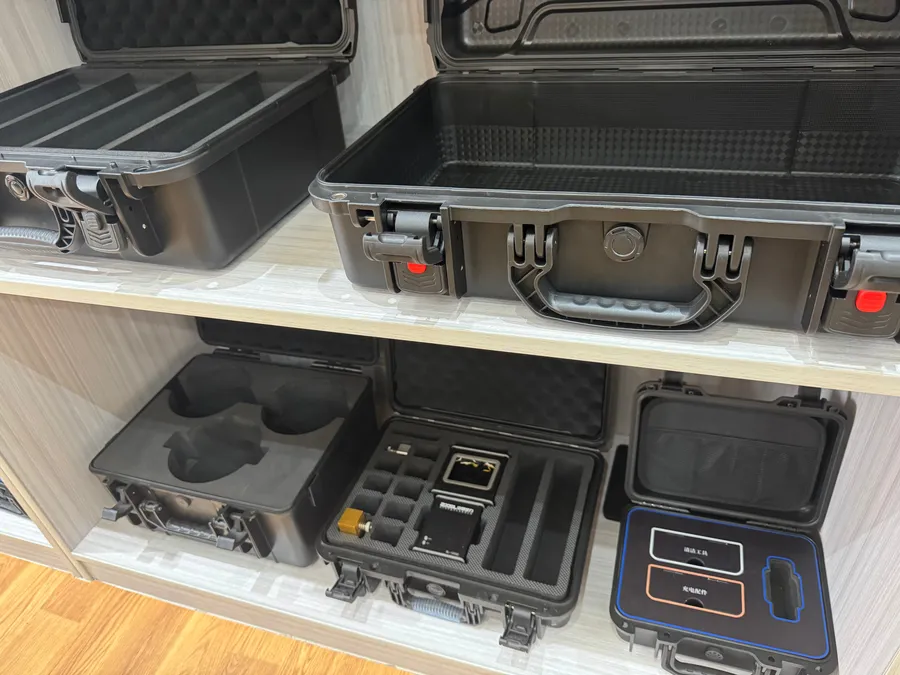
A hard plastic storage box earns the label organised when six features work together: a fixed internal envelope that fits the kit rather than swallows it, a lid and latch arrangement that keeps the seal closed under load, a stackable geometry so multiple boxes can share a shelf or pallet without crushing the contents, an optional gasket channel with a compressible gasket to keep dust out, an interior that can accept either dividers or a cut-foam tray for the specific item set, and a footprint that repeats across a series so accessories, liners and lids are interchangeable. Injection-moulded polypropylene and ABS boxes in the 200 to 360 millimetre internal length range cover most small-arms, hardware, tool and accessory storage, and every SKU on the catalogue publishes its internal dimensions, wall thickness and seal availability so buyers can specify from real numbers.
Key points
- Fix the internal envelope first; a box that matches the item footprint stores better than a box that has spare room to shift.
- A stackable geometry with moulded feet is what lets a small box scale to a shelf, a rack or a pallet load.
- A lid that latches at several points keeps dust out better than a single latch, and it is the practical partner to a gasket channel.
- Interior organisation comes from dividers or cut foam; pick the one that matches how the contents are repacked between jobs.
- Buy within a size series so spare lids, foam trays, dividers and outer cartons interchange across SKUs.
- Filter by published seal type per SKU; not every box has a gasket channel, and the datasheet says which.
A fixed envelope before anything else
The organising feature is the internal dimension, not the outer shell. If a box holds 8 to 9 litres and the item stack only occupies 3, the rest is free travel that turns into mess. Injection-moulded polypropylene and ABS storage boxes publish internal length, width and depth per SKU, so the buyer can pick the tight envelope that fits the actual contents, and there is typically a shallow and a deep variant on the same footprint. For example, the published internal data on three catalogue boxes is KX-3213 at 308 x 230 x 118 millimetres, KX-3609 at 355 x 280 x 80 millimetres and KX-63413 at 310 x 255 x 106 millimetres. Choosing the closest match to the real stack is the first thing that makes the box organised.
Lid and latch design
A lid that closes and stays closed is what lets the interior stay arranged. KeXin storage shells ship with moulded hinges and padlockable latches as measured attributes on the datasheet, and the latch count follows the length of the case; a 300 millimetre box typically latches at two or three points, a wider box at more, and every additional latch tightens the lid against the seal channel. Where a lid is expected to see a stack on top of it, the compression comes from the shell wall rather than the latch, so wall thickness and latch position should be considered together, both of which are printed per model on the catalogue page.
Stackable geometry
Stackability is the feature that converts a single box into a shelving system, and the same moulded geometry that lets boxes sit on each other in a warehouse also lets them share a pallet load in transit. Every storage SKU on this page is marked stackable on its datasheet and carries moulded feet that index the box on the lid of the box underneath, so the stack does not walk sideways. Because stacking load is measured on some SKUs and left as not measured on others, the practical rule is to filter by the specific SKU's published stack figure and, where the field is untested, ask the factory for the recommended stack height for the intended storage location.
Gasket channel and dust sealing
A continuous moulded channel around the shell rim with a compressible gasket is the standard way a hard box keeps dust and spray away from the interior; the presence of that channel is a per-model attribute on KeXin's data sheet, and it is either measured and stated on the SKU or listed as not offered. Buyers who plan to keep the box in a vehicle, a shed or an outdoor range bag should filter by SKU-level seal availability before committing to a size, and combine it with the other hardware attributes on that page, such as the latch pattern and the padlockable eyelets, so a single decision covers closure, sealing and lockability together.
Interior options: dividers or cut foam
| Interior Option | Best For | Trade Off |
|---|---|---|
| Dividers and loose trays | Contents that change between jobs | Items can still shift if the tray is not filled |
| Pick-and-pluck foam | Small mixed kit that is reconfigured often | Re-cutting takes user time |
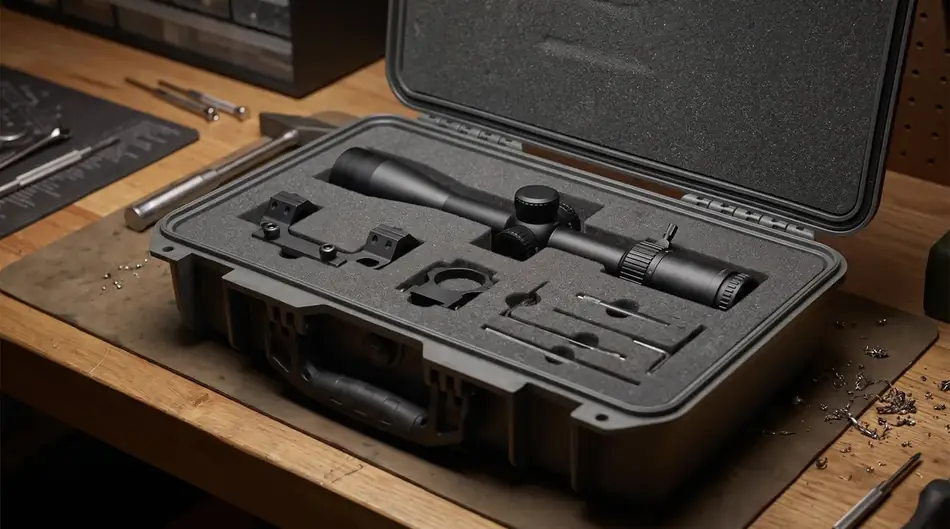
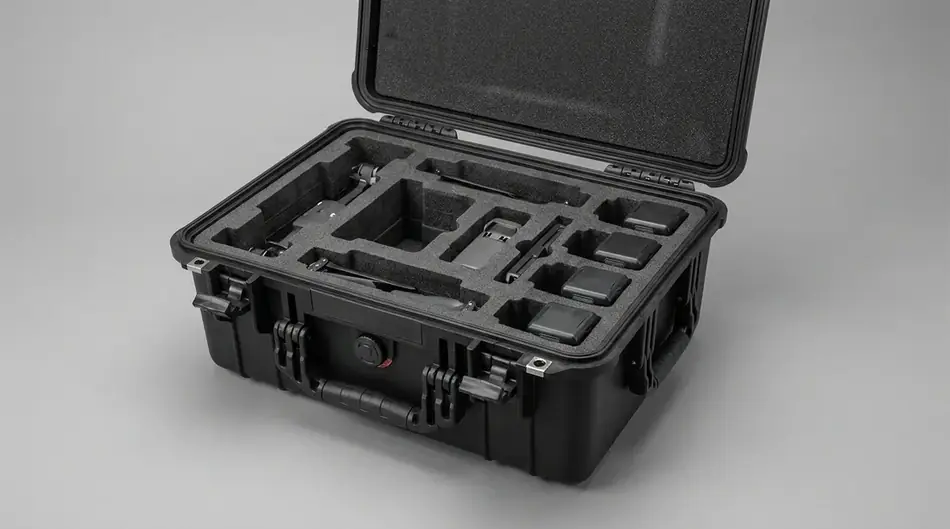
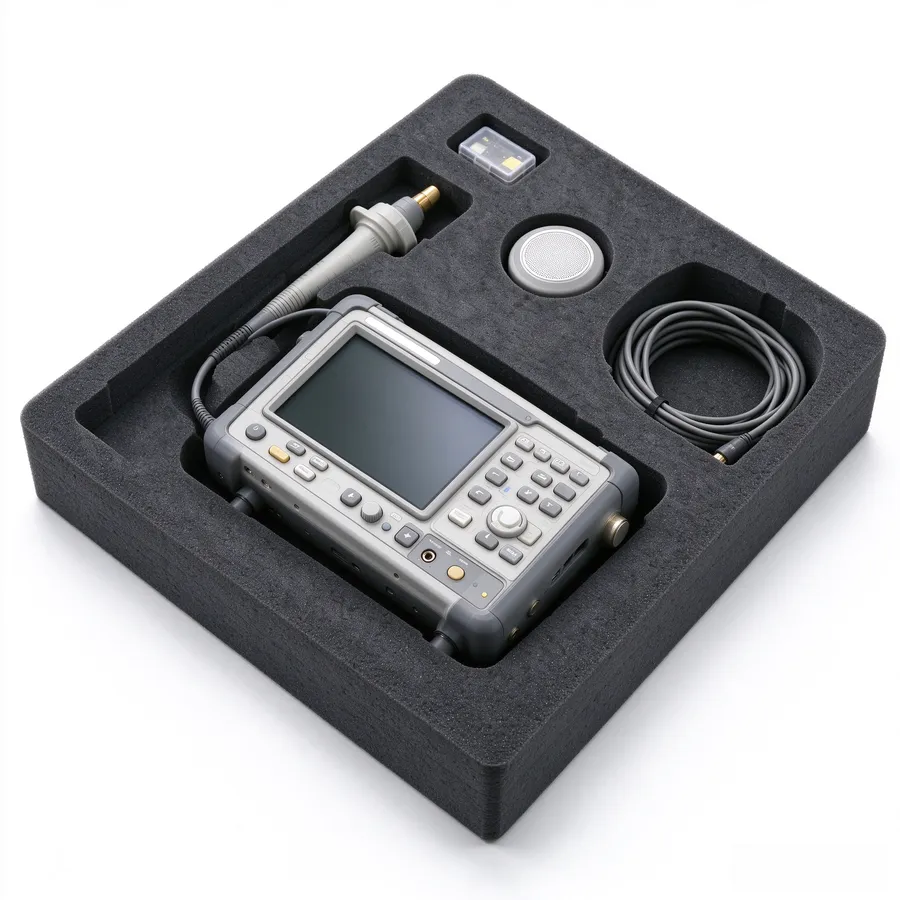
| Die-cut or CNC-cut foam | A stable kit that ships identically each time | Requires a drawing or sample |
| Layered top plus base foam | Kit with cables, tools and accessories | Higher foam cost per unit |
| Bare shell | Bulk consumables where packing is by count | No per-item organisation |
Feature checklist for organized storage
| Feature | Why It Matters |
|---|---|
| Published internal dimensions | Fixes the envelope before buying, so items fit and do not drift |
| Published wall thickness per SKU | Determines how the shell handles a stack or a knock |
| Padlockable latches with hinge moulded in | Closes the lid under a load and lets a buyer add a lock |
| Continuous gasket channel with compressible gasket | Keeps dust and spray out on models where the channel exists |
| Stackable geometry with moulded feet | Turns one box into a shelf, a rack or a pallet |
| Interior ready for dividers or a cut-foam tray | Gives each item a defined home inside the shell |
| Fixed handle on the shell | A box that must be lifted awkwardly is a box that gets dropped |
Typical organised-storage scenarios
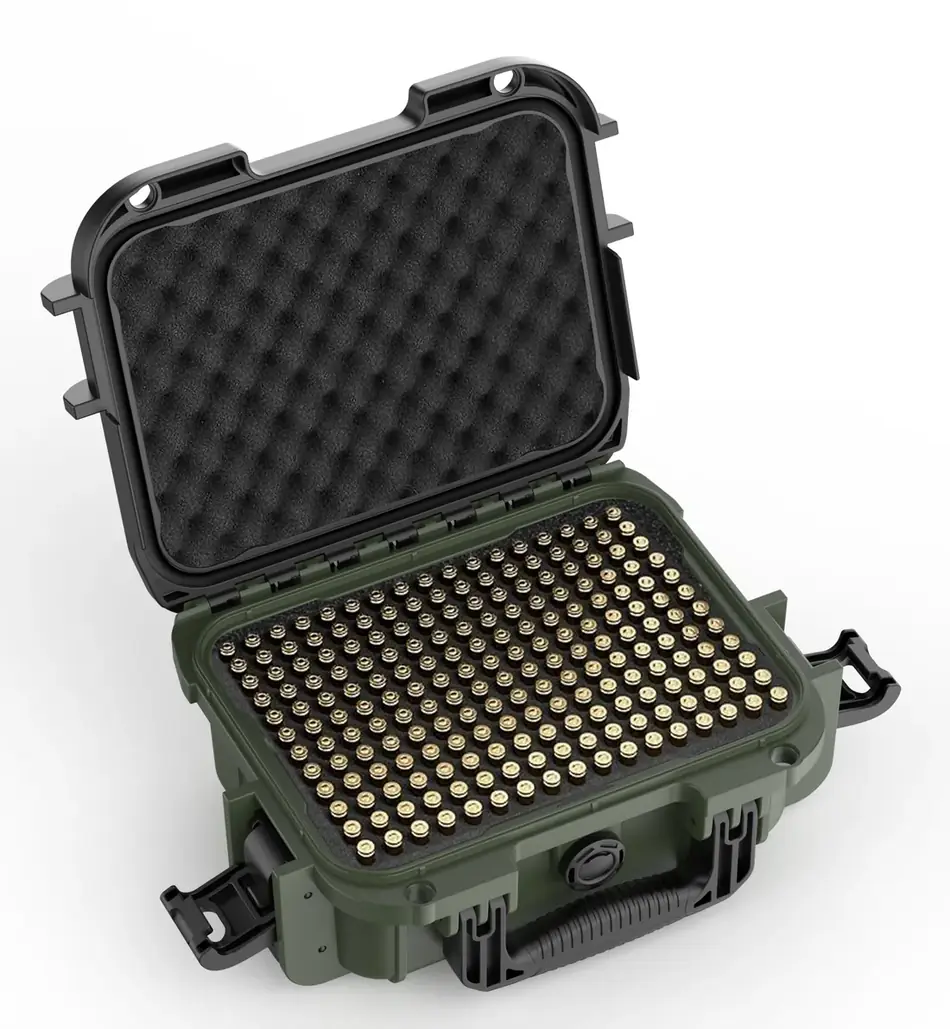
For a home range bag, a stackable 8 to 9 litre gasketed box with a foam tray keeps cartridges, primers, cases and tools visible and prevents items mixing between sessions. For a workshop, the same series of boxes with dividers and a printed lid label is more practical because contents change weekly. For a fleet or a club that stores the same kit in every unit, a die-cut foam layout cut to a drawing becomes the standard so every box is identical. For a buyer who also stocks ammunition-adjacent tools such as reloading presses, calipers and case gauges, an ABS shell at a 4 to 5 millimetre wall thickness protects the internal contents from a shelf-edge impact, and the gasket channel keeps brass dust out of the interior.
Customising the box
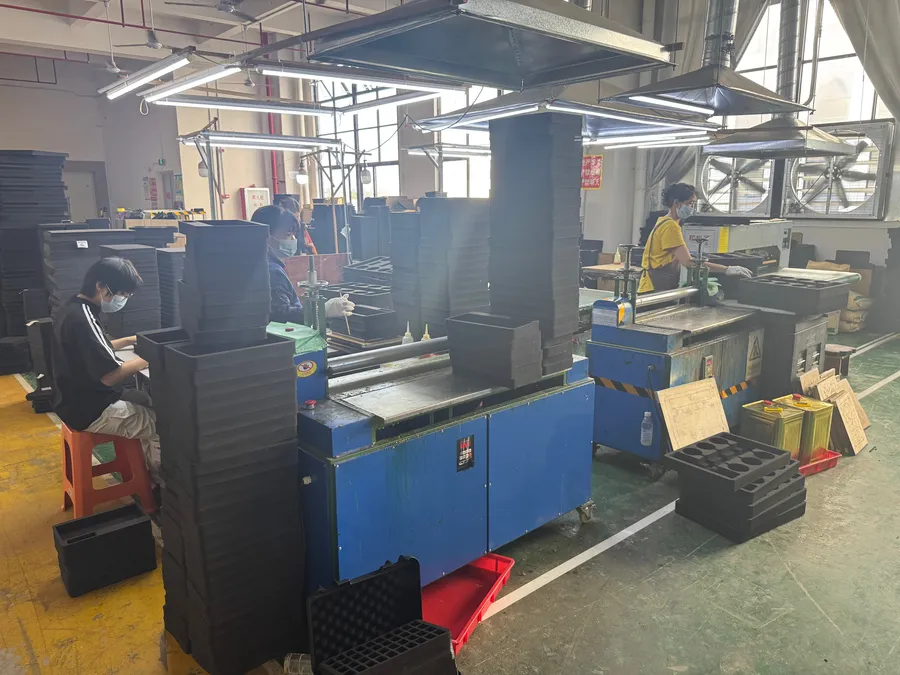
Storage boxes support the same OEM options as the rest of the catalogue: colour matching to a scheme, printed or in-mould logo, custom dividers, custom foam thickness and shape, custom packaging and buyer-branded labels. Standard OEM changes such as logo and colour run on the existing moulds at about 300 pieces; a new mould to a bespoke geometry starts at about 3,000 pieces per component. A first OEM sample on an existing mould follows the standing 45-day window, and a new mould follows about 125 days after drawing sign-off. Wholesale and OEM orders run on EXW or FOB terms with a 30 percent deposit against the proforma, and there is no retail channel, DDP term or overseas warehouse arrangement.
Procurement notes
Buy from the published internal dimension and published seal type of the specific SKU, not from a family claim. Confirm the stack figure, latch count and padlock position on the SKU's datasheet, and treat fields marked not measured as unknown. Where interior organisation depends on a foam layout or a divider pattern, send the item list or the physical sample so the cut matches the actual contents. Plan quantities around the standard OEM bands, and combine colour, logo and packaging changes on the same order to keep the tooling and the packing aligned across the batch.
Customisation
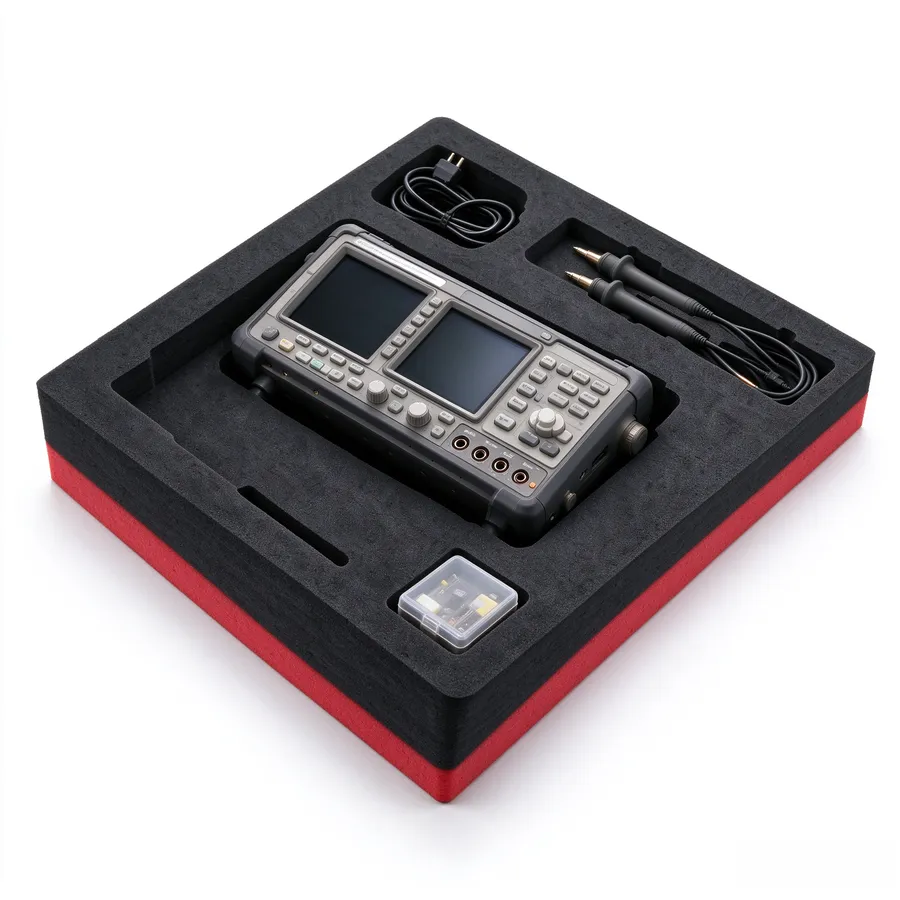
Everything described above is configurable on a standard shell: interior layout (pick-and-pluck, die-cut or CNC-cut), foam grade and thickness, colour, logo method, latch and lock count, pressure-equalisation valve, cable ports, document holder and identification plate. A bespoke exterior geometry requires a new mould — 125 days, from 3,000 units per moulded component.
Procurement considerations
| Question | What to send us |
|---|---|
| Which shell fits? | Equipment L × W × H as packed, plus required clearance per axis |
| What does it cost? | Order quantity and estimated annual quantity — the two drive different answers |
| Is tooling needed? | Whether an existing shell clears the envelope with usable foam depth |
| Lead time? | Your required delivery date, not just the order date |
| Certification? | The exact standard your tender names — we will say whether we can test to it |
| Freight? | Destination and preferred terms; carton and pallet data supplied with the quotation |
Comparison and selection guide
The tables on this page exist because a protective case is chosen by comparing three things: the envelope, the environment and the handling chain. Where no table applies, the rule below is.
| Situation | What To Do |
|---|---|
| Fixed installation | Choose a box whose external height matches your racking pitch, and check the narrow internal width if the shell tapers. |
| Mobile use | Prefer a four-latch configuration and a lid that can be removed cleanly with gloves. |
| Inventory control | Specify a foam or partition layout so that a shortage is visible without opening compartments. |
- Size on internal dimensions plus clearance, never on a product name.
- Choose the carrying method before the shell: it changes the series, not just the price.
- Specify the interior last, and decide up front whether the end user will reconfigure it.
What features should a storage box have for organized storage? relates to Storage & Transport Box Guide. Related families: Ammunition Storage & Transport Boxes / Tool Cases / Outdoor Protective Cases / Custom Protective Cases. Related sectors: field and industrial equipment. Continue in the Storage & Transport Box Guide cluster.
This page is written from our own production data. If your requirement differs, send the dimensions and we will tell you which of the 155 models fits, or whether a custom route is needed.