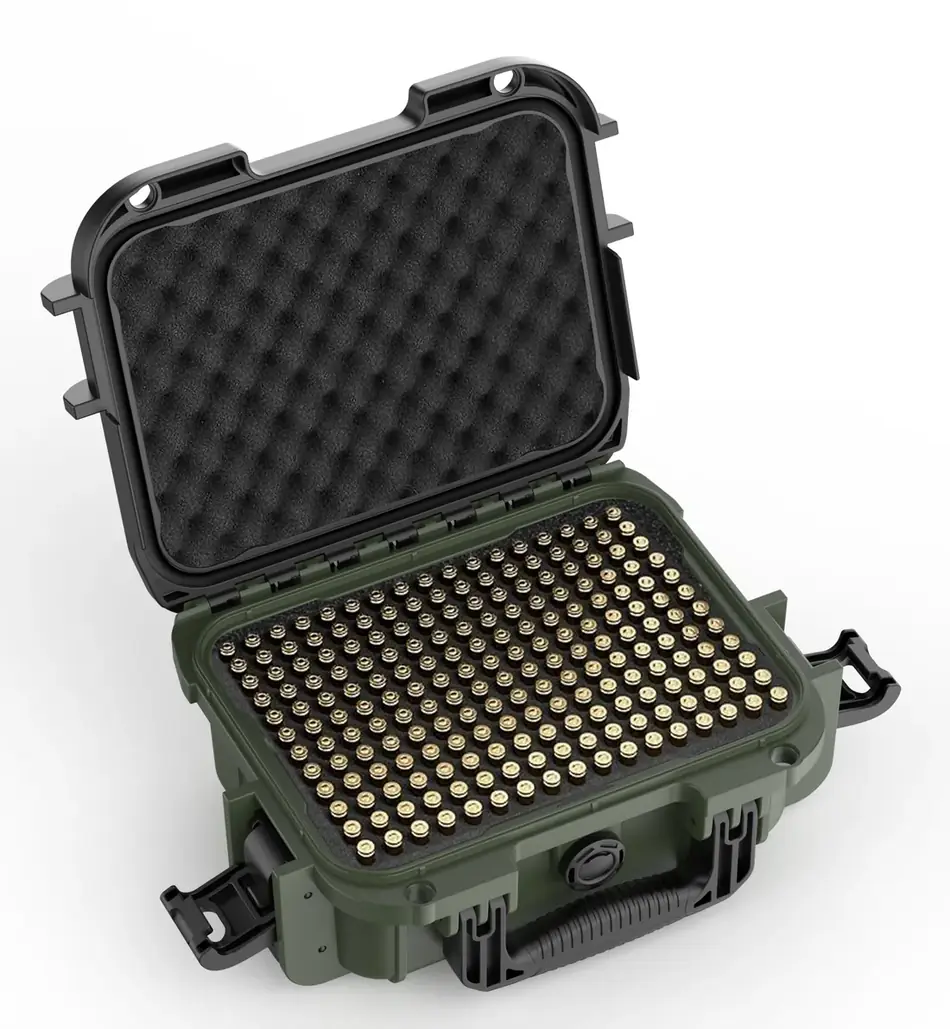
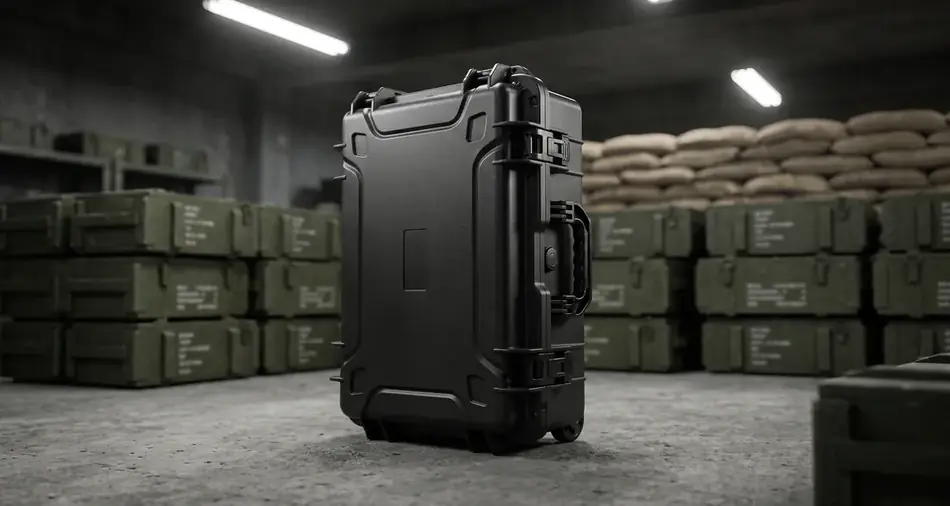
What should be considered when selecting a transport box?
Select a transport box from the contents and the route, not from the outside dimensions. Work through a fixed order of checks: the published internal length, width and depth that the item actually needs; the shell wall thickness that suits how the box will be handled and stacked; whether the SKU offers a continuous gasket channel to keep dust and spray out; the closure, hinge and latch pattern that holds that seal under load; the stacking and carry features; and the packing quantity that shapes your freight. Only after the box fits the load do you choose the interior that organises it. KeXin publishes these attributes per model across the catalogue, and where a value such as a drop or stack rating has not been measured on that specific SKU it is shown as not measured rather than filled in from a similar box.
Key points
- Start from the published internal dimensions of the item and its accessories, then subtract the foam to confirm the usable interior.
- Match wall thickness to how the box is handled: shallow utility boxes for trays, thicker ABS or engineering-PP shells for vehicle and pallet routes.
- Treat the seal channel as a per-model attribute; a good closure cannot replace a shell that has no gasket channel.
- Decide the interior layout by how often the contents change: pluck for mixed loads, die-cut or CNC-cut for a stable fleet.
- Check the carton packing quantity before costing freight; pieces per carton drives the landed cube more than the individual box size.
- Plan OEM colour, logo and packaging on the standard quantity bands so a repeat order matches the first one.
Size the interior from the real load
The internal envelope decides everything else. Measure the item at its widest working set, including handles, scopes, chargers, cables and any case or magazine that always travels with it, and pick the box whose published internal dimensions clear that envelope without leaving a large empty volume for parts to travel in. Ammunition and accessories transport boxes in this family publish internal sizes from compact trays to multi-litre shells, for example KX-3207 at 308 x 230 x 64 mm, KX-3213 at 308 x 230 x 118 mm, KX-3609 at 355 x 280 x 80 mm and KX-63413 at 310 x 255 x 106 mm. Subtract the foam thickness you intend to line before you commit, because a shallow box loses usable height to the liner faster than it loses length.
Match wall thickness to the route
Wall thickness is a per-model number and it governs how the box behaves when it is carried roughly, stacked or dropped a corner. Lighter utility transport is fine with a 3 mm polypropylene wall; a box that will live in a vehicle, sit on a pallet under other cartons, or be handled by many different people benefits from a thicker ABS or engineering-PP shell. In the sample models above, KX-3207, KX-3213 and KX-3609 are listed at a 3 mm polypropylene wall, while the ABS KX-63413 is listed at 4.8 mm. Choose against the actual handling path, not against a generic label such as heavy duty, and read the figure off the datasheet for the specific SKU you are quoting.
Decide whether you need a seal channel
If the contents must stay free of dust, brass, powder residue or road spray, the feature that matters is a continuous moulded gasket channel with a compressible gasket, and its presence is recorded per model. Several of the transport boxes in this line publish a seal as measured on that SKU, while other shells in the catalogue list no seal offered. The right sequence is to filter the candidate sizes by seal availability first, then confirm that the latch pattern and hinges on that same SKU can hold the lid down evenly enough for the gasket to do its job, because a single weak latch point can lift a corner of the seal under a stack.
Compare the selection factors
| Factor | What To Check | Why It Matters |
|---|---|---|
| Internal dimensions | Published internal L x W x H and usable interior after foam | Determines whether the load fits without free travel |
| Wall thickness | Per-model wall in millimetres and shell material | Sets how the box takes stacking and rough handling |
| Seal channel | Whether the SKU lists a compressible gasket in a channel | Keeps dust and spray off the contents |
| Closure and hinges | Latch count, padlockable points, moulded hinges | Holds the lid and seal under a load |
| Stacking and carry | Stackable flag, moulded feet, fixed folding handle | Turns one box into a shelf or pallet and aids safe carry |
| Packing quantity | Carton size and pieces per carton on the datasheet | Drives freight cube and landed cost |
Interior layout and how the load is repacked
A transport box organises its load through the interior, and the layout should follow how often the contents change. A box that carries the same kit every time is best served by a die-cut or CNC-cut foam layout that gives each part its own pocket and a relief under anything fragile. A box reconfigured between jobs is more practical with pick-and-pluck or dividers so users can reshape the cavity without a new cut. A mixed system with cables, tools and spares is handled by a layered top plus base so nothing rests its weight on the primary item. The catalogue supports all of these through the OEM foam route, and custom thickness, shape, CNC and die-cut work are all available on existing shells.
Reference transport boxes by use
| Use Case | Reference Model | Note |
|---|---|---|
| Small accessory and component tray | KX-3207, internal 308 x 230 x 64 mm, 3.0 mm PP wall | 24 pieces per carton on the datasheet |
| Deeper mixed kit with spares | KX-3213, internal 308 x 230 x 118 mm, 3.0 mm PP wall | 16 pieces per carton |
| Flat wide load across a shelf | KX-3609, internal 355 x 280 x 80 mm, 3.0 mm PP wall | Sealed shell, stackable |
| Thicker-wall kit for rough routes | KX-63413, internal 310 x 255 x 106 mm, 4.8 mm ABS wall | 10 pieces per carton |
Customising a transport box order
Transport boxes take the same OEM options as the rest of the range: case colour matching, printed or in-mould logo, custom foam, custom dividers and buyer-branded packaging. Logo and colour changes run on existing moulds starting around 300 pieces, and a first OEM sample follows the standing 45-day window. A bespoke internal geometry is the only thing that needs a new mould, which begins around 3,000 pieces per component and follows about 125 days after drawing sign-off. Orders are wholesale and OEM on EXW or FOB terms with a 30 percent deposit against the proforma; there is no retail, DDP or overseas-warehouse arrangement, so build landed cost and inbound freight into the selection.
Procurement notes
Specify from the datasheet, not from a family claim. Confirm the SKU's published internal dimensions, wall thickness, seal type, stackable status and carton packing quantity in writing before ordering. Pallet configuration is calculated from the carton footprint against your pallet size and is not a fixed figure on these models, so send your pallet standard and the factory will work the loading from there. Where a protection value is marked not measured on the SKU, treat it as unknown instead of assuming a rating. Lock the interior layout and any colour, logo or packaging changes on one order so a repeat batch is identical to the first.
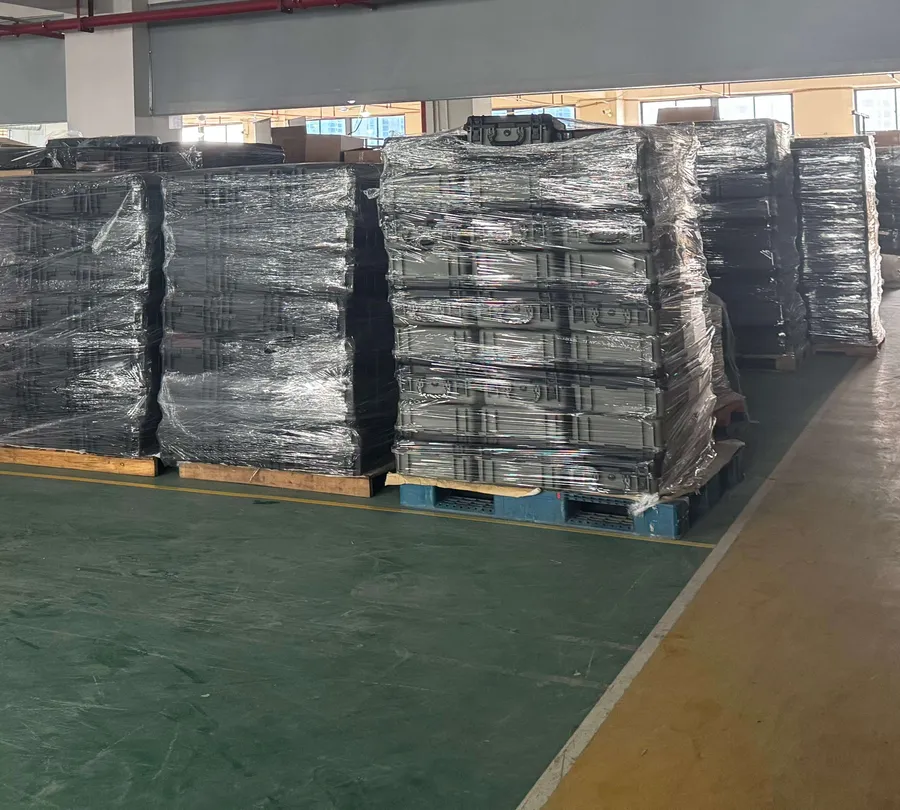
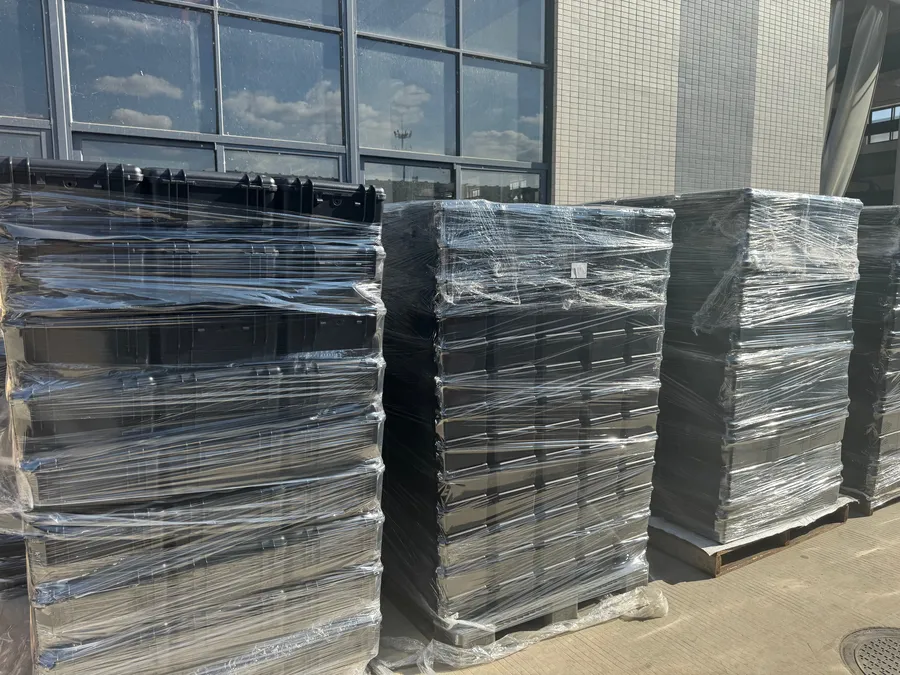
Customisation
Everything described above is configurable on a standard shell: interior layout (pick-and-pluck, die-cut or CNC-cut), foam grade and thickness, colour, logo method, latch and lock count, pressure-equalisation valve, cable ports, document holder and identification plate. A bespoke exterior geometry requires a new mould — 125 days, from 3,000 units per moulded component.
Procurement considerations
| Question | What to send us |
|---|---|
| Which shell fits? | Equipment L × W × H as packed, plus required clearance per axis |
| What does it cost? | Order quantity and estimated annual quantity — the two drive different answers |
| Is tooling needed? | Whether an existing shell clears the envelope with usable foam depth |
| Lead time? | Your required delivery date, not just the order date |
| Certification? | The exact standard your tender names — we will say whether we can test to it |
| Freight? | Destination and preferred terms; carton and pallet data supplied with the quotation |
Comparison and selection guide
The tables on this page exist because a protective case is chosen by comparing three things: the envelope, the environment and the handling chain. Where no table applies, the rule below is.
| Situation | What To Do |
|---|---|
| Fixed installation | Choose a box whose external height matches your racking pitch, and check the narrow internal width if the shell tapers. |
| Mobile use | Prefer a four-latch configuration and a lid that can be removed cleanly with gloves. |
| Inventory control | Specify a foam or partition layout so that a shortage is visible without opening compartments. |
- Size on internal dimensions plus clearance, never on a product name.
- Choose the carrying method before the shell: it changes the series, not just the price.
- Specify the interior last, and decide up front whether the end user will reconfigure it.
What should be considered when selecting a transport box? relates to Storage & Transport Box Guide. Related families: Ammunition Storage & Transport Boxes / Equipment Transport Cases / Military Transport Cases / Tool Cases. Related sectors: field and industrial equipment. Continue in the Storage & Transport Box Guide cluster.
This page is written from our own production data. If your requirement differs, send the dimensions and we will tell you which of the 155 models fits, or whether a custom route is needed.