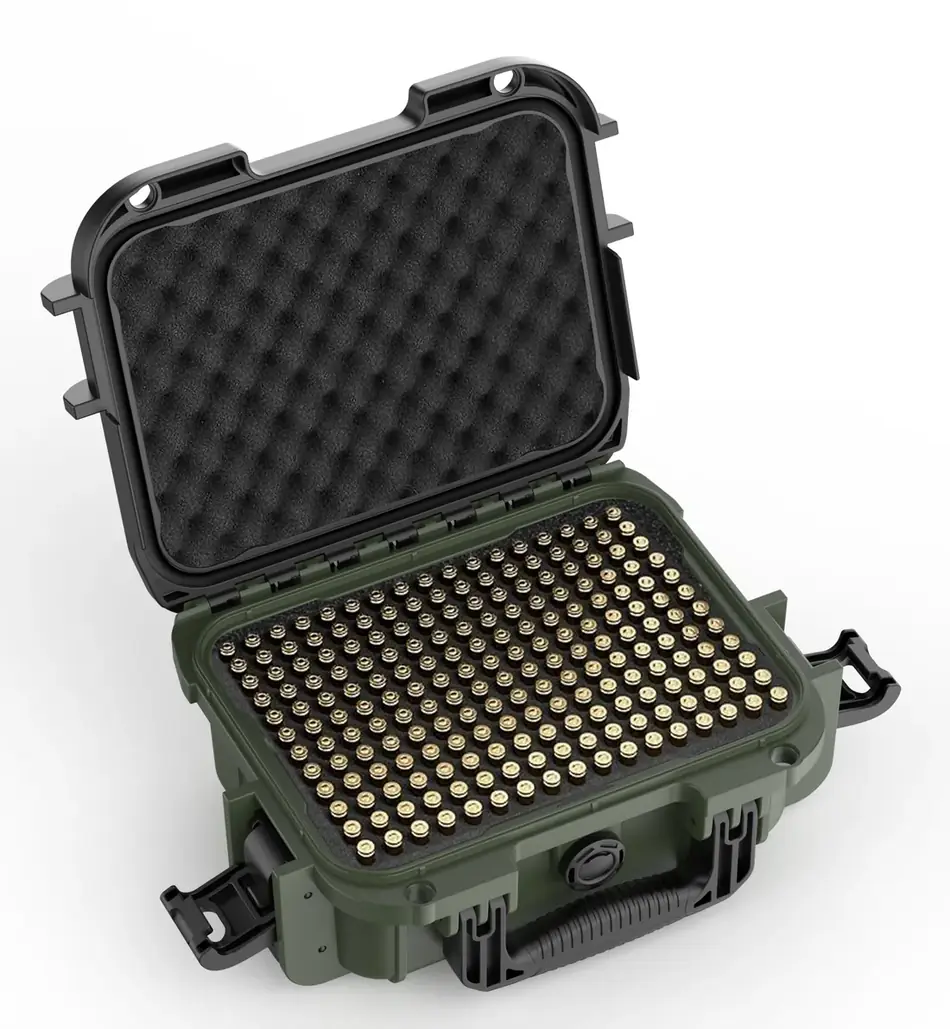
What is a stackable protective box?
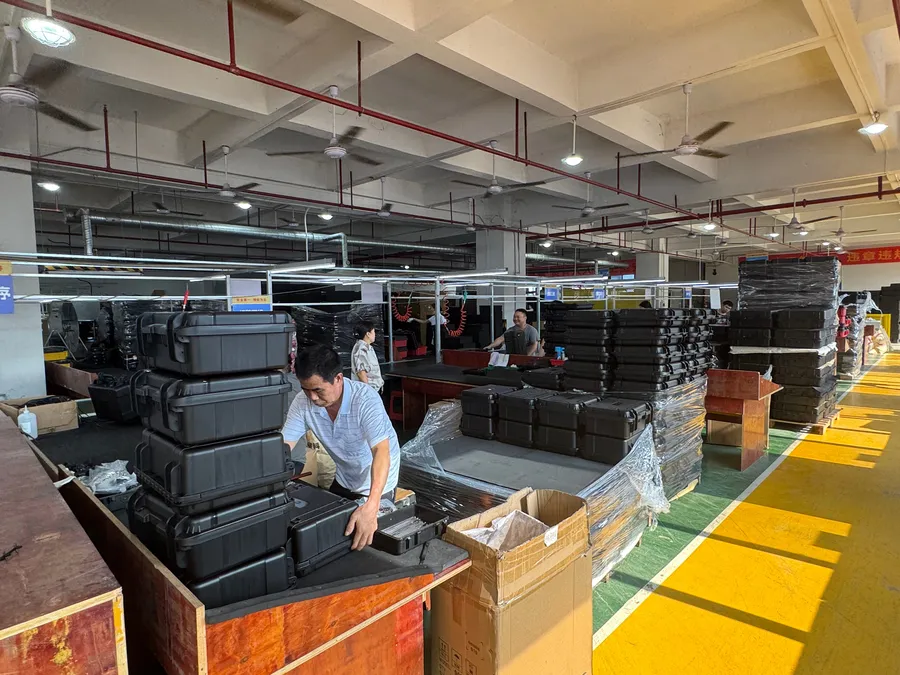
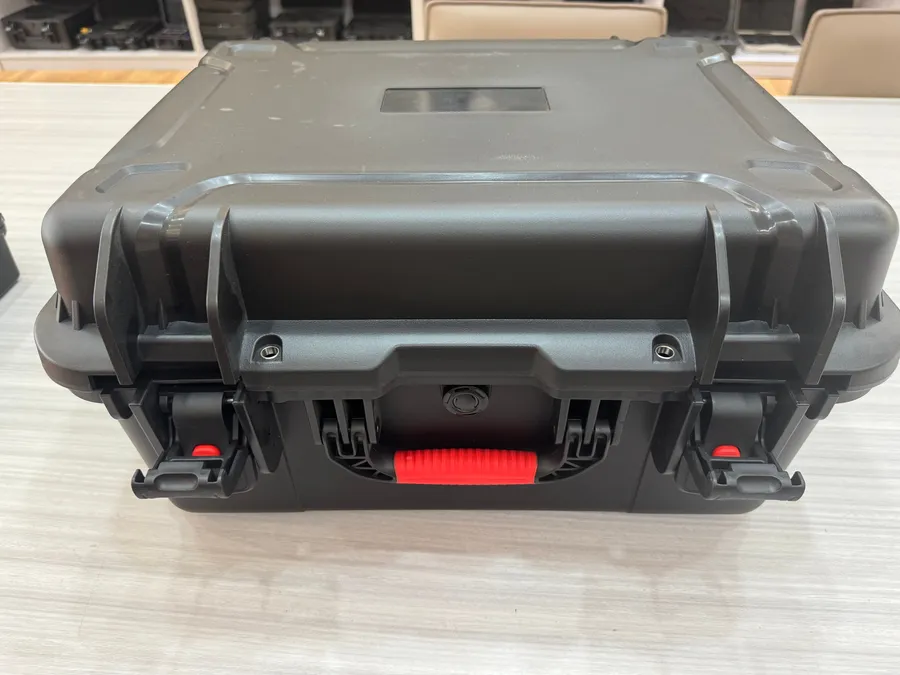
A stackable protective box is a rigid, reusable box whose lid, rim and external footprint are shaped so that loaded boxes can sit one on top of another as a stable column without crushing, tipping or jamming the units below. What separates a stackable box from an ordinary carrying case is not the plastic but the interface geometry: a flat or ribbed lid that presents a level bearing surface, a rim or moulded legs that register the box above onto the one below, and an external footprint that repeats exactly across a size family so upper boxes land squarely instead of overhanging an edge. Load in a proper stack is carried down through the walls and the rim, never through the flat of the lid panel, which is why published wall thickness behaves as a stacking specification rather than a styling choice. Ammunition boxes are the classic example, but the same stackable design stores spare parts, batteries, rations, tools and any consumable that must be counted, lifted and stacked many high. In our published range these boxes are moulded in polypropylene, engineering polypropylene or ABS with wall thickness listed per model, and every model in the stackable storage family is designed to stack and is not fitted with wheels.
Key points
- A box is stackable because of its rim, flat lid and repeating external footprint, not because the shell happens to be hard.
- Stack load travels through the walls and rim, so published wall thickness is a stacking figure, not a cosmetic one.
- Stacking and nesting are different: stacked boxes bear on full contents, nested boxes collapse empty to save return freight.
- Size a column by the mass and count of the boxes above, and ask for a measured figure only where the model has one.
- Consistent footprint across a size family matters more in a rack or a container than the internal volume printed on a datasheet.
The definition, and where it differs from a carrying case
A stackable protective box is defined by the job it is asked to do over time rather than by the object it wraps for a single journey. A carrying case protects one specific item for one trip and is then set down on its own; a stackable box is expected to sit in a column, several units high, often fully loaded, handled repeatedly by different people and re-counted as inventory. That duty reshapes the design brief around three interfaces that a single-use case can ignore: a lid that gives a flat, level bearing surface for the box above; a rim, lip or set of moulded legs that keeps each box located over the one beneath it so the column does not walk sideways; and an external footprint that is identical across a size family so an upper box lands on solid wall, not on a soft overhang. Ammunition is the name people reach for because it is the classic bulk-issued, box-counted consumable, but the identical stackable geometry is what lets the same boxes hold spare parts, batteries, rations, fasteners and field tools. The box is an inventory unit that also happens to protect what is inside it.
Stacking versus nesting, and why the distinction decides an order
Two words that look alike describe opposite behaviours, and mixing them up causes expensive mistakes in both directions. Stacking means loaded boxes ride on top of each other: the lower box carries the weight of everything above it, so the walls, rim and flat lid are what matter, and the box keeps its full height when empty. Nesting means empty boxes telescope into one another to shrink the volume they occupy on the return leg or in a store, which trades away column strength because the bearing surfaces are now sloped and irregular. A moulded storage box is designed to stack; you generally do not want it to nest, because a nested lid presents an uneven surface to a loaded column. Some deep lidded cases nest when empty and stack when loaded, but only if the geometry keeps a level bearing pad regardless of state, and that is a property to confirm per model rather than assume across a range. When you specify a stackable protective box, say plainly whether it must stack loaded, nest empty, or do both, because it changes the tool design and it changes what a supplier is even able to quote.
What carries the load: the geometry behind a safe column
The physics of a stack is simple, and it puts the responsibility somewhere people rarely expect. In a well-behaved column the weight above comes down through the four corners and the rim, continues through the vertical walls, and reaches the floor of the bottom box and the pallet beneath it. The flat centre of the lid panel is not meant to carry that load; if it is asked to, a deep box will dish, the lid will stop closing evenly, and the whole stack softens. That is why wall thickness, published per model across the stackable storage range between roughly 2.0 mm and 5.0 mm, is genuinely a stacking specification: a thicker wall resists the inward bowing that makes a column lean. The rim and any moulded legs do the locating, and the consistency of the external footprint does the rest. It is also why no box in this storage family carries wheels: a wheel set adds mass and cost, breaks the flat bearing surface, and turns a clean stacking footprint into an uneven one, so stacking and rolling are solved by different products, not by one box doing both.
Size examples drawn from the published stackable range
The figures below are published measured values taken from individual datasheets in the stackable storage range; they are examples, not a blanket capability claim, and the box you order is specified from its own data. Internal dimensions and wall thickness come straight from the datasheet; empty mass is published per model and climbs with footprint and depth, so a full column is planned on mass as well as on count. Where a stacking load has not been measured on a specific model we do not publish a number for it.
| Model | External Mm | Internal Mm | Wall Mm | Empty Mass G | Material |
|---|---|---|---|---|---|
| KX-3207 | 315 x 260 x 70 | 308 x 230 x 64 | 3.0 | 570 | PP |
| KX-3607 | 360 x 310 x 70 | 355 x 280 x 60 | 3.0 | 800 | PP |
| KX-62810 | 275 x 226 x 100 | 253 x 182 x 86 | 4.0 | 900 | ABS |
| KX-2811 | 280 x 225 x 111 | 253 x 180 x 98 | 5.0 | 890 | PP |
| KX-3213 | 315 x 260 x 128 | 308 x 230 x 118 | 3.0 | 860 | PP |
How to choose a box for the stack you actually intend
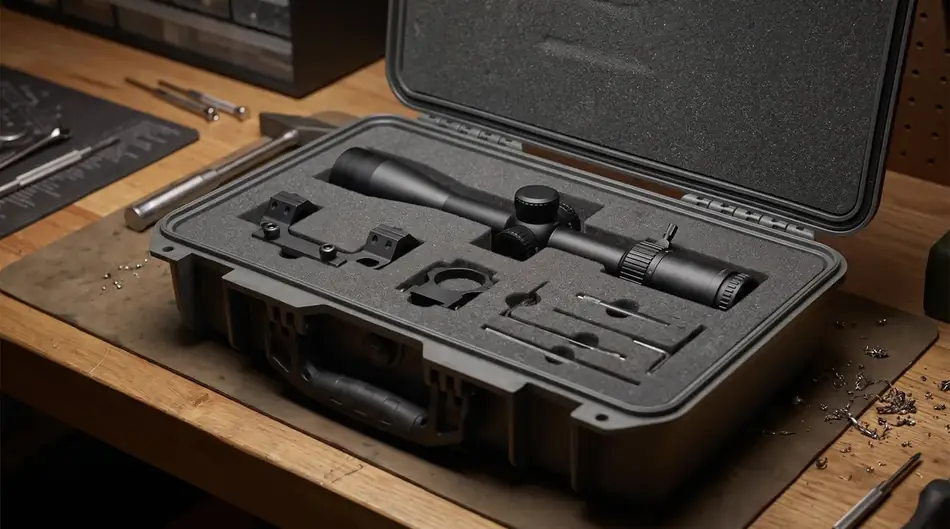
Start from the column, not from a single box. Work out how high the stack will stand and roughly how much loaded mass sits above the bottom unit, then choose wall thickness and rim geometry that suit that duty; a tall warehouse column of deep, heavy boxes is a different request from two shallow trays on a bench. Next check the footprint against where it will live: the external length and width have to match your shelf bays, rack slots or pallet grid, and if a box tapers to a narrower internal width you read that figure against the slot it has to drop into, not against the external size. Then confirm the box belongs to a size family whose footprint repeats, so mixed heights still land squarely. Finally decide the interior: most bulk consumables travel loose behind a divider, while anything issued as a kit is better served by a cut or pluck foam layer so a missing item is visible at a glance. The commercial decision last, because it is the carton packing of the exact model, not the single box, that turns a quantity into freight.
Where stackable boxes earn their keep
The natural home of a stackable protective box is anywhere stock is counted and lifted rather than carried one at a time: an armoury or unit store where a fixed box volume turns a count of items into a count of boxes and a stack becomes an inventory you can audit at a glance; a workshop spare-parts wall; a field kit of batteries and chargers; a supply run carrying rations and consumables; a maintenance store holding fasteners and hand tools. What these share is that the contents are numerous, interchangeable and individually unremarkable, but the set has to stay complete and survive being lifted, stacked and re-counted by many hands. That is precisely the situation a stackable, fixed-volume, closed box handles well, and it is why these boxes are bought by the unit, the depot or the fleet. The stacking footprint and the published carton packing are what let a buyer model how many full boxes fit a shelf, a pallet bay or a container before a single unit is ordered.
Customising a stackable box for your system
As a wholesale and OEM supplier we shape the box around your storage system instead of forcing your system into a catalogue size. The value is added at the interfaces and the interior: a rim profile or leg geometry tuned so your boxes register cleanly at the height you stack to, matched colour and a moulded or printed marking so different stock lines are told apart at a glance, a cut or pluck foam layer or a shallow removable tray to turn a plain box into a counted kit issuer, and dividers to split one volume into audited compartments. On a new tool the published business terms apply: about 45 days to a first OEM sample, about 125 days to a new mould, a 30 percent deposit on the tooling, and production quoted on EXW or FOB terms. A colour, logo or insert change on an existing shell is normally far quicker than cutting new steel.
Notes before you buy
We sell to distributors, integrators and OEM programmes on wholesale terms and do not retail single units; quotations are EXW or FOB, and we do not offer DDP or hold stock in an overseas warehouse, so plan freight and customs clearance yourself. Order against the datasheet of the exact model, because external and internal dimensions, wall thickness, empty mass and carton packing differ across the range. Two numbers decide whether a stack works at scale even when the internal volume looks right on paper: the repeating external footprint and the wall thickness for your intended stack height. On protection we hold the same narrow position used across this site: we publish measured physical figures per model, and where a stacking load or an ingress property has not been tested on that specific box we do not claim a value for it. If a supplier cannot show you the footprint consistency across a size family, that is the question to ask first.
Customisation
Everything described above is configurable on a standard shell: interior layout (pick-and-pluck, die-cut or CNC-cut), foam grade and thickness, colour, logo method, latch and lock count, pressure-equalisation valve, cable ports, document holder and identification plate. A bespoke exterior geometry requires a new mould — 125 days, from 3,000 units per moulded component.
Procurement considerations
| Question | What to send us |
|---|---|
| Which shell fits? | Equipment L × W × H as packed, plus required clearance per axis |
| What does it cost? | Order quantity and estimated annual quantity — the two drive different answers |
| Is tooling needed? | Whether an existing shell clears the envelope with usable foam depth |
| Lead time? | Your required delivery date, not just the order date |
| Certification? | The exact standard your tender names — we will say whether we can test to it |
| Freight? | Destination and preferred terms; carton and pallet data supplied with the quotation |
Comparison and selection guide
The tables on this page exist because a protective case is chosen by comparing three things: the envelope, the environment and the handling chain. Where no table applies, the rule below is.
| Situation | What To Do |
|---|---|
| Fixed installation | Choose a box whose external height matches your racking pitch, and check the narrow internal width if the shell tapers. |
| Mobile use | Prefer a four-latch configuration and a lid that can be removed cleanly with gloves. |
| Inventory control | Specify a foam or partition layout so that a shortage is visible without opening compartments. |
- Size on internal dimensions plus clearance, never on a product name.
- Choose the carrying method before the shell: it changes the series, not just the price.
- Specify the interior last, and decide up front whether the end user will reconfigure it.
What is a stackable protective box? relates to Storage & Transport Box Guide. Related families: Ammunition Storage & Transport Boxes / Tool Cases / Tactical Equipment Cases / Field Equipment Cases. Related sectors: field and industrial equipment. Continue in the Storage & Transport Box Guide cluster.
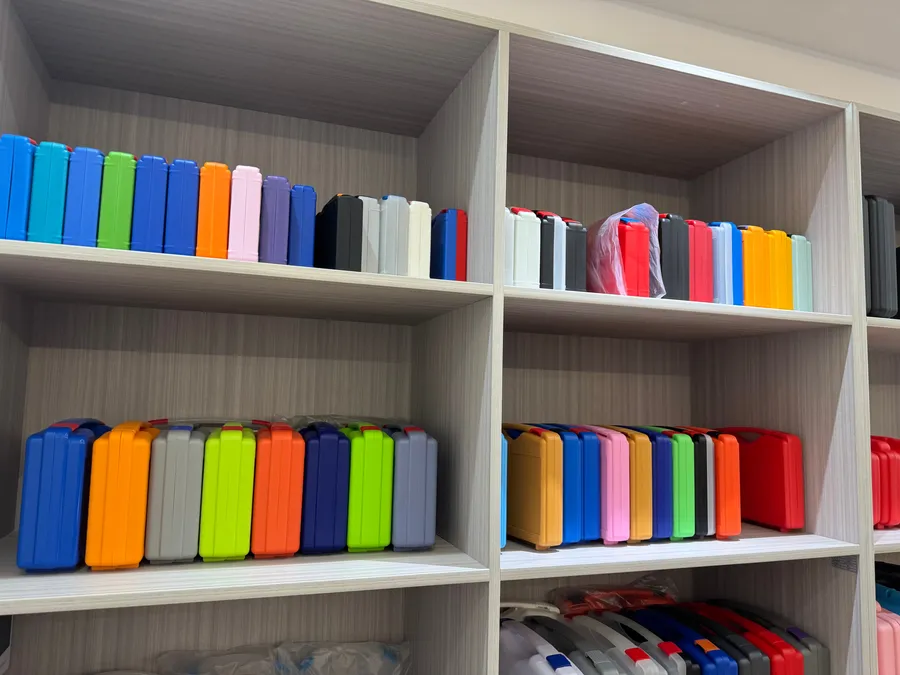
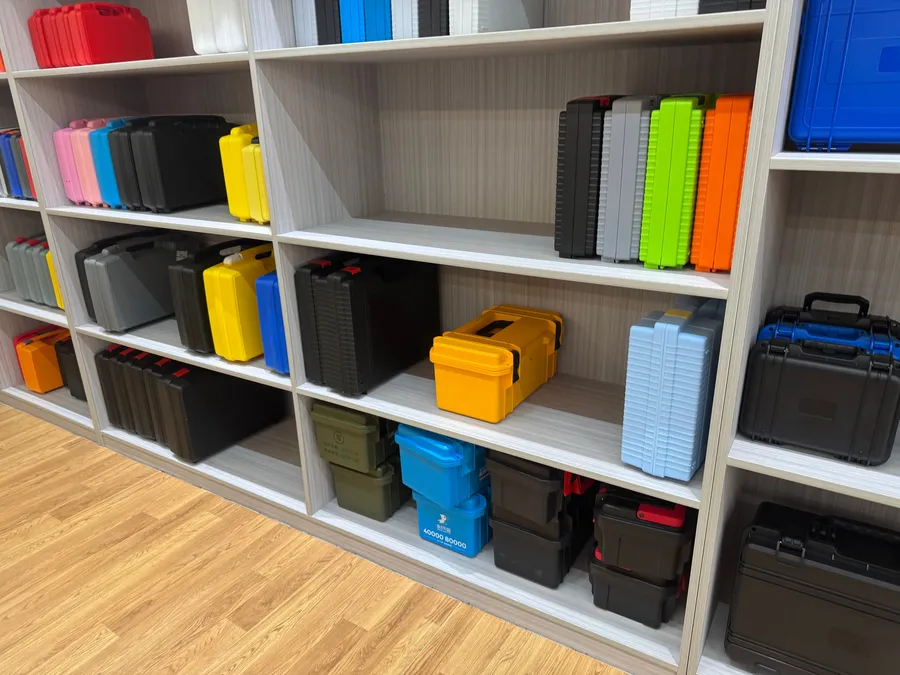
This page is written from our own production data. If your requirement differs, send the dimensions and we will tell you which of the 155 models fits, or whether a custom route is needed.