Photo & audio equipment case source factory custom?
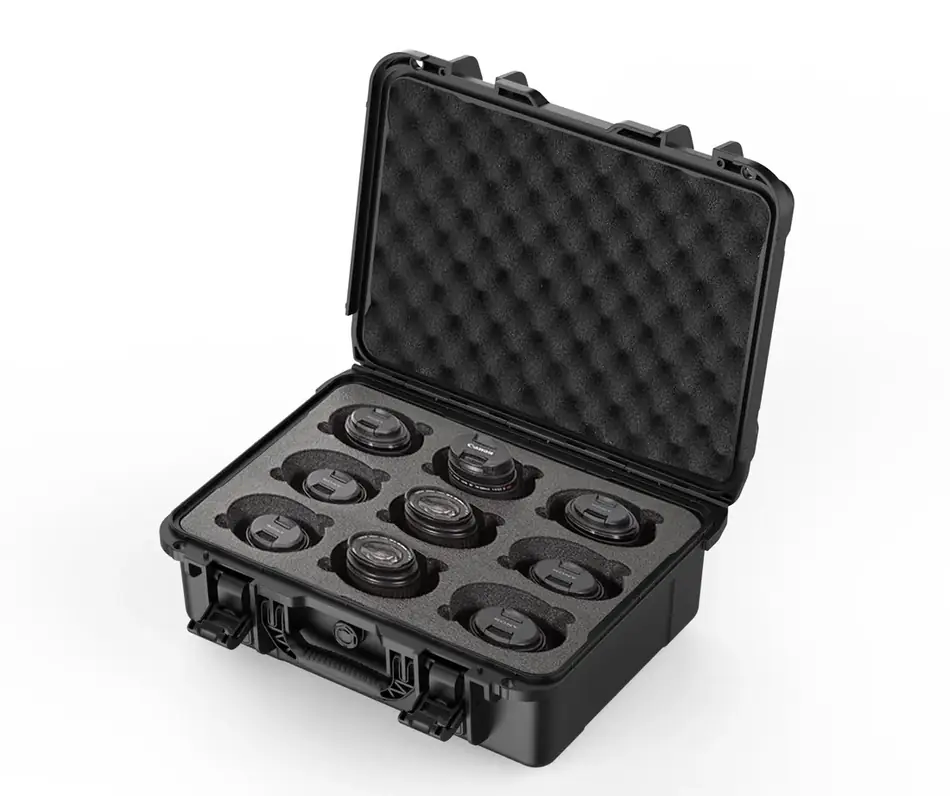
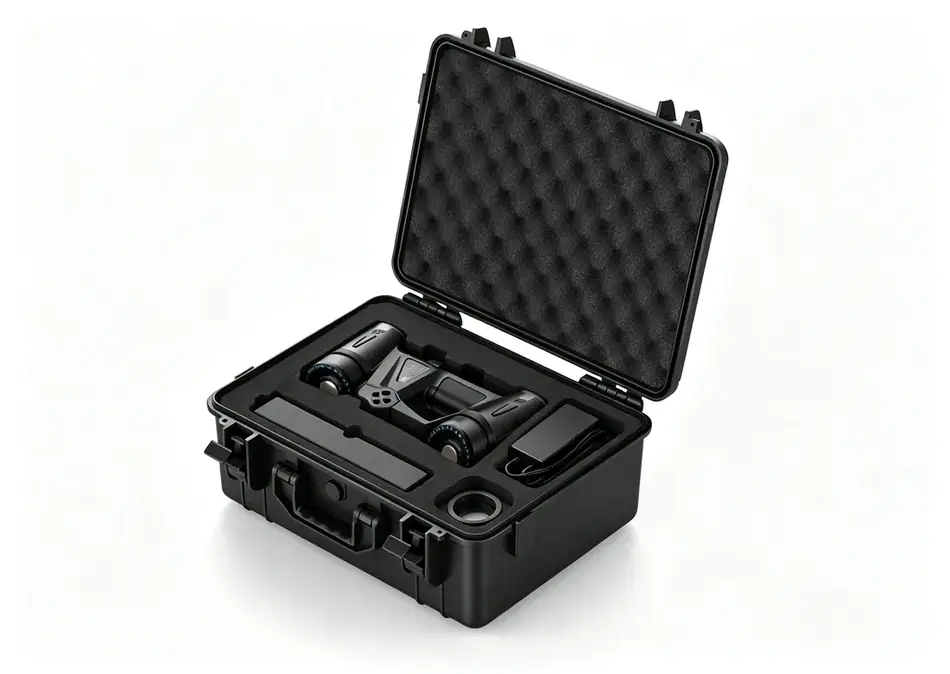
Photo & audio equipment case source factory custom means going to the plant that moulds the shell instead of a reseller, and having the case built around your kit rather than squeezed into a generic size. A source factory publishes measured internal dimensions, wall thickness and net weight per model, cuts the foam interior to a drawing or a sample, and changes colour or logo on your brand. The figures that decide a camera or audio order are the internal height and the lid-to-base split, because rigs and mixers are tall before they are wide; on our listings an ABS shell gives an internal 430 x 290 x 165 mm with a 140 mm lid over a 25 mm base, which is the kind of unbalanced depth a built-up camera carries rather than a flat tray.
Key points
- Buy from the moulding factory when you need interior, colour or logo changes; a reseller generally sells only what is in stock.
- Sized by internal height and the lid-to-base split first: rigs and mixers stand up, so deep-lid shells beat flat wide ones.
- A custom-foam layout starts from one case, while a colour or logo change on the shell carries a 300-unit minimum.
- We publish measured dimensions and mass per model; protection classes are recorded as not measured and can be tested on request.
- Existing-mould OEM runs a 45-day lead time; a brand-new mould runs 125 days with a minimum from 3,000 pieces per component.
- Wholesale and OEM/ODM only on EXW or FOB, a 30% deposit, the balance after your inspection, third-party factory audits welcome.
Photo & audio equipment case source factory custom: What Buying at the Moulding Factory Changes
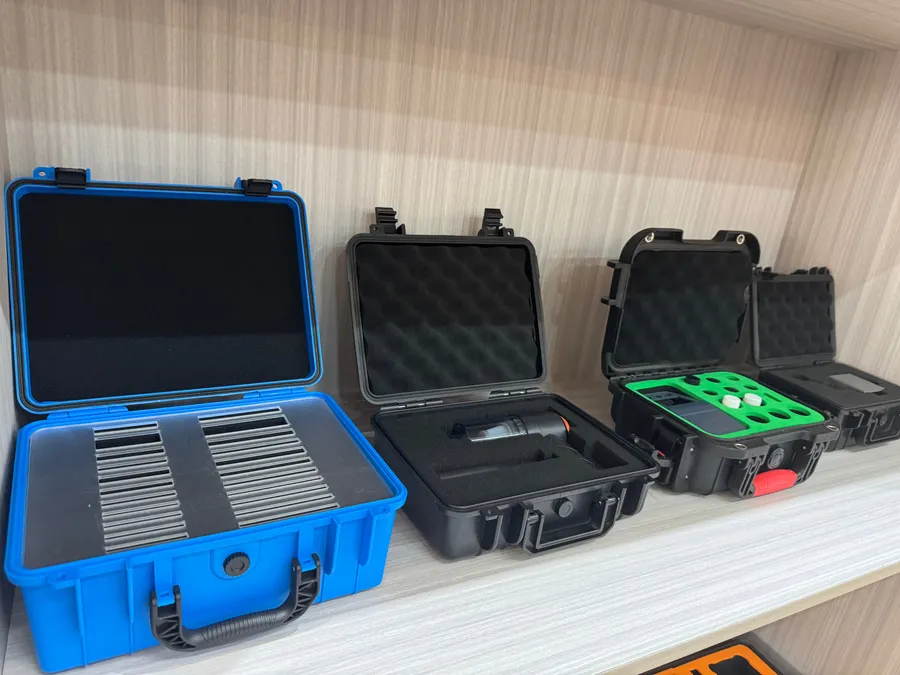
When a search reads photo & audio equipment case source factory custom, the practical difference is control. The factory that injects the shell can open the mould or leave it, cut the interior to your exact camera body, mixer or lens case, and finish the body in your colour with your logo. A reseller typically sells only the configurations already boxed, so a kit that does not match a stock size is left with pick-and-pluck foam and no brand. For a buyer assembling a recurring field kit, the source route is the one that lets the case match the equipment instead of the other way around.
Published Sizes for Camera and Audio Cases
Every figure above is published per model from our own production data and describes that shell as made, not an average for the line. Read the internal height column before the footprint: KX-705 gives 112 mm of height for a flat camera tray, while the ABS KX-64618 gives 165 mm on a narrower 430 x 290 base, which is what a built-up rig needs. Net weight rises with wall thickness and depth, so a heavier case is a deeper or thicker shell, not a claim of a higher protection class.
| Model | Internal L X W X H (Mm) | Wall (Mm) | Net Weight (G) | Internal Volume (L) |
|---|---|---|---|---|
| KX-2614 | 240 x 200 x 120 | 2.2 | 460 | 5.8 |
| KX-712 | 308 x 250 x 96 | 2.8 | 710 | 7.4 |
| KX-705 | 420 x 270 x 112 | 2.1 | 830 | 12.7 |
| KX-707 | 465 x 310 x 140 | 2.5 | 1360 | 20.2 |
| KX-64618 | 430 x 290 x 165 | 4.7 | 2775 | 20.6 |
| KX-86830 | 595 x 460 x 255 | 4.8 | 10160 | 69.8 |
Deep Lids and the Lid-to-Base Split That Fits a Rig
Camera and broadcast cases are usually sized by the tallest thing that travels assembled, so the split between lid depth and base depth matters more than total volume. On one ABS shell we publish a lid depth of 140 mm over a base depth of only 25 mm; that off-balance is deliberate, so a mounted body, gimbal or shotgun-and-blanker sits in the lid while the base takes batteries and cables. A balanced 56 over 56 on a smaller PP shell suits a field recorder that lies flat. Ask us to match the split to your tallest assembled item before we cut the foam.
Custom Interiors, Colours and Logos from the Factory
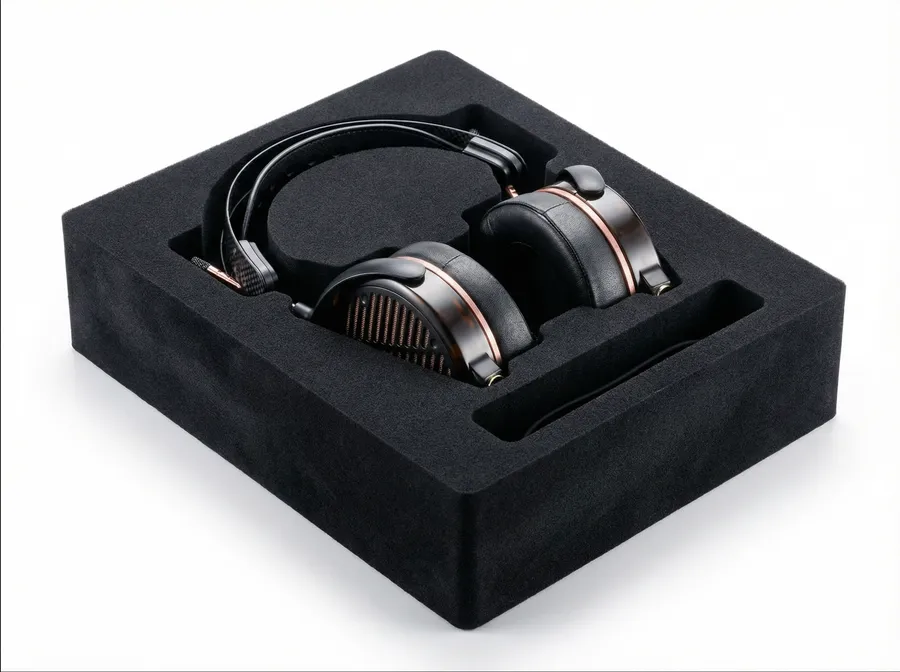
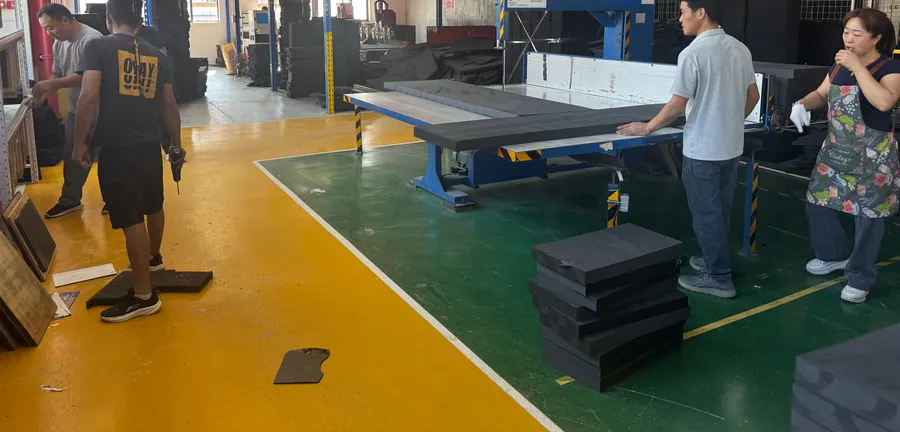
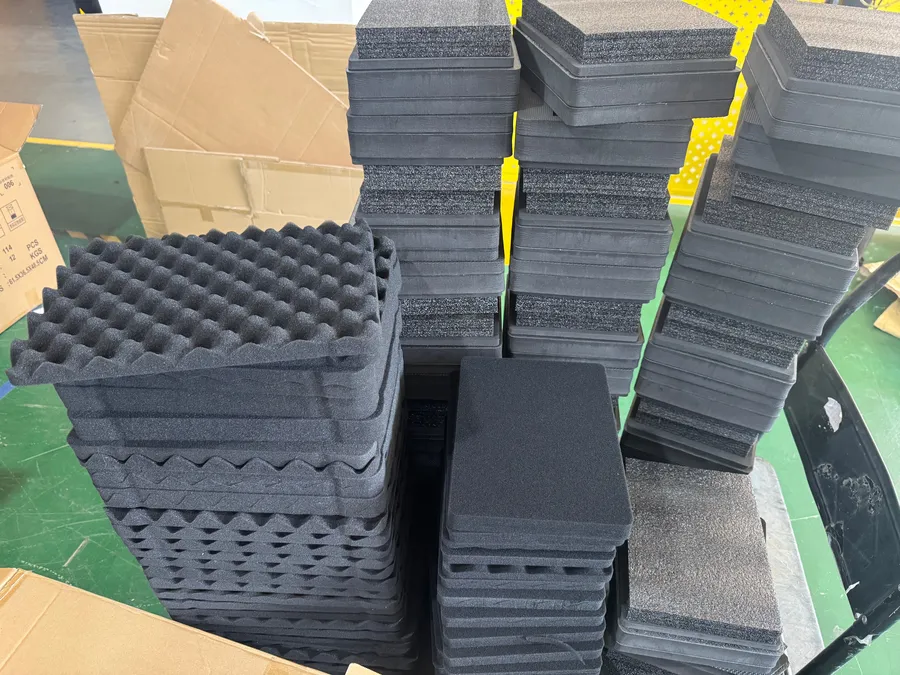
A custom interior is the normal order here, not a special request. We cut cross-linked PE, EVA or EPS by zone using pick-and-pluck, die-cut or CNC, from a drawing, a photograph of the packed kit, or a physical sample, and a custom-foam layout can start from a single case. Shell colour and a moulded or printed logo carry a minimum of 300 units. If the existing moulds do not cover your size, a brand-new mould runs to 125 days with a minimum from 3,000 pieces per component, while an OEM build on an existing mould runs a 45-day lead time.
What We Do Not Claim
We do not print a protection class, a waterproof figure, or a drop result that we have not run. On these models ingress and impact protection are recorded as not measured; where a configuration lists a gasket, it is EPDM or an equivalent offered as a build option. What we do publish are measured internal and external dimensions, wall thickness and net weight per model. If your tender needs a stated class, we will quote accredited third-party testing as a separate work package and report the result that comes back rather than assuming it.
Commercial Terms for a Custom Order
We are a wholesale and OEM/ODM supplier and quote on EXW or FOB terms only; we do not sell retail, do not offer DDP, and hold no overseas warehouse stock. Payment is a 30% deposit with the balance settled after your inspection, and third-party factory audits are welcome. Carton, pallet and container-loading numbers are supplied with your quotation and computed from the carton footprint against your pallet size. For a photo or audio case built to your kit, contact Fred Zhao or the KeXin Sales Team, or reach us on WhatsApp +86 135 3588 0002.
Customisation
Everything described above is configurable on a standard shell: interior layout (pick-and-pluck, die-cut or CNC-cut), foam grade and thickness, colour, logo method, latch and lock count, pressure-equalisation valve, cable ports, document holder and identification plate. A bespoke exterior geometry requires a new mould — 125 days, from 3,000 units per moulded component.
Procurement considerations
| Question | What to send us |
|---|---|
| Which shell fits? | Equipment L × W × H as packed, plus required clearance per axis |
| What does it cost? | Order quantity and estimated annual quantity — the two drive different answers |
| Is tooling needed? | Whether an existing shell clears the envelope with usable foam depth |
| Lead time? | Your required delivery date, not just the order date |
| Certification? | The exact standard your tender names — we will say whether we can test to it |
| Freight? | Destination and preferred terms; carton and pallet data supplied with the quotation |
Comparison and selection guide
The tables on this page exist because a protective case is chosen by comparing three things: the envelope, the environment and the handling chain. Where no table applies, the rule below is.
| Situation | What To Do |
|---|---|
| Changing kits | Layered pluck foam, rebuilt by hand. |
| Fixed rental fleet | CNC silhouette with serial pockets and an inventory list. |
| Harsh locations | Sealed shell plus desiccant provision in the lid. |
- Size on internal dimensions plus clearance, never on a product name.
- Choose the carrying method before the shell: it changes the series, not just the price.
- Specify the interior last, and decide up front whether the end user will reconfigure it.
Photo & audio equipment case source factory custom? relates to Procurement Guide. Related families: Camera & Photography Cases / Optical Equipment Cases / Custom Protective Cases / Electronics Cases / Rolling Cases. Related sectors: field and industrial equipment. Continue in the Procurement Guide cluster.
This page is written from our own production data. If your requirement differs, send the dimensions and we will tell you which of the 155 models fits, or whether a custom route is needed.