Dustproof and Waterproof Instrument Case Design?
A dustproof and waterproof instrument case is a closure design before it is a material choice: a continuous moulded gasket channel, latches that hold compression across the whole rim, a pressure path that is either deliberately sealed or deliberately vented, and an interior that keeps the instrument off the shell. Of 155 shell models, 115 carry the instrument tag; 96 of those offer a compressible gasket in a continuous moulded channel and 19 are plain shells. Water, dust and ingress performance are recorded as not measured on every model, so no code is printed and any rating comes from accredited testing quoted against the exact configuration you order.
Key points
- Design the closure first: the channel, latch spacing and valve decision decide ingress long before the resin brand does.
- 96 of the 115 instrument-tagged models offer a gasket in a continuous moulded channel; the other 19 are unsealed shells.
- Wall thickness is recorded on 109 instrument models between 2.1 mm and 5.8 mm; read it per model, not as a family promise.
- Water, dust, UV, temperature and stack load are not measured on any model, and no ingress code is printed.
- A gasket controls air and particles, not condensation; closed-cell foam and a desiccant or vent decision belong in the design.
- Settle envelope, seal, interior and test scope before colour or logo, because those four decide model, MOQ and price.
What dustproof and waterproof design means in a rigid instrument case
A rigid instrument case is a box with six interfaces: the rim between lid and base, the latch pockets, the pressure valve seat, any hole cut for a connector or cable, the hinge line, and the interior support that keeps the instrument off the shell. The resin and the wall decide how the box behaves when it is carried, dropped or stacked; the interfaces decide whether dust and water reach the instrument at all. That is why design work starts with the closure and the interior, and only then moves to colour, logo and packaging. We describe the result as a design that limits ingress, because the only honest statement about performance is the one backed by a test on the exact configuration a buyer orders.
Instruments make the problem harder than a plain box does. A bench meter arrives with binding posts, a probe socket, a carry handle and a calibration label; a field analyser arrives with a sensor head on a lead and a reference cell that must not be left loose. Each of those is a penetration or a pressure point. A case designed around the instrument has to fix three things at once: the clear cavity that the instrument and its foam occupy, a closure that survives being opened and closed several times a day, and an interior layout that stops the instrument moving when the case is carried on a shoulder or in a vehicle. Our sheet publishes the cavity for each model. It does not publish an ingress result, because water, dust and pressure performance are recorded as not measured.
The four paths that decide ingress, and how each one is designed
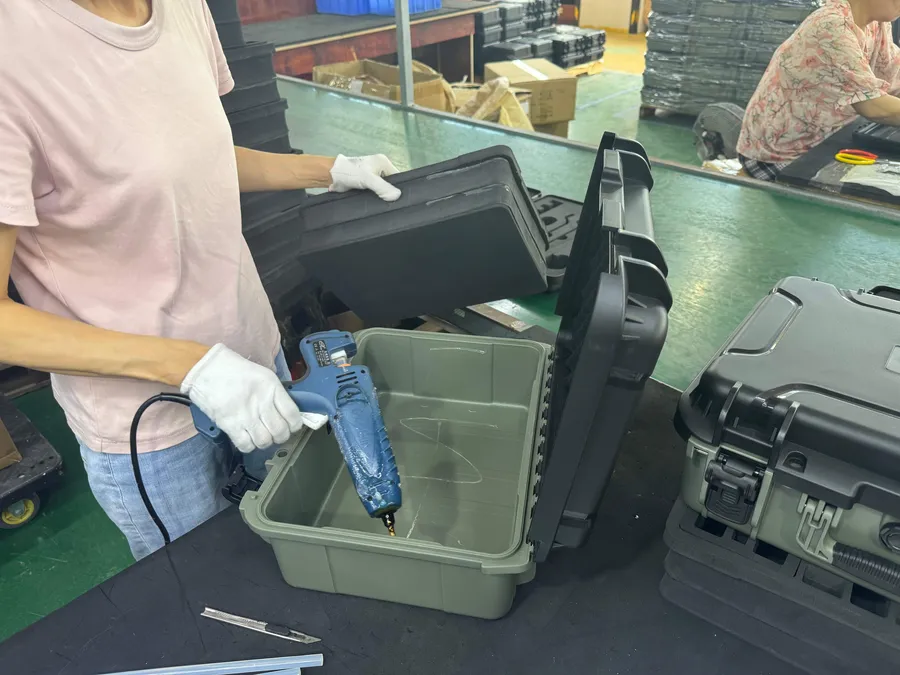
Dust and water do not pass through polypropylene. They pass through gaps. In a well-built shell the gaps are known and countable, and each one has a design answer. The rim is a continuous moulded channel holding a compressible gasket: continuous because a joint in the channel is a path, and moulded because a channel cut after moulding loses the compression geometry that makes the gasket work. The latches set the pre-load. Spacing and corner geometry decide whether the gasket stays compressed along the whole rim, and a latch that snaps shut easily is not automatically a latch that seals. The valve is a deliberate hole with a membrane in it, fitted to relieve the pressure difference created when a sealed case moves between a hot vehicle and a cold store; it is a manufacturer option on our models, not standard. Penetrations are the fourth path: a cable gland, a connector plate or an antenna pass-through is a hole, and each one needs its own seal and its own place in the test scope. The hinge line is the fifth, and the gasket has to run past it without a break in compression.
What our published instrument data states, and what it leaves open
Of 155 shell models, 115 carry the instrument tag. The material split is 62 polypropylene, 35 engineering polypropylene, 17 ABS and one shell offered in both PP and ABS. A wall thickness is recorded on 109 of the 115, running from 2.1 mm to 5.8 mm. Of those models, 96 offer a compressible gasket in a continuous moulded channel and 19 are plain shells with no seal; 107 are stackable and 8 are wheeled. Geometric internal volume runs from 5.8 to 44.0 litres across the group. The protection block is explicit about its limits: water, dust, UV, temperature, stack load and working load are recorded as not measured, and no ingress code is stated on any model. The one protection line recorded as measured is corrosion resistance: a thermoplastic shell with no ferrous corrosion path.
| Property | Published Status | What It Means For Your Specification |
|---|---|---|
| Property | Published status | What it means for your specification |
| Sealing option | Gasket on 96 of 115 instrument models; none on 19 | Shortlist the gasketed group for dusty or wet duty; the 19 plain shells suit dry benches and frequent opening. |
| Gasket | EPDM or equivalent compressible gasket in a continuous moulded channel | A replaceable consumable part of the case, not a permanent property of the shell. |
| Wall thickness | Recorded on 109 models, 2.1 mm to 5.8 mm | A mass and stiffness figure read per model; it is not an impact rating. |
| Shell material | 62 PP, 35 engineering PP, 17 ABS, one PP and ABS | ABS for a harder, cleaner moulded surface; PP for toughness and lower cost. |
| Corrosion resistance | Measured: thermoplastic shell, no ferrous corrosion path | Usable for splash and salt air, subject to checking the agent against the hardware finish. |
| Water and dust | Not measured on all 155 models; no ingress code printed | Ask for a quoted test on your configuration if the tender needs a number. |
| Temperature, UV, stack and load | Not measured on all models | Define the duty in the RFQ and request conditioning or load data as a separate scope. |
Resin and wall thickness: the choice that sets stiffness and mass
Polypropylene is the default for a moulded case because it stays tough at low temperature and is economical to mould. Engineering polypropylene is specified where the same part has to hold a tighter tolerance or take a stiffer rib. ABS gives a harder surface and a cleaner moulded finish, which matters on a bench instrument that is wiped down with a cloth several times a day. None of the three is a seal. The gasket, the channel and the latch geometry do that work, and they present the same design problem in all three materials, which is why a material change alone never turns an unsealed shell into a sealed one.
Wall thickness is published per model, from 2.1 mm to 5.8 mm in the instrument group, and it should be read as a mass and stiffness figure rather than a protection figure. A thicker wall raises the empty weight and the moulding cost, and it changes how the shell behaves under a point load, which is why the sheet records a wall for each model instead of a range for the family. Impact performance itself is not measured, so we do not attach a drop height to a wall figure. If a programme needs an impact number, it has to come from a test on the loaded case, and that test is quoted as a separate work package rather than implied by the drawing.
Foam, condensation and the moisture a gasket cannot stop
A gasket controls the air that crosses the rim; it does not control the water already inside the box. Warm, moist air trapped at assembly condenses on a cold shell, so a sealed case can be wetter inside after a night in a vehicle than an unsealed one. The design answer is to reduce the air exchange before closing, choose a closed-cell foam that does not hold a spill or a bead of condensation against the instrument, and decide whether a desiccant sachet or a vented interior layout belongs in the kit. That decision is part of the design, not an accessory added after the case is bought.
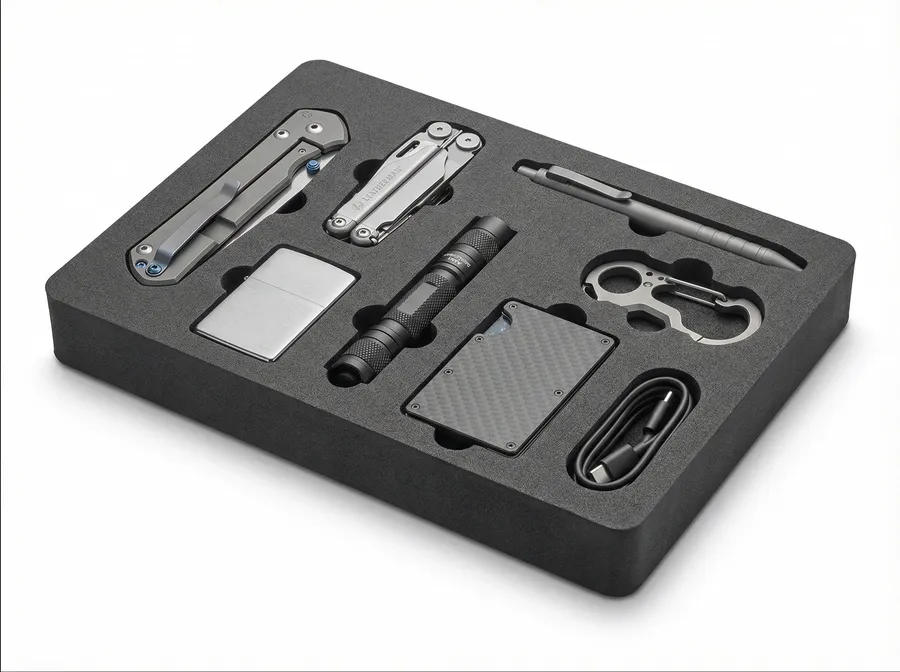
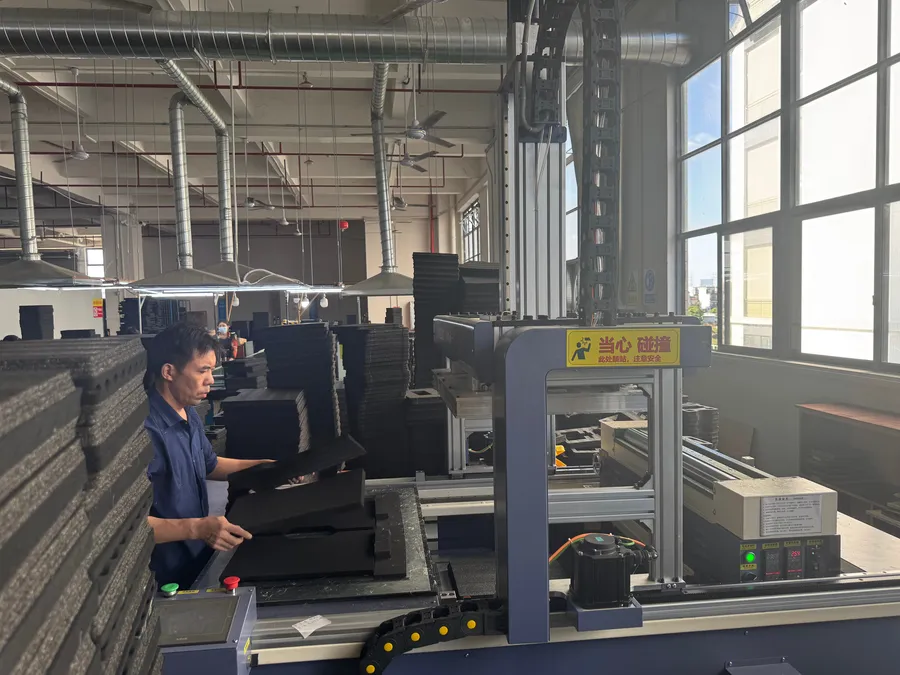
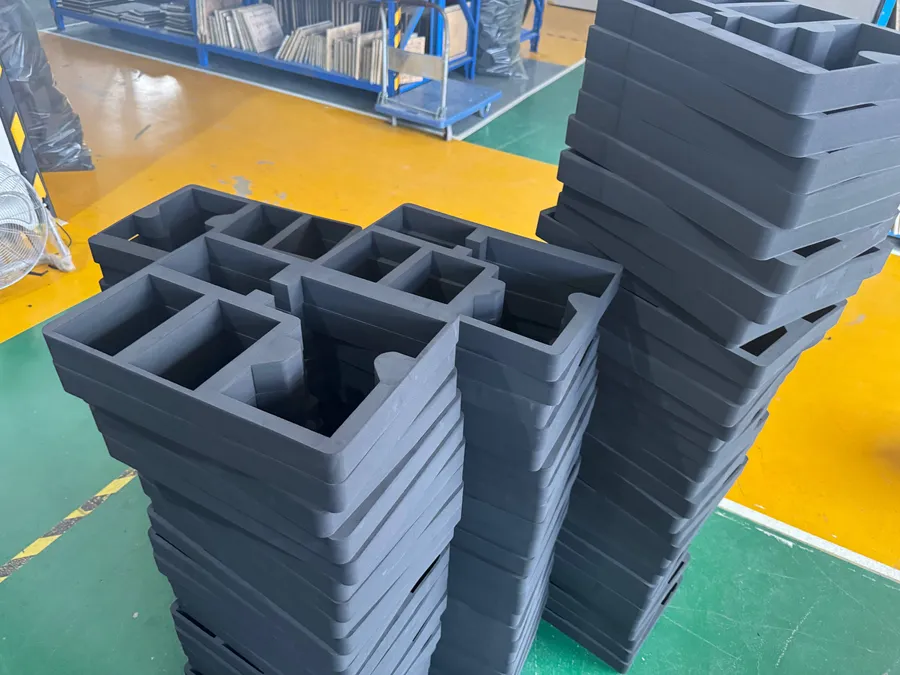
The interior is also where an instrument case earns or loses its price. Pick and pluck foam is quick for a mixed fleet of instruments; die-cut foam suits a repeatable kit; CNC-cut foam is the sensible choice when a probe, a lead and a reference block each need a separate pocket with a defined clearance. EVA and PE are closed-cell and cleanable; EPE is lighter and springier. The sheet lists foam as a manufacturer option, which means the layout is quoted with the case rather than assumed. Usable interior volume is always smaller than the geometric figure, 29.7 litres against 37.1 on one published model, because ribs, hinge mouldings and the foam itself take space.
| Foam | Behaviour | Instrument Duty It Suits |
|---|---|---|
| Foam | Behaviour | Instrument duty it suits |
| PE closed cell | Firm, does not absorb water, holds a cut pocket shape | Bench meters, calipers and heavy hand instruments that need a firm seat. |
| EVA closed cell | Softer than PE, cleanable, good for fine surface finish | Optical and precision instruments with painted or polished faces. |
| EPE | Light and springy, lower density | Lightweight accessories and leads where weight matters more than stiffness. |
| Pick and pluck | Pre-cut blocks removed by hand, coarse resolution | Mixed or changing instrument fleets where a new layout is needed quickly. |
| CNC-cut | Pockets cut to a drawing with defined clearance | Probes, connectors and reference blocks that must sit in a named position. |
Published instrument-case sizes from the sheet
The table below is read from the product sheet, per model, and it is not a family capability. External dimensions are the outside envelope including hardware; internal dimensions are the clear cavity; usable interior volume is smaller than the geometric internal volume because ribs, hinge mouldings and lid geometry take space; net weight is the empty case. The seven models are chosen to span the instrument group from a small bench meter shell to a case that takes a rack instrument and its leads. One of them, the 20.4-litre model, is included deliberately as a plain shell: it shows what an unsealed instrument case looks like in the same size band, and why seal choice is separate from size choice.
| Model | External Mm | Internal Mm | Usable Interior L | Wall Mm | Net Weight Kg | Seal |
|---|---|---|---|---|---|---|
| Model | External mm | Internal mm | Usable interior L | Wall mm | Net weight kg | Seal |
| KX-3218 | 315 x 260 x 180 | 308 x 230 x 172 | 10.5 | 3.0 | 0.90 | Gasket |
| KX-4010 | 400 x 360 x 100 | 390 x 315 x 88 | 9.3 | 3.0 | 1.02 | Gasket |
| KX-63416 | 339 x 310 x 155 | 310 x 255 x 138 | 8.7 | 4.8 | 1.80 | Gasket |
| KX-64120 | 405 x 362 x 195 | 378 x 307 x 187 | 17.4 | 4.0 | 2.64 | Gasket |
| KX-4716 | 466 x 387 x 162 | 458 x 345 x 150 | 20.4 | 2.5 | 1.68 | None offered |
| KX-84821 | 482 x 420 x 210 | 410 x 360 x 190 | 22.4 | 4.2 | Not recorded | Gasket |
| KX-65522 | 545 x 440 x 215 | 507 x 385 x 190 | 29.7 | 5.3 | 4.86 | Gasket |
Four sealing approaches compared by duty
The comparison below is written from the buyer side, because the four approaches are often quoted at very different prices and the difference is not a quality ladder. Each one answers a different question. A plain shell answers how to carry an instrument in a dry building. A gasket answers how to close a box against dust and splash. A valve answers what happens when that closed box changes temperature. A quoted test answers what a tender needs as evidence. Choosing the fourth when the duty is the first is how projects pay for a report they never use.
| Approach | What It Does | Duty It Suits | What It Does Not Give You |
|---|---|---|---|
| Approach | What it does | Duty it suits | What it does not give you |
| Plain shell | Holds the instrument and takes knocks without a closure claim | Calibration bench, dry store, frequent opening | Any barrier at the rim; dust enters as soon as the lid is closed on a dirty gasket seat |
| Gasket in moulded channel | Compresses a replaceable gasket against the rim along a continuous path | Dust, splash, rain and vehicle transport | A tested result; the assembly is still not measured on our sheet |
| Gasket plus pressure valve | Adds a membrane that equalises pressure across the rim | Repeated hot and cold moves, air freight, sealed cases opened at altitude | A better immersion result; the valve is itself a penetration to be named in the test scope |
| Gasket plus quoted test | Produces a report on one model, one seal state and one load case | Tenders and programmes that need evidence rather than a badge | A family guarantee; a different gasket, valve or penetration is a different assembly |
How to specify an instrument case: five decisions in order
Start with the instrument and the duty, then narrow the shell, then fix the interior, then decide the test scope, and only then discuss colour and logo. The order matters because each decision removes models from the list and changes the price, while reversing it produces a specification that no stock shell can meet. The most common failure is to choose a litre figure first: two cases with the same internal volume can differ by tens of millimetres in internal length, and the longest instrument or connector decides the model.
Where a sealed instrument case pays for itself
The duties that justify a gasketed design are the ones where the instrument is exposed between the vehicle and the bench: a calibration engineer carrying a reference meter into a plant room, a survey team working on a rail corridor, an electrical contractor testing panels in a dusty switch room, a service technician taking a diagnostic instrument to an outdoor installation. In each of those the case spends time open in the working environment and closed in transit, so the design question is not only whether it seals but how quickly it can be opened, closed and inspected. A gasketed shell with a clear channel and a latch that can be worked with gloves is more useful on site than a tighter closure that takes two hands and a tool.
For laboratory and production use the balance moves the other way. A case that stays in a clean room, is opened at a bench and closed at the end of the shift is better served by a plain shell with a well-cut foam layout, because there is no dust path to control and every latch is a step in the workflow. The instrument pages on this site set out the sizes used for test and measurement payloads, and the material guide explains where ABS and polypropylene each make sense. Neither page turns a design intent into a tested rating, and neither should be read that way.
Customisation, OEM and the terms we sell on
Customisation covers the foam layout, colour, logo, packaging, hardware and private label, and a bespoke shell is available where no stock geometry can meet the instrument footprint. Quotation thresholds on stocked shells follow the sheet: one unit for a standard model or a custom foam layout, about 300 units where a logo, a colour or an OEM marking needs a batch or a fixture, and about 3,000 per moulded component where a new shell geometry is required. Lead time is 45 days from approved drawing and deposit on an existing mould, and 125 days when a new mould has to be cut. A 30 percent deposit is the standard term, with the balance settled against the shipping documents.
We supply wholesale and OEM buyers only: instrument makers, distributors, calibration houses and programme contractors, on EXW or FOB terms from Guangdong. We do not sell to individual engineers or consumers, do not quote DDP, and hold no overseas warehouse, so the freight plan is yours and the carton and pallet data are published so that you can build it. Container loading figures for 20GP, 40GP and 40HQ are supplied with the quotation rather than printed on the sheet, because they depend on the carton mix. First articles, third-party inspection and factory audit by appointment are available.
Before you sign: a short procurement check
Put the model number, the seal configuration, the interior layout, the load state and the test scope in one document, and ask the supplier to quote against that document rather than against a family name. Two clarifications prevent most disputes: whether the quoted dimensions are internal or external, and whether the litres quoted are the geometric internal volume or the usable interior volume. On our sheet both volume figures are published, and the usable figure is the one to compare against the instrument plus foam.
Ask for the gasket material and the replacement route, because a seal is a service part that will be changed more than once in a ten-year life. Ask what is recorded as measured and what is recorded as not measured, and do not accept a datasheet that blurs the difference. The procurement checklist on this site lists the same questions in the order a programme office usually asks them, and the article on how to read a protective case datasheet explains which columns carry a fact and which carry an intention.
Customisation
Everything described above is configurable on a standard shell: interior layout (pick-and-pluck, die-cut or CNC-cut), foam grade and thickness, colour, logo method, latch and lock count, pressure-equalisation valve, cable ports, document holder and identification plate. A bespoke exterior geometry requires a new mould — 125 days, from 3,000 units per moulded component.
Procurement considerations
| Question | What to send us |
|---|---|
| Which shell fits? | Equipment L × W × H as packed, plus required clearance per axis |
| What does it cost? | Order quantity and estimated annual quantity — the two drive different answers |
| Is tooling needed? | Whether an existing shell clears the envelope with usable foam depth |
| Lead time? | Your required delivery date, not just the order date |
| Certification? | The exact standard your tender names — we will say whether we can test to it |
| Freight? | Destination and preferred terms; carton and pallet data supplied with the quotation |
Comparison and selection guide
The tables on this page exist because a protective case is chosen by comparing three things: the envelope, the environment and the handling chain. Where no table applies, the rule below is.
| Situation | What To Do |
|---|---|
| Benchtop mass | Firm base carrier, 50 mm minimum, with a soft contact layer. |
| Optical head | Suspend the body and clear the lenses entirely; never let foam touch a coated surface under load. |
| Field kit | CNC base for the instrument, pluck-foam top for probes and consumables. |
- Size on internal dimensions plus clearance, never on a product name.
- Choose the carrying method before the shell: it changes the series, not just the price.
- Specify the interior last, and decide up front whether the end user will reconfigure it.
Dustproof and Waterproof Instrument Case Design? relates to Waterproof & Dustproof Guide. Related families: Instrument & Equipment Cases / Waterproof Cases / Custom Protective Cases / Military Protective Cases. Related sectors: field and industrial equipment. Continue in the Waterproof & Dustproof Guide cluster.
This page is written from our own production data. If your requirement differs, send the dimensions and we will tell you which of the 155 models fits, or whether a custom route is needed.


