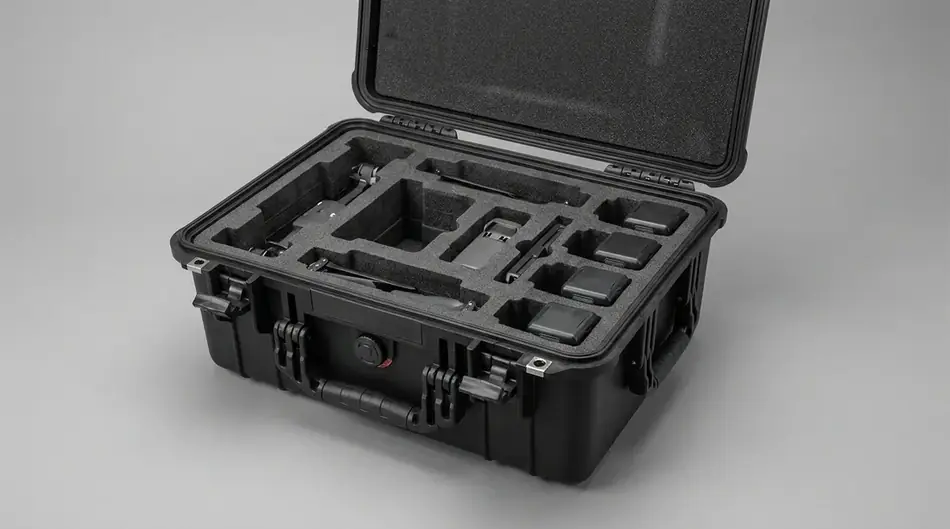
What is waterproof testing?
Waterproof testing is the practice of closing a complete assembly exactly as it will be used - shell, gasket, latches, hinges, any valve and any added port - holding it against a stated water exposure for a stated time at a stated temperature, and then establishing whether anything got in. The result belongs to that assembly under those conditions and to nothing else: it is not a property of the plastic, not a property of the rubber, and not automatically transferable to a similar shell from the same series in a different size. KeXin publishes the sealing construction for all 155 models we list - a compressible gasket seated in a continuous moulded channel on 124 of them, and no seal offered on 31 - and publishes no water-ingress figure for any model, because a range-wide number would have to come from a test record that does not exist. Where a buyer needs a depth and duration against a named method, we quote the test as a separate work package on the exact configuration, and the report is issued for the specimen that was tested.
Key points
- A water test result is a record of one assembly at one exposure, not a material property you can spread across a product family.
- We publish sealing construction on 124 of 155 models and an ingress figure on none of them; untested behaviour is labelled untested.
- Every model we list with a gasket channel also publishes a wall of 3.0 mm or more; every unsealed shell with a published wall is 2.9 mm or less.
- Type testing, routine production testing and destructive checks answer three different procurement questions - ask for the right one.
- Specify a test by its specimen, configuration, exposure, acceptance evidence and sample size, or the report cannot be used in a tender.
- A pressure-equalisation valve is offered as a configuration option and is standard-fitted on none of our 155 models.
The definition, stated precisely
Waterproof testing means exposing a closed assembly to water under conditions written down before the test begins, and then deciding, by an agreed method, whether water crossed the boundary. Three things have to be fixed in advance for that sentence to mean anything: what is being tested, what the water does to it, and what counts as a failure. Change any of the three and the previous result no longer describes your product. This is the single most misunderstood point in the whole subject, and it is why a responsible manufacturer is reluctant to put a water figure in a catalogue that covers 155 different shells.
The word that does the work is assembly. Water does not test a material; it finds the boundary between two parts and stays there until something stops it. On a moulded case that boundary is the line where the lid rim meets the base rim, held together by whatever compression the latches provide, with a compressible gasket deformed into the microscopic waviness of two moulded surfaces. Everything else - resin, colour, wall thickness, wheel set, foam - is context. A test result is therefore a statement about a joint, produced under a defined load, and it is only valid while that joint stays the same.
The five exposure families
Practical water testing sorts into five families, and they stress different things. Spray and rain tests put moving water against the exterior at an angle, which tests drainage and the ability of a rim to shed rather than hold water. Hose and washdown tests add flow and impact, which tests the same rim against water being driven into it, and they are where a partially lifted or contaminated gasket shows up first. Wave and splash tests are cyclic: water arrives, drains away, arrives again, and the case breathes in the intervals; they test the closure over many cycles rather than over one continuous duty.
Immersion under head is the one people mean when they say waterproof. The case sits at a stated depth for a stated time, and hydrostatic pressure pushes on every square centimetre of the rim at once, rising by roughly ten kilopascals for each metre of depth, so a shallow tank and a deep one are different questions. The fifth family is humidity and condensation cycling, which is not an ingress test at all but is often what a customer actually experienced: the interior cools below its dew point overnight, moisture condenses on a cold board or lens, and a perfectly watertight case is blamed for water that was never outside.
Type test, routine test, destructive check
A type test is done once, on a prepared specimen, to characterise a design. It answers the question does this construction work. It is the most expensive of the three and the least protective of your next shipment, because it says nothing about the batch that arrives six months later. A routine or production test is done on units from a real shipment, either on every unit or on a sampled quantity, and it answers a narrower but commercially useful question: were these specific cases assembled correctly - gasket seated all the way round, no twist, no grit in the channel, latches present and closing.
A destructive check is what you do to the units that fail, or to a sacrifice sample, to find out why. The three are not interchangeable, and procurement mistakes happen when a buyer accepts a type report where they needed a routine result, or asks for per-unit water testing on a shipment of 5,000 cases and pays for a test programme that dwarfs the order. The common in-plant compromise is an air-based leak check on the assembly line: pressurise or evacuate the closed shell, watch for a pressure change, and reject outliers. It does not prove performance at depth, but it reliably catches the gross assembly defects that a water test would otherwise discover at the customer's site.
What a result is a result of
Because the boundary is mechanical, the list of things that can invalidate a result is long and mostly mundane. Latch count and latch position change how evenly the rim is compressed; a shell tested with six latches is not the shell that ships with four. The gasket's compound, cross-section, hardness and its lot all matter, and so does how long it sat compressed in a closed case in a warehouse before first use - permanent set is the most common cause of a seal that was fine at test and leaks at year two. A buyer who adds a cable gland, an antenna pass-through or a drilled hole for a hasp has built a new assembly and voided the old report.
Temperature differentials matter more than people expect. A case carried from air conditioning into hot humid weather, or left in the sun and then rained on, moves air through the rim as its interior volume expands and contracts; the joint is being pumped. A closed-cell gasket can resist liquid while the same path still passes vapour slowly. Orientation during exposure decides whether water sits on the hinge side or drains from it. Contents change the answer too: a loaded case has a board, a battery and a handle passing through the interior, and it flexes differently under a spray than the empty shell that was tested. All of this is why an ingress figure belongs to a documented configuration rather than to a model name.
What we publish for 155 models, and what we do not
In our published specification data, the water-ingress field reads untested for all 155 models, and no ingress protection code is stated for any of them. What we do record as measured is the sealing construction: 124 model listings state a compressible gasket seated in a continuous moulded channel, and 31 state plainly that no seal is offered on that shell. The same data set publishes wall thickness on 148 models, net weight on 93, and carton plus pieces-per-carton on 58; pallet quantity is calculated from the carton footprint against your pallet size rather than measured, so we do not publish a figure for it either. That is the honest shape of a manufacturer's own data: complete where production records exist, visibly absent where they do not.
The published numbers do support one structural observation, and it is useful. Every model listed with a gasket channel also publishes a wall thickness of 3.0 mm or more, with a median of 4.2 mm, while every unsealed shell that publishes a wall is 2.9 mm or thinner, with a median of 2.2 mm. That is not a coincidence and it is not a performance claim. It reflects the fact that a seal needs a stiff rim: a compressible gasket in a supported channel on a lid that flexes between widely spaced latches will leak, so thin shallow shells are simply sold unsealed. A pressure-equalisation valve, which manages air pressure and not water, is available as a configuration option and is fitted as standard on none of the 155.
Sealed and unsealed shells on published figures
The table below is drawn entirely from figures published per model on this site, so any row can be checked against its own product page. It is a construction comparison, not a performance ranking: the last column names what is missing, and on every row the missing item is a test record.
| Model | Sealing | Wall Mm | Internal Mm | Volume L | Net Weight G | Not Published |
|---|---|---|---|---|---|---|
| KX-62205 | Gasket in continuous moulded channel | 3.5 | 200 x 98 x 41 | 0.8 (0.7 usable) | 310 | Depth, duration, ingress result |
| KX-1905 | Gasket in continuous moulded channel | 3.0 | 180 x 160 x 40 | 1.2 (1.0 usable) | 250 | Depth, duration, ingress result |
| KX-4010 | Gasket in continuous moulded channel | 3.0 | 390 x 315 x 88 | 10.8 (9.3 usable) | 1015 | Depth, duration, ingress result |
| KX-4616 | Gasket in continuous moulded channel | 3.0 | 455 x 338 x 148 | 22.8 (19.6 usable) | 1395 | Depth, duration, ingress result |
| KX-65522 | Gasket in continuous moulded channel | 5.3 | 507 x 385 x 190 | 37.1 (29.7 usable) | 4860 | Depth, duration, ingress result |
| KX-5321 | Gasket in continuous moulded channel | 5.8 | 481 x 373 x 192 | 34.4 (27.5 usable) | 4810 | Depth, duration, ingress result |
| KX-97227 | Gasket in continuous moulded channel | 6.0 | 590 x 435 x 210 | 53.9 (43.1 usable) | 10000 | Depth, duration; wheels and handle alter the rim |
| KX-3308 | No seal offered on this shell | 2.3 | 325 x 236 x 76 | 5.8 (5.0 usable) | 575 | Everything - this shell is sold unsealed |
| KX-712 | No seal offered on this shell | 2.8 | 308 x 250 x 96 | 7.4 (6.4 usable) | 710 | Everything - this shell is sold unsealed |
| KX-6922 | No seal offered on this shell | Not published | 600 x 420 x 200 | 50.4 (43.3 usable) | 6140 | Wall thickness and ingress behaviour |
How to specify a water test programme
If you need a real result, write the programme before anyone writes a quotation. Ten fields make a report usable rather than decorative. One: the specimen - model code, moulding batch, and how many units. Two: the configuration - gasket compound and lot, latch count and positions, valve fitted or blanked, hardware added by the buyer, and the interior as shipped. Three: the exposure family from the list above, with the exact duty: depth and duration for immersion, flow and standoff distance for spray or hose, cycle count for humidity. Four: orientation during exposure and whether the case is empty or loaded. Five: water temperature and air temperature, because the differential is what pumps the joint.
Six: conditioning before and after the exposure. Seven: the acceptance criterion, expressed as observable evidence - indicator tape in the corners, a weighed absorbent pad, a visual check of the foam, a functional test of the contents - and not as a vague pass. Eight: sample size and what happens to a failed unit, which is normally the destructive check described earlier. Nine: who performs it, and whether the laboratory holds accreditation for the method, since a self-declared sheet is worth much less in a tender than a report from an accredited body. Ten: the report itself, naming the tested configuration, so nobody can later attach it to a shell, a size or a hardware set that was never in the tank.
Choosing a shell: a five-step selection guide
Step one is the exposure, and you write it down before you look at any product. Stored indoors and carried to a vehicle, left in an open boat locker, hosed at a wash-down point, or dropped in and recovered are five different duties, and only the last two need a documented test. Step two is the internal envelope, measured on the equipment as it is actually packed, read against the published internal dimensions of the shell - never the external row. On KX-65522 the shell is 545 by 440 by 215 mm outside and 507 by 385 by 190 mm inside, so a plan built from external figures loses the walls, the rim and the latches.
Step three is the construction: whether the model is one of the 124 that publish a gasket in a continuous channel or one of the 31 sold unsealed, and what its published wall thickness implies about rim stiffness. Step four is handling, because handling is what destroys seals: a wheeled shell such as KX-97227 is marked non-stackable, and all 19 of our wheeled models are, since the wheel housings and handle channel occupy the rim and base area that stacking would otherwise bear on. Step five is serviceability - whether the gasket is a replaceable stock part, whether the channel can be cleaned with a brush and fresh water, and whether the case can be stored open. A configuration that fails step five will leak within a year whatever it was tested at.
Where documented water testing earns its cost
Testing is justified where a failure is expensive or a specification is contractual. Marine and coastal communications, survey and hydrographic instruments, offshore and harbour patrols, field medical kits that live in a vehicle bay, environmental and agricultural measurement programmes, and aerospace ground support all tend to reach the point where a named method, on a named configuration, with a report on file, is cheaper than the argument. In these programmes the test is usually specified by the end customer's own standard, and the honest sequence is that they name the method and we tell them whether the configuration can be put through it.
Most other purchases do not need it, and paying for a test they do not need is a real waste. A depot case that lives indoors, a tool shell that travels in a van, or a storage box in a dry rack is served by construction and maintenance rather than by a laboratory report - and sometimes by the unsealed shell, since a seal you never use is a gasket you must still replace. For sealed shells in dry, gritty roles the seal is often bought for dust rather than water; the same continuous channel that sheds spray also keeps the seating surface clean, which is a maintenance argument rather than a test argument.
Customisation, and what changes when you touch the closure
Everything on the closure side of a standard shell is configurable: latch count and type, padlock hasps, gasket compound, colour, logo method, pressure-equalisation valve, cable ports, document pocket, identification plate, and the interior layout - pick-and-pluck, die-cut or CNC-cut foam, grade and thickness. A valve is a pressure-management part; adding one is adding a penetrator to the rim area, which is precisely the kind of change that makes an earlier test inapplicable. Interior and hardware changes on existing tooling are quoted from 45 days to first sample, with logo, colour and OEM work at 300 pieces per item; a shell that does not exist yet is a new mould at 125 days and a minimum order from 3,000 pieces per moulded component.
If a test report is part of your programme, the order of work matters. Choose the shell, freeze the closure configuration, then test that configuration, then order production against it - and re-test if any of the ten fields above changes. We supply wholesale and OEM only, on EXW or FOB terms, with no retail channel, no DDP and no overseas warehouse stock, which also means we do not hold pre-tested inventory: the test is scheduled with the production batch it covers, and third-party inspection of the finished goods is welcome.
Procurement notes before you sign
Ask for four things in writing and most water disputes disappear. First, the construction record: which models publish a gasket in a continuous channel, and which are sold unsealed - a five-minute check against our catalogue, and the difference between a case you can maintain and one you cannot. Second, the exposure definition you actually need, in physical terms rather than adjectives: what happens to the case, how often, for how long, and what you will accept as evidence that nothing entered. Third, the specimen configuration, frozen before any test is booked. Fourth, who is doing the testing and what their report will name.
Be equally firm about what you do not ask for. A manufacturer who will print an ingress figure for a shell that has not been put through it has given you a document, not a capability, and that document is worth nothing in the field or in an audit. Our own position is deliberately narrow: construction published, behaviour unlabelled until it is measured, testing quoted as a separate work package on the configuration you order. It is a slower conversation than a catalogue adjective, and it is the only version of this subject that survives contact with a wet shipment.
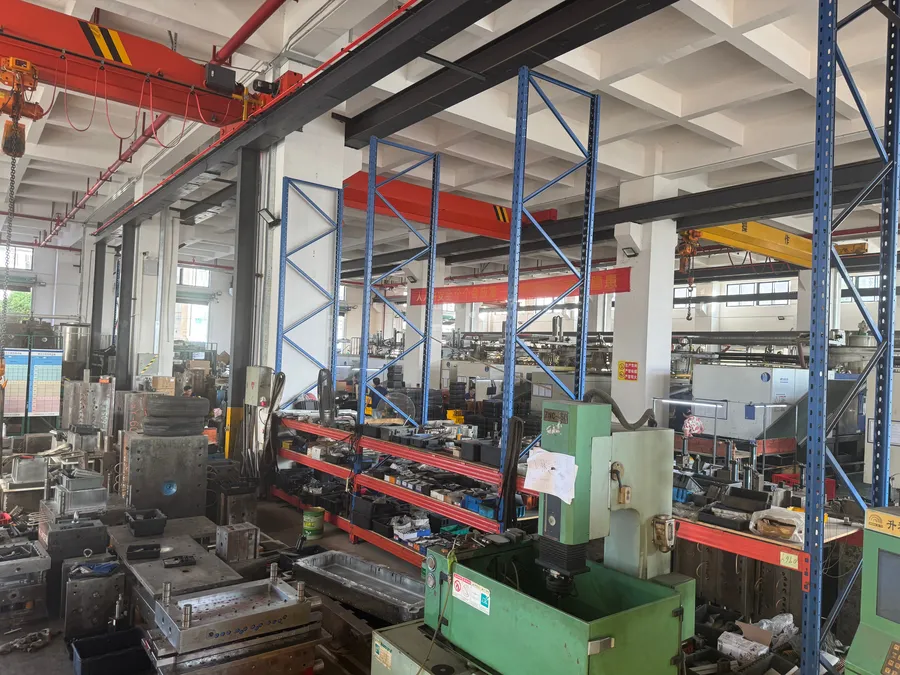
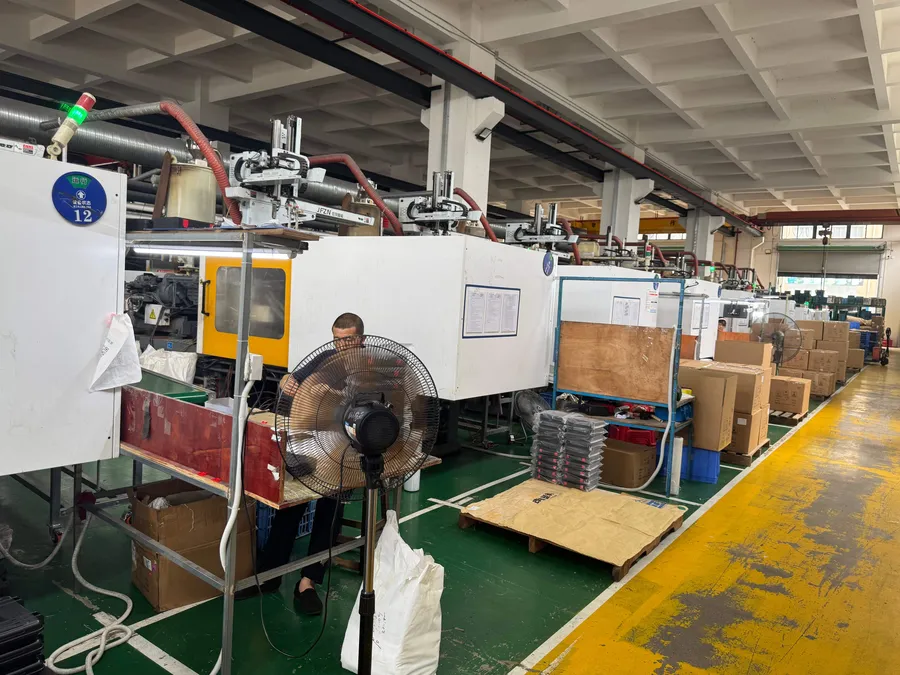
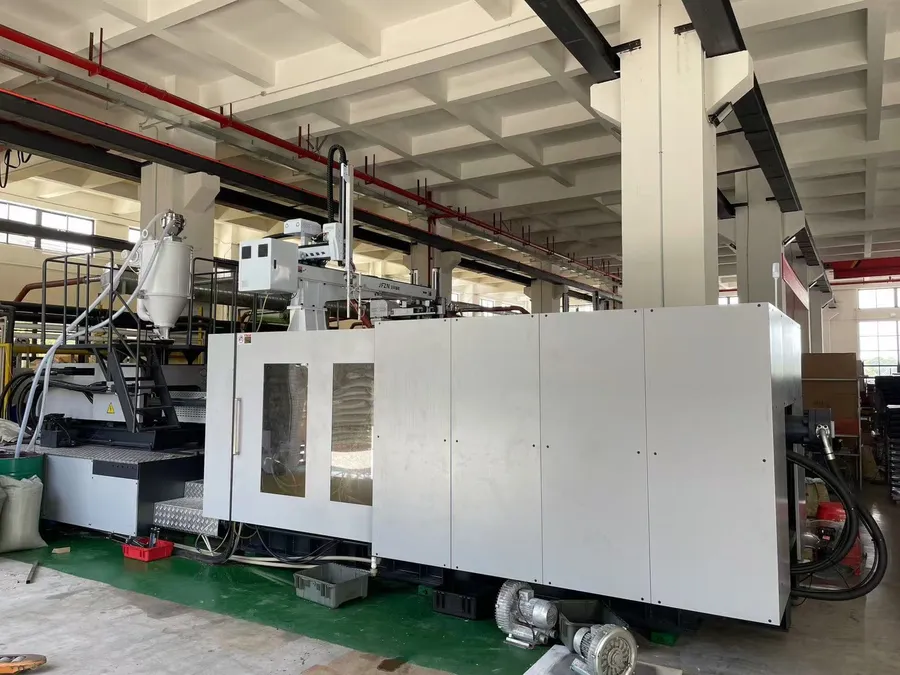
Customisation
Everything described above is configurable on a standard shell: interior layout (pick-and-pluck, die-cut or CNC-cut), foam grade and thickness, colour, logo method, latch and lock count, pressure-equalisation valve, cable ports, document holder and identification plate. A bespoke exterior geometry requires a new mould — 125 days, from 3,000 units per moulded component.
Procurement considerations
| Question | What to send us |
|---|---|
| Which shell fits? | Equipment L × W × H as packed, plus required clearance per axis |
| What does it cost? | Order quantity and estimated annual quantity — the two drive different answers |
| Is tooling needed? | Whether an existing shell clears the envelope with usable foam depth |
| Lead time? | Your required delivery date, not just the order date |
| Certification? | The exact standard your tender names — we will say whether we can test to it |
| Freight? | Destination and preferred terms; carton and pallet data supplied with the quotation |
Comparison and selection guide
The tables on this page exist because a protective case is chosen by comparing three things: the envelope, the environment and the handling chain. Where no table applies, the rule below is.
| Situation | What To Do |
|---|---|
| Occasional splash | A close-fitting rim without a gasket is cheaper and easier to maintain. |
| Rain and washdown | Sealed configuration, four or more latches, stainless hardware. |
| Immersion or pressure change | Sealed configuration plus a pressure-equalisation valve, and a documented test. |
- Size on internal dimensions plus clearance, never on a product name.
- Choose the carrying method before the shell: it changes the series, not just the price.
- Specify the interior last, and decide up front whether the end user will reconfigure it.
What is waterproof testing? relates to Waterproof & Dustproof Guide. Related families: Waterproof Cases / Outdoor Protective Cases / Military Protective Cases / Tactical Equipment Cases / Instrument & Equipment Cases. Related sectors: field and industrial equipment. Continue in the Waterproof & Dustproof Guide cluster.
This page is written from our own production data. If your requirement differs, send the dimensions and we will tell you which of the 155 models fits, or whether a custom route is needed.